
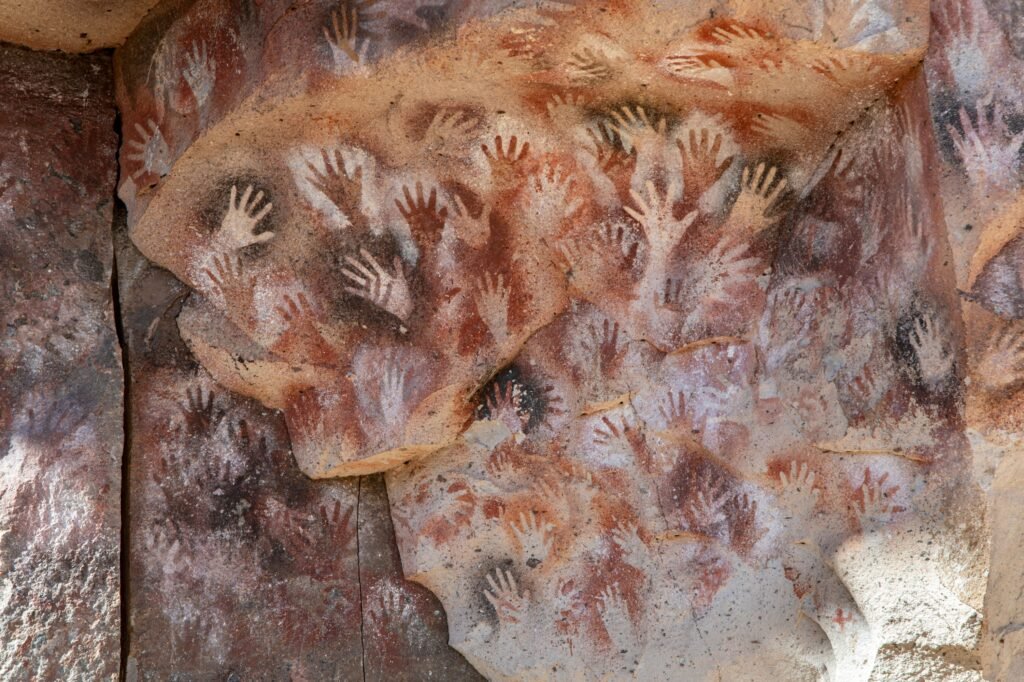
Walk into a Paleolithic cave and see a human hand on the wall, and something strange happens: for a second, it feels like that person is still there, reaching out through tens of thousands of years. No words, no story, just a hand. Yet it hits harder than most museum labels or history books ever will.
Those handprints are among the oldest direct traces of human presence we have, and they show up all over the world, from Europe to South America to Indonesia. But why were they made? Were they signatures, symbols, spells, or something we no longer have words for? Modern psychology cannot give us a single neat answer, but it does offer several powerful possibilities that make these ghostly hands feel even more alive.
Leaving a Mark: The Deep Human Drive Not to Be Forgotten
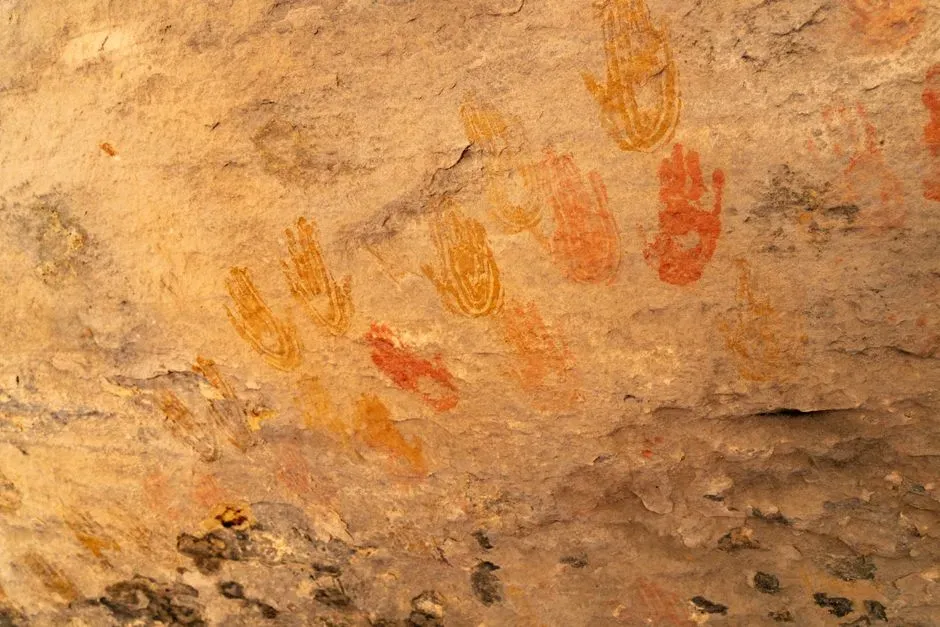
Psychologists have long noted that humans carry a strong need to feel that their existence matters and will not just vanish without a trace. Even today, people carve their names into park benches, write on school desks, or post endlessly on social media for an audience that might barely be paying attention. The instinct to declare “I was here” seems baked into our wiring, a quiet shield against the fear of being erased.
Ancient handprints may be one of the earliest versions of that same impulse. Imagine a young person in a small Ice Age community stepping up to a cave wall, pressing their hand against the rock, and watching others blow pigment around their fingers. In that moment, their hand becomes a lasting mark in a world where most things – footprints in mud, words spoken by the fire – disappear fast. It is not hard to see how emotionally powerful that must have felt.
Hands as Identity: Early Selfies and Social Signals
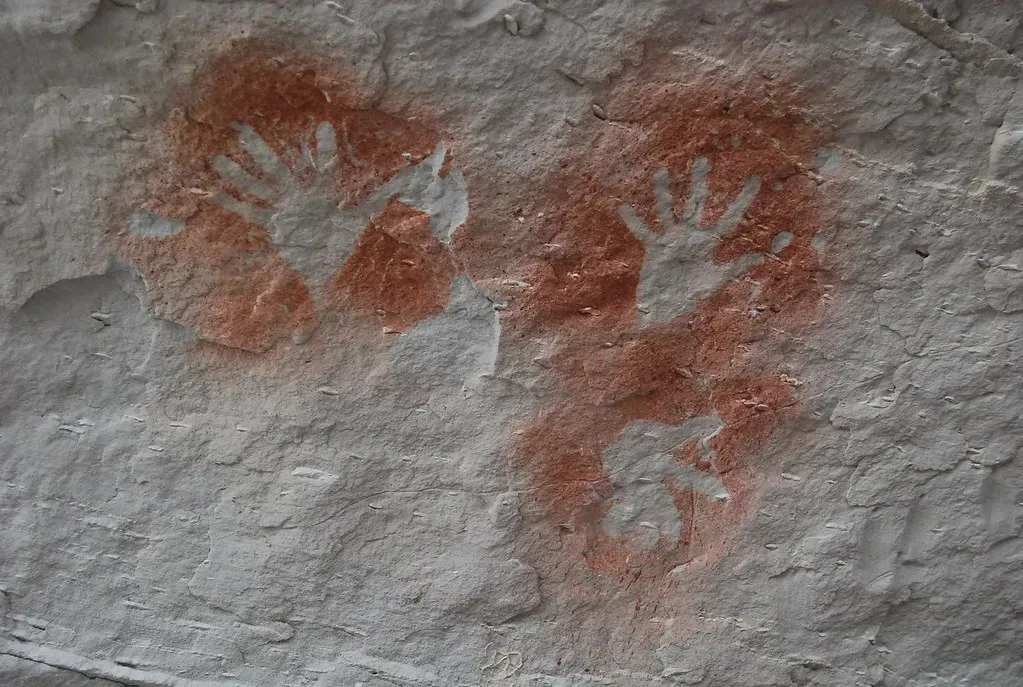
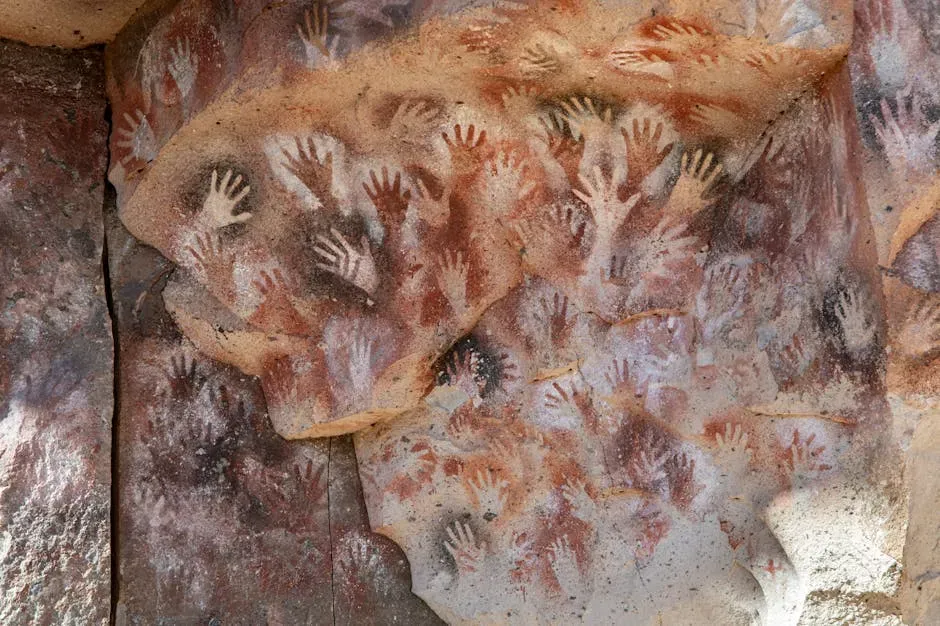
Look closely at cave hand stencils and you notice something simple but important: every hand is different. Some are large, some small, some with missing fingers, some maybe belonging to children. In a small group living in a harsh environment, these differences would have mattered a lot, and that turns each print into a kind of personal badge. It is primitive, but in spirit it is not so different from a profile picture, a gamer tag, or a username today.
Psychologically, this links to the idea of personal identity and social belonging. We like to see ourselves reflected in our environment – it reassures us that we have a place in the group. A wall covered in many hands could have worked as a visual roll call of the community: these are our people, these are our bodies, we are part of this place together. That kind of shared identity would have been a powerful emotional anchor in a world that was unpredictable and often dangerous.
Ritual, Trance, and Altered States of Consciousness
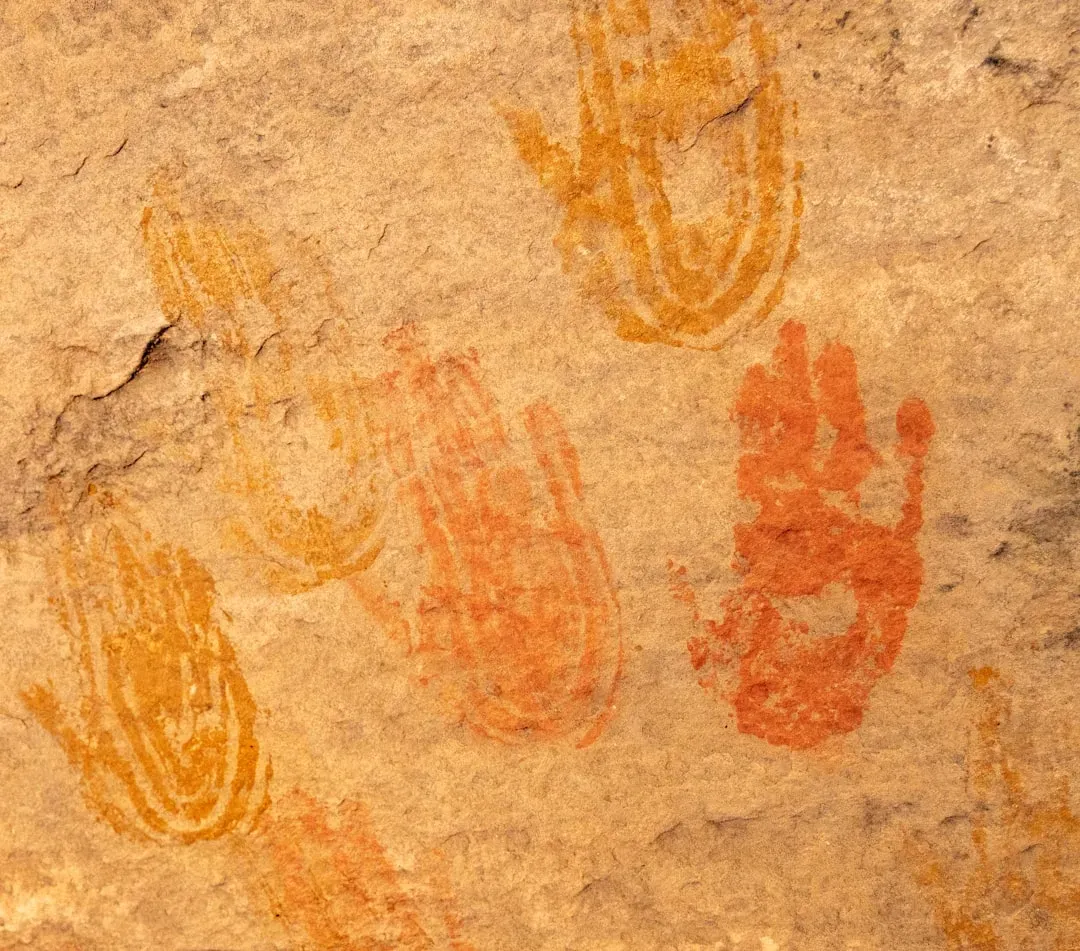
Some researchers think these handprints were not casual doodles but part of rituals that involved chanting, drumming, flickering torchlight, and maybe even altered states of mind. The deeper you go into certain caves, the more narrow and disorienting the spaces become, which alone can change how your brain processes sound, light, and time. Combine that with stress, hunger, or substances that might alter perception, and you have a recipe for intense, trance-like experiences.
From a psychological angle, rituals like this help people make sense of fear, uncertainty, and big life transitions such as birth, death, or coming of age. Placing a hand on the wall and turning it into a lasting symbol could have been a way of crossing from one state to another – child to adult, outsider to insider, living to spiritually protected. The act of creating the print may have mattered more than the finished image itself, like a small, controlled drama to manage overwhelming feelings.
Teaching, Storytelling, and Early Visual Communication
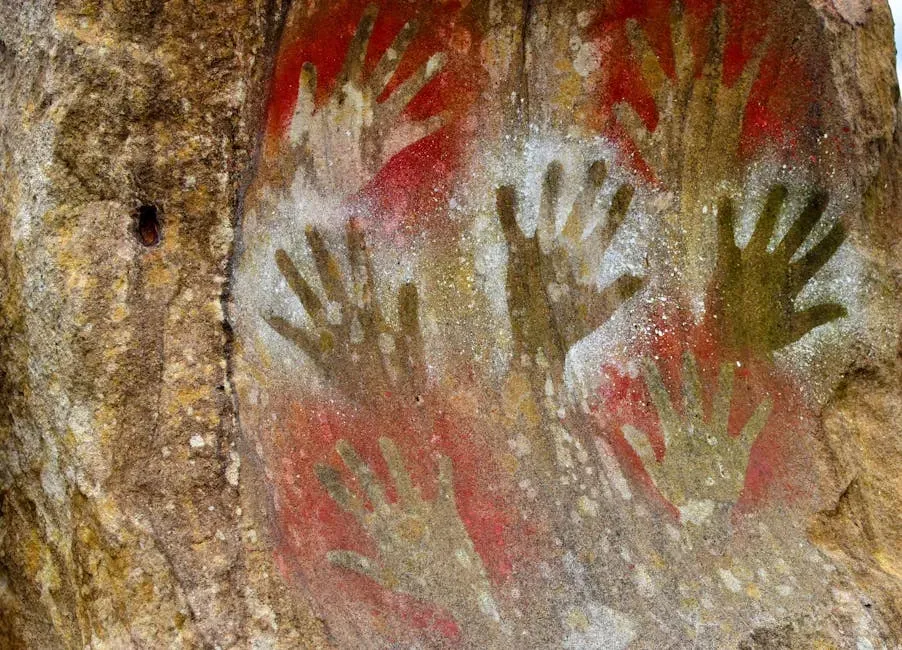
We often think of cave art as “decorations,” but in small, tight groups that depended on shared knowledge to survive, images were probably tools as much as they were expressions. Hands are central to almost every task humans do – hunting, making tools, preparing food, caring for children – so it makes sense that they would show up as key symbols. A hand on the wall is instantly recognizable to any human who sees it, no explanation needed.
Psychologists studying learning and memory know that people remember things better when they are paired with strong visuals and physical actions. Making a hand stencil is both: it is a visual cue plus a bodily sensation. That combination could have made the event and any story or lesson around it more memorable for children and adults alike. Maybe those walls were less like silent galleries and more like classrooms and campfires, where handprints anchored stories, warnings, or shared myths.
Control Over Chaos: Turning the Body Into a Symbol
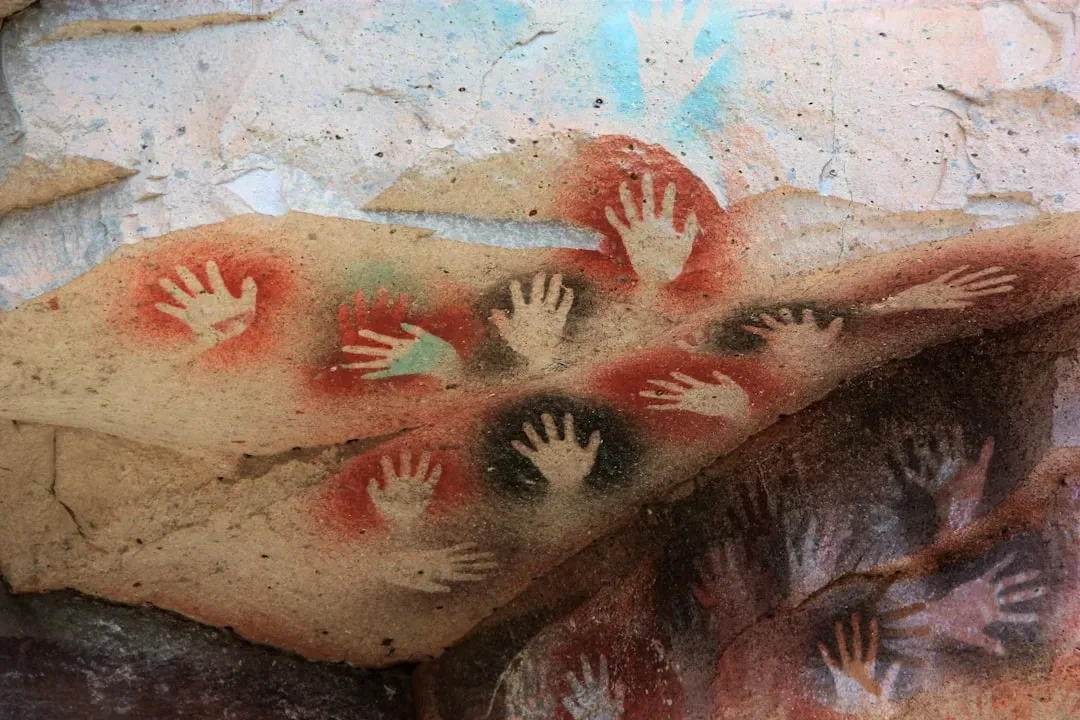
Life for ancient humans was fragile. Illness, injuries, predators, bad weather, and scarcity of food were never far away. In that context, turning your living, vulnerable hand into a sharp, high-contrast image on stone is a subtle act of psychological control. You take something that can be hurt or lost and translate it into something stable and lasting. It is like freezing a fleeting moment of your existence and pinning it down where nothing can chase it.
This is similar to what modern psychologists see when people create art after trauma or during grief. The process of transforming raw emotion into an external object – a drawing, a sculpture, even a tattoo – can make overwhelming experiences feel more manageable. A handprint on a cave wall might have helped people feel that they could push back against chaos, at least a little, by stamping a part of themselves into the solid earth and saying, in effect, that not everything can be taken away.
There is also the strange, almost eerie flip side: once your hand is up there, you get to look back at it as if it belongs to someone else. That distance between your living body and its stone twin can change how you think about yourself, nudging you toward more abstract ideas of personhood, spirit, and legacy. In a quiet, dark cave, that could have been a powerful, maybe even unsettling, experience.
Play, Curiosity, and the Joy of Making Something Appear
It is tempting to assume every prehistoric image carried huge spiritual or social weight, but humans have always also played. Anyone who has watched a child discover handprints in paint or mud knows how pure and intense that joy can be. There is a shock in seeing a blank surface suddenly carry the shape of your body, as if you have created a little echo of yourself out of nothing.
From a cognitive perspective, that moment of surprise and delight is not trivial. It strengthens curiosity, encourages experimentation, and makes people more likely to try new actions with the materials around them. In a world where innovation – better tools, smarter strategies – could mean the difference between survival and starvation, that playful curiosity was incredibly valuable. So even if some cave handprints were tied to serious rituals, others may simply reflect humans doing what we still do today: experimenting, laughing, testing what happens if we try this or that, then leaving the results behind like a trail of breadcrumbs through time.
Conclusion: A Hand Reaching Across 30,000 Years
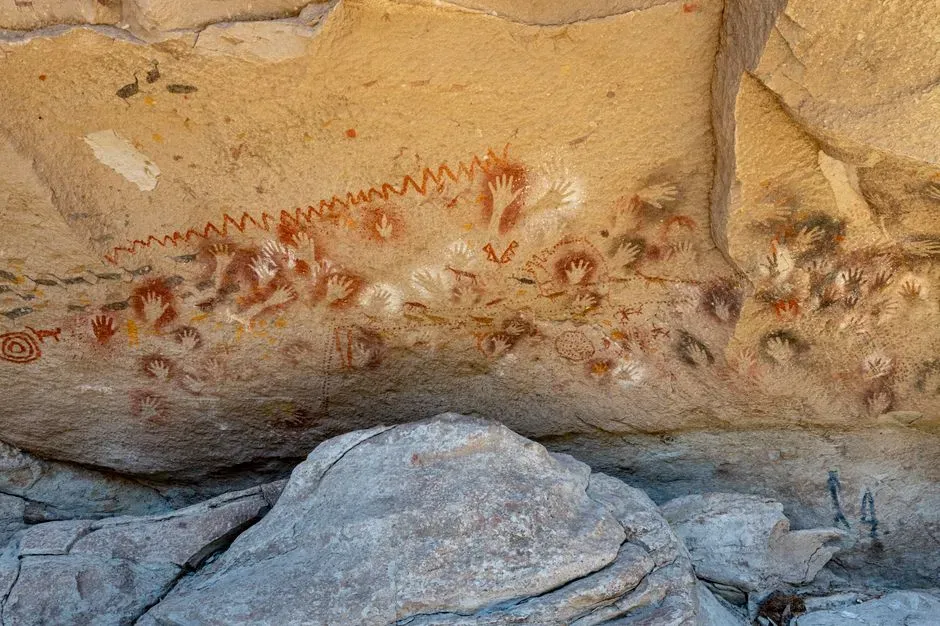
We may never know exactly what any one ancient person was thinking when they pressed their palm to cold stone and watched pigment bloom around their fingers. But when you line up what psychology tells us about identity, fear, ritual, learning, control, and play, a pattern emerges. Those handprints were probably not just one thing. They were acts of self-assertion, tools for teaching, anchors for ritual, expressions of control over a brutal world, and moments of joyful experimentation, all layered together over generations.
Personally, I find that mix of motives deeply moving, because it makes those distant people feel less like mysterious “cavemen” and more like us: anxious, proud, curious, hopeful, and trying to make meaning in a world that did not owe them anything. When you look at a cave wall full of hands, you are not just seeing art; you are seeing a cluster of human minds wrestling with being alive. The real surprise, at least to me, is not that they did this – but that, after so many thousands of years, we still recognize exactly what they were reaching for. Would you have guessed a simple handprint could carry that much of what it means to be human?