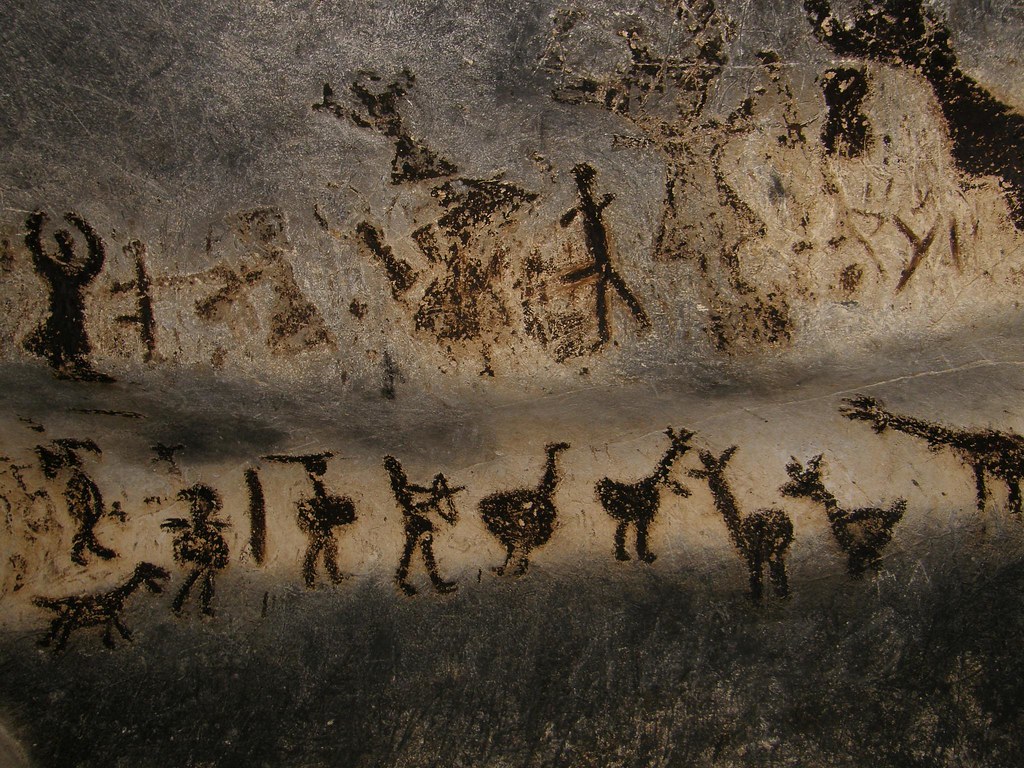
Somewhere in a dark cave or on a windy shoreline, a human ancestor once stopped, picked up a piece of pigment or a shell, and did something utterly strange: they made something that was not useful in any obvious way. No calories gained. No predator chased off. Just a mark, a bead, a carved line that meant something to a mind that was suddenly thinking beyond the here and now.
That moment – or rather, those scattered, repeated moments in different places and times – might be the closest thing we have to catching the human mind in the act of becoming what we recognize as truly modern. When our ancestors started making art, they were not just decorating their world; they were revealing a new kind of inner world. If we look closely at when and how art first appears, we may be glimpsing the evolutionary turning point where imagination, symbolism, and shared meaning took off.
From Survival to Symbol: Why Early Art Is Such a Big Deal
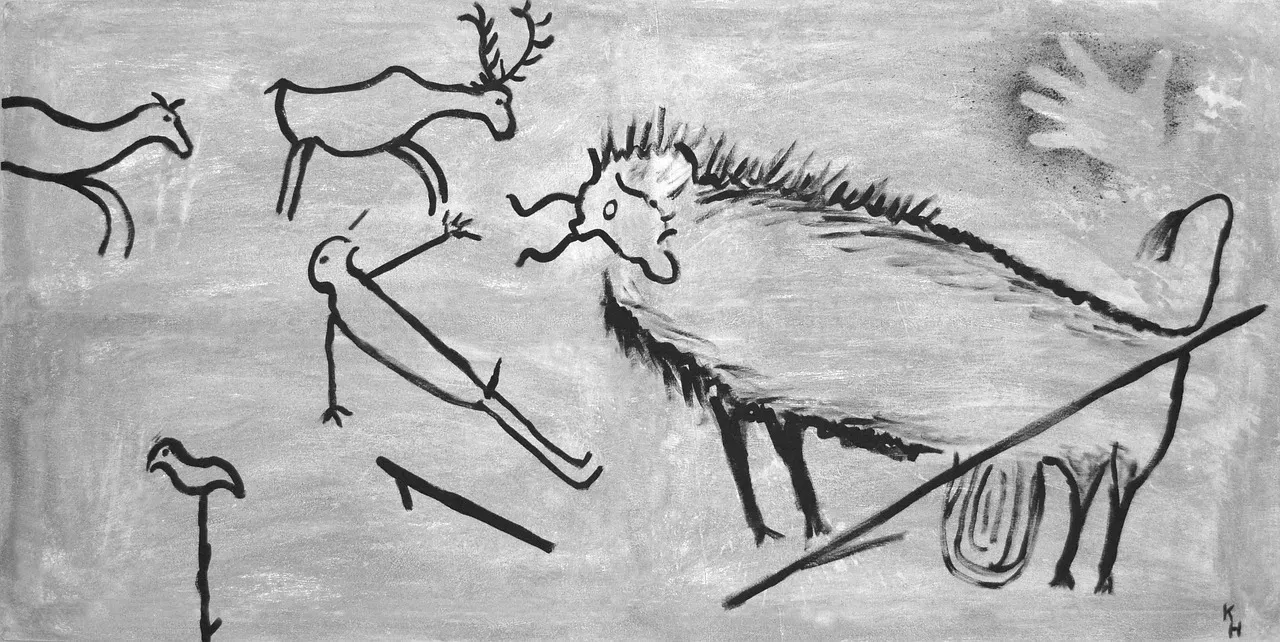
It’s easy to underestimate how radical early art really was. For most of evolutionary history, animals (including our pre-human ancestors) focused on the basics: survive, eat, reproduce, avoid danger. Then, at some point, our lineage began investing time and energy into things that did not obviously help with any of those tasks, like engraving lines on bone or painting animals on cave walls. That shift hints that something had changed in how our brains weighed value and meaning.
Art marks a psychological leap from pure survival to symbolism. A piece of ochre with deliberate cross-hatched markings or a carefully pierced shell bead suggests that our ancestors cared about ideas that were not physically in front of them: identity, status, stories, maybe even spirits or ancestors. In evolutionary terms, that is huge, because it shows that the mind had begun to treat abstract, invisible things as powerful enough to shape real behavior.
The Oldest Traces: Pigment, Engravings, and Beads Before Cave Paintings

When people think of ancient art, they often picture spectacular cave paintings in Europe, but the story is older and more scattered. Archaeologists have found pieces of red ochre with carved patterns, perforated shell beads stained with pigment, and simple engravings that go back tens of thousands of years before the famous cave scenes. Some of these objects come from coastal caves in Africa and suggest that symbolic behavior might have deep roots in Homo sapiens long before they spread widely across the globe.
These early traces may not look like “art” in a modern museum sense, but they are arguably even more important. A single bead or scratched stone is like a whisper that says, “Someone cared enough to make this mean something.” These objects hint at minds able to plan, to follow aesthetic preferences, and to share codes of meaning with others. In a way, they are like the faint, first heartbeat of culture as we know it: fragile, easy to miss, but unmistakably different from anything found in the lives of other animals.
Cave Walls as Storytelling: How Images Turned Space Into a Shared Mind
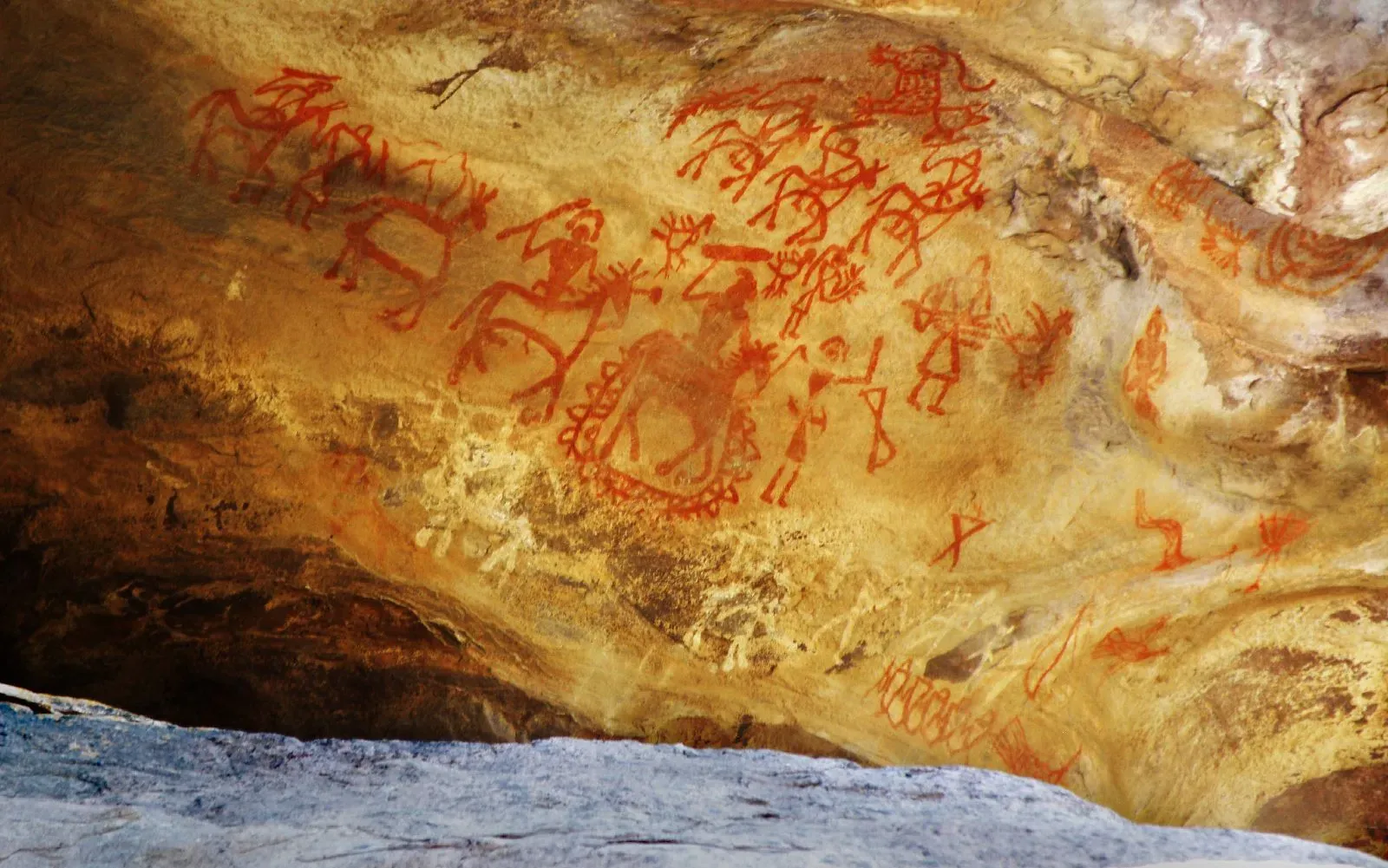
By the time our ancestors were painting animals, hand stencils, and strange signs on cave ceilings and walls, something even more complex was happening. Caves became three-dimensional storyboards, places where groups could gather to look at the same images and, likely, recall the same narratives, hunts, or myths. A bare rock surface, once just geology, turned into a kind of external memory – like a prehistoric screen displaying what lived inside people’s heads.
Think of a cave painting as an early hard drive for the mind. It allowed memories and ideas to exist outside a single brain and to be accessed by others who had never seen the original events. That ability to externalize imagination and share it across individuals and generations is a powerful sign that human cognition had moved into a new phase. The mind was no longer locked inside one skull; it was beginning to spill into the environment, where it could be preserved, pointed to, and argued over.
Art as a Mirror of Self-Awareness and Theory of Mind
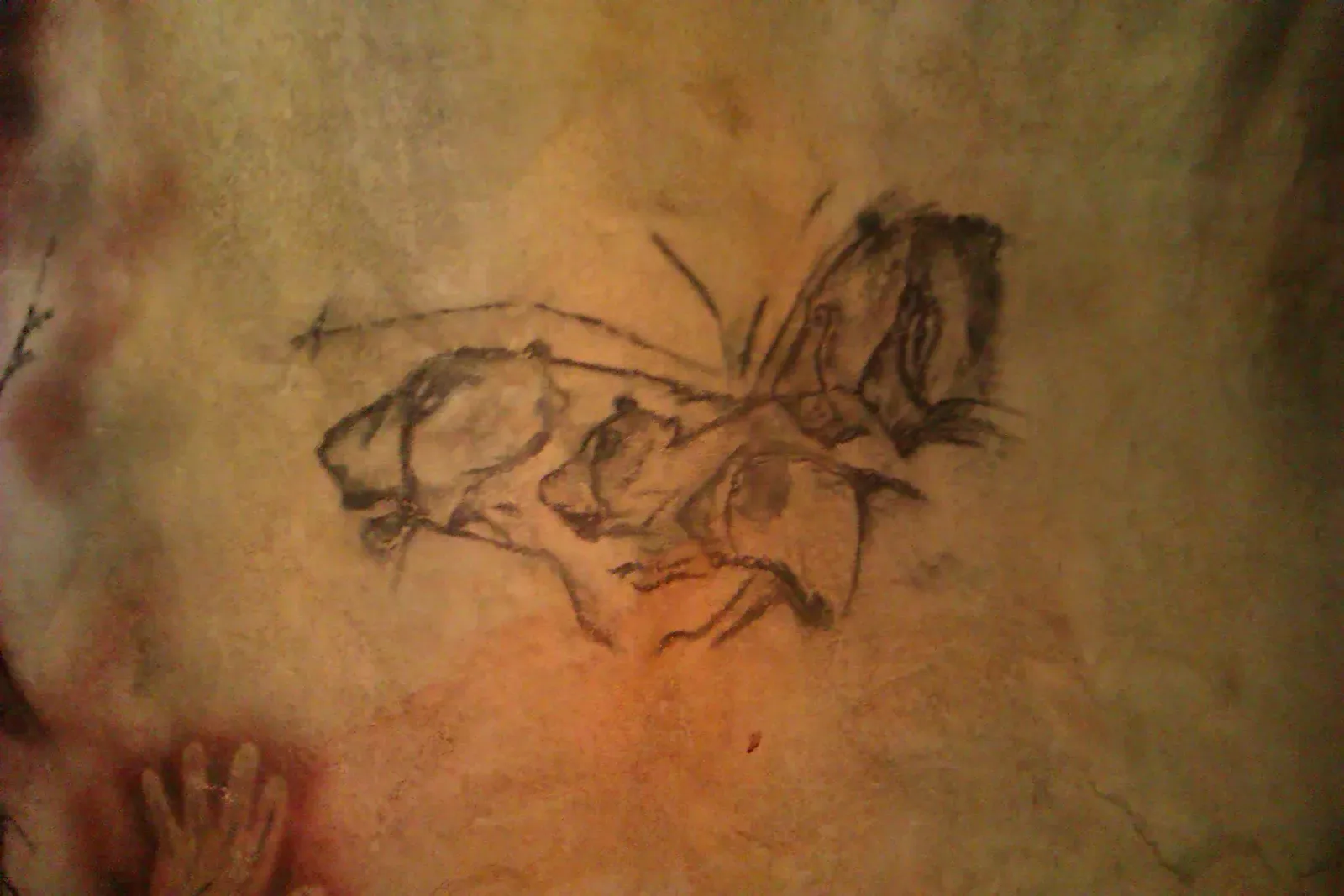
One of the most striking things about early art is that it implies a mind aware of being seen by other minds. Decorating your body with beads, paint, or tattoos only makes sense if you understand that others will perceive you, judge you, and respond to that appearance. That level of social self-awareness, sometimes called theory of mind, is a critical step beyond simple social behavior; it suggests our ancestors were constantly imagining how others were imagining them.
Even images of animals or abstract designs may reflect an inner life that could step outside itself, observe, and rearrange mental pictures. To portray a horse or a bison from memory is to admit that you can mentally “hold” that animal in your mind’s eye and then re-create it. That kind of internal visualization lies at the heart of what we think of as consciousness: a mind not just reacting to the world, but modeling it, replaying it, and even bending it into new, unreal forms.
Group Identity and Belonging: Art as Social Technology
Art also seems to have functioned as a powerful social technology. Matching ornaments, shared motifs, and repeated styles likely signaled group membership, alliances, or status. Imagine walking into a gathering and instantly recognizing who belongs with whom based on shell necklaces, painted patterns, or carved pendants. That kind of visual code could knit groups together and make cooperation more stable and predictable.
From an evolutionary perspective, any behavior that strengthens group cohesion could be a game changer. Groups that recognized each other, trusted each other, and could rally around shared symbols would have an advantage in everything from hunting to conflict. Art, in this view, was not just pretty decoration; it was social glue. It turned identity and loyalty into something you could wear, hold in your hand, or paint on a wall for everyone to see and remember.
Imagination, Counterfactuals, and the Birth of “What If” Thinking

One of the most profound clues hidden in early art is the emergence of imagination in a richer sense: the power to think in “what ifs.” To draw a creature from memory, combine features from different animals, or invent abstract signs is to say, “I can think beyond what is right in front of me.” This kind of counterfactual thinking – imagining possibilities that are not currently real – lies at the core of planning, innovation, and moral reflection.
When our ancestors began to routinely engage in imaginative art, they may have been training their brains to explore alternatives, to rehearse scenarios, and to play with ideas. That same mental machinery would be useful for planning migrations, inventing tools, solving social dilemmas, and anticipating future threats. In that sense, early art might have been like a cognitive gym: a playful yet serious place where the brain exercised its newfound ability to step outside the present moment and rearrange reality in thought.
Emotion, Awe, and the Mystery of Meaning
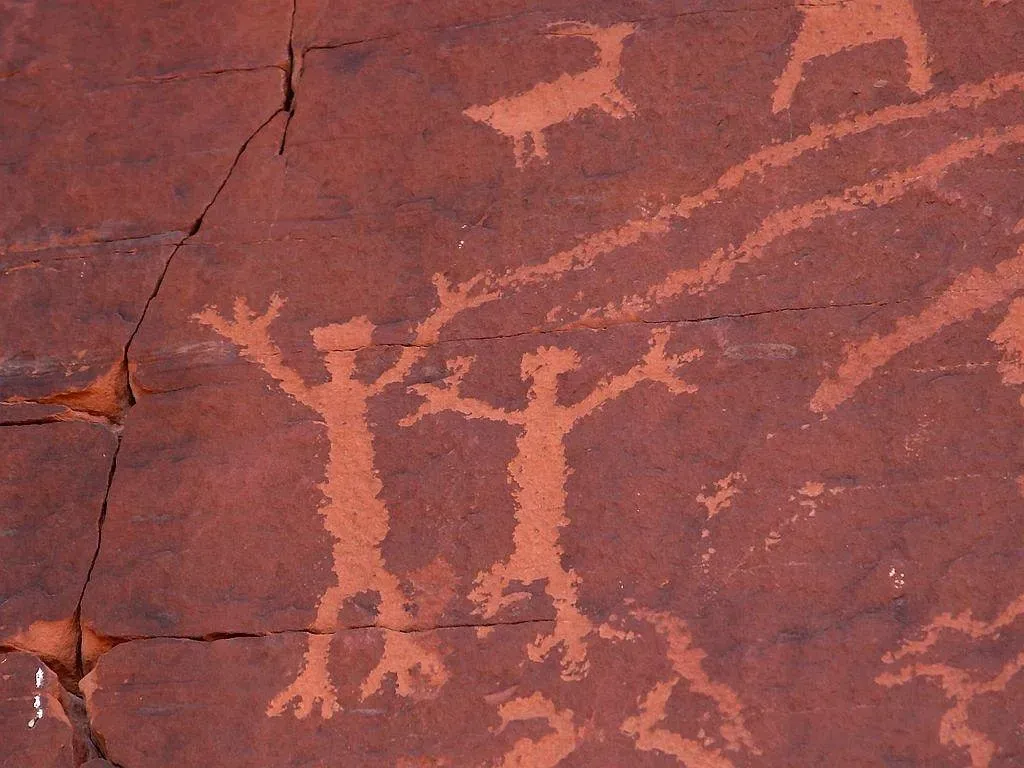
Anyone who has stood inside a painted cave, even in modern times, often reports a powerful sense of awe and eeriness. Now imagine being among the first people to see flickering torchlight bring those images to life on the stone walls. Art does not just carry information; it also hits us in the gut. It stirs fear, pride, grief, longing, and wonder, sometimes all at once. That emotional charge suggests that our ancestors were not only smarter in a technical sense, but also feeling the world more intensely and in more layered ways.
The emotional impact of early art hints at minds attuned to meaning on multiple levels: practical, social, and spiritual. A painted animal might be a hunting focus, a clan symbol, and a sacred being all at once. That kind of layered significance is a sign that the human mind had started weaving a thick web of meaning around everyday life. In my view, this is where art becomes a clue that consciousness itself had deepened – not just seeing the world, but feeling that it mattered in ways that could not be fully explained or easily put into words.
The Artful Mind: What This All Suggests About Who We Are
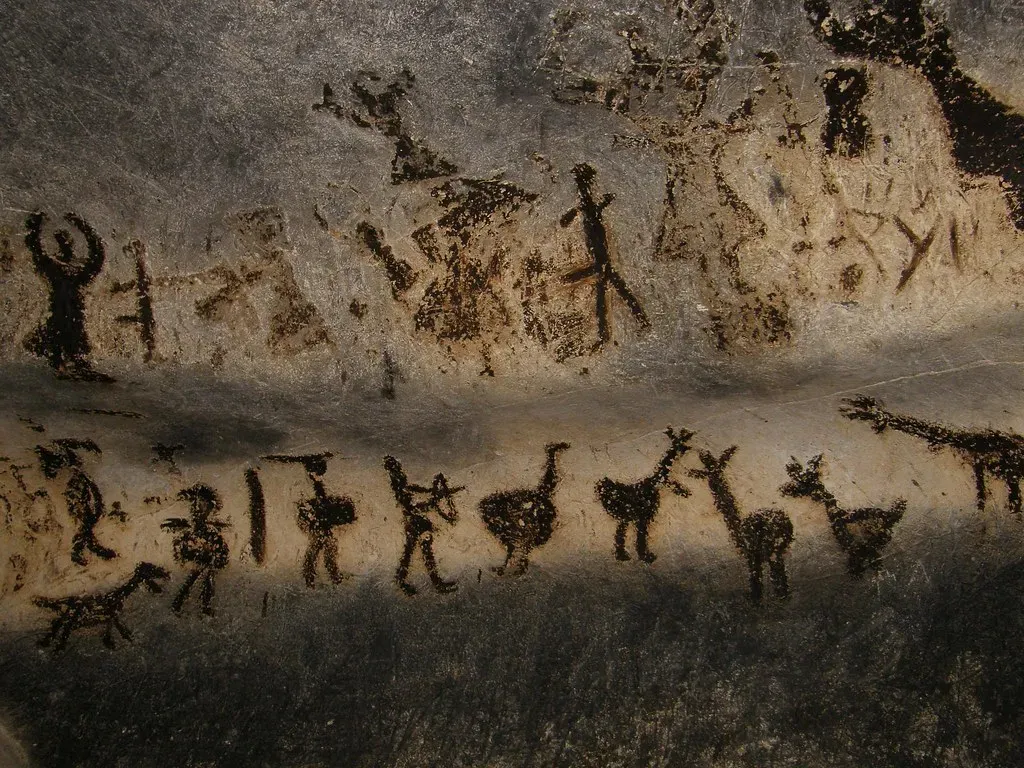
When we put all these strands together – symbolism, self-awareness, group identity, imagination, and emotion – early art begins to look less like a side hobby and more like a core signal of what made our minds truly human. The moment our ancestors started making art was not a random flourish on top of an already finished brain; it was part of the process of shaping that brain into something capable of culture, morality, and long-term cooperation. Art is both a product of a new kind of mind and a force that helped that mind evolve further.
My own opinion is that if you want to find the soul of our species, you will not find it first in tools or weapons, but in these early marks, beads, and paintings. They show a hunger to mean more, to be seen, to connect, and to imagine worlds beyond the visible one. The fact that, in 2026, we still decorate our bodies, fill our screens with images, and argue passionately about art says that this ancient shift never stopped. We are still the descendants of those first people who looked at a blank surface and felt an irresistible urge to make their inner world visible. When you think about it, every time you doodle, post a photo, or hang a picture on your wall, you are echoing that original, astonishing moment – and how could that not change the way you see yourself?