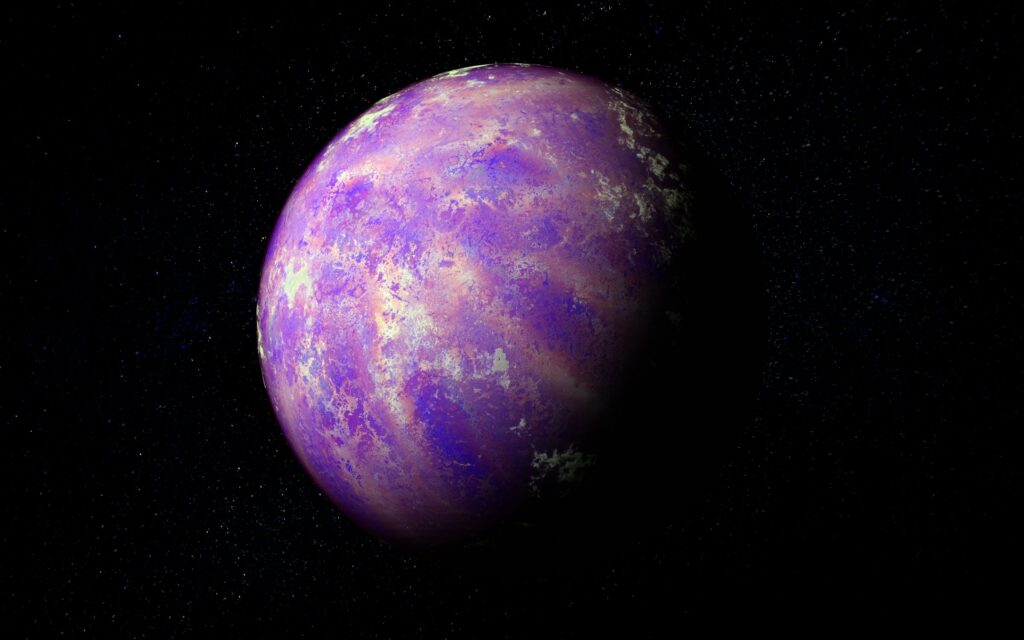
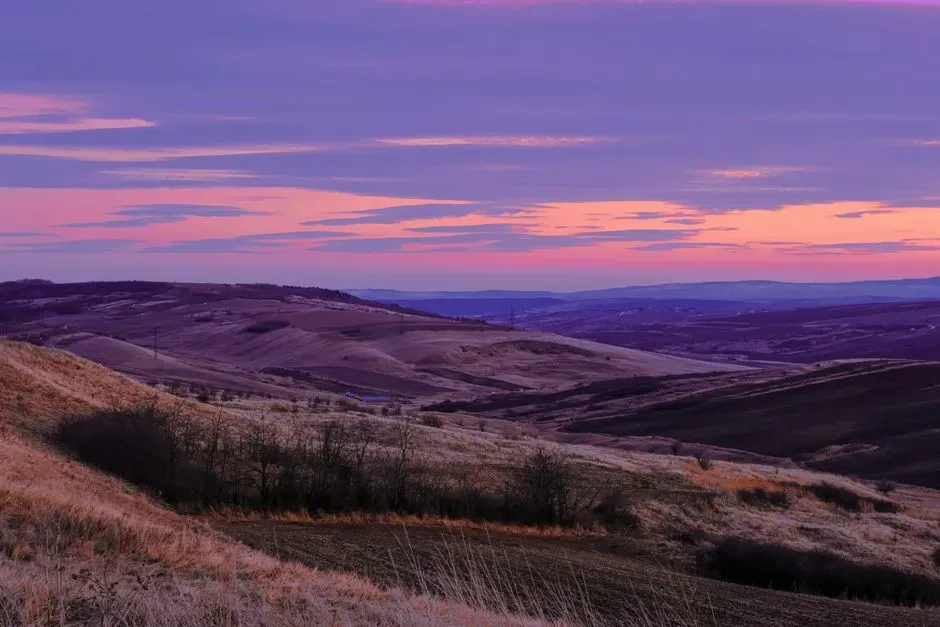
Imagine looking up at an ancient shoreline not covered in lush green, but washed in a strange, shimmering purple. Rocks, mats of microbes, maybe even the shallows of the ocean itself glowing in lavender and violet tones under a younger, harsher sun. It sounds like science fiction, yet some scientists think something like this might actually have happened on early Earth.
This idea, known as the “purple Earth hypothesis,” suggests that before green plants and algae took over, another kind of light-harvesting life may have ruled the planet’s surface. That life would have used different pigments than the chlorophyll we know today, possibly giving early ecosystems a purplish tint. It is a bold idea, still under active investigation, but it is forcing researchers to rethink what life can look like – not only on Earth, but on distant planets too.
A strange question: Why is life on Earth mostly green?
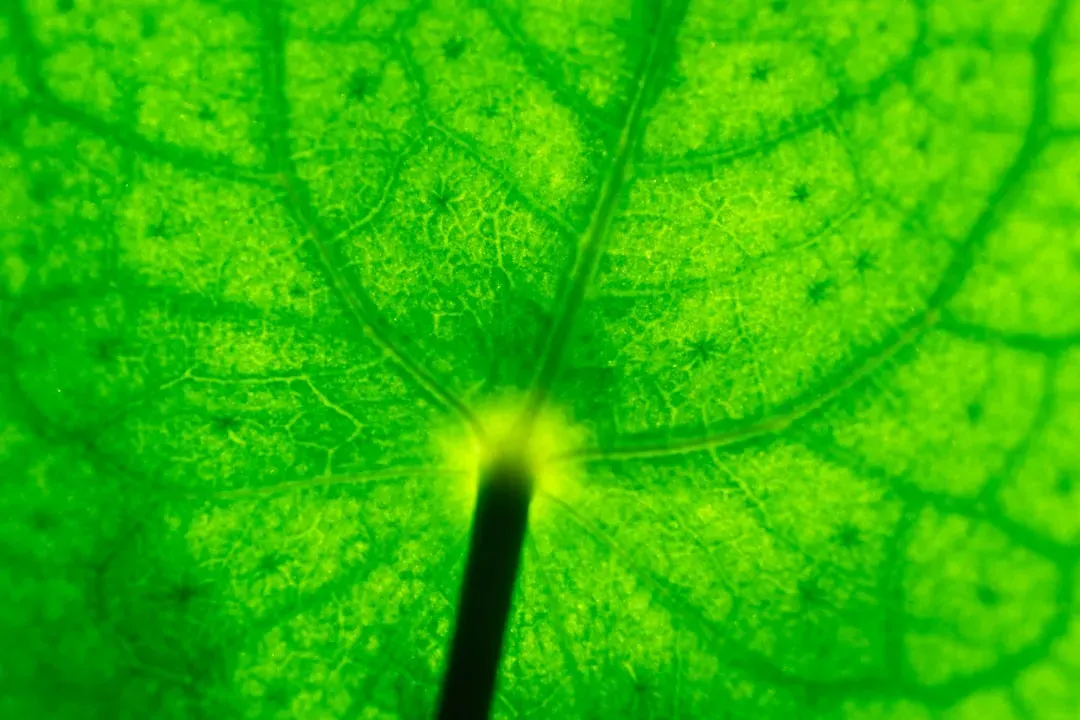
We are so used to green leaves and green algae that it feels obvious: of course life should be green. But when scientists look more closely, it becomes a weird mystery. Chlorophyll, the pigment that makes plants green, is actually a bit picky about which parts of sunlight it uses, ignoring some wavelengths that seem surprisingly useful.
That oddity opens the door to questions. If evolution is supposedly good at finding efficient solutions, why did life settle on chlorophyll and the specific way it harvests light? Some researchers argue this strange choice might make more sense if chlorophyll-based photosynthesis is not the first system that ever evolved, but a late arrival that had to fit around something older that was already dominating the light spectrum.
The purple Earth hypothesis: life ruled by retinal pigments
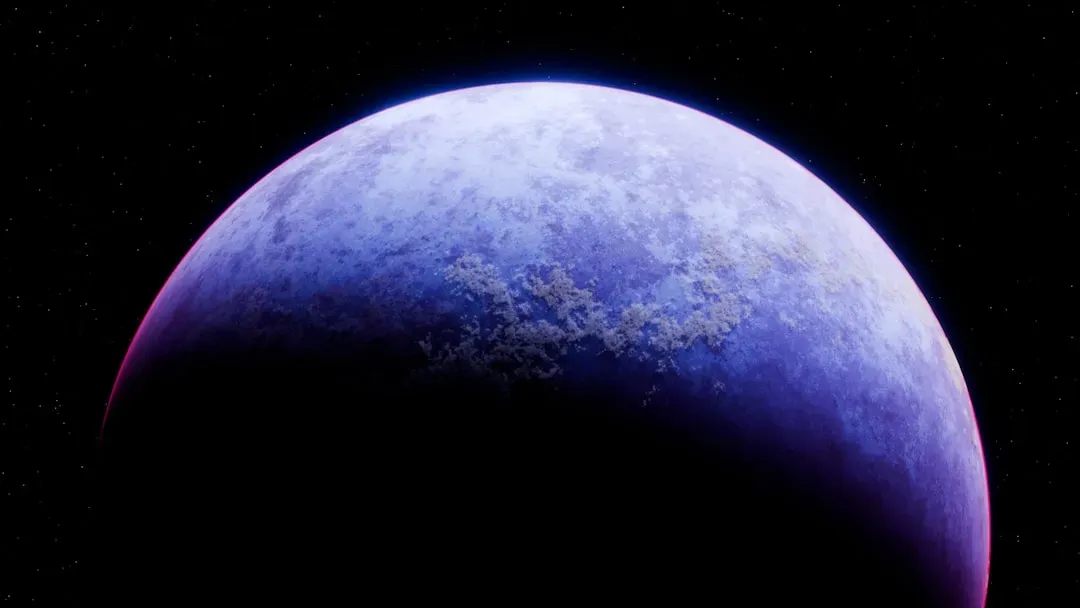
The purple Earth idea suggests that before chlorophyll-based photosynthesis became widespread, primitive microorganisms may have used a different pigment system based on retinal. Retinal is a light-sensitive molecule that, in some modern microbes, is bound to proteins that pump ions when exposed to light, effectively turning sunlight into a simple form of usable energy.
These retinal-based systems often appear purple or reddish, because they absorb green-yellow light and reflect the rest. If early oceans or shallow waters were filled with microbes using such pigments, large areas could have taken on a violet, magenta, or purple hue when seen from above. In that scenario, early Earth might have looked dramatically different from the lush green-and-blue world we know now.
Modern purple microbes: tiny survivors from an ancient strategy

This idea is not built from imagination alone; there are living microbes today that hint at what purple life might look like. Some salt-loving microorganisms known as halophiles use a protein called bacteriorhodopsin that contains retinal. When light hits this system, it pumps protons across a membrane, storing energy much like charging a microscopic battery.
These organisms often form colorful, almost neon-purple or deep pink layers in salty ponds and evaporation basins. If you have ever seen aerial photos of bright magenta salt flats, you are likely looking at communities of pigment-loaded microbes doing precisely this kind of light harvesting. Scientists see them as possible analogs – not direct descendants necessarily, but a proof that purple, retinal-based light capture is a viable way for life to power itself.
Why purple first, green later might actually make sense
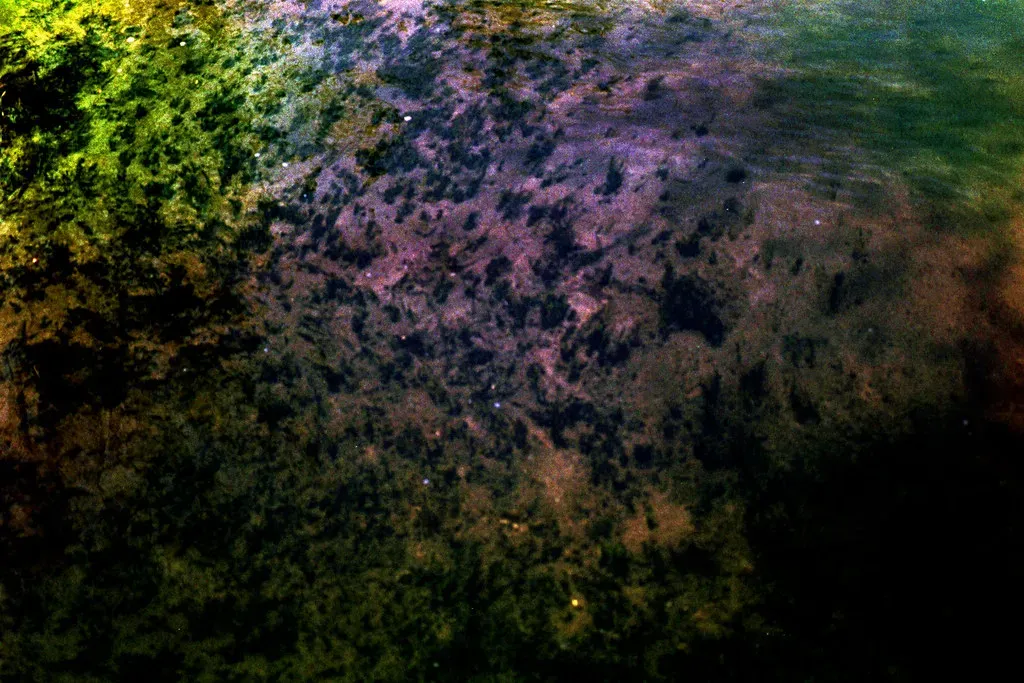
One of the key arguments for a purple-then-green sequence has to do with how sunlight behaves at Earth’s surface and in water. Early in the planet’s history, the atmosphere and oceans filtered sunlight differently compared to today, and the most easily available wavelengths near the surface might have favored retinal-based systems that absorb in the green part of the spectrum. In that environment, purple microbes would have had a competitive edge.
Later, as conditions changed and ecosystems became more crowded, any new pigment system had to exploit whatever parts of the spectrum were left over or less used. Chlorophyll, with its knack for red and blue light, could slide into those gaps. In that sense, green life might be a clever latecomer, evolving to work around a world already partially monopolized by purple light harvesters rather than being the original rulers of the photobiological game.
Evidence, gaps, and the fine line between bold idea and speculation
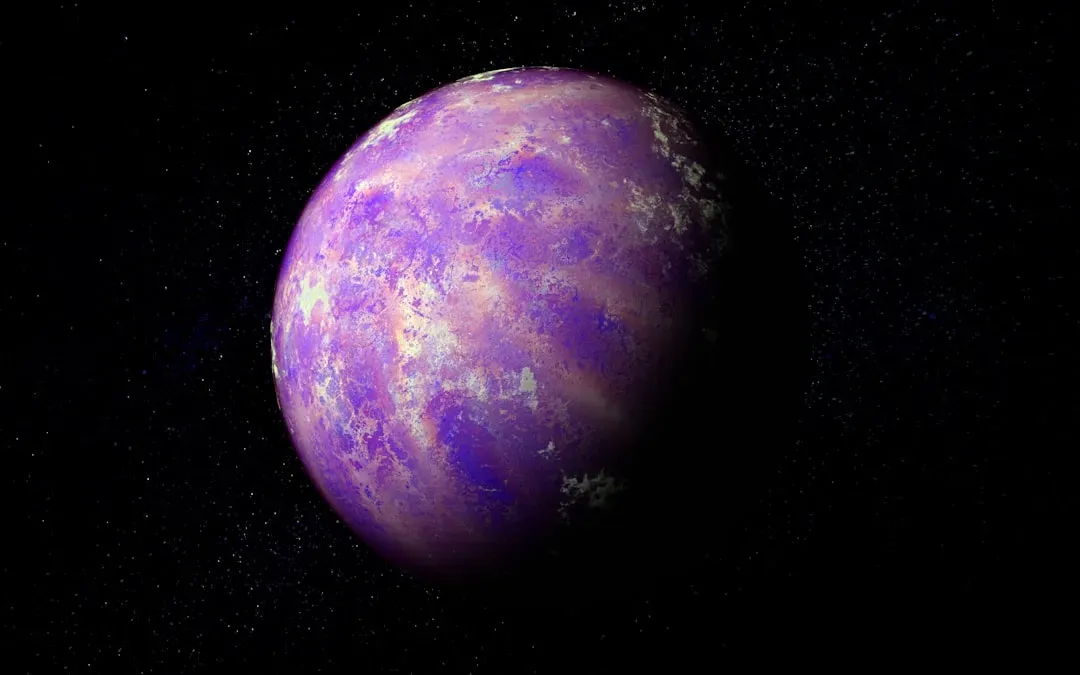
Despite how elegant the purple Earth story sounds, the hard truth is that direct evidence is extremely limited. Rocks from billions of years ago are rare, often heavily altered, and organic pigments degrade over vast timescales. Scientists cannot simply dig up a violet fossil mat from three and a half billion years ago and hold it up as proof. Instead, they rely on chemical traces, models of early atmospheres and oceans, and comparisons with modern microbes.
So far, there are tantalizing clues that early life was already using sunlight and shaping the chemistry of oceans and air, but those clues do not yet draw a clear color picture. That is why responsible researchers treat the purple Earth hypothesis as a possibility, not a settled fact. It is a useful lens to question old assumptions, not a guaranteed snapshot of the past. The honest answer right now is that Earth’s early palette is still painted in broad, fuzzy strokes rather than fine detail.
How a purple Earth changes the search for alien life
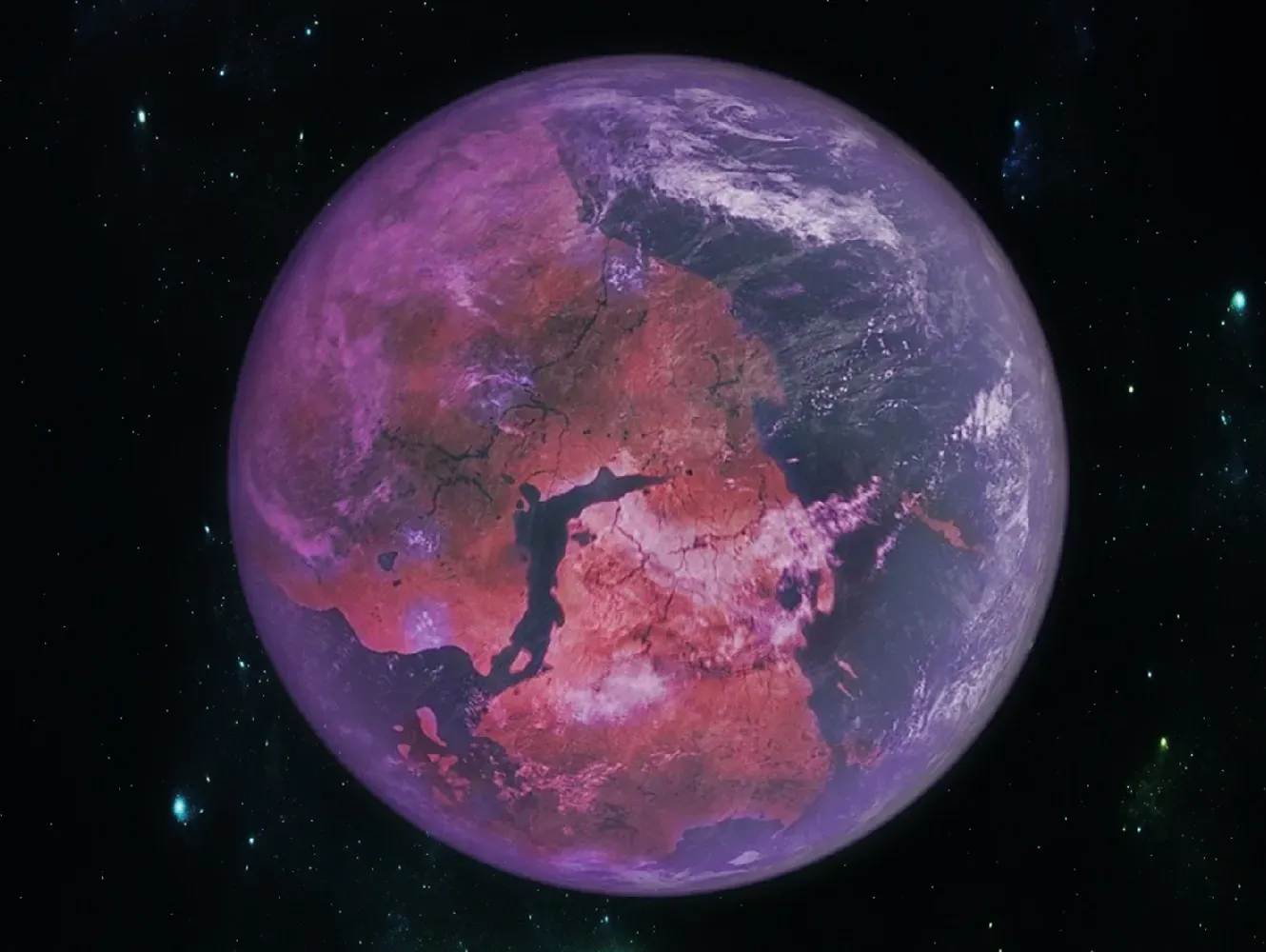
Even without solid proof, the purple Earth idea is already shaking up how astronomers think about life on other worlds. For a long time, many searches focused on the familiar: green plants, oxygen-rich atmospheres, and Earth-like colors. But if life can thrive with very different pigment systems, then an inhabited planet might look red, orange, purple, or something entirely unexpected from space. The color of life could be wildly diverse, shaped by the local star and atmosphere.
This means that when we design telescopes and instruments to look for life signatures on exoplanets, we should not only tune them to detect Earth-style green. Instead, scientists are beginning to consider a broader palette of possible biosignatures – from odd colors to unusual patterns of reflected light that hint at organized pigments on a planetary scale. A purple Earth in the deep past would be more than a curious historical footnote; it would be a warning not to assume our current version of Earth is the universal template.
Why this matters now: rethinking what “normal” life looks like
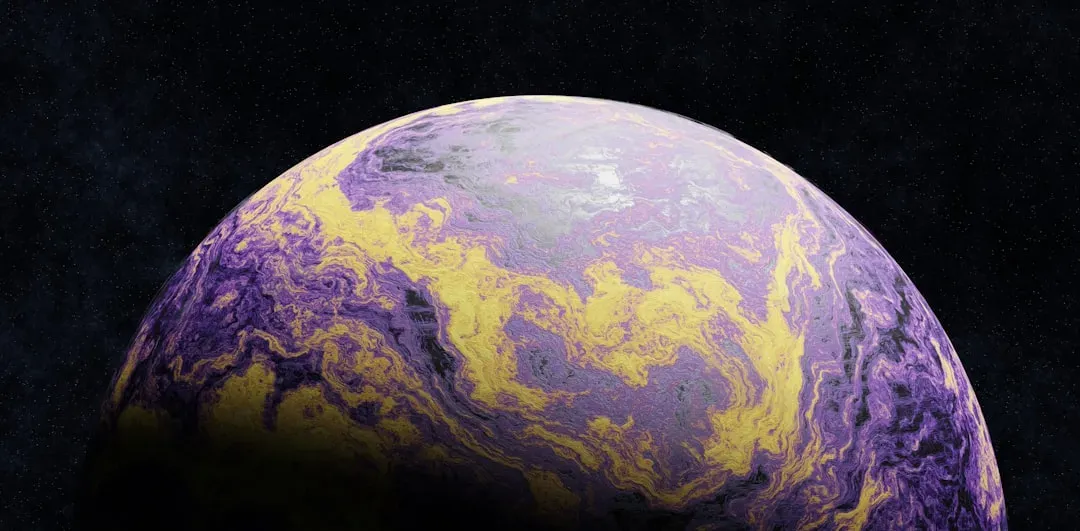
What I find most striking about the purple Earth hypothesis is not the visual image, although the idea of a violet shoreline is hard to forget. It is the way this theory forces us to admit how narrow our perspective can be. We look around at modern plants and believe they show us what life is “supposed” to look like. Yet Earth itself may have cycled through multiple dominant strategies before arriving at the green world we inherited. In that light, green is not destiny; it is just one successful experiment in a long chain of evolutionary improvisations.
That realization should make us both humbler and more imaginative. When we talk about habitability, we often smuggle in the assumption that life will mimic current Earth biology, just with a slightly different twist. The purple Earth picture says: maybe not. Maybe life is more like a restless artist that keeps changing its pigment set as conditions change. If that is true, then clinging too tightly to green might blind us to other living colors hiding in plain sight, both at home in our ancient rocks and out there on worlds we have barely begun to study.
Opinionated conclusion: a beautiful idea that deserves curiosity, not blind acceptance
Personally, I love the purple Earth hypothesis, but not because I think it has already “won” the scientific argument. I love it because it is a gutsy reminder that our planet’s story is still full of blank pages and that even something as basic as the color of ancient life is not settled. In my view, the responsible attitude is to treat this idea as a vivid possibility supported by some intriguing hints, but not as a replacement myth that simply swaps one oversimplified story for another. Green was never inevitable, and purple is not either.
If scientists eventually gather enough chemical clues and modeling results to strongly support a purple phase in Earth’s early history, that will be a revolutionary insight into how flexible and inventive life can be. If instead the evidence points another way, the hypothesis will still have done its job by pushing us to think beyond our comfort zone. Either outcome is a win for curiosity. When you picture the deep past of our world now, do you still only see green – or can you at least imagine that, once upon a time, Earth might have worn a different, more violet skin?