Most people assume the ocean has always stayed within its lines – that if you want to find a shark tooth or a whale bone, you need a coastline nearby. That assumption is wrong, and it’s not even close. Scattered across deserts, mountaintops, and landlocked prairies are fossils of creatures that spent their entire lives swimming, not walking.
Some of these sites sit more than 500 miles from the nearest saltwater, and one of them happens to be sitting on top of the highest point on Earth. Here’s what geologists and paleontologists actually say about how the sea ended up in the strangest places imaginable – and which fossil bed might be the most underrated on the planet.
#13 – The Ordovician Seafloor Hiding Under Cincinnati, Ohio
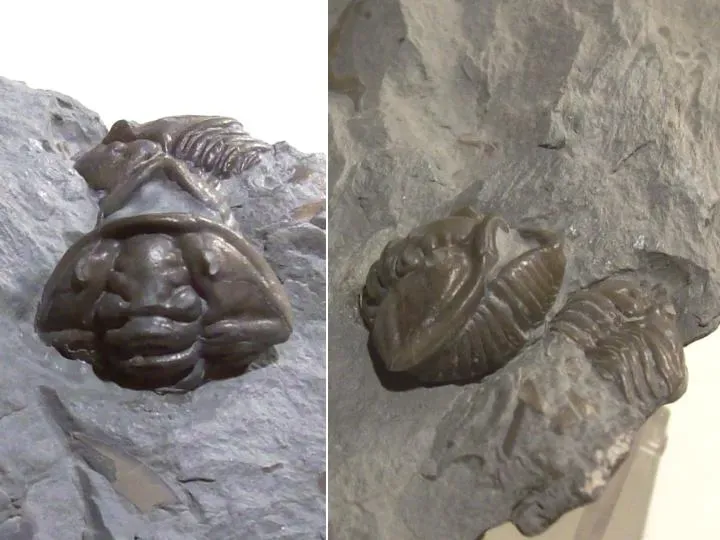
Cincinnati sits nowhere near an ocean today, but 450 million years ago it was buried under a shallow tropical sea that stretched across most of the American Midwest. The hills and road cuts around the city are so packed with fossilized brachiopods, trilobites, and bryozoans that geologists nicknamed the local rock layers the “Cincinnatian Series” – an entire chunk of the geologic time scale named after a landlocked Ohio city.
Most people walking their dogs through local parks have no idea they’re stepping over a 450-million-year-old seabed. Backyard gardeners and construction crews routinely turn up perfectly preserved shells while digging foundations. Unlike the dramatic sea monsters found elsewhere on this list, Cincinnati’s fossils are almost all invertebrates, which makes them less flashy but arguably more valuable for scientists trying to reconstruct ancient ocean ecosystems in fine detail.
#12 – Wyoming’s Sundance Sea Left Marine Reptiles in the Rockies
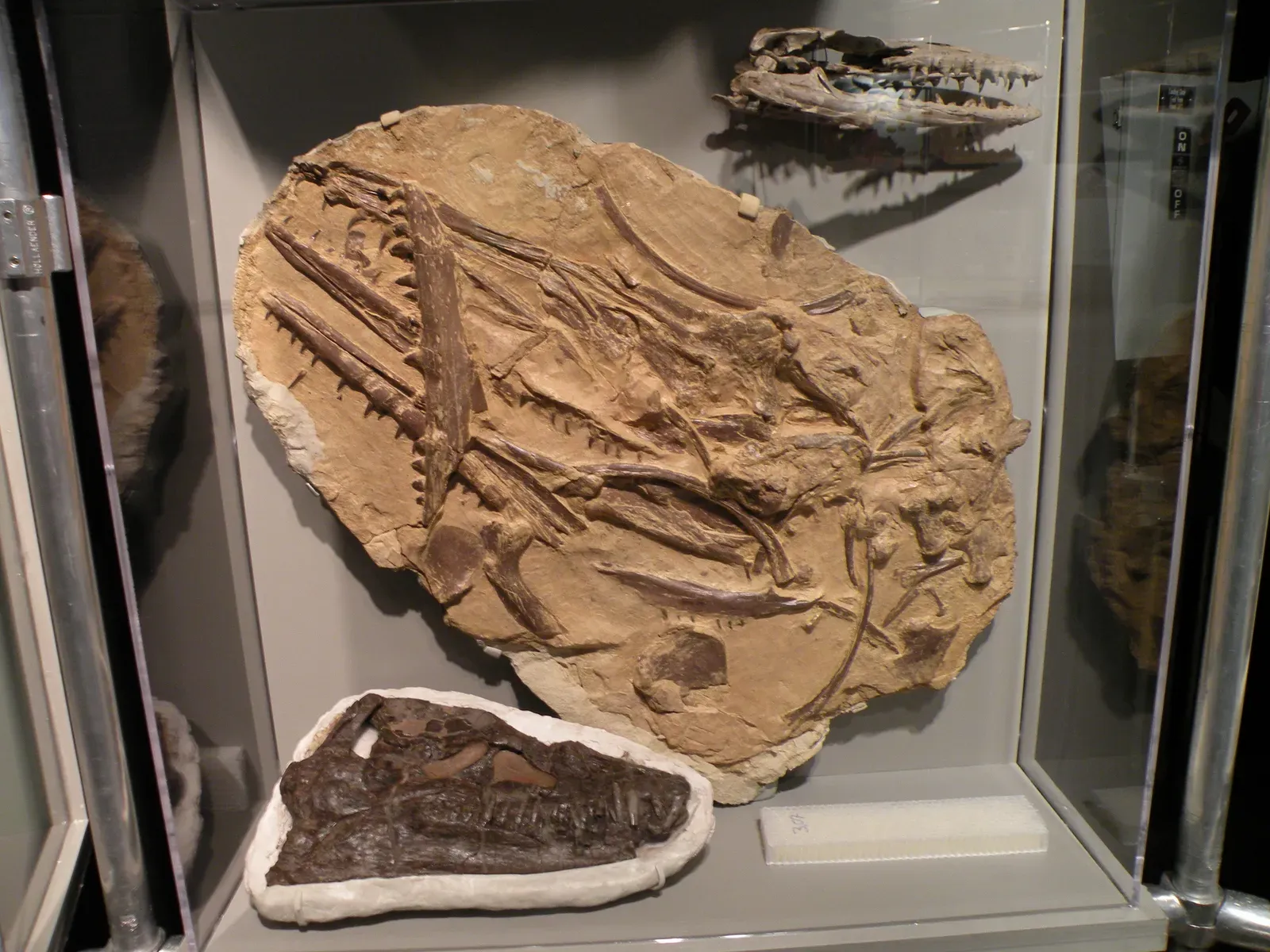
Long before Wyoming became synonymous with cowboys and cattle ranches, a body of water called the Sundance Sea swept down from the Arctic and flooded the region during the Jurassic Period. That inland sea supported ichthyosaurs, plesiosaurs, and ammonites, and their remains are still turning up in rock formations across the state today.
The strange part is that some of these fossils are found at elevations well over a mile high, in mountain ranges that didn’t even exist yet when these animals were alive. The uplift that created the modern Rockies happened millions of years after these creatures died, meaning the mountains essentially grew up around their graves. Paleontologists studying the region argue the Sundance Sea deposits are underappreciated compared to more famous marine fossil beds, mostly because Wyoming’s reputation is dominated by land dinosaurs instead.
#11 – South Dakota’s Pierre Shale Was a Highway for Sea Monsters
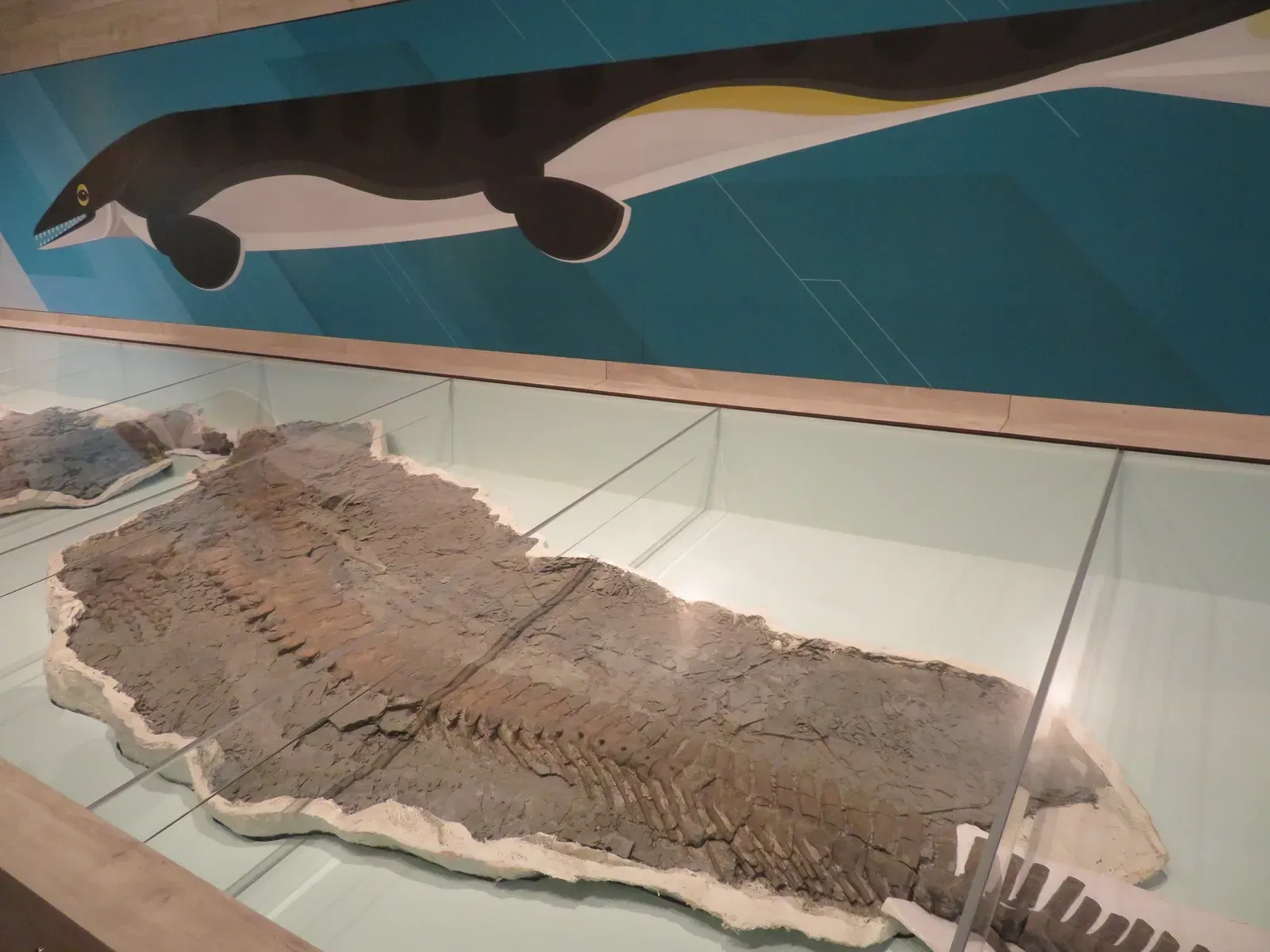
The Pierre Shale formation stretches across South Dakota and several neighboring states, and it was laid down at the bottom of the same Western Interior Seaway that later made Kansas famous. This dark, crumbly rock has produced mosasaurs, plesiosaurs, and giant marine turtles, many recovered by fossil hunters working cattle ranches instead of ocean cliffs.
Some of the mosasaur specimens pulled from Pierre Shale country rival anything found in Kansas, yet they get far less attention in mainstream science media. Local fossil dealers and museums in the Dakotas have quietly built entire collections around these finds. Some experts argue South Dakota deserves just as much credit as Kansas for preserving the Western Interior Seaway’s marine life, a controversial opinion in paleontology circles, but the fossils back it up.
#10 – Alberta’s Ammolite Gemstones Are Fossilized Sea Creatures
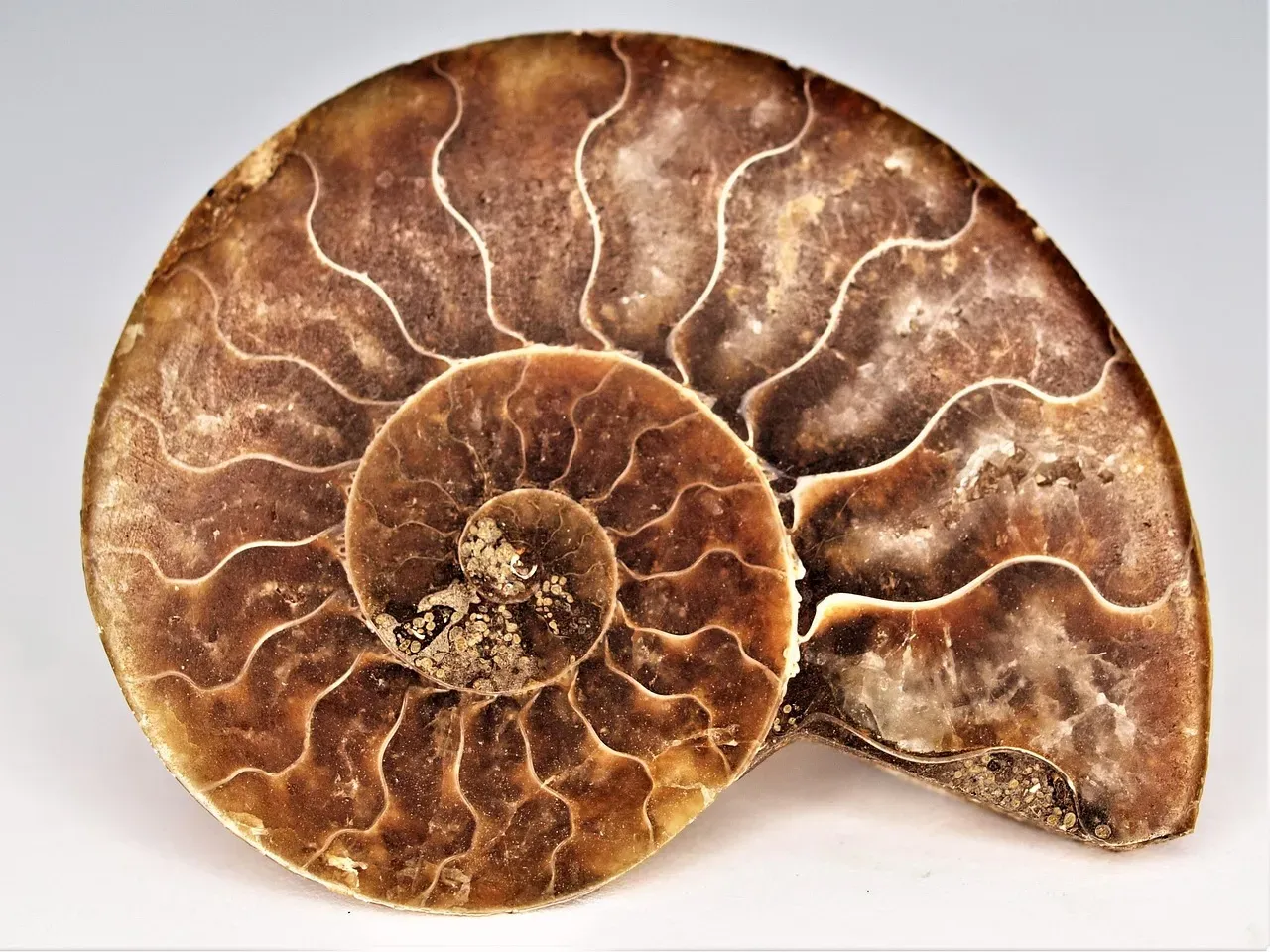
Alberta, Canada is landlocked and famous for oil sands, not oceans – yet it’s home to one of the most unusual marine fossils on the planet: ammolite. This iridescent gemstone is made from the fossilized shells of ammonites, ancient coiled cephalopods that lived in a shallow sea covering the region roughly 70 million years ago.
Ammolite is one of the only fossils on Earth classified as an official gemstone, and it’s found almost exclusively in a narrow band of Alberta’s Bearpaw Formation. Jewelers prize it for its rainbow shimmer, which forms from thin layers of aragonite in the original shell. It’s a strange twist of fate: a creature that spent its life in open water now ends up set in rings and necklaces sold thousands of miles from any coastline.
Fast Facts
- Ammolite was recognized as a gemstone by the CIBJO Colored Stones Commission in 1981, and in 2004 it was named the official gemstone of the Province of Alberta.
- The gem forms almost exclusively from Placenticeras ammonite shells buried in the Bearpaw Formation of southern Alberta.
- The Blackfoot people have known about iridescent ammonite fossils for hundreds of years and called the material “Iniskim,” meaning “buffalo stone.”
- No other place on Earth produces this gem-quality iridescent ammonite in commercial quantity.
#9 – Morocco’s Sahara Desert Is a Graveyard for Ancient Sharks and Sea Reptiles
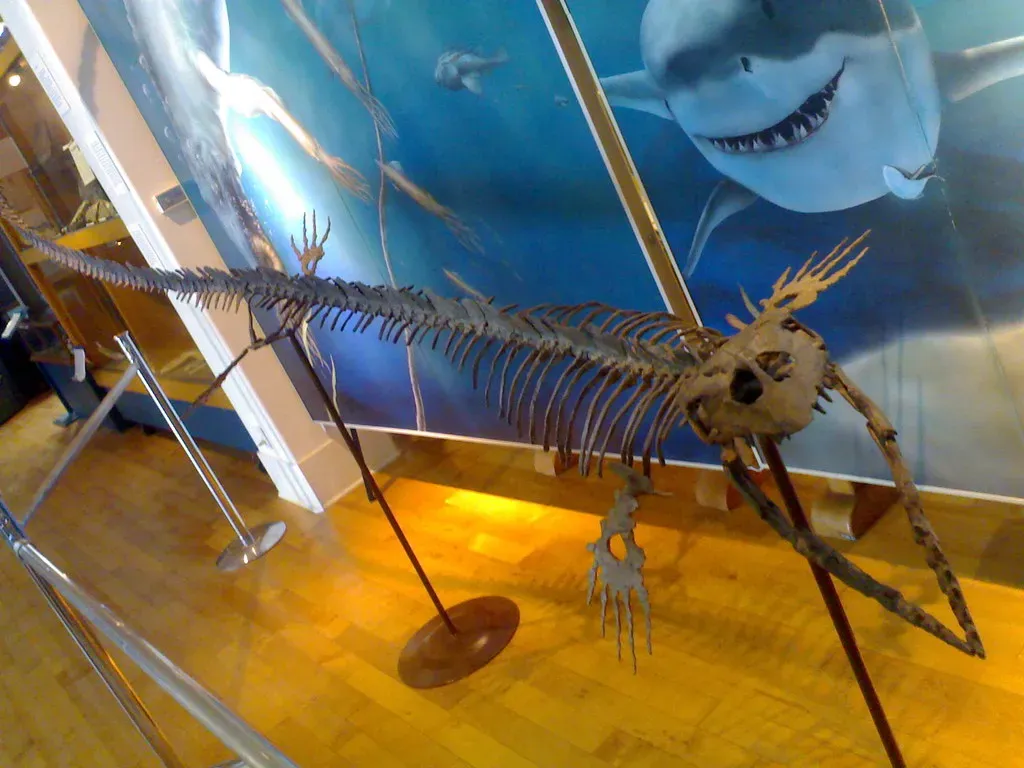
Morocco’s phosphate mines, deep in the Sahara, have become one of the richest sources of marine reptile fossils anywhere in the world. Alongside famous trilobite beds in the Anti-Atlas Mountains, the region has produced an enormous haul of mosasaur remains that continues to expand the scientific record, alongside major discoveries from Texas and Alabama.
What makes Morocco unique is the sheer density of finds – entire commercial mining operations have inadvertently become fossil quarries, unearthing skeletons by the truckload in what is now one of the driest places on Earth. Some paleontologists have raised concerns that unregulated fossil trading in the region means countless scientifically important specimens disappear into private collections before researchers ever get to study them.
#8 – Antarctica’s Frozen Coastline Was Once Prime Marine Reptile Real Estate
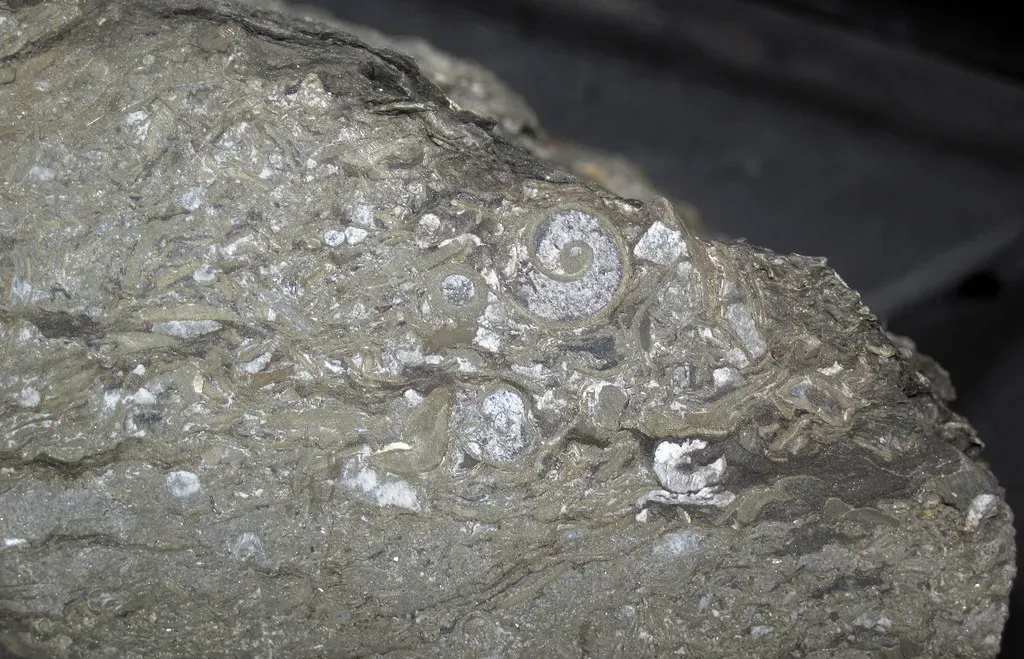
James Ross Island, off the Antarctic Peninsula, doesn’t look like anywhere a sea monster would want to live today. But during the Cretaceous Period, this same ground supported a marine ecosystem populated by plesiosaurs, ammonites, and other ocean-dwelling reptiles, before the continent drifted into the deep freeze it’s known for now.
Researchers have to fly in specialized teams for a few weeks each year just to access these fossil beds, since the harsh climate and remote location make this some of the most difficult fieldwork on the planet. Every expedition risks losing an entire season to weather, yet scientists keep returning because Antarctic fossils fill in evolutionary gaps that warmer climates erased through erosion. It’s a brutal irony: the coldest, most lifeless-looking place on Earth holds some of the best-preserved evidence of ancient ocean life.
#7 – Australia’s Outback Turned Sea Reptiles Into Opal
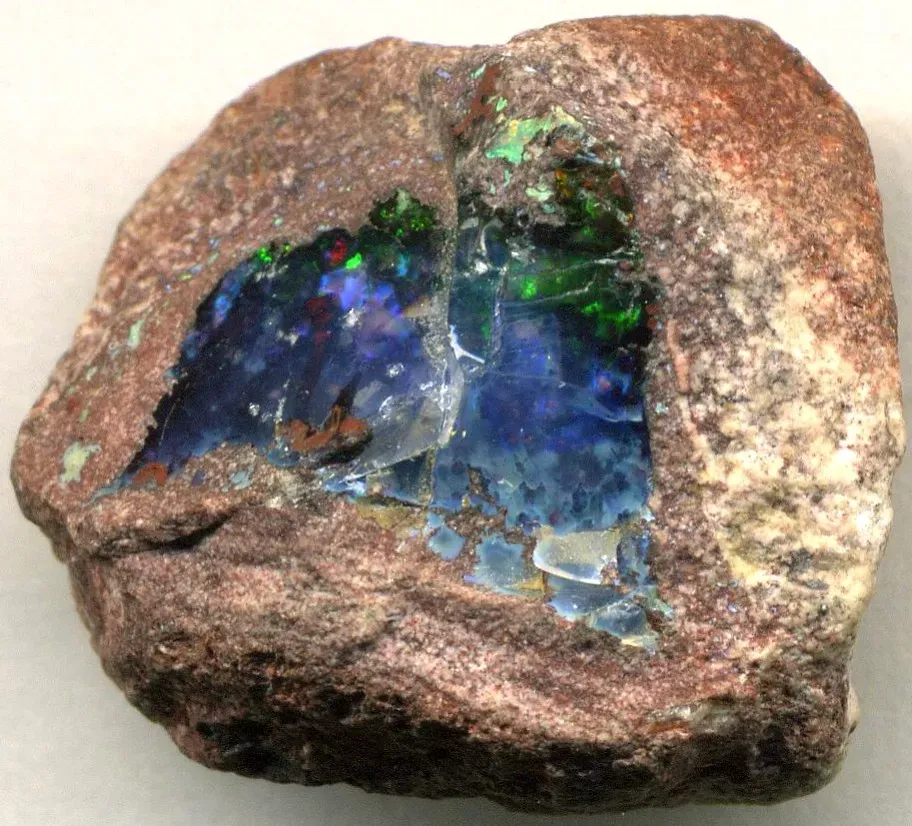
Millions of years ago, a vast inland sea called the Eromanga Sea covered much of what is now the Australian outback, teeming with plesiosaurs, pliosaurs, and marine fish. When these creatures died and settled into the sediment, mineral-rich groundwater slowly replaced their bones with silica – the same process that creates opal.
Some of the marine reptile skeletons pulled from Australian opal fields are literally made of gemstone, glittering blue and green where bone used to be. Miners searching for commercial opal have stumbled onto museum-quality fossils by accident, sometimes destroying scientifically priceless specimens before realizing what they’d found. It’s arguably the most visually stunning marine fossil site on this entire list, and yet most people outside Australia have never even heard of it.
#6 – Nevada’s Mountain Desert Hides Some of the Largest Marine Reptiles Ever Found
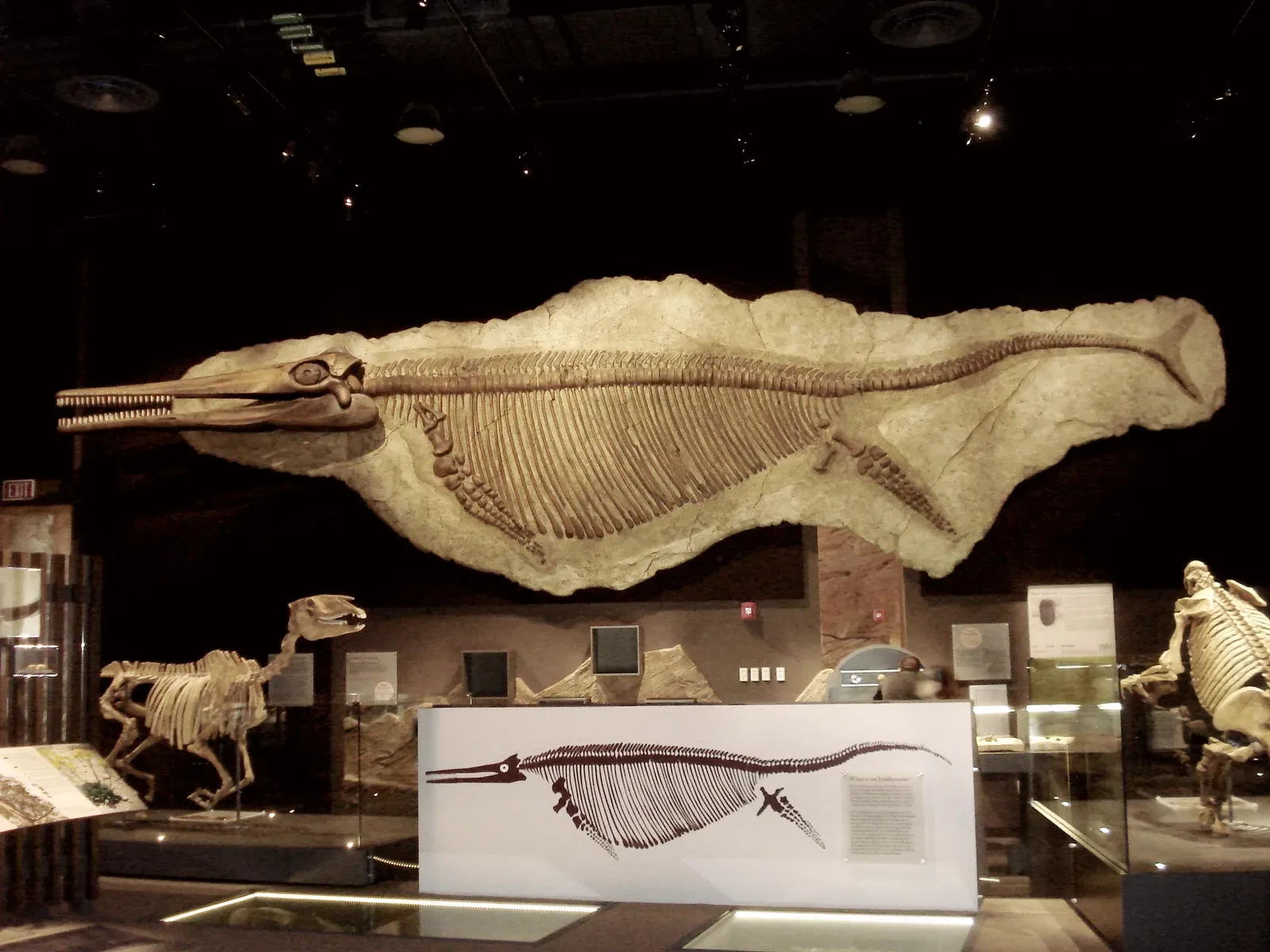
Nevada isn’t the first place anyone pictures when they think “ocean,” but the state’s high desert mountains contain one of the richest deposits of giant ichthyosaurs on the planet. These marine reptiles, some rivaling whales in size, died in massive numbers at a single site now preserved as a protected fossil park.
Paleontologists have found dozens of Shonisaurus skeletons that appear to have died during toxic algal blooms and washed onto a tidal flat, with researchers noting “a dominance of adult-sized Shonisaurus and then a smaller bump of embryonic to neonatal specimens.” That pattern suggests this remote Nevada site may have functioned as a birthing ground for some of the earth’s first ocean giants. Instead of coastal cliffs, visitors now have to drive through sagebrush-covered mountains to see fossilized sea reptiles the length of school buses.
At a Glance
- Shonisaurus popularis was designated Nevada’s official state fossil in 1977.
- At least 40 individual Shonisaurus popularis, the largest marine reptile known from the Triassic period, are preserved at this single Nevada site.
- The longest specimen found here, at roughly 7,000 feet elevation in the Shoshone Mountains, measured 55 feet long.
- Researchers believe the site was used as a birthing ground across many generations, not just a single mass-death event.
#5 – The European Alps Are Stacked With Ancient Seafloor
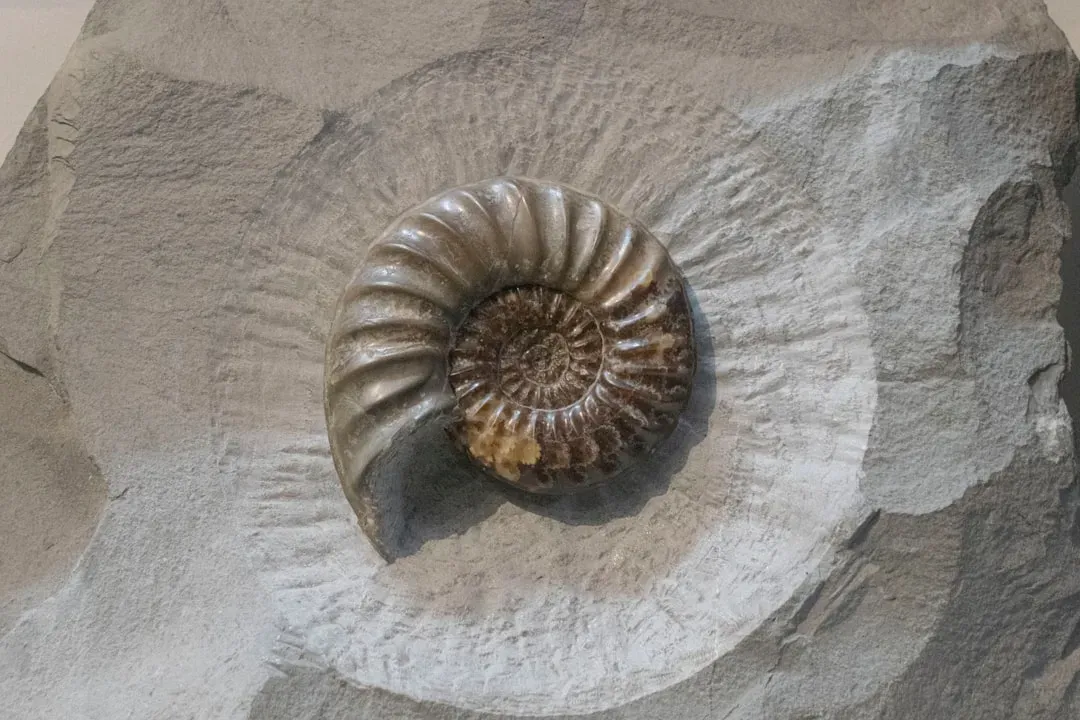
The Alps are famous for skiing and postcard scenery, not oceans, yet the limestone that makes up huge sections of these mountains formed at the bottom of the ancient Tethys Sea. Ammonites and other marine invertebrates are so common in certain Alpine rock layers that early geologists used them to help map out the region’s complicated tectonic history.
Entire hiking trails through the Dolomites cut directly through fossilized coral reefs, now sitting thousands of feet above sea level. The same continental collision that later helped form the Himalayas also crumpled and lifted seafloor sediment here, though on a smaller scale. It’s a reminder that mountain ranges around the world, not just the most famous ones, are often just recycled ocean floor wearing a very convincing disguise.
#4 – Kansas Was Once Patrolled by 45-Foot Sea Monsters
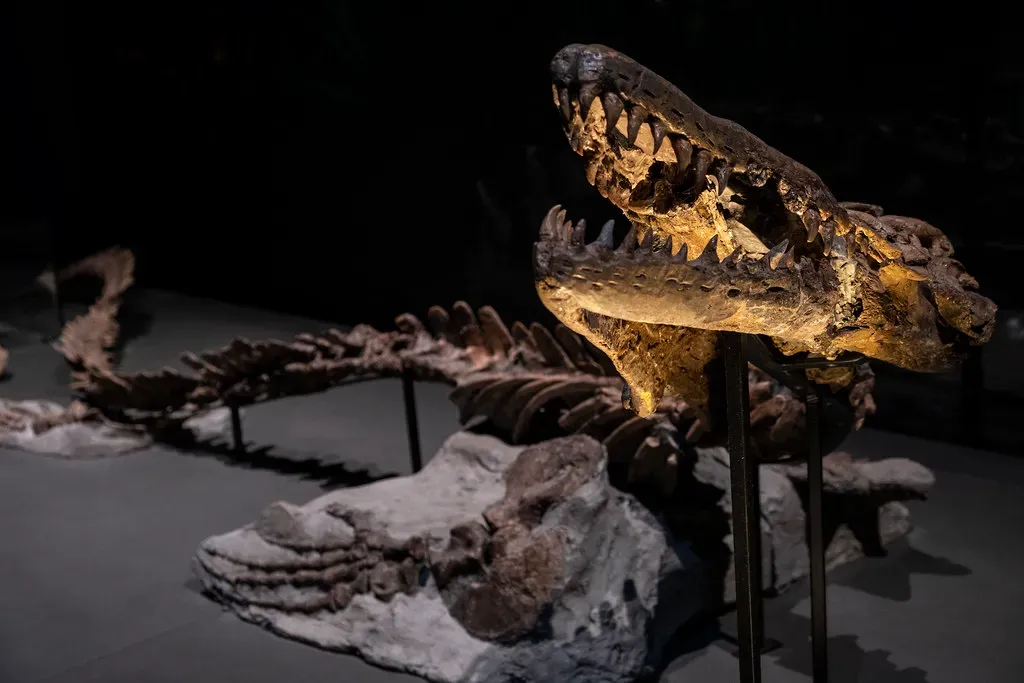
It’s hard to imagine, but the flat wheat fields of western Kansas once sat at the bottom of a massive inland ocean called the Western Interior Seaway, which split North America in two roughly 80 million years ago. The western Kansas chalk beds became famous in the 19th century for largely complete fossils of giant swimming and flying reptiles known as mosasaurs, plesiosaurs, and pterosaurs, as well as aquatic birds with teeth, 20-foot-long fish, and clams up to six feet across.
One museum display alone features a 45-foot mosasaur darting after a giant sea turtle whose fossilized shell is covered in more than 100 teeth marks. A Kansas geology expert put it bluntly: “In any major museum in this time period, look at the marine Cretaceous stuff and it will be from Kansas.” Some paleontologists even argue Kansas has been unfairly overshadowed by dinosaur-focused states, despite arguably having a richer marine reptile record than almost anywhere else on the continent.
Quick Compare
- Kansas: Niobrara chalk beds from the Western Interior Seaway, known for 45-foot mosasaurs, plesiosaurs, and toothed diving birds.
- South Dakota: Pierre Shale deposits from the same seaway, producing mosasaurs and giant marine turtles recovered from cattle ranches.
- Alberta: Bearpaw Formation ammonites, fossilized into the gem-quality ammolite rather than bone and shell.
#3 – Chile’s Atacama Desert Hides a Mass Whale Graveyard
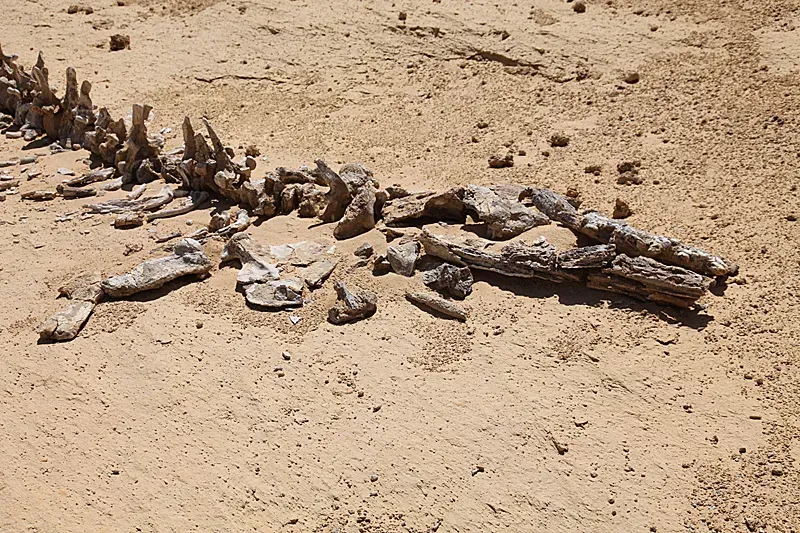
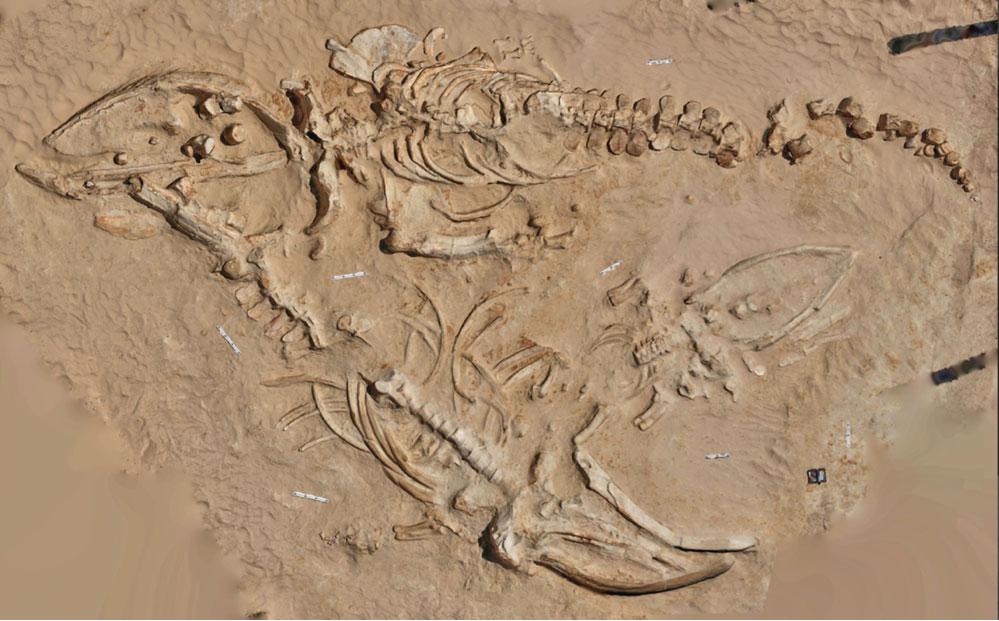
The Atacama Desert is one of the driest places on Earth, yet buried beneath its sand is one of the richest whale fossil sites ever discovered. About 40 fossil whale skeletons were uncovered at Cerro Ballena, next to the Pan-American Highway, when the road was being expanded – sitting 40 meters above sea level, in a stretch of desert where nothing else grows.
The most unsettling part is that this wasn’t just one mass death – it happened four separate times, with researchers identifying at least four distinct fossil-bearing layers stacked on top of each other. Scientists believe toxins from harmful algal blooms likely caused the sudden death of all the marine life at the site, a phenomenon that still happens in modern oceans today.
It’s the richest site for fossil marine mammals in the world.
Smithsonian paleobiologist
#2 – Egypt’s Desert Holds an Entire Valley of Fossilized Whales
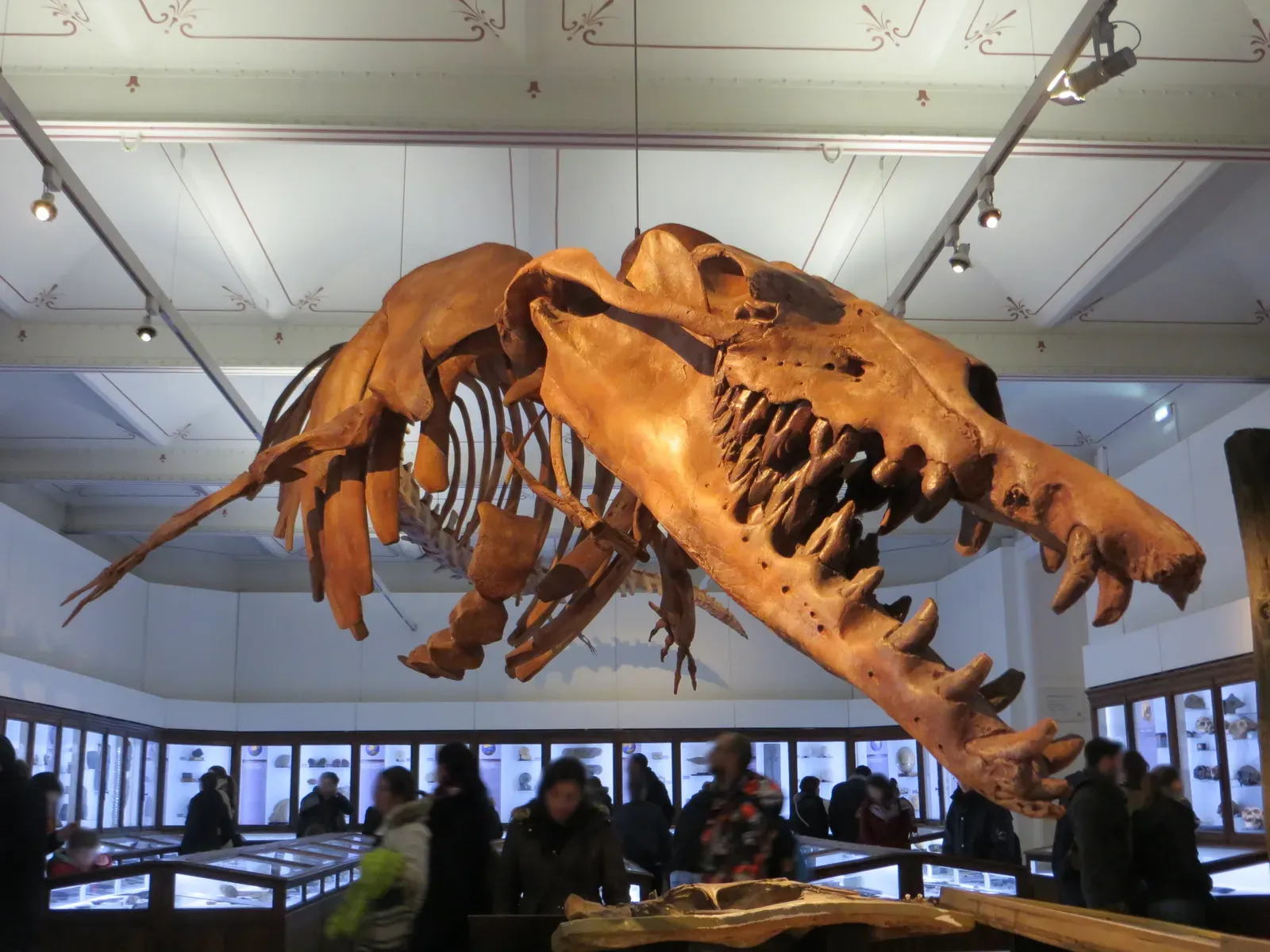
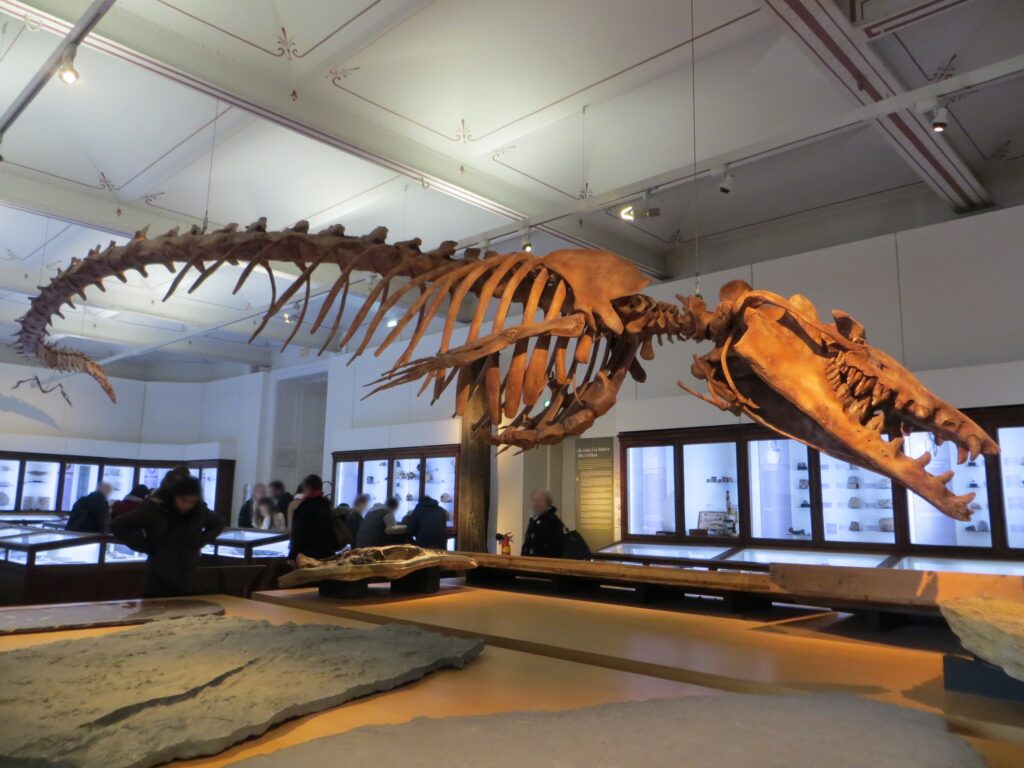
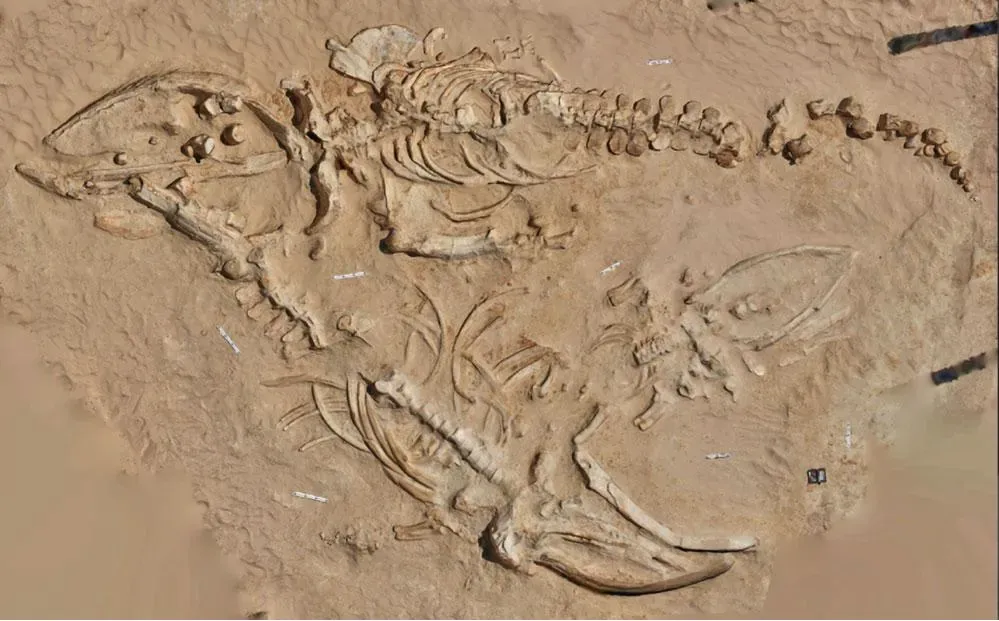
Roughly 150 kilometers southwest of Cairo, deep in Egypt’s Western Desert, sits Wadi Al-Hitan – literally “Whale Valley.” It’s a protected paleontological site with about 400 fossils of extinct whales from three species, dating back 40 million years to when the area was under an ancient sea. Basilosaurus isis and Dorudon atrox are the most abundant and best known of the archaic whales found there.
What makes this site scientifically explosive is that some skeletons still have tiny hind limbs, feet, and toes – physical proof of whales transitioning from land to sea. In 2020, researchers uncovered something even bigger: the world’s only intact fossil of an early whale, a Basilosaurus dating back about 40 million years. It’s arguably the single most important fossil site on Earth for understanding how whales evolved, and it sits in a desert most tourists only associate with pyramids.
Worth Knowing
- Wadi Al-Hitan has been designated a UNESCO World Heritage Site since July 2005 for its significance in understanding whale evolution.
- It holds the largest concentration of intact whale fossils in the world, with around 400 skeletons representing multiple species from the Eocene era.
- Most of the whales here lived in the Tethys Sea roughly 38 to 36 million years ago.
- UNESCO calls it the most important site in the world for demonstrating this stage of whale evolution.
#1 – The Summit of Mount Everest Was Once the Bottom of the Ocean
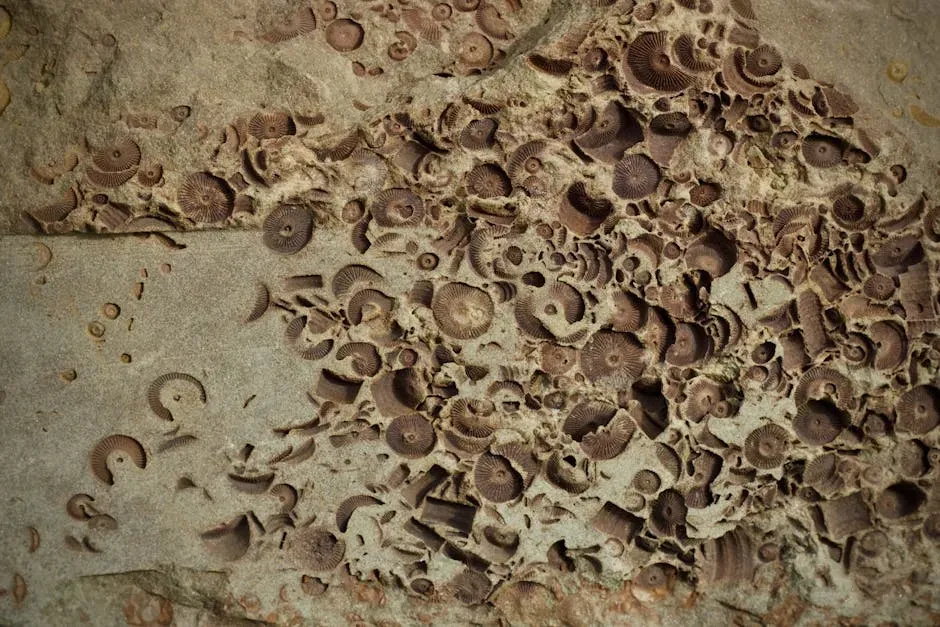
Here’s the fact that stops climbers in their tracks: the rock at the very top of the highest mountain on Earth used to be seafloor. At the summit sits sedimentary rock known as the “Qomolangma Limestone,” containing fossilized marine creatures from the Ordovician Period, roughly 488 to 444 million years ago, including trilobites, brachiopods, ostracods, and crinoids.
Some of the very first people to prove this were the climbers themselves. Geologist Noel Ewart Odell collected fossil samples during George Mallory and Andrew Irvine’s 1924 expedition, and Edmund Hillary also collected limestone near the summit during his historic 1953 ascent. The science is unambiguous: Everest and the Himalayas were formed when the Eurasian and Indian continental plates collided starting around 40 to 50 million years ago, lifting an entire ancient seafloor more than five miles into the sky. There is no better proof anywhere on the planet that the ground beneath our feet is never as permanent as it looks.
The Bottom Line
Every fossil on this list tells the same brutal truth: oceans don’t disappear, they just leave clues behind for tectonic plates to carry away. From opalized sea reptiles in the Australian outback to whale skeletons still holding tiny leg bones in the Egyptian desert, these sites prove that “landlocked” is a temporary label, not a permanent one.
The most controversial takeaway here? Kansas and South Dakota deserve to be talked about with the same reverence as Egypt’s Whale Valley – they’re simply overshadowed because deserts photograph better than wheat fields. If plate tectonics can put a 450-million-year-old seafloor on top of Mount Everest, nothing about the modern map should be treated as fixed. Which of these sites surprised you the most? Did we miss one worth digging into? Drop it in the comments.