Picture this: warm turquoise water, no humans, no boats, no sunscreen. Just you slipping beneath the surface of a Cretaceous sea that stretches to the horizon. For a heartbeat, it’s peaceful. Then your brain finally catches up with the reality that you’ve just stepped into the most dangerous open-water swimming pool in Earth’s history.
The Cretaceous oceans were not just a little bit risky. They were stacked with hyper-evolved hunters built like living weapons: bone-crushing jaws, serrated teeth, sonar-like senses, bodies tuned for ambush and pursuit. If you dropped a modern great white shark into that world, it wouldn’t be the undisputed apex predator anymore – it would be just one more item on the menu. Let’s dive into seven of the worst reasons you’d never want to swim there.
Mosasaurus: The Submarine With a Chainsaw Mouth
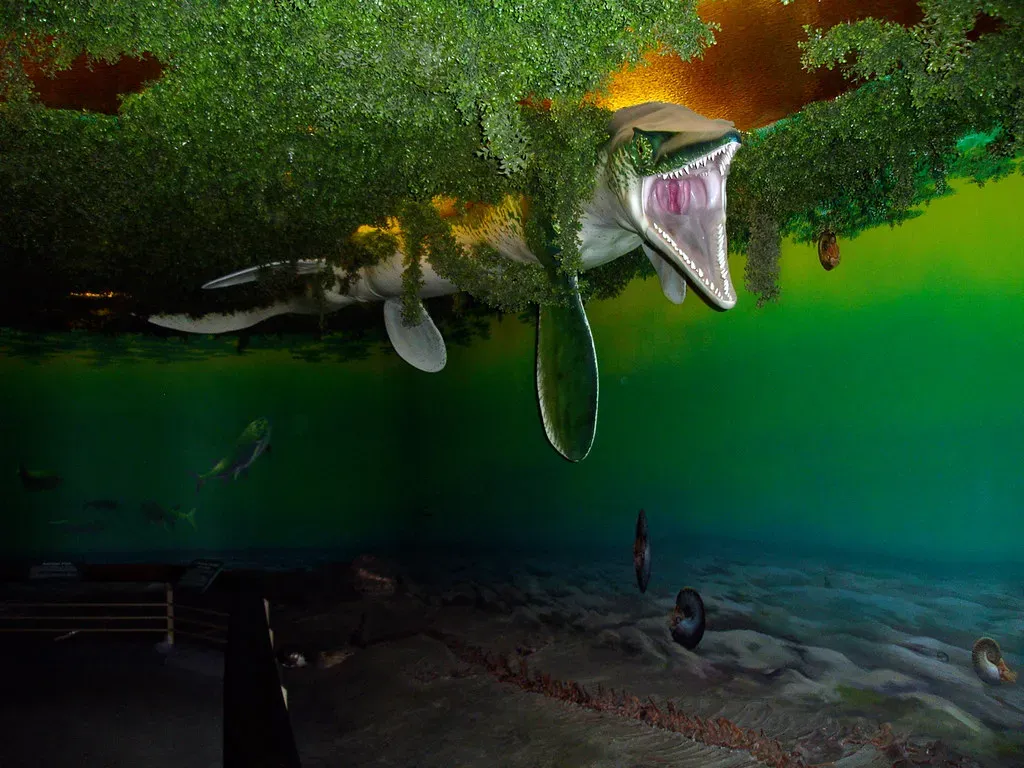
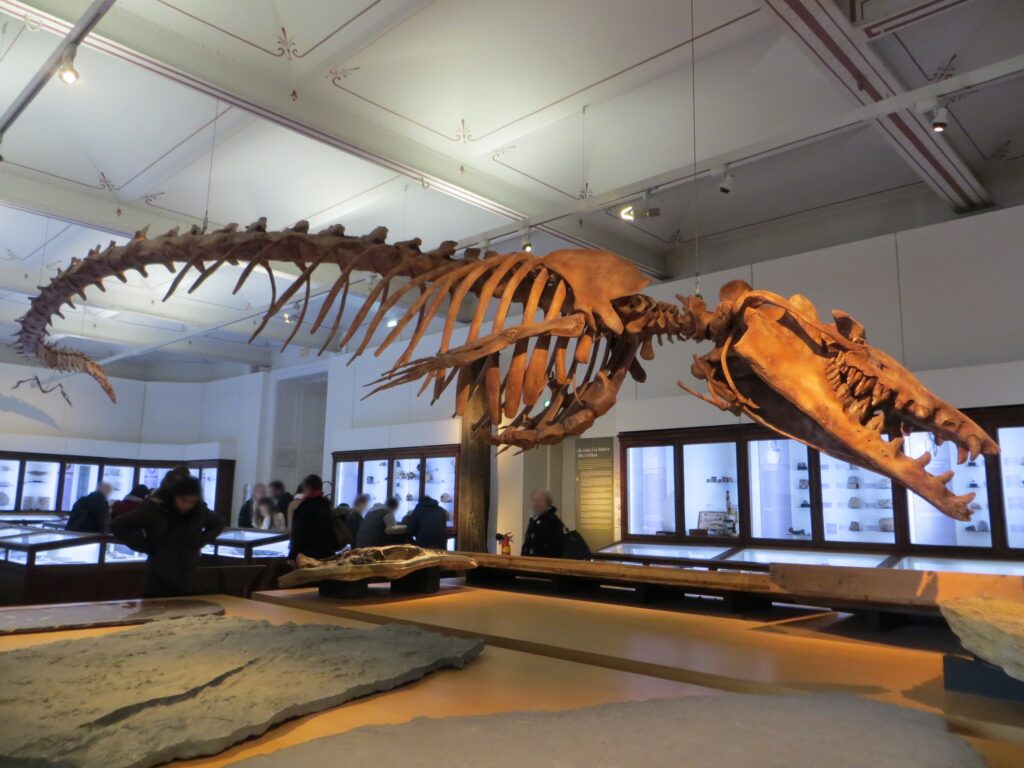
If there’s one animal that turns the Cretaceous seas into a hard no, it’s Mosasaurus. Imagine a marine reptile longer than a school bus, with a head like a crocodile and a body powered by massive paddle-like limbs and a tail fin built for speed. This thing wasn’t a dinosaur, but a giant lizard gone full aquatic, related more closely to monitor lizards and maybe even snakes than to any shark or whale.
Mosasaurus had a jaw full of long, conical teeth perfect for gripping and tearing, and some species carried extra teeth on the roof of the mouth to help drag prey deeper in. Fossils show bite marks on turtle shells, other mosasaurs, and pretty much anything that moved, which strongly suggests it didn’t have many dietary boundaries. You would hardly even register as a snack – more like a passing curiosity that got swallowed in one sideways lunge.
Tylosaurus: The High-Speed Missile of the Western Interior Seaway
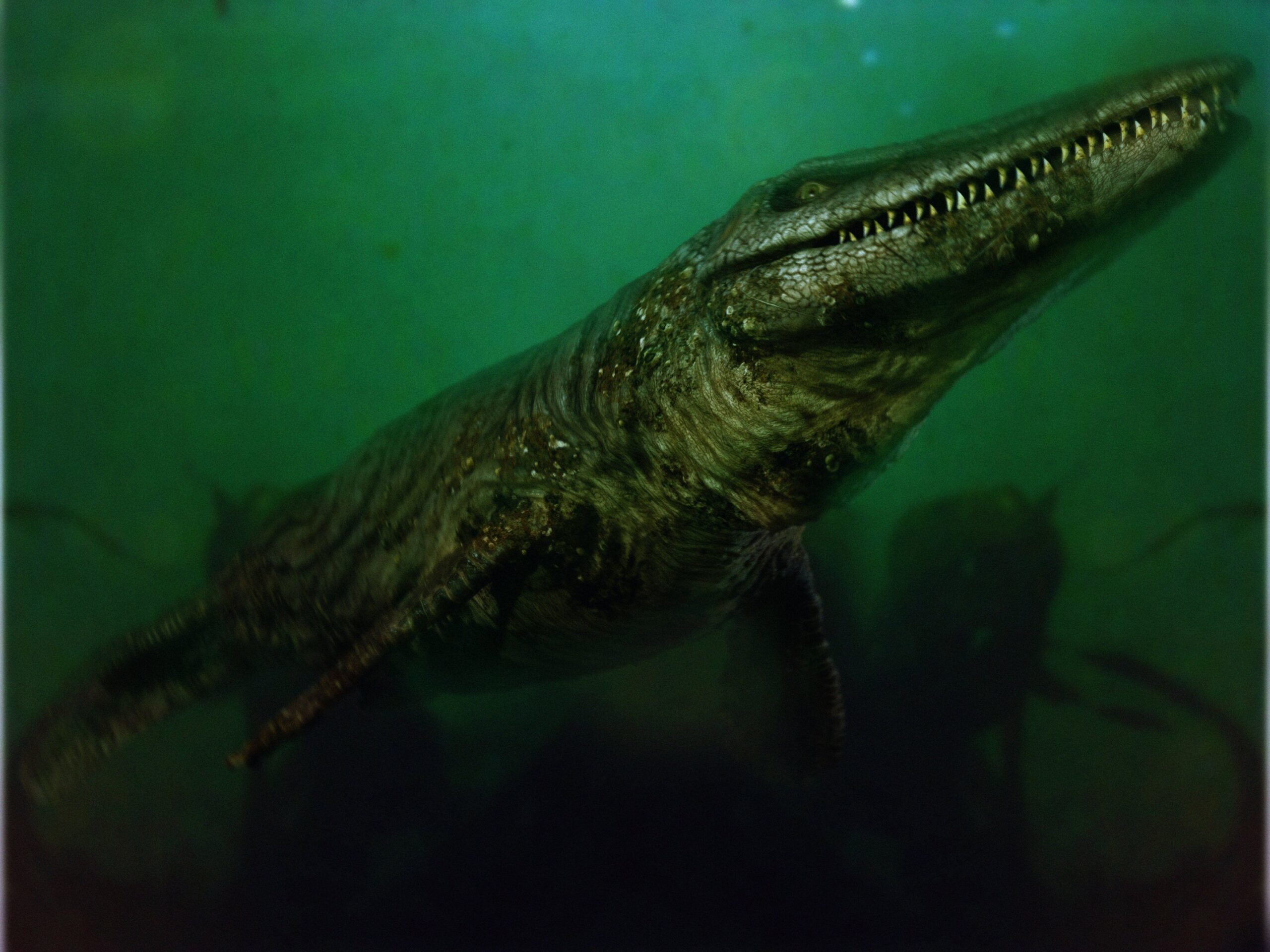
While Mosasaurus terrorized the oceans more broadly, Tylosaurus ruled the vast inland sea that split North America during the Late Cretaceous. It was another mosasaur, but built like a torpedo: long, narrow, and optimized for speed and surprise. The front of its snout was reinforced into a thick, bony battering ram, suggesting it may have slammed into prey before finishing the job with its teeth.
Gut contents from fossil Tylosaurus skeletons read like a greatest-hits list of Cretaceous sea life: fish, marine reptiles, birds, even smaller mosasaurs. This is not the profile of a picky eater; it’s the signature of a relentless apex predator. If you were treading water in that ancient seaway, you might never see it coming – just a dark shape streaking up from below, turning the surface above you into a brief explosion of foam, blood, and silence.
Kronosaurus: The Short-Necked Juggernaut With Titanic Jaws
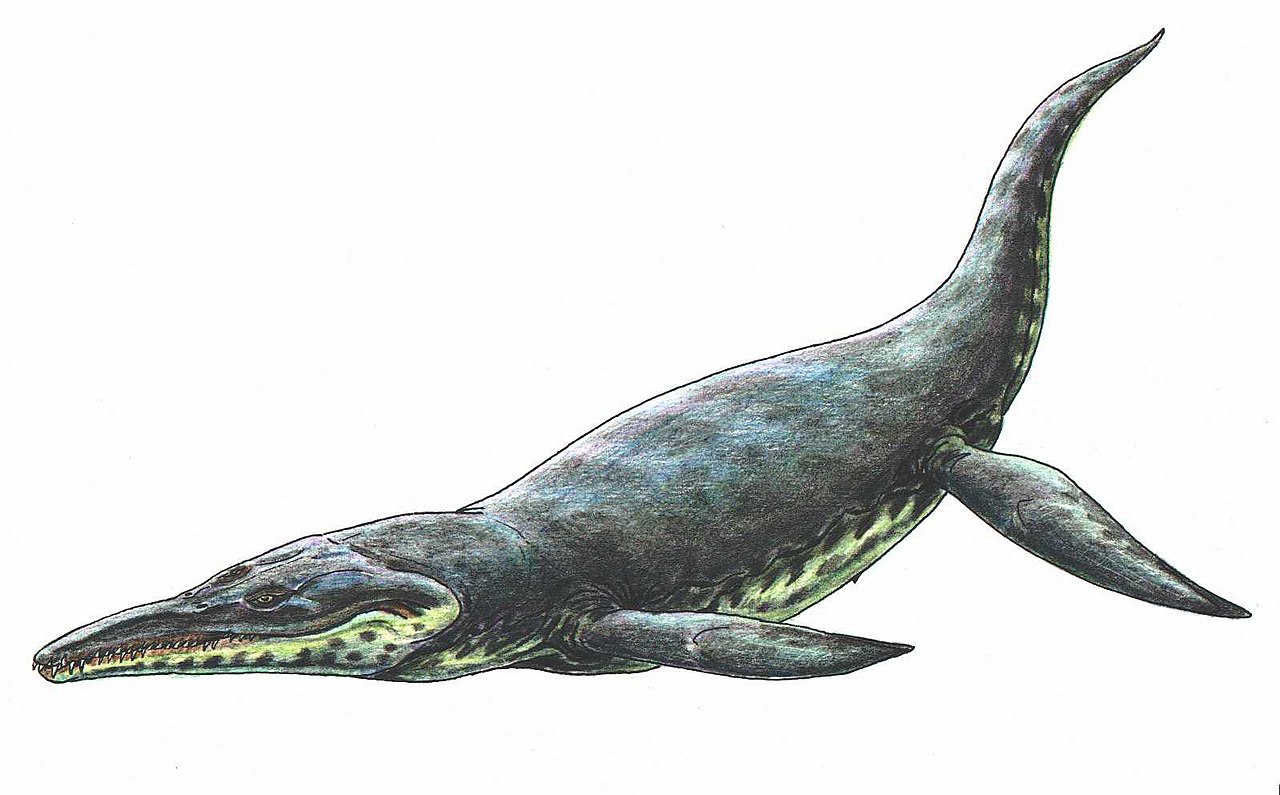
Before mosasaurs took over, large pliosaurs like Kronosaurus held the title of seafaring nightmare. Picture a reptile roughly the size of a bus, but with a huge, blocky head and relatively short neck compared to its long-necked plesiosaur cousins. That head was mostly bite force and teeth – massive, conical, deeply anchored teeth perfect for seizing slippery, struggling prey.
Kronosaurus likely hunted with straightforward brutality: power forward, grab, thrash, and tear. With flippers that worked like giant, synchronized paddles, it could surge through the water with frightening acceleration. It probably targeted large prey such as other marine reptiles and big fish, and a human-sized body would be a trivial mouthful. If mosasaurs were like stealth submarines, Kronosaurus was more like a heavily armed assault ship that didn’t bother with finesse.
Mosasaur “Baby-Killers”: Clidastes and Smaller But Deadly Species
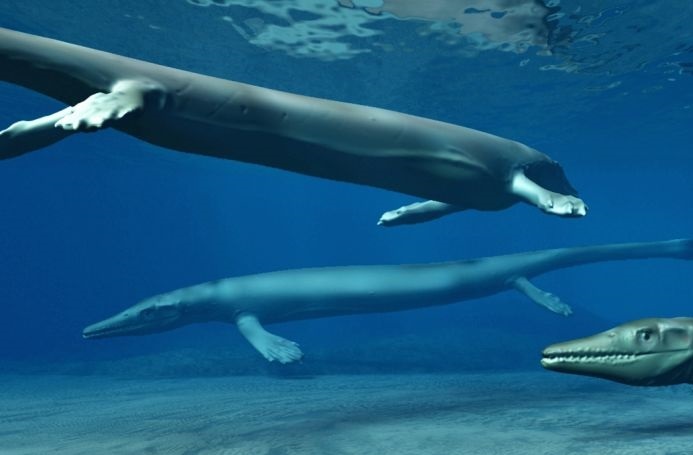
One of the more unsettling realities of the Cretaceous seas is that size did not save you from mosasaurs – and small size did not make you safe from them either. Medium-sized mosasaurs like Clidastes were not the giants of their family, but they were incredibly agile and well adapted to chase down fast-moving prey in shallower waters. Think of them as the high-performance sports cars among marine reptiles.
The fossil record hints that these smaller mosasaurs sometimes targeted juvenile animals of other species, including young turtles, fish, and likely the offspring of other marine reptiles. In a world where big predators grabbed the large stuff, medium-sized hunters specialized in picking off the vulnerable. For a human trying to “just stay near the shore,” this is bad news – you’d be swimming right in the hunting lane of these smaller, faster killers that treated the shallows like a buffet of the weak and unwary.
Cretoxyrhina: The Cretaceous Shark That Could Challenge a Great White
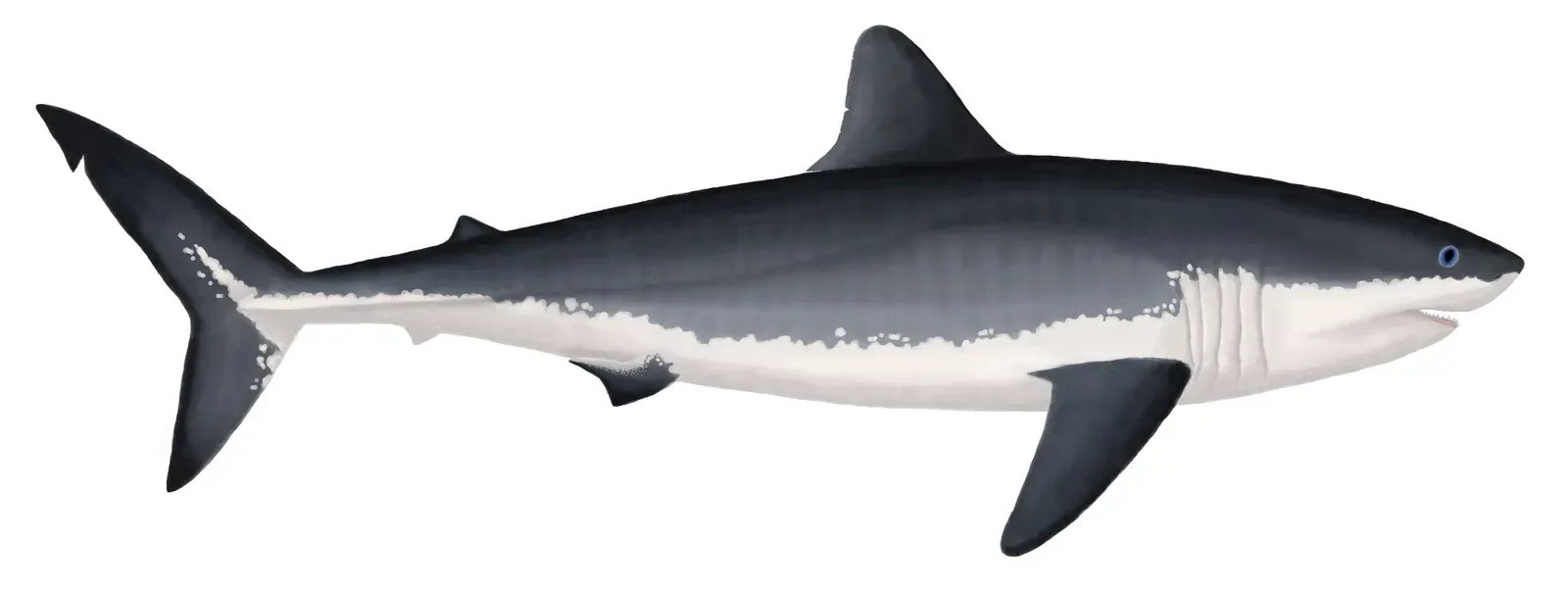
Modern sharks would not have had the oceans to themselves in the Cretaceous, but they absolutely held their own. Cretoxyrhina, sometimes nicknamed the “Ginsu shark” by paleontologists, was a large, powerful shark that swam the Western Interior Seaway and other Cretaceous waters. It might not have been quite as massive as the largest mosasaurs, but it had a serious set of serrated teeth and a highly efficient shark body built for endurance and ambush attacks.
Fossil remains show Cretoxyrhina teeth embedded in marine reptile bones, including mosasaurs and plesiosaurs, suggesting it was bold enough to attack big, dangerous prey. It probably hunted in a style similar to modern large sharks: fast approaches, devastating bites, then pulling back while the victim weakened. To a human swimmer, it would be the worst of both worlds – fast, curious, and absolutely capable of shredding you before you even realized you were being tested as potential prey.
Xiphactinus: The Nightmare Fish That Could Swallow You Whole
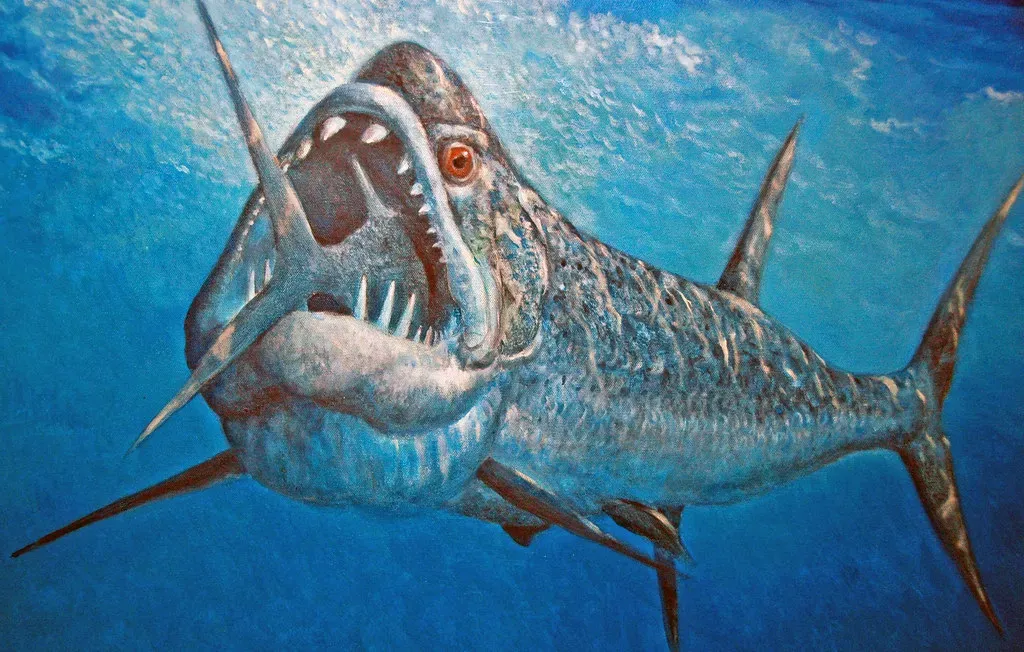
Even if you somehow dodged the reptiles and sharks, the Cretaceous seas still had something deeply unnerving waiting for you: Xiphactinus, a gigantic bony fish with a freakishly big mouth full of sharp, fang-like teeth. This was not some gentle giant; it was more like a barracuda scaled up to monstrous proportions. Its skull was long and slender, and its jaws opened wide enough to engulf prey nearly half its own body length.
One famous fossil shows a Xiphactinus that died with an almost fully intact, large fish inside its belly, apparently having bitten off more than it could handle. That alone tells you everything you need to know about its feeding style: it did not nibble; it inhaled. To a human, Xiphactinus might not have been a deliberate hunter, but if you drifted into its path, its reflex might simply be to lunge first and figure out the details later. Being accidentally swallowed by a giant fish has to be one of the worst possible ways to go.
Elasmosaurus: The Long-Necked Ambusher You’d Never See Coming
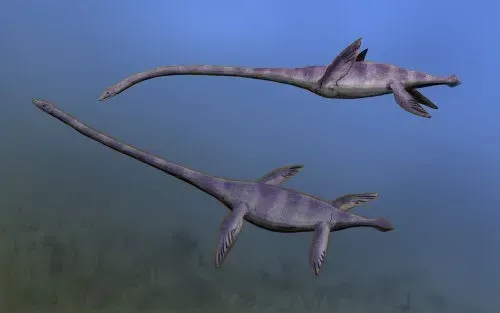
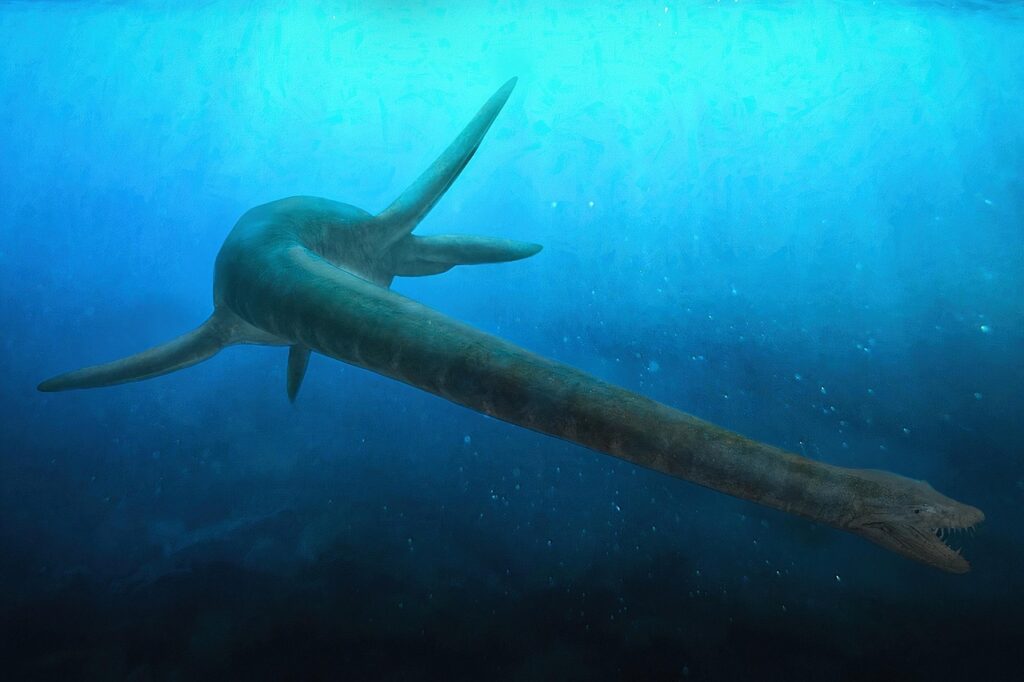
Elasmosaurus looks almost elegant at first glance: a huge body, four powerful flippers, and an absurdly long neck ending in a relatively small head. It might not scream “nightmare” the way a mosasaur does, but from a swimmer’s perspective, that long neck is exactly what makes it terrifying. It could keep most of its body well away from you while its small, toothy skull snaked in for the strike.
Scientists still debate exactly how it used that neck, but one compelling idea is that it hovered or cruised relatively calmly while flicking its head sideways through schools of fish or small creatures, snapping them up with quick motions. Scale that up to human size, and you get an image of you floating along, feeling alone, and then suddenly something small but fast darts in from what feels like forever away, grabs a limb, and pulls you toward a dark, bulkier shape you never realized was there. Its teeth were not made to crush armor, but they were more than enough to shred soft flesh and drag struggling prey beneath the surface.
Conclusion: The Cretaceous Sea Wasn’t a Beach Destination – It Was a War Zone
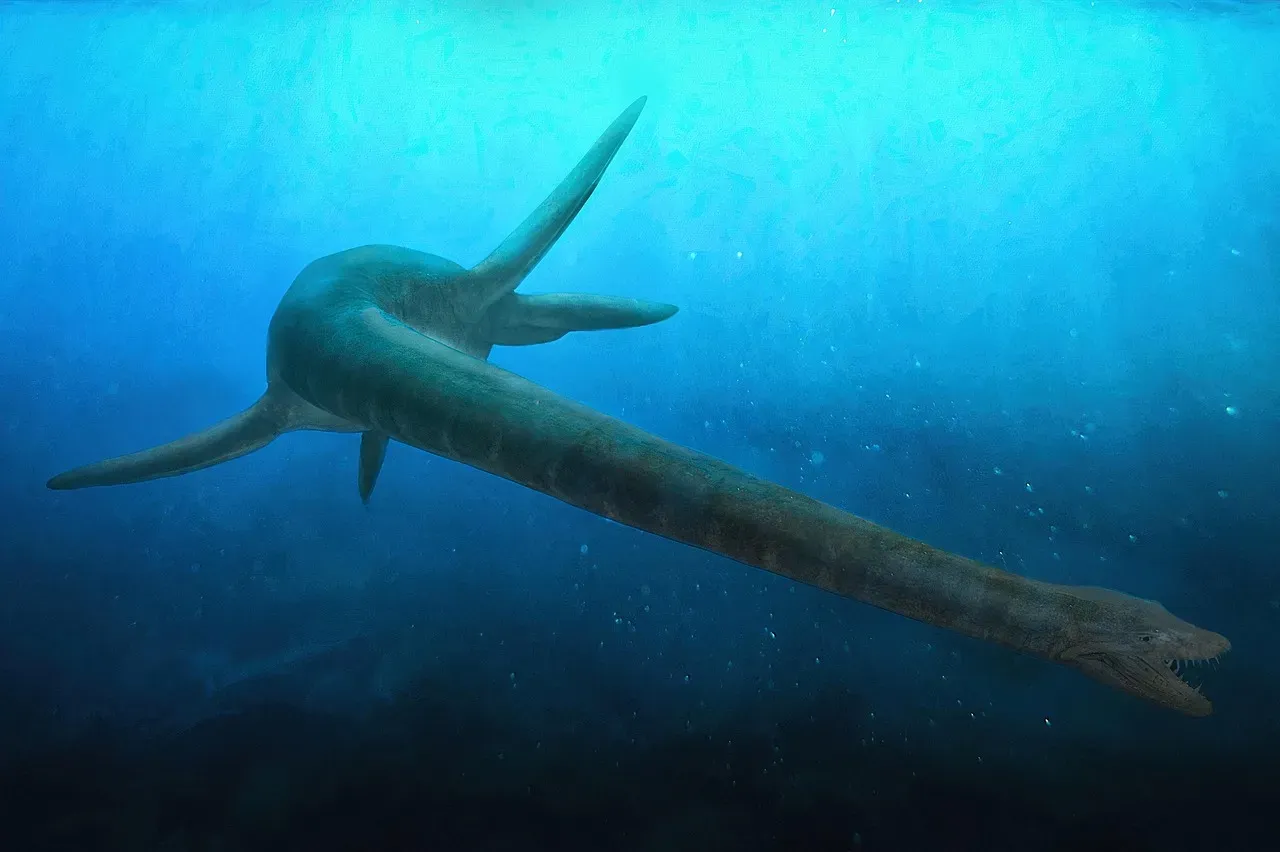
When you lay all these predators side by side – mosasaurs, pliosaurs, massive sharks, giant fish, and bizarre long-necked hunters – you start to see the Cretaceous ocean for what it really was: an arms race with no safety zone. There was no friendly lagoon, no peaceful cove where you could just float and relax. Every depth, from the surface to the dark below, had something with teeth, speed, or sheer size perfectly tuned to exploit any mistake another animal made.
Personally, I think we romanticize “ancient seas” way too much. We picture sunlight streaming through clear water and lazy, drifting reptiles, when the truth was closer to a never-ending wildlife documentary where every cutaway shot ends in blood. If time travel ever becomes real, I’d happily visit the Cretaceous beaches, but I’m staying firmly on the cliffs with binoculars, not dipping so much as a toe in the water. If you had to pick an era for a casual swim, would you really gamble on the one where even the fish could probably eat you whole?