
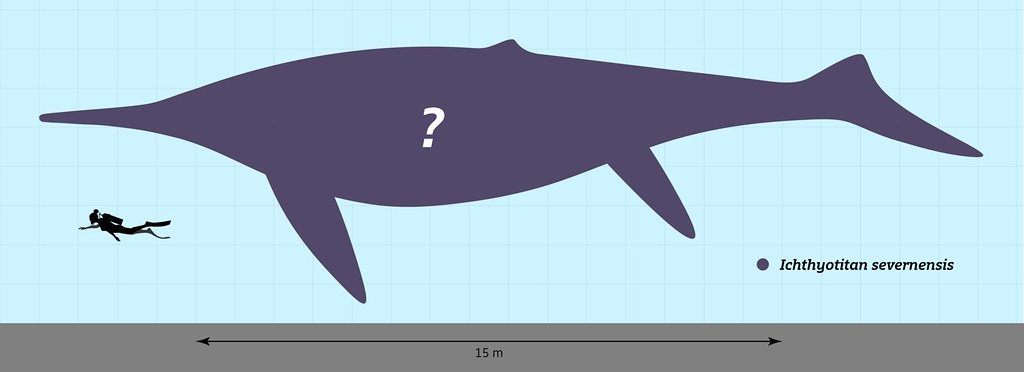
Imagine an open ocean with no whales, no dolphins, not even a single seal on the horizon. Now picture something as long as a modern blue whale slicing through those ancient waters with a mouth full of sharp teeth and eyes the size of dinner plates. This was reality more than two hundred million years ago, when enormous ichthyosaurs ruled the seas long before whales ever evolved.
These were not just big reptiles; they were genuine marine titans that pushed vertebrate body size into new territory. Their story rewrites what many scientists thought they knew about how fast gigantic body sizes can evolve and who got there first. Let’s dive into the world of the giant ichthyosaur and see how it managed to grow to whale-like proportions in a world that had never seen a whale.
The First Giants in the Open Ocean
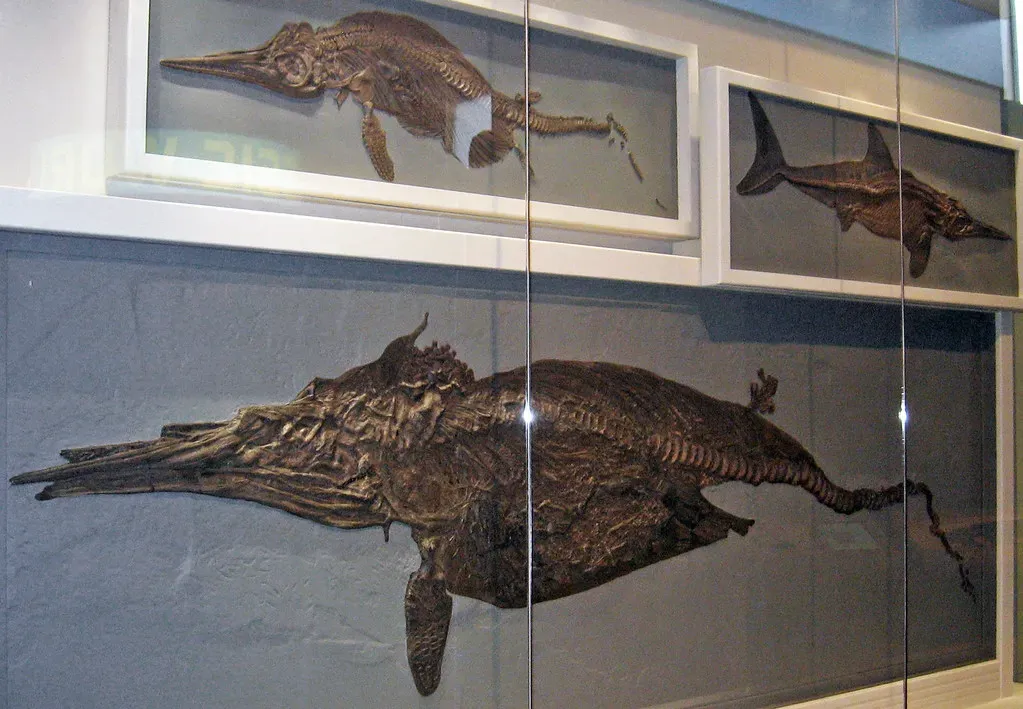
It shocks a lot of people to learn that whales were not the first ocean giants; reptiles beat them to it by more than a hundred million years. Early in the Triassic Period, after the worst mass extinction in Earth’s history, some lizard-like land reptiles began returning to the sea and rapidly transformed into streamlined swimmers. Within a surprisingly short slice of geological time, a few of these ichthyosaurs ballooned in size to lengths comparable to modern baleen whales.
Picture an ecosystem still recovering from catastrophe, much of life wiped out, ecological niches wide open. In that vacuum, ichthyosaurs seized the role of top marine predators and large-bodied cruisers almost overnight on an evolutionary timescale. The sheer speed with which they jumped from modest reptile to ocean giant forces scientists to rethink long-held assumptions about how slowly body size was supposed to increase.
Whale-Sized Reptiles: How Big Did They Actually Get?
![Whale-Sized Reptiles: How Big Did They Actually Get? (By Printed under a CC BY license, with permission from Nadine Bösch and Beat Scheffold, original copyright [2013]., CC BY 2.5)](https://nvmwebsites-budwg5g9avh3epea.z03.azurefd.net/dinoworld/059be8c44be3f785bc4fbe4b46316c76.webp)
When paleontologists talk about some ichthyosaurs reaching lengths similar to whales, they are not exaggerating for drama. Giant forms known from fragmentary skeletons suggest body lengths that may have rivaled modern great whales, stretching well beyond the size of most living sharks. Some skulls alone reached lengths that would dwarf an average person standing upright next to them.
Of course, estimating body size from partial fossils is a bit like trying to guess the size of a car from a single door, so scientists stay cautious. They compare bones from more complete, smaller species to scale up, always adding healthy error bars and skepticism. Still, even with conservative estimates, these ichthyosaurs clearly occupied the same size class as today’s ocean heavyweights, proving that reptilian bodies could push the physical limits of life in the sea long before mammals took a turn.
Shaped Like Dolphins, Built Like Reptiles
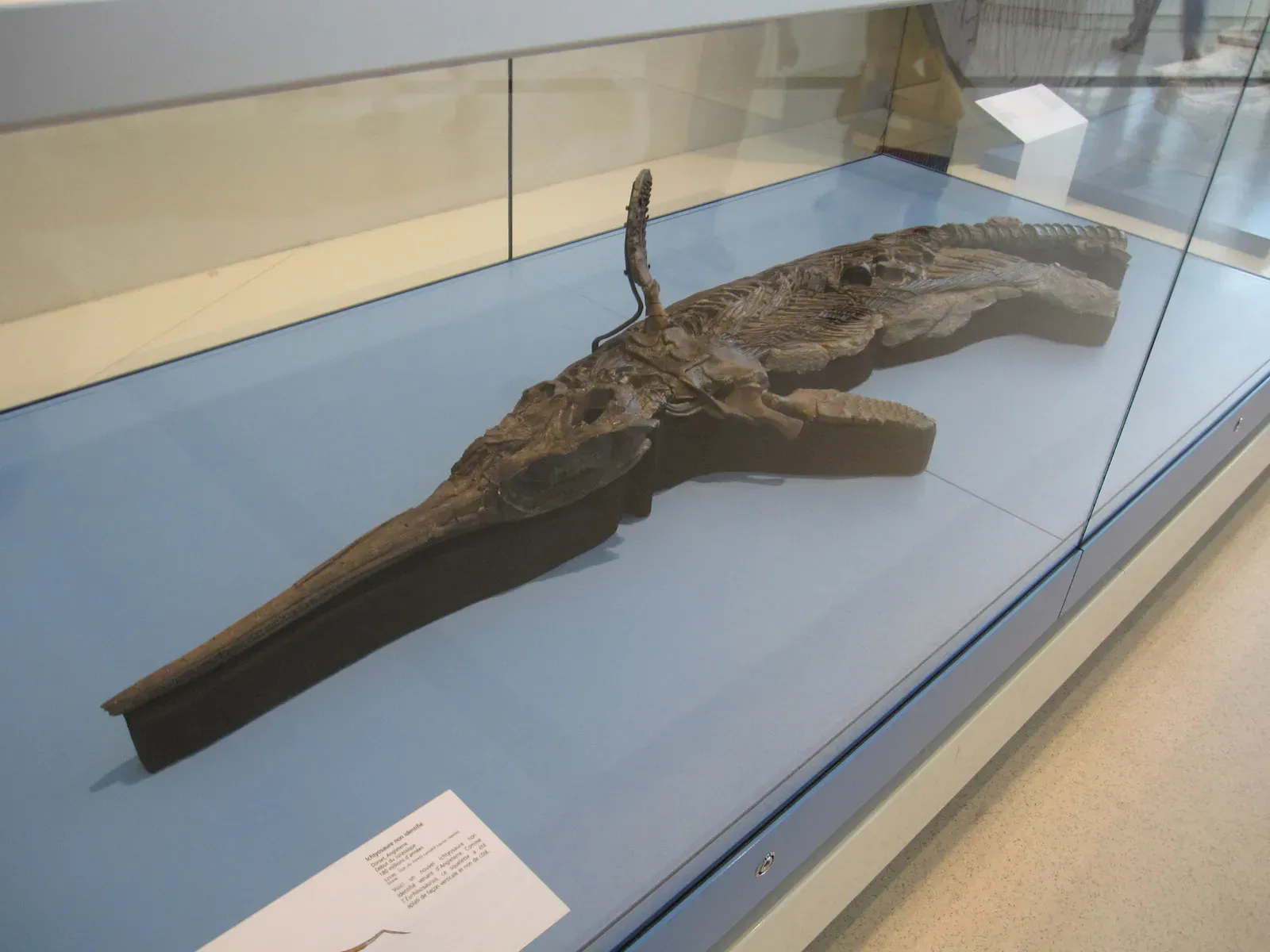
At first glance, an ichthyosaur might remind you of a dolphin or a small whale, and that is exactly what makes them so fascinating. They evolved a similar fish-like body, with a streamlined torso, powerful tail, and fins for steering, even though they were reptiles and not mammals. This is a textbook case of convergent evolution: totally different lineages arriving at similar body shapes because the ocean rewards certain designs.
Under the skin, though, these animals were unmistakably reptilian. Their bones, teeth, and developmental patterns tell a very different story from whales, even if their silhouettes could confuse you from a distance. It is like looking at two sports cars from rival companies: the shapes are similar because both are built for speed, but under the hood they are built from totally different engineering traditions.
Life in a World Without Whales
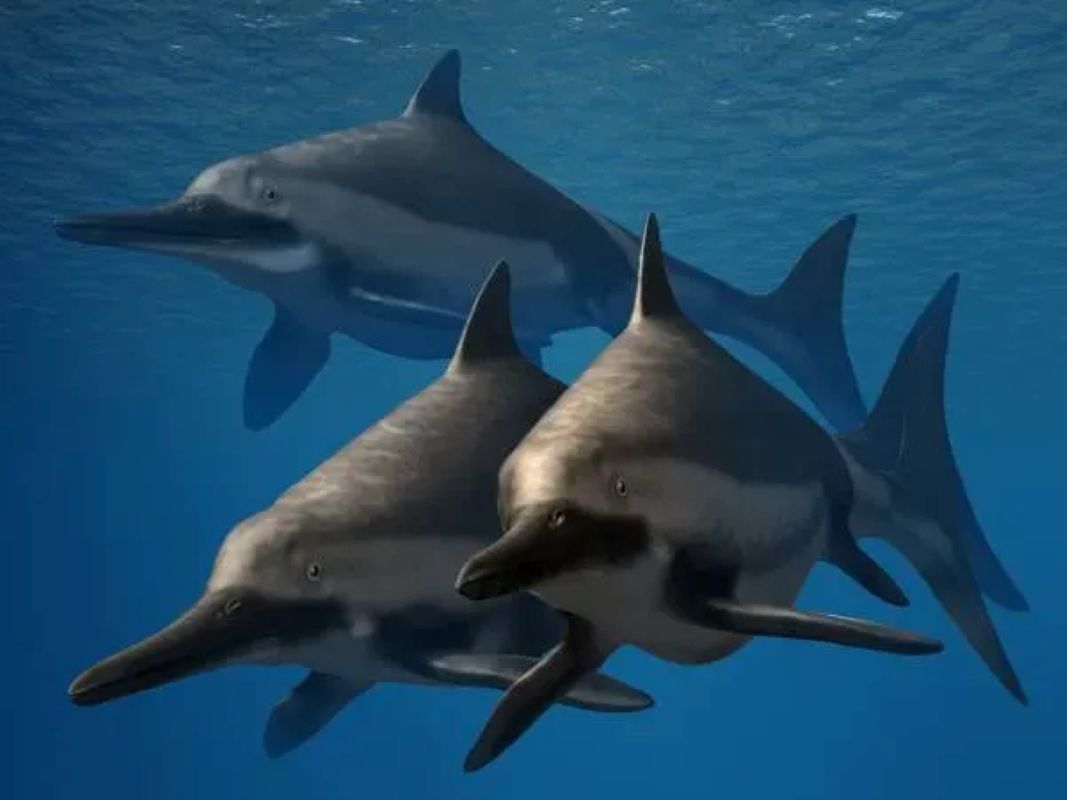
One of the wildest things about these giant ichthyosaurs is the world they lived in: no whales, no seabirds, no humans, no familiar marine mammals at all. Instead, their oceans were filled with ammonites, early fish, and other marine reptiles that served as prey, rivals, or both. In that setting, ichthyosaurs filled roles that whales would later take on, from fast-moving hunters to wide-ranging ocean giants.
When you strip away whales and dolphins from the mental picture and swap in sharp-toothed reptiles, the ocean food web looks completely different. The top predator might be an ichthyosaur rather than an orca, and your plankton-feeding giant could be an enormous, long-bodied reptile instead of a blue whale. It is a reminder that the ocean’s hierarchy is not fixed; it is a rotating cast of whoever evolution puts in charge at any given time.
How Did They Get So Big So Fast?
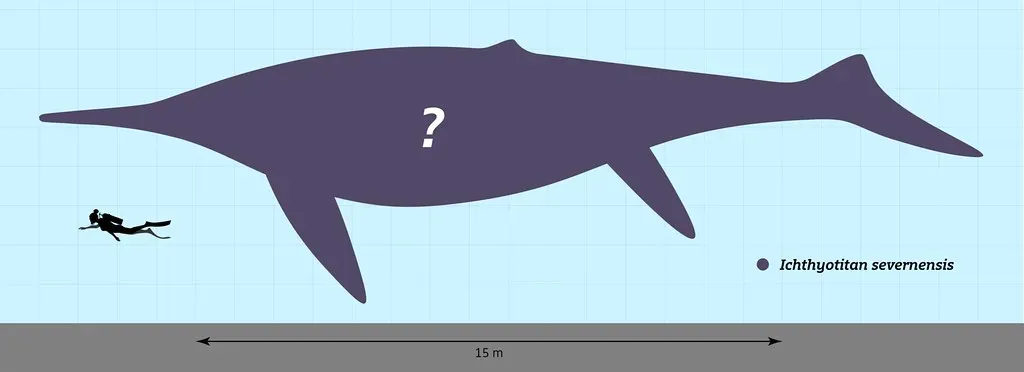
One of the most surprising scientific conclusions about giant ichthyosaurs is how quickly they seem to have achieved their massive size. After the end-Permian mass extinction wiped out the vast majority of species, new ecosystems were relatively empty and open for experimentation. In that landscape, growing large could be a winning strategy: bigger bodies can handle long-distance migrations, store more energy, and scare off would-be predators.
But size is not everything, and getting huge comes with serious costs, from requiring vast amounts of food to slower reproduction and vulnerability to environmental change. Some scientists argue these reptiles may have evolved their giant forms in evolutionary bursts, only to disappear when the environment shifted and their enormous bodies became a liability. It is a bit like a startup that scales too quickly; impressive while it lasts, but fragile when conditions turn against it.
Why Whales Took Over and Reptiles Did Not
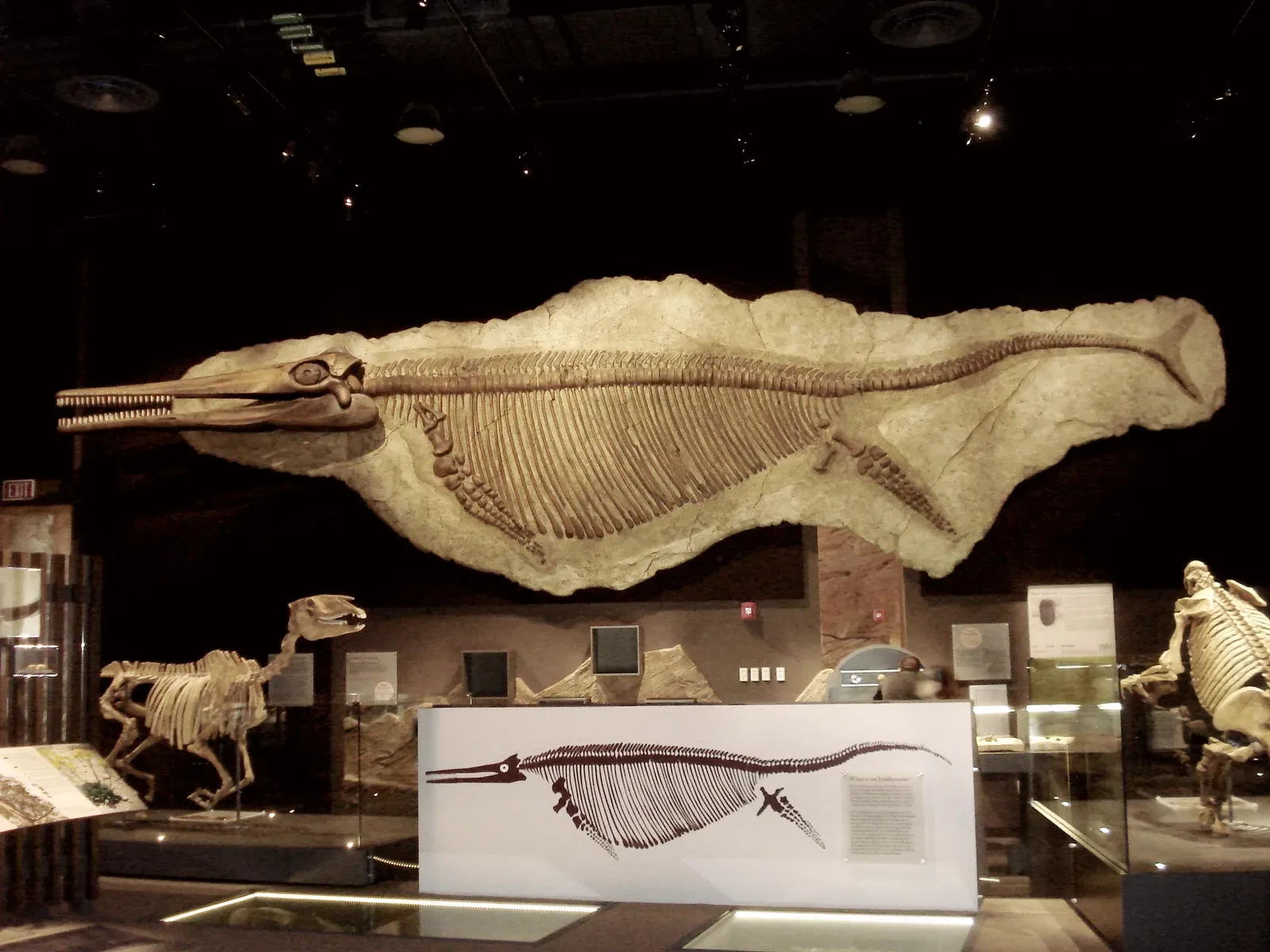
If giant ichthyosaurs were so successful, it is natural to wonder why whales rule the seas today instead of their reptilian predecessors. Over tens of millions of years, Earth’s climate, sea levels, and ecosystems changed, and many large marine reptiles, including ichthyosaurs, eventually vanished. Later on, a completely different group – land-dwelling hoofed mammals – moved into the ocean and began their own experiment in gigantism, eventually giving rise to whales.
In my view, this is one of the most humbling patterns in Earth’s history: no group holds the crown forever, not even the biggest creatures on the planet. Whales did not “win” because they are somehow inherently better; they were simply the right animals in the right place at the right time after reptiles had already come and gone. Today’s whales might look like the final act, but if the story of giant ichthyosaurs teaches us anything, it is that even ocean rulers are temporary. Who would you bet on to be the next giant of the seas a hundred million years from now?