Picture a lizard-like animal padding through mud along a warm, shallow shoreline. A few million years later, its descendants are slicing through open ocean like torpedoes, birthing live young far from land, and snapping up prey with jaws built for speed instead of chewing. That sounds like science fiction, but it is exactly what happened, more than once, in Earth’s deep past. Several groups of reptiles abandoned solid ground and reinvented themselves as powerful marine predators.
This is one of those evolutionary stories that feels almost too dramatic to be real. Yet the rocks are packed with clues: skeletons with paddle-shaped limbs, streamlined skulls, and even pregnant mothers preserved in stone. What fascinates me most is that these sea reptiles did not follow a single script. Ichthyosaurs, plesiosaurs, mosasaurs, marine crocodiles – they all solved the same problem in different ways. Let’s walk that shoreline, slide into the water with them, and follow the long, strange journey from dirt to deep blue.
From Shoreline Stalkers To Reluctant Swimmers
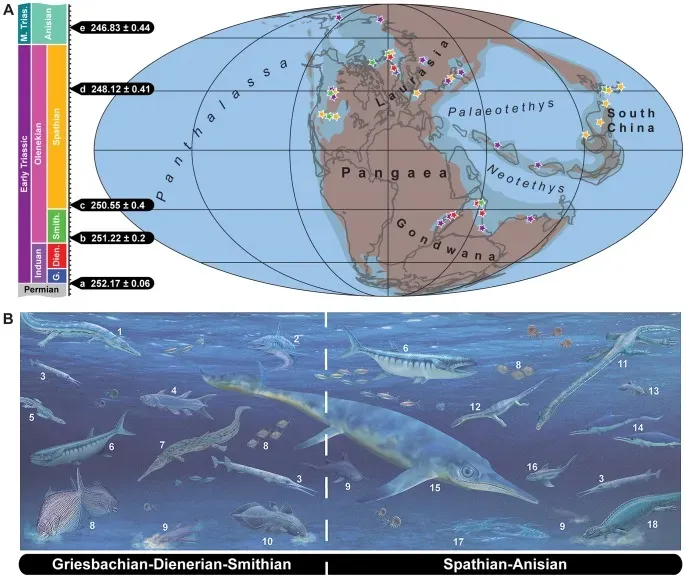
It all starts at the edges: tidal flats, lagoons, river deltas where land and sea blend together. Early in the Triassic Period, after the biggest mass extinction in Earth’s history, ecosystems were full of empty jobs. Some reptiles that hunted along the water’s edge began wading in more often, chasing fish and squid-like creatures. At first, these were probably awkward swimmers, more like today’s monitor lizards splashing after prey than sleek dolphins.
Over time, small advantages in the water started to matter. A slightly flatter tail gave a bit more thrust, a more flexible spine allowed quicker side-to-side motion, and feet that were broader or webbed worked like crude paddles. These early shoreline hunters lived a double life: clumsy on the sea’s surface but still perfectly capable on land. Natural selection slowly nudged them deeper into the waves, generation after generation, as the ocean offered richer food and fewer competitors than the crowded land.
Transforming Limbs Into Flippers And Bodies Into Torpedoes
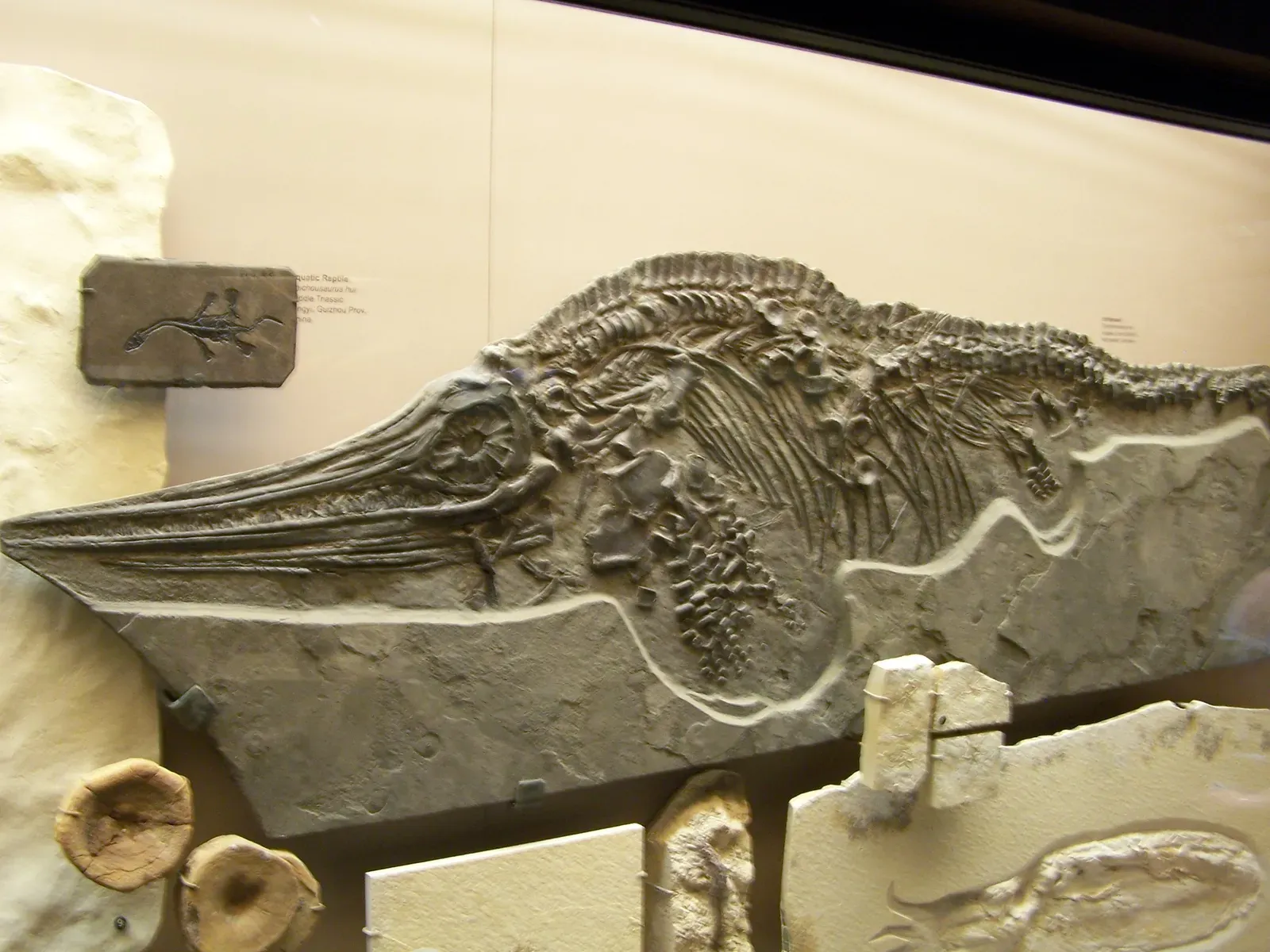
Once reptiles committed to a truly marine lifestyle, their bodies began to change in striking ways. Limbs that once supported their weight on land shifted into broad, stiff paddles with shortened bones packed together like a fan. Instead of gripping the ground, these limbs now pushed against water, trading fine finger movements for raw surface area and power. The spine lengthened and became more flexible, turning the entire body into a propulsion machine.
Ichthyosaurs are the most eye-catching example of this transformation. Early forms still looked a bit lizardlike, but later species converged on a shape that is eerily similar to modern dolphins: a streamlined body, powerful tail fin, and small, stabilizing flippers. This is one of those moments where evolution shows its favorite trick: very different animals, facing the same physical challenges, often end up solving them in nearly the same way. Water is unforgiving, and if you want to move through it fast, you end up shaped like a living torpedo.
Breathing Air While Living Like Fish
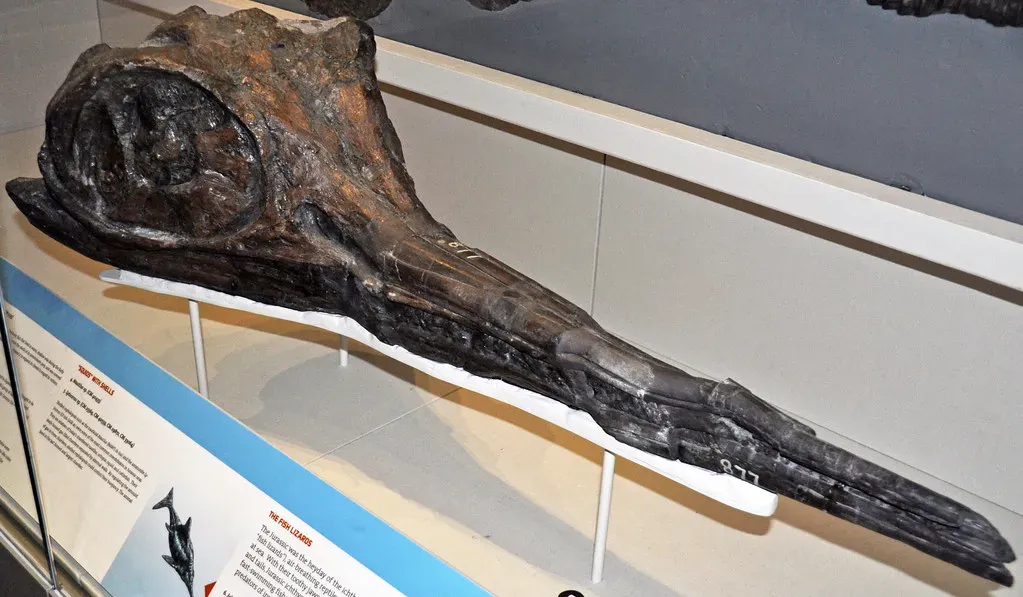
Marine reptiles faced a paradox from the start: they were air-breathers living in a world where oxygen was literally out of reach beneath the waves. Unlike fish with gills, these animals had to surface regularly, yet they could not afford to waste time or energy. Evolution favored more efficient lungs, better oxygen storage in blood and muscles, and behaviors that minimized the number of trips to the surface. Many developed streamlined skulls with nostrils placed so they could grab a breath quickly, then dive again.
This balancing act shaped how they hunted and moved. Some probably took relatively shallow dives in bursts, much like sea lions today, lunging at schools of fish near the surface. Others, especially advanced ichthyosaurs, may have pushed into deeper water to chase fast-swimming prey, holding their breath for longer stretches. If you have ever held your breath in a pool and felt that urgent need to come up, you get a tiny glimpse of the evolutionary pressure they lived under. Every second they shaved off a surfacing trip meant more time feeding and less time being vulnerable near the surface.
Reinventing Birth: From Eggs On Land To Live Young At Sea
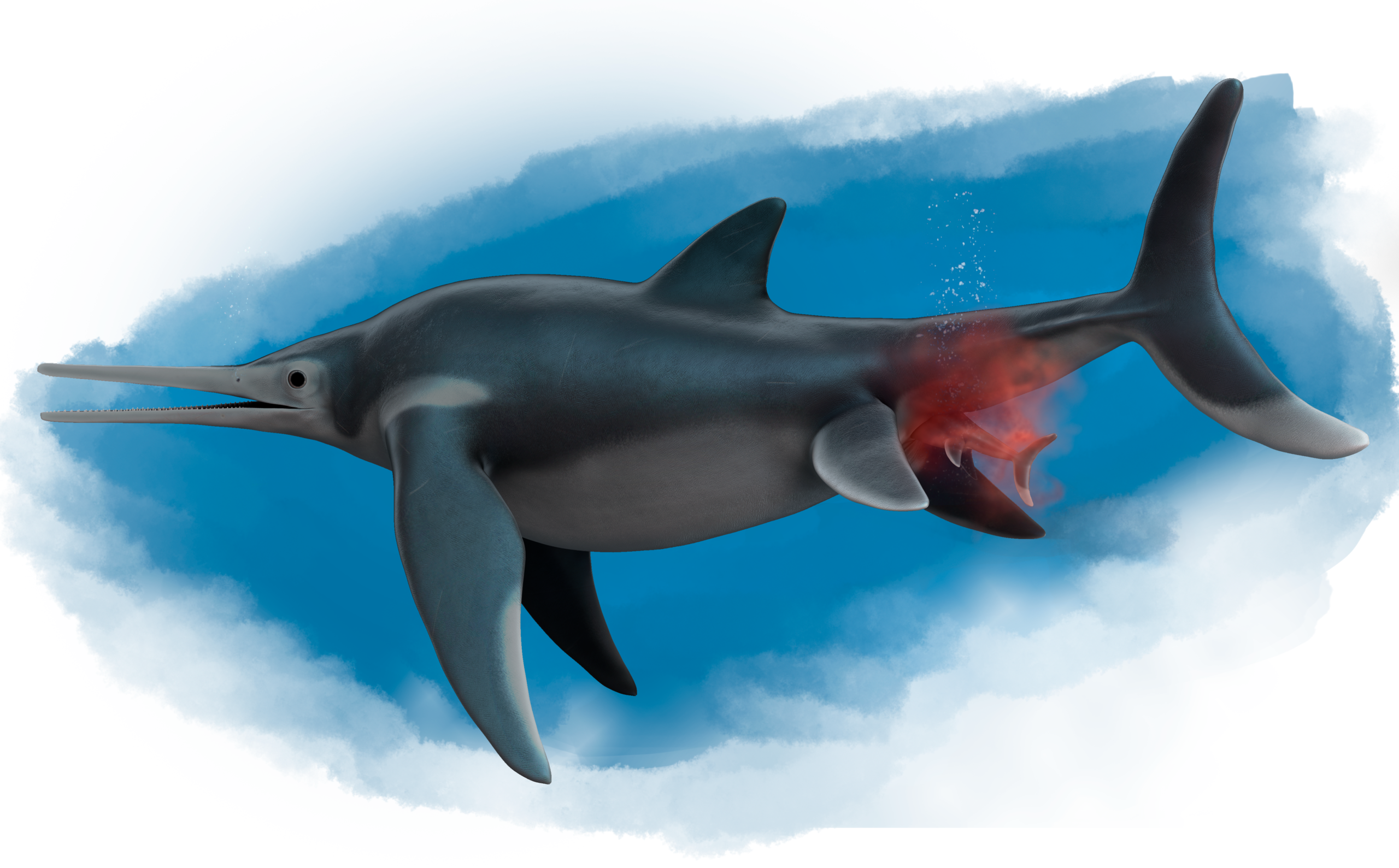
Leaving land created a very practical problem: where do you lay your eggs if you never come ashore? Most reptiles rely on sun-warmed nests on land, but a fully marine lifestyle makes that almost impossible. The solution, reached independently in several lineages, was to carry embryos internally and give birth to live young in the water. Fossil discoveries of pregnant ichthyosaurs and other marine reptiles show tiny skeletons inside the mother’s body, sometimes even captured in the act of being born.
This switch to live birth was not just a biological curiosity; it was a major evolutionary leap. It freed these animals from the constant risk and energy cost of returning to land to nest. It also meant that newborns had to be competent swimmers right away, not helpless hatchlings stumbling out of a nest. If you imagine a baby sea reptile entering a world already full of large predators, you can see why any trait that gave newborns a better chance – stronger muscles, sharper senses, better swimming posture – would spread quickly through the population.
Building Weapons: Teeth, Jaws, And Feeding Styles
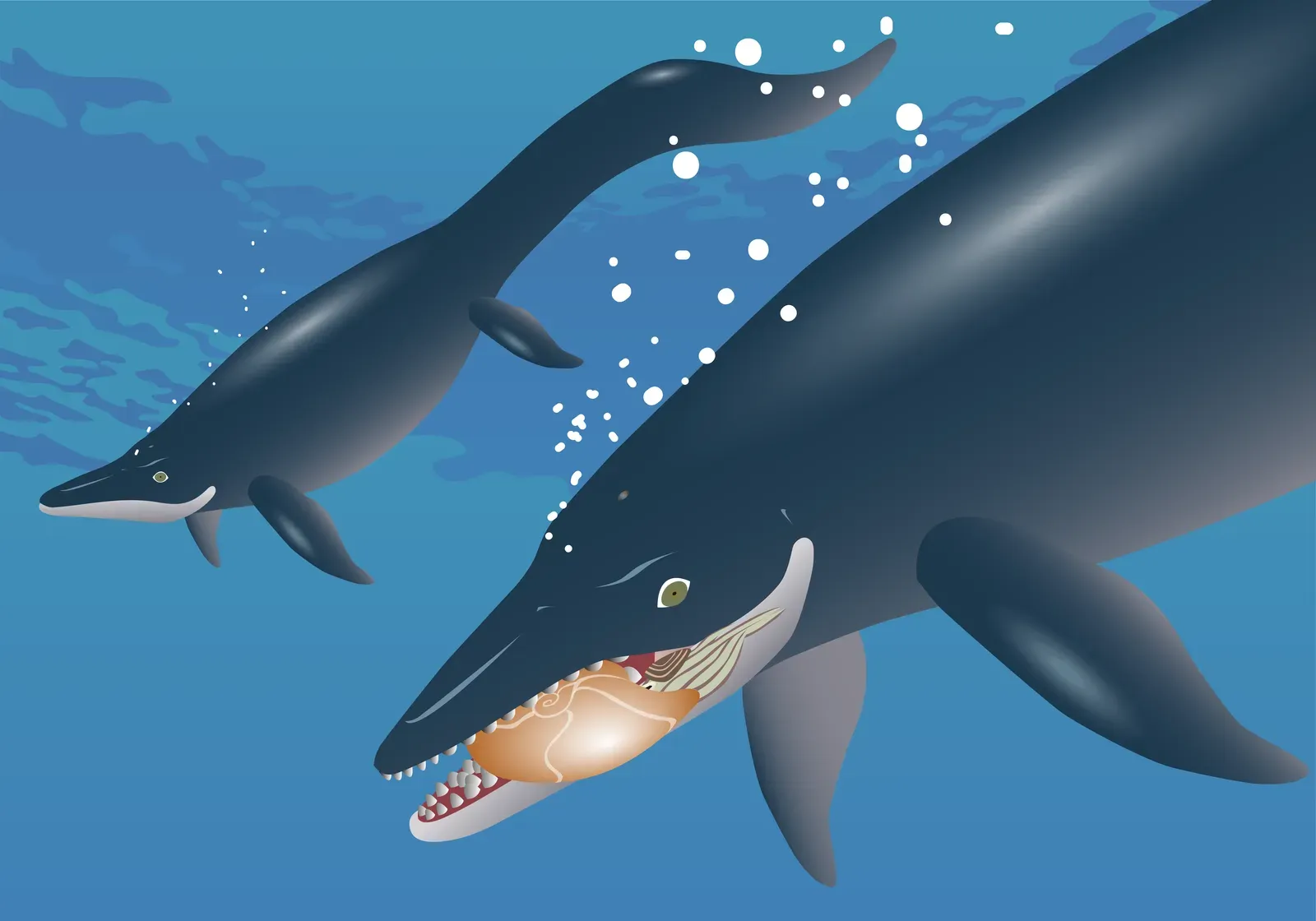
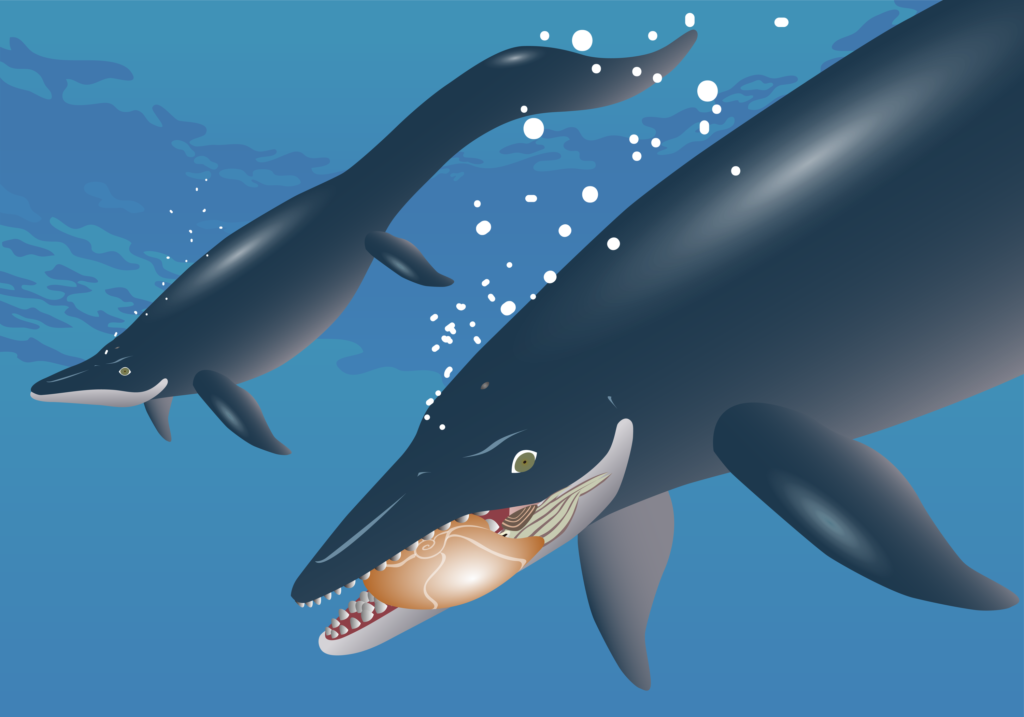
Once reptiles fully committed to the sea, the ocean turned into a battlefield of specialized diets. Some marine reptiles evolved long, needle-like teeth interlocking like a fish trap, perfect for gripping slippery prey. Others developed short, blunt teeth or crushing plates suited for cracking shelled animals such as ammonites. Skull shapes stretched and shrank depending on the job: narrow and elongated snouts for quick snapping strikes, or broader, more robust heads for wrestling larger prey.
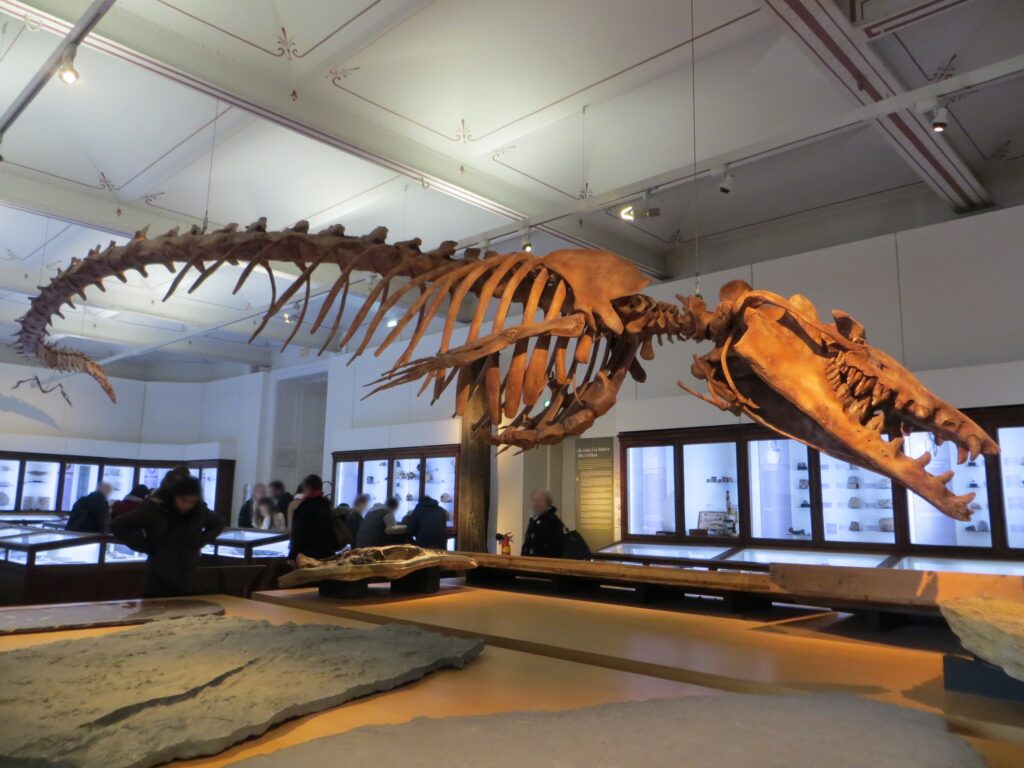
You can almost read the menu from the morphology. Mosasaurs, the later marine lizards of the Cretaceous, carried deep, powerful jaws armed with conical teeth that could handle struggling prey, from fish to smaller marine reptiles. Plesiosaurs, with their famously long necks and small heads, probably used quick darting bites to snatch fish or squid from a distance, like a snake using its body as a stealthy extension of its reach. In a way, their skulls and teeth were evolutionary signatures of their lifestyle, as revealing as a modern shark’s serrated smile compared with a manatee’s grinding molars.
Diversifying Into Many Kinds Of Sea Monsters
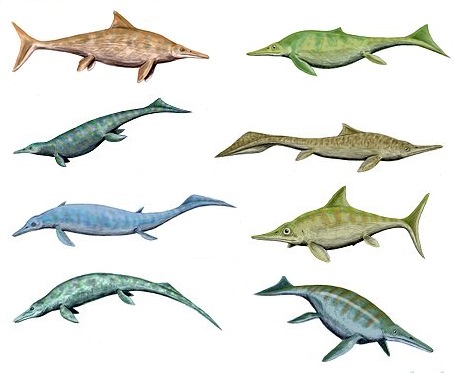
What makes this story truly wild is that there was never just one type of marine reptile ruling the seas. Instead, multiple lineages explored the water at different times and in different ways. Ichthyosaurs dominated much of the Triassic and Jurassic, streamlined hunters of open water. Plesiosaurs and pliosaurs experimented with two contrasting body plans: some had extremely long necks and smaller heads, while others had massive skulls and shorter necks, like tanks versus spears in the same army.
Then, later in the Cretaceous, mosasaurs surged into dominance, rising from lizard ancestors to become apex predators comparable in size and power to white sharks and orcas. There were also marine crocodile relatives that flirted with a fully oceanic life, some with tail flukes and paddle-like limbs. These groups often overlapped, competing, coexisting, and replacing each other as environments shifted and mass extinctions reset the stage. The result was a constantly changing cast of marine reptiles, each wave rewriting what a “sea monster” could look like.
Why They Vanished While Whales Took Over
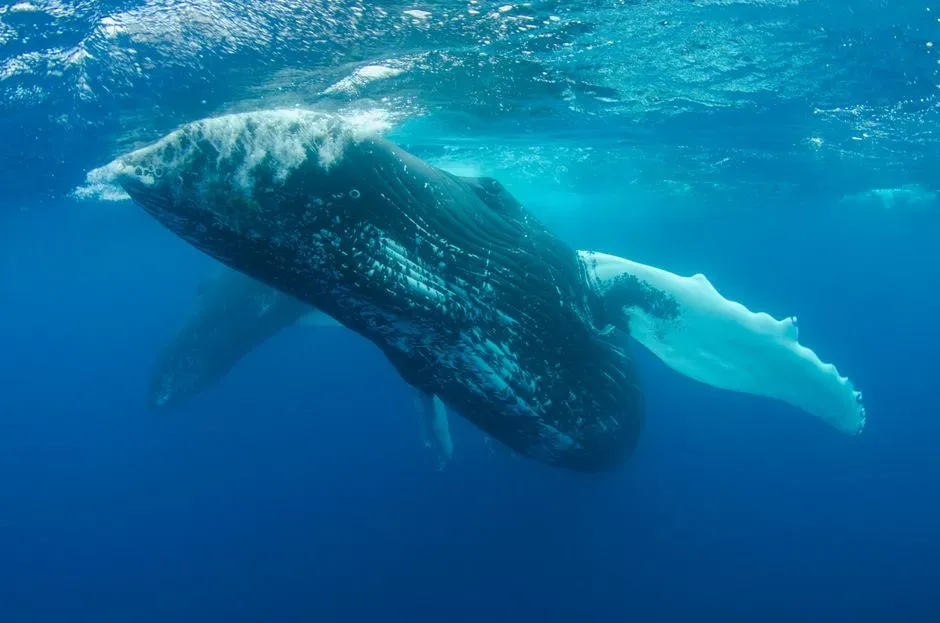
For all their success, marine reptiles were not permanent fixtures. Several groups, like ichthyosaurs, faded out before the final blow that ended the age of dinosaurs. Others, such as mosasaurs and plesiosaurs, disappeared during the great extinction at the end of the Cretaceous. Changes in sea level, climate, food webs, and catastrophic events all likely played roles. When their time ran out, the oceans were left with a massive vacancy at the top of the food chain.
That vacancy was eventually filled by mammals, not reptiles. Whales and dolphins would later evolve remarkably similar body shapes and lifestyles, echoing many of the same solutions: streamlined forms, flippers, tail-powered swimming, deep diving, and live birth at sea. To me, this handoff is one of the most striking parts of the story. It reminds us that the ocean does not care who the top predators are, only that some lineage is ready to evolve into that role. Marine reptiles were the first grand experiment; whales are simply the latest version.
What These Ancient Sea Reptiles Reveal About Evolution Today
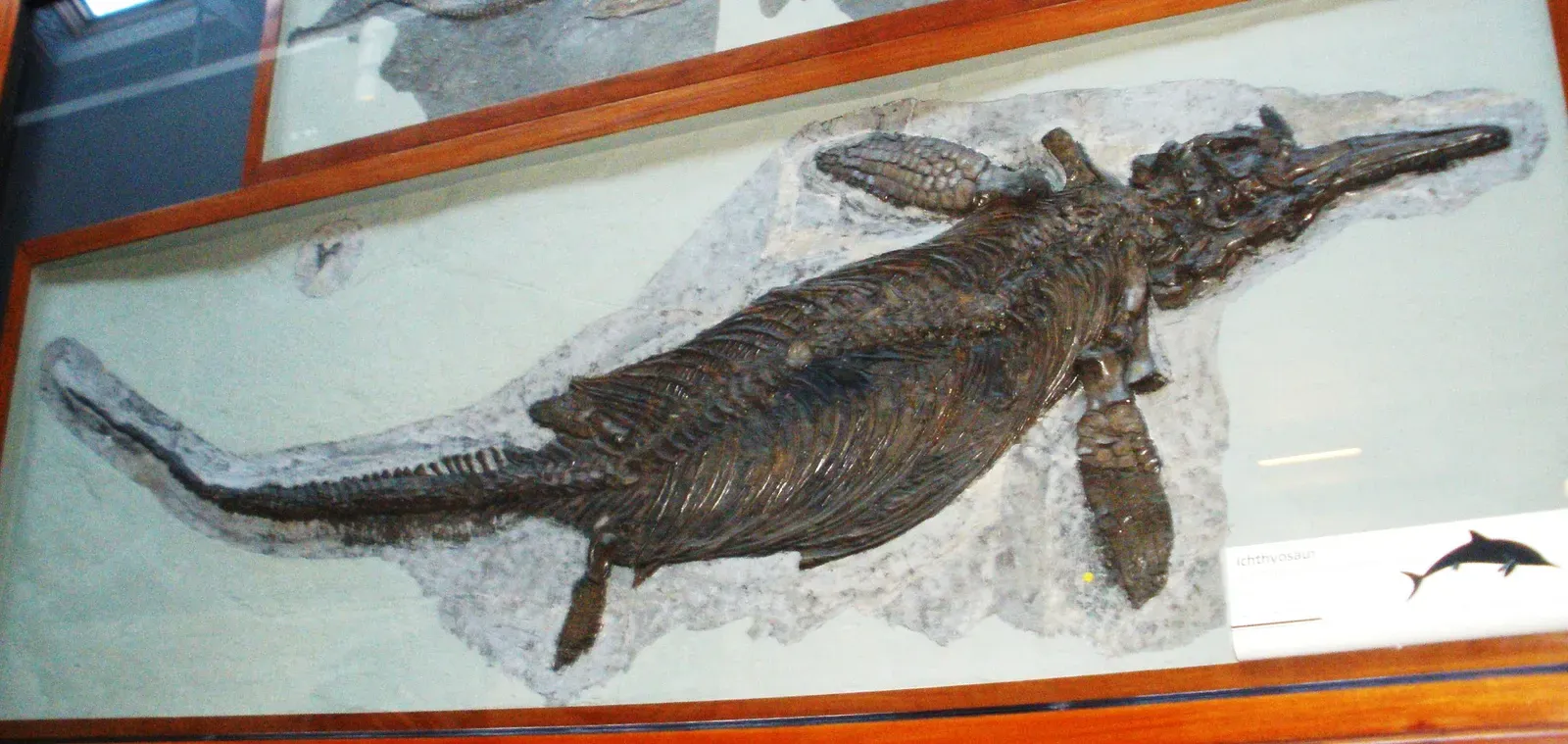
Marine reptiles are more than just cool fossils in museum halls; they are case studies in how radically evolution can reshape a body when the environment demands it. They show that major transitions, like moving from land to water, are not flukes but repeatable patterns. Limbs become flippers, bodies streamline, lungs and metabolism adapt, reproduction shifts toward live birth. We see similar themes in whales, seals, and even some modern reptiles that spend most of their time in water, from sea snakes to marine iguanas.
Looking at this long arc, I cannot help feeling that evolution is both shockingly inventive and surprisingly predictable. Give a lineage a rich new environment and enough time, and it will carve itself a niche, even if that means rewriting its own blueprint. The strange journey of marine reptiles is a reminder that the boundaries we take for granted – land versus sea, reptile versus fishlike swimmer – are blurrier than they seem. If the past can turn lizard-like hunters into oceanic titans, what unexpected transformations might be quietly beginning right now in our changing seas?
Conclusion: A Vanished Ocean Empire With A Very Modern Message
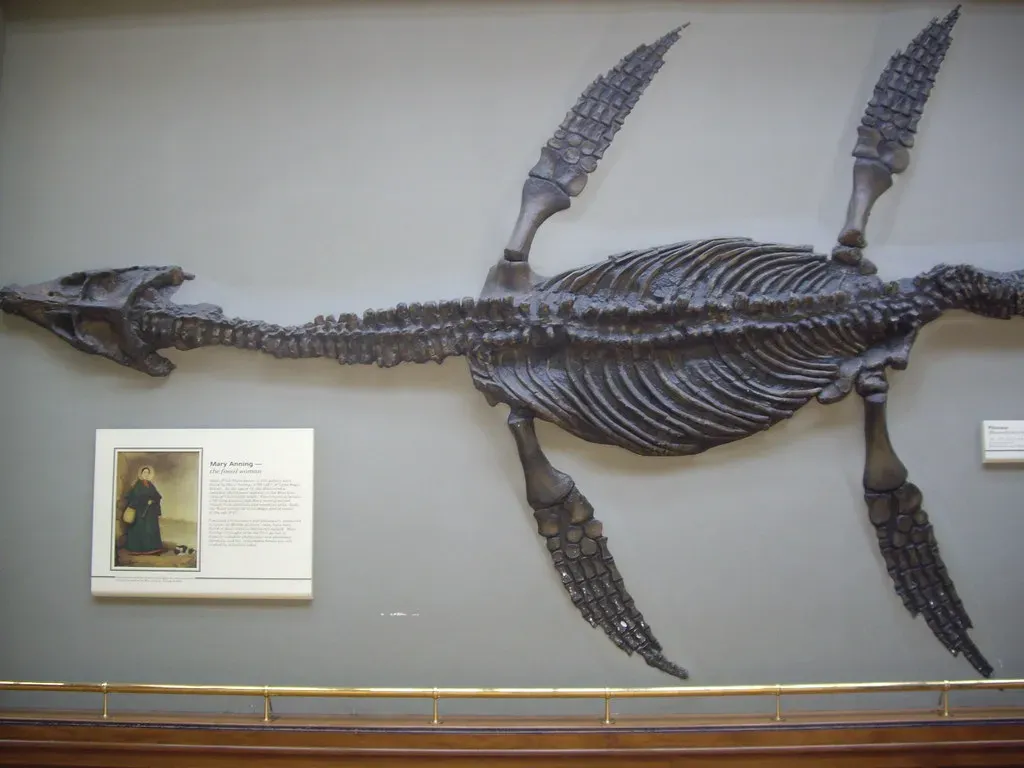
When I think about the rise and fall of marine reptiles, it feels less like a dusty chapter of prehistory and more like a warning and a mirror. These animals conquered the seas with astonishing speed in geological terms, then vanished when the world changed faster than they could adapt. Their skeletons in stone tell a story of bold evolutionary risks that paid off for tens of millions of years, yet still were not enough to guarantee survival when the rules of the game shifted abruptly.
In my view, that makes marine reptiles one of the most important reality checks evolution has ever handed us. Dominance is temporary, adaptation is ongoing, and even the most formidable predators are vulnerable to rapid upheaval. Their strange journey from mudflats to open ocean shows what life can achieve when it pushes boundaries, but their disappearance reminds us how fragile that success really is. The next time you see a dolphin or a whale cut through the waves, will you also picture the reptilian empires that ruled those waters long before them?