

Most people assume that in the age of DNA sequencing and forensic labs, nothing dead can wash up on a beach or turn up in the woods without getting identified within days. That assumption is wrong more often than you’d think. Museums, universities, and wildlife departments have quietly logged dozens of carcasses over the last two centuries that never got a clean answer – some rotted past recognition, some had their tissue samples vanish before testing, and a few left scientists arguing with each other for decades after the “official” verdict came in.
None of these fourteen cases started with a lab coat and a microscope. Every single one began the same way: someone stumbled onto something dead and horrifying purely by accident, with zero warning and zero context for what they were looking at. What happened next split biologists, embarrassed a few of them, and in one case, actually created a brand-new scientific classification. Here’s what the real case files say.
#14 – The Elmendorf Beast That Terrorized a Texas Town
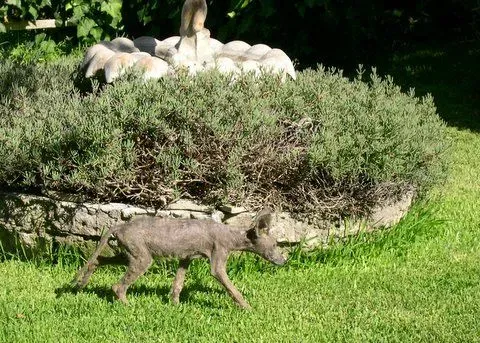
A dog-sized creature stalking a small Texas community sounds like the opening of a horror film, not a wildlife report.
The Elmendorf Beast terrorized the small town of Elmendorf, Texas, for months before it was finally caught. Locals swore it matched descriptions of the legendary chupacabra passed down through generations of Texas folklore. Photos of the emaciated, hairless animal spread fast, and wildlife officials stayed quiet for a while as speculation ran wild across local news segments.
The eventual verdict surprised almost no one who works in wildlife biology. Rumors of a chupacabra swirled until zoologists revealed the creature’s real nature: nothing more than a coyote. Mange – a parasitic skin condition – had stripped its fur and warped its features into something unrecognizable enough to spark a legend.
Fast Facts
- Location: Elmendorf, Texas
- Duration: Roamed the area for months before capture
- Legend invoked: Chupacabra
- Real cause: Severe mange stripped its fur and warped its features
- Final ID: Ordinary coyote
#13 – The Cuero “Chupacabra” That Split the Scientific Community
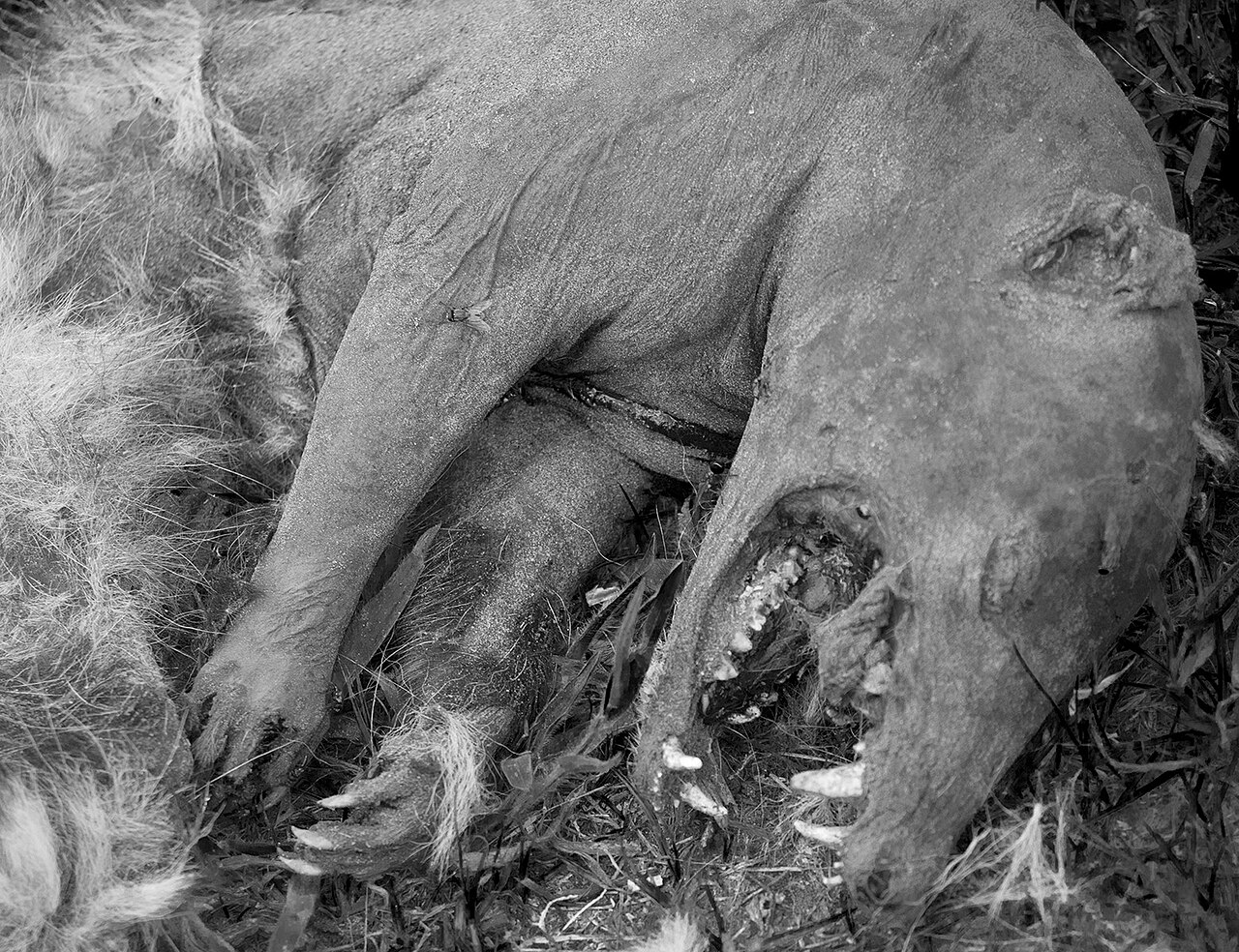
A rancher in Cuero, Texas, found something so strange she kept the head in her freezer for a DNA test.
Phylis Canion and her neighbors discovered the 40-pound bodies of three of the animals over four days in July, after her ranch had been pestered for years by a creature that stole her cats and drained her chickens. She saved the head of one to get to the bottom of its ancestry through DNA testing, and news outlets and skeptics alike waited on the results.
The lab results came back clean, but the story didn’t end there. Biologist Mike Forstner ran the DNA himself, and he later admitted he’d initially guessed it was a domestic dog.
The DNA sequence is a virtually identical match to DNA from the coyote.
Mike Forstner
The Cuero Chupacabra turned out to be, genetically speaking, an ordinary Texas coyote. Owners of similar carcasses across the state still insist their animals looked nothing like ordinary coyotes, and no lab result has managed to change their minds.
#12 – The Baby Chupacabra Found in a Texas Backyard
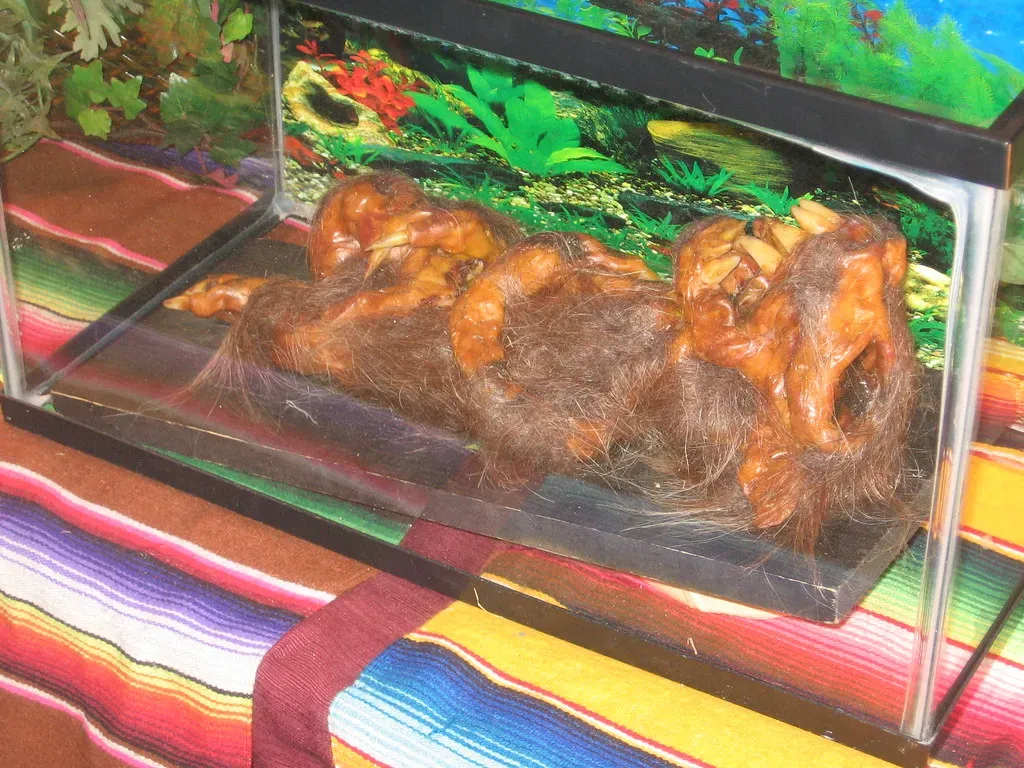
In 2014, a Texas family claimed they’d trapped a living legend in a cage, and the internet exploded overnight.
A Ratcliffe, Texas, family said they had captured the chupacabra itself. The tiny, hairless, hopping creature had reptilian-looking skin and an unsettling growl that didn’t match any animal locals could name on sight. Wildlife officials were called in to settle the debate once and for all.
Officials landed on an answer, but not everyone accepted it. The Texas Parks & Wildlife Department shattered the illusion after confirming that the creature was actually a raccoon with mange. Yet other observers who examined the footage pushed back, insisting its eating habits and growl suggested something else entirely – a disagreement between official channels and firsthand witnesses that never fully closed.
#11 – The Panama Creature That Attacked Teenagers
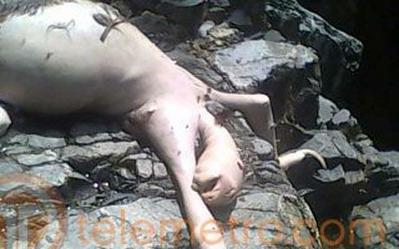
Teenagers in Panama told a story so bizarre that scientists had to intervene just to calm the public down.
The so-called “Panama Creature” turned up in a river near Cerro Azul after a group of teenagers claimed an alien-like creature attacked them from under the water, forcing them to kill it. The pale, hairless body with oddly proportioned limbs looked nothing like any local wildlife the teens could describe.
The explanation, once it arrived, reframed the entire encounter. Scientists determined the “monster” was actually the decomposing corpse of a brown-throated sloth, its hair stripped away after being stuck underwater for an extended period. Sloths almost never enter water voluntarily, which is exactly why nobody recognized one when they saw it.
#10 – The Indonesian Giant That Baffled an Entire Island

When a carcass longer than a school bus washed up on Seram Island, giant squid theories started circulating within hours.
The badly decomposed carcass measured over 15 meters long and baffled locals who had never seen anything like it. Early photos showing an amorphous, bloody mass surrounded by water only fueled speculation that something genuinely unknown had surfaced from the deep.
Marine biologists eventually leaned on skeletal evidence to settle the debate. A visible internal skeleton ruled out the giant squid theory and pointed instead to a dead baleen whale. One expert on the scene noted that the smell alone should have been warning enough to stay away.
#9 – The Chilean Blob That Echoed a Global Pattern
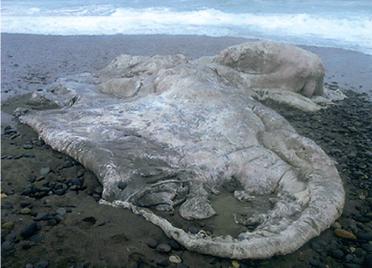
South American beaches have produced their own share of unidentifiable flesh, and Chile’s 2003 discovery followed a strangely familiar script.
The Chilean Blob of 2003 followed the same pattern as other famous cases: widespread excitement about an unknown sea creature, followed eventually by DNA testing that identified whale remains. Before the testing came back, the pale, boneless mass sparked genuine confusion among people who assumed a whale carcass would still look at least somewhat whale-shaped.
That confusion is basically the whole point of these discoveries. Decomposition in the ocean selectively breaks down muscle and internal organs, leaving behind a mass of tough, elastic collagen and fat commonly known as blubber. What’s left rarely resembles the animal it came from, which is exactly why witnesses keep reaching for the word “monster.”
Worth Knowing
- Ocean decomposition strips away muscle and organs first
- Blubber – tough, elastic collagen and fat – resists breaking down
- The leftover mass rarely looks anything like the original animal
- This exact pattern repeats across nearly every “globster” case on record
#8 – The Hebrides Blob That Drew International Attention

Off the coast of Scotland, fishermen hauled in something in 1990 that briefly made headlines across Europe.
The Hebrides Blob followed the same familiar pattern: widespread excitement about an unknown sea creature, followed by DNA testing that identified whale remains. The sheer size of the mass, combined with its total lack of visible bones, teeth, or fins, made an on-the-spot identification nearly impossible for anyone standing on the shoreline.
Scientists who study these masses say the appearance itself is deceiving by design. As a whale carcass floats and decomposes, the outer skin and bone structure detach and sink, leaving the large, boneless core of blubber to drift and get battered by currents into an amorphous blob. Only lab work, not eyesight, can reliably sort out what’s really inside.
#7 – The Bermuda Blob That Started a Media Frenzy
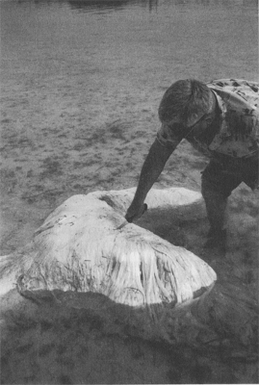
The Bermuda Blob of 1988 might be the case that cemented “globster” as a household word among monster enthusiasts.
The Bermuda Blob followed the classic pattern: widespread excitement about an unknown sea creature, followed by DNA testing that identified whale remains. News crews descended on the beach before any lab had touched a sample, and speculation ran from sea serpents to entirely new species living undiscovered in the Atlantic.
The gap between sighting and science is where these myths grow. The globster phenomenon exposes something important about the limits of identification in the field – even trained naturalists encountering a badly decomposed mass under stressful conditions can fail to recognize a familiar animal’s remains. That single fact explains why nearly every decade produces a fresh “unknown creature” headline.
#6 – The “New Nessie” Hauled Up by a Japanese Trawler
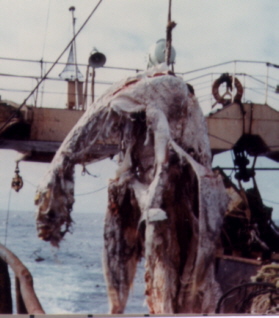
In 1977, a fishing crew pulled up something so strange that Japanese newspapers ran headlines about a living plesiosaur.
The Zuiyo-maru carcass was hauled up by the Japanese trawler Zuiyō Maru off the coast of New Zealand, and its peculiar appearance immediately sparked speculation that it might be the remains of a sea serpent or prehistoric plesiosaur. The creature measured 33 feet long, weighed roughly 4,000 pounds, and had a snakelike head at the end of a long, slender neck – nothing about it looked whale-shaped.
Even the scientists on board weren’t convinced by the eventual explanation. Several of them insisted it was “not a fish, whale, or any other mammal,” though later analysis of amino acids in the muscle tissue indicated it was most likely a basking shark. The captain ordered the body dumped back into the sea before a full necropsy could happen, leaving only tissue fragments and photographs behind.
At a Glance
- Length: 33 feet
- Weight: roughly 4,000 pounds
- Found: off the coast of New Zealand, 1977
- Initial guesses: sea serpent or plesiosaur
- Final verdict: likely basking shark, based on amino acid analysis
#5 – The Tasmanian Carcass That Gave Monsters a New Name
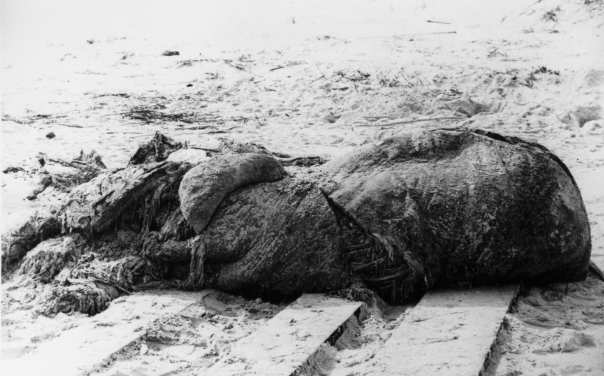
Before 1960, there wasn’t even a scientific word for creatures like this – the Tasmanian discovery changed that.
The term “globster” was coined by Ivan T. Sanderson in 1962 to describe the Tasmanian carcass of 1960, which was said to have no visible eyes, no defined head, and no apparent bone structure. For two full years, almost nobody with scientific credentials examined the body directly, meaning the earliest reports were built entirely on eyewitness impressions rather than lab data.
That delay changed everything about how the case unfolded. Because it beached on a remote part of the island inaccessible by car, scientists couldn’t reach it for two years – by which point they determined it was part of a dead whale, though some eyewitnesses remain skeptical to this day. The gap between discovery and analysis is a recurring theme in nearly every case on this list.
#4 – The Montauk Monster That Vanished Before Testing
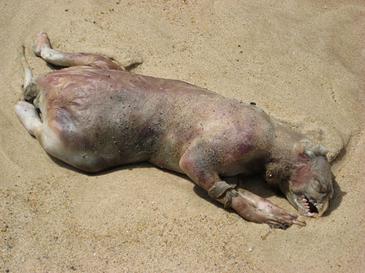
Few carcasses have gone viral faster than the creature that washed up on a New York beach in the summer of 2008.
The “Montauk Monster” washed ashore near the business district of Montauk, New York, in July 2008, and its identity has been the subject of controversy ever since. The carcass was described as bloated and hairless, with sharp teeth and a beak-like mouth unlike anything locals could place.
Here’s the detail most retellings leave out: nobody in an official capacity ever tested it. A local man recovered the carcass and planned to let it decompose so the bones could be preserved, but no expert ever definitively identified it through direct lab testing. Most naturalists point to a waterlogged raccoon, but without a lab report, that remains an educated guess rather than a confirmed fact.
#3 – Trunko, the Creature Whose Body Was Never Recovered
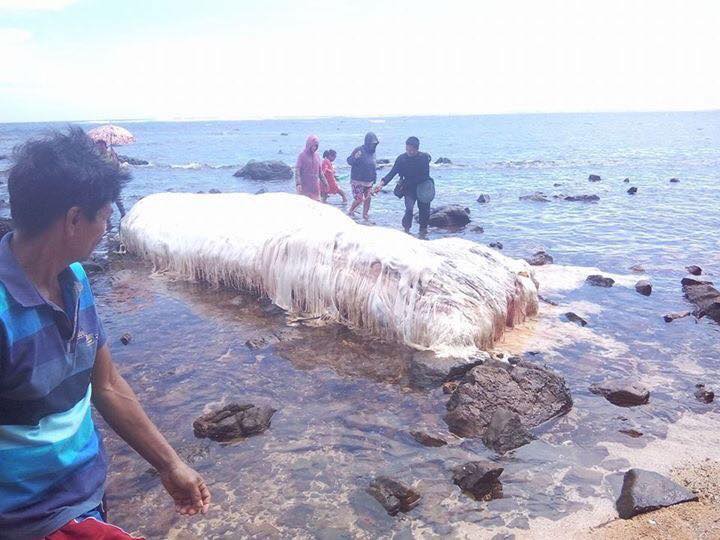
Of every case on this list, Trunko might be the strangest simply because the evidence consists of exactly four photographs and nothing else.
Trunko is the nickname for a large unidentified lump of flesh, a so-called “globster,” reportedly sighted off Margate, South Africa, on October 25, 1924. Witnesses claimed it was first seen battling two killer whales for three hours, using its tail to strike them and reportedly lifting itself out of the water by about 20 feet.
No scientist ever touched a single tissue sample from Trunko. Despite its extraordinary appearance, no scientists came to investigate, and after ten days the tide carried it back out to sea and no one saw it again. Every theory about Trunko – whale blubber, giant squid, unknown species – is built on secondhand descriptions and grainy black-and-white photographs, not a single lab result.
#2 – The St. Augustine Monster That Scientists Still Argue About
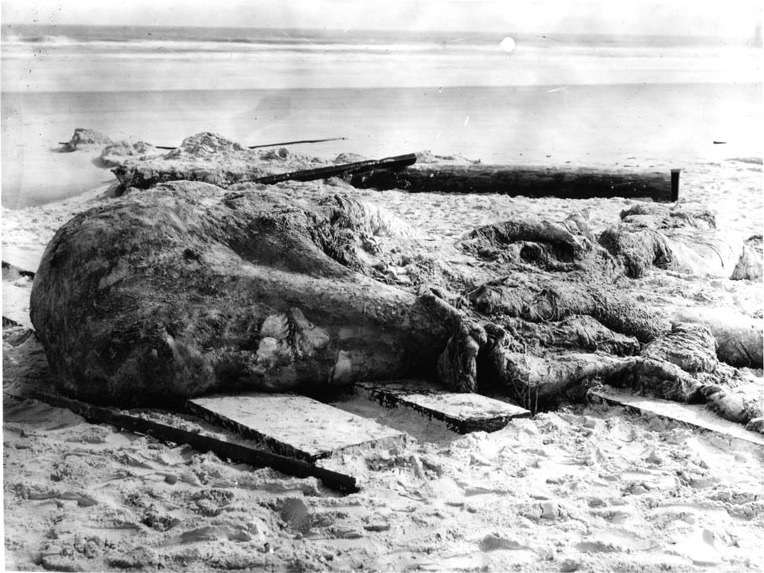
Two boys walking a Florida beach in 1896 stumbled onto a carcass that has now confused four separate generations of researchers.
The St. Augustine Monster made national headlines after two boys found the amorphous carcass on Anastasia Island, Florida. It measured 21 feet long, 7 feet wide, and 6 feet tall at its highest point. Unlike most globsters, actual tissue samples from this one survived, preserved in a jar for over a century.
Those preserved samples produced wildly different conclusions decade after decade. In 1971, a cell biologist reported it might be from an octopus; cryptozoologist Roy Mackal reached the same conclusion in 1986; then a more sophisticated 1995 analysis reported the samples were collagen from a warm-blooded vertebrate – in other words, probably a whale. Three separate scientific teams, working from the exact same jar of tissue, arrived at three different answers.
Quick Compare
- 1971: Cell biologist points to octopus tissue
- 1986: Cryptozoologist Roy Mackal agrees, octopus theory stands
- 1995: Advanced testing finds collagen from a warm-blooded vertebrate, likely whale
#1 – The Stronsay Beast That Got Its Own Scientific Name

This is the case that started it all, and remarkably, it’s the one where actual credentialed scientists formally declared they’d found a brand-new species.
The Stronsay Beast washed ashore on the island of Stronsay in Scotland’s Orkney Islands after a storm on September 25, 1808, and was measured at 55 feet long, not counting a missing section of tail. The Natural History Society of Edinburgh couldn’t identify the carcass and concluded it was a new species, probably a sea serpent.
They even gave it a formal scientific name before anyone challenged the ruling. Scientists in Edinburgh named it Halsydrus pontoppidani, though a leading surgeon named Sir Everard Home later argued it was a decomposed basking shark after studying its vertebrae. The problem is that the longest basking shark ever recorded measured 32 feet – significantly shorter than the globster’s reported 55 feet. More than two centuries later, that size gap has never been fully resolved, and the Stronsay Beast remains the closest thing to an officially unidentified animal on record.
The Bottom Line
Here’s the uncomfortable truth the case files reveal: identification isn’t nearly as clean as forensic dramas make it look. Most of these carcasses were never touched by a real scientist until days, months, or even years after discovery – by which point currents, decomposition, and scavengers had already destroyed the evidence that would have settled things fast.
A handful, like the Montauk Monster and Trunko, disappeared before testing ever happened at all, which means the “official” explanations you’ve heard are educated guesses, not lab-confirmed facts. Our take? The real mystery isn’t what these animals were – it’s how easily the public accepts a tidy explanation for a case that was never actually closed. Which one of these do you think deserves a second look? Drop your theory in the comments.