
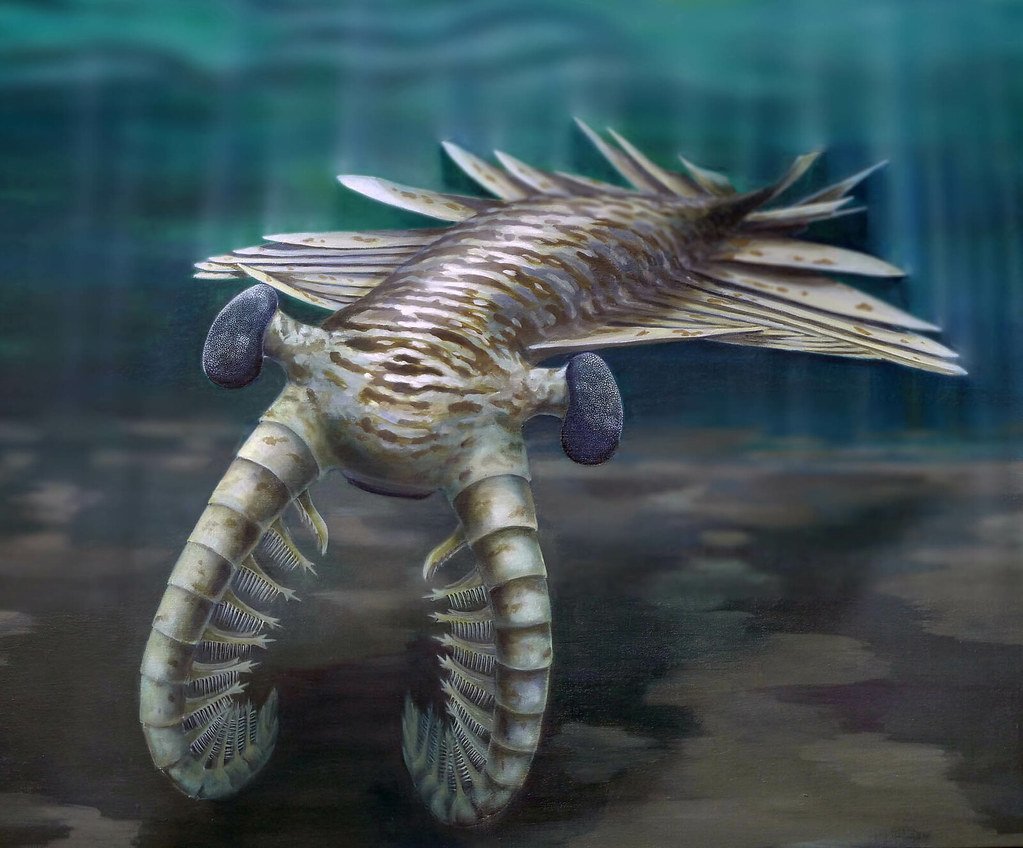
You tend to imagine prehistoric life as giant reptiles, swooping pterosaurs, and shaggy mammoths. But when you look deeper into the fossil record, you find creatures so strange that even expert paleontologists stared at them and basically said, “What on earth is this supposed to be?” Some of these fossils were flipped upside down, taken apart, misidentified as completely different animals, or left in the “unsolved” pile for decades. You’re about to walk through nine of the weirdest of these problem creatures. For each one, you’ll see how scientists first got it wrong, how they eventually figured it out, and what that teaches you about how science actually works when the evidence is confusing. By the end, you might feel that the past was far stranger, and far more creative, than any science fiction universe you’ve seen on screen.
1. Hallucigenia: The Fossil Scientists Literally Had Upside Down
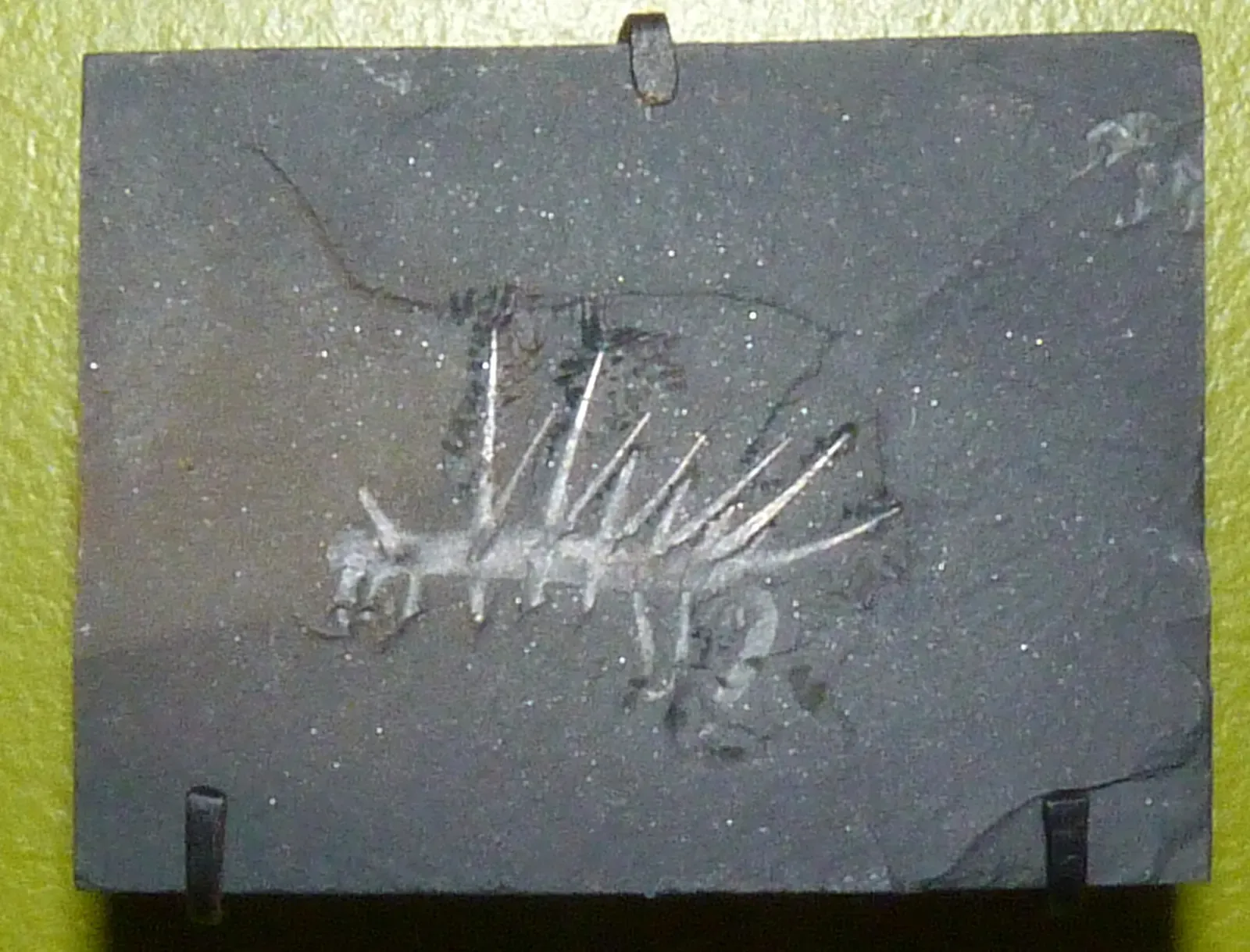
If you ever wanted proof that the fossil record can mess with your brain, Hallucigenia is it. When you first meet this animal, you see a long worm-like body with spikes and soft tentacle-like limbs… but for years, scientists thought the spikes were legs and the legs were tentacles on its back. The head and tail were also swapped, so the original reconstruction looked like something built in a hurry from spare parts rather than a real animal. ([biblicalcreation.org.uk](https://www.biblicalcreation.org.uk/scientific_issues/bcs007.html?utm_source=openai)) Later, fresh fossils showed that the soft, tube-like structures actually came in pairs, like proper walking limbs, while the big spikes lined its back as armor. Once researchers flipped it over and turned it around, Hallucigenia suddenly made more sense as a small, spiky relative of modern velvet worms, part of a broader group of lobopodians that helped bridge the gap between worms and arthropods. You can almost feel the collective embarrassment: for years, you would have been picturing this creature walking on stilts made of knives, when in reality those “legs” were there to stop something else from doing the eating. ([paleoecology.voices.wooster.edu](https://paleoecology.voices.wooster.edu/wp-content/uploads/sites/229/2020/02/Sample-Paleo-Research-Paper.pdf?utm_source=openai))
2. Anomalocaris: A “Shrimp Tail” That Turned Out to Be a Monster
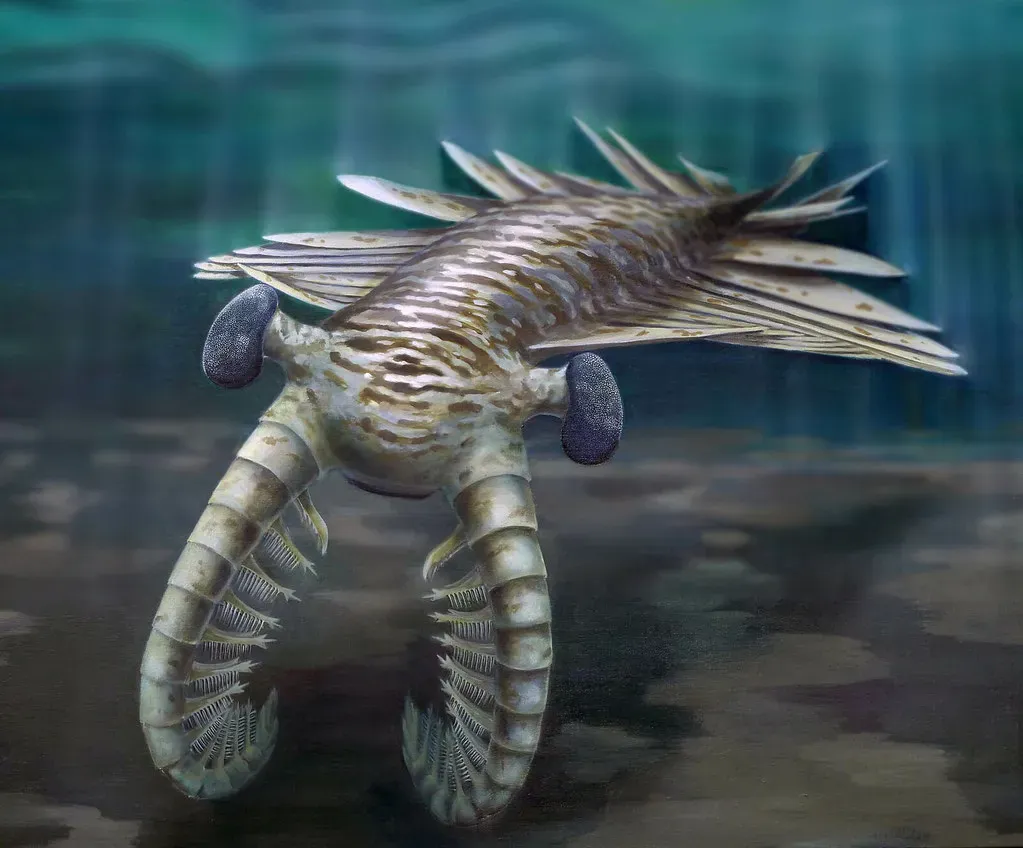
Imagine you’re sorting through slabs of rock and you find an odd, segmented structure that looks like the tail of a shrimp. A little later, you find a round disc that seems like a jellyfish, and some curved spiny appendages you can’t quite place. For decades, these bits were all described as separate creatures, given different names, and filed away. Only later did scientists realize you were actually looking at scattered pieces of one huge predator: Anomalocaris. ([strangescience.net](https://www.strangescience.net/stinv.htm?utm_source=openai)) Once the puzzle came together, Anomalocaris transformed from a collection of misidentified parts into a true Cambrian terror, swimming with flapping lobes, using those formidable spiny limbs to grab prey and shove it into a circular mouth lined with plates. Today you’d recognize it as one of the earliest large predators in Earth’s oceans and a stem-relative of arthropods, but at first it was literally too weird to see as a single animal. If you’d been a paleontologist in the early twentieth century, you might have confidently labeled the “tail,” the “jellyfish,” and the “claw” without ever suspecting they belonged to the same toothy nightmare. ([en.wikipedia.org](https://en.wikipedia.org/wiki/Anomalocaris?utm_source=openai))
3. Opabinia: The Five-Eyed Vacuum Hose From the Cambrian
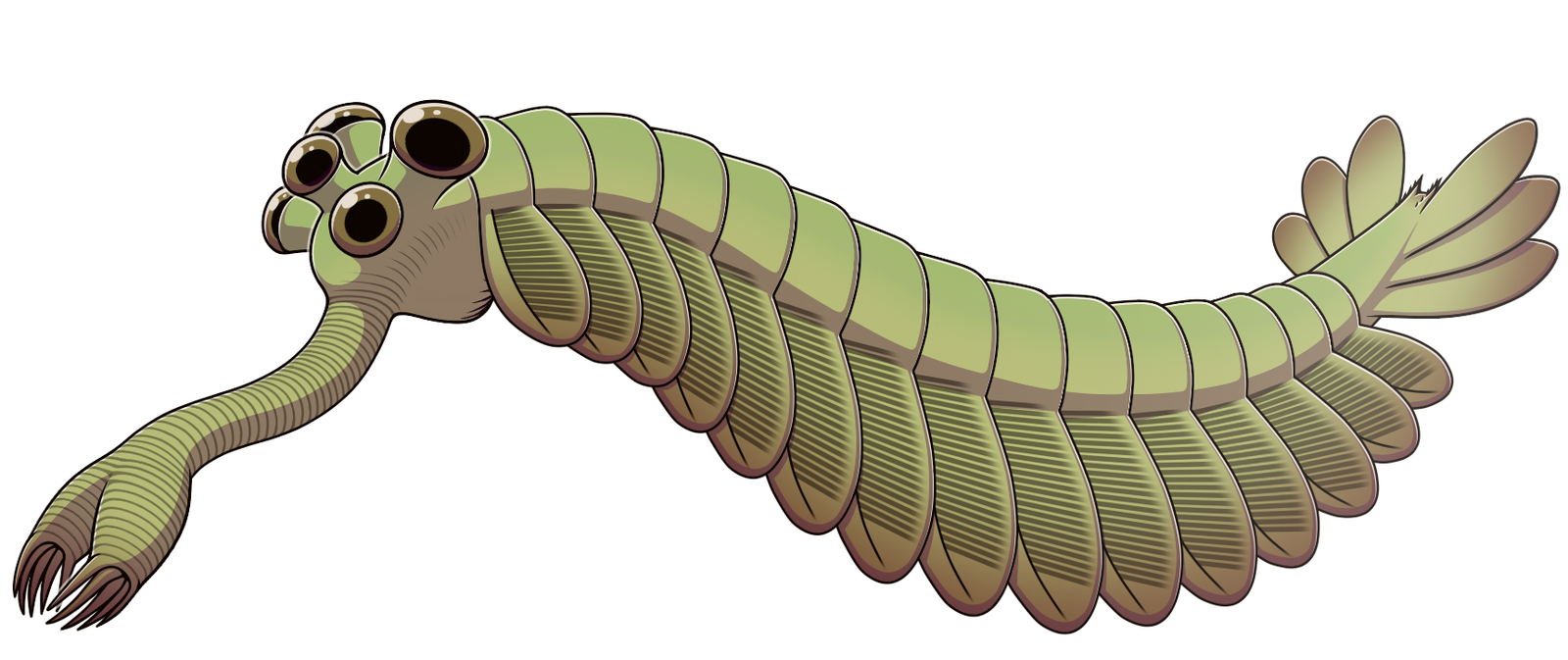
Now picture yourself at a scientific talk in the 1970s. A reconstruction of a small Cambrian animal appears on the screen: five stalked eyes, a long flexible trunk ending in a claw, and a mouth tucked under the head. According to accounts, the audience laughed out loud because it looked that absurd. Yet Opabinia was real, and you can still visit its fossils from the Burgess Shale. ([ocean.si.edu](https://ocean.si.edu/through-time/burgess-shale?utm_source=openai)) For a long time, Opabinia sat in the “unclassifiable” bin, a one-off evolutionary experiment nobody quite knew how to place. Only with decades of work, plus the discovery of related forms, did researchers come to see it as part of the stem lineage leading toward arthropods, with that trunk likely used to grab soft food from the seafloor and pass it to its hidden mouth. If you looked at it now, you’d still think it looks like something from a surreal cartoon, but you’d also see a key data point in understanding how complex heads and appendages evolved. Its weirdness is not a joke; it’s a clue to how radically different early animal body plans could be. ([burgess-shale.rom.on.ca](https://burgess-shale.rom.on.ca/fossils/opabinia-regalis/?utm_source=openai))
4. Tully Monster: The State Fossil That Wouldn’t Behave
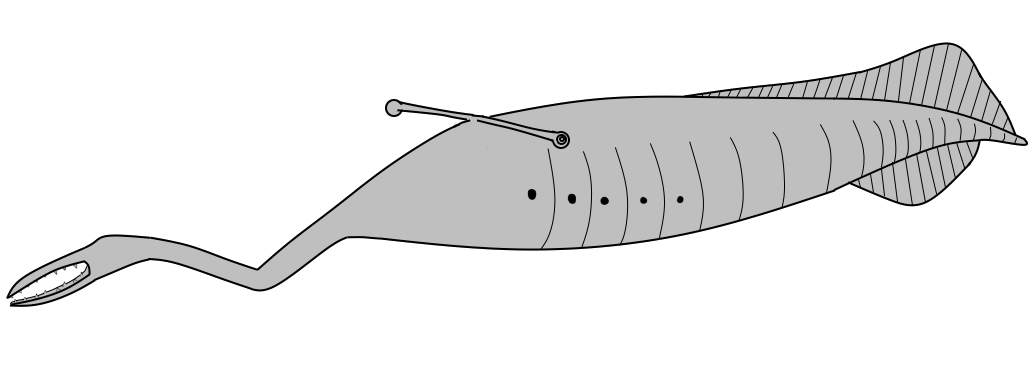
If you grew up in Illinois, your state fossil is not a dinosaur, but a soft-bodied enigma called the Tully Monster, or Tullimonstrum. At first glance, you see a tadpole-shaped body, a long flexible snout ending in a claw-like structure, and eyes set on a stiff horizontal bar – like someone stretched a squid and added a periscope. For more than half a century, scientists debated what it even was: worm, mollusk, jellyfish relative, arthropod, or something completely unique. ([floridamuseum.ufl.edu](https://www.floridamuseum.ufl.edu/fossilproject/blog/research-the-tully-monster/?utm_source=openai)) More recent work, based on thousands of fossils from the Mazon Creek deposits and advanced imaging, has leaned toward interpreting the Tully Monster as a vertebrate, possibly related to jawless fish. Features like what appear to be gill pouches and a notochord support that idea, though not everyone agrees and the debate still simmers. If you like scientific mysteries, this one is perfect for you: even today, you’re watching in real time as new techniques slowly narrow down where this bizarre creature fits on the tree of life, while its overall shape still looks like something you’d doodle in the margins during a boring meeting. ([floridamuseum.ufl.edu](https://www.floridamuseum.ufl.edu/fossilproject/blog/research-the-tully-monster/?utm_source=openai))
5. Ainiktozoon: The “Problem” Fossil From Scotland
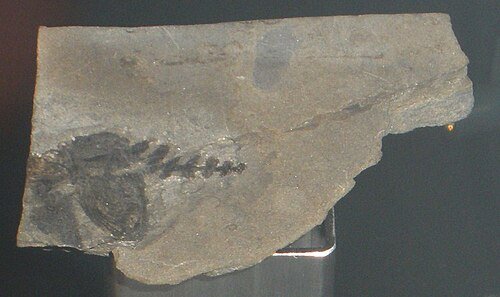
Travel in your mind to the Silurian rocks of Scotland, and you meet Ainiktozoon, an animal so hard to classify that it has been lumped into a catch-all category paleontologists half-jokingly call “Problematica.” Original specimens showed a small, segmented body with a head shield, a tail, and strange lateral structures that looked a little like gills or fins but not quite like anything living today. Because it did not neatly match any modern group, early workers bounced among possibilities, treating it as everything from an odd crustacean-like creature to something closer to early chordates. ([earth.yale.edu](https://earth.yale.edu/sites/default/files/2024-09/Briggs%20doc%2017.pdf?utm_source=openai)) With better preservation and modern imaging, Ainiktozoon is now seen as part of a broader set of early, complicated animals that blur lines between major groups. When you look at it, you’re really seeing how arbitrary some of your modern categories are. Your brain wants to file things as fish, worm, insect, or jellyfish, but fossils like this refuse to cooperate. Instead, they force you to picture evolution as a branching network where many experiments, like Ainiktozoon’s particular body plan, simply ended without leaving direct descendants, leaving you to puzzle over the ghosts of long-vanished lineages. ([earth.yale.edu](https://earth.yale.edu/sites/default/files/2024-09/Briggs%20doc%2017.pdf?utm_source=openai))
6. Dickinsonia: Animal, Fungus, or Giant Single-Celled Blob?
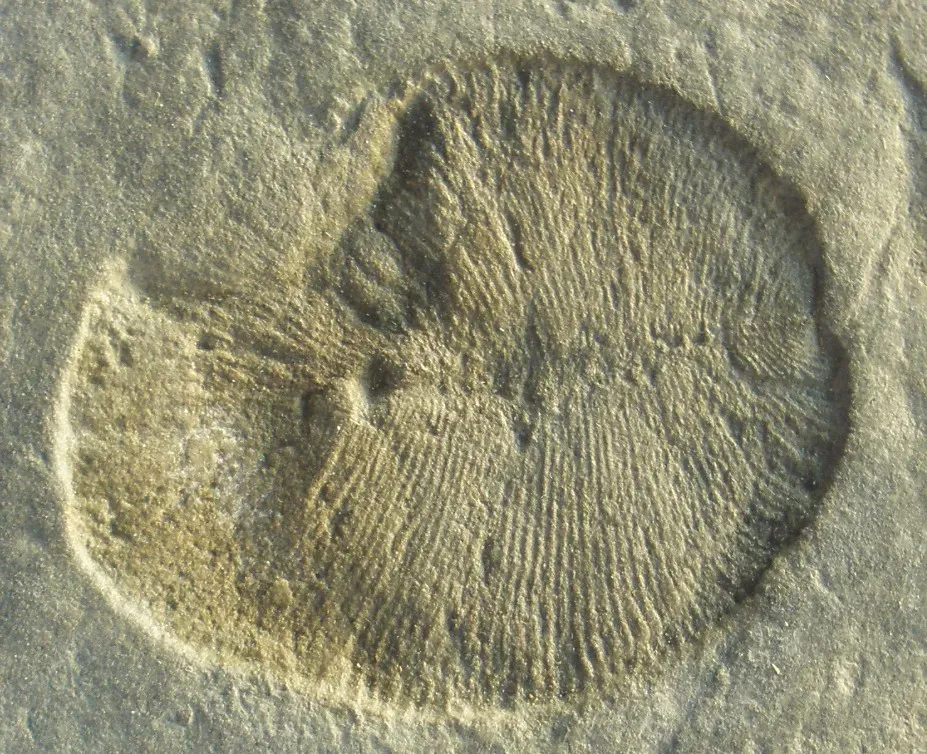
Move back even further, before the Cambrian explosion, and you run into Dickinsonia from the Ediacaran period: flat, oval, ribbed impressions on ancient seafloors. When you first see photos of these fossils, they look like segmented pancakes or giant leaves pressed into stone. Early interpretations bounced wildly. Some scientists thought you were looking at a kind of primitive animal, others leaned toward giant protozoans, fungi, or even an extinct kingdom of life with no modern equivalent. The trouble was that you rarely had clear evidence of mouths, guts, or limbs – just these quilted, bilaterally symmetrical shapes. ([earth.yale.edu](https://earth.yale.edu/sites/default/files/2024-09/Briggs%20doc%2017.pdf?utm_source=openai)) Over the last decade or so, chemical studies of organic molecules preserved in some Dickinsonia fossils have strongly suggested an animal affinity, pointing toward cholesterol-like compounds that you expect in animals rather than algae or fungi. That does not mean every detail is solved, but it does pull this creature closer to your own branch of the tree. When you picture Dickinsonia now, you can imagine a soft-bodied, possibly mobile animal that grazed microbial mats on the seafloor, even though for years it sat in textbooks as the definition of “we actually have no idea what this is.” ([earth.yale.edu](https://earth.yale.edu/sites/default/files/2024-09/Briggs%20doc%2017.pdf?utm_source=openai))
7. Wiwaxia: A Walking Pin Cushion That Broke the Rules
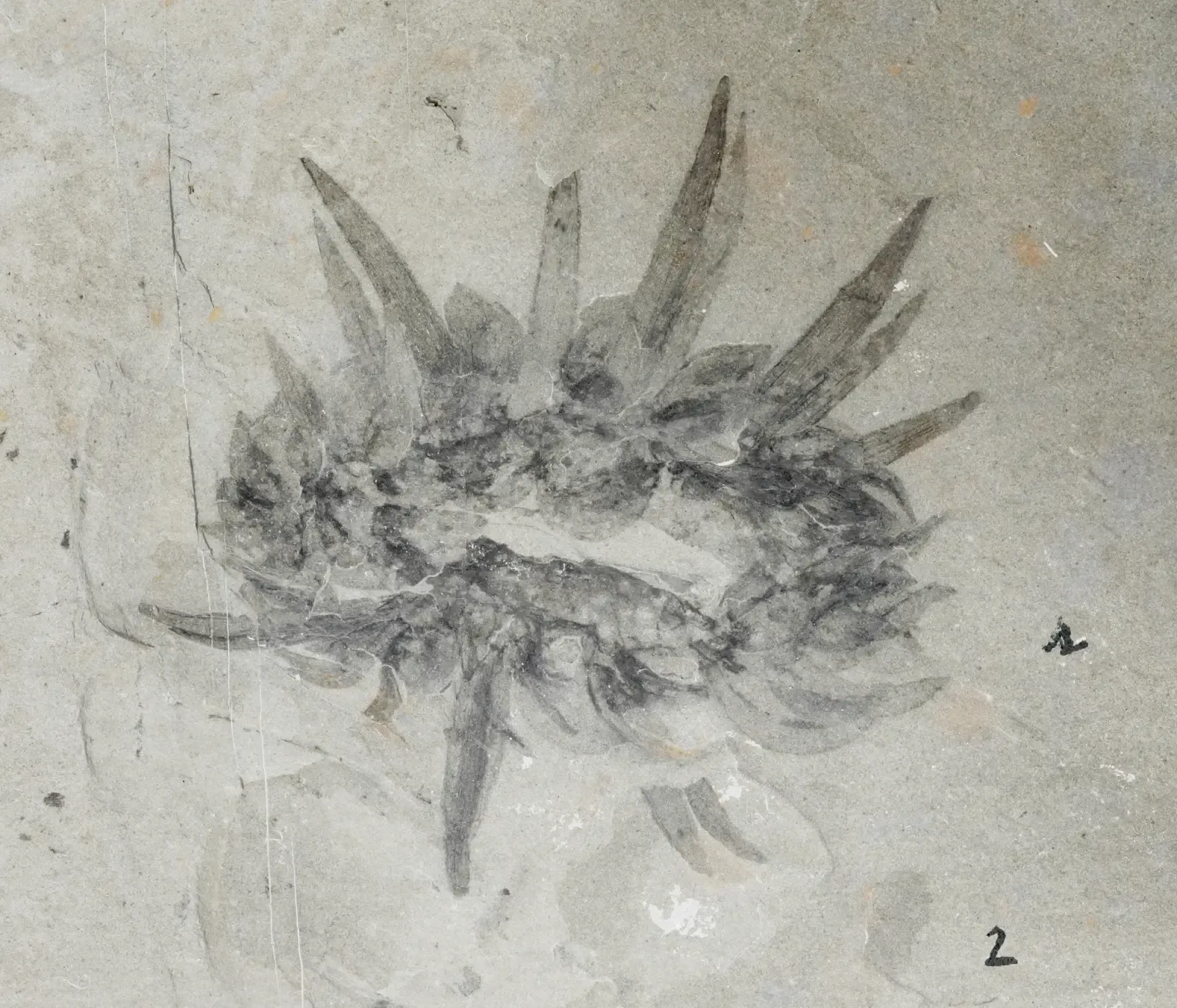
From the Burgess Shale again, you meet Wiwaxia: a small, slug-like body covered in overlapping scales and long spines that stick out like toothpicks from a hedgehog. The first time you see it, your brain reaches for analogies – armored slug, spiky pill bug – but none of them really land. For a long time, paleontologists argued about whether you should think of Wiwaxia as closer to early mollusks, early annelid worms, or its own weird one-off lineage. The mouth region with tooth-like elements added more confusion because those features could fit more than one group. ([earth.yale.edu](https://earth.yale.edu/sites/default/files/2024-09/Briggs%20doc%2017.pdf?utm_source=openai)) Today, the balance of evidence nudges Wiwaxia toward mollusk relatives, especially when you compare its mouthparts to the rasping radula of modern snails and slugs. But you still can’t shoehorn it neatly into any living category. When you look at Wiwaxia, you’re basically looking at evolution trying out an armored grazing body plan long before the modern line-up of shell makers and bristly worms settled into their current shapes. If you had been one of the first people to reconstruct it, you would probably have drawn something that looked more like fantasy art than a sober scientific illustration – and honestly, you would not have been that far off. ([earth.yale.edu](https://earth.yale.edu/sites/default/files/2024-09/Briggs%20doc%2017.pdf?utm_source=openai))
8. Spriggina: An Ediacaran Creature Caught Between Eras
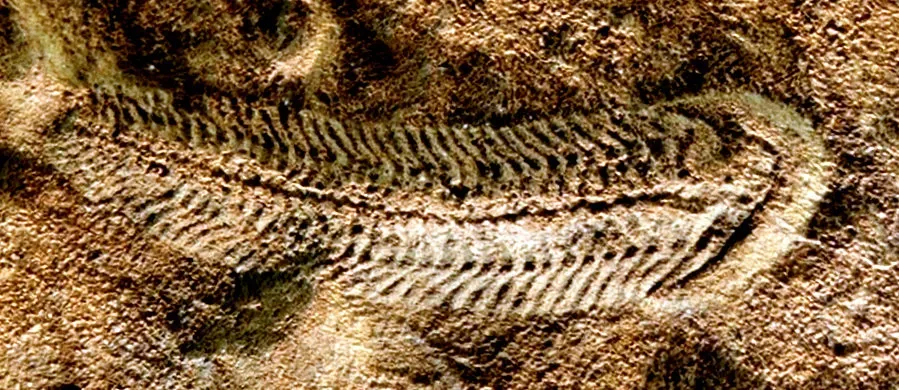
Spriggina is another Ediacaran oddball that initially left scientists scratching their heads. Its fossils show an elongated, segmented body with a possible head region at one end, making it look, at first glance, like a stripped-down version of a trilobite or centipede. That resemblance tempted early researchers to treat it as a potential ancestor of later arthropods, while others argued it might belong closer to early worms or represent a separate, now-extinct group. With only impressions and no hard shells or clear internal anatomy, your interpretation depends heavily on subtle details that are easy to misread. ([earth.yale.edu](https://earth.yale.edu/sites/default/files/2024-09/Briggs%20doc%2017.pdf?utm_source=openai)) Modern analyses have tended to be more cautious, placing Spriggina among a suite of Ediacaran animals that probably sit near the base of bilaterians – organisms with a front and back and left-right symmetry like you. That still leaves a lot unanswered. When you imagine Spriggina sliding across ancient sea floors, you see an experiment in building a more complex body, one that might have set the stage for the explosion of forms in the Cambrian. Yet because it does not cleanly match any one modern group, you also see how easily early scientists could project familiar shapes (like trilobites) onto something that only superficially resembles them. ([earth.yale.edu](https://earth.yale.edu/sites/default/files/2024-09/Briggs%20doc%2017.pdf?utm_source=openai))
9. Odontogriphus: The “Toothed Mystery” With a Hidden Identity
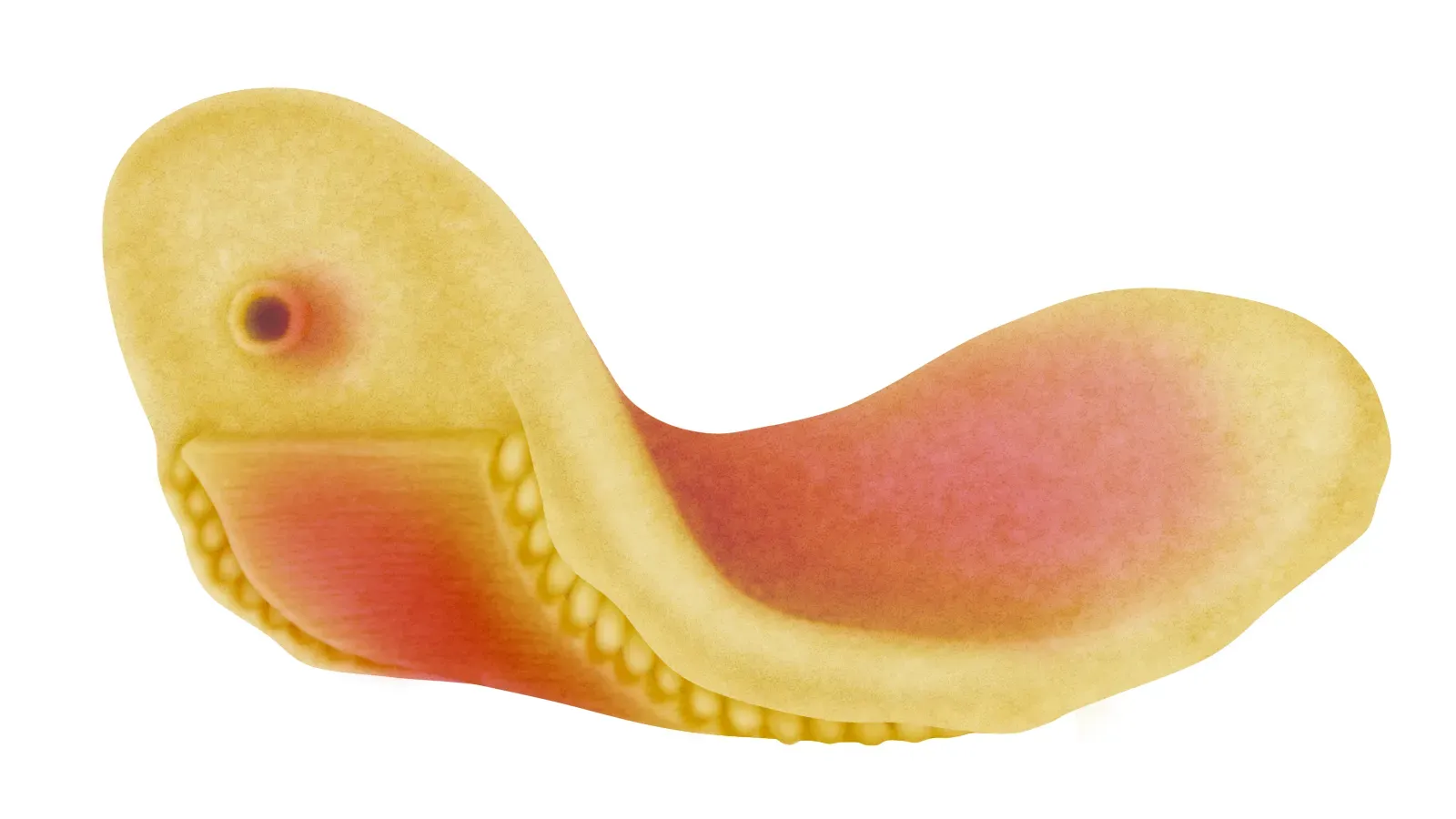
Finally, meet Odontogriphus, whose name literally means “toothed riddle.” When it was first described from the Burgess Shale, it looked like a soft, flattened oval with a band of teeth-like structures and few other obvious features. With no shell, no legs, and no clear segmentation, early workers were left wondering whether you were looking at some kind of strange grazer unrelated to modern groups or a missing link that would change how you see familiar animals. For a while, it floated in that frustrating gray zone of “interesting, but unplaceable.” ([earth.yale.edu](https://earth.yale.edu/sites/default/files/2024-09/Briggs%20doc%2017.pdf?utm_source=openai)) Later discoveries and more complete specimens showed that Odontogriphus shared important traits with early mollusk-like animals, especially when you look closely at its feeding apparatus. Those tooth rows now seem to be an early version of a radula, the scraping organ you see in snails and other mollusks, suggesting this odd little creature was sliding over microbial mats and rasping them up. What started as a nearly featureless blob in the fossil record turned out to be a key piece in the story of how one of the most successful animal groups on Earth got started. If you had seen only the first, poorly preserved fossils, you probably would have shrugged; with better material, the “toothed riddle” suddenly begins to speak. ([earth.yale.edu](https://earth.yale.edu/sites/default/files/2024-09/Briggs%20doc%2017.pdf?utm_source=openai))
Conclusion: What These Bizarre Creatures Really Tell You
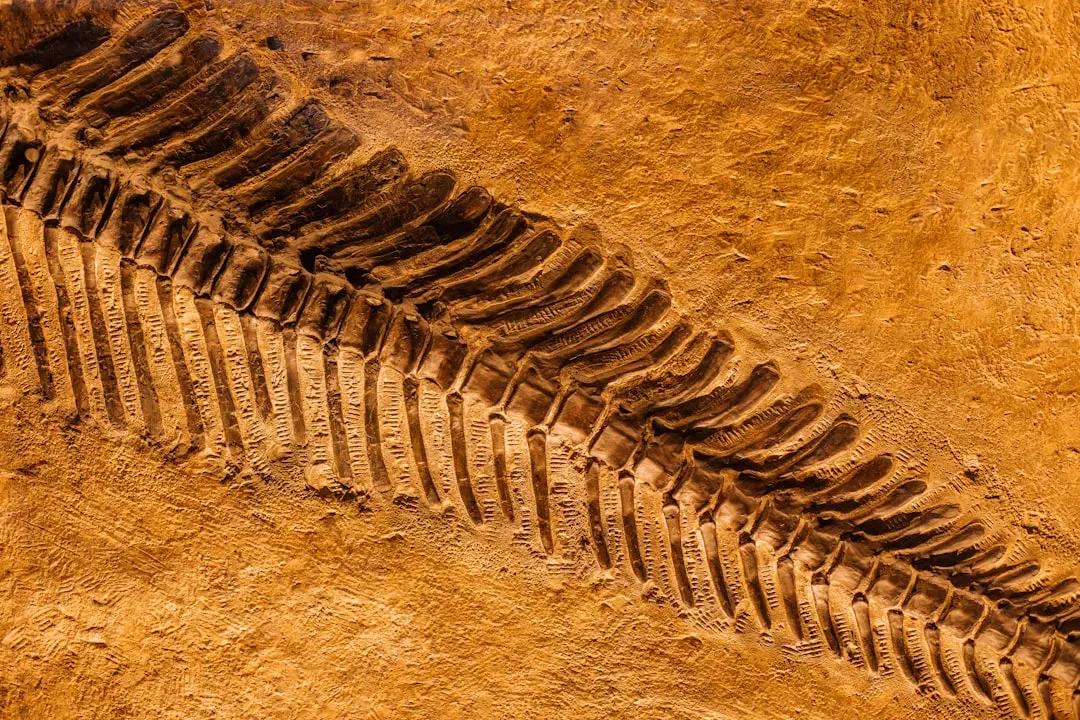
When you step back from these nine creatures, a pattern jumps out at you: the past is not just a simpler version of the present. It is a graveyard of evolutionary experiments, many of which look nothing like anything alive today. You see scientists misreading spikes as legs, tails as shrimp, or animal bodies as fungi, not because they were foolish, but because your own brain is wired to force the unfamiliar into familiar boxes. These fossils push back and remind you that evolution has tried far more options than the handful of body plans you see in modern seas and forests. The next time someone tells you prehistoric life was just dinosaurs and mammoths, you’ll know better. The true story includes five-eyed vacuum hunters, inside-out worms, armor-plated slugs, and state fossils that still refuse to sit quietly in one category. It also includes something more subtle: a picture of science as a constantly self-correcting process, where being wrong is sometimes the only way to eventually be right. So when you imagine ancient oceans now, which of these strange creatures do you see gliding past first – and did you ever expect prehistory to be this weird?