
You tend to think of dinosaurs and mammoths when someone says “prehistoric animals,” but the deep past is full of creatures so strange they make those giants look almost ordinary. When you zoom in on the details of their anatomy, you start seeing solutions to survival that feel more like science fiction prototypes than anything nature should reasonably invent. As you walk through these ten animals, try to picture them as living, moving bodies, not just dusty skeletons. You’ll see eyes in the wrong place, jaws that behave like circular saws, limbs that turn into wings in ways you’d never expect, and armor that turns an animal into a literal living tank. You’re not just reading about fossils here – you’re looking at the outer limits of what evolution can do when it’s given hundreds of millions of years to experiment on a dangerous planet.
1. Opabinia: The Five‑Eyed Vacuum Cleaner Of The Cambrian Seas
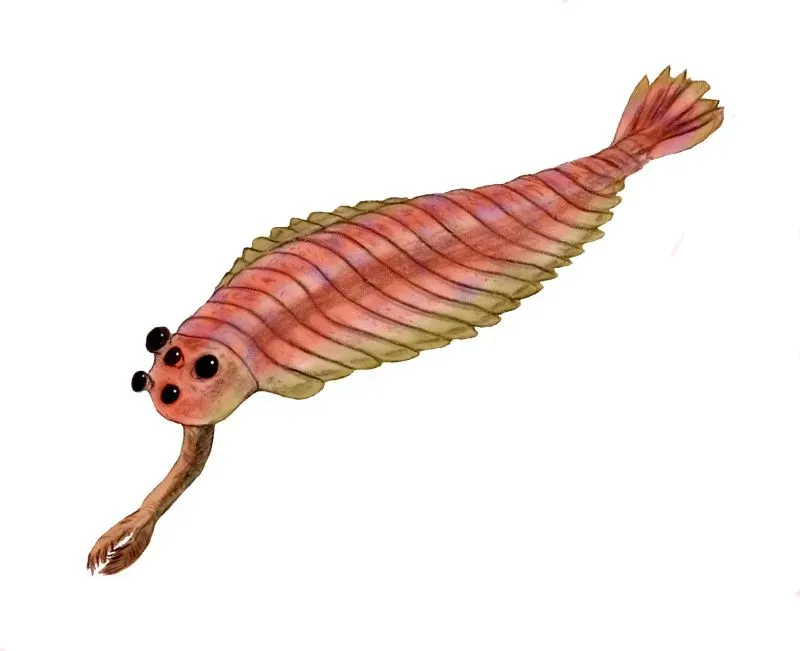
If you could time‑travel to Cambrian seas more than five hundred million years ago, Opabinia would stop you in your tracks. You’d be staring at a small, soft‑bodied creature, roughly the length of your finger, carrying five eyes on stalks and a long, flexible proboscis that looks disturbingly like a tiny vacuum hose. That proboscis ended in little claws, perfectly shaped to grab bits of food and pass them back under its head to a mouth that actually faced backward. ([en.wikipedia.org](https://en.wikipedia.org/wiki/Opabinia?utm_source=openai)) You can think of Opabinia as evolution stress‑testing every camera angle and feeding layout it could come up with. Those five eyes gave it overlapping fields of view in a murky seafloor world where something could attack from almost any direction, while the clawed trunk let it reach into soft sediment like a flexible robotic arm. You never see this exact setup again in the fossil record, which tells you that you’re looking at a genuine evolutionary dead end – one of nature’s strangest trial runs in building complex predators from scratch. ([burgess-shale.rom.on.ca](https://burgess-shale.rom.on.ca/science/origin-of-animals-and-the-cambrian-explosion/enigmatic-ediacarans/?utm_source=openai))
2. Sharovipteryx: The Reptile That Put Its Wings On The Wrong End
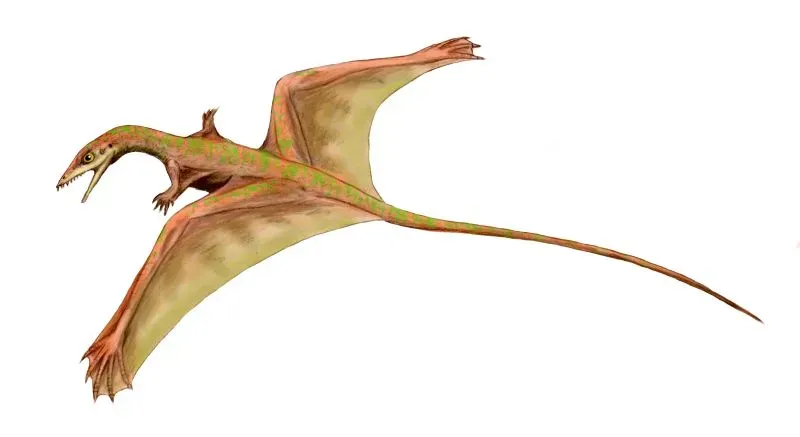
When you picture a gliding reptile, you probably imagine something like a flying dragon lizard, with long ribs or skin folds stretched between the front and back legs. Sharovipteryx laughs at that mental image. This tiny Triassic reptile had ridiculously long hind legs with membranes stretched between them and the tail, forming a triangular “delta wing” placed behind the rest of the body, while the forelimbs stayed short and almost useless for lift. From above, it would have looked more like a paper airplane glued to a lizard than anything alive today. ([onlinelibrary.wiley.com](https://onlinelibrary.wiley.com/doi/10.1111/j.1420-9101.2006.01105.x?utm_source=openai)) Researchers have modeled how this odd little animal might have moved through the air, and the results show you a surprisingly stable glider, not some doomed evolutionary joke. By holding its hindlimbs and tail in different angles, Sharovipteryx could adjust its glide much like a modern delta‑wing jet controls its airflow. You’re essentially watching evolution discover that you can fly not only by enlarging your arms, but by turning your legs into the main lifting surface – a design that worked here, then vanished without ever being reused. ([doc.rero.ch](https://doc.rero.ch/record/16249/files/PAL_E3487.pdf?utm_source=openai))
3. Helicoprion: The Shark With A Buzz‑Saw For A Jaw
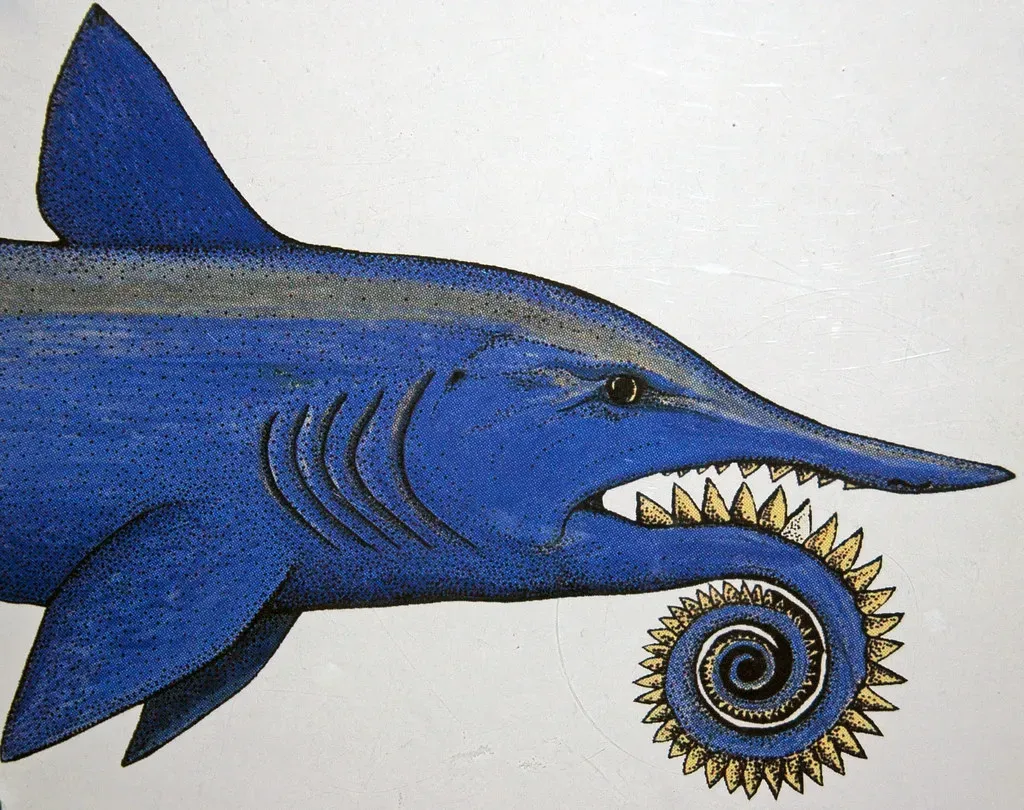
Imagine swimming alongside what looks like a fairly standard prehistoric shark, until it opens its mouth and you realize its lower jaw contains a tightly coiled spiral of teeth, like a circular saw blade made out of enamel. That is Helicoprion, an early cartilaginous fish that lived around the Permian period, whose bizarre tooth whorl has baffled scientists for over a century. At first glance, you’d never guess where that spiral even belonged, and early reconstructions stuck it everywhere from the snout to the throat. Modern studies place the tooth spiral in the lower jaw, where it likely rolled new teeth forward as old ones were worn down by biting into soft‑bodied prey like squid. You can picture it almost like a meat‑processing machine: the upper jaw pinned the prey, the lower “saw” rotated it inward, and the spiral of fresh, sharp teeth did the shredding. You never evolved anything like this yourself, but it reveals a powerful point about evolution – you can solve the problem of tooth replacement not just by growing a new row, but by stacking them into a rotating conveyor of blades.
4. Deinocheirus: The Dinosaur That Looked Like A Mash‑Up
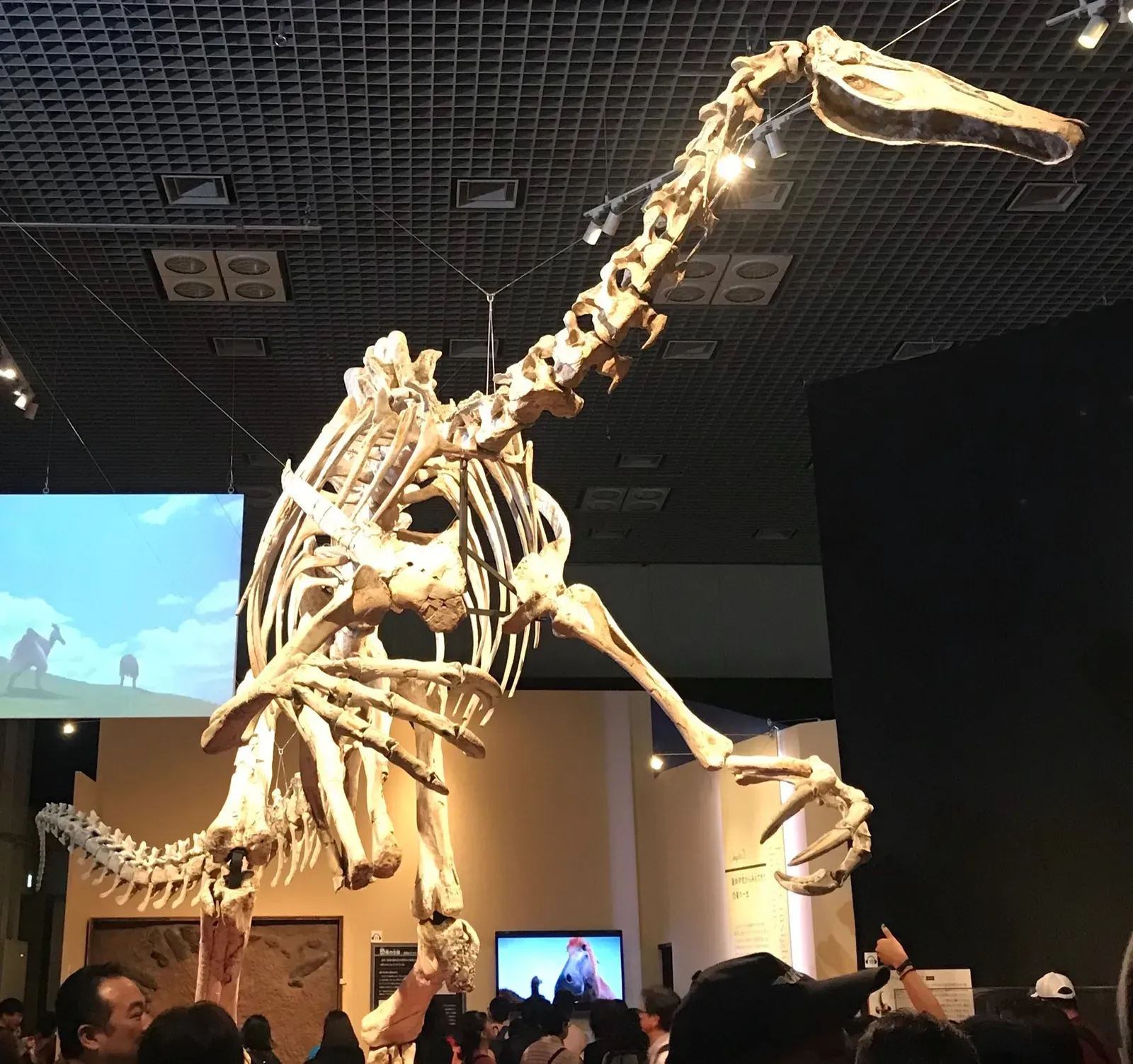
The first thing you notice about Deinocheirus is the pair of gigantic, eight‑foot arms tipped with formidable claws, which were all scientists had for decades. When the rest of the skeleton finally turned up, what you got looked almost like a practical joke: a massive, hump‑backed, duck‑billed, pot‑bellied dinosaur with a strange sail of spines along its back and hooves instead of sharp raptor claws on its feet. It was technically related to the ostrich‑like ornithomimosaurs, but it looked more like someone fused a duck, a camel, and a theropod into one animal. Instead of being a sleek predator, Deinocheirus seems to have used its colossal arms to rake plants and soft material toward its beak in wetlands, while its broad hips and heavy belly housed a huge gut for digesting rough vegetation. You can think of those scary arms not as weapons but as oversized rakes or shovels. This flips your normal dinosaur expectations upside down, showing you that even among theropods – famous for toothy killers – evolution could push some lineages into slow, bulky, almost comical‑looking omnivores that still managed to be wildly successful in their own niche.
5. Spinosaurus: The Aquatic Super‑Predator With A Sail
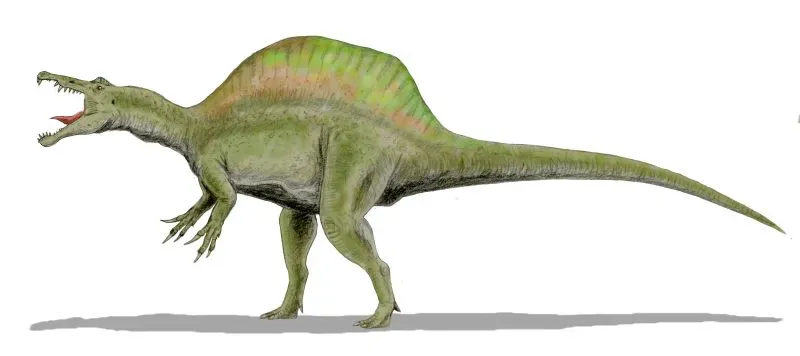
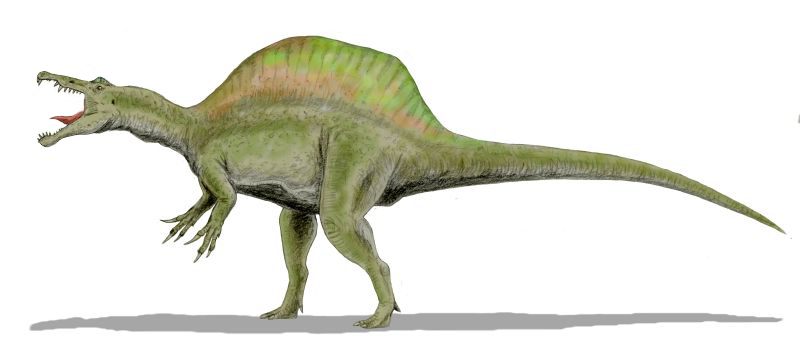
Spinosaurus already sounds over the top when you hear it was longer than Tyrannosaurus, but its real weirdness shows up when you look at how its body was built for water. It had a long, crocodile‑like snout packed with conical teeth, nostrils placed further back from the tip, dense limb bones, and a tail flattened side‑to‑side like a giant paddle – features that together point strongly toward a life spent swimming after fish rather than stalking prey on land. You’re basically looking at a dinosaur that was halfway to being a four‑legged, deep‑chested, bipedal crocodile with a sail stuck to its back. That sail – formed by tall neural spines – might have played a role in display or thermoregulation, but whatever its exact use, it made Spinosaurus look almost unreal, like it had wandered in from a concept artist’s sketchbook. The combination of semi‑aquatic adaptations and that towering fin forced you to rethink the old picture of dinosaurs as strictly land‑locked. Instead, you have a lineage that pushed deep into river systems as top aquatic predators, blending traits you normally mentally separate into different groups: crocodile senses and teeth, fish‑trapping jaws, and a dinosaur skeleton warped to fit an amphibious lifestyle.
6. Glyptodon: The Living Tank With A Built‑In Shield
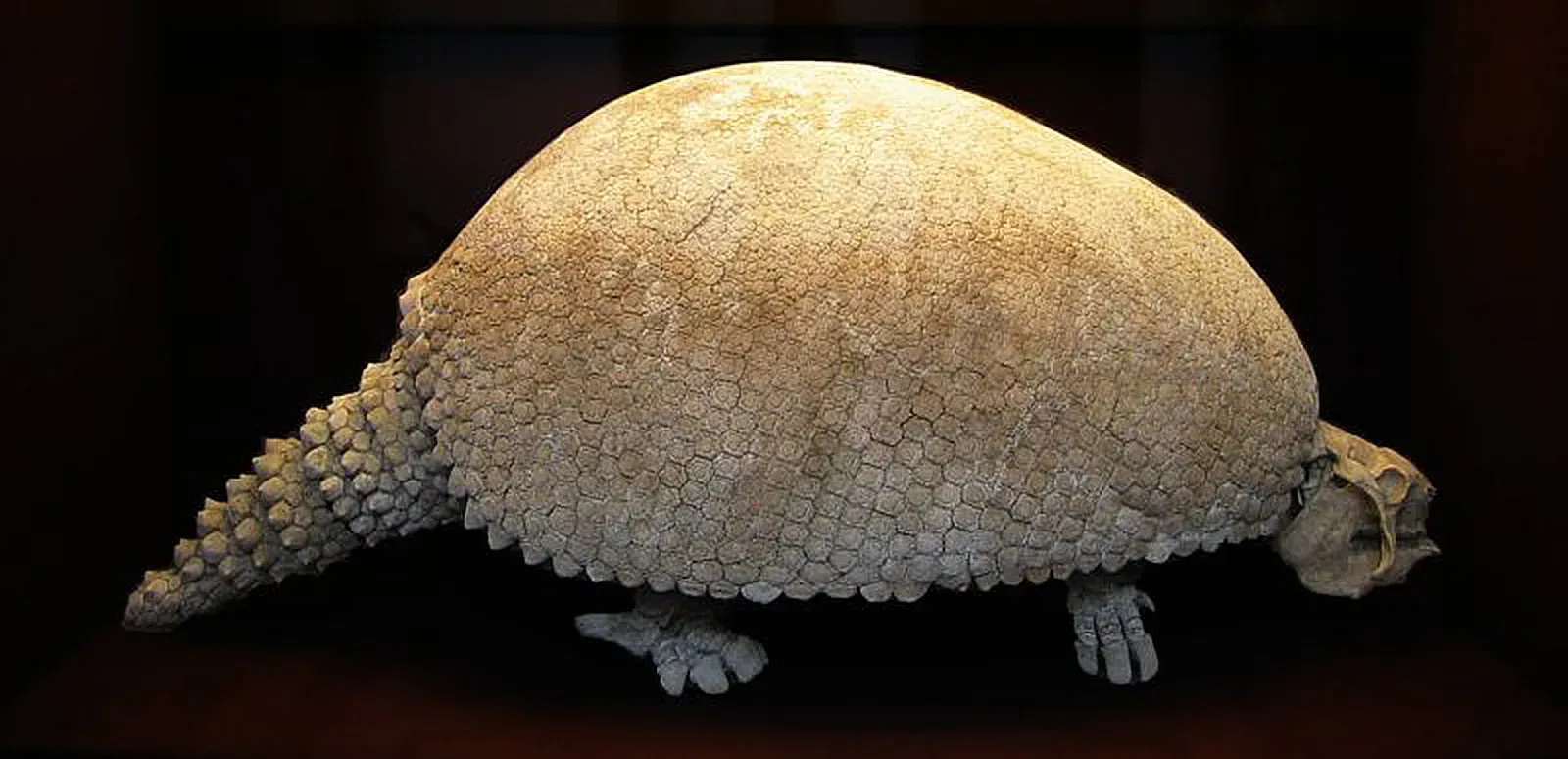
If you came across a Glyptodon in Ice Age South America, you might think someone had abandoned a huge, dome‑shaped metal shield in the grass. This relative of modern armadillos carried a rigid shell made of fused bony plates, plus a massively reinforced skull and often a heavy club‑like tail. Instead of running from predators, it could simply hunker down, turning itself into a boulder of bone that big cats or even early humans would struggle to crack. What makes Glyptodon feel almost impossible to you is how fully committed it was to the armor strategy. Its entire body plan revolves around defense: low‑slung legs to keep the center of gravity close to the ground, broad hips to support the shell’s weight, and a tail that could be swung like a built‑in mace. It is evolution taking the idea of a turtle shell and dialing it up several notches, showing you that if the threat level is high enough and you are willing to pay the energy cost, you really can become a walking fortress and still find enough food to survive.
7. Arthropleura: The Millipede That Turned Into A Roadblock
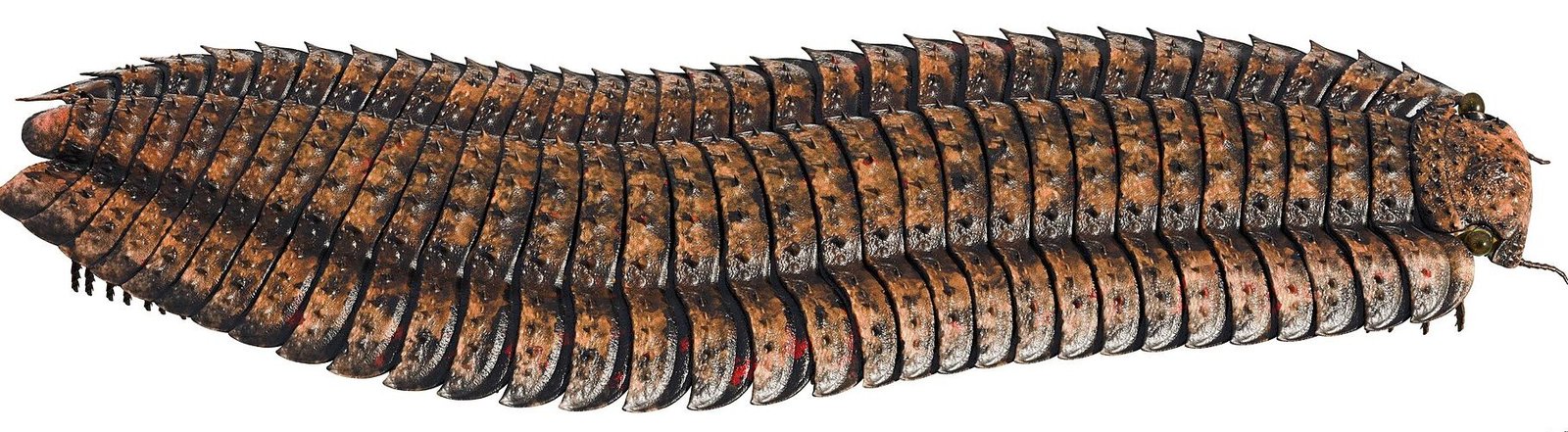
Now picture a forest floor in the Carboniferous period, covered in giant club‑moss trees and ferns, and then let your mind drop down to eye level with Arthropleura. You’re looking at a millipede‑like arthropod that could grow over two meters long, its segmented body plated with overlapping armor and supported by dozens of legs. It did not need venom or claws to be frightening; its sheer size would have been enough to make you freeze if you saw it crossing your path. The impossibility you feel here comes from the fact that the air back then held much more oxygen than it does today, which allowed arthropods to grow to these absurd sizes without suffocating. Arthropleura likely fed mostly on plant material and detritus, yet it still ended up as one of the largest terrestrial invertebrates ever known. You’re seeing how a simple, low‑to‑the‑ground body plan – repeated segments and legs – can scale up into something that starts to rival a small car in length, given the right atmospheric conditions and a forest floor rich enough to support it.
8. Dimetrodon: The Sail‑Backed Predator That Wasn’t A Dinosaur
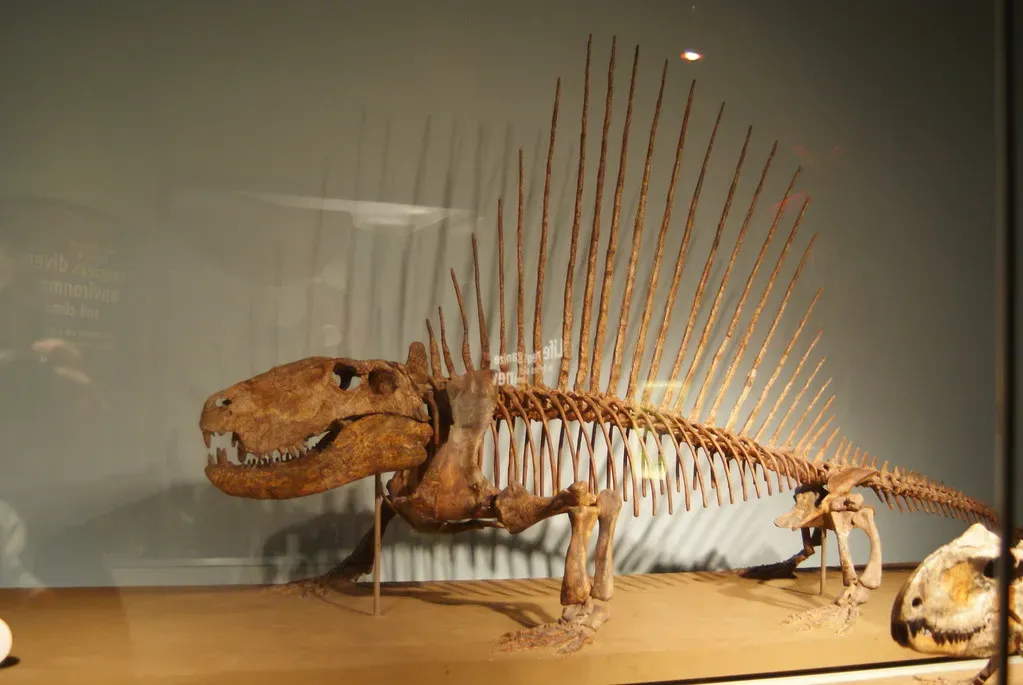
Dimetrodon often gets casually lumped together with dinosaurs in pop culture, but it actually lived tens of millions of years before the first true dinosaurs evolved. What grabs your attention, of course, is that enormous sail rising from its spine, made of elongated vertebral spines connected by skin. This predator already had differentiated teeth – sharp canines and shearing back teeth – hinting at a feeding style more complex than most reptiles around it, and yet all you can think about at first is that giant vertical billboard on its back. You still do not have a final answer on exactly why that sail evolved, but thermoregulation and display are two strong possibilities. In either case, it shows you that evolution is willing to bolt a huge, seemingly fragile structure onto a carnivore’s back if the payoff in temperature control or social signaling is high enough. Dimetrodon sits on your own distant evolutionary side of the tree – as a synapsid relative – so when you look at it, you are not just seeing a weird “reptile.” You are seeing an early chapter in the experiment that eventually produced mammals, already playing around with body temperature and energetic lifestyles in dramatic fashion.
9. Hallucigenia: The Inside‑Out, Upside‑Down Worm With Spines
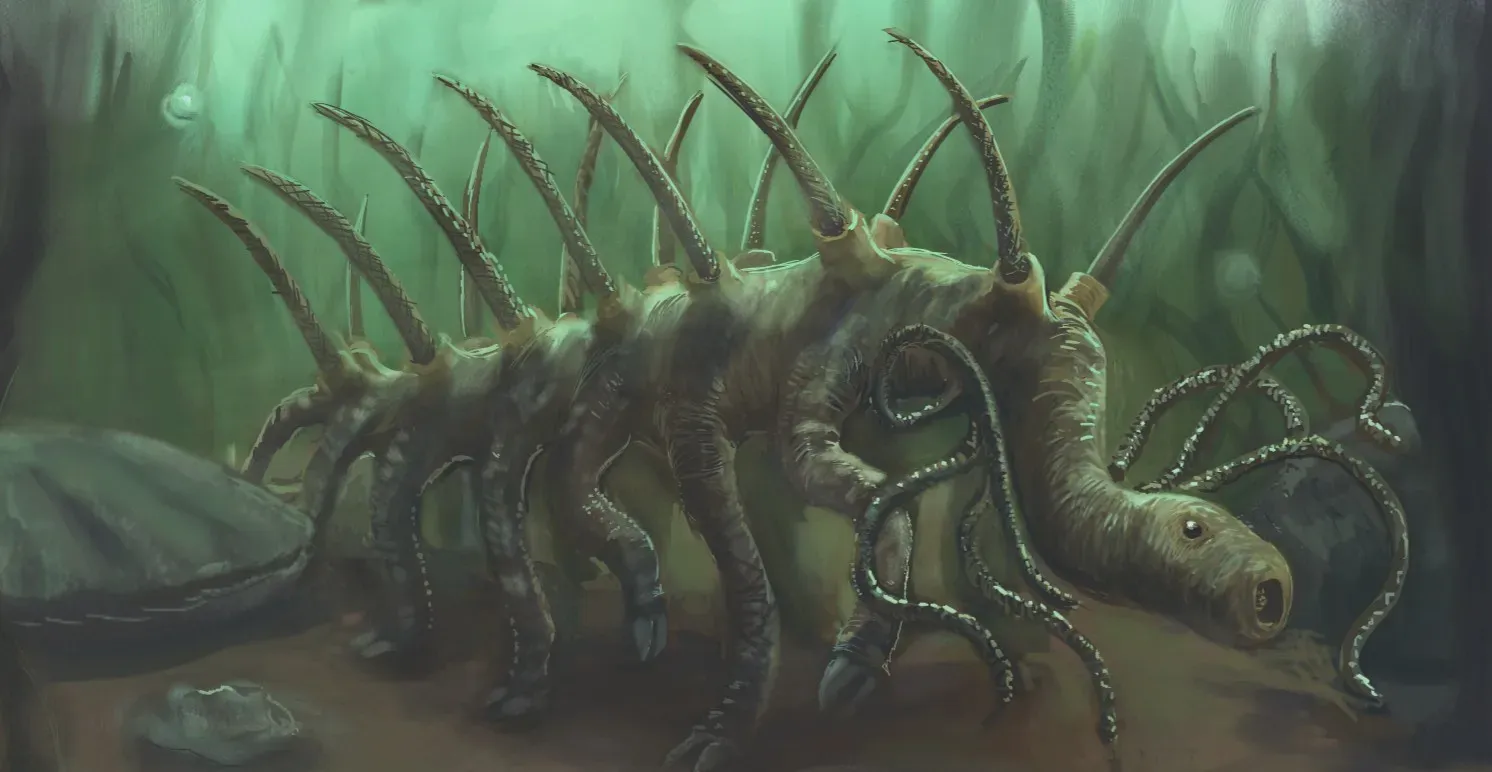
Hallucigenia earned its name because for years paleontologists could not even agree which way was up. The original fossils were reconstructed as a worm walking on stiff spikes with soft tentacles waving along its back, a design so strange that it felt like a hallucination. Later work flipped the animal: those “spines”turn out to be defensive structures on the back, while the fleshy tentacles are actually paired walking legs ending in tiny claws, turning the whole animal into a soft‑bodied crawler armored with wicked dorsal spikes. You can imagine this little creature tiptoeing along the Cambrian seafloor on its soft limbs, while those rigid spines made it a nightmare to swallow for any predator without sophisticated crushing jaws. Hallucigenia shows you how evolution can solve the problem of staying uneaten not by running faster or hiding better, but by making your body so unpleasant to bite that many predators simply move on. The confusion it caused among scientists is a reminder that your sense of what an “animal shape” should be is deeply biased by what survives today; deep time was willing to try combinations that your brain instinctively wants to flip, rotate, or reject as impossible.
10. Sharovipteryx’s Gliding Cousins: A Family Of Experimental Fliers
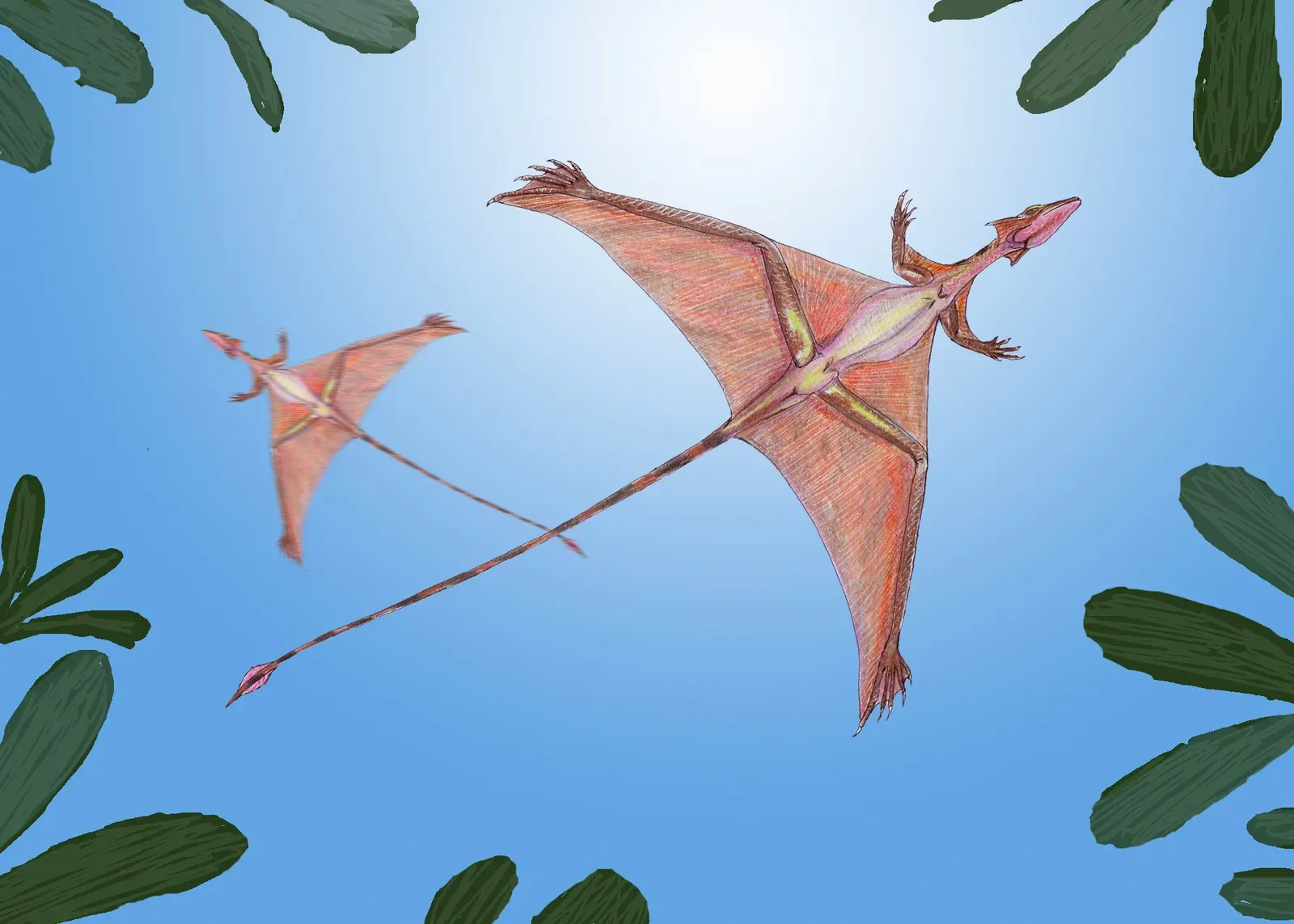
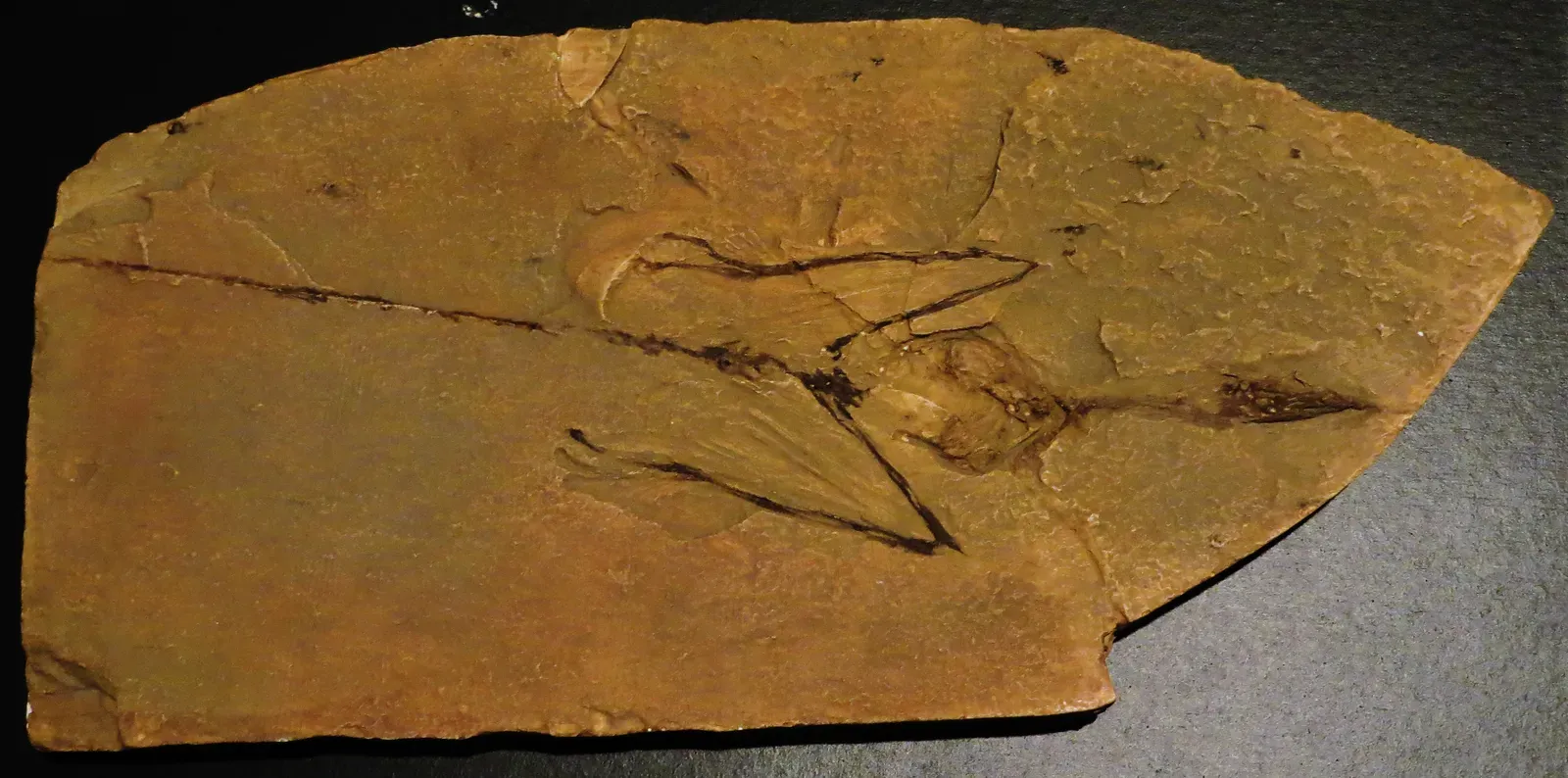
While Sharovipteryx might be the poster child for leg‑based wings, it was not completely alone in pushing reptilian gliding into strange territory. Its likely relative Ozimek volans, for example, combined very long limbs with probable gliding membranes, creating another small Triassic animal adapted to air‑travel using stretched skin surfaces rather than feathers. Together, these gliders show you that evolution did not settle on one single pathway to flight, but repeatedly tinkered with bones, skin, and posture to build workable parachutes and wings. ([en.wikipedia.org](https://en.wikipedia.org/wiki/Ozimek_volans?utm_source=openai)) When you group these experimental fliers in your mind, from hind‑limb gliders to long‑ribbed “wing” reptiles, you start to see a broader pattern: whenever forests and high places exist, natural selection eventually nudges small animals into the air. Some did it the way bats and birds eventually would, using forelimbs as wings, but others did it by turning ribs into support struts or by stretching membrane between hind legs and tail. That diversity tells you something humbling: the physics of gliding and flight are strict, yet within those constraints, evolution is willing to try designs that look, to your modern eyes, almost impossible – and sometimes they work well enough to dominate their little patch of sky for millions of years. ([pmc.ncbi.nlm.nih.gov](https://pmc.ncbi.nlm.nih.gov/articles/PMC1838464/?utm_source=openai))
Conclusion: When “Impossible” Is Just Another Option
As you look back over these ten prehistoric oddities, you can feel your sense of what a “normal” animal is start to stretch. You met predators with buzz‑saw jaws and sail‑backs, gliders that flew with their legs instead of their arms, armored mammals that turned defense into an art form, and tiny Cambrian creatures whose eyes, mouths, and limbs feel like they were scattered by a mischievous designer. None of them are mistakes; each one is a snapshot of evolution testing wild ideas against the ruthless filter of survival. You live in the aftermath of those experiments, in a world where most of the strangest body plans are gone, leaving you with just enough fossil traces to glimpse how far the rules can bend. The next time someone tells you evolution is “random,” you can remember these animals and see something more nuanced: random variation, yes, but shaped by physics, ecology, and time into forms so extreme they look unreal until you realize they actually worked. Which of these creatures would you have guessed was real if you had only seen the drawing with no explanation at all?