
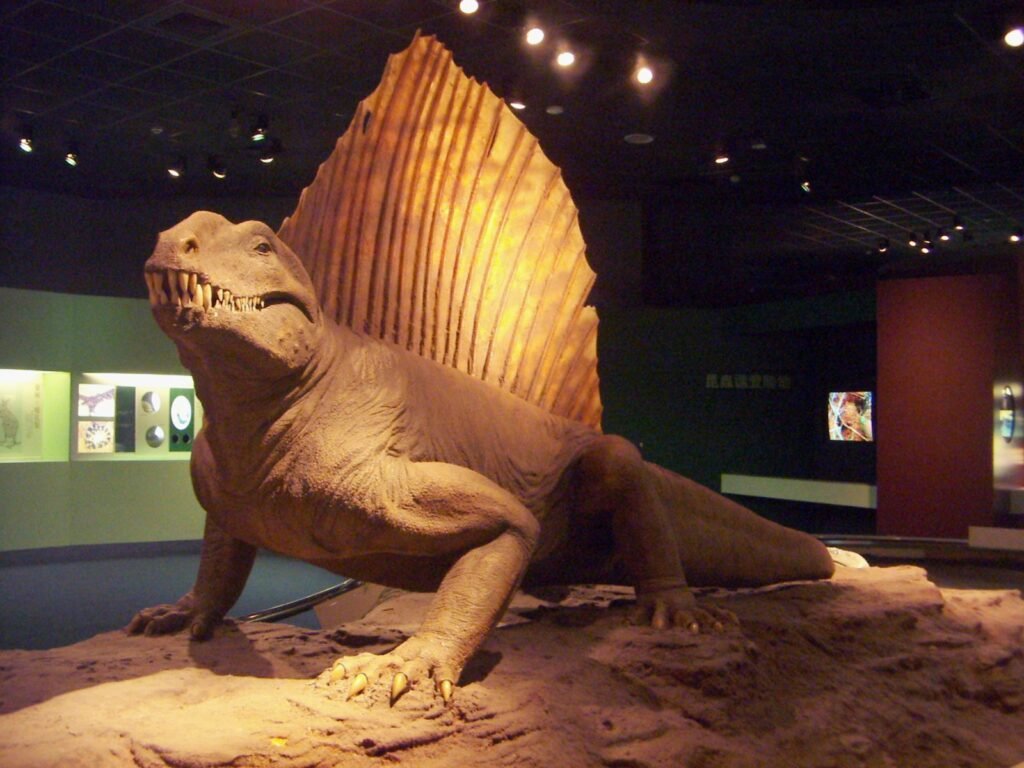
Long before any dinosaur ever thundered across the landscape, Earth already had a reigning super‑predator. Imagine ancient rivers and lush swamps filled with strange, armor‑plated creatures, while a single massive hunter sits at the top of the food chain, shaping everything that lives below it. That animal was not a dinosaur, not even close, but for millions of years it ruled the land the way a T. rex would much later.
The story of that forgotten apex hunter takes us deep into the Permian Period, more than two hundred and fifty million years ago, to an age most people never hear about outside of a museum plaque. Yet in many ways, this era set the stage for the world dinosaurs would inherit. Once you meet the creature that dominated this pre‑dinosaur planet, you’ll never look at “early reptiles” the same way again.
The Apex Before Dinosaurs: Meet Dimetrodon
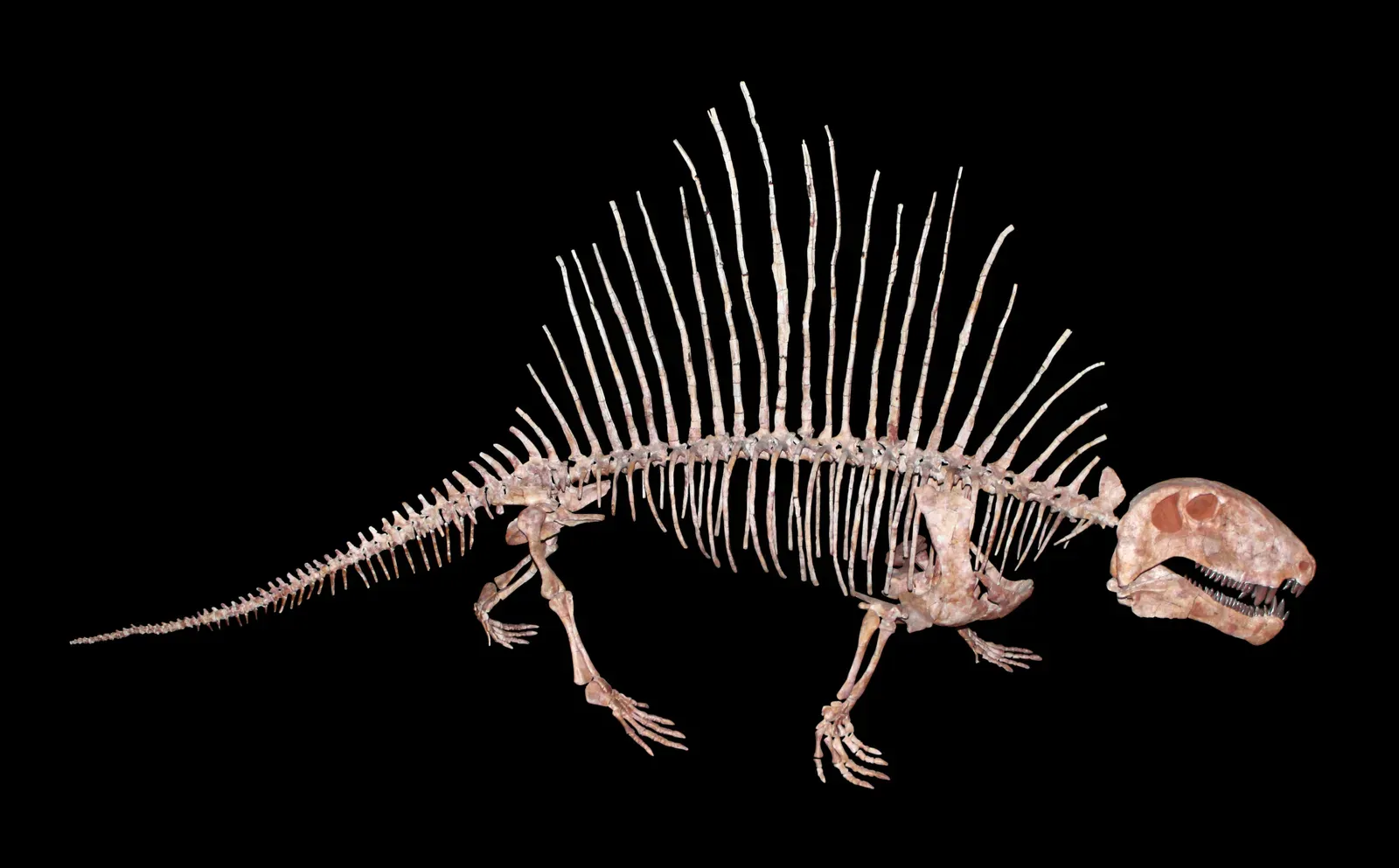
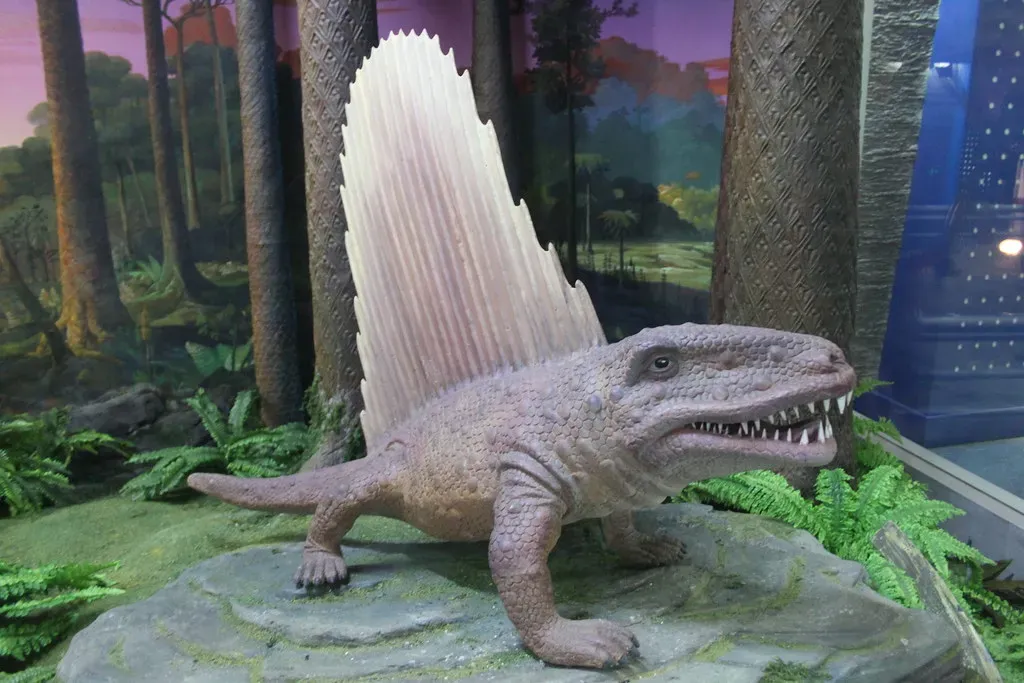
The ancient predator that ruled Earth’s ecosystems long before dinosaurs is called Dimetrodon, and yes, it is that dramatic sail‑backed animal you have probably seen on old fossil posters. It lived during the Early Permian Period, roughly about two hundred ninety‑five to two hundred seventy‑two million years ago, which means it died out tens of millions of years before the first dinosaurs even appeared. Despite often being lumped into dinosaur toy sets, Dimetrodon actually belongs to a completely different branch of the family tree.
Dimetrodon was a synapsid, part of the lineage that would eventually give rise to mammals, including us. That makes it more closely related to humans and dogs than to any dinosaur that ever walked the Earth. So when we talk about the biggest, baddest land predator of its time, we are really talking about a very distant, very toothy cousin that once dominated riverside ecosystems in what is now North America and parts of Europe.
A Body Built for Power: Size, Jaws, and Bone‑Crushing Teeth
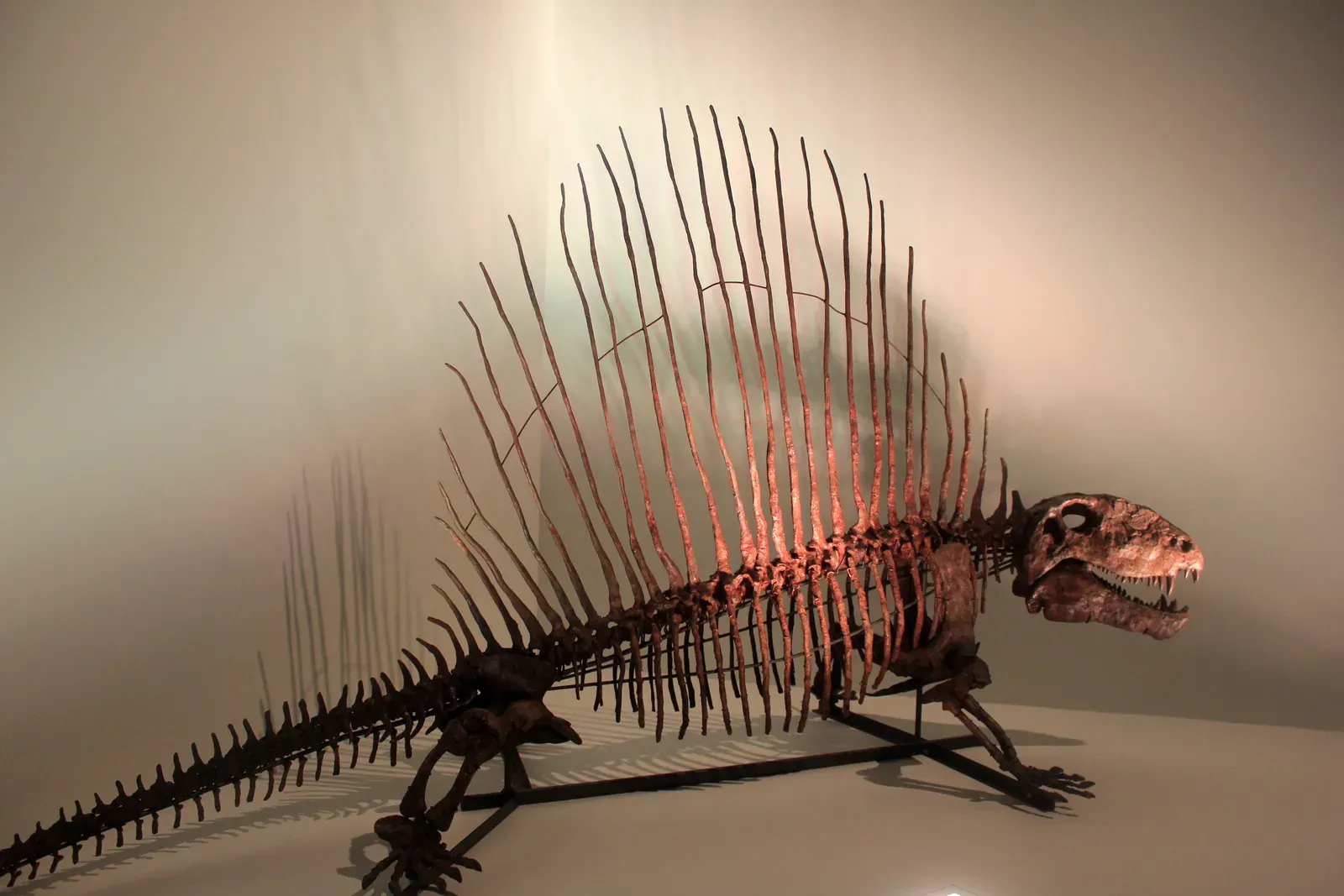
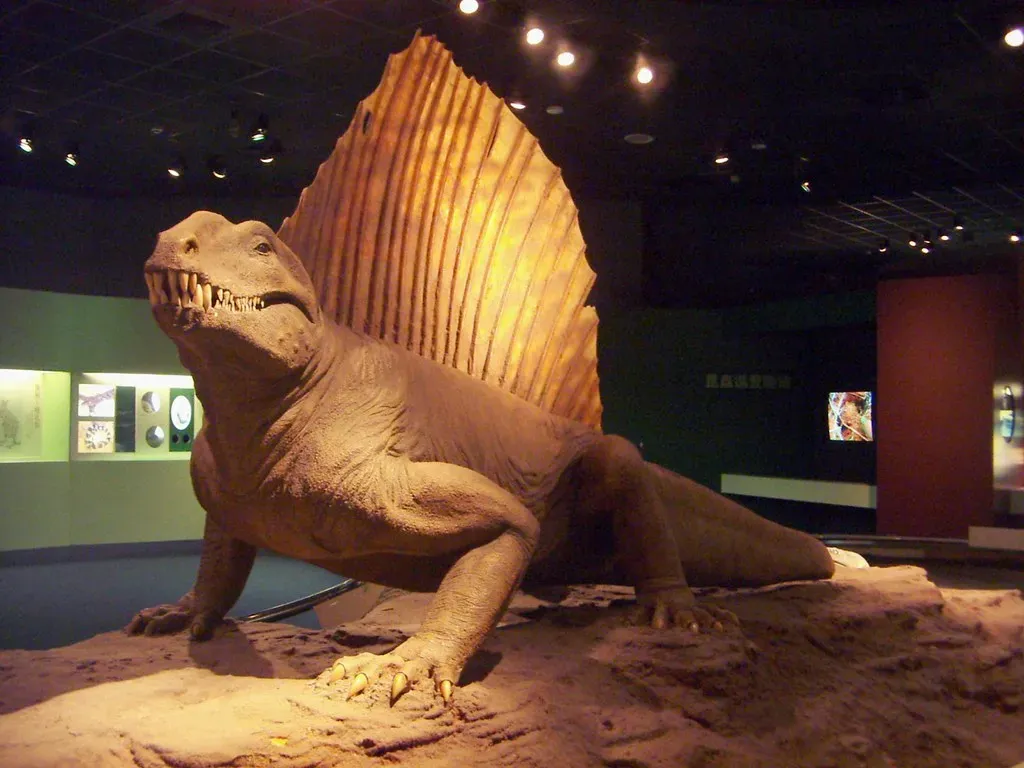
Dimetrodon was not large by dinosaur standards, but for its own time it was terrifyingly impressive. Depending on the species, some individuals were the length of a small car, with a low, sprawling body and a massive skull that did most of the talking. This heavy head was packed with long, serrated teeth that looked like they had been designed to slice through flesh and bone with brutal efficiency.
One of the most chilling features is the way those teeth are arranged. Dimetrodon had enlarged, blade‑like canines and a mix of differently shaped teeth along its jaws, a pattern that hints at more sophisticated feeding than just swallowing things whole. This kind of tooth variety foreshadows what we see in later mammal relatives and suggests Dimetrodon could tackle prey with some precision – gripping, tearing, and shearing like a prehistoric combination of a crocodile and a big cat.
The Famous Sail: Radiator, Billboard, or Something Stranger?
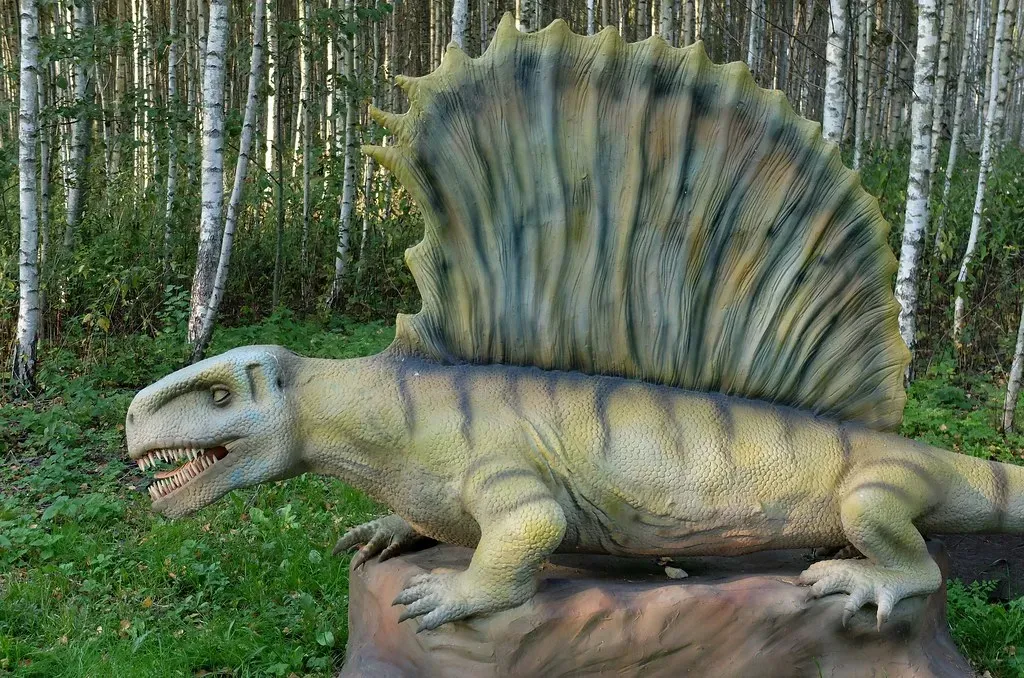
Dimetrodon’s most iconic feature is the tall sail along its back, formed by elongated neural spines projecting from its vertebrae and covered in skin. For decades, scientists have debated what this dramatic structure was actually for. One popular idea is that it helped regulate body temperature, acting like a biological solar panel in the cool mornings and a radiator when the day grew hot, which would have been incredibly useful in fluctuating Permian climates.
Other researchers have suggested the sail could have been used for display, helping individuals recognize their own kind, attract mates, or intimidate rivals and potential threats. Picture an early morning riverside scene: low mist, scattered ferns, and a bulky Dimetrodon slowly rising, its sail catching the sun like a flag. Whether it was mostly a thermostat, a social signal, or a mix of both, that towering structure turned an already dangerous predator into something visually unforgettable.
The World It Ruled: Swamps, Rivers, and a Pre‑Dinosaur Food Web
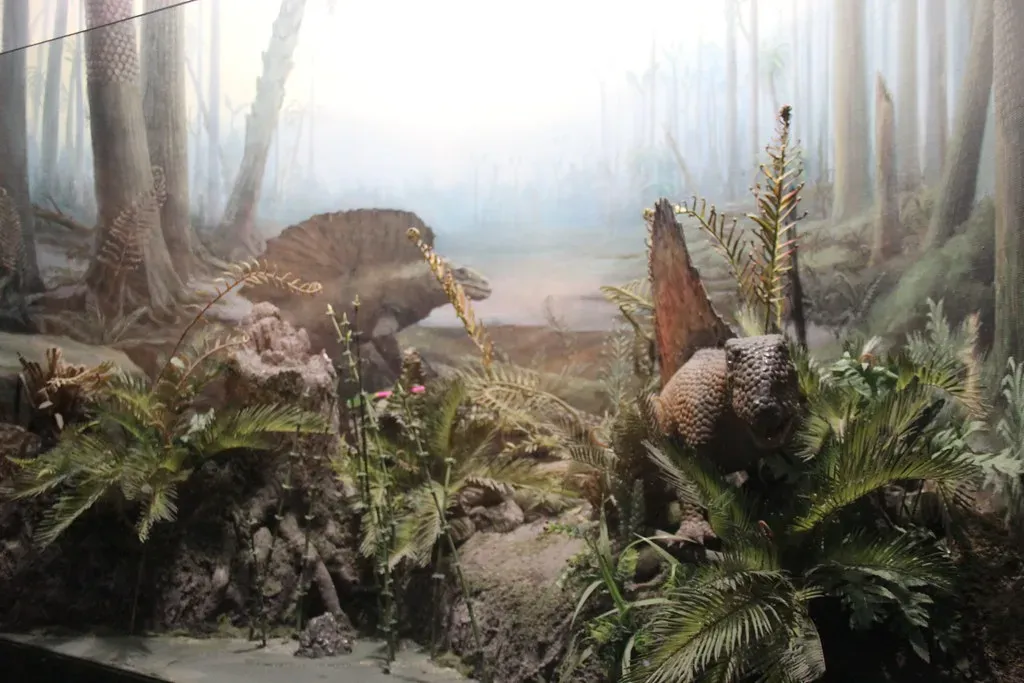
Dimetrodon lived in landscapes dominated by broad river systems, seasonal floodplains, and swampy lowlands. These were not the lush dinosaur jungles many of us imagine, but they were rich in plants like seed ferns and early conifers, with thick mats of vegetation around lakes and streams. The climate in many of its known habitats appears to have swung between wet and dry seasons, creating challenging environments where only well‑adapted animals could thrive.
In this pre‑dinosaur world, Dimetrodon sat at the top of a food web filled with amphibians, early reptiles, and herbivorous synapsids it could hunt. Large, lumbering plant‑eaters such as Edaphosaurus, another sail‑backed animal, may have been on the menu, along with fish and smaller vertebrates that shared the waterways. Where a later ecosystem might have a large theropod dinosaur as its apex predator, these Permian communities had Dimetrodon as their ruling hunter, quietly dictating who lived and who died.
A Predator’s Lifestyle: Hunting Strategies and Daily Life
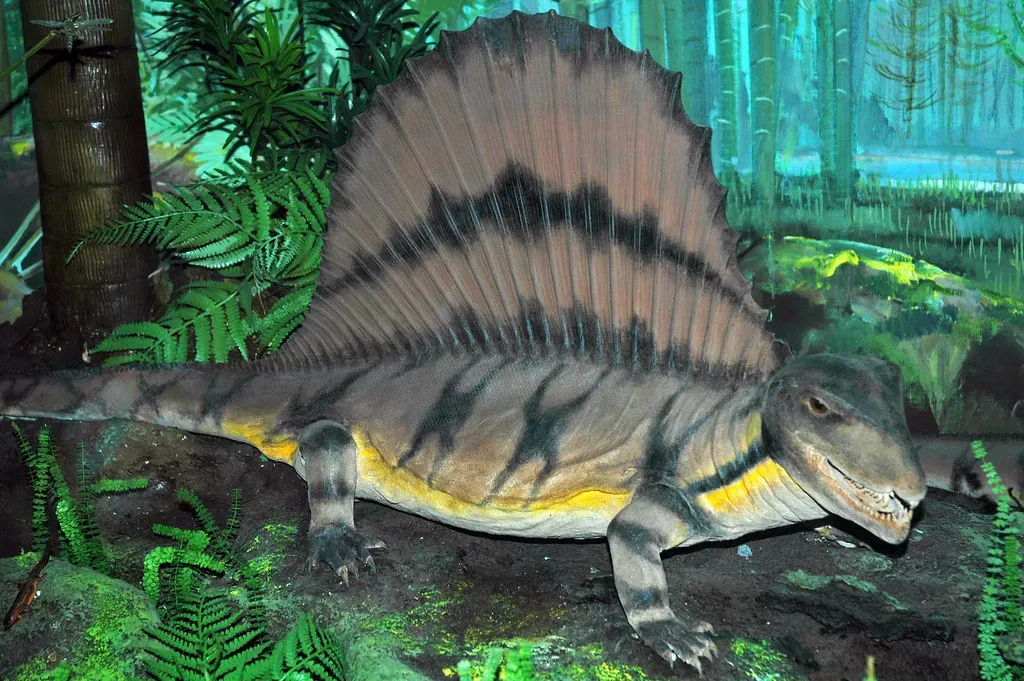
We will never watch a Dimetrodon hunt in real life, but its skeleton offers some intriguing clues. With its sprawling limbs and robust body, it probably was not a sprinter tearing across open ground at high speed. Instead, many paleontologists think it was an ambush predator that waited by water sources or along animal trails, then lunged at unsuspecting prey with a explosive burst of power. In that sense, it may have behaved more like a modern crocodile mixed with a Komodo dragon than like a cheetah.
The combination of massive jaws, differentiated teeth, and a powerful neck suggests that once Dimetrodon got a grip, the outcome was rarely in doubt. It may have used a bite‑and‑wait strategy with smaller prey, clamping down and letting blood loss and shock do the work, while larger victims could have been dismembered with repeated bites. It is a grim image, but also a reminder that even hundreds of millions of years ago, predators were already experimenting with complex ways of turning other animals into energy.
The Mammal Connection: Why Dimetrodon Is More “Us” Than “Dino”
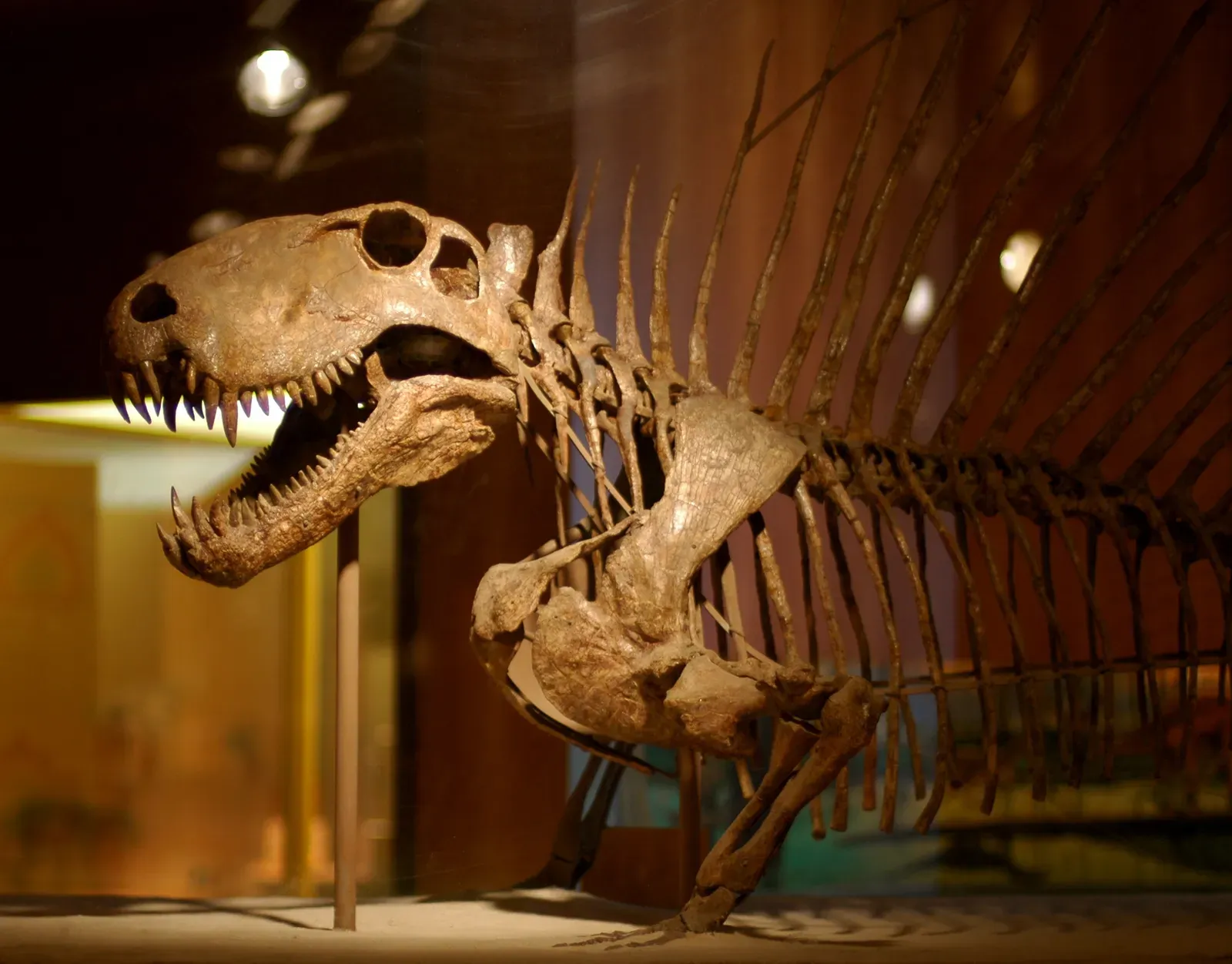
One of the strangest twists in this story is that the terrifying sail‑backed killer people often call a “dinosaur” is technically closer to mammals than to any dinosaur species. The key lies in the skull. Dimetrodon has a single temporal opening behind each eye socket, a hallmark of synapsids, the group that eventually led to true mammals. Dinosaurs, by contrast, belong to the diapsids, with a different skull design featuring two such openings.
Over time, descendants of early synapsids would evolve more upright postures, more complex teeth, and eventually traits like fur and warm‑blooded metabolisms, culminating in the first true mammals. Dimetrodon sits near the base of that journey, like an early, experimental prototype of the mammal body plan, even though it still looked reptile‑like on the outside. It is a little unsettling to realize that the apex land predator of the Permian was not just some random ancient monster, but part of our own extended family tree.
Surviving in a Changing World: Climate Stress and Extinction
The Permian Period was a time of dramatic environmental shifts, with continents colliding into the supercontinent Pangaea and climates becoming increasingly unpredictable. Drying trends, changing sea levels, and altered habitats put pressure on entire ecosystems. Dimetrodon and its contemporaries had to cope with seasonal droughts, fluctuating temperatures, and evolving competitors, all of which would have tested even a top predator’s resilience.
Dimetrodon itself vanished before the catastrophic mass extinction that ended the Permian, but its disappearance still fits into the broader pattern of life facing escalating challenges. As environments changed and new synapsid and reptile groups emerged, the exact combination of traits that made Dimetrodon so successful may have become less advantageous. In the long run, even apex predators are temporary, and the throne of top hunter is always up for grabs when the planet shifts under their feet.
From Dimetrodon to Dinosaurs and Us: A Deep‑Time Perspective
After animals like Dimetrodon disappeared, other synapsids rose and fell, and eventually the great Permian mass extinction reshaped life on Earth in a way that is hard to fully grasp. Out of that devastation, new lineages of reptiles and early dinosaur relatives would later emerge and diversify, setting the stage for the age of dinosaurs that dominates popular imagination today. In a sense, Dimetrodon’s era feels like a first draft of complex land ecosystems, with later periods revising the cast but keeping the same core idea: energy flows upward from plants to herbivores to powerful, specialized predators.
On the mammal side, distant descendants of those early synapsids would eventually evolve into small, nocturnal creatures that shared the world with dinosaurs, biding their time in the shadows. Much, much later, those mammal lines would blossom into primates, apes, and eventually humans. When you pull back far enough, you can see a faint but real connection: the savage jaws of Dimetrodon, the thunder of dinosaurs, and the quiet click of a keyboard today are all chapters in the same enormous, messy, astonishing story of life adapting to a restless planet.
Conclusion: The First King of the Land – and What It Says About Us
I think the most mind‑bending part of Dimetrodon’s story is not that it was a fearsome killer, but that we barely talk about it compared to dinosaurs, even though it ruled the land long before them. This animal shows that the role of apex predator is not a one‑time prize but a temporary job title that different creatures have held as Earth keeps changing the rules. Dimetrodon was the first big land hunter to truly dominate complex ecosystems, and then, like every “king” before and after, it was swept away by time, climate, and evolution.
To me, that undercuts any idea that our own species is somehow the final chapter or the inevitable peak of life on Earth. We are just the latest in a very long series of experimenters, following in the footsteps of a sail‑backed synapsid that terrorized riverbanks hundreds of millions of years ago. Remembering that an ancient, distant relative once filled the top‑predator niche is strangely humbling – and a bit thrilling. When you picture that prehistoric hunter basking in the sun, sail glowing, jaws ready, does it change how you see our place in the story of life?