
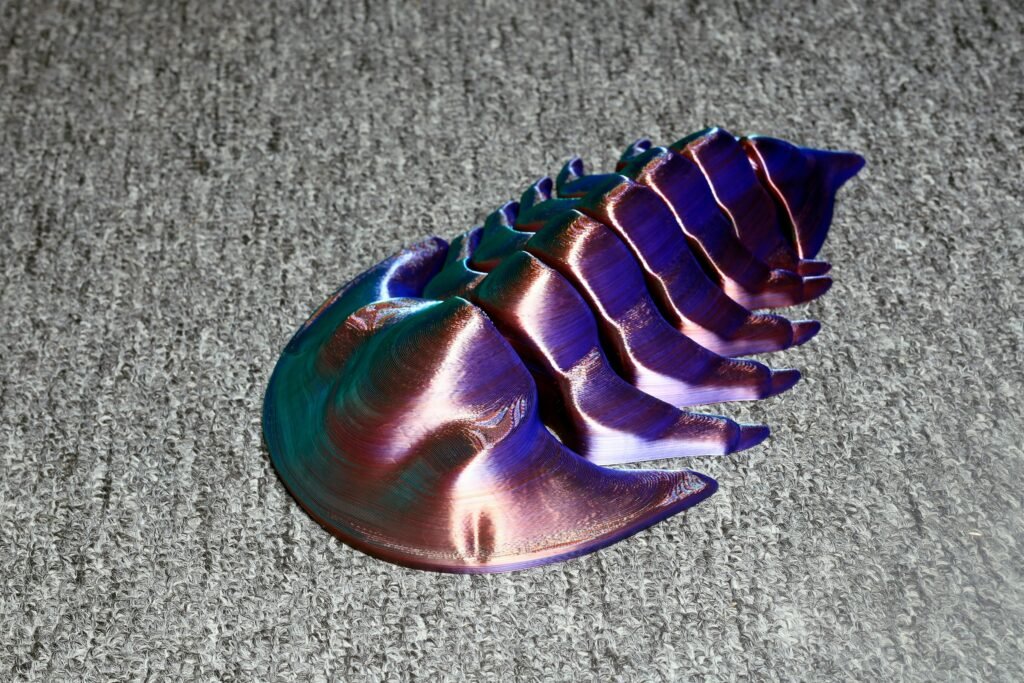
Every so often, you stumble across a fossil reconstruction and think, there’s no way this thing was real. It looks like someone hit “randomize” on a creature generator and then just… went with it. Yet these bizarre animals actually walked, swam, and slithered across ancient Earth, thriving in ways that make our modern sense of “normal” biology feel very small.
What follows are ten prehistoric oddballs that seem to break every rule you thought you knew about evolution. Some look like mash‑ups of three different animals, some have body parts that make zero intuitive sense, and others feel like nature was just showing off. And yet, each of them is a real experiment in survival, honed by millions of years of trial and error. Ready to question everything you thought you understood about what a body “should” look like?
1. Hallucigenia: The Walking Fever Dream
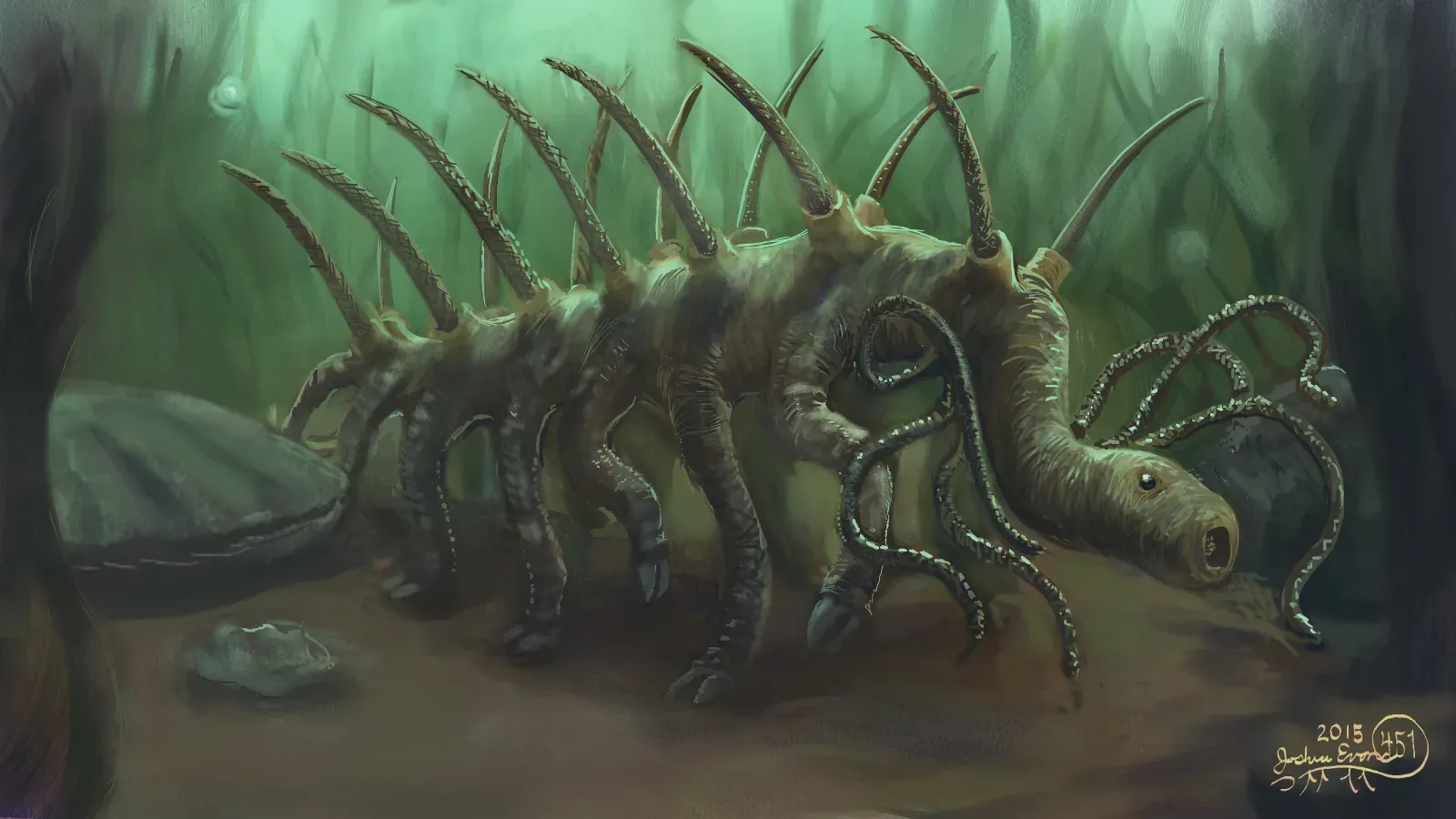
Hallucigenia is the kind of animal that makes paleontologists double‑check their coffee. Discovered in Cambrian rocks and only a few centimeters long, it is basically a soft worm‑like tube with spikes on one side and floppy, balloon‑like legs on the other. For decades, scientists were not even sure which way was up or where the head was, and early reconstructions literally had it upside down.
This creature looks like someone tried to draw a caterpillar from memory and got distracted halfway through. Its skinny body carries paired, spiky armor on one side, while the opposite side has stubby legs ending in strange pads, probably used for gripping soft seafloor sediment. Even after better fossils helped clarify which end was the head, Hallucigenia still feels like evolution ignored the design handbook and went full experimental art project.
2. Anomalocaris: The Alien Shrimp Hunter
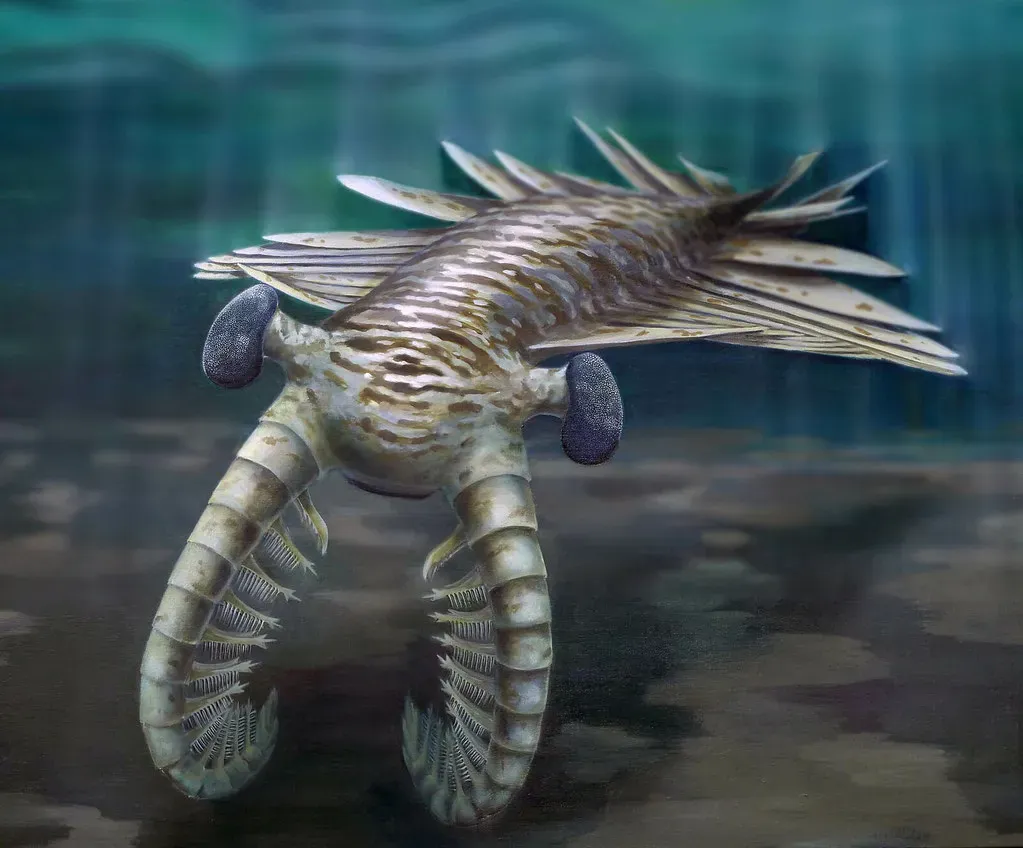
Anomalocaris lived in the Cambrian seas and is often described as one of the first true super‑predators, but it also looks like three different animals duct‑taped together. It had a soft, segmented body with flapping side lobes like a swimming centipede, a circular, pineapple‑slice style mouth, and two huge, spiny grasping appendages jutting from the front. The whole thing feels like nature’s prototype for a sci‑fi movie monster.
To early fossil hunters, its body parts were so strange they were mistaken for separate species: the mouth as a jellyfish, the arms as shrimp, and the body as a sea cucumber‑like creature. Once assembled correctly, you get a sleek, torpedo‑shaped hunter that probably chased down trilobites and other soft‑bodied prey. Anomalocaris shatters the idea that predatory animals must look shark‑like or reptilian; instead, it proves that evolution can shape top hunters out of almost any weird toolkit it has lying around.
3. Helicoprion: The Buzzsaw‑Toothed Shark Impostor
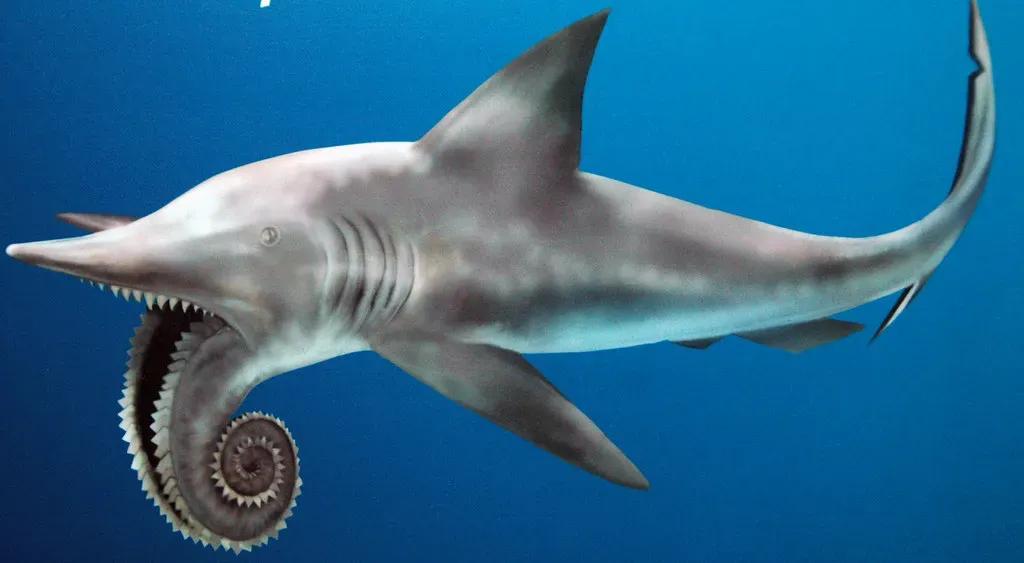
Helicoprion is best known for its utterly bizarre “tooth whorl,” a spiral of teeth that curls like a circular saw. For a long time, nobody knew where that spiral went: under the chin, in the throat, stuck on the nose like a nightmare unicorn horn. The reality appears to be that the spiral sat inside the lower jaw, stacking new teeth inside a rolling coil while older ones moved outward, ready for work.
Visually, this makes Helicoprion look like an ordinary shark that swallowed a power tool. It likely used the whorl to slice or crush soft, squid‑like prey, with the spiral acting like a continuous supply of replacement teeth. Unlike most modern sharks, whose teeth are shed in neat rows, this “buzzsaw” arrangement is so strange it almost feels like a one‑off evolutionary dare. It is a reminder that even something as simple as “teeth in a jaw” can be reinvented in wild, almost comical ways.
4. Opabinia: Five Eyes and a Hose for a Face
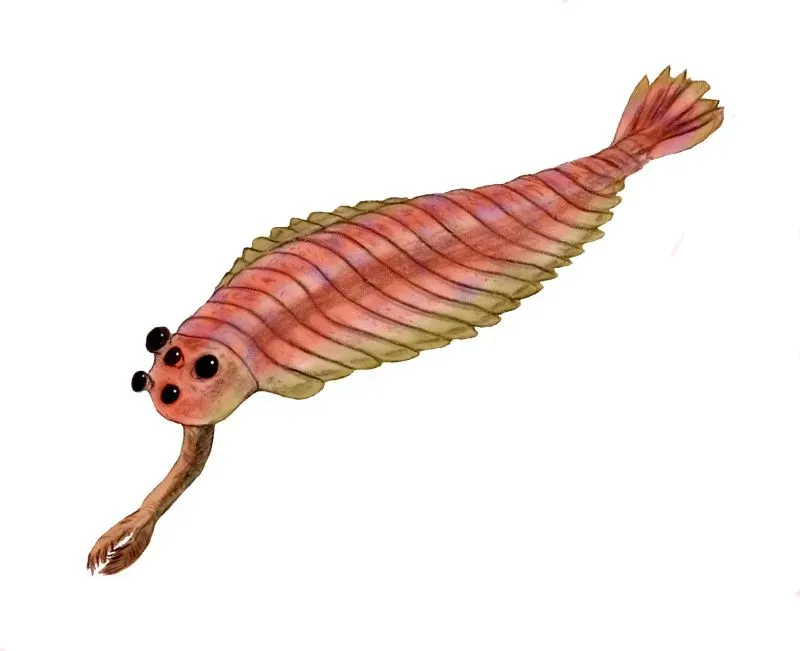
If you tried to describe Opabinia to someone with no visuals, they might think you were joking. This small Cambrian creature had a soft, segmented body, a fan‑shaped tail, and, most famously, five eyes perched on the top of its head. On top of that, it carried a long, flexible, hose‑like appendage ending in a pincer, which stuck out from where you would normally expect a mouth.
Functionally, the “hose” was probably used to grab small bits of food and pass them back to the real mouth, tucked below. The multiple eyes may have given it a wide, panoramic field of view, perfect for spotting both predators and prey in murky water. But if you look at an illustration of Opabinia, it simply feels like evolution mixed insect, vacuum cleaner, and submarine periscope into one body. Five eyes and a face‑arm absolutely crush the idea that there is one sensible way to build a head.
5. Dimetrodon: The Sail‑Backed “Not‑a‑Dinosaur”
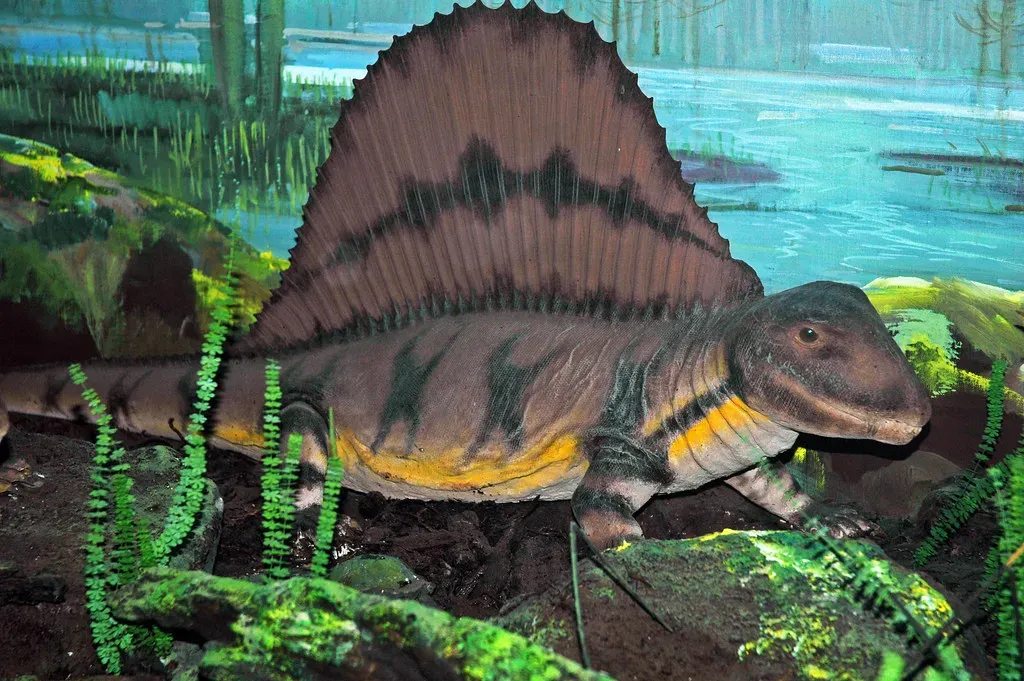
Dimetrodon is often mistaken for a dinosaur, but it actually predates dinosaurs by tens of millions of years and is more closely related to mammals than to any reptile you know today. Its most striking feature is the enormous sail on its back, built from elongated vertebral spines wrapped in skin. Standing taller than the rest of the body, that sail turns a squat, lizard‑like animal into something that looks halfway between a crocodile and a windsurfing board.
Scientists have suggested the sail might have helped regulate body temperature, catch the eye of potential mates, or intimidate rivals and predators. Whatever the exact purpose, it is a drastically extravagant solution to problems that other animals solved with fur, color patterns, or behavior. Evolution, in this case, seems to have leaned into showy architecture: why add a bit of fuzz when you can install a giant billboard on your spine?
6. Tully Monster: The Mystery That Refuses to Behave
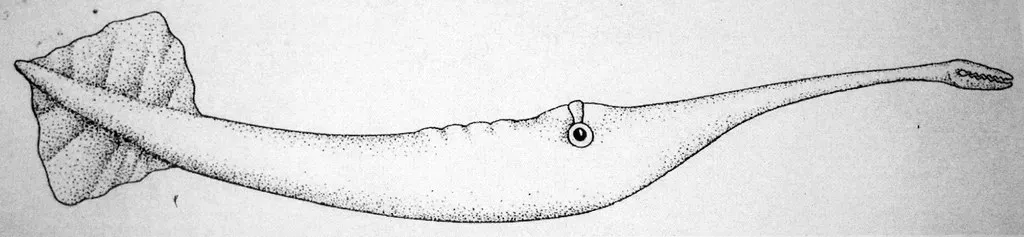
The Tully Monster, found in fossil deposits from what is now Illinois, is so strange that scientists still argue about what it actually is. Its body looks like a soft, torpedo‑shaped tube with a finned tail, stalked eyes sticking out from the top, and an absurdly long snout ending in a claw‑like mouth. It has been proposed as everything from a worm to a vertebrate relative, and the debate has gone back and forth even in recent years.
From a design point of view, the Tully Monster feels like evolution threw out the usual blueprint for fish or worms and started improvising. Instead of placing the mouth at the end of the face, it put it at the end of a flexible proboscis, as if someone grafted a grabber toy onto a tadpole. That arrangement might have allowed it to probe into crevices or sift through soft mud at a safe distance from danger. Whatever its exact family tree, the Tully Monster proves that even basic things like “where to put the mouth” are not as fixed as we like to imagine.
7. Therizinosaurus: The Giant Herbivore With Murder Claws
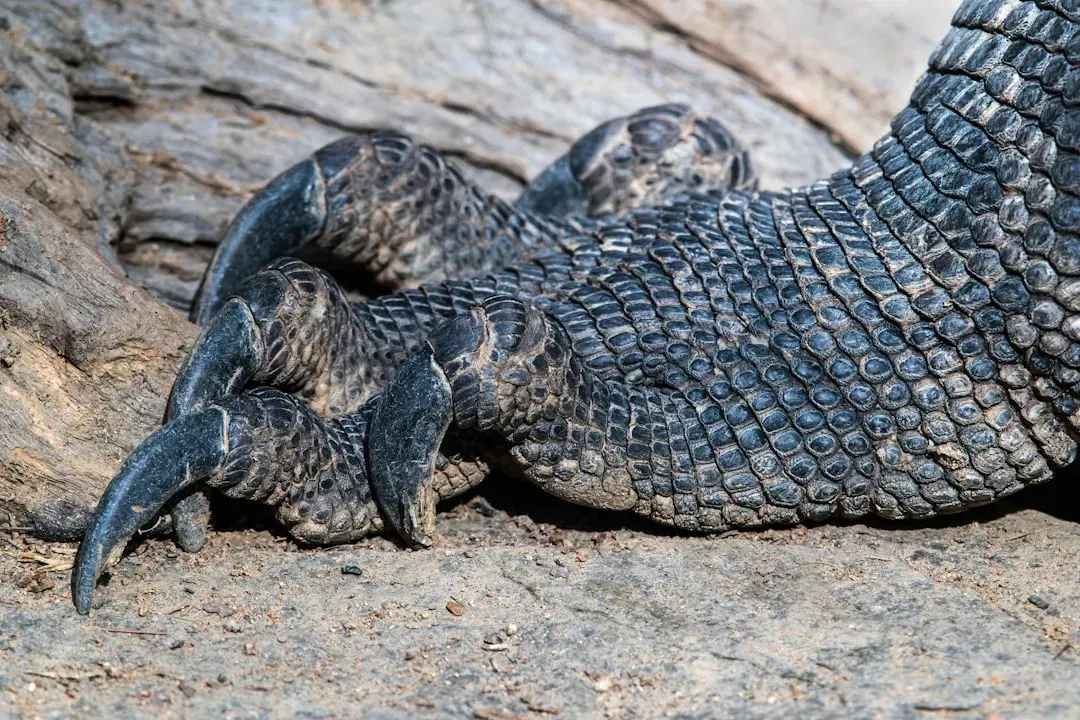
Therizinosaurus is one of those animals that feels like it was assembled from spare parts left over from other dinosaurs. Picture a huge, pot‑bellied, feathered creature with a small head, long neck, and massive hind legs, but then give it front arms armed with absurdly long, scythe‑shaped claws. Some of these claws measured longer than a grown human’s arm, which makes the species look like a horror villain that wandered into a herbivore’s body.
Despite the terrifying hardware, evidence strongly suggests Therizinosaurus was primarily plant‑eating, using its claws to rake down branches, pull foliage close, or dig. This flips the usual script, where gigantic claws equal bloodthirsty hunter. Evolution here has repurposed a weapon into a tool, the same way a chef knife is far more likely to see vegetables than enemies. The mixed signals in its anatomy challenge our assumptions about what a “gentle giant” is supposed to look like.
8. Nigersaurus: The Dinosaur With a Vacuum‑Cleaner Face
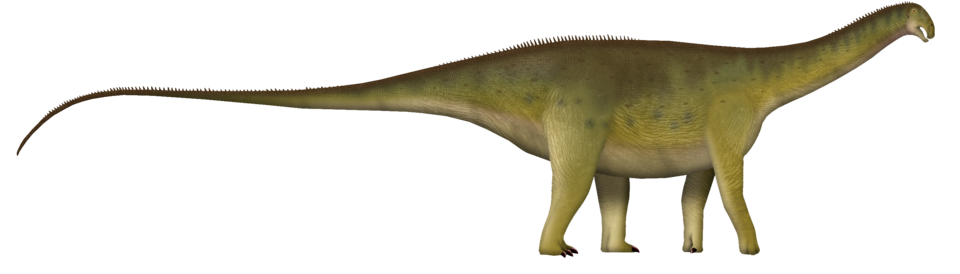
Nigersaurus takes the familiar idea of a long‑necked sauropod and then completely rewrites the head design. Instead of a big, boxy skull with front‑loaded teeth, it had a broad, squared‑off muzzle packed with hundreds of tiny teeth arranged in battery‑like rows. The jaw was wide and flat, projecting forward almost like the intake of a vacuum cleaner, perfectly adapted for mowing low vegetation close to the ground.
To make things stranger, its skull bones were incredibly thin and lightweight, with some parts described as almost translucent. It looked like a delicate, high‑tech grazing machine mounted at the end of a rather ordinary sauropod neck. While most people picture long‑necked dinosaurs reaching up into treetops, Nigersaurus seems to have evolved an entirely different lifestyle, sweeping the ancient landscape like a living lawnmower. It is a reminder that even within one general body plan, evolution is happy to redesign the front end in outrageous ways.
9. Deinocheirus: The Dinosaur That Went From Monster Arms to Oddball Duck‑Beast
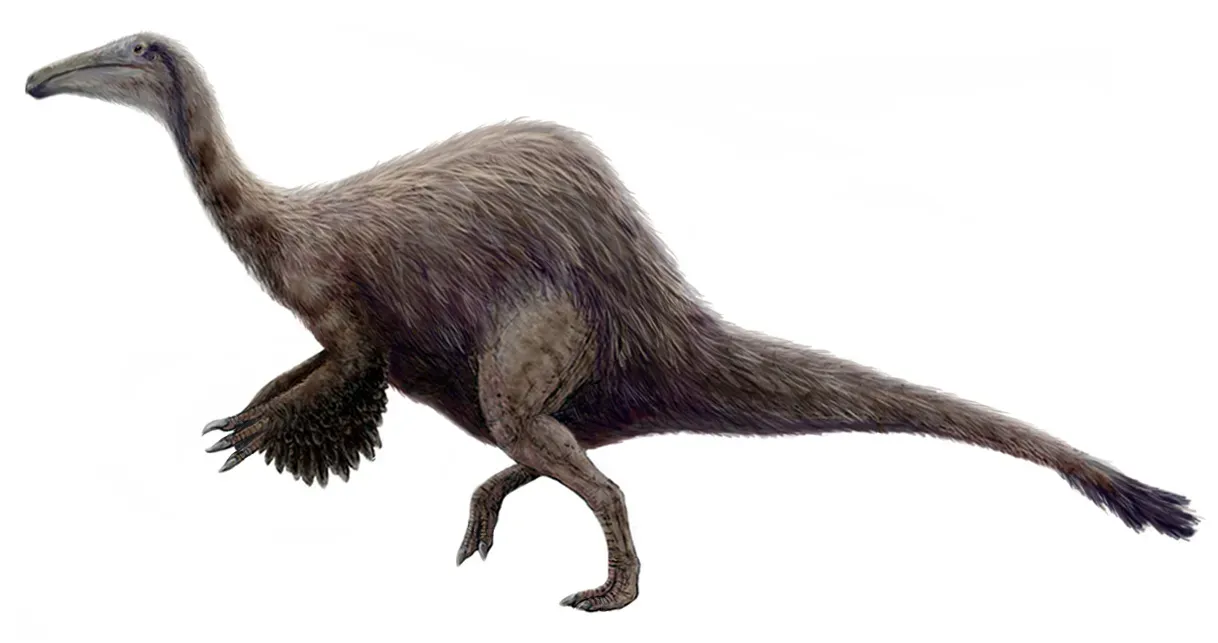
For years, all scientists had of Deinocheirus were a pair of gigantic arms with huge claws, and that mystery turned it into something of a legend. Those arms looked like they belonged to a terrifying predator, leading to all kinds of dramatic guesses about its appearance. When more complete fossils were finally found, the truth was far weirder than anyone expected: a hump‑backed, pot‑bellied dinosaur with a duck‑like bill, broad feet, and a shaggy covering of feathers.
Instead of a sleek hunter, Deinocheirus seems to have been a bulky omnivore or herbivore, wading through rivers and wetlands, using its bill and big hands to forage. Its back had tall spines that created a kind of sail or hump, making its silhouette even stranger. This animal basically wears three different vibes at once: intimidating arms, goofy bill, and awkward body. If you ever needed proof that you cannot judge an extinct creature by one body part, Deinocheirus delivers it with style.
10. Tanystropheus: The Reptile That Was Mostly Neck
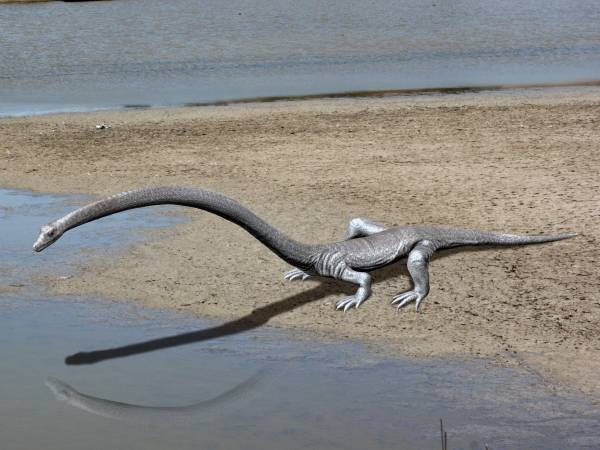
Tanystropheus looked like someone stretched a lizard in photo‑editing software and forgot to stop. Its neck was longer than the rest of its body and tail combined, made of just a handful of extremely elongated vertebrae. This created a stiff, crane‑like structure that seems almost structurally ridiculous, yet somehow worked well enough for the animal to survive for millions of years around Triassic coastlines.
Researchers think Tanystropheus may have lurked in shallow water or at the shoreline, keeping its body hidden while its long neck snaked out to grab fish or other prey. Instead of swimming like a plesiosaur or stalking like a crocodile, it turned its whole front end into a reach‑extending fishing rod. Watching a reconstruction in motion feels wrong at first, as if its own neck should topple it over. But that is exactly the point: evolution can fine‑tune even the most counterintuitive designs until they work in ways that defy our expectations.
Conclusion: Evolution Is Not Interested in Our Sense of “Normal”
Looking at these ten prehistoric misfits, it is tempting to think evolution “lost the plot” from time to time. In reality, it is our human taste for tidy patterns and symmetrical, familiar shapes that is limited. Natural selection does not care whether an animal looks elegant, cute, or even believable to us; it only cares whether that shape can survive long enough to pass on genes. Hallucigenia’s spikes, Helicoprion’s buzzsaw jaw, and Nigersaurus’s vacuum mouth all started as small tweaks that spiraled into outrageous designs because, in their own contexts, they worked.
Personally, I find that both humbling and a little thrilling. These creatures are reminders that the living world has experimented with body plans we would never dream up in a lab or a film studio, and that “normal” is just whatever happens to be common right now. If evolution could produce five‑eyed vacuum‑faced, sail‑backed, murder‑clawed oddities in the past, who knows what forms we are missing in the gaps of the fossil record? The next time you look at a pigeon or a housecat and think biology is straightforward, ask yourself: compared to a buzzsaw‑toothed shark and a mystery tube with a grabber nose, are we really seeing the full story of what life can look like?