
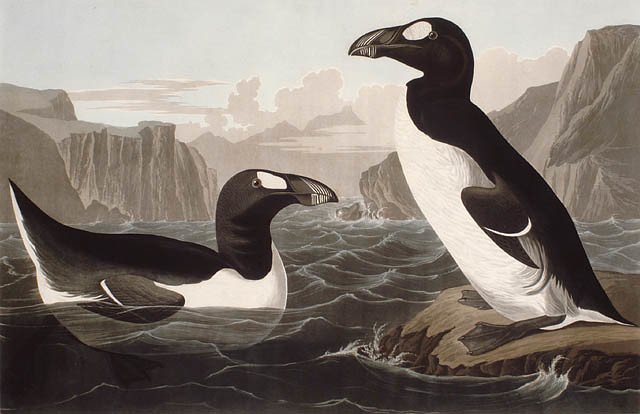
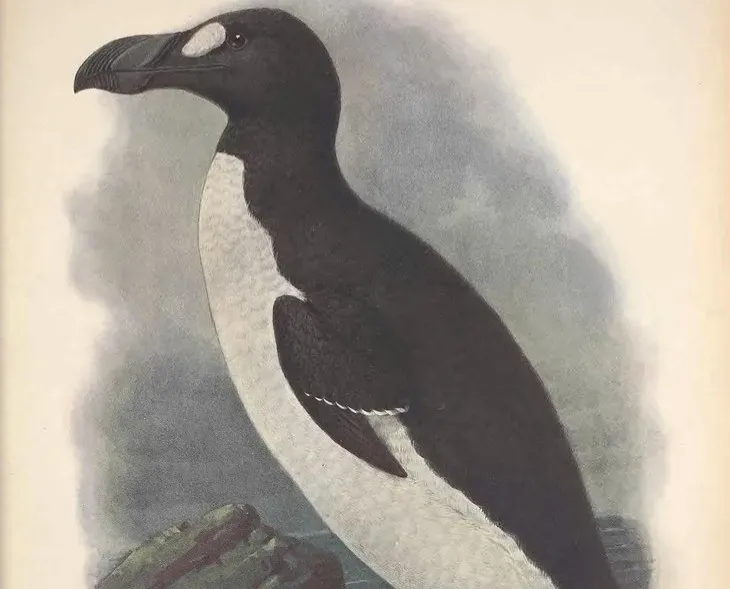
Extinction is supposed to be slow. A shifting climate, a shrinking habitat, a species fading quietly over centuries while scientists write worried papers about it. The Great Auk breaks that pattern in the most violent way possible.
This three-foot-tall, flightless seabird shrugged off four separate Ice Ages, swam circles around killer whales and polar bears, and survived being hunted by Neanderthals long before humans had written language. By every rule of nature, it should have vanished a dozen times over, thousands of years before the 19th century ever arrived. Instead, it took one very specific, very human kind of greed to finally erase it – and the fossil record, ancient DNA, and ship logs all tell the same disturbing story.
#1 – It Outlived Four Ice Ages
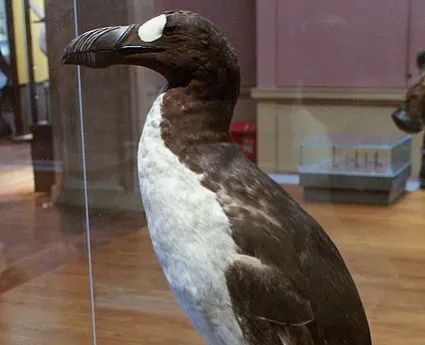
Most extinct animals get killed off by climate change, slowly and predictably. The Great Auk laughed in the face of it, four separate times.
The species first appeared roughly 400,000 years ago, and across that span it powered through four distinct Ice Ages, each one brutal enough to erase entire ecosystems. While glaciers reshaped coastlines and wiped out countless cold-water species around it, the auk just kept swimming, diving, and raising chicks on storm-battered rocky islands that had sheltered it since the very first freeze. A bird that tough should never have gone extinct in a few short centuries. And the Ice Ages weren’t even its biggest flex.
#2 – It Existed Millions of Years Before Modern Humans Did
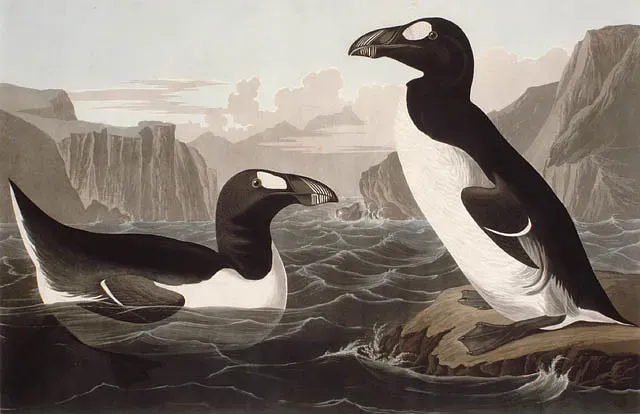
Here’s a fact that puts things in perspective: this bird was already ancient history in the making before humanity even showed up.
The Great Auk emerged as a species roughly 5 million years ago – a staggering run of evolutionary success for a bird that couldn’t even fly. Its range wasn’t some tiny pocket of ocean, either. Archaeological and Pleistocene records place the species as far south as Spain, Italy, and even New England, meaning this bird spread from Arctic waters to the Mediterranean over millions of years. That’s not a fragile creature clinging to survival. That’s a dominant species. Yet even that timeline doesn’t compare to what came next.
Fast Facts
- Emerged as a species roughly 5 million years ago
- Stood about three feet tall, flightless but a powerful underwater swimmer
- Historic range stretched from Arctic waters down to Spain and Italy
- Fossil evidence also places the species as far west as New England
#3 – It Survived Being Hunted by Neanderthals
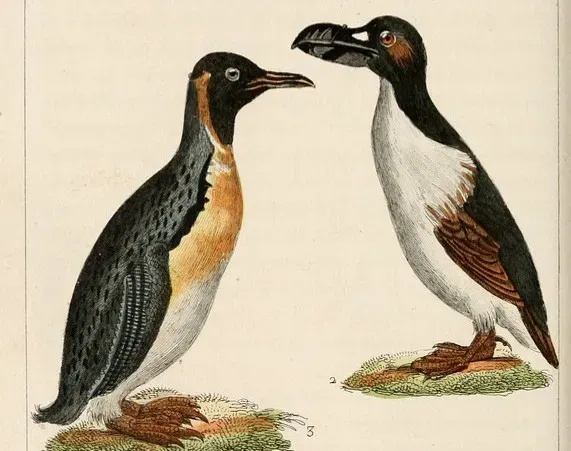
Long before muskets and fishing boats, this bird was already dodging Stone Age hunters – and winning, for tens of thousands of years.
Great Auks were hunted for food by Neanderthals more than 100,000 years ago, making this species a food source before Homo sapiens had even fully spread across Europe. The pressure never really let up after that, either. Prehistoric hunter-gatherer groups across multiple continents and cultures – the Beothuk in North America, the Inuit of Greenland, Scandinavians, Icelanders, hunters in Britain, and Magdalenian communities on the Bay of Biscay – all relied on the auk for meat and eggs, and the species kept coming back every single time. Still, that’s just the warm-up for what happened next.
#4 – It Coexisted With Human Hunters for Thousands of Years Without Collapsing
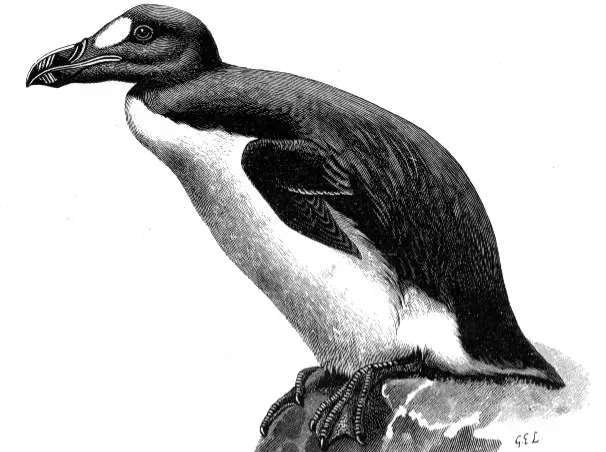
This is the detail that should really stop you in your tracks: humans and Great Auks lived side by side, hunting and being hunted, for millennia – with no extinction event in sight.
Ancient middens in Newfoundland and northern Europe are packed with auk remains, proof of a species absorbing regular losses and bouncing back generation after generation. Ancient DNA studies confirm the same thing in blunt terms: the Great Auk was “once abundant” across the North Atlantic before being heavily exploited for its eggs, meat, and feathers. Notice that phrase – once abundant. This wasn’t a rare bird clinging to existence. It was everywhere. None of that explains how it kept winning, though.
#5 – It Had a Nearly Perfect Predator-Proof Home Turf
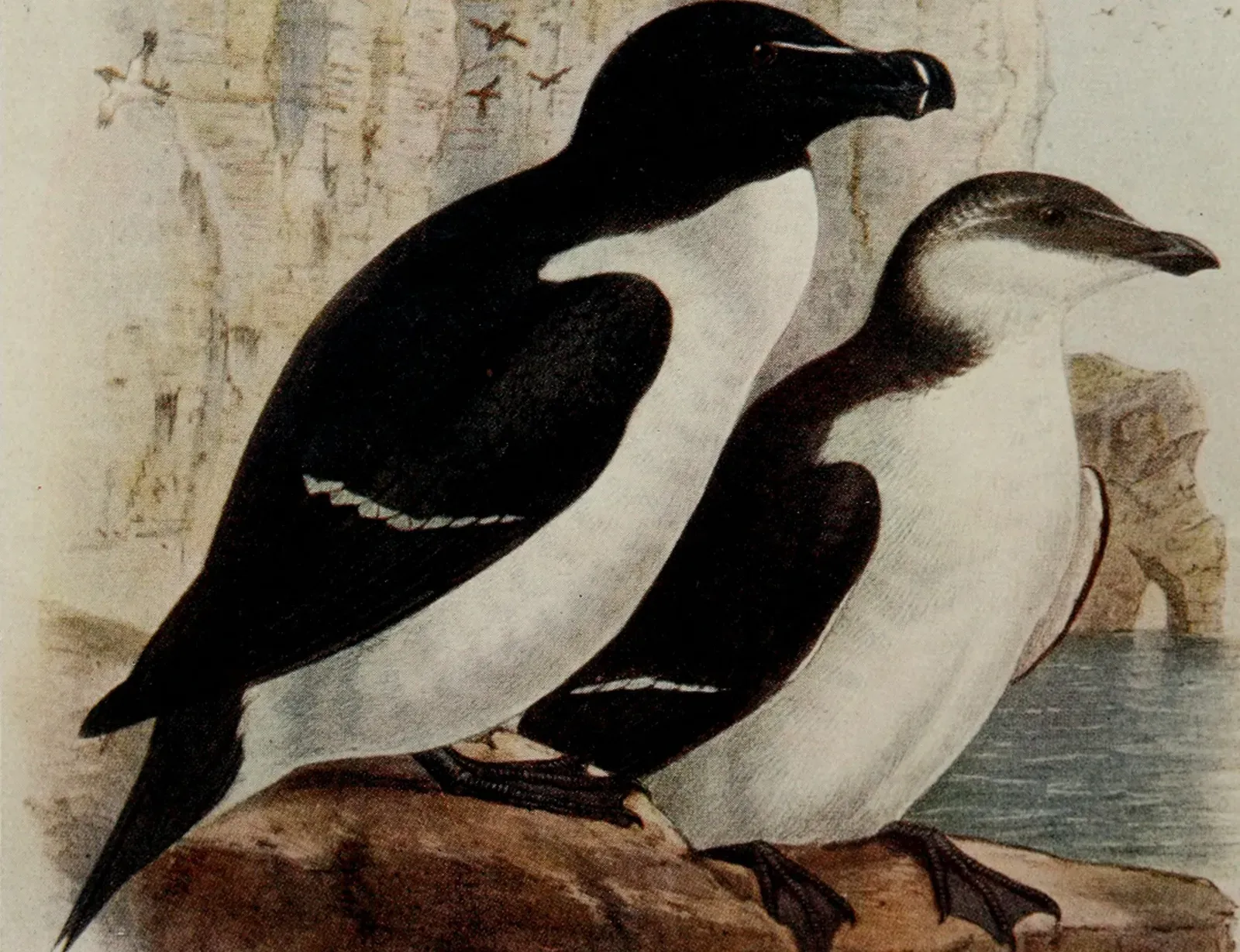
Great Auks weren’t just lucky. They had picked out some of the most defensible real estate in the entire North Atlantic.
They nested on small, rocky, nearly inaccessible islands, so safe from predators that the birds developed almost no natural defenses at all. Being defenseless simply didn’t matter when nothing could reach them in the first place. They gathered in massive colonies on sheer cliffs and storm-battered rocks, where surf violent enough to scare off skilled sailors kept the colonies safe for thousands of years. This wasn’t dumb luck. It was a survival strategy that worked for millennia. Its home turf wasn’t the only trick up its sleeve.
#6 – It Dodged Orcas, Polar Bears, and Eagles for Generations
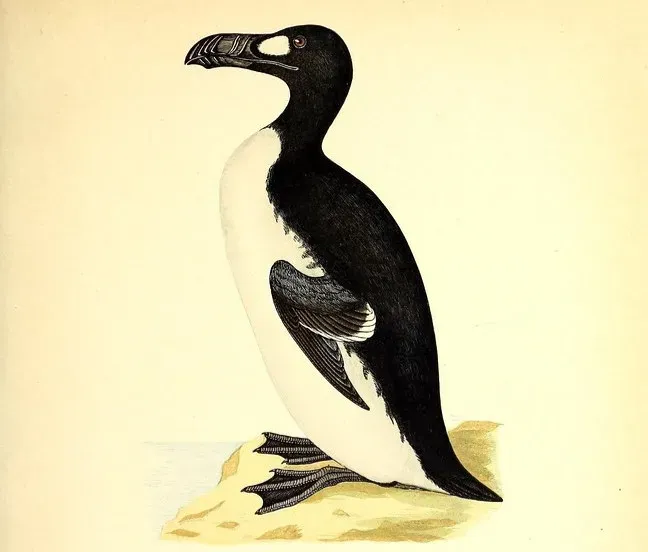
Predators existed. They just couldn’t get the job done.
The Great Auk’s list of natural enemies was short but genuinely dangerous – killer whales, polar bears, and white-tailed eagles, all apex predators capable of taking down animals far larger and faster than a clumsy, waddling seabird. Yet the auk’s speed and agility underwater made it a moving target orcas rarely caught, while its cliff-top nesting sites kept eagles and bears mostly locked out. The single most surprising fact here is that the auk barely had any natural predators worth worrying about – humans were basically its only real threat. Then nature itself decided to test that theory.
#7 – It Survived the Little Ice Age Turning Its Own Home Against It
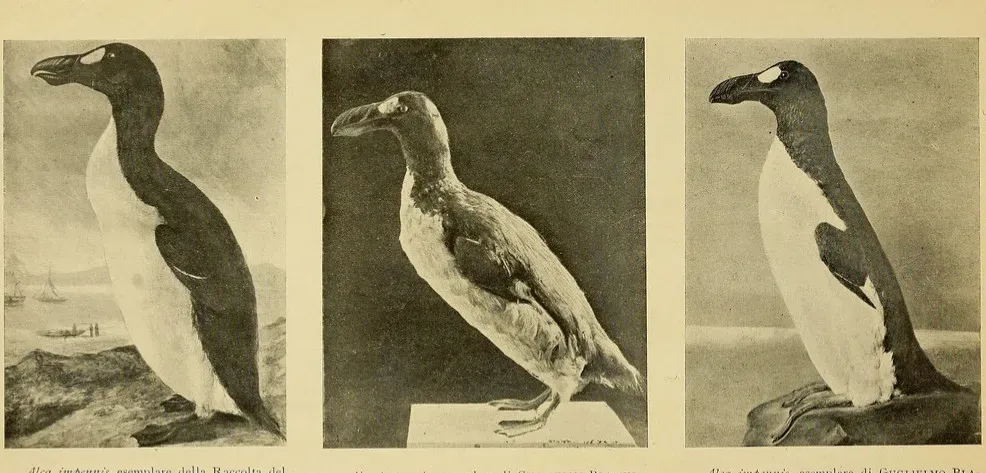
Just when things should have gotten easier, nature pulled a nasty trick – and the auk still hung on.
Between roughly 1500 and 1800, a cooling period known as the Little Ice Age changed everything. Sea ice linked the auk’s breeding islands to larger land areas, giving polar bears direct access to nesting grounds for the first time in generations. Imagine spending millennia perfecting an island fortress, only to watch the ocean freeze into a bridge for your worst enemy. Even so, the species only declined during this period – it didn’t collapse, and that distinction matters enormously. That’s when things stopped being about nature entirely.
#8 – It Survived Being Herded Onto Ships Like Livestock
This is where things stop being about nature and start becoming genuinely disturbing.
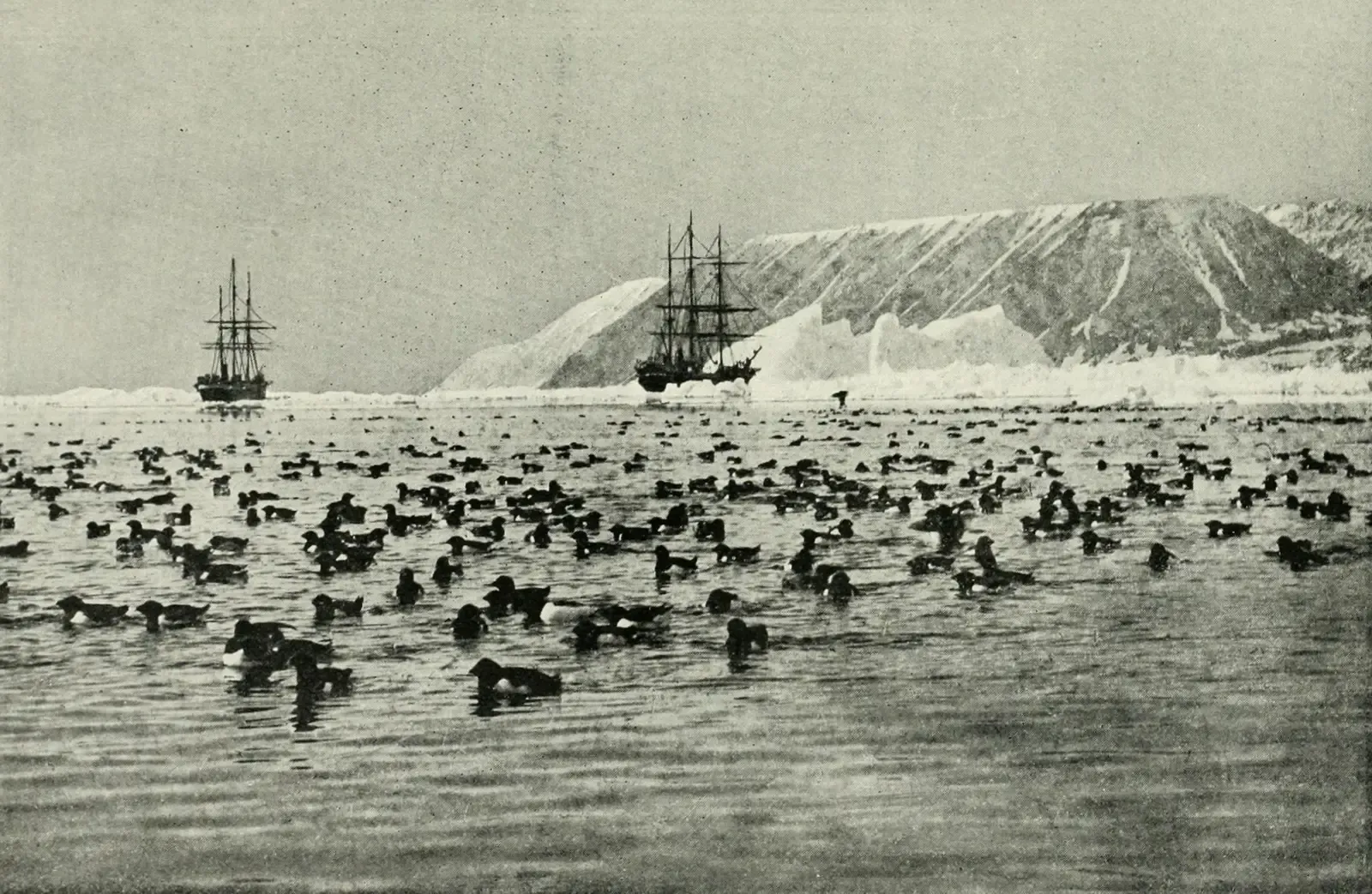
Once serious maritime traffic crossed the North Atlantic in the 1500s, everything changed overnight. Sailors began herding the birds off their rookeries and onto ships by the hundreds, like chickens, to be eaten as meat during long voyages. Not hunted. Not chased. Herded, walking up a plank into the hold of a vessel to be slaughtered. The most shocking detail is that these birds showed zero fear of humans, walking calmly toward their own deaths because nothing in their evolutionary history had prepared them for a predator like this. And the numbers involved are almost impossible to believe.
#9 – It Survived Ships That Took a Thousand Birds in Half an Hour
If modern overfishing numbers sound extreme, wait until you hear what happened at Funk Island.
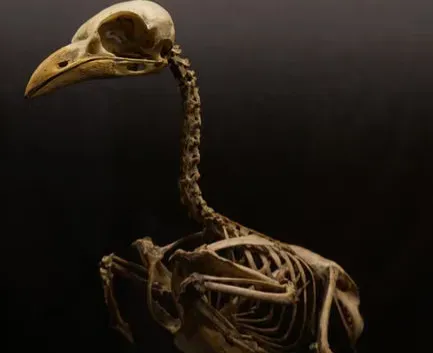
Historical hunting reports from Newfoundland are almost unbelievable by today’s standards – one account claims two ships took a thousand birds in just half an hour. That’s roughly one bird every two seconds, for thirty straight minutes, from a single location. On Funk Island, hunters corralled entire colonies into stone enclosures, funneling them like cattle with no chance to scatter or escape. Somehow, even after this, scattered pockets of the species clung on elsewhere. As brutal as that sounds, it gets darker.
At a Glance
- Two ships reportedly took 1,000 birds in just 30 minutes
- That works out to roughly one bird every two seconds
- Funk Island hunters used stone enclosures to trap entire colonies at once
- Even after losses like this, scattered colonies survived elsewhere – for a while
#10 – It Survived Being Burned Alive to Kill Its Own Kind
This is the detail that turns a sad extinction story into something closer to horror.
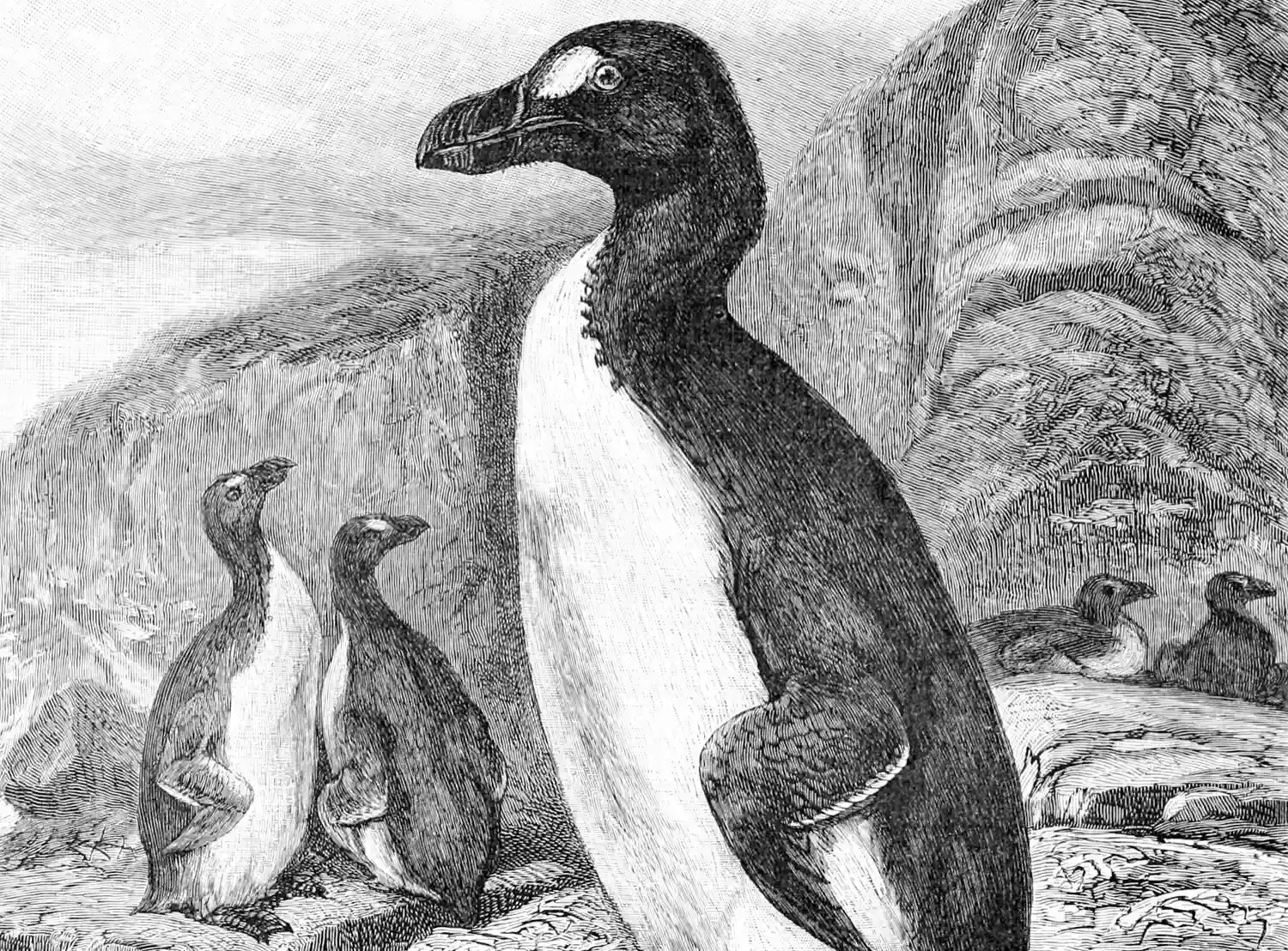
Hunters didn’t just kill auks for meat – they used the birds’ own bodies as fuel to process more of them. Living birds were burned alive to heat the water used to scald the feathers off other auks. Read that twice. Researchers who study this history don’t sugarcoat how dark it gets.
To see this quirky bird be lost in such a barbaric way – it’s a sad story. It was such an iconic species; it was the penguin of the north.
Thomas
Then the earth itself joined the assault.
#11 – It Survived a Volcano Erasing Its Safest Refuge
Just when it seemed like the auk had found one truly untouchable stronghold, the earth itself decided to argue.
The species’ last major fortress was a volcanic rock called Geirfuglasker, or “Great Auk Rock,” off the coast of Iceland – steep-sided, surrounded by rough surf, and normally inaccessible to humans. It was supposed to be the safest place left on the planet for the species. Then, in 1830, a volcanic eruption submerged the entire rock, forcing the surviving birds onto a nearby island called Eldey, ground that humans could actually walk on. That single geological event may have done more damage than centuries of hunting combined. For a moment, though, luck returned – briefly.
#12 – It Survived Being Undiscovered for Years on Its New Island
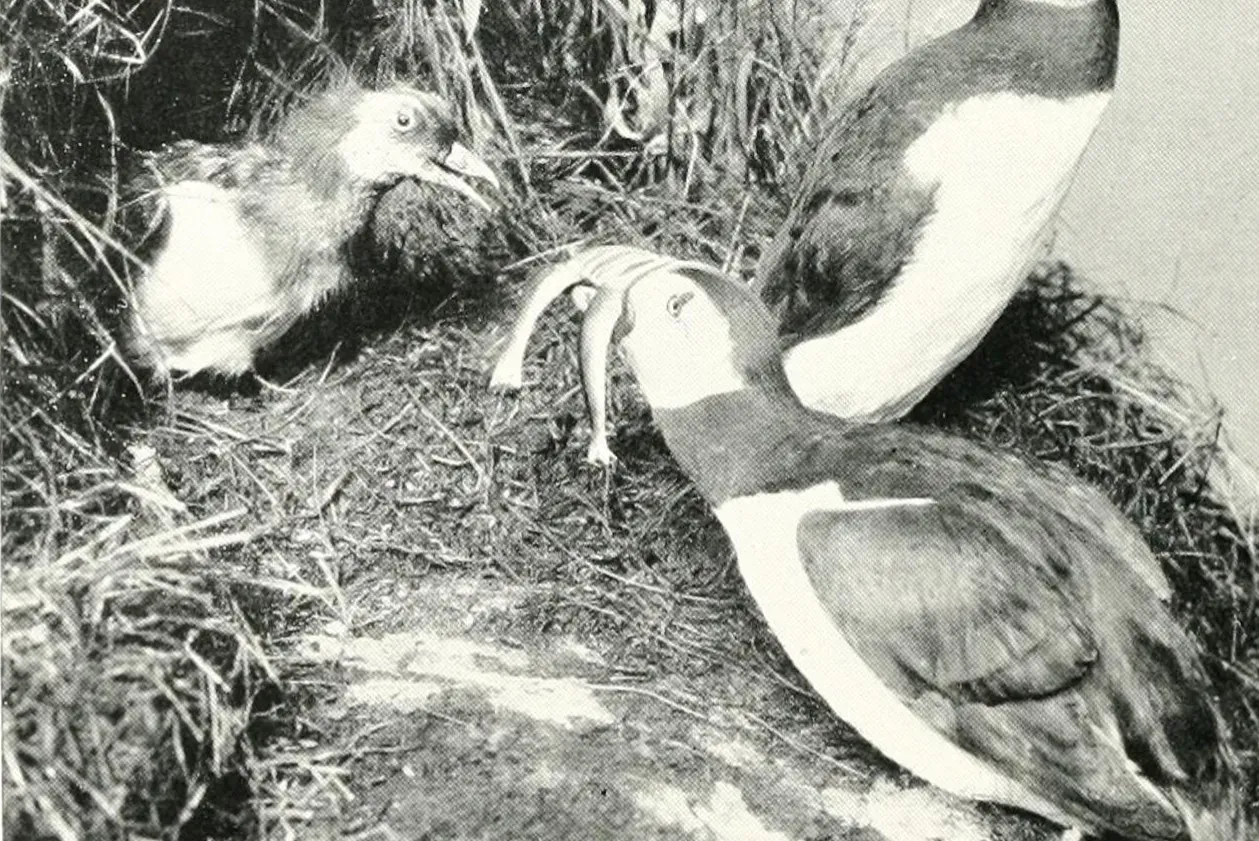
For a brief window, the relocated colony had one last piece of luck: nobody knew it was there.
When the new colony on Eldey was finally found in 1835, nearly fifty birds were present – not a thriving population, but a species clinging to a real second chance. That chance didn’t last long once word got out. Museums, eager for skins to preserve and display, quickly began collecting birds from the colony, and the single most tragic fact here is that curiosity and preservation efforts, meant to study the species, ended up accelerating its disappearance instead. Meanwhile, something bigger was already changing behind the scenes.
#13 – It Survived Centuries of Casual Hunting Before the Feather Trade Turned Industrial
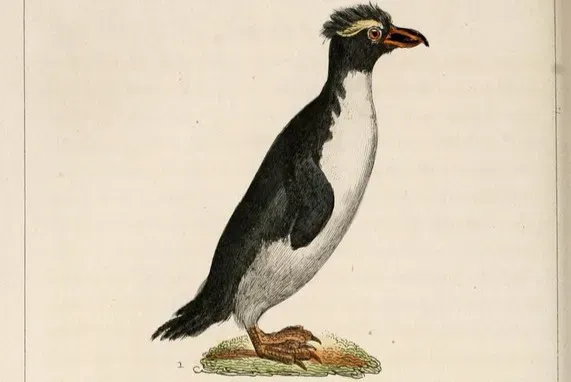
For most of history, hunting the auk was opportunistic – grab a few birds when you happen to pass by. That changed, and changed fast.
Late in the 1700s, commercial hunting for the feather trade intensified exploitation to levels the species had never faced before. Feathers weren’t just useful anymore, they were profitable, and profit motives scale in ways subsistence hunting never does. Casual, small-scale hunting is not what killed the Great Auk – industrial greed is. A species that survived scattered hunting for 100,000 years couldn’t survive 300 years of commercialized demand for its feathers, fat, meat, and oil. And rarity, instead of saving the species, made things worse.
Quick Compare
- Subsistence hunting (pre-1500s): small-scale, seasonal, the species recovered every time
- Commercial hunting (1700s-1800s): industrial-scale, driven by feathers, fat, meat, and oil, with no recovery window
- The math: roughly 100,000 years of survival undone by about 300 years of commercialized demand
#14 – It Survived Long Enough to Become a Luxury Commodity
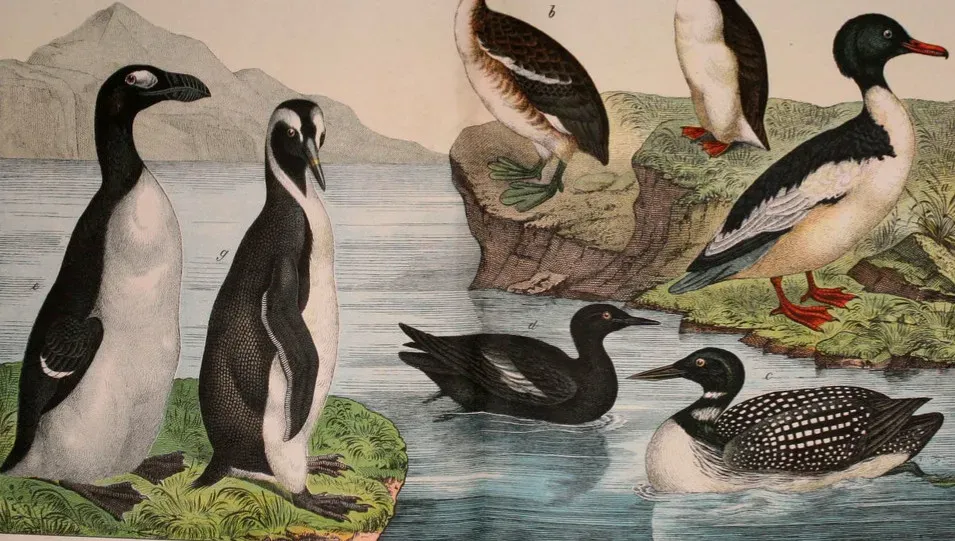
Here’s the cruelest irony in the entire story: as the birds became rarer, they became more desirable, not less.
By the early 1800s, collectors were paying huge sums for a single egg or skin, and scarcity should have triggered protection – instead it triggered a bidding war. This wasn’t hunger driving the final blows. It was vanity and prestige, and it dealt a final, deadly one in 1844, when the last known breeding pair fled in vain from hunters, who caught them anyway and crushed their single egg underfoot. Greed wasn’t even the only force working against it.
#15 – It Survived Being Blamed for Storms and Bad Luck
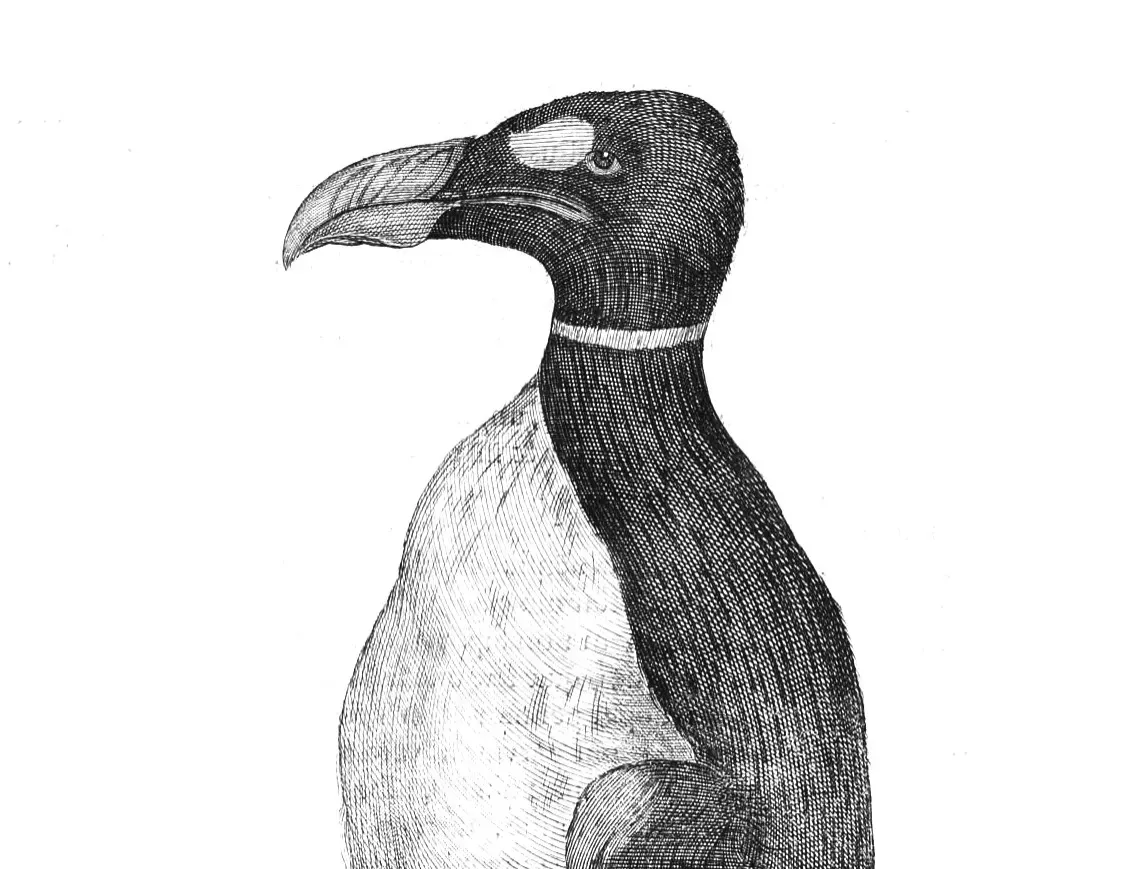
Sometimes it wasn’t greed that killed an auk. Sometimes it was pure superstition.
Sailors spooked by bad weather occasionally turned their fear directly onto the birds, believing an auk was a witch responsible for a storm and beating it to death with a stick. This wasn’t an isolated myth, either – the last Great Auk was killed by three fishermen in 1844, who hunted it, tied it to their ship, then stoned and crushed it, out of superstition rather than hunger. A species that had outlasted Ice Ages and apex predators was, in some of its final moments, killed over folklore. Everything on this list led to one final moment.
#16 – It Survived Right Up Until Three Fishermen Ended It Forever
Everything on this list – the Ice Ages, the predators, the volcano, the superstition – led to one final, irreversible moment.
On July 3, 1844, on the rocky island of Eldey, three Icelandic fishermen acting on behalf of a merchant captured and killed the last confirmed Great Auk breeding pair, crushing their egg in the process. Not disease. Not starvation. Not even a natural predator – just three men, acting on a commercial order. Scattered, unconfirmed sightings still trickled in for nearly a decade afterward, including reports near Vardo, Norway in 1848 and Newfoundland in 1852, as if the species was trying one last time to prove it could survive anything except us.
Worth Knowing
- Last confirmed breeding pair killed: July 3, 1844, on Eldey, Iceland
- Unconfirmed sighting reported near Vardo, Norway in 1848
- Another possible sighting reported in Newfoundland in 1852
- No verified sightings have surfaced since
The Bottom Line
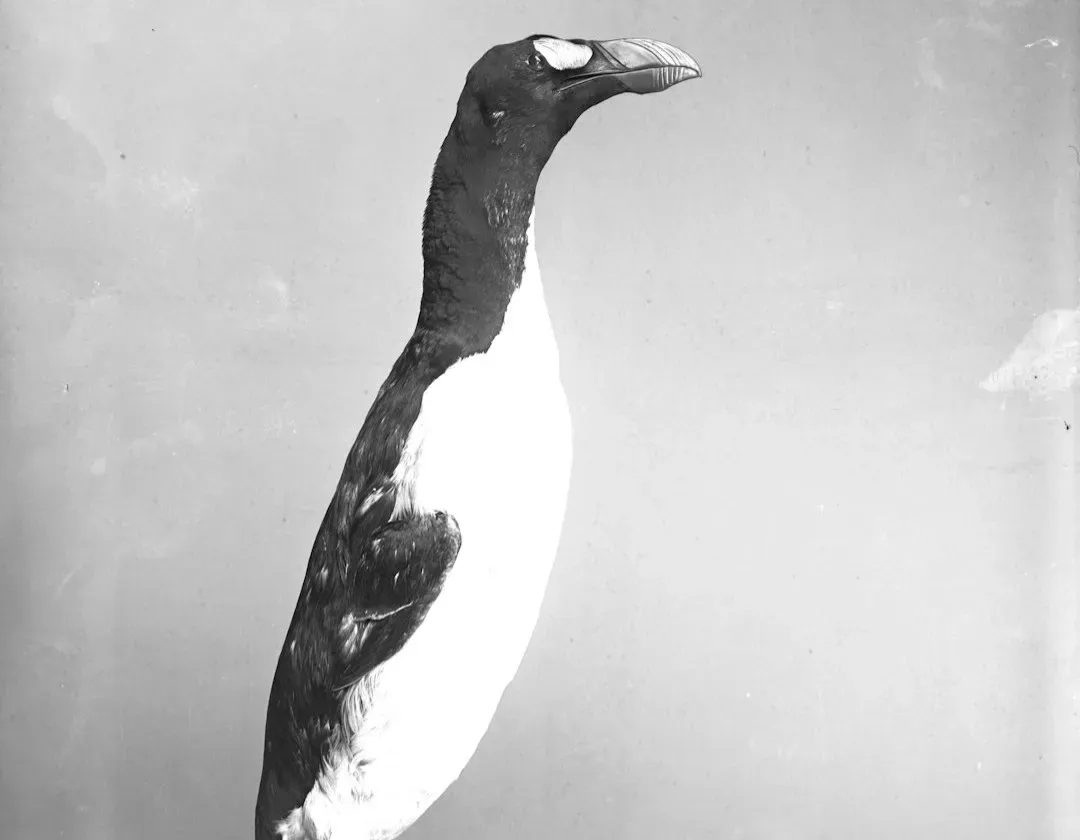
Let’s be honest about what actually happened here. The Great Auk wasn’t a fragile species that climate change slowly erased – it was a genuine survivor of Ice Ages, orcas, polar bears, volcanic eruptions, and 100,000 years of prehistoric hunting. What finally finished it wasn’t nature at all. It was three centuries of ships, feather traders, museum collectors, and superstitious fishermen who mistook resilience for invincibility.
The uncomfortable truth is that abundance never guaranteed safety, and that lesson still applies today. What other “unkillable” species do you think are quietly facing their own Eldey moment right now? Drop your answer in the comments.