The relationship between plants and their pollinators represents one of nature’s most remarkable examples of coevolution. For over 150 million years, this intricate dance has shaped Earth’s ecosystems, driving the diversification of flowering plants and their animal partners. From primitive beetles clumsily transferring pollen in the Jurassic period to the sophisticated relationships between orchids and their specialized pollinators today, the story of pollination is a fascinating journey through evolutionary time. This natural process has fundamentally transformed our planet’s landscapes, influenced the development of agriculture, and continues to underpin global food security in the modern world. Let’s explore this remarkable story, tracing the evolution of pollination strategies from their ancient origins to the complex ecological networks that sustain our world today.
The Pre-Angiosperm World: Early Pollination Mechanisms
Before flowering plants dominated the landscape, gymnosperms like conifers, cycads, and ginkgoes relied primarily on wind pollination, a method that persists in many species today. These ancient plants produced vast quantities of pollen that would be carried randomly by air currents, an inefficient strategy that required proximity between male and female plants. Some early gymnosperms, however, began developing relationships with insects as early as the Permian period (299-252 million years ago). Fossil evidence suggests that certain insects fed on pollen from these non-flowering seed plants, inadvertently transferring genetic material between plants. Early beetles were likely among the first animal pollinators, consuming pollen and occasionally transferring it between plants in these primitive pollination relationships. These initial partnerships set the stage for the explosion of diversity that would come with the evolution of flowering plants.
The Jurassic Revolution: Rise of the First Flower-Like Structures
The Jurassic period (201-145 million years ago) witnessed crucial developments that would eventually lead to modern pollination systems. During this time, several gymnosperm groups evolved structures that, while not true flowers, shared some similar characteristics and functions. Bennettitales, an extinct group of seed plants, developed reproductive structures with both male and female components arranged in a flower-like configuration, suggesting early adaptations toward insect attraction. These plants produced compounds that likely attracted beetles, which would feed on pollen and reproductive tissues while inadvertently transferring pollen between plants. Paleobotanical evidence indicates that some of these early relationships were becoming increasingly specialized, with certain insect groups showing adaptations for pollen feeding. This period represents a critical transitional phase, setting the evolutionary stage for the true flowering plants that would soon transform the planet.
The Cretaceous Explosion: Angiosperms Emerge
The Cretaceous period (145-66 million years ago) marks the dramatic emergence and diversification of angiosperms – true flowering plants – revolutionizing Earth’s ecosystems. These novel plants possessed innovative reproductive structures – flowers – that dramatically improved the efficiency of pollination through direct attraction of animal vectors. Early flowers were likely simple, with undifferentiated tepals rather than distinct petals and sepals, but they represented a revolutionary innovation in plant reproduction. The fossil record from this period shows a rapid diversification of flower types, suggesting intense selective pressure driving coevolution between plants and pollinators. Evidence from fossil insects, particularly beetles with specialized pollen-collecting structures, indicates that pollination relationships were becoming increasingly refined during this time. This period represents one of the most significant evolutionary radiations in Earth’s history, fundamentally restructuring terrestrial ecosystems through the accelerated pace of plant-pollinator coevolution.
Beetle Pollination: The Pioneers of Animal-Mediated Pollen Transfer

Beetles represent the most ancient lineage of insect pollinators, with relationships to plants dating back over 150 million years to the early Jurassic period. These insects, often described as “mess and soil” pollinators, typically feed directly on flower parts and pollen, incidentally transferring pollen between flowers in the process. Early angiosperms evolved several adaptations to accommodate beetle pollination, including robust flowers that could withstand the damage from these insects’ chewing mouthparts and strong fruity or spicy scents that beetles could detect with their primarily olfactory-based sensory systems. Modern examples of beetle-pollinated plants include magnolias, water lilies, and spicebush, which often retain primitive floral characteristics reflecting their ancient evolutionary history. Cantharophily (beetle pollination) continues to be significant globally, with approximately 40,000 beetle species involved in pollination relationships, representing the most diverse group of pollinating animals on Earth.
The Rise of Hymenopteran Pollinators: Wasps and Bees

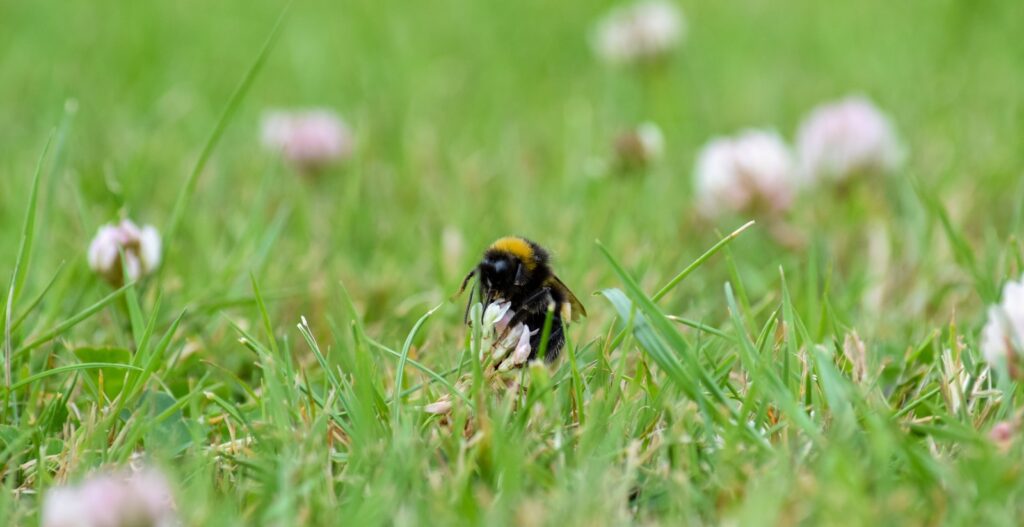
The evolution of bees from predatory wasp ancestors around 100 million years ago represents one of the most significant developments in the history of pollination. Unlike their carnivorous relatives, bees evolved specialized adaptations for collecting and transporting pollen, including branched body hairs, pollen baskets on their legs, and elongated mouthparts for nectar collection. This transition from predation to pollen-feeding created a group of insects exquisitely adapted for efficient pollination, dramatically improving the reproductive success of their plant partners. Fossil evidence indicates that by the mid-Cretaceous period, several lineages of bees had already diversified, suggesting rapid coevolution with flowering plants. The emergence of social behavior in some bee lineages further enhanced their effectiveness as pollinators by maintaining large, persistent colonies that could provide consistent pollination services throughout a flowering season. Today, bees represent the most important group of pollinators globally, with approximately 20,000 species responsible for pollinating an estimated 80% of flowering plants, including many critical food crops.
Butterfly and Moth Pollination: Specialists with a Proboscis

Butterflies and moths (Lepidoptera) emerged as significant pollinators during the Cretaceous period, bringing unique adaptations to plant-pollinator relationships. Their most distinctive feature, the coiled proboscis, evolved approximately 83-90 million years ago, allowing these insects to access nectar from deep floral tubes without landing inside flowers. This innovation drove the coevolution of flower morphology, with many plants developing long, tubular flowers that could only be pollinated by lepidopterans with correspondingly long mouthparts. Moths, particularly sphinx moths (Sphingidae), developed especially long proboscises, sometimes exceeding 30 centimeters in extreme cases like the Madagascar star orchid and its pollinator Morgan’s sphinx moth. Night-blooming plants evolved alongside moths, developing strong fragrances and pale colors visible in low light, while day-blooming plants developed bright visual cues and landing platforms for butterflies. The fossil record shows steadily increasing specialization between lepidopterans and their plant partners throughout the Cenozoic era, resulting in some of the most specific plant-pollinator relationships known in nature.
Dipteran Influence: The Underappreciated Role of Flies in Pollination

Flies (Diptera) represent one of the most diverse and ecologically significant groups of pollinators, with relationships to flowering plants dating back to the early Cretaceous period. While often overlooked compared to bees and butterflies, flies pollinate thousands of plant species across diverse ecosystems, from tropical rainforests to arctic tundra where few other pollinators can survive. Different fly families have developed specialized relationships with plants: hoverflies (Syrphidae) mimic bees and wasps while feeding on nectar and pollen, mosquitoes rely on floral nectar for energy, and bizarre fungus gnats pollinate orchids that mimic their fungal egg-laying sites. Perhaps most striking are the carrion flies and flesh flies that pollinate plants mimicking rotting meat, such as the titan arum (Amorphophallus titanum) and various stapeliads, which produce sulfurous odors and reddish-brown flowers to trick flies into believing they’ve found decomposing animal tissue. Recent research has increasingly highlighted the crucial role flies play in global pollination networks, particularly in high-altitude and high-latitude environments where other pollinator groups are less diverse.
Vertebrate Pollinators: Birds, Bats, and Beyond

While insects dominated early pollination relationships, vertebrates gradually entered these ecological networks during the Cenozoic era, adding new dimensions to plant-pollinator coevolution. Birds, particularly hummingbirds in the Americas and sunbirds in Africa and Asia, evolved specialized relationships with plants beginning around 30-40 million years ago, driving the development of tubular, often red flowers with copious dilute nectar that perfectly match their bill morphology and high energy needs. Bats emerged as significant pollinators in tropical and subtropical regions approximately 25-30 million years ago, leading to the evolution of night-blooming flowers with strong musky scents, durable structures that can withstand mammalian visitors, and abundant nectar production to sustain these large pollinators. Less appreciated vertebrate pollinators include small mammals like rodents and marsupials, particularly in Australia and Africa, as well as lizards on oceanic islands where insect diversity is limited. These vertebrate pollinators typically service different plant species than insects, expanding the diversity of pollination syndromes and contributing to plant diversification in their native ranges.
Specialized Pollination Syndromes: Evolutionary Masterpieces

Through millions of years of coevolution, many plants and their pollinators have developed remarkably specialized relationships that showcase the power of natural selection. Among the most extraordinary examples are orchids of the genus Ophrys, which produce flowers mimicking female bees or wasps in appearance, texture, and even pheromone chemistry, tricking male insects into attempting to mate with the flowers and thus ensuring precise pollen transfer. The relationship between yucca plants and yucca moths represents one of the most interdependent mutualisms in nature, where female moths deliberately collect and transfer pollen between yucca flowers, then lay eggs in the developing fruits, ensuring food for their offspring while simultaneously fertilizing the plant. Fig trees and their specialized fig wasps have been coevolving for over 60 million years in a relationship so interdependent that neither partner can reproduce without the other. Such specialized relationships highlight the incredible precision that can develop through coevolution, though they also create vulnerability when one partner in the relationship declines or disappears.
Climate Change and Shifting Pollination Patterns Through Deep Time
Throughout Earth’s history, climate fluctuations have dramatically influenced the evolution and distribution of plant-pollinator relationships. The warm, equable climate of the mid-Cretaceous enabled the rapid diversification of flowering plants and their insect partners across much of the globe, establishing the foundation of modern pollination networks. The Terminal Eocene Event (approximately 34 million years ago) brought significant cooling and drying, driving extinctions and range contractions in many plant and pollinator lineages while selecting for cold-hardy species in northern latitudes. The Pleistocene glacial cycles of the last 2.6 million years repeatedly forced plants and pollinators to track suitable habitat southward during glacial periods and northward during interglacials, influencing genetic diversity and species distributions that persist today. These historical climate shifts provide context for understanding how modern anthropogenic climate change affects pollination systems, highlighting the capabilities and limitations of species to adapt to changing conditions through evolutionary time.
Human Impact: Agriculture, Domestication, and the Modern Pollination Crisis
Human civilization has profoundly reshaped plant-pollinator relationships over the past 10,000 years, beginning with the domestication of key crop species and the inadvertent selection for plants that could thrive with human assistance. Ancient civilizations recognized the importance of pollinators, with Sumerian clay tablets from 2000 BCE describing date palm pollination techniques, and Egyptian tomb paintings depicting beekeeping practices dating back to 2500 BCE. The intentional management of European honey bees (Apis mellifera) began at least 4,500 years ago, eventually leading to their global spread as agricultural pollinators. Modern industrial agriculture has dramatically intensified human impact on pollination systems through habitat conversion, pesticide use, introduction of non-native species, and climate change, contributing to significant pollinator declines worldwide. These declines threaten both natural ecosystems and human food security, as approximately 75% of leading global food crops depend at least partly on animal pollination, representing 35% of global food production by volume and nearly $577 billion in annual economic value.
Future Trajectories: Evolution in the Anthropocene
As we progress deeper into the Anthropocene epoch, plant-pollinator relationships face unprecedented evolutionary pressures that will reshape these ancient partnerships. Climate change is already causing phenological mismatches, where plants flower before their pollinators emerge or vice versa, potentially driving selection for altered timing in both groups. Urbanization creates novel selective environments favoring heat-tolerant, generalist pollinators and plants that can thrive in fragmented habitats, potentially restructuring pollination networks toward more robust but less diverse systems. Intensive agriculture selects for pollinators that can tolerate pesticides and utilize mass-flowering crops, while potentially reducing selection for specialists adapted to native plant communities. These anthropogenic selective pressures operate much faster than historical evolutionary rates, raising questions about whether natural selection can keep pace with human-induced environmental change. Conservation efforts increasingly incorporate evolutionary thinking, focusing not just on preserving current biodiversity but on maintaining the evolutionary potential of species to adapt to changing conditions through approaches like evolutionary rescue, assisted migration, and the protection of genetic diversity within pollinator populations.
Conclusion
The 150-million-year story of plant-pollinator coevolution represents one of nature’s most spectacular evolutionary narratives. From its humble beginnings with beetles clumsily transferring pollen in the Jurassic period to the intricate specialization seen in modern orchid pollination, this relationship has fundamentally shaped Earth’s terrestrial ecosystems. The diversification of angiosperms, triggered and accelerated by their pollinator partnerships, transformed the planet’s landscapes and created the foundation for modern terrestrial food webs. Today, as human activities threaten these ancient relationships, understanding the historical context and evolutionary processes that created them becomes increasingly important. The future of pollination systems will depend on their evolutionary resilience in the face of unprecedented change, as well as on human efforts to preserve the complex ecological networks that have developed over millions of years. By appreciating the deep history of these relationships, we gain perspective on both their vulnerability and their remarkable capacity for adaptation as they continue to evolve in response to our changing world.