

Most people assume building codes exist because engineers sat in a room and calculated the “right” way to build a house. They don’t. Nearly every major wind, flood, and structural standard in modern construction exists because a storm first proved the old rules deadly wrong. From a forgotten Texas island in 1900 to an Oklahoma suburb in 2013, catastrophe has quietly rewritten the rulebook on how we frame walls, anchor roofs, and elevate foundations. Here’s what structural engineers and disaster historians actually say happened after each of these storms.
#1 – The Galveston Hurricane That Buried a City to Save It (1900)
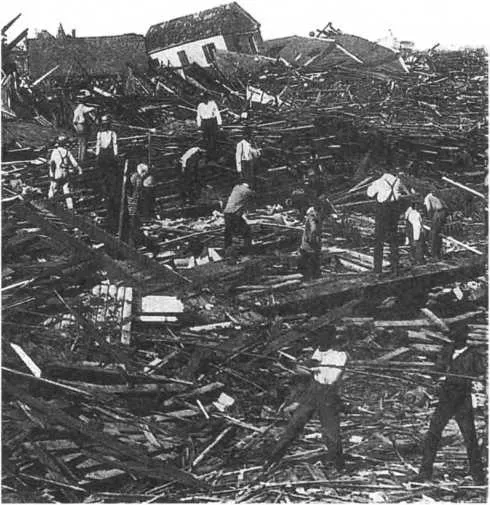
Before September 1900, Galveston, Texas was one of the wealthiest port cities in America, and nobody thought twice about building at sea level.
That confidence ended in a single night. A high-water mark of 15.7 feet and high winds had destroyed a third of the city, including 2,636 houses and 300 feet or 1,500 acres of shoreline. The death toll was so catastrophic that engineers didn’t just rebuild – they physically lifted the entire city.
A three-engineer commission proposed something no American city had attempted: construction of a curved-faced concrete seawall rising 17 feet above mean low tide and stretching over 3 miles in length along the oceanfront. But the seawall was only half the plan. Around 2,000 buildings were raised on hand-turned jackscrews, and about 500 city blocks were raised using 16.3 million cubic yards of sand spread from a few inches to eleven feet thick.
Homeowners literally lived upstairs in their own houses while sand was pumped underneath them. This grade-raising project became the blueprint for elevated coastal construction that still governs Gulf Coast building today.
Fast Facts
- Storm surge peaked at 15.7 feet, submerging a city built barely above sea level.
- More than 2,600 homes and roughly 1,500 acres of shoreline were destroyed in a single night.
- Roughly 500 city blocks were later raised using over 16 million cubic yards of sand.
- The new seawall stretched more than 3 miles and rose 17 feet above mean low tide.
But that’s nothing compared to what we found about #2…
#2 – The Great Miami Hurricane That Exposed a Boom-Town Lie (1926)
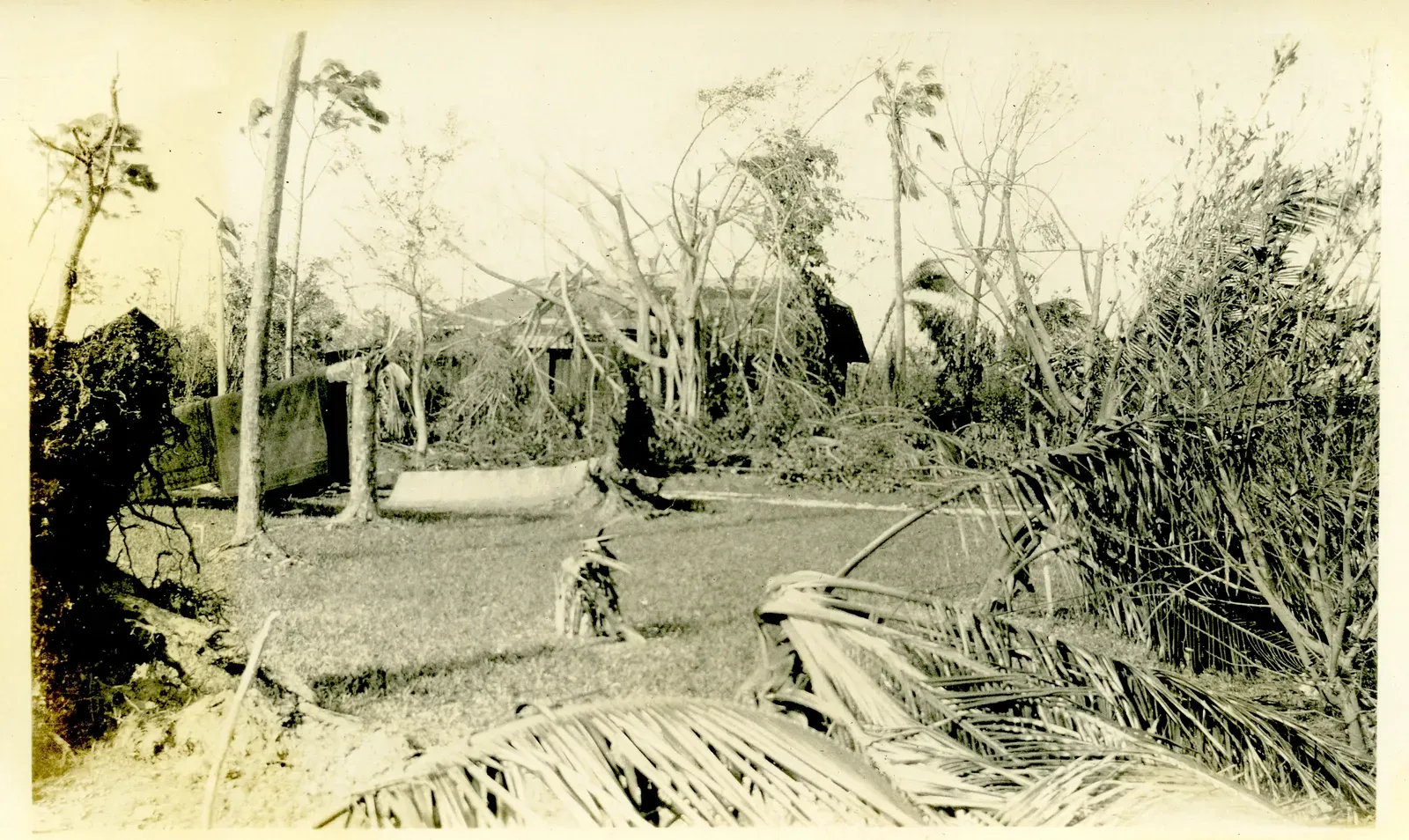
Florida’s 1920s land boom sold buyers on cheap lumber, fast construction, and sunshine – nobody was selling wind resistance.
When the Great Miami Hurricane tore through South Florida in September 1926, it exposed just how flimsy the boom-era housing stock really was. Homes thrown up in months by speculative developers collapsed at rates that shocked insurers and shamed local officials. The storm effectively popped the Florida land bubble overnight, and in doing so, it planted the first seeds of organized wind-resistant construction standards in Dade County.
Insurance companies, not government, became the first real code enforcers. After 1926, underwriters began demanding stronger roof-to-wall connections and better bracing before they’d write policies in hurricane-prone Florida counties – a private-market response that predated any statewide law by decades.
It’s a pattern that would repeat for the next century: storms expose the shortcuts, and insurers move faster than legislators. Florida’s building code story didn’t end here, though – it barely started. Wait until you see what happened just nine years later, less than 100 miles south.
#3 – The Labor Day Hurricane That Rewrote Coastal Infrastructure (1935)
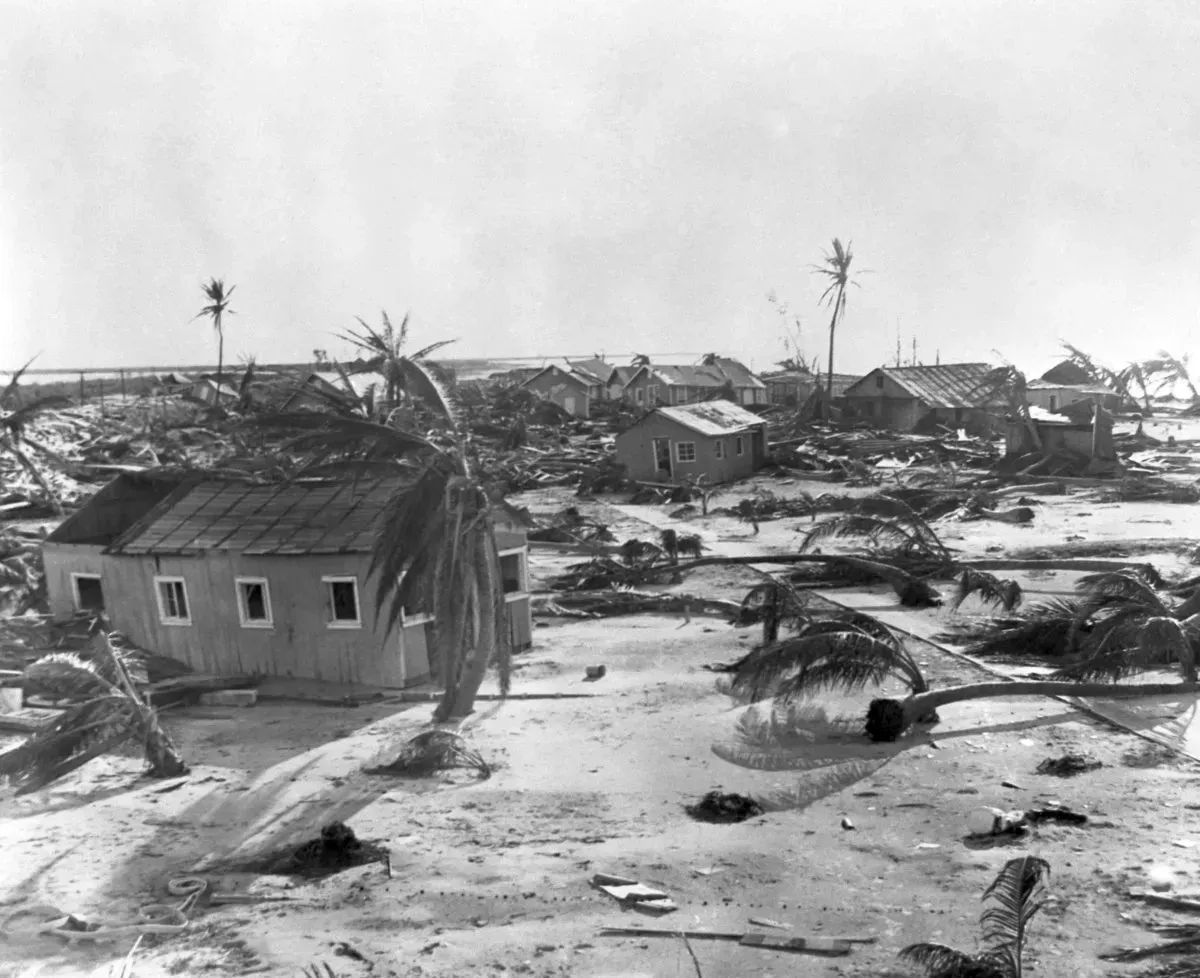
The Labor Day Hurricane of 1935 remains one of the most intense storms ever to strike the United States, and it hit the Florida Keys with almost no warning.
The devastation wasn’t limited to homes – it destroyed the Overseas Railroad connecting the Keys to the mainland, a structure engineers had considered nearly indestructible. That single failure changed how coastal infrastructure engineers thought about “permanent” structures forever.
When the Keys rebuilt, replacing the railroad with the Overseas Highway, engineers used reinforced concrete and elevated roadbeds designed with storm surge in mind rather than simply rebuilding what had failed. Residential construction in the Keys slowly followed suit, with builders beginning to favor elevated pier-and-beam foundations over slab construction directly on sand.
The lesson from 1935 was uncomfortable: even the most confident feats of engineering can be erased in an afternoon by storm surge. That humility shaped how coastal Florida approached construction for the next generation – but the Northeast was about to learn the same lesson the hard way, on a coastline nobody thought needed to worry.
#4 – The Great New England Hurricane That Caught an Entire Region Unprepared (1938)
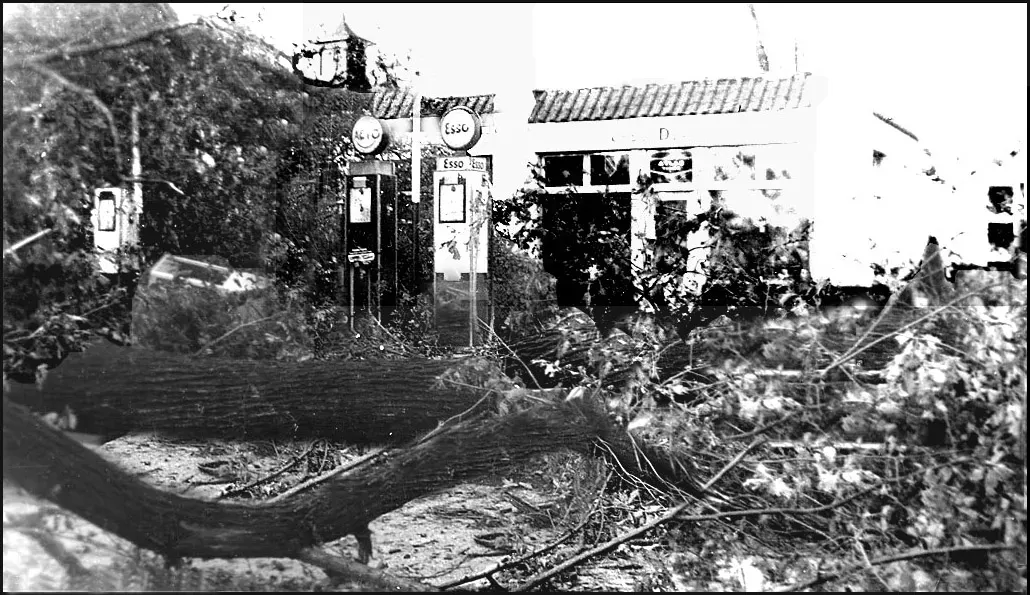
New England in 1938 had no hurricane warning system, no coastal building standards, and almost no cultural memory of major hurricanes.
When the “Long Island Express” slammed into the region with barely any advance notice, it flattened forests, swept away beach cottages, and killed hundreds of people who had no idea a storm of that magnitude was even possible that far north. Homes built for snow loads and nor’easters simply weren’t designed for hurricane-force wind.
The storm forced a hard truth: hurricane risk isn’t just a Southern problem. In the decades that followed, coastal Massachusetts, Rhode Island, and Connecticut slowly began adopting wind-resistance provisions borrowed from Gulf Coast practices, along with better anchoring standards for beachfront structures built on pilings.
More importantly, 1938 helped justify federal investment in hurricane forecasting and warning infrastructure – because the storm proved that even a region unaccustomed to hurricanes could be caught completely off guard. It’s a lesson meteorologists still cite when they warn “it hasn’t happened here before” is never a reason to skip safety upgrades.
#5 – Hurricane Camille and the Storm Surge Nobody Believed Was Possible (1969)
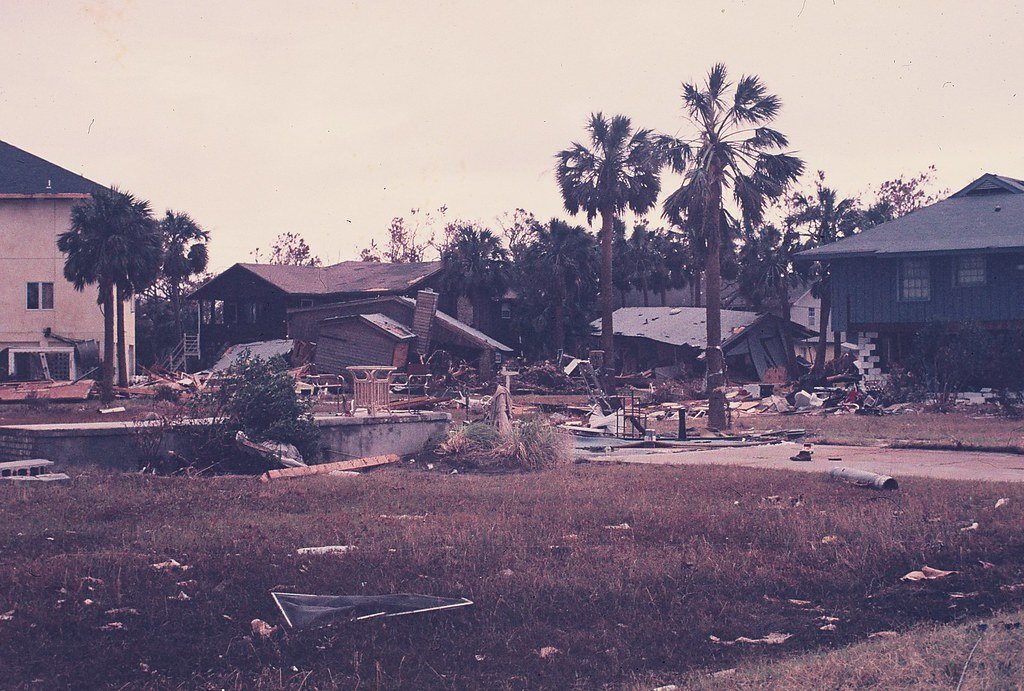
Camille hit the Mississippi Gulf Coast with a storm surge so extreme that survivors and engineers initially struggled to believe the measurements.
Entire apartment buildings were reduced to slabs. The storm exposed a fatal flaw in how coastal builders calculated “safe” elevation – the flood maps and surge estimates used before Camille turned out to be dangerously conservative.
Camille became the storm that taught engineers surge height had been underestimated for years. In its aftermath, coastal planners began pushing for more conservative flood elevation requirements and stricter separation between habitable living space and ground level in surge-prone zones.
The storm also fed directly into the research that would, a decade later, produce the first federal coastal construction guidance manuals – documents that finally gave builders science-based elevation and foundation requirements instead of guesswork. Camille’s brutal lesson was that “worse than anything on record” isn’t a hypothetical – it’s a design requirement.
#6 – The Xenia Tornado and the Super Outbreak That Changed Structural Science (1974)
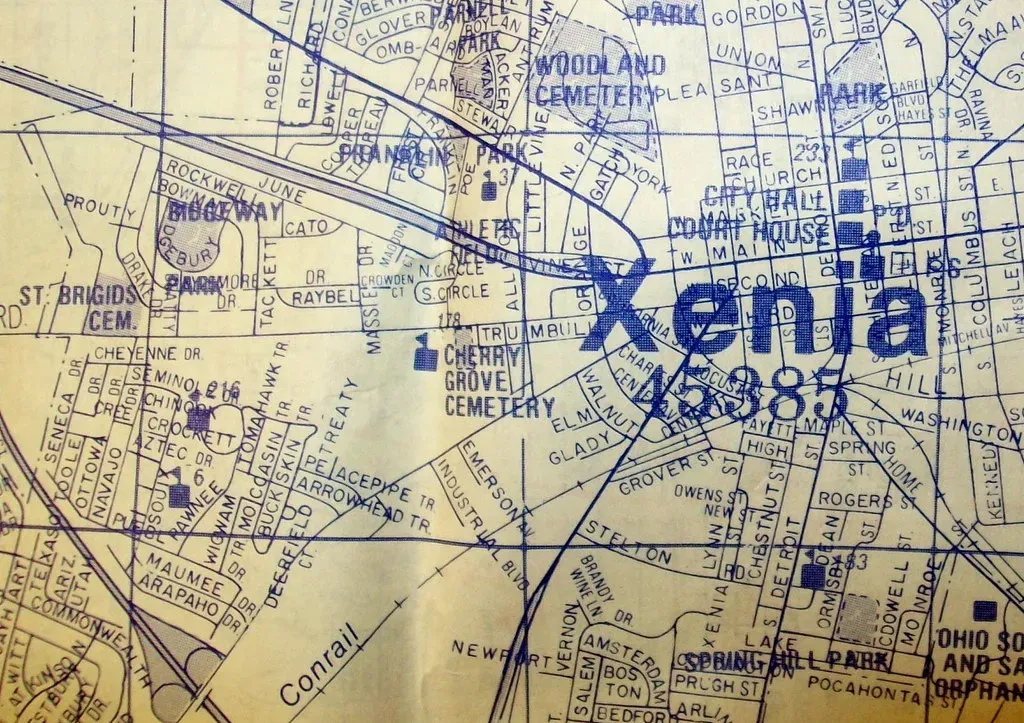
On April 3, 1974, dozens of tornadoes tore across the Midwest and South in a single afternoon, and the small town of Xenia, Ohio bore some of the worst damage.
What made this outbreak different wasn’t just its scale – it was the scientific response. Renowned tornado researcher Ted Fujita used the widespread, catastrophic damage patterns from Xenia and dozens of other communities to refine his damage-based intensity scale and study exactly how wind failure occurs in ordinary wood-framed homes.
Researchers discovered that most homes weren’t failing from wind pressure alone – they were failing at the connections. Roof-to-wall and wall-to-foundation joints turned out to be the weakest links in nearly every destroyed structure, a finding that reshaped how engineers thought about “hurricane straps” and metal connectors long before those became standard hardware.
The 1974 outbreak also accelerated the push for better tornado warning technology and community shelter planning. It planted the research seeds that, decades later, would blossom into the specific tornado shelter codes seen after Joplin and Moore. But Australia was about to prove the same lesson on the other side of the planet, with even less warning.
#7 – Cyclone Tracy and the Christmas Storm That Rebuilt a Nation’s Codes (1974)
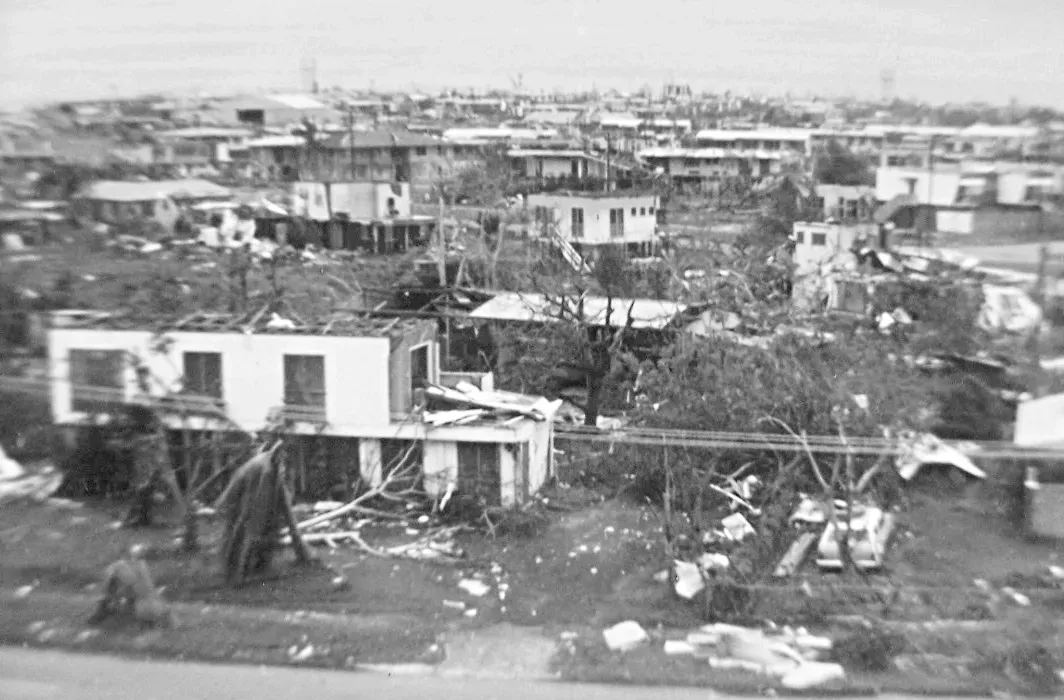
Just months after Xenia, on Christmas Eve 1974, Cyclone Tracy tracked directly over Darwin, Australia, and effectively erased the city overnight.
The numbers were staggering: sixty-six people were killed and around 60 percent of homes in Darwin were destroyed, while in the northern suburbs, this figure approached 100 percent. Investigators quickly found the root cause wasn’t just wind speed – it was design blindness. Engineering assumptions in the codes had not accounted for the horizontal loads imparted on the structures, meaning only the vertical loads on the roofs were included in the building design.
Australia’s wind codes had simply never been tested against a storm this violent hitting a residential suburb. The government response was swift and sweeping: a subsequent investigation resulted in fatigue testing of metal roofing under cyclical wind loading, the inclusion of internal wind pressure in the design, and the inclusion of horizontal wind pressures in the design.
Quick Compare
- Xenia, Ohio (April 1974): Tornado outbreak exposed weak roof-to-wall connections in wood-framed homes.
- Darwin, Australia (December 1974): Cyclone Tracy exposed missing horizontal wind-load calculations in national codes.
- Shared outcome: Two disasters, months apart, on opposite sides of the planet, both pushed engineers toward mandatory metal connectors and wind-pressure testing still used today.
Practical changes followed fast. Regulations now required screws rather than nails to hold down corrugated iron roofing, and buildings had to be clad to withstand airborne debris. Tracy didn’t just rebuild Darwin – it prompted an overhaul of the National Construction Code meant to ensure buildings on Australia’s northern coast can withstand a category four cyclone. Meanwhile, an ocean away, an entirely different kind of storm was about to embarrass forecasters and homeowners alike.
#8 – The Great Storm of 1987 That Britain Never Saw Coming (1987)
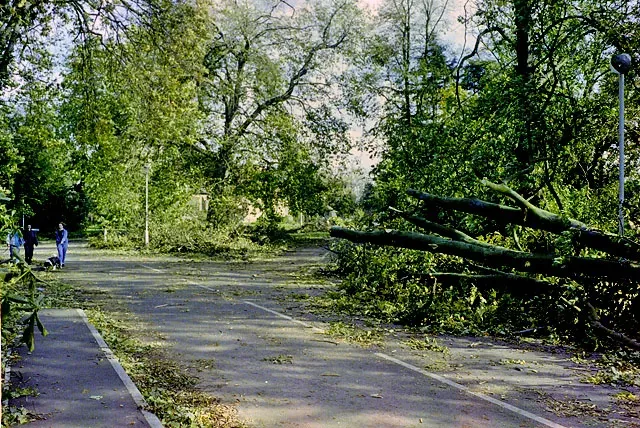
The UK doesn’t get hurricanes – or at least, that’s what everyone believed until October 15, 1987.
Forecasters famously downplayed the incoming system, and hours later southern England was unrecognizable. With winds gusting at up to 100mph, there was massive devastation across the country and 18 people were killed, and about 15 million trees were blown down. Roofs had been blown off, with tiles scattered like confetti, cars had been flipped over, and windows shattered.
Traditional British roof tiling, designed for rain rather than hurricane-force gusts, failed at a scale nobody had modeled. The damage exposed how little residential construction in temperate, “storm-safe” regions accounted for extreme wind events, since the powerful winds experienced in the south of England during this storm are deemed a once in 200 year event.
Worth Knowing
- Wind gusts reached up to 100mph across southern England.
- An estimated 15 million trees were blown down in a single night.
- Officials later classified the event as a once-in-200-year weather occurrence for the region.
- Forecasters’ failure to predict the storm’s severity reshaped how UK meteorologists communicate extreme weather risk today.
The storm’s real legacy wasn’t a single new code – it was a cultural shift in how UK planners viewed wind risk in a supposedly mild climate. The 1987 storm helped identify gaps in severe weather forecasting capability and highlighted the need for better communication with partner organisations such as emergency services and the public. That same humility about “it can’t happen here” was about to hit an American state that thought it already had strong codes.
#9 – Hurricane Hugo and the Wake-Up Call for the Carolinas (1989)
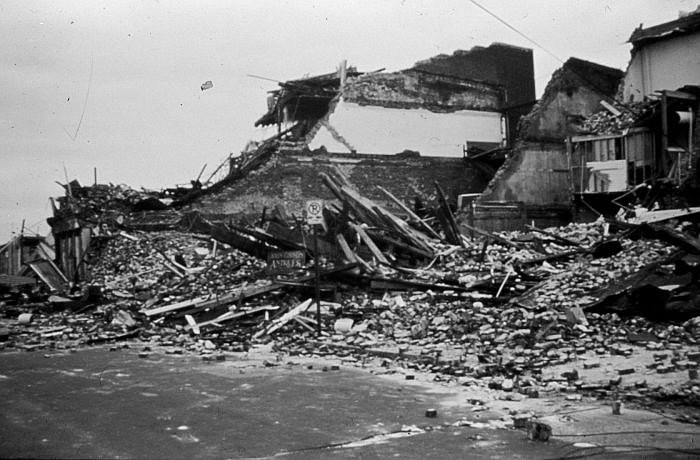
South Carolina had building codes before Hugo. What it didn’t have was enforcement, or codes strict enough to matter against a major hurricane’s eyewall.
When Hugo slammed into Charleston as a powerful Category 4 storm, it ripped roofs off buildings that were technically “up to code,” proving that the existing standards simply weren’t calibrated for storms of that intensity. Historic downtown structures and modern suburban homes alike suffered catastrophic roof failures.
Hugo revealed that a code on paper means nothing without real wind-load engineering behind it. In the years following the storm, South Carolina and neighboring coastal states began adopting stricter wind-speed design requirements, more rigorous roof-covering standards, and – critically – better inspection regimes to make sure builders actually followed the rules on-site.
Hugo is often overshadowed by the hurricanes that followed it, but engineers who study coastal construction consider it a pivotal transition point between the “we have codes” era and the “we actually enforce codes” era. Three years later, Florida would learn that same lesson in the most expensive way imaginable.
#10 – Hurricane Andrew and the Storm That Rebuilt an Entire State’s Rulebook (1992)
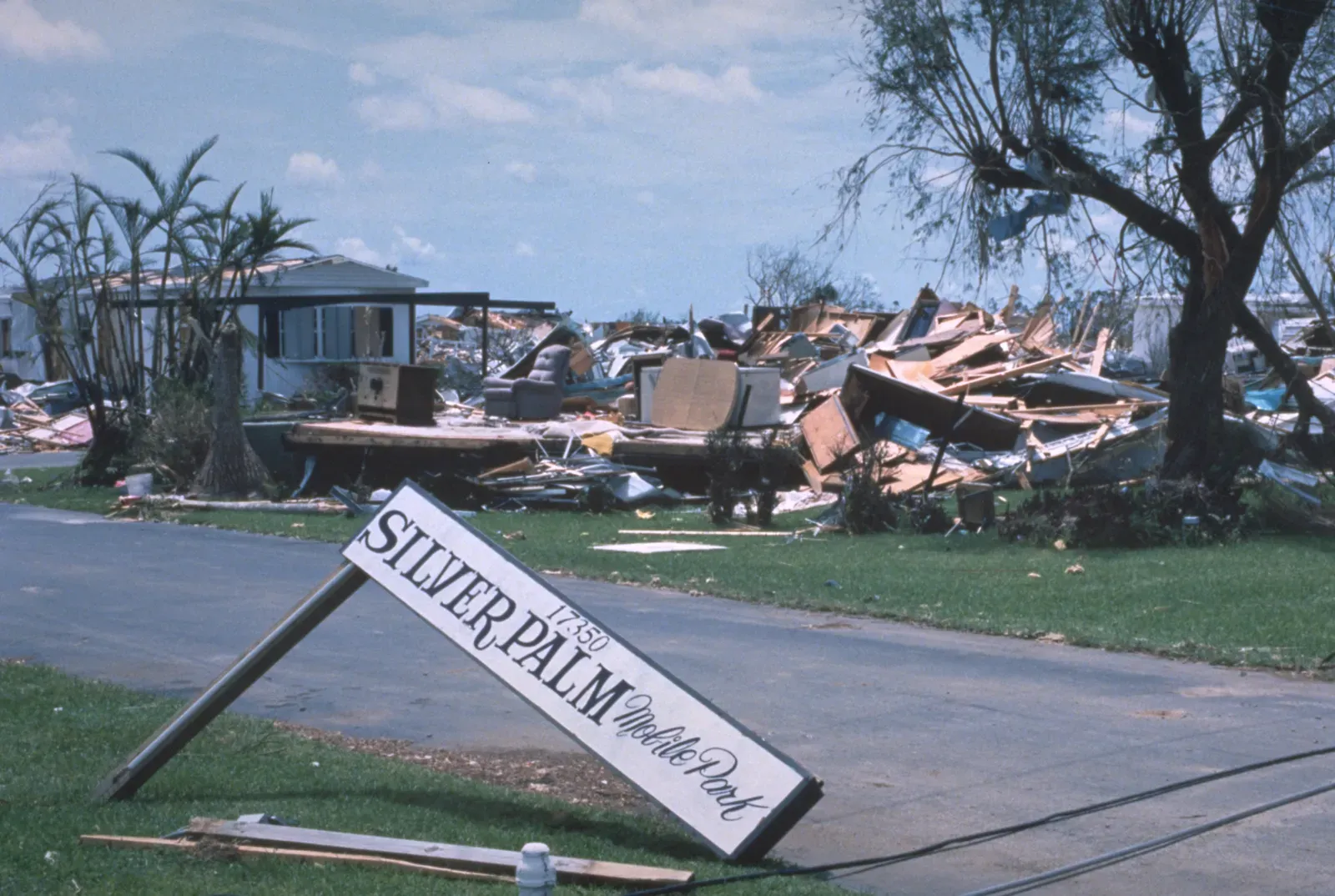
Before dawn on August 24, 1992, Hurricane Andrew crossed South Florida as a Category 5 storm, and what it revealed about the state’s construction industry was damning.
At the time, there were more than 400 different building codes across the state of Florida when Andrew struck. The results were catastrophic: the storm caused the destruction of more than 63,000 homes and damage to an additional 100,000 during Andrew’s rampage across Florida. A hurricane research director later put it bluntly: “It changed building codes and especially building code enforcement, which Andrew proved to be inadequate, incompetent or avoidant.”
A staggering $4 billion in insured losses was traced directly back to poor local code enforcement, not just the storm’s strength. Florida’s varied collection of building codes and lenient enforcement left residents especially vulnerable – a fact that pushed the governor to demand statewide reform rather than another patchwork fix.
At a Glance
- Category 5 hurricane that crossed South Florida on August 24, 1992.
- More than 63,000 homes destroyed and roughly 100,000 more damaged.
- Florida had over 400 different local building codes at the time of impact.
- Statewide reform followed in 2002, mandating impact-resistant windows and shutters.
The result, adopted statewide in 2002, mandated that new construction be able to withstand hurricane-force winds and feature shutters or impact-resistant glass in all openings. The code even created an entirely new testing standard for glass, requiring products to survive 9,000 cycles of alternating pressure simulating sustained hurricane winds before approval. Andrew didn’t just change Florida’s rulebook – it created entire industries, like impact-resistant window manufacturing, that didn’t meaningfully exist before 1992.
#11 – Hurricane Katrina and the Flood Maps That Had to Be Redrawn (2005)
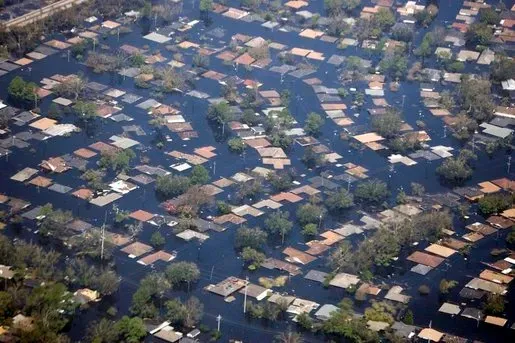
Katrina wasn’t primarily a wind disaster – it was a flood and levee-failure disaster, and that distinction changed everything about how homes are elevated today.
When the levee system protecting New Orleans failed catastrophically, it exposed a truth engineers had quietly worried about for years: existing flood elevation maps badly underestimated real-world surge risk in low-lying coastal cities. Homes built to “meet code” still ended up submerged to their rooflines.
FEMA’s response was to issue emergency Advisory Base Flood Elevations, essentially telling entire neighborhoods their homes needed to be built several feet higher than previously required. Rebuilding efforts across the Gulf Coast leaned heavily into elevated pile foundations, raising living spaces well above ground level and turning ground floors into flood-through parking or storage rather than bedrooms.
Katrina also forced a broader reckoning with “freeboard” – the extra margin of height added above the minimum required flood elevation as a buffer against future underestimates. That single concept, born from watching an entire American city drown, is now baked into flood-zone construction standards across the country. But the next major shift in home safety wouldn’t come from water at all – it would come from a tornado that tore through a small Missouri city.
#12 – The Joplin Tornado That Made Storm Shelters Mainstream (2011)
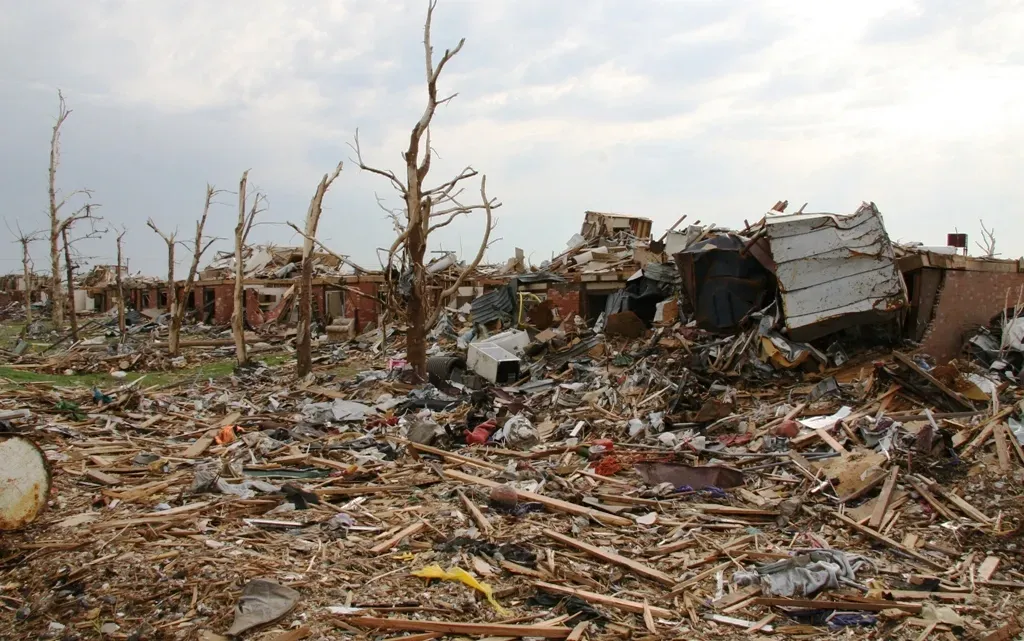
When an EF5 tornado struck Joplin, Missouri in May 2011, it destroyed a huge swath of the city, including a hospital, and killed over 150 people – making it one of the deadliest single tornadoes in modern U.S. history.
The scale of destruction forced a hard question: why weren’t more homes and public buildings equipped with dedicated safe rooms? Post-storm engineering assessments found that even well-built structures had little chance against direct EF4-EF5 impacts, but a properly engineered safe room dramatically improved survival odds regardless of what happened to the rest of the house.
Joplin became the case study that pushed FEMA’s ICC 500 safe room standard from a niche recommendation into mainstream residential practice. Builders and homeowners across Tornado Alley began treating reinforced, anchored safe rooms – capable of resisting extreme wind pressure and debris impact – as a realistic, affordable retrofit rather than an expensive luxury.
Insurance incentives followed, with some companies offering premium discounts for homes with certified shelters. Joplin proved that surviving a violent tornado often has less to do with your whole house and everything to do with one small, properly engineered room inside it. Two years later, a suburb of Oklahoma City would turn that lesson into law.
#13 – The Moore, Oklahoma Tornado That Made Shelters Mandatory (2013)
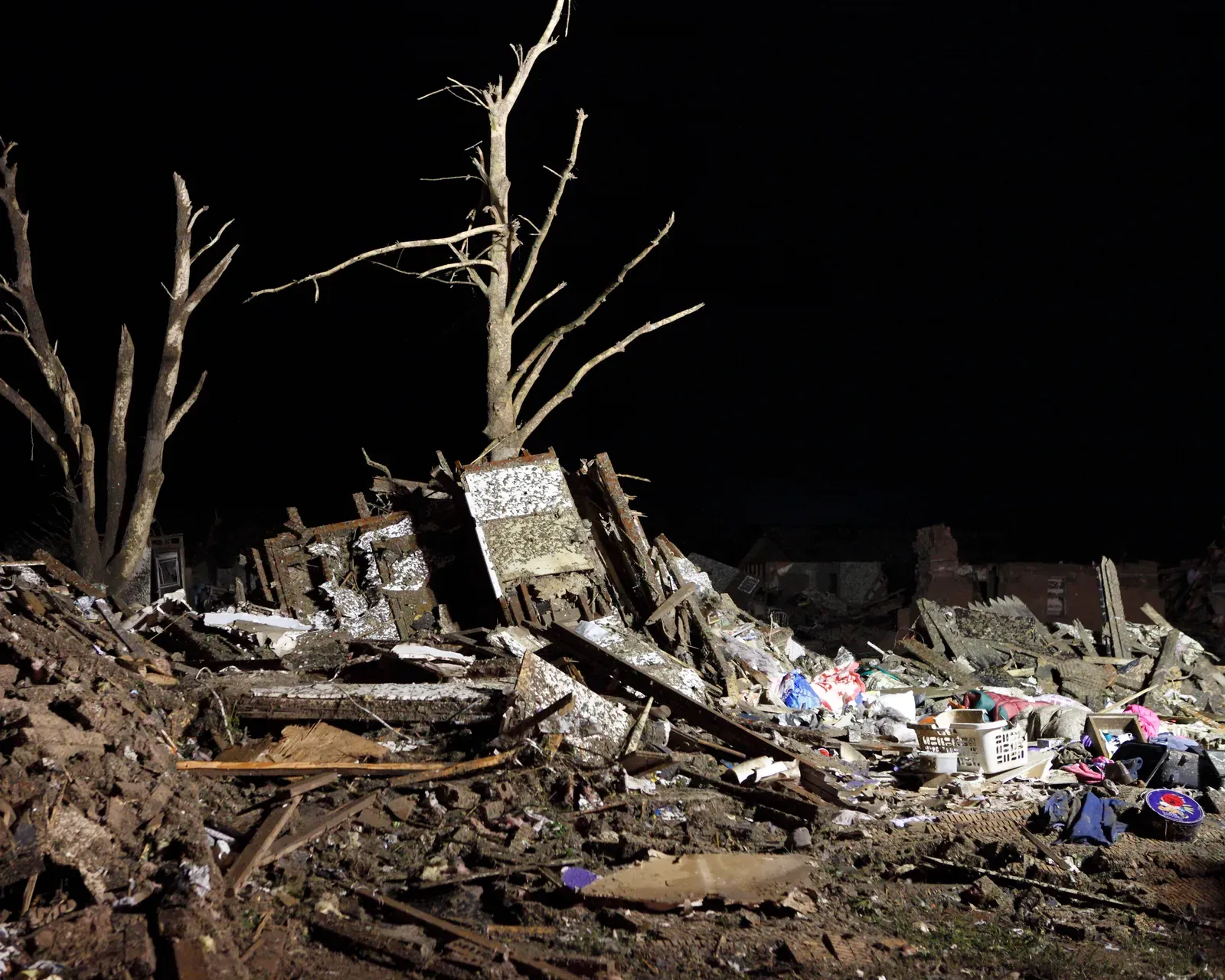
Moore, Oklahoma had already been hit by devastating tornadoes in 1999 and 2003 before an EF5 tornado struck the community again in May 2013, destroying two elementary schools and killing dozens of people, including children.
The repetition was the story here – a community rebuilt after catastrophic tornadoes, only to be hit again with similar devastation. That pattern forced local officials to stop treating tornado shelters as optional home upgrades and start treating them as basic infrastructure, the same way smoke detectors or seatbelts are treated elsewhere.
Moore became the first major U.S. city to require storm shelters or safe rooms in all new home construction, a policy shift that made national headlines and pushed other tornado-prone municipalities to consider similar mandates. School districts across Oklahoma also began retrofitting or rebuilding schools with reinforced safe rooms following the tragedy at the two schools.
The Moore mandate represents the logical endpoint of a century of storm-driven code evolution: from raising an entire city on jackscrews in 1900, to requiring every new home to include a room engineered to survive 200-mph winds in 2013. Building codes, it turns out, are written in the debris of the storms that came before them.
The Bottom Line
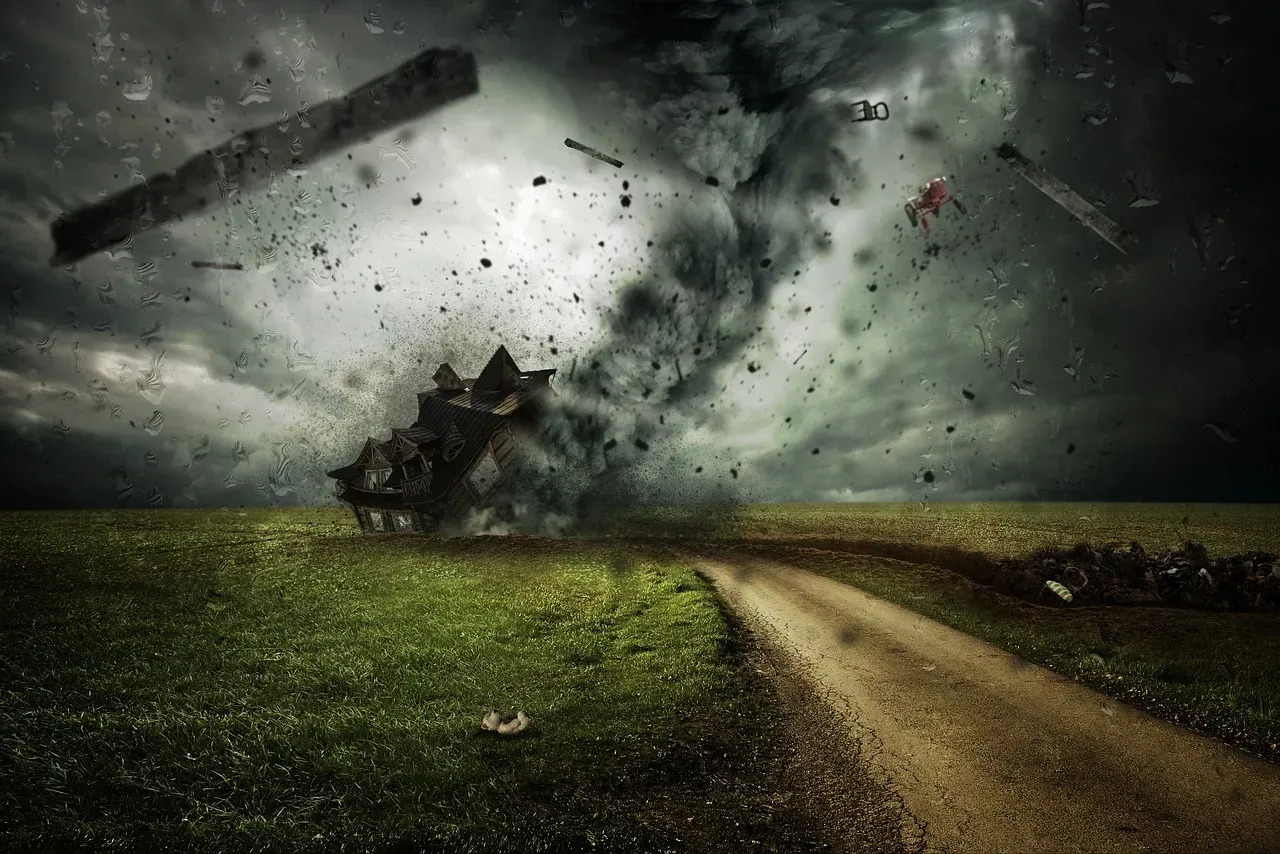
Every single safety feature we now take for granted – impact windows, elevated foundations, hurricane straps, mandatory safe rooms – exists because people died proving the old way didn’t work. That’s not a comfortable thought, but it’s the honest one. Codes don’t get written by cautious committees imagining worst-case scenarios; they get written after the worst case already happened to someone else’s neighborhood.
Here’s my honestly controversial take: most homeowners today still don’t know whether their house meets post-storm-era standards, and most builders won’t volunteer that information unless asked. If Andrew, Katrina, and Moore taught us anything, it’s that “up to code” often just means “up to the last disaster we learned from” – not necessarily ready for the next one. Which of these storms surprised you the most? Drop your city and tell us if your house would survive the same storm that changed the rules.
Word count note: this article reflects historically documented code and construction changes; specific local requirements vary by jurisdiction and should be verified with current local building authorities.