
Birds are supposed to nest in trees, bushes, cliffs and reeds… right? That is the neat textbook version. But out in the real world, where concrete, steel and Wi‑Fi signals now dominate, birds are constantly improvising. They turn junk into nurseries, danger zones into daycares and our everyday objects into high‑stakes maternity wards. I still remember walking into an underground parking garage and spotting a neat little cup of twigs balanced on top of a motion sensor. No sunlight, roaring engines, exhaust fumes everywhere – and yet, quietly, a female dove sat there, calm as a monk in rush‑hour traffic. It was such a bizarre contrast that I never looked at “normal” bird behavior the same way again. Below are 14 very real, very strange places birds have used as nest sites. Some are clever, some are risky, and a few feel almost like performance art. They all show one thing: birds are a lot more adaptable, and frankly weirder, than we usually give them credit for. —
#1 A Nest on Top of a Traffic Light in the Middle of a Busy Intersection
Imagine sitting in your car at a red light and suddenly noticing a bird flitting in and out of the signal housing above you. It sounds absurd, but traffic lights are used as nest sites all over the world. Pigeons, doves, corvids and even small songbirds sometimes cram twigs, trash and grass into any corner they can find on top of or behind the colored lenses.
From a bird’s perspective, a traffic light offers three big advantages: elevation, excellent visibility and a relatively predator‑free platform. Many natural predators like cats, snakes and small mammals simply can’t reach that height in the middle of a road. The constant noise and movement of vehicles also create a sort of chaotic shield that may discourage some predators from even trying.
Of course, it is far from safe. Heat from the lights can be intense, exhaust fumes are constant, and the nestlings are perched above lanes of hard asphalt and rushing metal. Yet birds still choose these spots, suggesting that, in urban areas, the scarcity of natural sites pushes them toward high‑risk, high‑reward improvisations.
When you look up at a traffic light now, you may notice small clumps of sticks or droppings that give away a hidden home. It’s a reminder that, even in the most controlled and regulated bits of city infrastructure, wildlife quietly moves in and rewrites the rules.
—
#2 A Barn Swallow Nest Glued to the Ceiling of a Fast‑Food Drive‑Thru
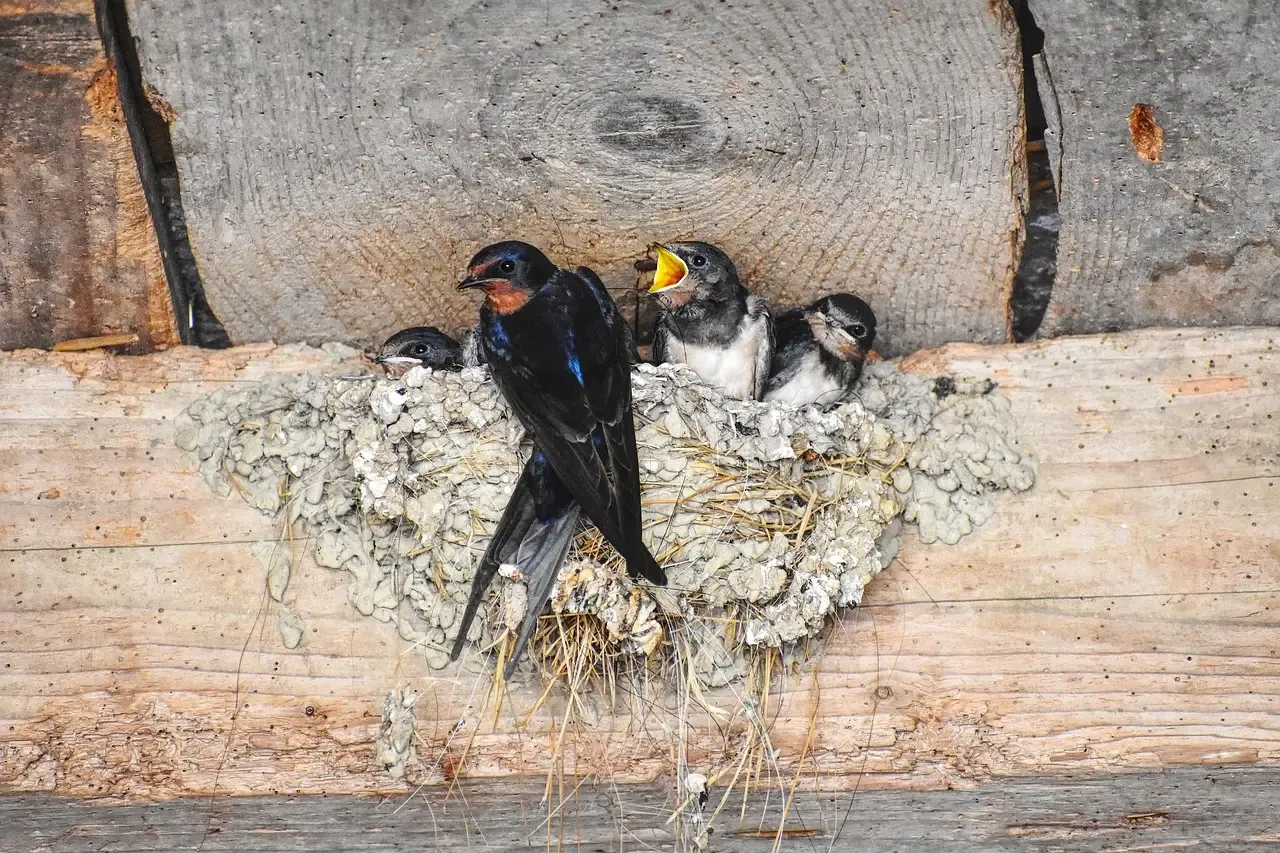
Pulling into a drive‑thru, most of us are thinking about fries, not wildlife architecture. Yet barn swallows, cliff swallows and similar species frequently build their mud nests in the sheltered overhangs above ordering windows. They mix mud pellets with bits of straw and attach the structure directly to the ceiling, just centimeters above where cars idle and people lean out to grab their food.
The choice is eccentric but smart. Those covered outdoor ceilings mimic rock ledges and cliff overhangs where these birds historically nested. The fluorescent lights attract insects at night, giving adults an all‑you‑can‑eat buffet conveniently placed near their nesting colony. Human presence also tends to keep certain predators away, turning a noisy fast‑food joint into an oddly secure nursery.
From a human point of view, this setup can be comical and a bit gross: white droppings spattering the menu board, chicks peering down at people unwrapping burgers. Staff sometimes put up boards or ledges to catch the mess, or, less sympathetically, try to knock down early nest attempts.
But if you ever watch a line of swallows swooping around the neon signs at dusk, chattering and ferrying insects back to those mud cups, it suddenly makes sense. To them, we’ve built an artificial cliff face, added lighting and food, and then thoughtfully provided round‑the‑clock traffic to scare away predators. Why wouldn’t they move in?
—
#3 A Nest Hidden Inside a Store Sign or Neon Letter
Large plastic or metal letters on buildings – especially hollow ones – look like pure advertisement to us. To a bird, they might as well be small ready‑made caves. Starlings, house sparrows and other cavity‑nesting birds often squeeze into gaps between letters, behind logos or inside the hollow spaces of illuminated signs to lay their eggs.
These sign nests can be surprisingly well protected from rain and wind. The housing for lights or wiring creates a dry cavity, and the elevated location makes it tough for ground predators to gain access. The glow of neon or LED lights doesn’t seem to deter many urban birds. Some species appear quite tolerant of low‑level illumination, especially in cities where artificial light is inescapable anyway.
There are trade‑offs, of course. Heat from bulbs, electrical noise and constant vibrations can stress adult birds and their young. Maintenance workers sometimes uncover nests accidentally when repairing a sign, leading to abrupt eviction. Still, the repeated use of these structures shows how strongly birds are drawn to enclosed, protected spaces, even when they come with modern hazards.
- Cavity‑nesting birds are wired to seek enclosed, cave‑like spaces.
- Hollow letters on signs mimic natural tree holes or rock crevices.
- Light and noise are risks, but elevation and shelter are major benefits.
Once you notice one sparrow slipping in behind a logo, you start seeing possibilities everywhere. Suddenly every big sign on a strip mall looks less like branding and more like an accidental bird apartment complex.
—
#4 A Nest in the Engine Bay of a Parked Car or Truck
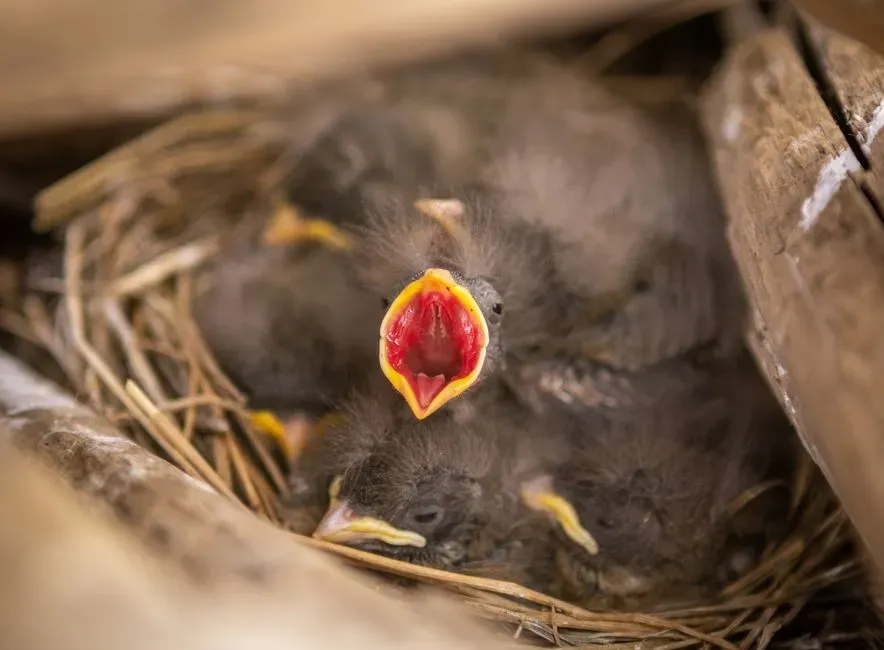
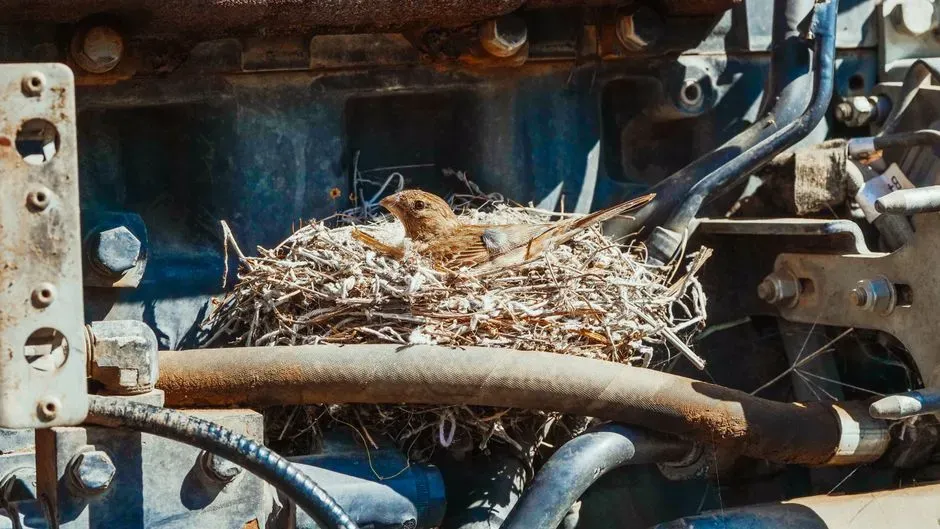
Ask any mechanic and they will tell you: birds love engine bays. If a vehicle sits unused for days or weeks – especially in spring – there is a good chance some small bird will sneak under the hood, haul in dry grass and leaves, and set up a nest in the sheltered maze around the engine block or battery.
From a bird’s viewpoint, the space under a hood is almost perfect. It is dark, wind‑free, and partially insulated. On vehicles that have been used recently, residual warmth can be attractive on chilly nights, making it feel like a cozy natural cavity. In rural or suburban areas, cars parked near hedgerows or fields become especially vulnerable to this spontaneous “upholstering.”
For the birds, the problem appears when the owner starts the car again. Nests can be crushed, shaken apart or exposed to sudden heat and fumes. Chicks can be injured or killed before anyone even realizes they were there. For the vehicle, nesting material and droppings can clog vents or damage wiring, leading to unpleasant surprises and repair bills.
Because of this, wildlife groups sometimes recommend that people who leave vehicles idle for long periods do a quick check under the hood in nesting season. It sounds ridiculous until you open the bonnet and find a perfectly formed cup of dry grass, a few pale eggs and a nervous parent bird glaring up at you from inside the machinery.
—
#5 A Nest Built Directly on an Air Conditioner Unit or Fan
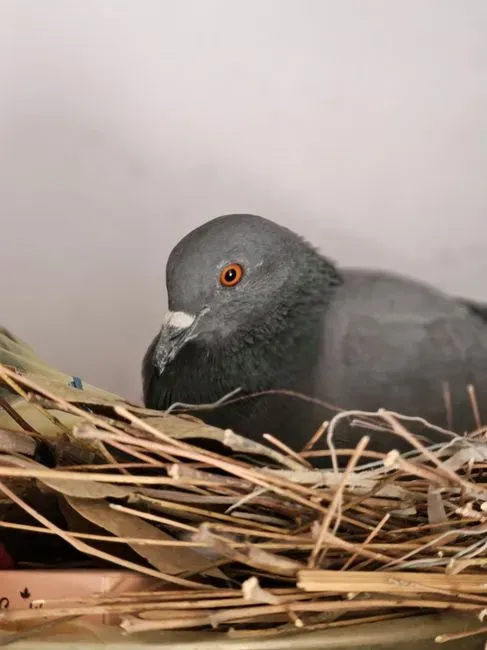
Window air conditioning units, rooftop condensers and extractor fans often look like industrial noise boxes to us. To a determined bird, they are flat surfaces with ledges and grills – prime spots to wedge in twigs and start a family. Doves, pigeons and various small songbirds frequently use the top of AC units or the recess around them as nesting platforms.
There is some logic here. These devices are usually mounted off the ground, offering height and a bit of shelter from rain. The surrounding walls or window frames create corners and ridges that help hold the nest together. If a unit is rarely used, or if the bird builds during cooler weather, the risk from moving parts might initially seem low.
Things become problematic once the device is turned on. Vibrations shake the nest, fan blades can injure nestlings, and hot exhaust can overheat the eggs. Homeowners sometimes only discover the nest when they notice strange noises, feathers or bits of twigs blowing out of vents.
- Flat artificial surfaces act like cliffs or ledges in densely built areas.
- Birds rarely understand the danger of moving parts or sudden heat.
- Covering unused units in spring can help prevent nesting conflicts.
I once stayed in a small hotel where a pair of pigeons insisted on nesting on the outdoor heat pump. Every time the system kicked on, they would wobble, ruffle their feathers and stubbornly settle back down, as if trying to pretend the entire metal box hadn’t just shuddered beneath them. It summed up urban wildlife: persistent to the point of absurdity.
—
#6 A Seabird Nest on a Rooftop Satellite Dish
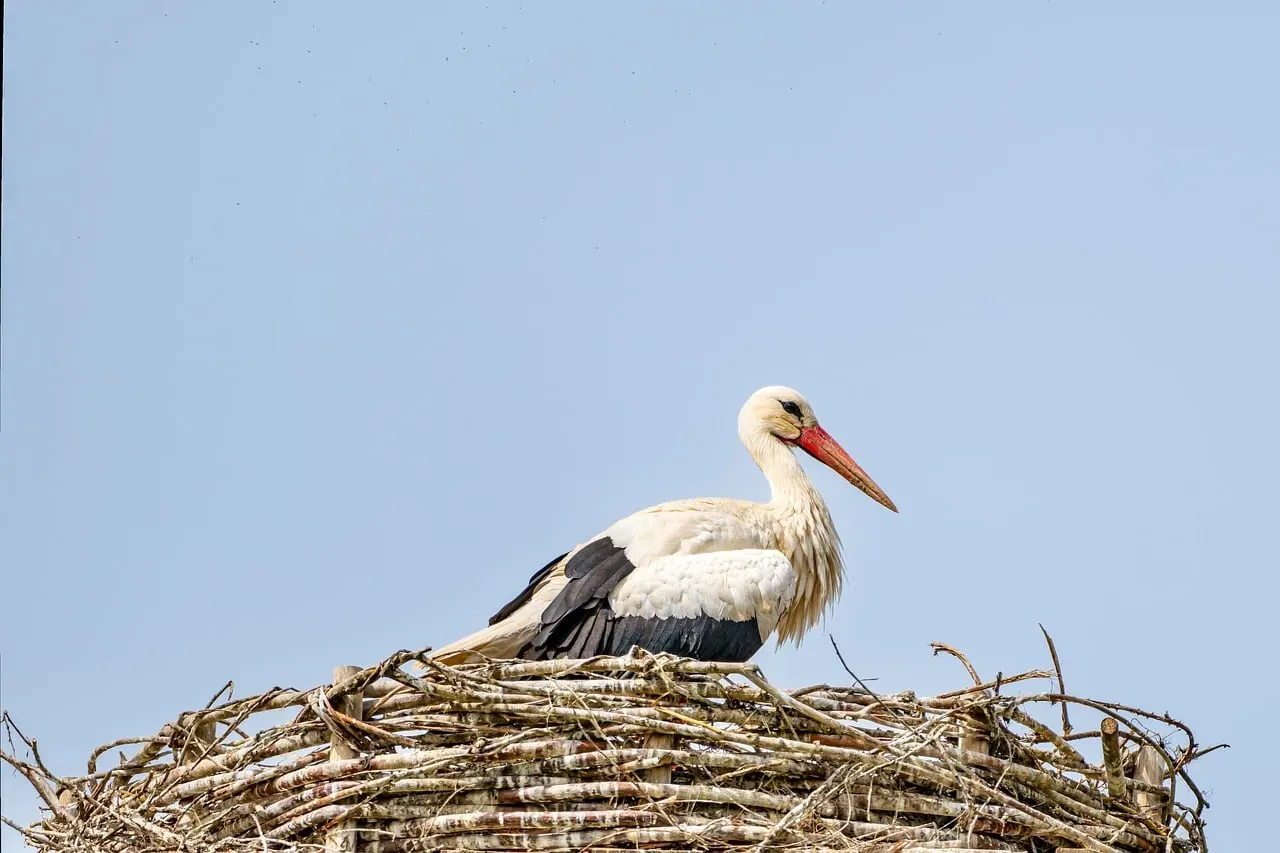
On coastal buildings, satellite dishes and large TV antennas have quietly become stand‑ins for ocean cliffs. Gulls, terns and other seabirds sometimes choose the shallow curve of a satellite dish as a nesting bowl, lining it with vegetation, plastic and even bits of rope washed ashore. From the street, it looks like a strange crown of trash perched on the dish.
For birds that historically nested on rugged rock ledges, a high rooftop dish checks many of the same boxes: exposed but elevated, with wide open sightlines and minimal land predators. Nearby human activity might be annoying, but it rarely poses a direct threat at nest level. And in many coastal cities, there are far more flat roofs and dishes than intact natural cliffs.
The downside is interference – both for humans and the birds. Nest material can weigh down or distort the dish, affecting reception. Human attempts to clear the nest can come into conflict with local wildlife protection laws, as many seabirds are protected during breeding season. For the birds, metal surfaces can become extremely hot in full sun, and chicks are vulnerable if they stray too close to the dish edge.
Nonetheless, these improvised nests highlight how seabirds adapt to shrinking natural habitat. When a gull chooses a satellite dish, it is essentially saying that, in the modern coastal landscape, our electronics are the nearest equivalent to the rugged cliffs its ancestors once used.
—
#7 A Nest Carefully Constructed in a Hanging Flower Basket
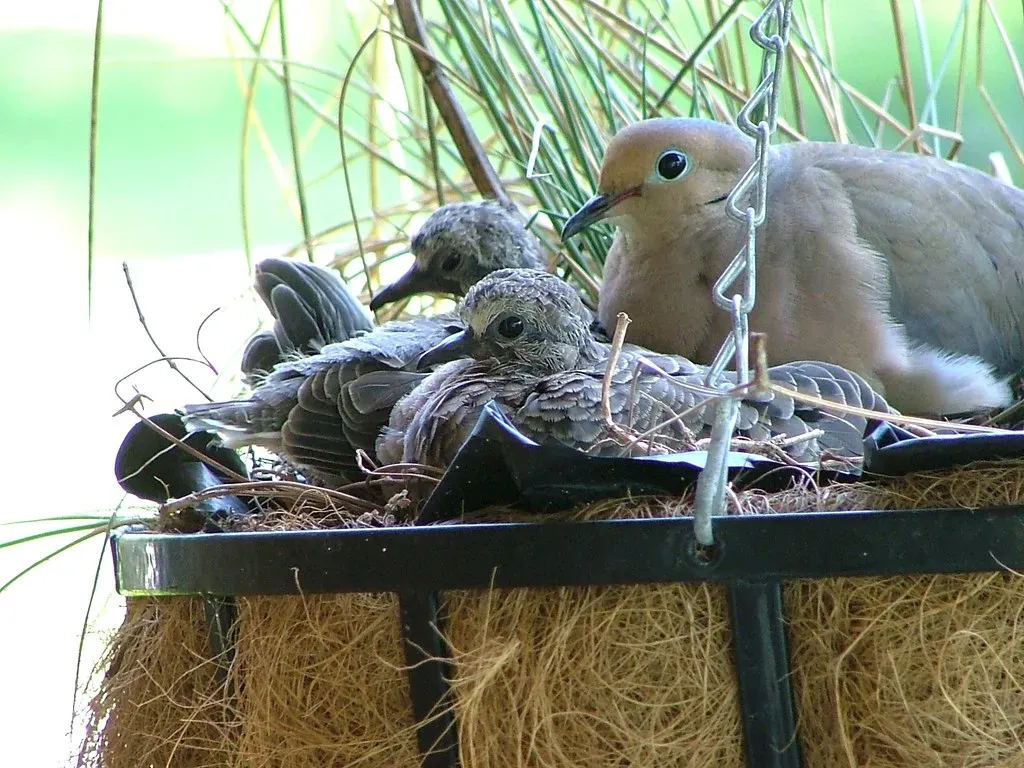
Hanging flower baskets on porches and balconies are meant to brighten our lives, but to many birds they are simply perfect ready‑made planters for their offspring. Species like finches, sparrows and robins will tuck their nests snugly into the dense foliage, sometimes right next to the front door where humans walk in and out daily.
The advantages are obvious: the basket already hangs off the ground, the foliage provides cover from above, and humans tend to chase away cats, raccoons and other predators. Watering routines mean the plants stay lush, creating excellent camouflage. To a bird, it is like finding a fully furnished studio apartment, complete with security guard and landscaping service.
For us, the discovery can be equal parts delightful and inconvenient. Gardeners may notice that their plants look oddly flattened in the center, then spot beaks poking out from the greenery. Suddenly watering becomes a delicate operation, and using the front door can feel like crossing an invisible security boundary.
- Hanging baskets combine elevation, cover and low predator access.
- Human routine unintentionally creates a “safe zone” from many threats.
- Conflicts often arise over watering, pruning and access to the doorway.
Personally, I always feel a bit honored when a bird chooses a basket near a doorway. It is a strangely intimate vote of confidence: out of all the dangerous spots in the world, this tiny creature has decided your front porch is the least terrifying.
—
#8 A Nest Deep Inside a Traffic Cone or Road Barrier
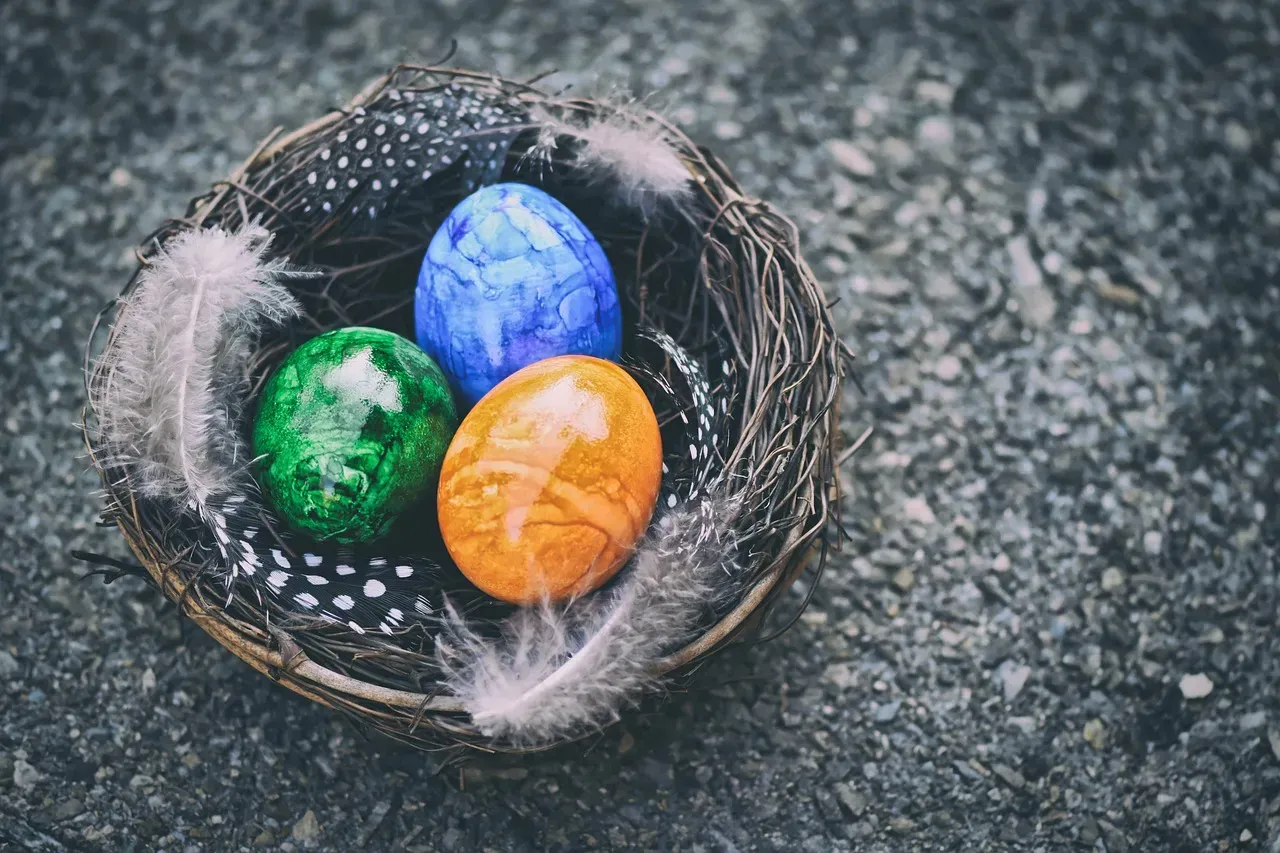
Bright orange traffic cones, hollow plastic bollards and modular road barriers are designed to control human movement, not to host wildlife. Yet their hollow interiors can be irresistible to birds looking for a concealed cavity. Sparrows and similar small birds sometimes slip through the opening at the top of a cone or the side gaps in a barrier and pile in nesting material.
From the outside, you might notice nothing more than the occasional chirp or a bit of grass sticking out. Inside, however, the bird enjoys a dark, wind‑shielded chamber with only one small entrance that is easy to defend. To a cavity‑nester, it feels like an ideal tree hollow that just happens to be made of reflective plastic.
These nests become problematic when construction crews move or stack the cones and barriers. Sudden disturbance can crush the nest, dislodge eggs or leave chicks stranded. In some cases, workers have postponed work or carefully relocated cones after realizing they were unknowingly hosting an active nest.
It is hard not to be amused by the idea that a tool meant to make roads safer for humans has simultaneously become a micro‑habitat for nervous little birds, turning construction zones into reluctant bird sanctuaries.
—
#9 A Nest Wedged Between Letters in a License Plate or Car Grille
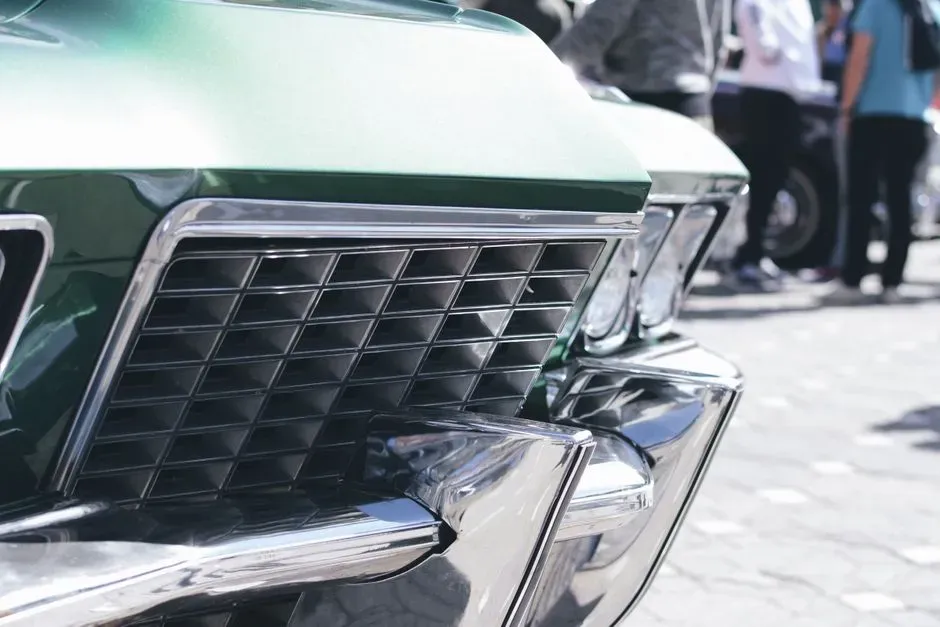
License plates and car grilles seem much too exposed and flimsy to be viable nesting spots, yet birds sometimes cram nesting materials into the narrow spaces between characters or in the gaps of a decorative grille. This happens most often on cars that stay parked in the same spot for long stretches, especially near hedges or fields.
To a bird hurrying to claim territory in spring, any small cavity or ledge can look promising. The recessed areas around plate bolts or lettering offer a tiny nook to wedge grass and feathers. In some cases, birds just start there as an exploratory attempt, and if the car does not move, they commit and build a full nest.
For humans, the result is half‑comical, half‑alarming. You go to start your car after a week away and notice straw poking out around the plate or grille, plus an indignant bird protesting from a nearby shrub. Cleaning it out feels cruel, but leaving it puts both birds and vehicle at risk if you actually need to drive.
- Short‑term immobility can trick birds into treating cars as permanent objects.
- Even tiny recesses are enough to trigger nesting behavior in some species.
- Frequent movement is one of the best deterrents against this kind of nesting.
It’s a strangely modern problem: birds making life‑and‑death decisions based on our parking habits, while we try to balance compassion with the practical reality that cars are, in fact, meant to move.
—
#10 A Nest Balanced on Top of an Outdoor Security Camera
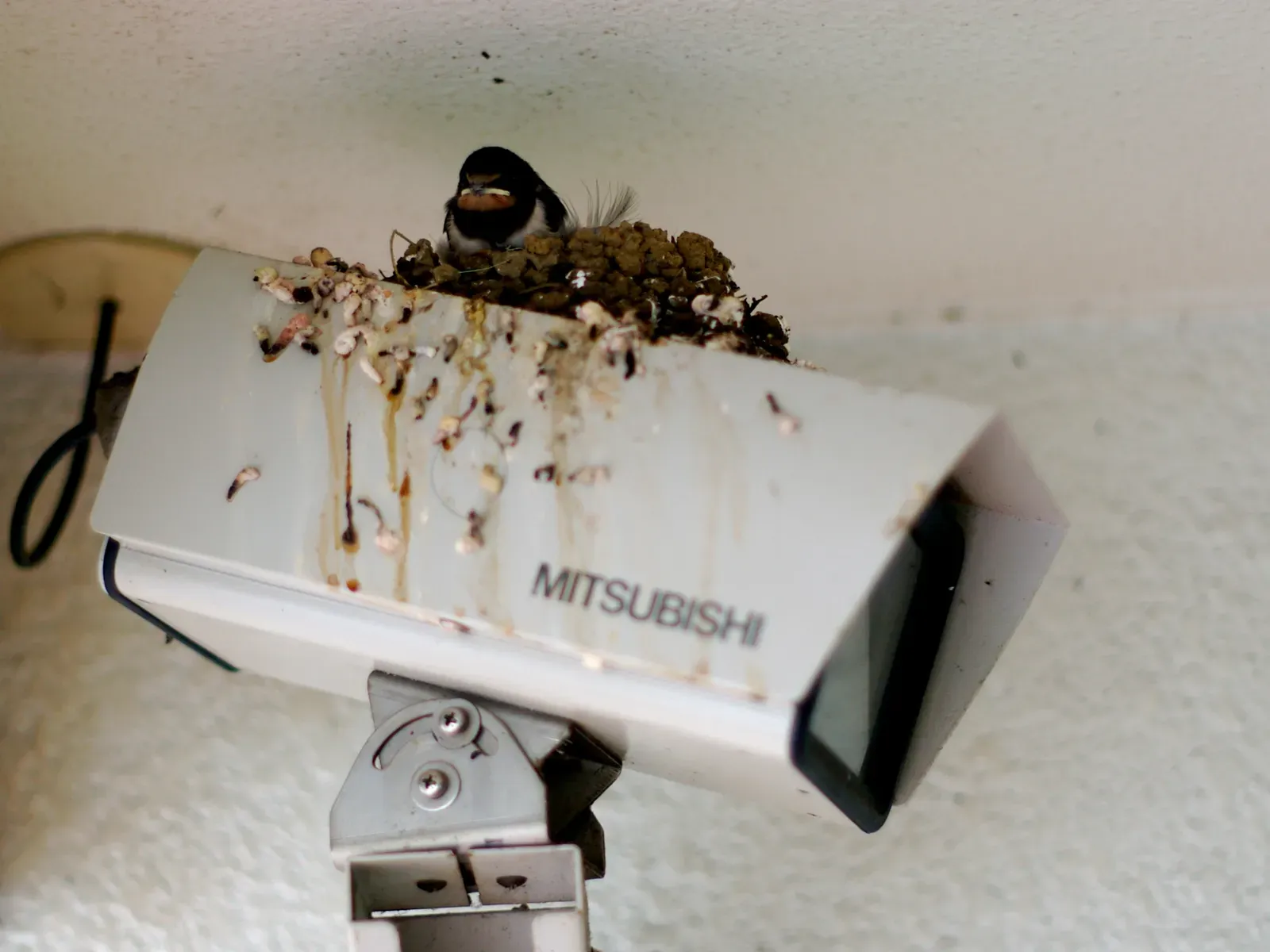
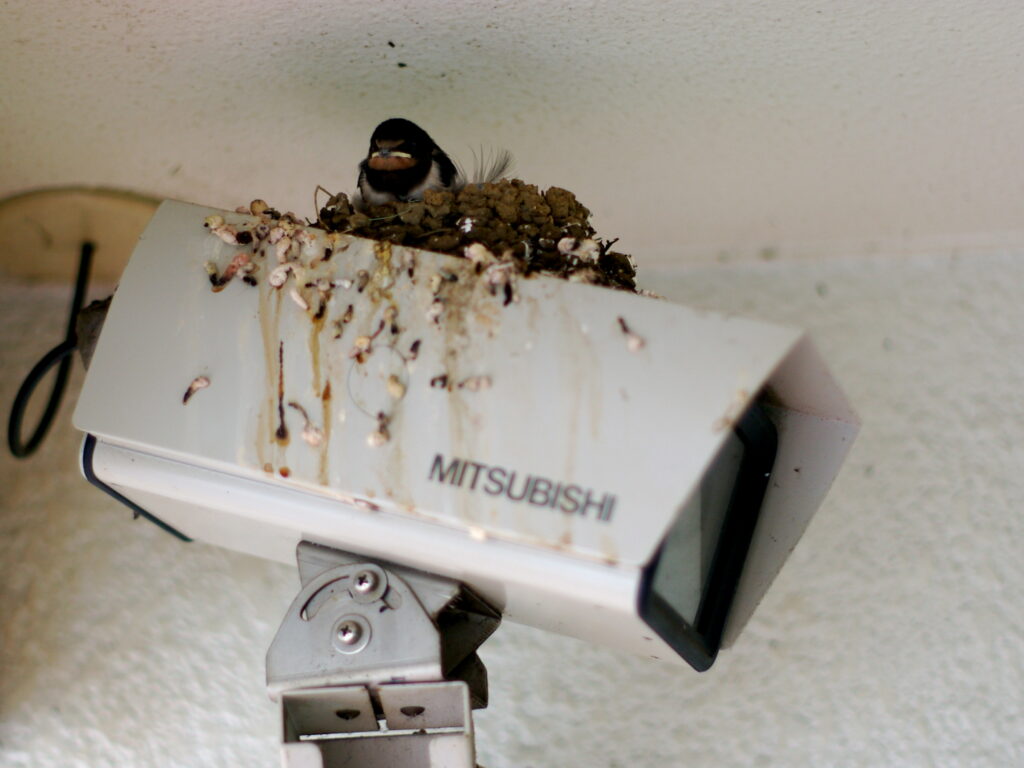
Security cameras are meant to keep watch over property. Ironically, they often end up hosting feathered squatters, turning into platforms for nests. Doves, swallows and even crows have been seen building their nests right on top of wall‑mounted cameras, dome housings and motion‑sensing floodlights.
The elevated position gives the birds an excellent view of their territory, and the camera housing itself provides a flat, stable base. In some cases, nearby walls and roof overhangs offer additional shelter from rain and wind. As with many other examples, human activity in the area may inadvertently keep away certain predators and larger competitors.
From a security perspective, this is a headache. Nest material, droppings and the birds’ own bodies can obstruct the camera, reducing visibility and sometimes triggering false motion alerts all day long. Attempts to remove nests have to navigate both ethics and, in some jurisdictions, wildlife protection rules that limit interference during active nesting.
There is something almost poetic about it: the technology meant to watch everything ends up watching, and being reshaped by, nature. Your “all‑seeing eye” ends up wearing a messy crown of twigs, and the true rulers of the yard are the tiny beaks peeking over the lens.
—
#11 A Nest Tucked Inside an Old Boot or Helmet Left Outdoors
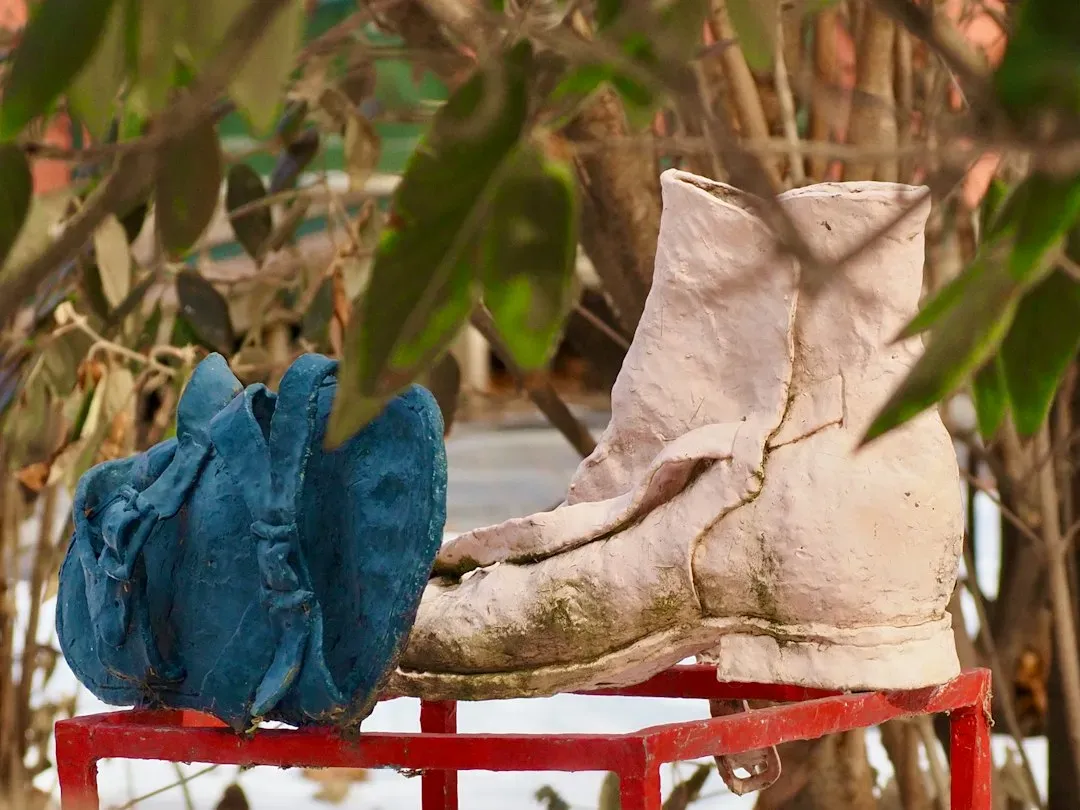
Abandoned work boots, riding helmets, bicycle helmets and even hard hats left in sheds or gardens unintentionally become perfect micro‑caves. Small birds love them. The hollow interior, one entrance, and sturdy walls match the template of a safe nesting cavity almost perfectly. Add a bit of dry, sheltered positioning, and you have five‑star bird real estate.
These nests often go unnoticed until someone goes to move the item. You bend down to pick up a dusty boot or a helmet and are startled by a rush of wings or the sight of tiny eggs nestled where your foot or head once went. For the birds, the repurposed object is just another available structure in a rapidly changing world.
The choice tells us a lot about how adaptable birds have become. As fallen tree hollows and old stumps become rarer in managed landscapes, they increasingly turn to human cast‑offs. A boot by a shed might be the closest equivalent to a hollow log. To them, it is not weird; it is resourceful.
- Enclosed man‑made objects can feel like ideal natural cavities to birds.
- Leaving gear outside in spring almost guarantees some unexpected tenants.
- Gently checking long‑unused items can prevent unfortunate surprises.
On a personal note, I once found a perfectly formed nest inside a forgotten garden glove box. It felt like nature quietly cleaning up after human clutter, turning neglect into new life.
—
#12 A Nest on a Floating Piece of Trash or Discarded Object in Water
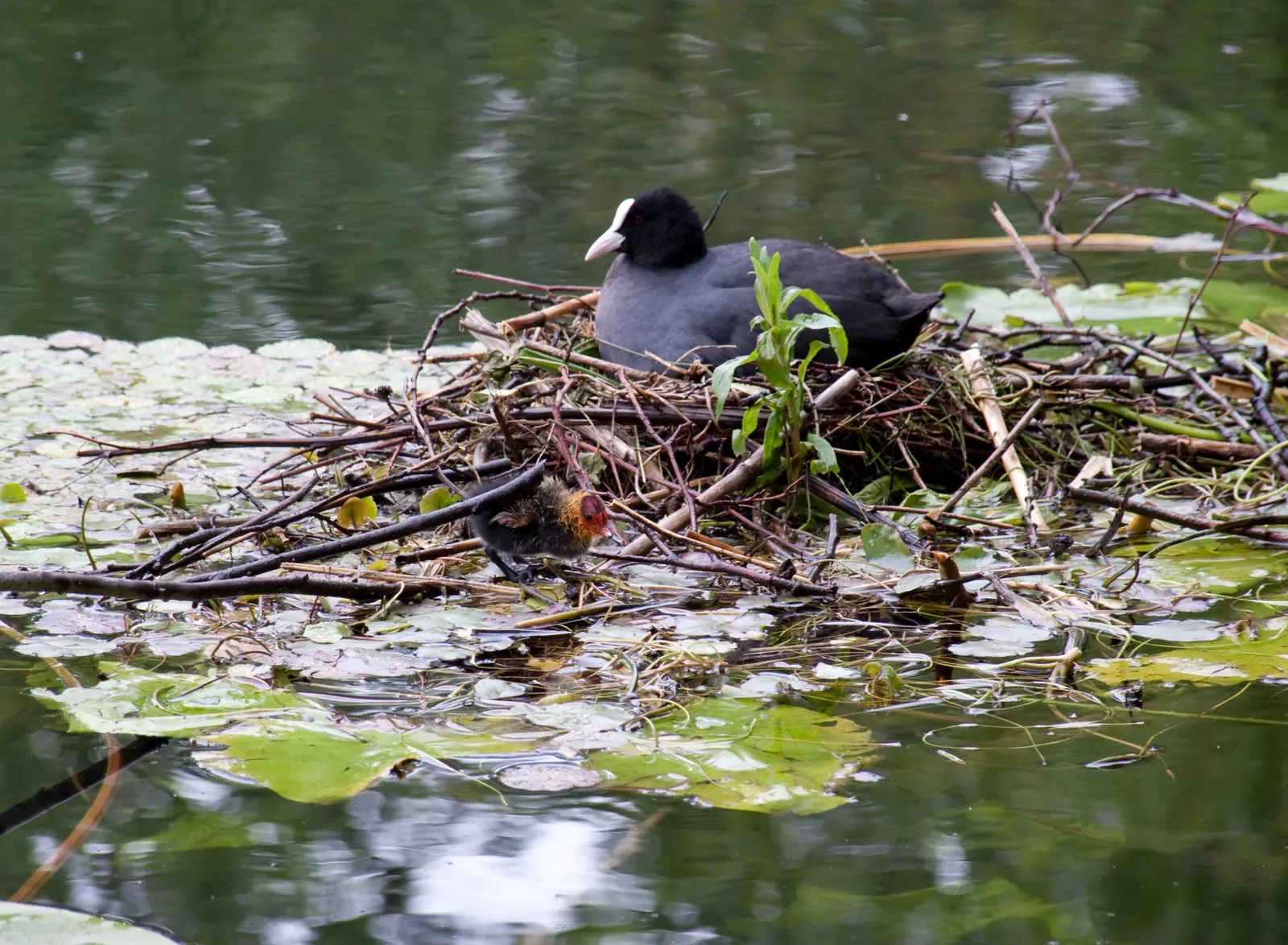
In lakes, harbors and urban ponds, birds sometimes nest on floating objects that were never meant to host wildlife. Old tires, pallets, chunks of Styrofoam, plastic drums and even piles of littered bottles can become improvised rafts. Waterbirds such as coots, grebes and some ducks will stack vegetation and trash on top of these surfaces to form a floating nest.
Historically, many of these species nested on natural floating mats of vegetation or in reed beds. As shorelines are hardened and wetlands drained, they may pivot to whatever substitute they can find. A half‑submerged pallet or drifting plastic platform may be the closest thing to a stable, predator‑resistant base in an otherwise disturbed waterbody.
The irony is painful. On one hand, it is a testament to the incredible flexibility of birds, turning pollution into a life raft. On the other hand, the same trash can entangle chicks, leach chemicals and break apart in storms, dooming the brood. The nest may literally be built on the material that threatens the species long term.
Seeing a clutch of downy chicks huddled on a mess of bottles and bags can be oddly moving. It crystallizes how wildlife does not get the luxury of waiting for a better world; it has to work with whatever we leave lying around, even if that makes no sense from a natural history perspective.
—
#13 A Nest Constructed in the Crook of a Storefront Mannequin or Statue
Outdoor mannequins, garden statues and life‑size decorative figures often stand still longer than any human would. Birds notice. They sometimes tuck nests into the arms, shoulders or hats of these figures, taking advantage of the stable, elevated, and often sheltered contours of a fake human or animal form.
From a distance, the sight can be surreal: a neatly dressed mannequin with a nest in the crook of its elbow, or a statue of a historical figure with chicks peering over the brim of a sculpted hat. To the birds, the statue is just another tall, unmoving object that offers structure and a perch – like a very eccentric tree.
These nests highlight how little birds care about our symbolic meanings. Where we see art, advertising or cultural memory, they see geometry and opportunity. A bent arm becomes a branch; a decorative urn becomes a hollow log replacement. The weirdness exists mostly in our minds, not theirs.
- Static human shapes can function like unconventional, branchy “trees.”
- Birds take advantage of sheltered crooks, hats and shoulders for nest support.
- Humans often perceive these nests as whimsical, but for the birds, it is pure practicality.
There is something oddly humbling about a songbird ignoring all of our stories and status games, then casually raising a family in the elbow of a plaster general or fashion mannequin. It puts our sense of importance into perspective very quickly.
—
#14 A Nest Perched on High‑Voltage Transmission Towers and Power Poles
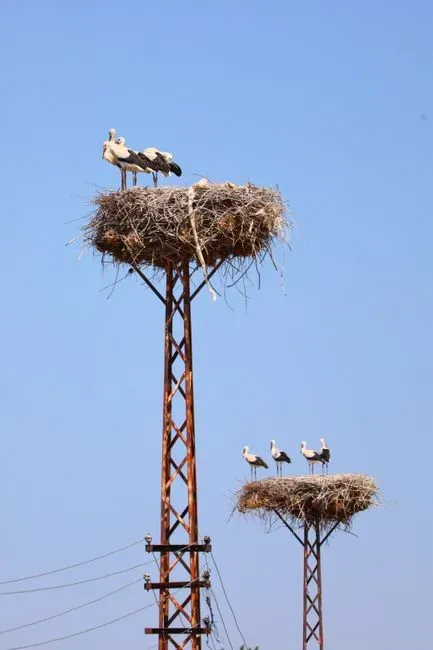
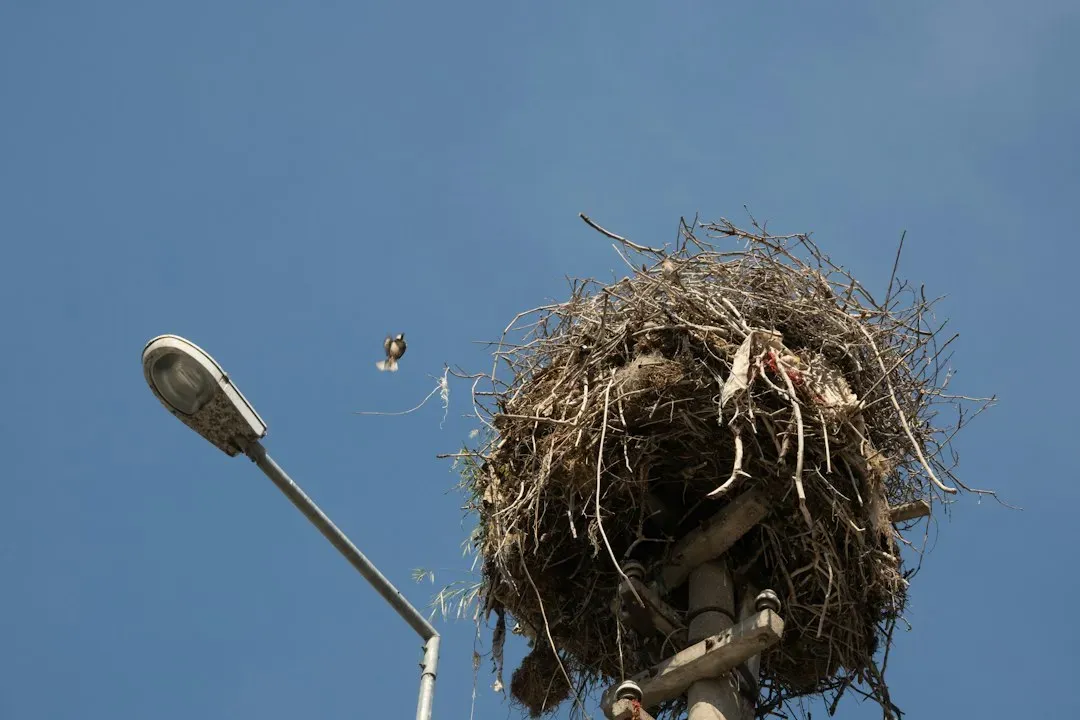
High‑voltage transmission towers and tall power poles are among the strangest and most dangerous nesting platforms, yet they are also some of the most popular with large birds. Raptors like ospreys and eagles, as well as storks and some large corvids, regularly build bulky stick nests on the crossbeams of these structures, sometimes returning to the same spot year after year.
Why risk it? The view is unparalleled, and predation risk from ground‑based threats is almost zero. The broad, rigid crossarms offer very stable support for heavy nests, and the open surroundings give birds plenty of time to spot intruders. In landscapes where tall trees are scarce – wetlands, open plains, heavily logged areas – these towers may be the only available “trees” tall enough to meet the birds’ requirements.
The danger comes from the lines themselves. Large wingspans plus conductive materials in nests can create the perfect conditions for electrocution or outages. Utilities spend considerable effort installing nest platforms and deterrents, trying to balance grid reliability with wildlife protection. In some regions, specially designed platforms are placed just above or beside live hardware to safely attract nesting pairs away from critical lines.
Watching an enormous nest perched on top of a metal lattice tower, with chicks peering out against a backdrop of insulators and cables, feels almost like science fiction. It is a literal fusion of wild instinct and human infrastructure, a place that makes no sense on paper and yet keeps being chosen, decade after decade.
—
Conclusion: What These Ridiculous Nest Sites Are Really Telling Us
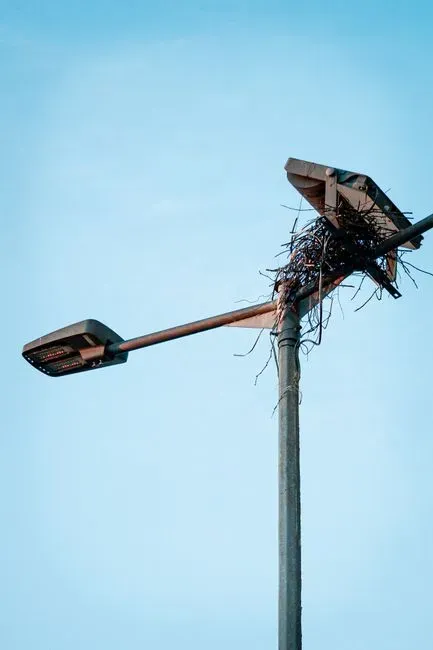
At first glance, a nest in a traffic cone or on a security camera just feels funny, like animals photobombing modern life. But when you look more closely, a pattern emerges. Birds are not being random or quirky for our entertainment. They are responding to a world where traditional nesting sites are shrinking, and they are using what is left – no matter how strange it looks to us.
That engine bay nest or hanging basket nursery is a direct result of habitat loss, urbanization and our obsession with tidiness. Old trees with natural cavities are cut down. Wetlands where reed beds once spread are drained or walled off. In their place we offer plastic cones, neon signs, towers and porch decor. Birds can either adapt to these odd options or give up entirely, and most of them are far too stubborn to give up.
I think that is why these stories stick with people. They make us laugh, but they also carry a quiet accusation: if a bird is desperate enough to raise its young in a boot or on a satellite dish, what happened to the safer, saner nesting places it used to have? In that sense, every weird nest is both a testament to resilience and a symptom of loss.
If there is a hopeful angle, it is that small choices matter. Leaving a dead tree standing where it is safe to do so, installing proper nest boxes, or simply checking your car and gear before long drives in spring can all tip the balance. The more real habitat we protect and restore, the fewer birds will have to bet their future on traffic lights and power poles.
Next time you spot a nest somewhere that makes no sense, it might be worth asking yourself a slightly uncomfortable question: is this a charming exception, or is this what normal looks like when nature has run out of better options?