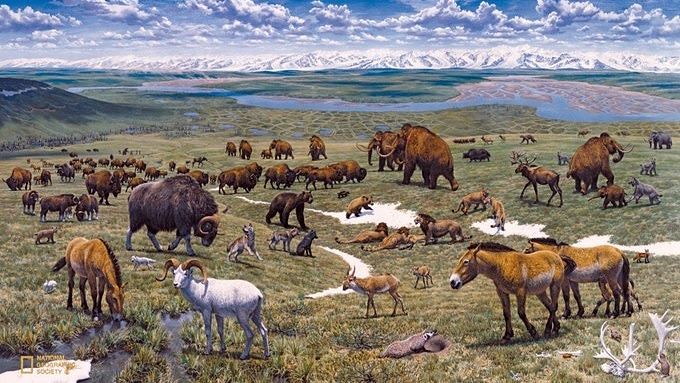
Imagine walking across the American landscape thousands of years ago. You wouldn’t be alone. Towering mammoths with curved tusks, saber-toothed cats with dagger-like fangs, and ground sloths the size of elephants once roamed the very land beneath your feet today. These weren’t creatures from a fantasy novel. They were real.
The United States harbors one of the most spectacular prehistoric records on Earth. From the tar pits of California to the badlands of Montana, fossils tell stories of a world dramatically different from our own. These ancient giants disappeared roughly ten thousand years ago in what scientists call the megafauna extinction event, leaving behind only their bones and the mystery of what killed them. Let’s dive in and meet the colossal beasts that once ruled America.
The Towering Columbian Mammoth
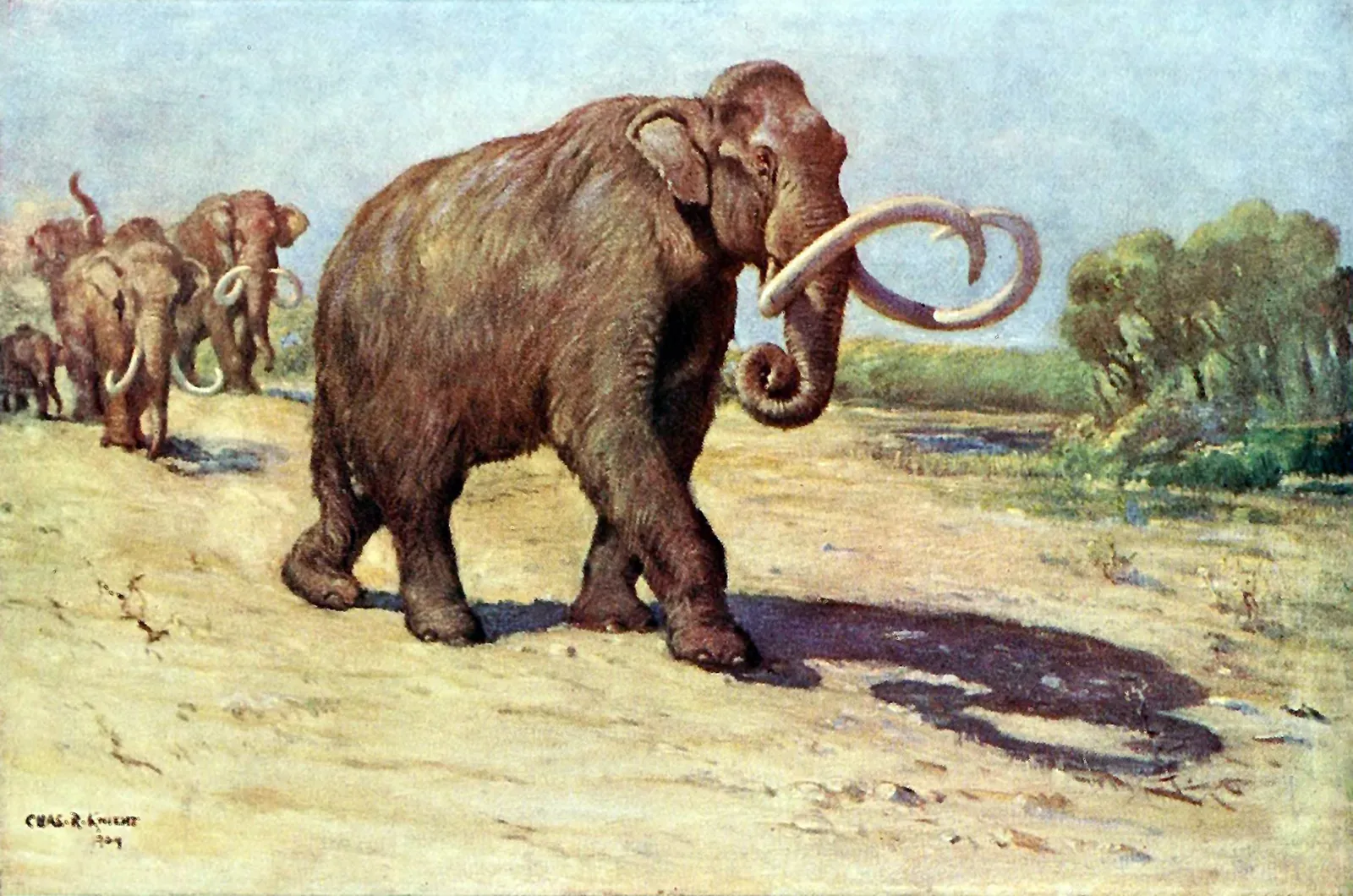
The Columbian mammoth stood about 13 feet tall and weighed nearly 10 tons, making it one of the most impressive creatures to ever walk North America. Unlike its famous hairy cousin the woolly mammoth, which stayed in the frozen north, this species thrived in warmer climates across most of the continent. Picture a creature roughly the size of a school bus lumbering across grasslands from Canada down through Mexico.
These massive herbivores were grazers, using their ridged teeth to chew through roughly four hundred pounds of grass and vegetation daily. Standing 12 feet tall at the shoulders and weighing six to eight tons, the woolly mammoth grazed the northern steppes of Ice Age North America using its colossal, 15-foot curved tusks to dig under the snow for food, but the Columbian mammoth preferred more temperate regions. Their long, curved tusks could grow up to sixteen feet along the outer curve, making them the longest in the entire elephant family. Think about that for a moment: tusks longer than most cars.
The Stocky American Mastodon
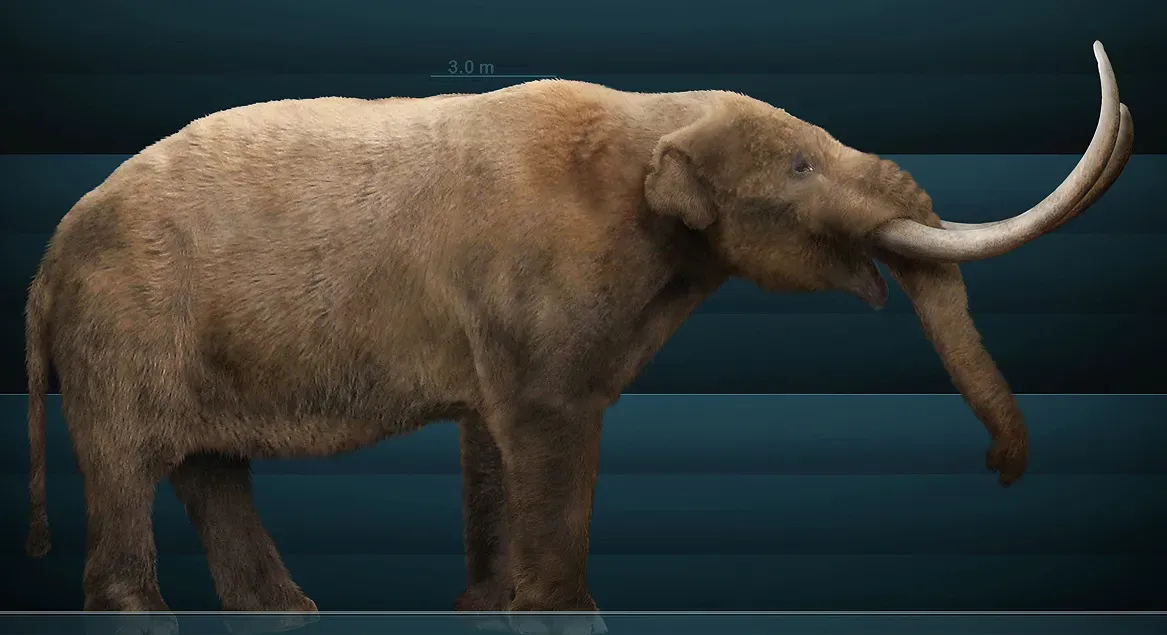
The American mastodon is the most ancient of the North American “elephants,” with ancestors that crossed the Bering Strait from Asia roughly 15 million years ago and evolved into the American mastodon 3.5 million years ago. These forest-dwelling beasts were shorter and stockier than mammoths, with adults reaching heights of around ten feet at the shoulder and weighing about six tons. Not exactly small, yet dwarfed by their mammoth cousins.
The mastodon was shorter and stockier than the later mammoths, and the shape of its teeth indicate that mastodons didn’t graze on grass like mammoths, but ripped off leaves and entire tree branches for food. Their cone-shaped cusps on molars, resembling a pig’s teeth, allowed them to crush woody vegetation with ease. Mastodons preferred wet forests to open grasslands, browsing on branches, pinecones, and shrubs rather than grass. These gentle giants had flatter heads than mammoths and lacked the distinctive bulging skull dome that characterized their larger relatives.
The Terrifying Giant Short-Faced Bear
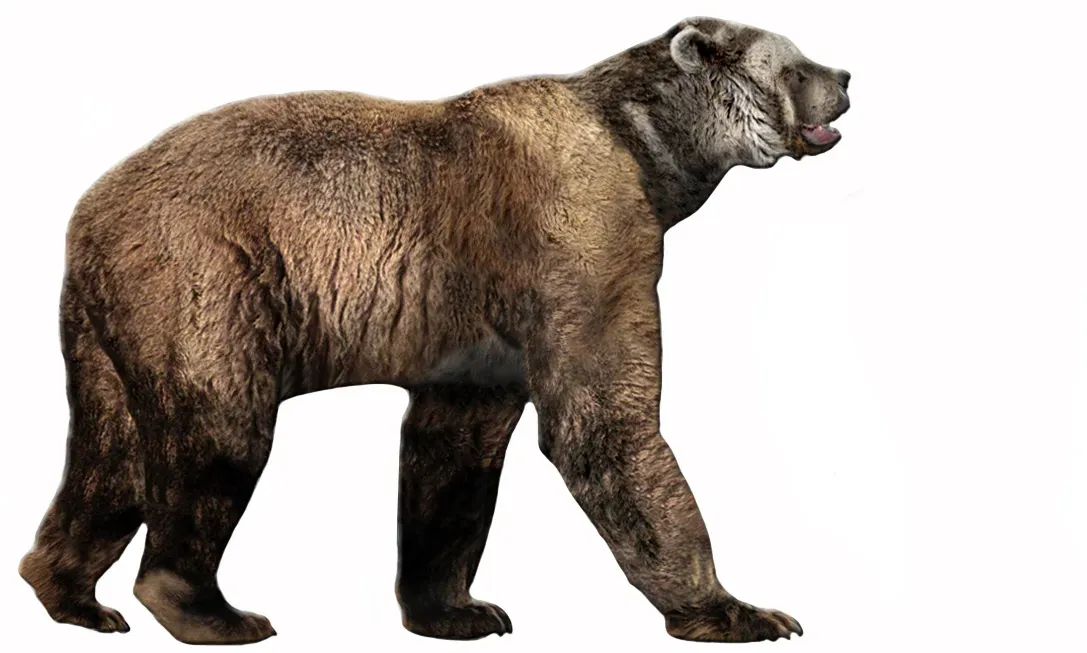
Let’s be real: if you encountered this beast in the Ice Age, you’d have been utterly terrified. The giant short-faced bear (Arctodus simus) was the largest carnivorous mammal to ever roam North America, and standing on its hind legs, an adult giant short-faced bear boasted a vertical reach of more than 14 feet. That’s taller than most basketball hoops. This wasn’t some lumbering brute either.
The short-faced bear could reach speeds topping 40 miles per hour, making it the fastest bear to ever live. Its long, muscular legs gave it a cursorial build, meaning it could chase down prey across open landscapes. Standing tall on those powerful limbs, this predator would have been a nightmare for any herbivore unfortunate enough to cross its path. Honestly, it’s hard to imagine a more intimidating predator prowling Ice Age America.
Massive Ground Sloths That Stood Twelve Feet Tall
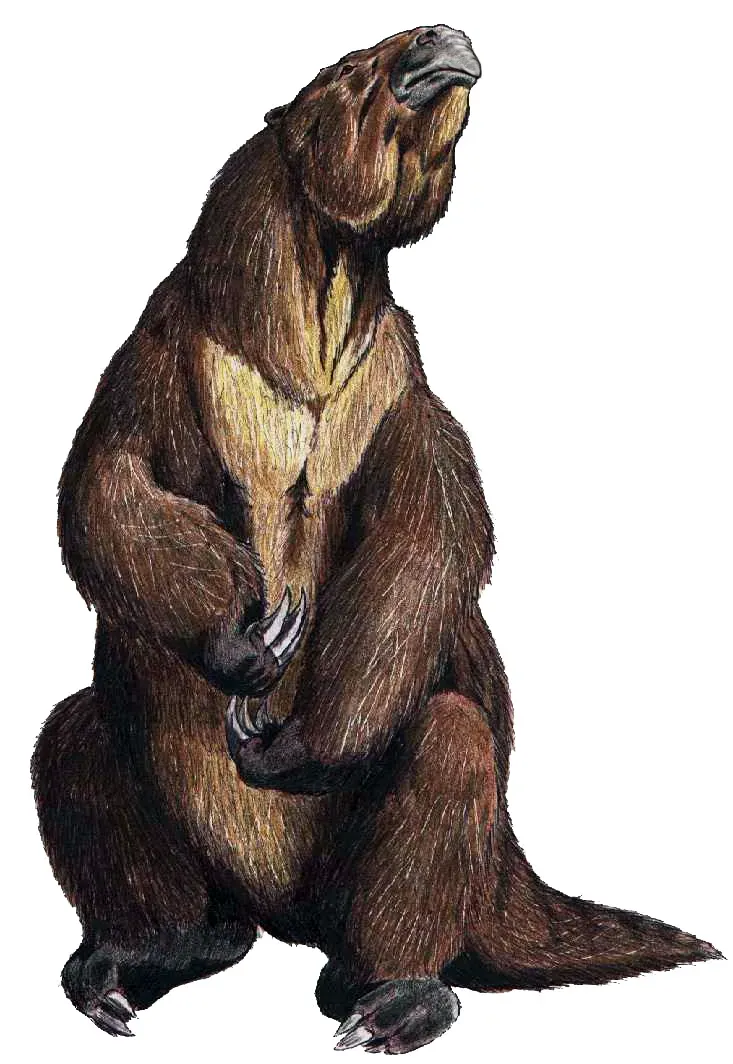
When you think of sloths today, you probably picture those adorable, slow-moving tree dwellers from South America. In Ice Age North America, sloths were an entirely different beast, with giant ground sloths of the late Pleistocene being bear-sized herbivores that stood 12 feet on their hind legs and weighed up to 3,000 pounds. These weren’t climbing trees; they were reaching up to strip leaves from the highest branches while standing on the ground.
One giant sloth species, the Jefferson ground sloth (Megalonyx jeffersonii), was named for Thomas Jefferson, who initially believed that sloth fossils were a type of colossal cat. These massive herbivores had elongated claws like modern sloths, which they used to dig for roots and tear branches from trees. They likely moved awkwardly, shuffling on the curled-in ankles of their hind legs. Multiple species migrated north from South America, bringing their impressive size to the American landscape.
Saber-Toothed Cats With Seven-Inch Fangs
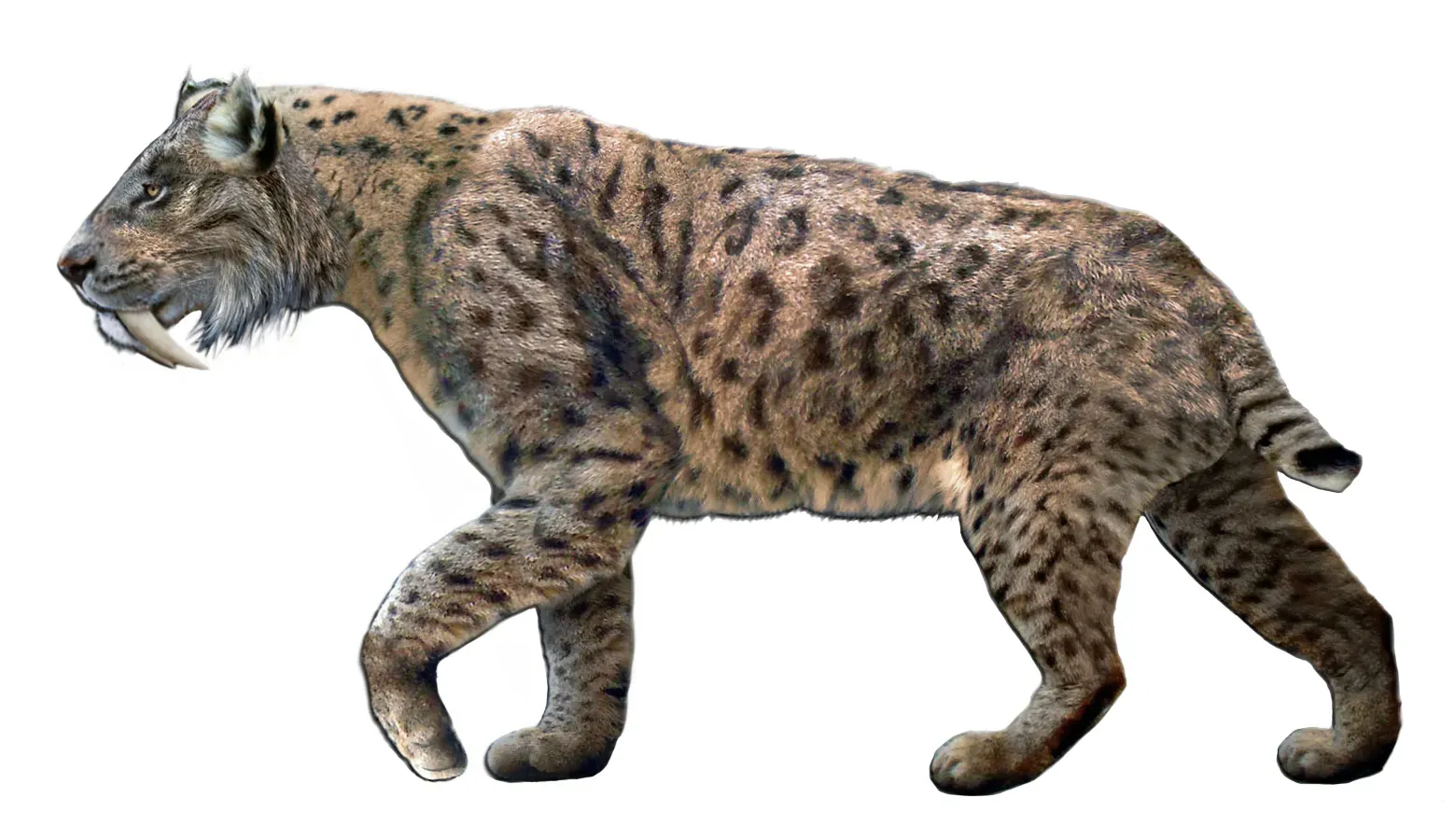
The saber-toothed cat (Smilodon fatalis) lived from about 400,000 to 11,000 years ago, weighing around 350 to 620 pounds and measuring an average of about 5.75 feet from its rump to its snout. While roughly the size of a modern African lion, this cat was built differently, with shorter, more robust limbs and a muscular, compact body designed for power rather than speed. But here’s the thing: those teeth.
Some species of saber-toothed cats possessed canines stretching seven inches long, jutting from their upper jaws like curved daggers. These weren’t just for show; they were specialized killing weapons. The cats likely ambushed prey, using their powerful forelimbs to wrestle victims to the ground before delivering a precise, deadly bite to the throat or belly. Their skulls show they could open their jaws to an enormous gape, allowing those fearsome sabers to do their work without the lower jaw getting in the way.
Giant Beavers the Size of Black Bears
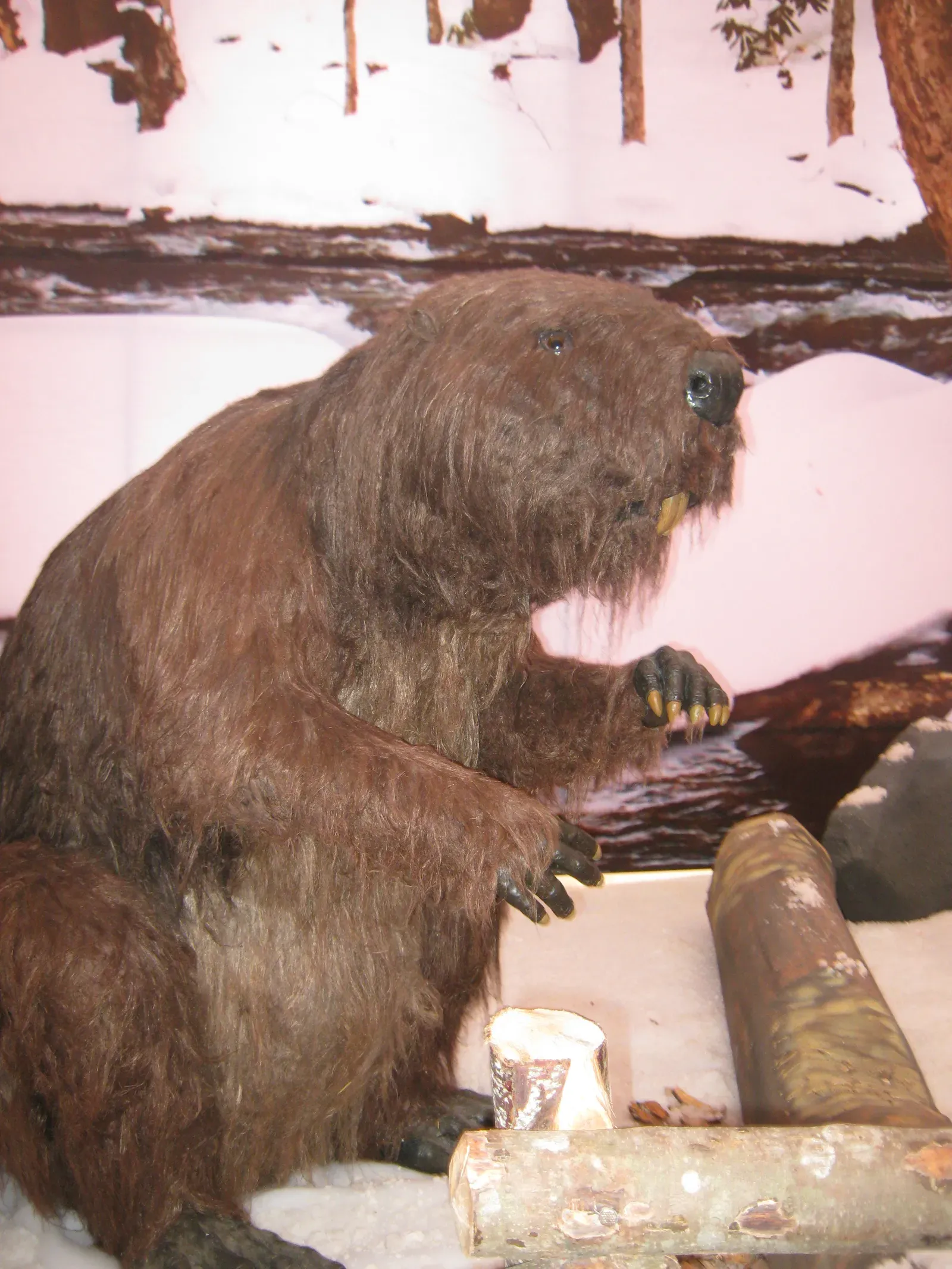
Another colossal rodent was the giant beaver (Castoroides ohioensis), which reached up to nine feet long while building huge lodges in North America. Imagine a beaver, but instead of being cute and manageable, it’s as large as a modern black bear. The largest beaver was the giant beaver (Castoroides) of North America, which grew over 2 meters in length and weighed roughly 90 to 125 kg, also making it one of the largest rodents to ever exist.
These aquatic giants built lodges like their modern descendants, but everything about them was supersized. Without their two-foot-long tails, their bodies were comparable in size to that of a black bear. Rodents larger than wolves were actually common not so long ago in geological terms. They went extinct around the same time as most other megafauna, roughly eleven thousand years ago, leaving only their modern miniaturized relatives behind.
American Horses That Vanished Mysteriously
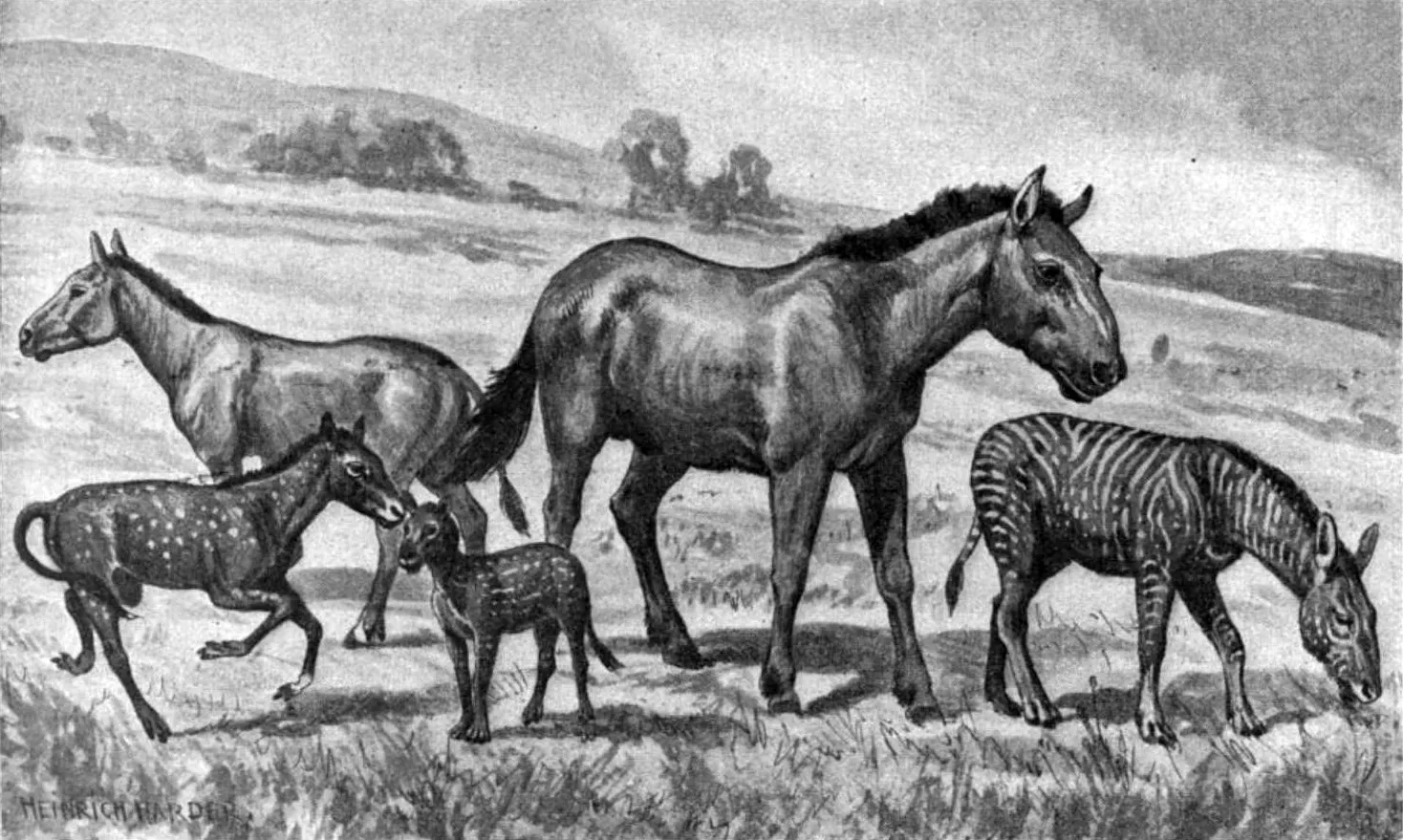
It’s long puzzled scientists, yet horses originally evolved right here in North America. Indigenous horses roamed North America for 55 million years before going extinct along with other Ice Age megafauna roughly 10,000 years ago. These weren’t introduced by Spanish conquistadors; they were rediscovered by them, returning to a continent they’d once dominated for millions of years.
One of the oldest and most widespread ancient horse species in North America was the American zebra (Equus simplicidens), also known as the Hagerman horse, which is the oldest known member of the genus Equus and stood around five feet tall at the shoulders, had a stocky build, and faint stripes along its neck and flank. Around roughly two to three million years ago, these horses migrated westward over the Bering land bridge, eventually spreading across Asia and into Africa. The fact they died out in North America yet survived elsewhere remains one of the great peculiarities of this extinction event.
Armored Glyptodons Like Living Tanks
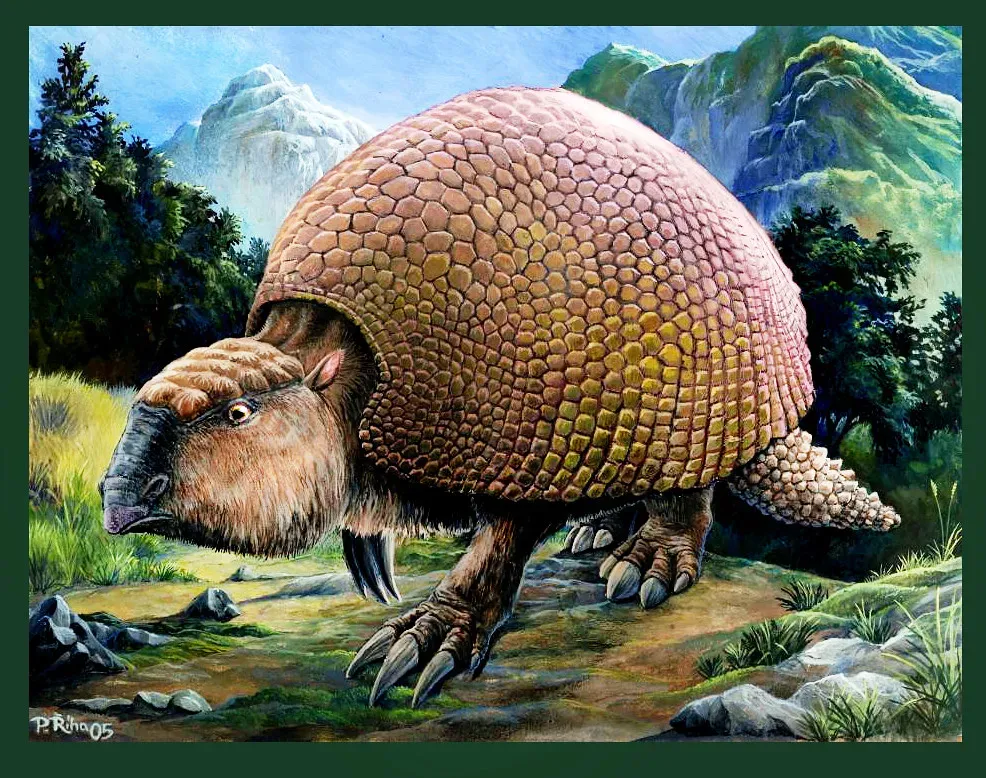
From South America, the armored, 1-ton creature probably traveled across the Isthmus of Panama to North America, with Glyptodon flourishing in what is now coastal Texas and Florida about 2 million years ago. Picture an armadillo, but scale it up to the size of a Volkswagen Beetle and cover it in thick, bony armor plates. That’s essentially what a Glyptodon looked like.
These herbivores were protected by shells roughly five feet in length, with total body lengths around eleven feet from nose to tail. Their armor wasn’t just for show; it provided genuine protection against the fearsome predators of the time. Some species even had clubbed tails, similar to modern armadillos but vastly more intimidating. They lumbered through grasslands and forests, grazing on vegetation while their armor kept them safe. Well, safe until roughly ten thousand years ago when they, too, vanished from the landscape.
The Mystery of the Great Extinction
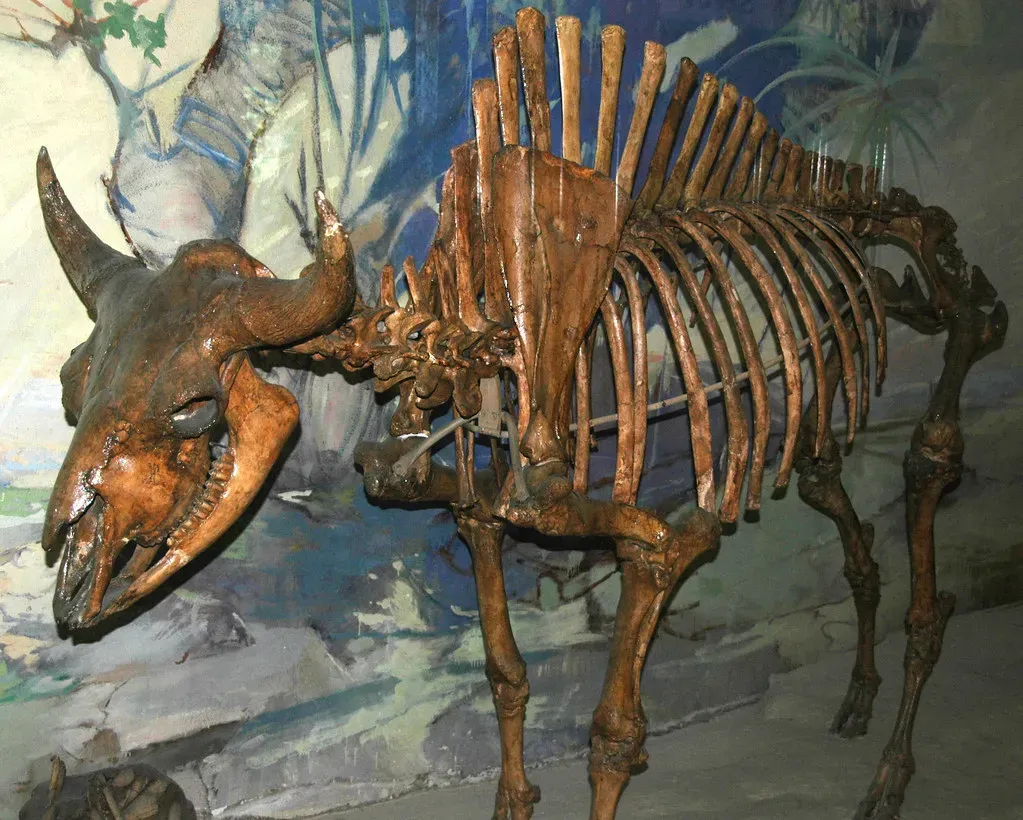
When the glaciers receded in the late Pleistocene, North America was home to dozens of thriving species of extra-large mammals known as megafauna, but around 10,000 years ago, nearly all of those giant creatures were wiped out. The debate over what caused this mass die-off continues to rage among scientists. Was it human hunters? Climate change? Disease? Honestly, it’s probably more complicated than a single cause.
Rapid warming periods called interstadials and, to a lesser degree, ice-age people who hunted animals are responsible for the disappearance of the continent’s megafauna, according to a study published in 2015 in the journal Science. Yet other researchers place more blame on humans, while some say multiple factors combined. As the Pleistocene came to an end in North America, 38 genera of mammals vanished, with the majority designated as megafauna, with a body mass over approximately 45 kg, including several proboscideans weighing more than 4,500 kg. Whatever the cause, North America lost roughly seventy percent of its large mammals in a geological blink of an eye.
What We’ve Learned From Their Bones
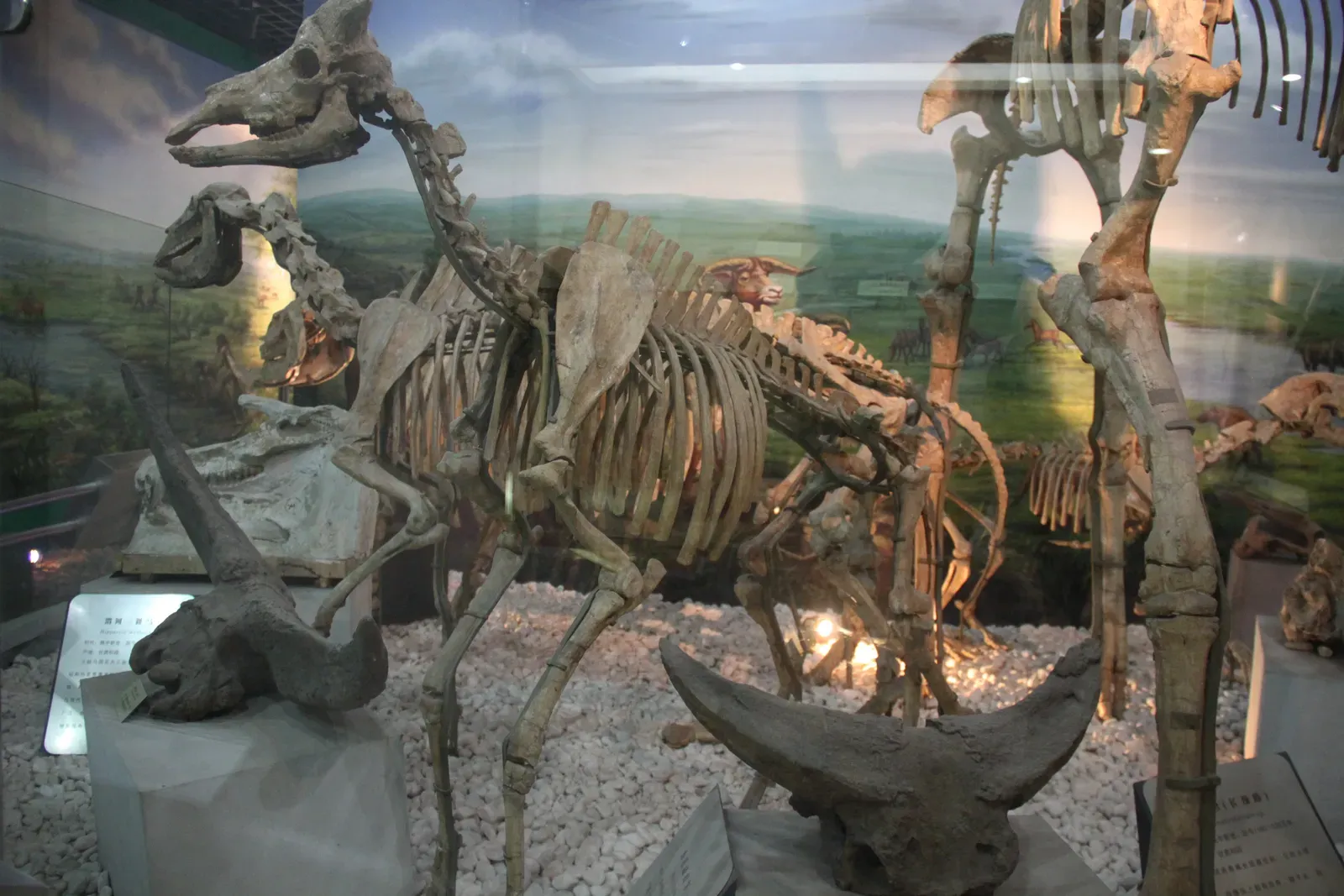
The fossil record of these prehistoric giants provides an incredible window into America’s distant past. California holds the distinction of having the most fossil finds of any state, with nearly two thousand specimens documented. Montana, Wyoming, Colorado, and Arizona also rank among the top locations for discovering dinosaur and megafauna remains. The La Brea Tar Pits in Los Angeles alone have preserved thousands of Ice Age specimens, giving scientists an unparalleled look at what life was like roughly thirty thousand years ago.
For example, the bones of at least 140 mastodons and 18 mammoths have been found in New York state alone, showing these giants weren’t just confined to the western states. From coastal beaches to inland valleys, from frozen Alaska to humid Florida, these creatures occupied virtually every habitat across the continent. Their fossils remind us that the North America we know today is actually quite unusual. For most of Earth’s history, this land was populated by enormous animals that would dwarf anything alive here now except perhaps whales offshore.
These ancient giants shaped the ecosystems they inhabited in ways we’re only beginning to understand. Their disappearance changed America forever, opening ecological niches that smaller animals gradually filled. The more we learn from their fossilized remains, the clearer it becomes that our continent once hosted some of the most spectacular megafauna the world has ever seen. What do you think caused their extinction? The evidence keeps growing, yet the mystery endures.