Imagine walking out of your tent one morning, only to come face to face with a creature the size of a two-story building, covered in shaggy fur, with tusks curved like enormous scimitars. That was, in some sense, the reality facing the earliest people who called North America home. These were not creatures of myth or legend, at least not at first. They were real, breathing, thundering giants roaming the same grasslands and forests where ancient tribes hunted, camped, and built the foundations of entire cultures.
The relationship between North America’s earliest human inhabitants and the continent’s staggering megafauna is one of the most fascinating and debated stories in all of archaeology. You might think such a connection would be obvious, but the truth is far more layered, more emotional, and honestly more surprising than most textbooks let on. Let’s dive in.
A World Filled with Giants: The Ice Age Landscape Tribes Entered
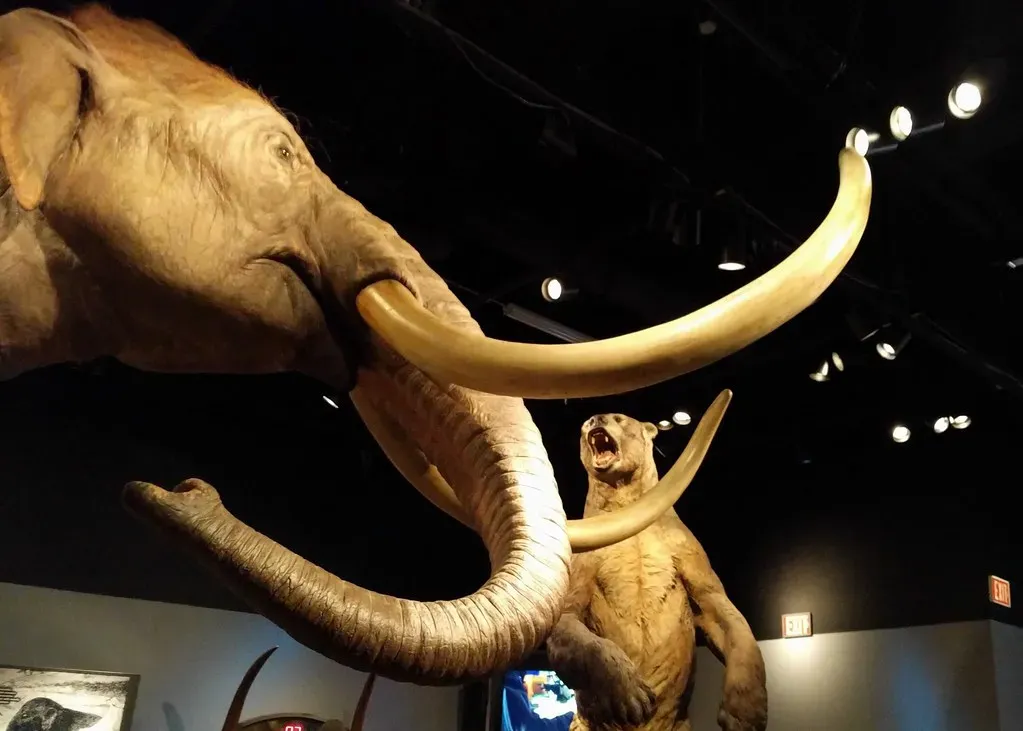
When you picture the world that greeted the first wave of people crossing into North America, you have to completely reset your imagination. This was the Ice Age world that humans encountered when they crossed from Asia into North America between 14,000 and 25,000 years ago. You were not stepping into the landscape you see today. You were stepping into something wilder, stranger, and far more dangerous.
The earliest people who lived in North America shared the landscape with huge animals. On any given day, these hunter-gatherers might encounter a giant, snarling saber-toothed cat ready to pounce, or a group of elephantlike mammoths stripping tree branches. Maybe a herd of giant bison would stampede past. Think of it like sharing a neighborhood with creatures pulled straight from a science fiction film. The sheer diversity of megafauna was astonishing.
In North America alone, the big ones included mammoths, mastodons, dire wolves, saber-toothed cats, camels, glyptodons (armadillos the size of VW Bugs), and short-faced bears. These were not minor animals lurking in the background. They dominated the continent, and every early tribe that settled here had no choice but to learn how to live alongside them, or perish trying.
The Clovis People: North America’s First Great Megafauna Hunters
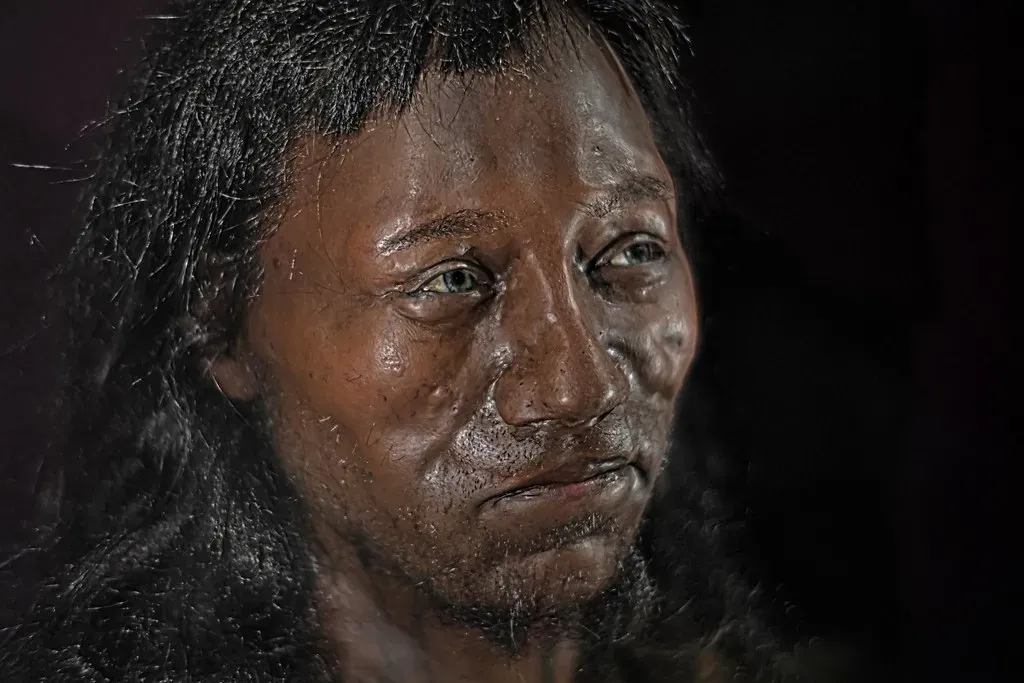
Clovis culture dates back approximately 13,000 years and is viewed as a type of common culture ancestral for all Native American tribes in North America. These were the people whose story, for a long time, dominated the conversation about early human life on the continent. Honestly, calling them simply “hunters” feels like an understatement. They were extraordinary strategists.
Using stable isotope analysis of the Anzick child, an 18-month-old Clovis boy buried in Montana, researchers provided direct evidence that Clovis people ate a lot of mammoth meat, complementing it with elk and bison. Remarkably, mammoth meat accounted for more than 40% of his family’s diet, while elk or bison made up another substantial portion. You were not looking at occasional opportunistic scavenging. You were looking at a way of life built entirely around these colossal animals.
The Clovis people likely traveled long distances following the mammoths’ migration routes, helping to explain how they could spread throughout North America and into South America in just a few hundred years. Picture a culture so tightly bound to one animal that the entire direction of its expansion across two continents was shaped by that animal’s movement. That is a deep connection by any measure.
Stone Tools, Planted Pikes, and Ingenious Hunting Strategies
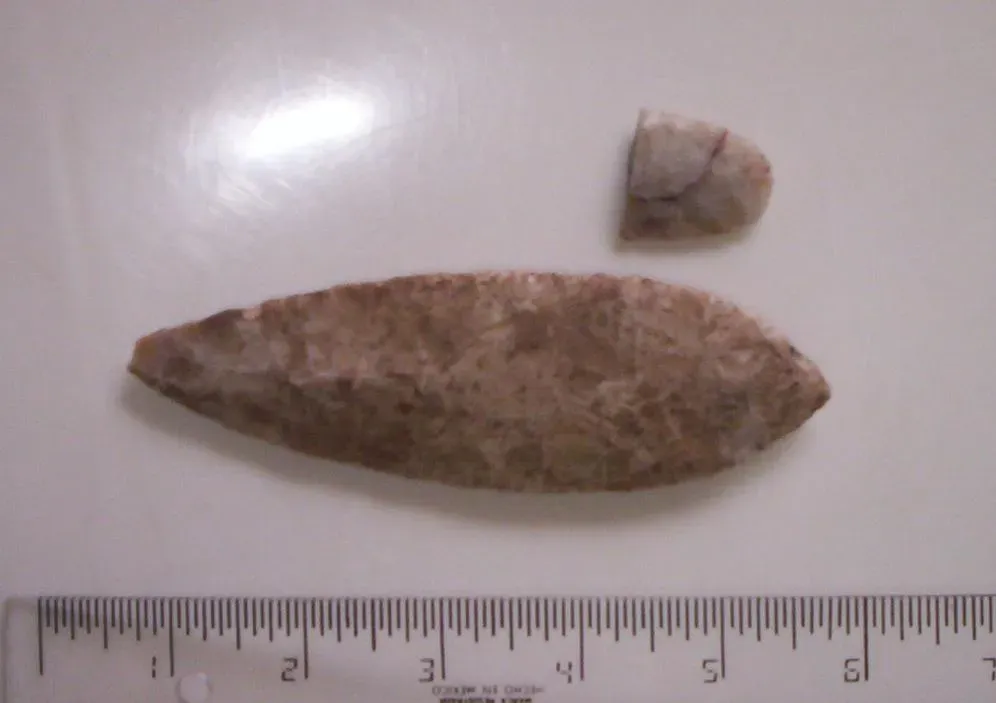
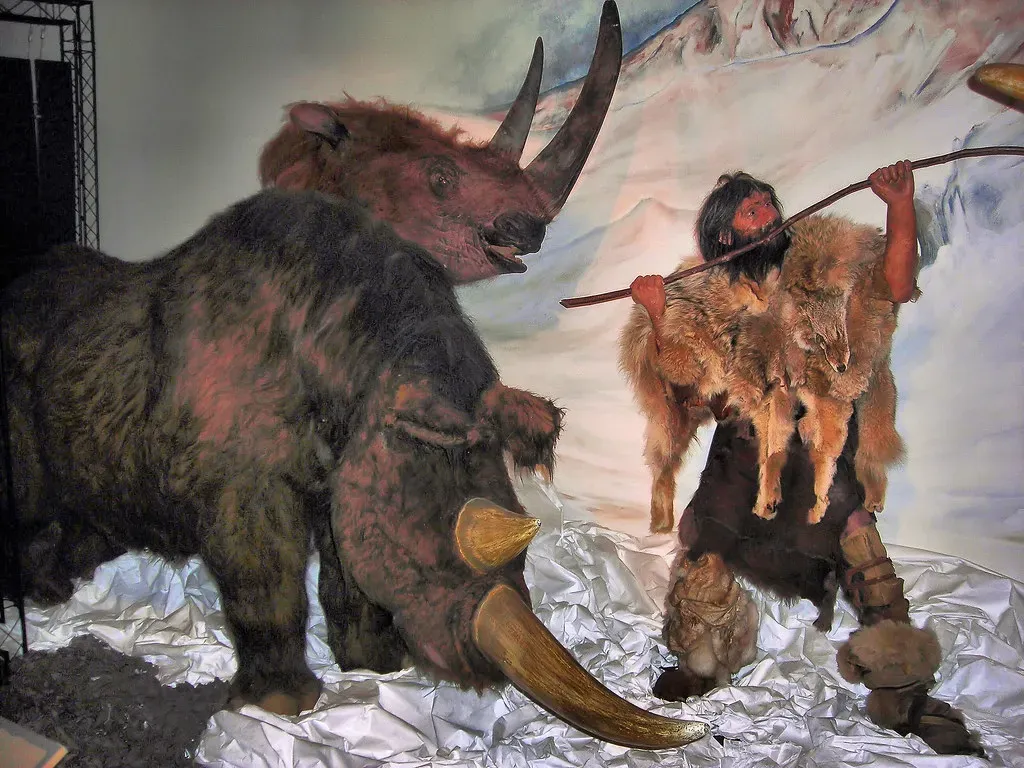
Here is the thing most people get wrong: the image of ancient hunters hurling spears wildly at charging mammoths is almost certainly a fantasy. The reality was far more calculated. While the dominant narrative and popular culture view Clovis points and tipped spears as a throwing weapon, UC Berkeley researchers say these tools may have actually been designed to be braced against the ground as a pike during a confrontation with megafauna.
Instead of throwing spears or jabbing at these massive creatures, the researchers suggest that early humans used a less hands-on strategy. They braced the spear’s butt against the ground, angling the weapon upward to impale charging animals. The immense force of the animal’s movement would drive the spear deeper into its body, creating a devastating wound. You have to admire the sheer cleverness of it. They were essentially letting the animal kill itself on the weapon.
The results revealed that once the sharp rock penetrated the flesh, the spear’s engineered mounting system activated, making the spear tip behave like a modern hollow-point bullet, causing serious damage to creatures such as mastodons, bison, and saber-toothed cats. The sophisticated Clovis technology that developed independently in North America is testimony to the ingenuity and skills that early Indigenous people employed in their cohabitation of the ancient landscape with now-extinct megafauna. It’s hard not to be impressed.
Blood on the Stone: Forensic Evidence of Ancient Hunts
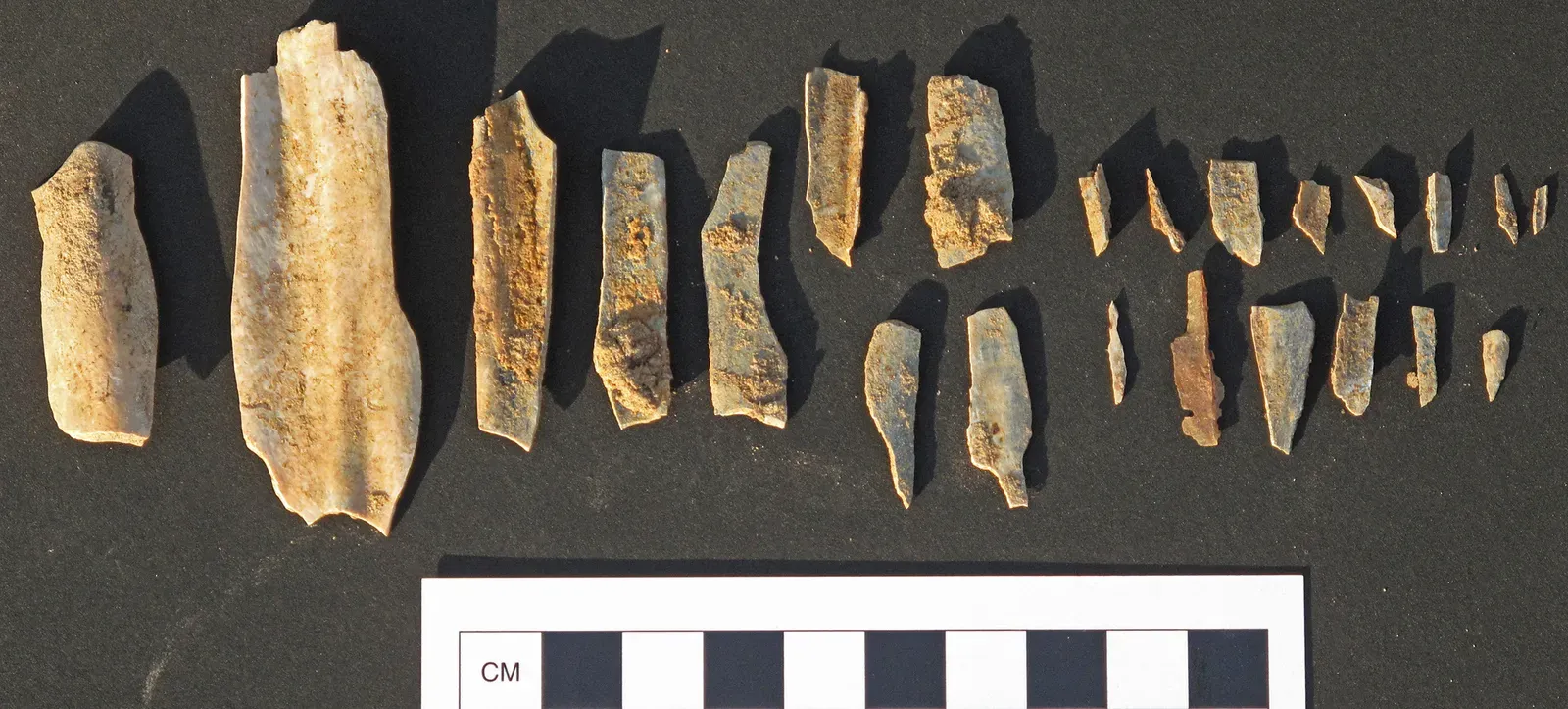
You might think that proving ancient people actually hunted specific megafauna would be nearly impossible after 13,000 years. Bones decay. Organic materials vanish. Yet science found another way. Residue analysis does not rely on the presence of nuclear DNA, but rather on preserved, identifiable proteins that sometimes survive within the microscopic fractures and flaws of stone tools created during their manufacture and use.
The results included the first direct evidence on ancient stone tools of the blood of extinct mammoth or mastodon and the extinct North American horse on Paleo-American artifacts in eastern North America. This evidence is significant because it proves that these animals were present in the Carolinas, and they were hunted or scavenged by early Paleo-Americans. When you think about it, those bloodstains survived longer than entire civilizations.
Another interesting finding is that while mammoth or mastodon blood residues are found on Clovis artifacts, blood residues for ancient horses are found not only on Clovis points but also on Paleoindian points that are slightly more recent than Clovis points. This may suggest the extinctions of mammoths and mastodons were complete in this region by the end of the Clovis period, and the extinction of ice age horse species took longer. The stone tools themselves became a timeline of disappearance.
Mythology, Memory, and the Echoes of Giants in Tribal Oral Traditions
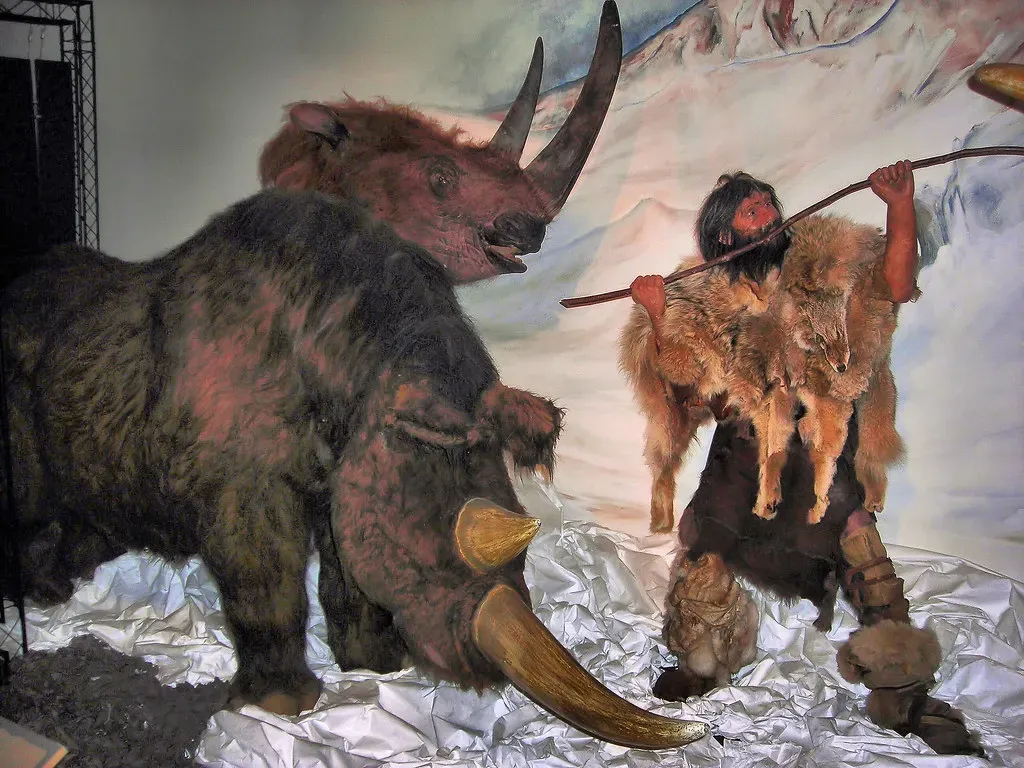
Here is where things get genuinely fascinating. The connection between ancient tribes and megafauna did not die when the animals did. It lived on in stories. Legends from dozens of Native American tribes have been interpreted by some as indicative of Woolly Mammoth. One example is from the Kaska tribe from northern British Columbia, where in 1917 an ethnologist recorded their tradition of a very large kind of animal which roamed the country a long time ago.
North American Indigenous accounts of megafauna feature colossal creatures rooted in oral traditions across diverse tribes, from the Pacific Northwest to the Great Lakes region, often embodying natural forces and spiritual guardians. These beings, such as avian storm-bringers, aquatic predators, monster bears, and giant lizards, play pivotal roles in explaining environmental phenomena and tribal cosmologies. Scholars suggest these narratives may preserve faint echoes of post-Ice Age encounters with extinct megafauna, blending memory with animistic worldview to instill respect for the wild.
Some of these stories identified mastodons as the “grandfathers of the buffalo.” Zuni, Navajo, Apache, and Hopi creation stories all cover a vast timeframe, with the Zuni describing volcanic eruptions that dried out primeval oceans full of monsters and giant lizards. Native Americans also posited that megafauna like giant beavers and bison had shrunk to their present sizes over time, and they came up with these explanations long before European scientists had any comprehension of deep time. That is not superstition. That is oral science.
The Great Debate: Did Ancient Tribes Drive Megafauna to Extinction?
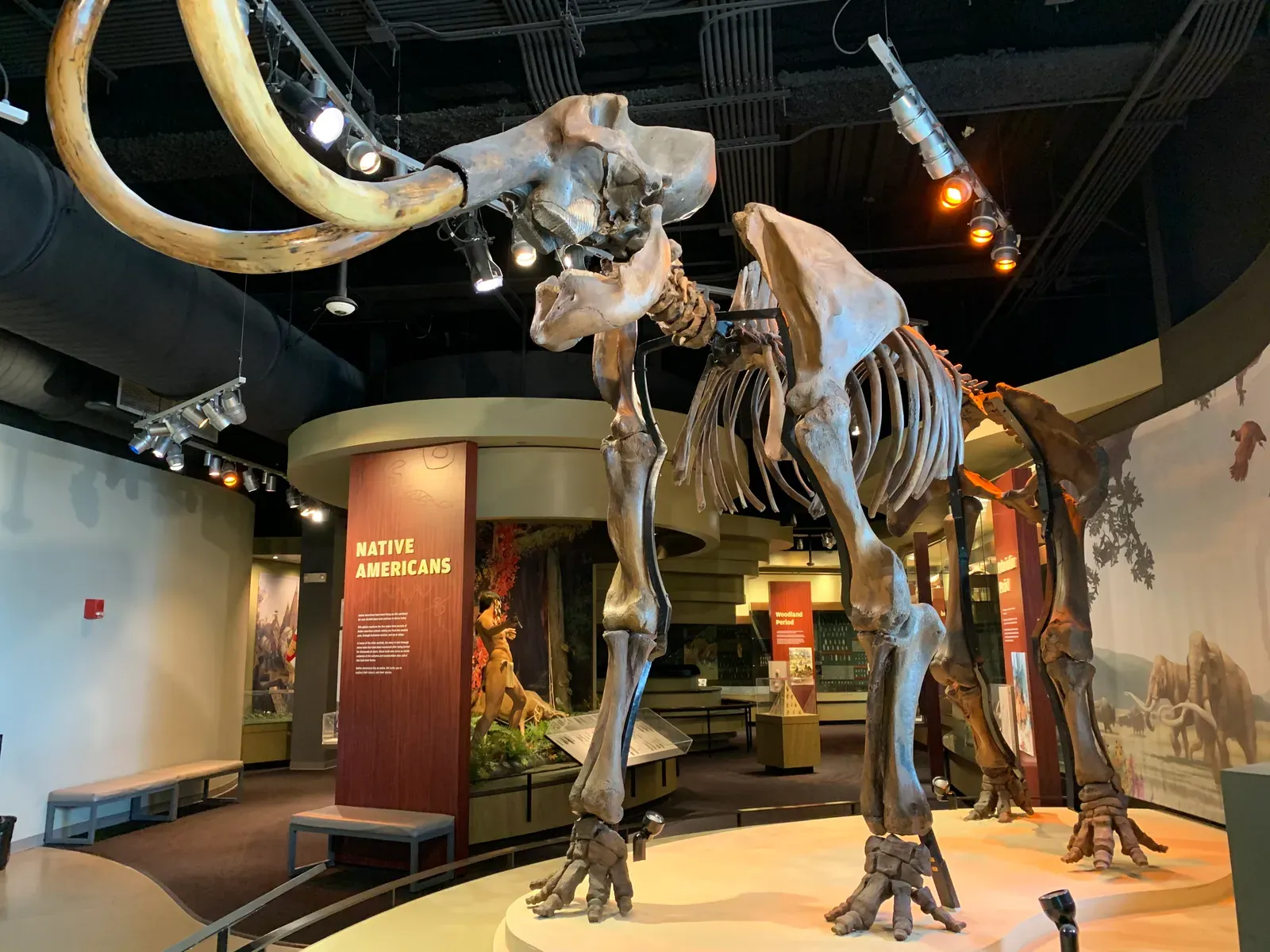
This is the question that still sparks heated arguments in lecture halls and research conferences. It is one of prehistory’s most compelling unsolved puzzles. The Late Pleistocene saw the extinction of many mammals weighing more than 40 kilograms, including around 80% of mammals over 1 tonne. The proportion of megafauna extinctions is progressively larger the further the human migratory distance from Africa, with the highest extinction rates in Australia and North and South America.
North America’s megafauna had survived previous cycles of warming and cooling. Why was this one different? That question cuts straight to the heart of the debate. Climate change alone is hard to sell as the single villain when these animals had weathered similar environmental upheavals before. Extinction through human hunting has been supported by archaeological finds of mammoths with projectile points embedded in their skeletons, by observations of modern naive animals allowing hunters to approach easily, and by computer models.
Ground sloths survived on the Antilles long after North and South American ground sloths were extinct, woolly mammoths died out on remote Wrangel Island 6,000 years after their extinction on the mainland, and Steller’s sea cows persisted off isolated uninhabited islands for thousands of years. The later disappearance of these island species correlates with the later colonization of these islands by humans. It’s hard to ignore a pattern that consistent. Still, the timing and severity of the extinctions varied by region and are generally thought to have been driven by humans, climatic change, or a combination of both.
Conclusion: A Bond Carved Into Bone and Story
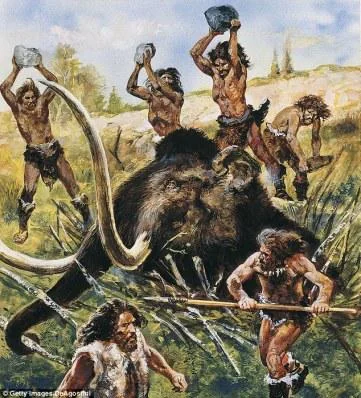
The connection between ancient North American tribes and the megafauna they lived alongside was not simply a matter of predator and prey. It was a relationship that shaped their technology, defined their diets, powered their migration across entire continents, and ultimately echoed through generations of oral tradition long after the last mammoth fell silent on the plains. You cannot separate these people from these animals. They were woven together.
What makes this story so enduring is that it refuses to be simple. The science keeps evolving, new forensic methods keep revealing new truths, and the oral traditions of Indigenous peoples keep proving themselves to be far more scientifically sophisticated than anyone once gave them credit for. The giants are gone, but their memory survived in myth, stone, and blood residue on ancient tools for over 13,000 years.
If you stop and think about it, the most remarkable fact of all might be this: the very culture of the people who walked alongside mammoths may have shifted permanently when those animals disappeared. The end of the Clovis culture may have been driven by the decline of the megafauna that the Clovis hunted, resulting in local differentiation of lithic and cultural traditions across North America. In a very real sense, the extinction of the giants may have scattered the people, giving birth to the diverse tribal cultures that defined North America for thousands of years to come. What do you think? Could a relationship with one animal truly reshape an entire civilization? Drop your thoughts in the comments below.