Barcelona – A well-preserved fossil skull housed in the Museu de Ciències Naturals de Barcelona has enabled scientists to name a new genus and species of legless lizard from Spain’s Late Miocene. Discovered at the Sant Miquel de Toudell site in nearby Viladecavalls, the specimen dates back more than 10 million years to the Vallesian stage. Researchers revealed Fontisaurus tarumbaire through advanced imaging, highlighting an unexpected richness in Europe’s ancient reptile fauna during a time of climatic shifts.
A Rare Glimpse into an Articulated Past
A Rare Glimpse into an Articulated Past (Image Credits: Facebook)
The holotype specimen, cataloged as MGB V60, consists of a large articulated skull measuring about 53 millimeters in length and 20 millimeters in width, complete with associated osteoderms and a rib. Collected decades ago as part of the J.F. de Villalta paleontological collection and donated to the museum in 1983, it languished until recent study. This fossil stood out for its exceptional preservation, with bones remaining in their original positions despite some deformation and fractures.
Scientists applied neutron computed tomography at Germany’s ANTARES facility to peer inside, overcoming challenges where traditional X-ray methods fell short due to poor bone-sediment contrast. The scans revealed intricate details of the inner ear and braincase, crucial for classification. Previously noted as Ophisaurus sp. in 1952, the specimen now anchors a distinct lineage.
Distinct Traits Set It Apart
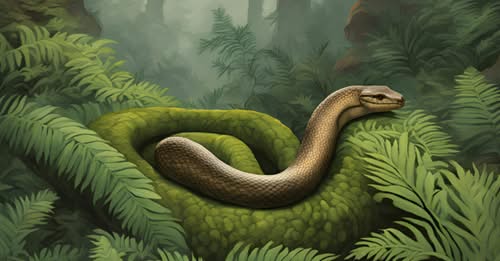
Fontisaurus tarumbaire belongs to the Anguidae family and Anguinae subfamily, akin to modern slowworms that slither leglessly across Europe. Its skull featured crust-like dermal sculpturing with anastomosing ridges, grooves, and pits, alongside conical, robust teeth and a robust posterior process on the maxilla. The parietal bone showed widely laterally extended anterolateral processes and medially directed anterior ends of the anterolateral ventral crests – hallmarks unmatched in other European anguids, extinct or living.
Key differences emerged in comparisons:
- Longer coronoid than surangular dentary process, unlike many congeners.
- Absence of cylindrical stout teeth seen in Pseudopus species.
- Postfoveal crest on the parietal and a long area levis.
- Quadratojugal process on the jugal, rare among relatives.
These traits confirmed its novelty, with phylogenetic analyses via maximum parsimony and Bayesian methods placing it firmly within Anguinae.
Community Shapes Scientific Legacy
The name Fontisaurus tarumbaire emerged from a unique participatory process. Residents of Viladecavalls voted a year prior to select from proposed options, honoring local lore where small dragons guarded the town’s springs – hence “Fontisaurus” – and “tarumbaire,” a nod to the municipal nickname for inhabitants. This initiative, led by the Institut Català de Paleontologia Miquel Crusafont (ICP-CERCA), bridged science and society.
“The choice of name aims to recognize the territorial rooting of the scientific discovery, giving voice to the citizenship and bringing paleontology to everyone,” stated lead author Andrea Villa. The announcement coincided with the study’s publication in the Swiss Journal of Palaeontology in December 2025, marking a milestone for public engagement in naming.
Reshaping Views on Ancient Diversity
Post-Palaeogene Europe hosted fewer anguid genera than expected, mostly referred to Anguis, Ophisaurus s.l., and Pseudopus. Fontisaurus challenges this, as one of few Neogene articulated skulls, suggesting higher diversity amid Asian and African reptile influxes during Miocene climatic changes. Tip-dating analyses indicate its split from close kin predated the Palaeogene-Neogene boundary.
An isolated parietal from Germany’s Middle Miocene Griesbeckerzell 1a site resembles it closely, assigned as Fontisaurus aff. tarumbaire, hinting at wider spread across Europe. The Vallès-Penedès Basin, a half-graben rich in fossils from the Early to Late Miocene, yielded this gem from late MN9 to MN10 horizons, around 9.65 to 9.36 million years ago.
Collections as Timeless Archives
Museu de Ciències Naturals de Barcelona now holds this holotype among its 2,034 type specimens, underscoring collections’ value. “The fact that a specimen preserved for decades has allowed a new species to be described is a demonstration of the essential role of scientific collections,” noted curator Vicent Vicedo. They serve as living heritage for ongoing research.
International collaboration – spanning ICP-CERCA, Universitat Autònoma de Barcelona, Slovak Academy of Sciences, and others – drove the work, funded by Spanish and Catalan grants.
Key Takeaways
- Fontisaurus tarumbaire boasts a uniquely preserved 53 mm skull, rare for European Miocene anguids.
- Community voting tied the name to Viladecavalls folklore, blending local pride with science.
- The find expands known anguine diversity, with potential relatives in Germany.
This discovery revives a lost branch of legless lizards, reminding us how museum shelves hold secrets of prehistoric worlds. What stories might other overlooked fossils tell? Share your thoughts in the comments.