Imagine heading out on a cold January morning with nothing more than a hammer, some curiosity, and a vague hope of finding a fossil or two – and instead stumbling onto a dinosaur that rewrites the textbook. That is essentially what happened in a quiet corner of Surrey in the mid‑1980s, when an ordinary hobbyist cracked open a block of clay and set off one of the biggest paleontological stories in modern British history. The idea that such a pivotal discovery came not from a high‑tech expedition, but from an amateur kneeling in the mud, is both humbling and strangely thrilling.
This is the story of Baryonyx: a crocodile‑snouted, fish‑eating theropod that looked like it had been stitched together from a heron, a crocodile, and a construction crane. Its skeleton, pulled from a clay pit better known for bricks than breakthroughs, became a cornerstone for understanding an entire group of dinosaurs and the ecosystems of Early Cretaceous Britain. Once you see how unlikely this discovery was – and how much it changed – you start to realize that the ground beneath familiar English countryside is hiding stories as wild as anything in a Hollywood blockbuster.
The Man With the Hammer and the Surrey Clay Pit
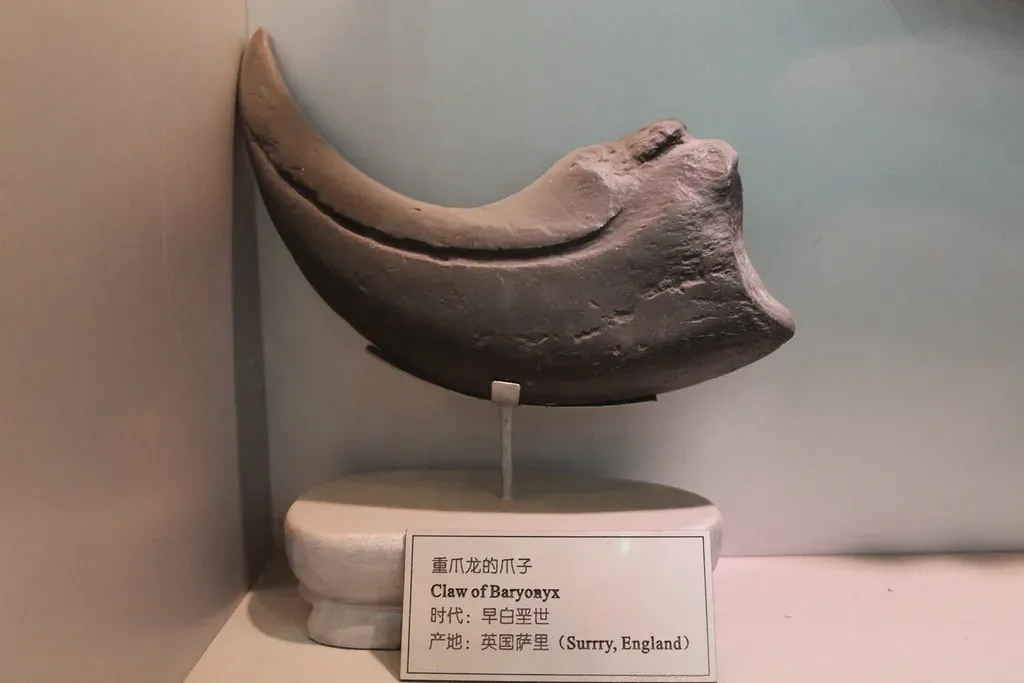
The discovery of Baryonyx began with amateur fossil hunter William J. Walker, searching a clay pit at Smokejacks Quarry in Surrey in January 1983. He was not a professional paleontologist backed by a big university; he was a dedicated enthusiast who simply loved fossils and knew how to spot something unusual in a lump of rock. When he split open one particular block of clay with his hammer, he noticed something that did not look like the usual pieces of fossilized wood or scattered bones.
What he had found turned out to be a large claw bone, unlike anything that had been described from British dinosaurs up to that point. Recognizing that he was out of his depth, Walker did the single smartest thing an amateur can do: he contacted experts at the Natural History Museum in London. From there, a professional excavation was organized, and over time, a remarkably complete dinosaur skeleton emerged from the quarry walls. It is hard not to feel a little awe at the thought that if Walker had chosen a different block of clay that day, the history of British paleontology might have unfolded very differently.
A Dinosaur Like No Other: What Made Baryonyx So Strange
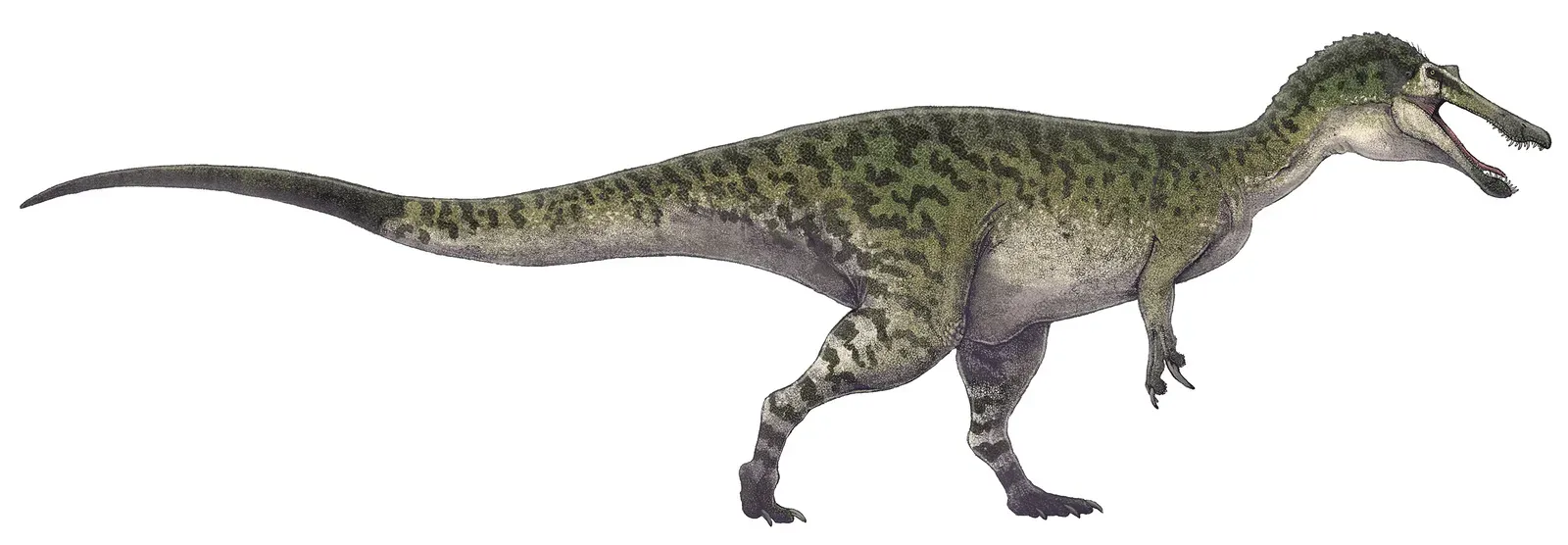
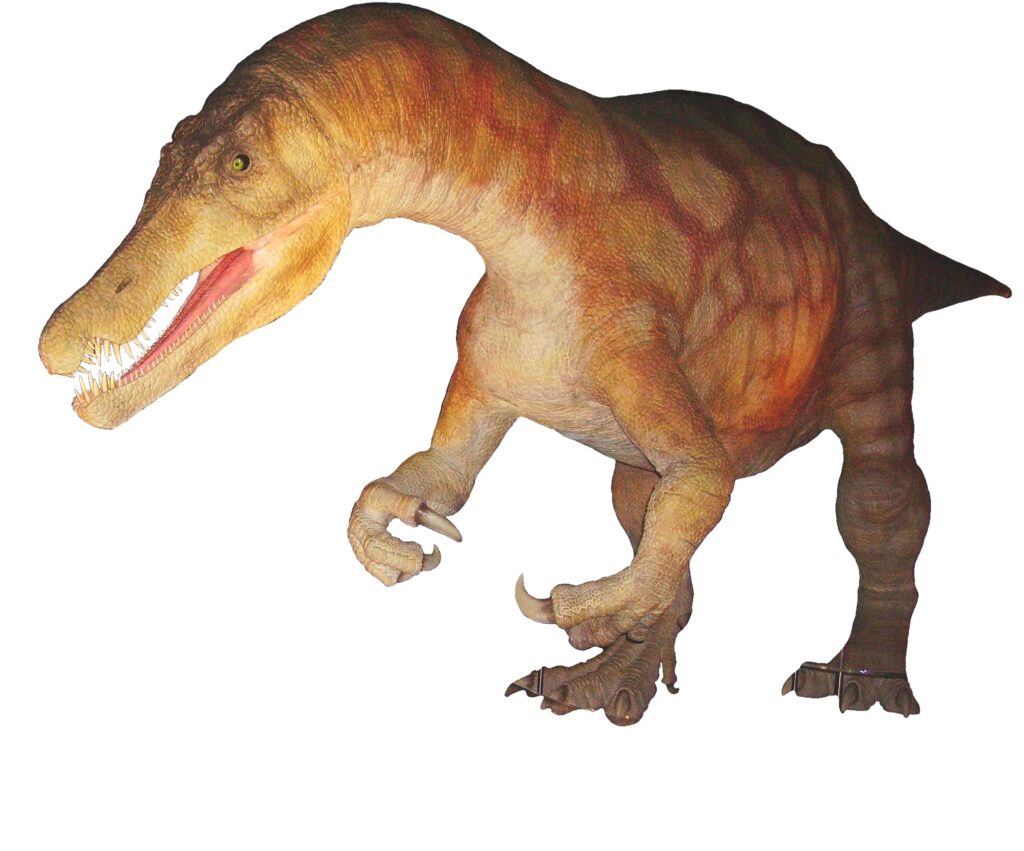
Once the bones were cleaned, described, and assembled, scientists realized they were looking at a dinosaur that did not fit comfortably into the familiar categories of carnivores known from Europe. Baryonyx had a long, narrow, crocodile‑like snout filled with conical teeth that looked better suited for gripping slippery prey than tearing flesh. Its skull alone was enough to raise eyebrows among researchers who had grown accustomed to the deep, triangular heads of classic meat‑eaters like Allosaurus.
The star feature, though, was that massive claw on its first finger – a sickle‑shaped weapon that could reach the size of a small forearm. This is what gave Baryonyx its name, which translates roughly to “heavy claw.” It suggested an animal that might have hooked, pinned, or scooped its prey rather than simply biting and shaking it to pieces. Standing back from the reconstruction, you are left with a creature that looks part fisherman, part predator, and part evolutionary experiment, as if nature had been trying out new ways to build a carnivorous dinosaur.
Why Baryonyx Shocked British Paleontology
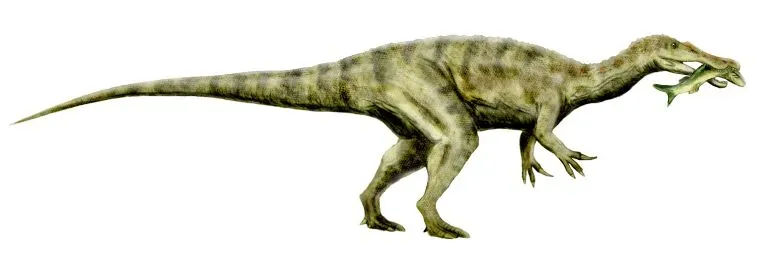
Before Baryonyx was described in 1986, the image of British dinosaurs was dominated by familiar, almost comfortable names: Iguanodon, Hypsilophodon, various armored forms, plus a smattering of fairly standard theropods. They were important, but they felt like variations on themes already seen elsewhere in Europe and North America. Baryonyx changed that overnight by revealing that Britain had hosted a bizarre, specialized predator that no one had seriously expected to find there.
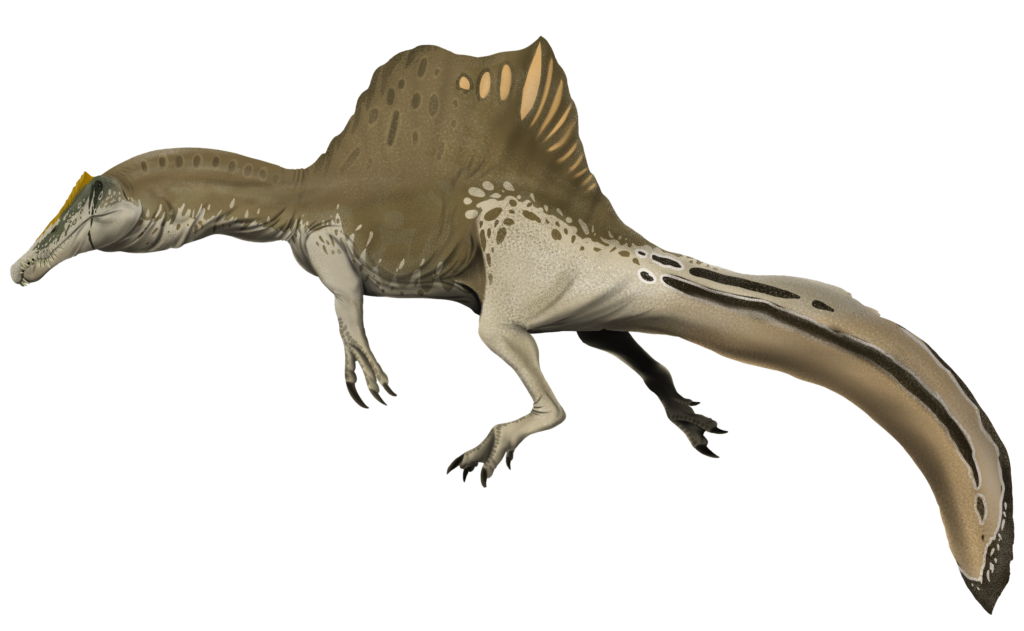
This was not just another meat‑eater; it belonged to a previously underappreciated group now called spinosaurs, which would later include some of the strangest theropods ever discovered. The Surrey fossil was one of the first reasonably complete members of this group found anywhere in the world, and that gave British researchers a leading role in understanding an entire dinosaur lineage. In one stroke, a muddy clay pit turned Britain from a supporting character into a headline act in global dinosaur research.
Claws, Teeth, and Fish: Reconstructing a Semi‑Aquatic Predator
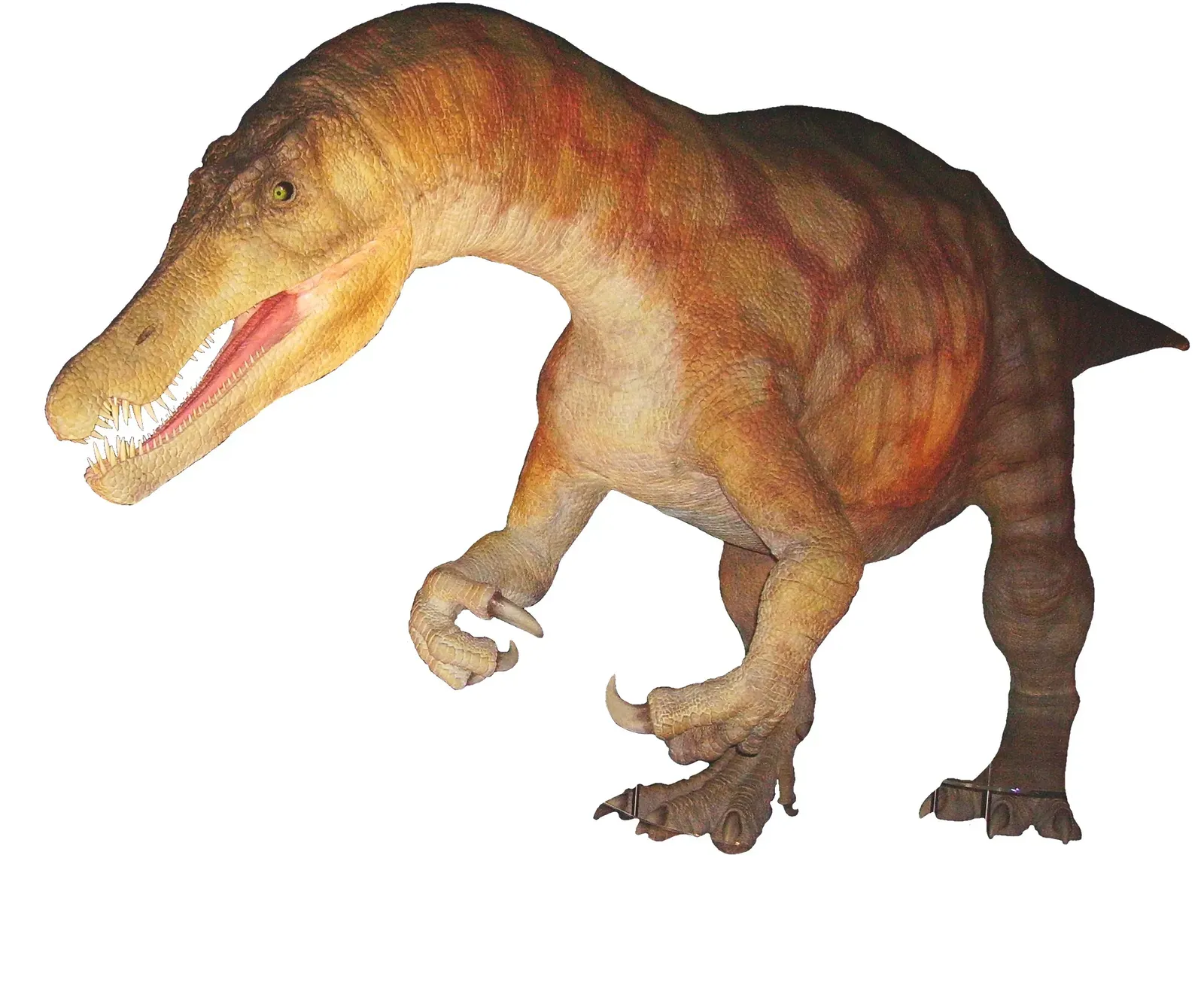
One of the most intriguing aspects of Baryonyx is how its anatomy points to a lifestyle tied closely to water. The narrow snout, the straight, conical teeth, and the layout of the jaws are all reminiscent of modern fish‑eating crocodiles. When scientists found what appeared to be fish scales and partially digested remains in the gut region of the skeleton, it strengthened the interpretation that this dinosaur was, at least in part, a specialized fish hunter. Suddenly, the heavy claw began to look less like a simple killing tool and more like a hook for snagging prey from the water.
Many researchers now paint Baryonyx as a semi‑aquatic or at least water‑loving predator, stalking riverbanks and shallows much like a heron on stilts with the power of a big cat. It probably did not turn its nose up at other food sources and might have scavenged or hunted land animals when the opportunity arose, but fish seem to have been a major part of its menu. For British dinosaur science, this was a dramatic shift: here was a carnivorous dinosaur that was not just a land‑based runner and biter, but a specialist straddling the line between river and shore.
Smokejacks Quarry and the Lost World of Early Cretaceous England
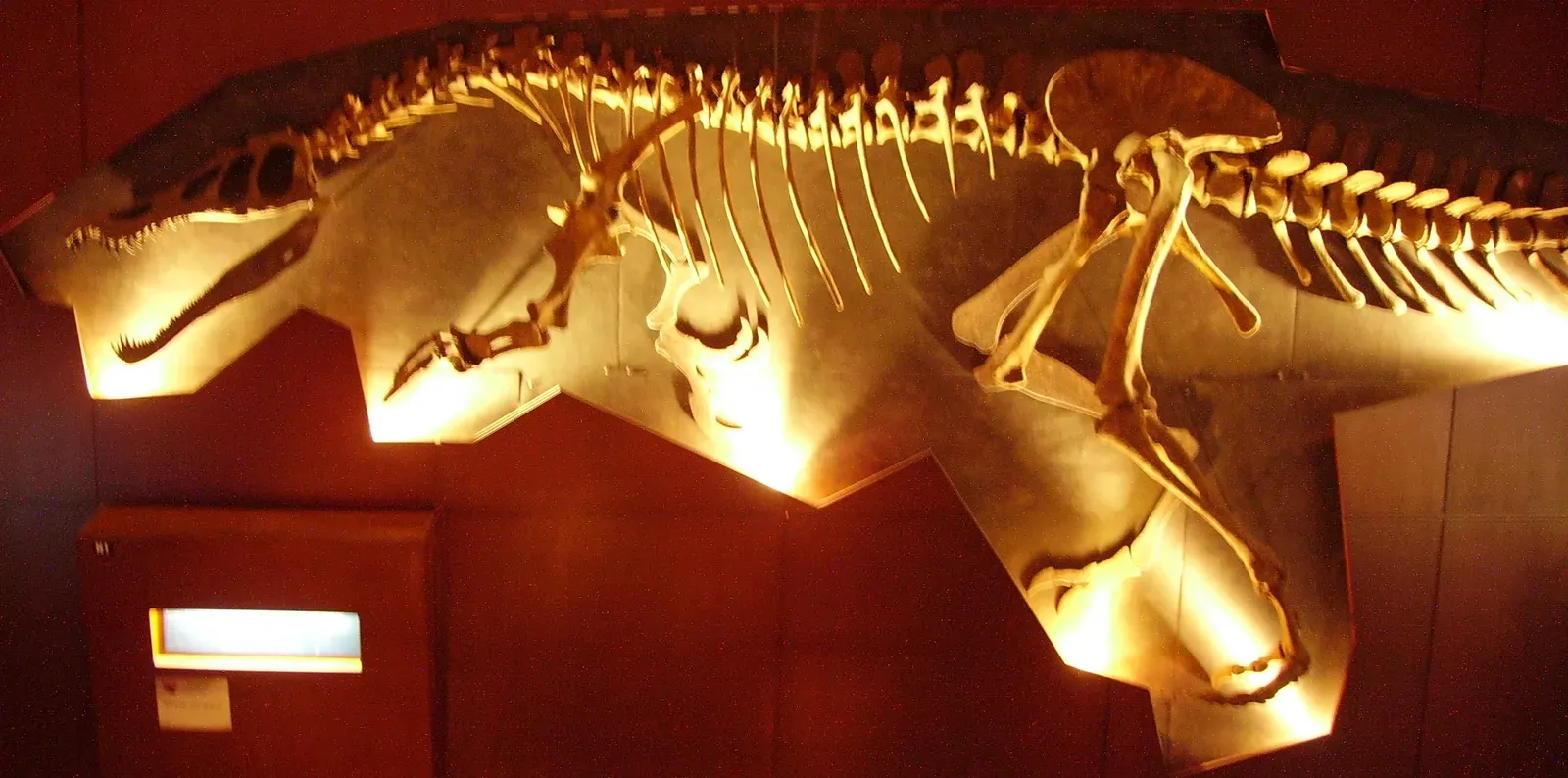
The Surrey clay that preserved Baryonyx traces back to the Early Cretaceous, roughly around one hundred and twenty‑five million years ago, when southern England was a very different place. Instead of quiet woods and commuter towns, the landscape was crisscrossed by rivers and floodplains under a warmer climate, populated by dinosaurs, crocodiles, early mammals, and lush plant life. Smokejacks Quarry, and similar sites in the Weald, act like time capsules, capturing slices of this vanished ecosystem layer by layer.
Finding a nearly complete predator like Baryonyx in that setting gives scientists a focal point for understanding how the food web might have worked. You can start to picture it wading along riverbanks shared with Iguanodon herds, crocodilian relatives lurking in deeper channels, and flocks of early birds flitting overhead. What looks at first glance like an industrial clay pit becomes, through the lens of paleontology, a window onto a thriving prehistoric wetland. The fact that so much of this world has been pieced together from fossil finds made by both professionals and amateurs adds a very human layer to an otherwise alien landscape.
From One Skeleton to a Dinosaur Revolution
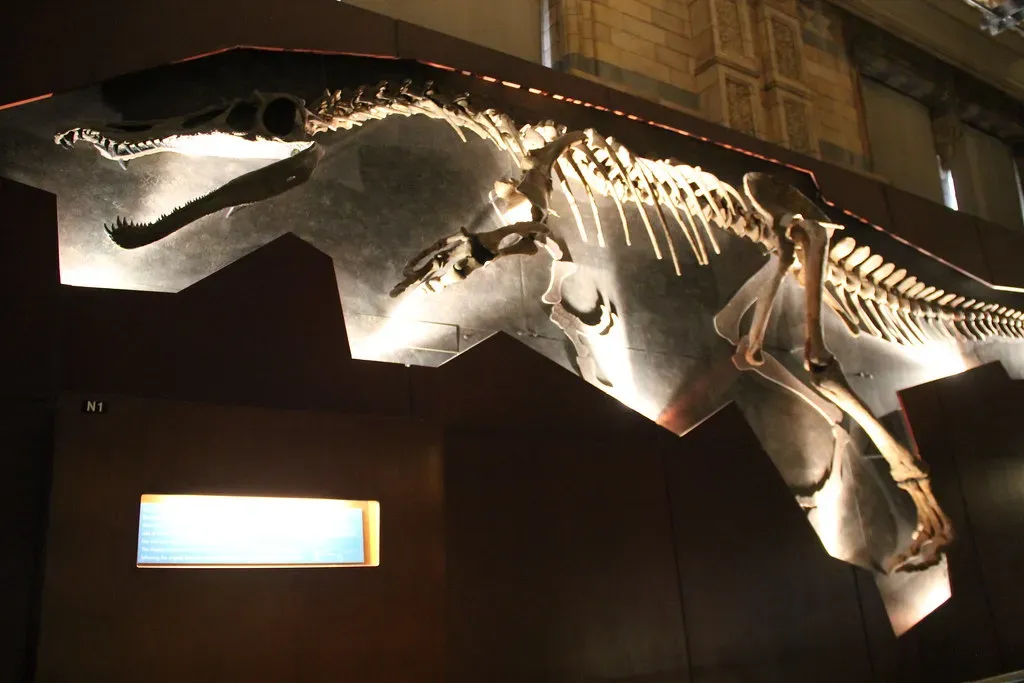
Baryonyx did more than just add a weird, fish‑eating predator to Britain’s dinosaur roster; it helped push a broader rethinking of how diverse and globally widespread spinosaurs were. Once scientists had a clear, well‑described skeleton from Surrey, they were able to re‑examine fragmentary fossils from other countries and recognize that some of them belonged to related animals. Bones and teeth that had seemed puzzling or isolated suddenly made more sense when seen through the lens of the Baryonyx discovery.
This is one of the quiet revolutions that big finds can trigger: a single, relatively complete specimen acts as a template, allowing paleontologists to link together scattered pieces from across continents. Baryonyx helped anchor an entire group conceptually, influencing how later discoveries in places like Spain and Africa were interpreted. In that sense, the Surrey skeleton was not just a local curiosity; it was a keystone in a global story about how carnivorous dinosaurs adapted to rivers, coasts, and wetlands around the world.
Why This Amateur Discovery Still Matters Today
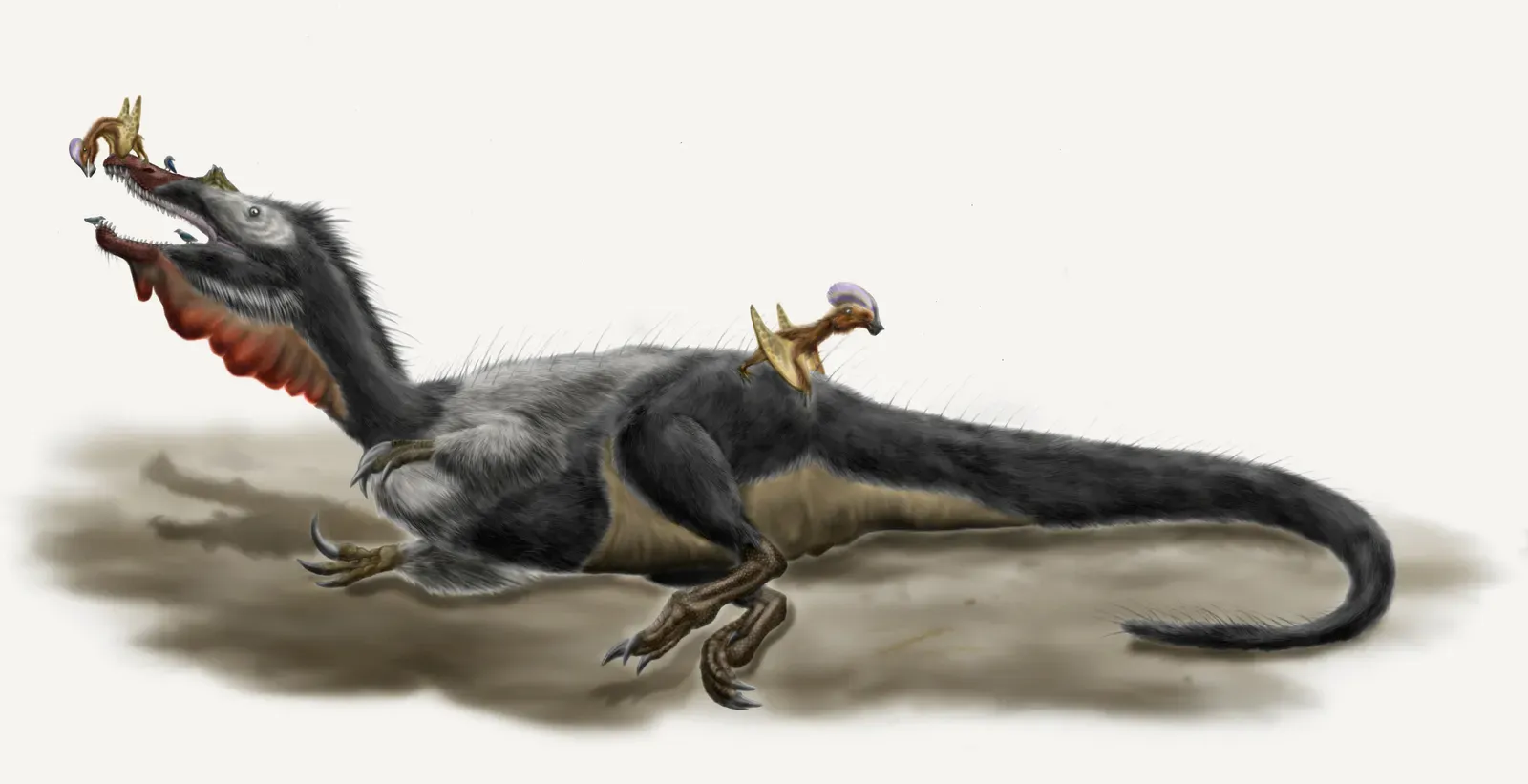
Decades after its discovery, Baryonyx continues to loom large in British paleontology because it embodies something rare: a combination of scientific importance, striking appearance, and a very human backstory. It is one thing to hear that a research team with a big grant found a new dinosaur in some remote desert. It is quite another to know that a fossil fan, armed with a hammer and enough humility to call the experts, helped uncover a specimen that reshaped our view of dinosaur evolution.
Personally, I think Baryonyx is a powerful reminder that science is not just about elite institutions and million‑dollar equipment; it is also about curiosity, persistence, and the willingness to get your hands dirty, literally. The Surrey clay pit find shows how amateurs and professionals can work together to do something neither could achieve alone. It also underlines that Britain’s fossil record is far from exhausted and that major discoveries can still appear in the most workaday places – in quarries, on coastal cliffs, even in spoil heaps that most people walk past without a second glance.
Conclusion: A Clay Pit, a Claw, and a Challenge to How We See Discovery
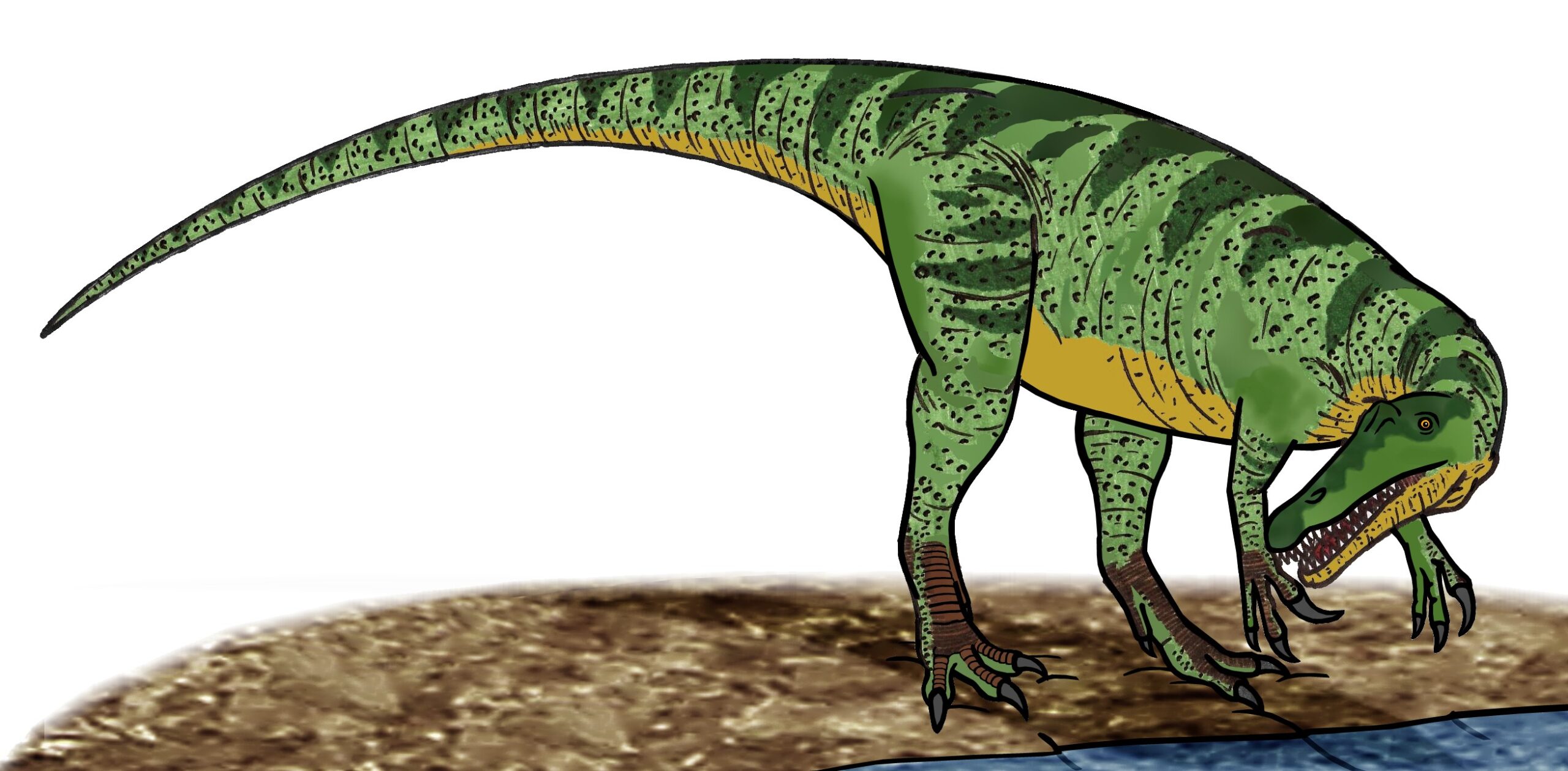
When you step back from the technical details, the story of Baryonyx is almost annoyingly cinematic: a lone amateur in a Surrey clay pit cracks open a block, finds a mysterious claw, and sets in motion a chain of events that rewrites part of dinosaur history. Yet this really happened, and that is what makes it so compelling. It is not just that Baryonyx turned out to be a key player in understanding spinosaurs and semi‑aquatic predators; it is that it exposed how incomplete and biased our mental picture of “typical” dinosaurs in Britain had been.
In my view, the most important lesson from Baryonyx is not that there was once a strange fish‑eating hunter wandering ancient English riverbanks, but that transformative discoveries can come from messy, everyday places and from people who are not on anyone’s official research roster. That should push us to value citizen science more, to protect fossil‑rich sites from careless destruction, and to admit that the ground under our feet still holds surprises big enough to embarrass our confidence. The next time you see a construction site, a quarry, or a cliff face, it is worth wondering: could the next Baryonyx be hiding there, just waiting for someone curious enough to look twice?