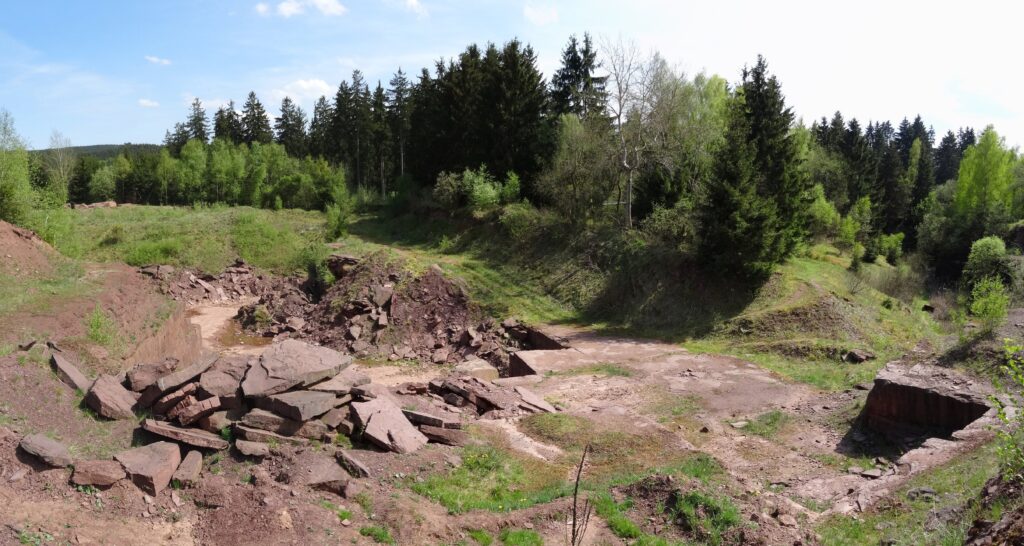
Thuringia, Germany – Scientists have pinpointed the age of the renowned Bromacker fossil site with unprecedented precision, revealing it formed 4 million years earlier than long assumed. This adjustment, from roughly 290 million years ago to 294 million years ago, stems from analyzing a razor-thin volcanic ash layer just millimeters thick above the treasures it preserves. The discovery reshapes understanding of early land vertebrate evolution during the Permian period.
A Millimeter-Thin Clue Unlocks Deep Time
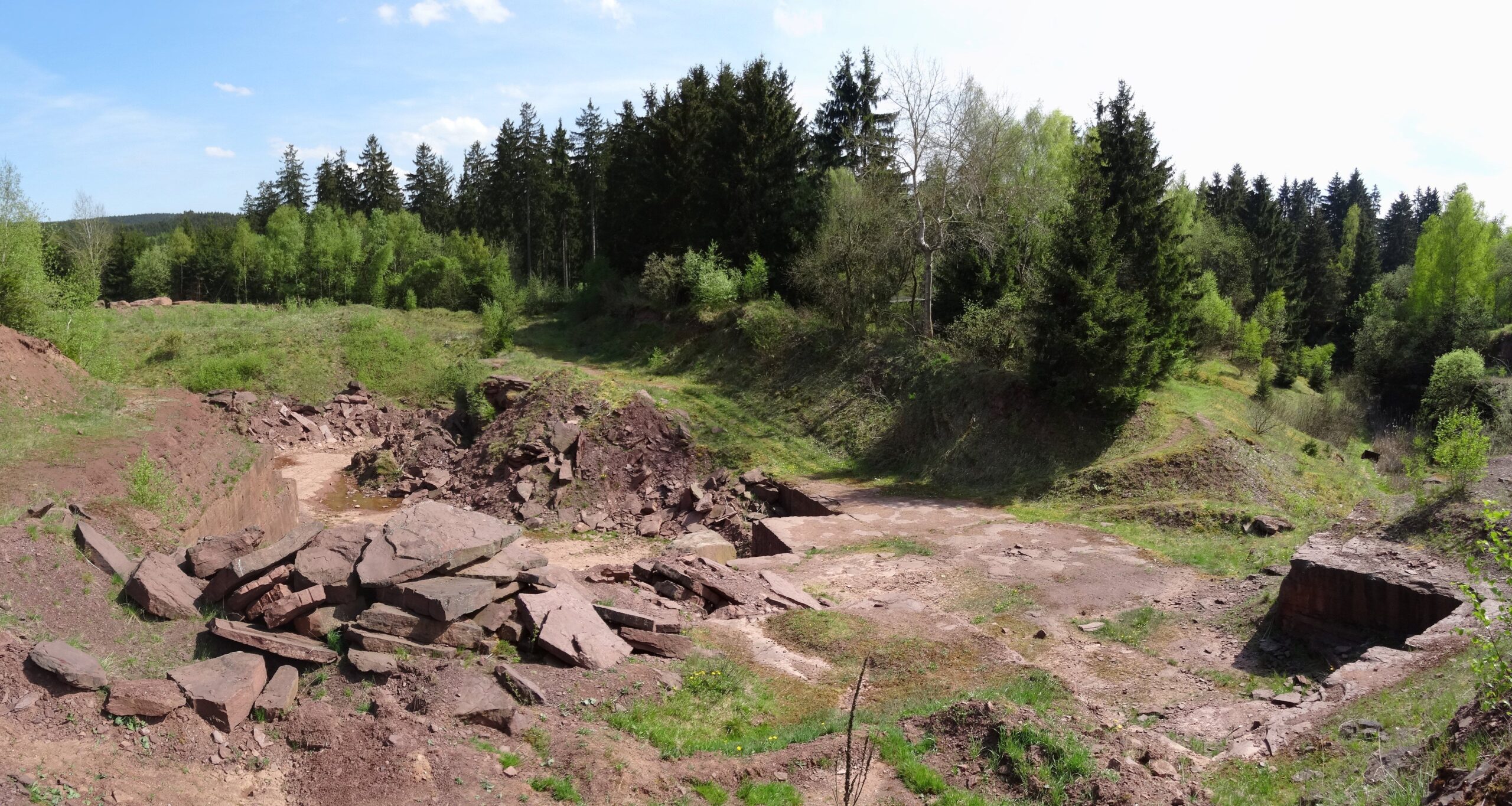
A Millimeter-Thin Clue Unlocks Deep Time (Image Credits: Upload.wikimedia.org)
Researchers identified a delicate rhyolitic tuff layer during 2024 excavations at Bromacker, situated in the Thuringian Forest between Tambach-Dietharz and Georgenthal. This ash deposit, mere millimeters above fossil-bearing strata, yielded zircons ideal for U-Pb CA-ID-TIMS dating. The technique delivered a mean age of 294.1 million years, with a tiny margin of error at 0.4 million years.
Prior estimates placed the Tambach Formation, which hosts Bromacker, in the Sakmarian or early Artinskian stages, around 290 million years old. Biostratigraphy and comparisons with other sites supported this view. Yet the new radioisotopic data confirmed a latest Asselian age, aligning with underlying layers dated to 295.8 million years ago. Such exactitude highlights how subtle stratigraphic details can span millions of years in geological records.
Exceptional Preservation of a Lost Ecosystem
Bromacker stands out for its three-dimensional, often complete skeletons of early Permian land dwellers, a rarity in Europe. Unlike aquatic-dominated sites, it captures a fully terrestrial community in red beds of sandstone, mudstone, and conglomerate. Excavations since 1974, intensifying post-reunification in 1993, uncovered articulated specimens that illuminate life on the supercontinent Pangaea.
The assemblage features diverse tetrapods adapted to a seasonal, tropical savanna climate with hot, dry spells broken by heavy rains. Synapsids, the stem-mammals, include predators like Dimetrodon teutonis and herbivores such as Martensius bromackerensis. Diadectids like Orobates pabsti dominated as plant-eaters, while amphibians such as Rotaryus gothae and Seymouria sanjuanensis thrived alongside early reptiles including the bipedal Eudibamus.
- Synapsids: Carnivorous forms and the first with epidermal scales.
- Diadectomorphs: Abundant herbivores reshaping food webs.
- Amphibians: Branchiosaurids and dissorophoids in burrows.
- Reptiles: Pioneers of raised gaits and bipedality.
- Invertebrates and plants: Insects, conchostracans, calamites, and conifers.
Shifting the Permian Evolutionary Clock
The revised 294-million-year age advances key milestones in vertebrate history. Modern trophic structures, with herbivores driving ecosystems, emerged here earlier than thought. Innovations like helical burrows, facultative bipedalism, and epidermal scales in synapsids now trace to the late Asselian.
This timing fits a warming, aridifying world at low Pangaean latitudes. Footprint biostratigraphy, insect, and conchostracan records align, prompting updates to European biozones. Correlations extend to other sites, refining the early Permian timeline across Euramerica.
| Aspect | Previous Estimate | New Age |
|---|---|---|
| Tambach Formation | Sakmarian/Artinskian (~290 Ma) | Latest Asselian (294.1 ± 0.4 Ma)[1] |
| Key Implications | Later trophic shifts | Earlier innovations (scales, bipedality) |
Legacy of Ongoing Discoveries
International teams continue annual digs, unearthing regurgitalites and trackways that reveal behaviors like predation and locomotion. Bromacker’s fossils, prepared meticulously, fill gaps in pre-dinosaur faunas. Its status in the UNESCO Global Geopark underscores efforts to preserve this window into 294-million-year-old life.
The site’s story reminds geologists how precision refines history. Future analyses may link it further to global events like the Carboniferous-Permian transition.
Key Takeaways
- Bromacker now dated to 294.1 million years via zircon U-Pb analysis.[1]
- Hosts unique 3D terrestrial tetrapods, including early synapsids and herbivores.
- Advances Permian biochronology, pushing evolutionary milestones back 4 million years.
This recalibration not only honors the site’s exceptional fossils but also invites deeper questions about life’s adaptability in ancient climates. What other timelines might shift next? Tell us in the comments.