Carnotaurus sounds like something a movie studio made up after one too many coffees: a horned, ultra-lightweight, almost armless meat-eater that might have been the speed demon of the dinosaur world. Yet outside of hardcore paleo fans, it barely gets a whisper compared with celebrities like T. rex or Velociraptor. If you love weird animals or underdog stories, this dinosaur is both.
Once you start looking at the fossils, Carnotaurus feels less like a background extra and more like the main character that somehow got cut from the final film. It was built like a sprinter, decorated like a gladiator, and armed with a jaw designed to clamp down on huge prey. So why is this bizarre predator still living in the shadow of its more famous cousins – and what does that say about how we choose which creatures history remembers?
The Horned “Bull Lizard” That Looked Ready for a Fight
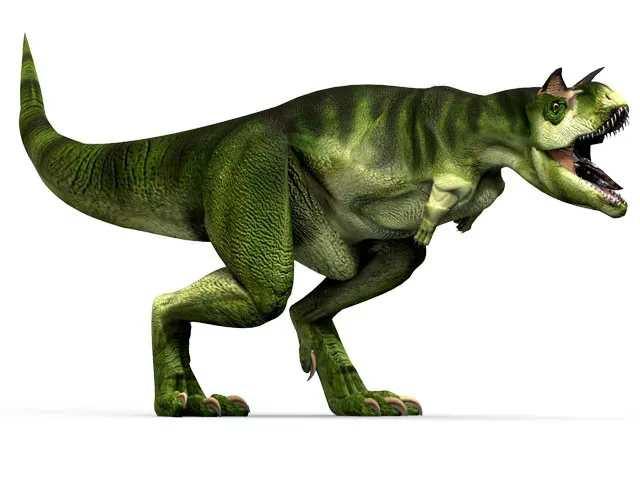
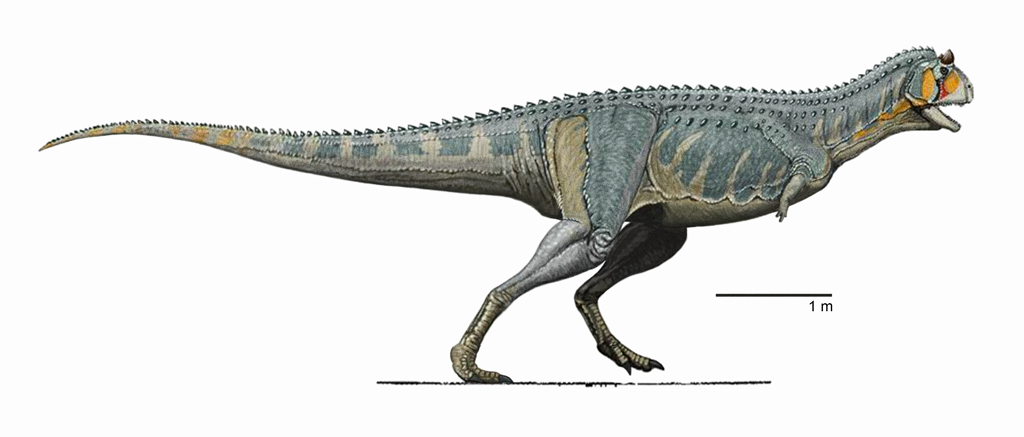
The name Carnotaurus literally means “meat-eating bull,” and for once the dramatic name actually fits. Its skull was crowned with a pair of thick, forward-pointing horns over the eyes, more like a bull or a bison than a typical theropod dinosaur. These weren’t delicate decorations; they were solid bone, integrated into a heavy, reinforced skull that looked built to take and deliver impacts.
We still do not know exactly how those horns were used, but the leading ideas are almost all dramatic. Some researchers think Carnotaurus might have used them in head-butting contests with rivals, maybe not full-speed collisions but quick, forceful shoves and twisting impacts. Others suggest they were visual signals, a billboard broadcasting strength and maturity the way antlers or horns do in many animals today. Either way, this was not a bland, generic predator – it was instantly recognizable.
The Infamous Tiny Arms That Make T. rex Look Well Equipped
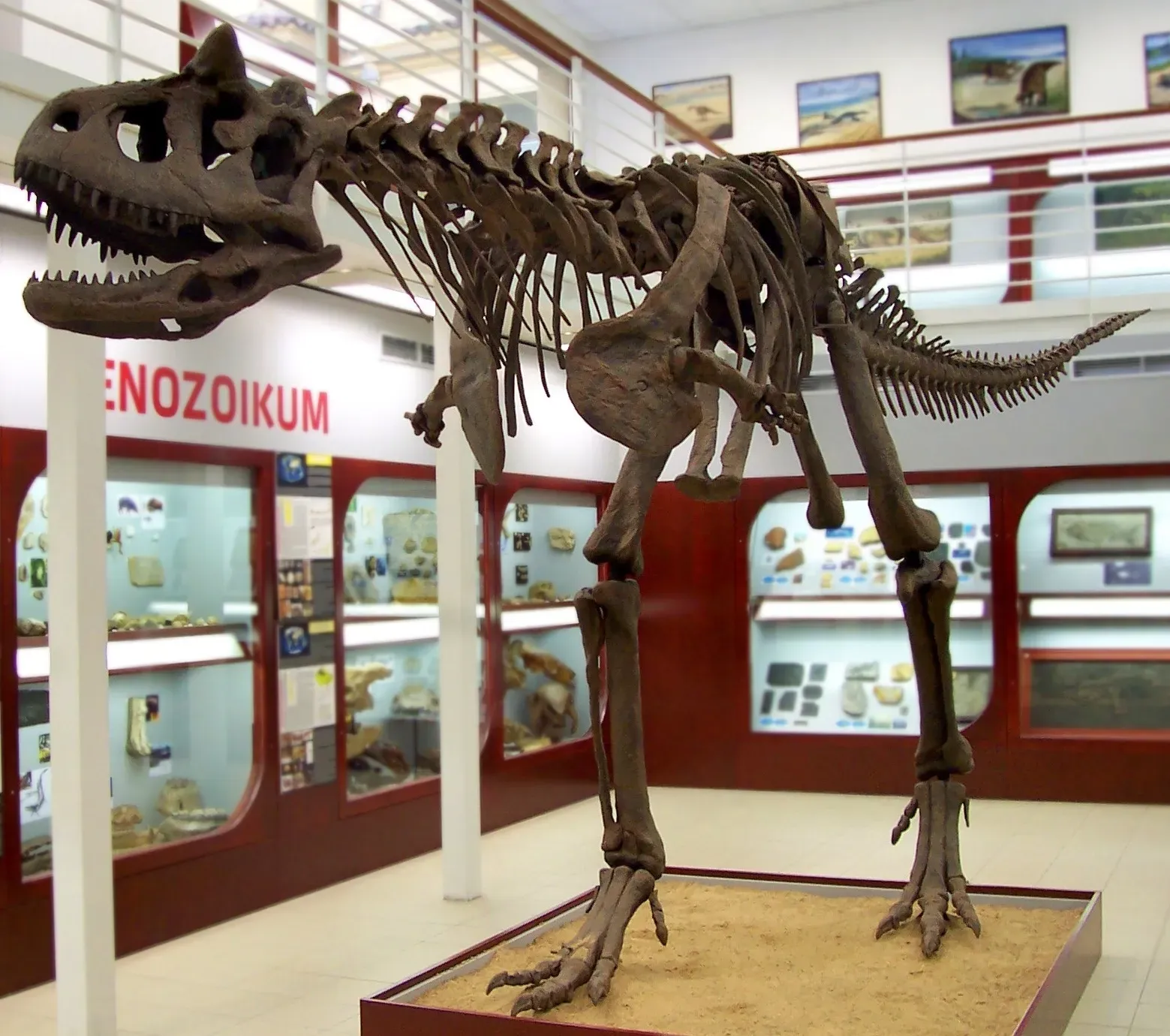
You think T. rex had small arms? Carnotaurus looks like nature tried to erase its arms and then gave up halfway. Its forelimbs were ridiculously short, with reduced bones and almost no useful reach, ending in tiny digits that probably were not good for grabbing or slashing. In reconstructions, the arms are so small they look like a design error you want to zoom in and double-check.
This extreme reduction tells us something important: Carnotaurus did not need its arms to hunt. Its entire killing toolkit shifted to the head, neck, and legs. That kind of anatomical specialization is not random; it suggests long evolutionary fine-tuning toward a particular hunting style. The arms basically turned into evolutionary dead weight, which is exactly what tends to happen in lineages where other body parts do the job better. It is a little unsettling – almost like looking at a predator that stripped itself down to the bare essentials.
A Predator Built Like a Sprinter, Not a Tank
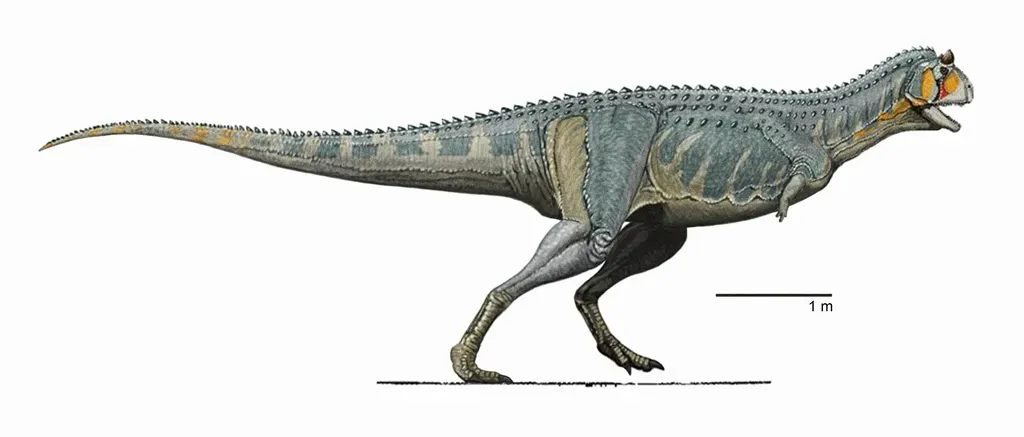
Where T. rex was massive and muscular like a heavyweight boxer, Carnotaurus was built more like a track athlete. Its body was relatively lean, with long, powerful legs and a deep tail anchored by huge muscles that would have powered strong, fast strides. Computer models and biomechanical studies have suggested it could have been exceptionally quick for a large theropod, potentially among the fastest big predators known.
Its bones show adaptations that point to speed: long lower leg bones, a stiffened tail to help balance and stabilize at high pace, and a lightweight skull compared with some other giants. It probably was not chasing down antelope-like animals in a flat savanna, but in its Late Cretaceous South American ecosystems, being able to accelerate quickly would have been a huge advantage. When people say it may have been the fastest large predator of its time, they are not just being dramatic; the skeleton really does look like it was tuned for running.
Armor, Scales, and Skin Details That Most Dinosaurs Never Get
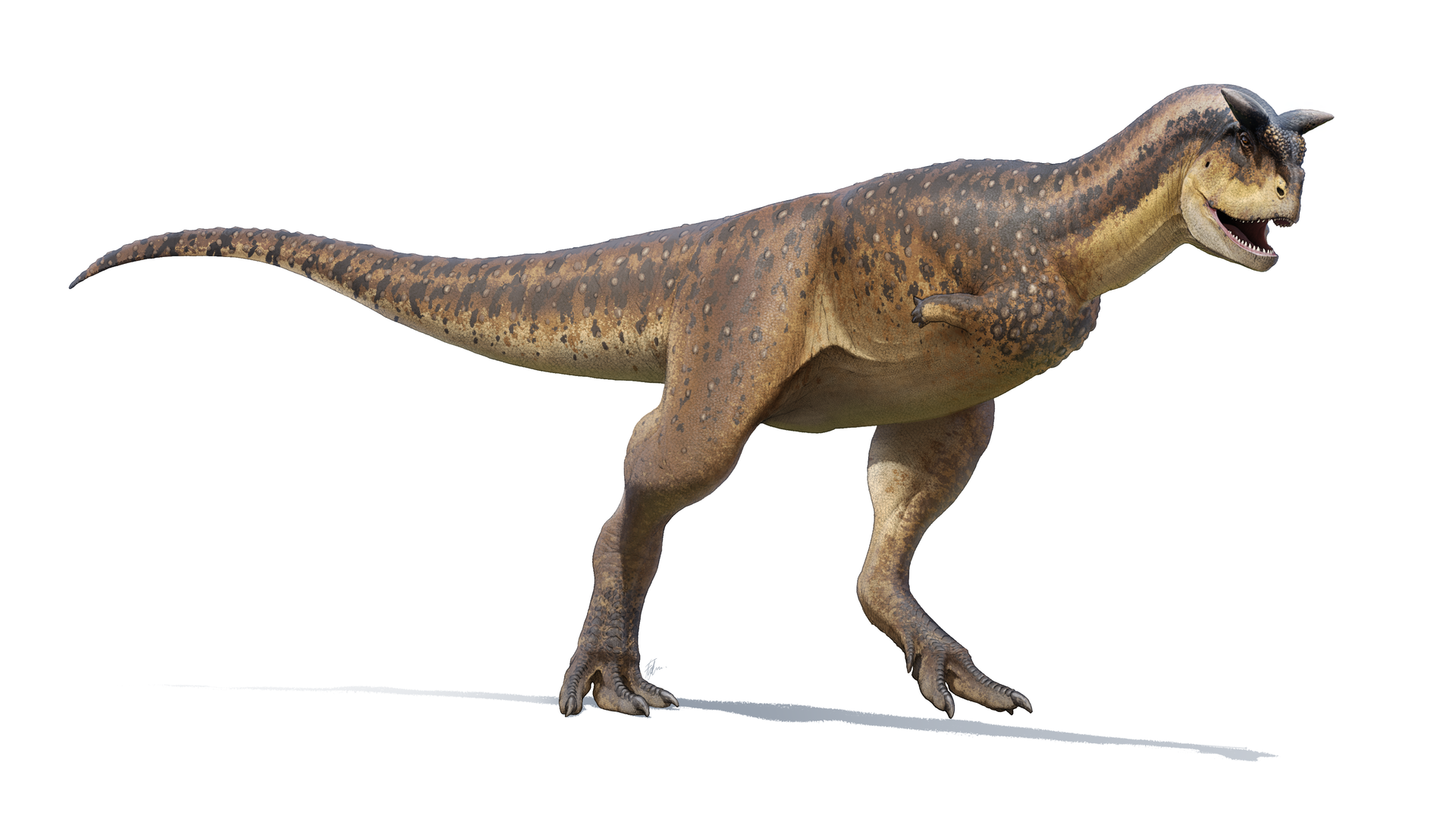
One of the most underrated things about Carnotaurus is that we do not just have bones; we have fossilized skin impressions. That is rare. Those impressions show a body covered in non-overlapping scales, with larger conical bumps arranged along the sides, almost like rows of studs. It gives the animal a more armored, textured look than the smooth, shrink-wrapped versions many people imagine when they think of dinosaurs.
These skin details bring Carnotaurus to life in a way that many other predators never quite achieve. You can actually picture how light would have hit those scales, how mud might have dried on that bumpy skin, how scars might have stood out. It is one thing to say “large theropod,” and another to imagine a horned, studded, scaled sprinting predator charging across a floodplain. The preserved skin turns it from an abstract skeleton into something almost uncomfortably real.
An Apex Hunter in a Lost South American World
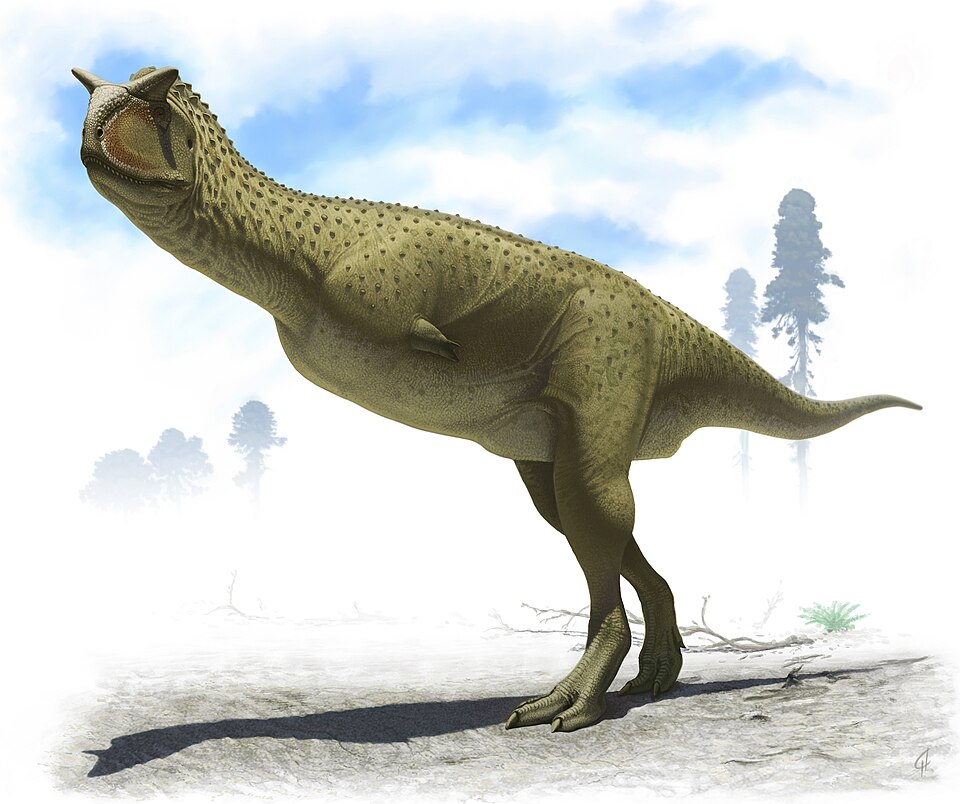
Carnotaurus lived in what is now Patagonia, Argentina, during the Late Cretaceous, in a world that looked very different from the classic North American dinosaur scene. Instead of facing off with T. rex, it shared its environment with a whole cast of southern-only creatures: long-necked titanosaurs, strange crocodile relatives, and other unique theropods. It was likely near the top of its local food chain, a specialist in bringing down sizeable prey in open or semi-open landscapes.
Because most popular dinosaur stories are built around North America and, to a lesser extent, Asia, this South American world feels like an alternate timeline. The animals there evolved in relative isolation, and Carnotaurus represents that divergence perfectly: a horned, ultrafast predator that does not resemble the usual northern superstars. When we ignore it, we are basically ignoring an entire branch of dinosaur history that took a very different, very weird turn.
So Why Is Carnotaurus Still a Background Character?
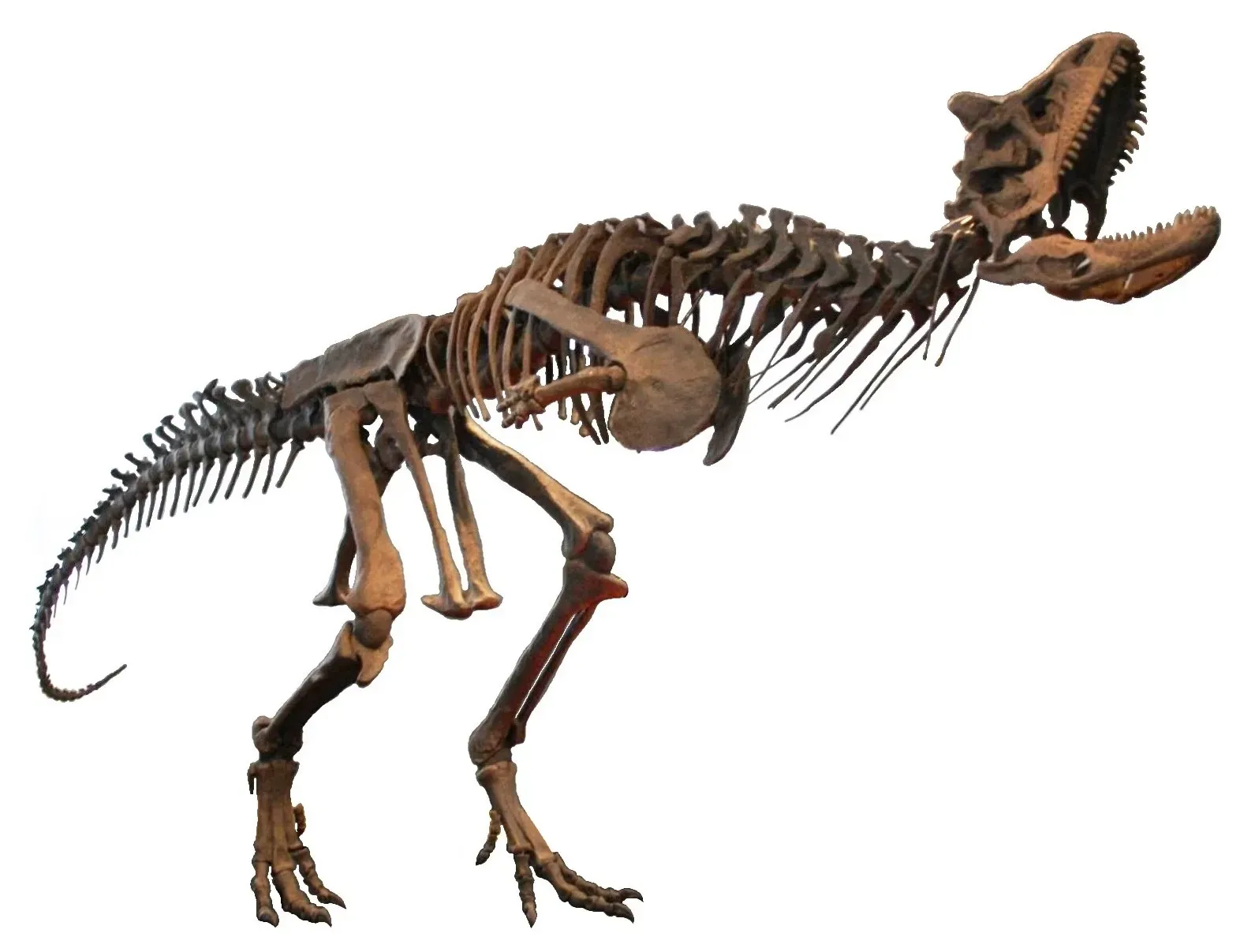
For all its bizarre features, Carnotaurus never really grabbed the cultural spotlight in the way T. rex or even Velociraptor did. Part of that comes down to timing and geography: it was discovered and described later than some of the classic dinosaurs, and it lived in South America rather than the heavily publicized North American fossil beds. Movies, TV shows, and children’s books built their early dinosaur rosters around what was already famous, and Carnotaurus simply missed the first casting call.
There is also an uncomfortable truth: once the public gets attached to a few iconic creatures, it is hard for newcomers to break in, no matter how deserving they are. Carnotaurus is too odd to fit neatly into the generic “big scary dinosaur” mold, and too underexposed to have its own mythology yet. That combination keeps it in a weird limbo – beloved by paleo nerds, mostly unknown to everyone else. Honestly, that feels like a mistake; if any dinosaur deserves to be the face of how strange and experimental evolution can be, it is this horned, almost armless, speed-obsessed predator.
Carnotaurus Deserves Main-Character Status
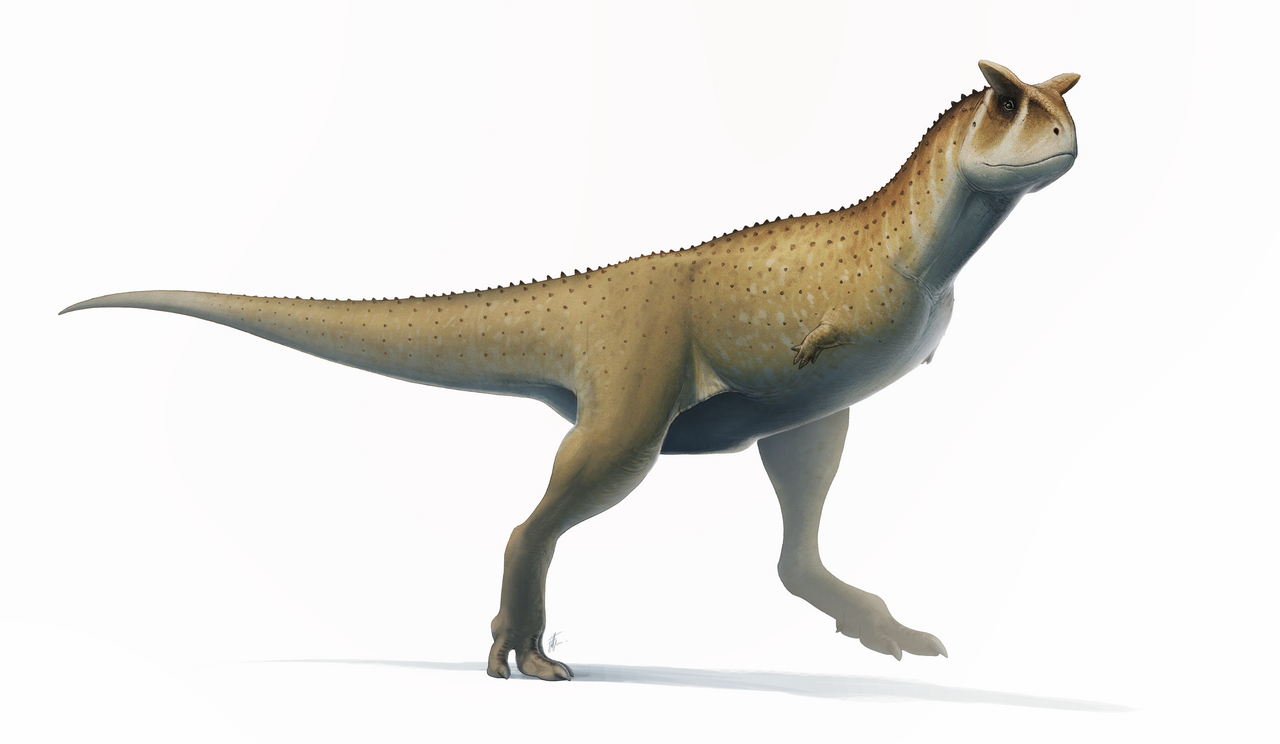
Looking at everything we know, it is hard not to think that Carnotaurus has been badly underrated. This was not a generic meat-eater; it was a horned, sprinting specialist with a stripped-down body plan and preserved skin that lets us almost see it in the flesh. In a way, it captures the exact mix of weirdness and power that makes dinosaurs so compelling in the first place.
My opinion is simple: if we keep centering the same three or four dinosaurs in every story, we are missing the real magic of deep time. Carnotaurus shows that evolution does not just repeat successful designs; it experiments, pushes boundaries, and sometimes produces something that looks like it was dreamed up for a sci‑fi movie. Next time someone brings up T. rex for the thousandth time, it might be worth asking: what about the horned sprinter from Patagonia that evolution tried to turn into a living missile?