Picture a world so foreign to our own that you’d struggle to recognize a single coastline, a familiar tree, or even a stretch of sky that feels like home. No ice caps at the poles. No Atlantic Ocean. Just one vast, scorching supercontinent and an emptiness left behind by history’s most catastrophic extinction. This was the stage onto which the dinosaurs were about to walk – tentatively at first, and then with growing, unstoppable confidence.
The Triassic Period is one of paleontology’s most gripping stories, precisely because it doesn’t start with triumph. It starts with survival. It asks the question: after nearly everything dies, what gets to inherit the Earth? You’re about to find out.
A World Rebuilt from Ruin: The Aftermath of the Great Dying
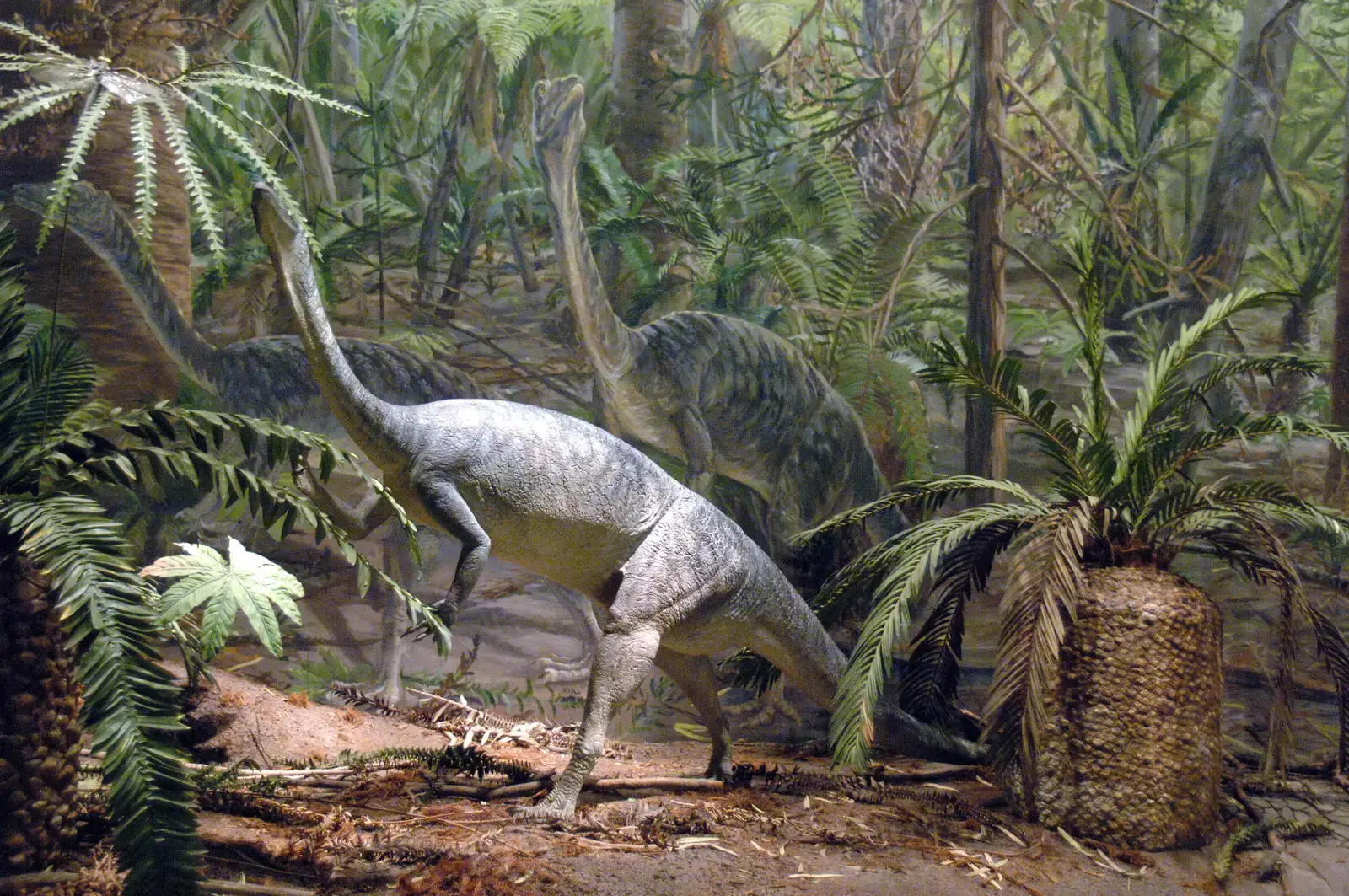
Dinosaurs diverged from their archosaur ancestors during the Middle to Late Triassic, roughly 20 million years after the devastating Permian–Triassic extinction event wiped out an estimated 96% of all marine species and 70% of terrestrial vertebrate species approximately 252 million years ago. That scale of destruction is nearly impossible to wrap your head around. Imagine losing the overwhelming majority of all life on Earth, not in a geological blink, but in a catastrophic unraveling that left ecosystems essentially gutted.
It was also a time of tremendous change and rejuvenation. Life that survived the so-called Great Dying repopulated the planet, diversified into freshly exposed ecological niches, and gave rise to new creatures, including rodent-size mammals and the first dinosaurs. Honestly, there’s something both haunting and deeply exciting about this. Catastrophe, it turns out, is one of evolution’s most powerful engines. The emptied landscape was effectively a blank canvas, waiting for whoever had the nerve and the biology to claim it.
Pangaea: One World, One Stage
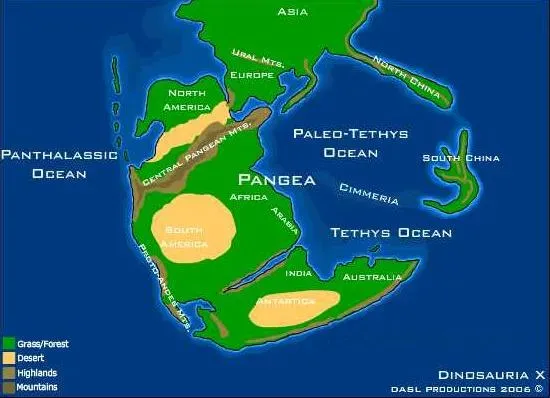
Dinosaurs evolved in a world that had one supercontinent, Pangaea, surrounded by one ocean, Panthalassa. Think of it like this: the entire landmass of Earth compressed into one enormous C-shaped slab straddling the equator and stretching toward the poles. There were no physical barriers separating what are today different continents, which meant animals could theoretically wander from what is now Argentina to what is now central Europe without ever crossing an ocean.
The unique continental arrangement into a single emerged land mass (Pangea) favored a general context of wet shores and an arid interior, with a maximum expression of monsoonal climate. Much of the inland area was isolated from the cooling and moist effects of the ocean. The result was a globally arid and dry climate, though regions near the coast most likely experienced seasonal monsoons. It was a harsh interior, and the dinosaur ancestors who thrived in it were already proving themselves tough customers before they’d even officially become dinosaurs.
The Archosaur Foundation: Building Blocks of Dinosaur Ancestry
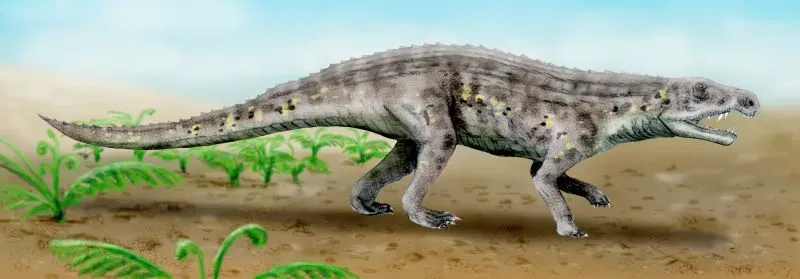
True archosaurs appeared in the early Triassic, splitting into two branches: Avemetatarsalia, the ancestors to birds, and Pseudosuchia, the ancestors to crocodilians. Avemetatarsalians were a minor component of their ecosystems, but eventually produced the earliest pterosaurs and dinosaurs. Here’s the thing – the group that would give rise to dinosaurs wasn’t the dominant one early on. Not even close. They were, for a long stretch, almost background noise.
Although many researchers have long suggested that dinosaurs outcompeted other reptile groups during the Triassic, researchers argue that the ascent of dinosaurs was more a matter of contingency and opportunism. Dinosaurs were overshadowed in most Late Triassic ecosystems by crocodile-line archosaurs and showed no signs of outcompeting their rivals. By the Late Triassic there was a shift in dominance between the mammal-like reptiles and the archosaurs. There are various theories as to what may have caused this, such as competition in a climate that was becoming steadily warmer and dryer or evolutionary stagnation. It’s a humbling reminder that dominance is rarely destiny – sometimes it’s just luck dressed up as fitness.
The First True Dinosaurs: When and Where Did They Actually Appear?
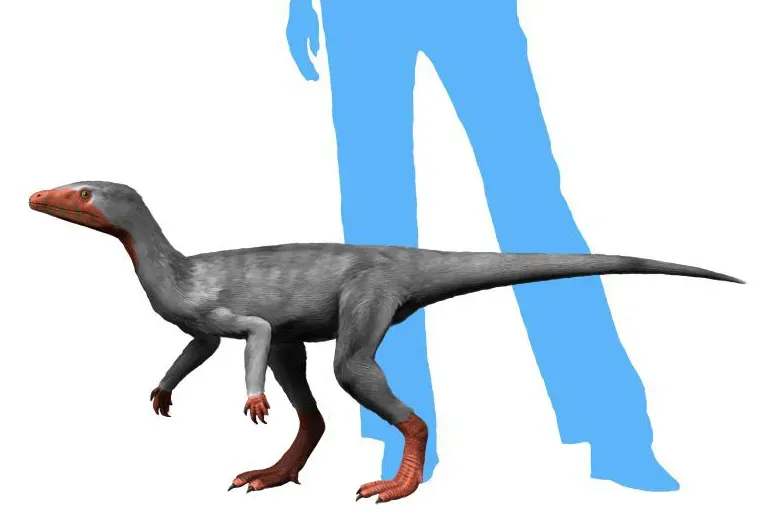
Dinosaurs first appeared during the Triassic period, between 243 and 233.23 million years ago, although the exact origin and timing of the evolution of dinosaurs is a subject of active research. The oldest undisputed dinosaurs are known from the early Late Triassic, about 231 million years ago. But even those dates keep shifting as new fossils come to light. It’s hard to say for sure exactly when the first true dinosaur stepped onto the scene, partly because the boundary between “almost a dinosaur” and “definitely a dinosaur” is blurrier than most people assume.
Fossils discovered in Argentina suggest that the first dinosaurs may have appeared in South America during the Late Triassic, about 230 million years ago – a period when today’s continents were fused in a single landmass called Pangaea. The Ischigualasto Formation, radiometrically dated at 231 to 230 million years old, has produced the early saurischian Eoraptor, originally considered a member of the Herrerasauridae but now considered to be an early sauropodomorph, along with the herrerasaurids Herrerasaurus and Sanjuansaurus. South America was, in many ways, the birthplace of the dinosaur family tree as we know it today – a remarkable thing to consider the next time you glance at a world map.
Meet the Earliest Dinosaurs: Small, Swift, and Surprisingly Humble
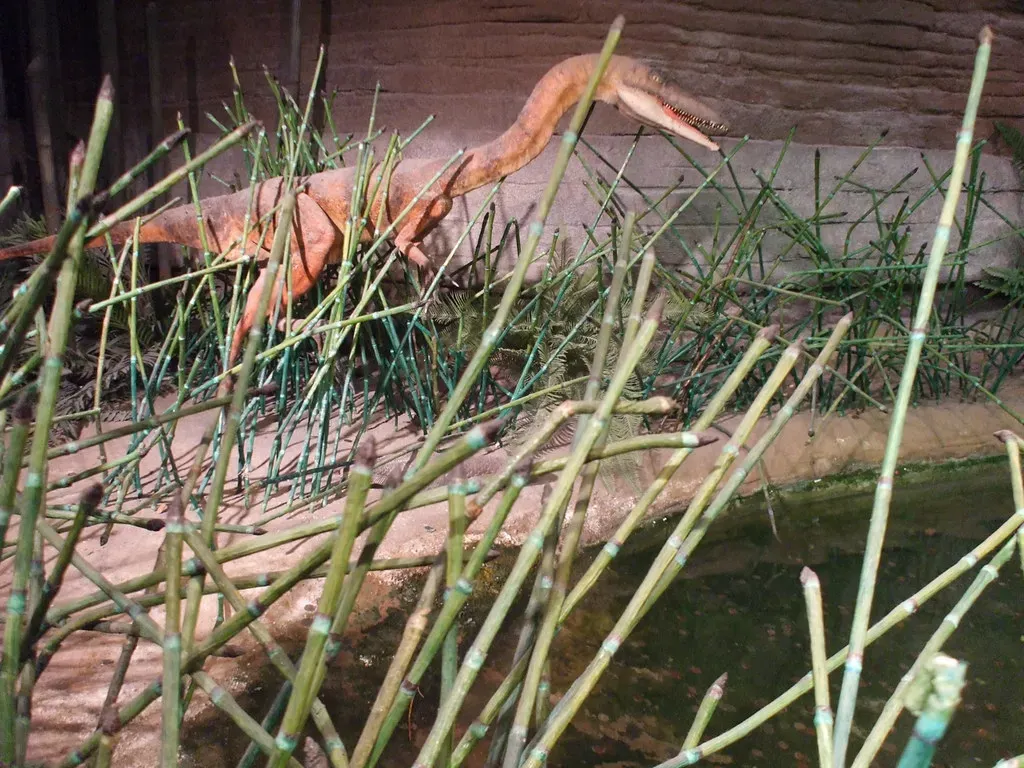
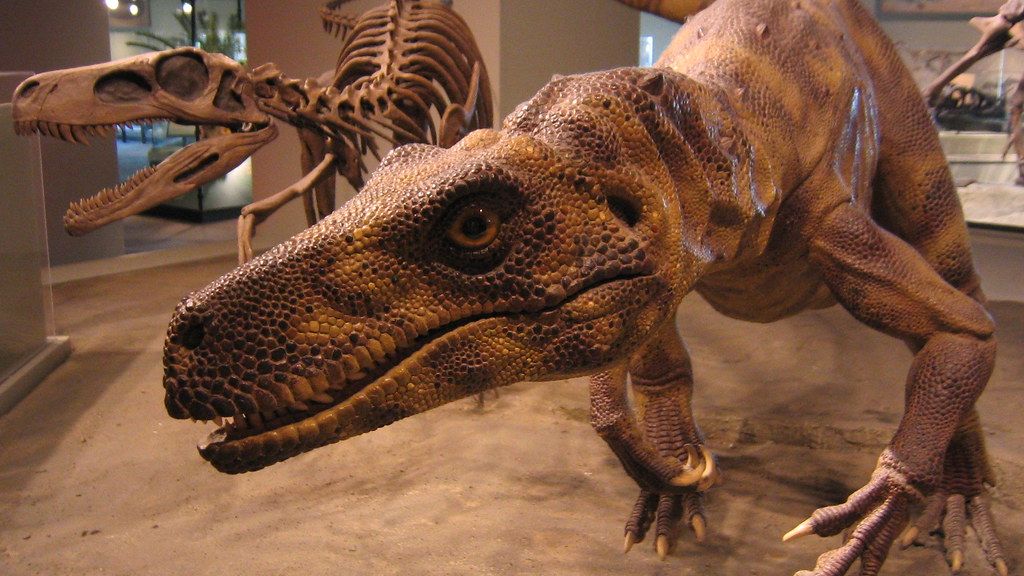
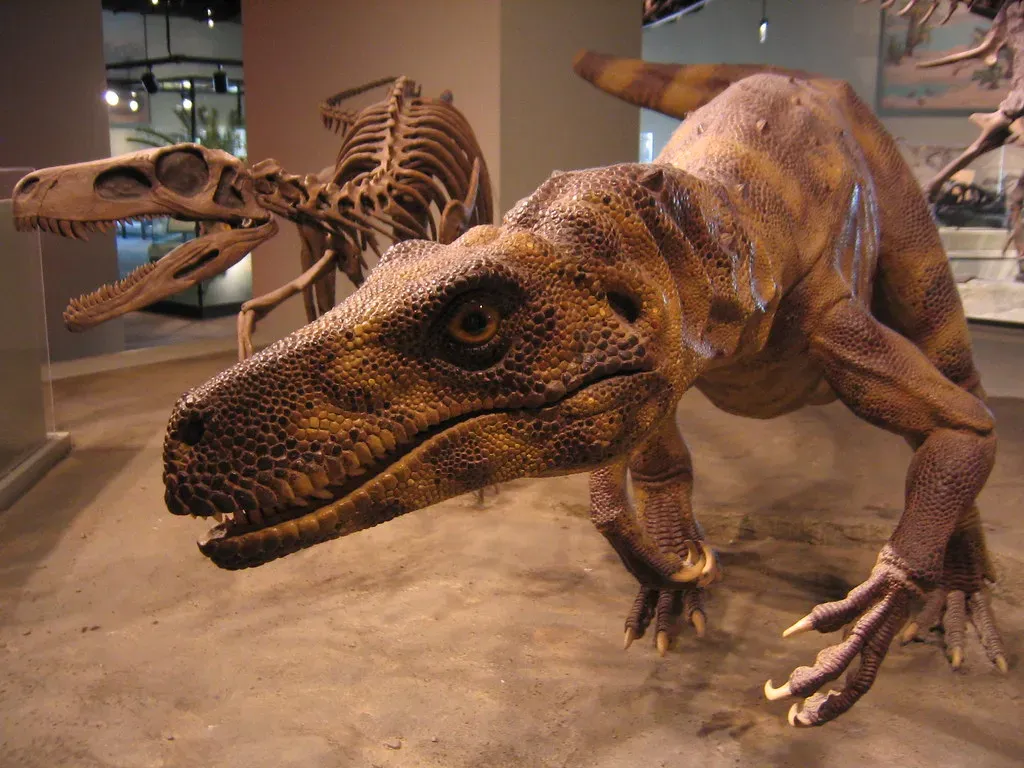
These early dinosaurs were mostly small, lightly built two-legged carnivores, including animals such as Coelophysis and its close relatives. You might expect the ancestors of the largest creatures to ever walk the land to arrive with some kind of spectacle. They didn’t. The ancestors were lightly built two-legged animals, around the size of a crow. It sounds almost laughably modest. A crow-sized creature that would eventually give rise to Brachiosaurus and Tyrannosaurus rex. Evolution really does love a long game.
Coelophysis was a small, slenderly built, ground-dwelling, bipedal carnivore that could grow up to 3 meters long. The dinosaur’s vertebrae were hollow, contributing to its lightweight structure and enabling swift, agile movements. Its limbs were well-developed with the hind limbs adapted for bipedal locomotion. Coelophysis’ tail was long and slender, likely serving as a counterbalance during movement. Meanwhile, unlike later theropods, which typically had uniform, blade-like teeth, Eoraptor had a variety of tooth shapes – a strong indicator of an omnivorous diet, suggesting that Eoraptor was capable of eating both meat and plant matter. These early dinosaurs were already showing the flexibility that would define the group for the next 150 million years.
The Key Advantage: Why Dinosaur Bodies Were Built to Win
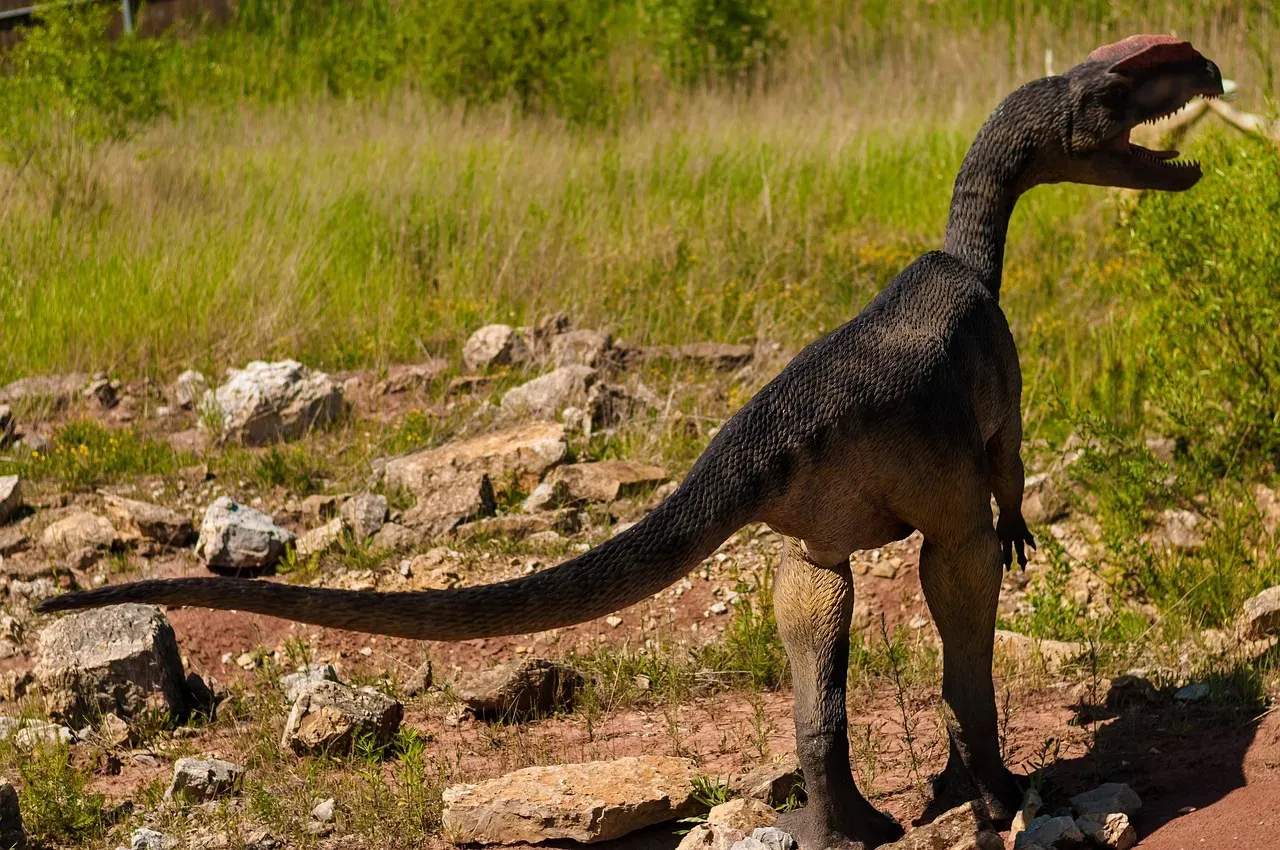
Dinosaurs stand with their hind limbs erect in a manner similar to most modern mammals, but distinct from most other reptiles, whose limbs sprawl out to either side. This posture is due to the development of a laterally facing recess in the pelvis and a corresponding inwardly facing distinct head on the femur. Their erect posture enabled early dinosaurs to breathe easily while moving, which likely permitted stamina and activity levels that surpassed those of sprawling reptiles. In practical terms, think of a lizard doing push-ups to breathe versus a dog running without effort – the efficiency difference is enormous.
Erect limbs probably also helped support the evolution of large size by reducing bending stresses on limbs. The transition from quadrupedality to bipedality, and from small to large size in the dinosaur lineage was a pivotal development. Bipedality is often considered a defining feature of dinosauromorphs and was historically heralded as a key character explaining the ascendancy of dinosaurs over other Triassic reptile groups. Let’s be real – this wasn’t just a body plan. It was a blueprint for becoming the planet’s most successful large land animals for the better part of 150 million years.
The End-Triassic Extinction: Chaos Becomes Opportunity
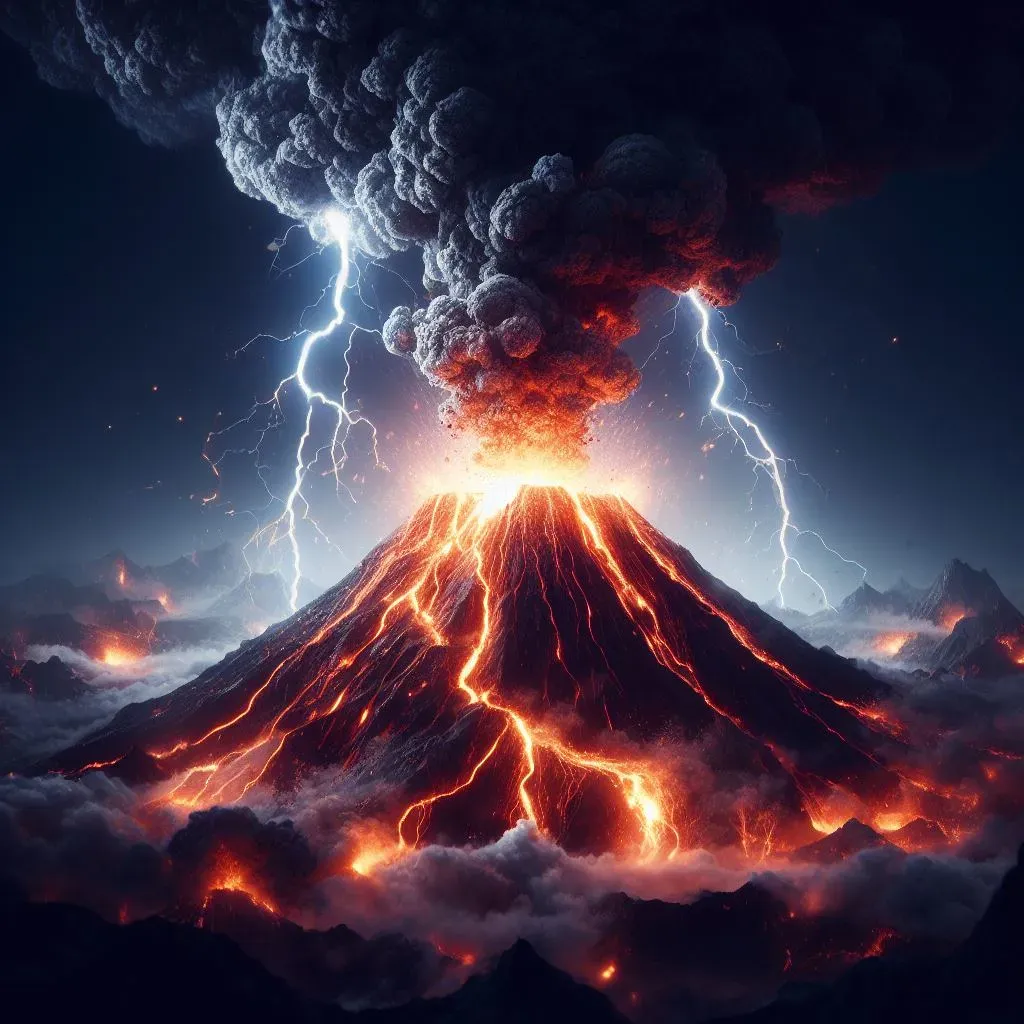
The end-Triassic extinction, a global extinction event occurring at the end of the Triassic Period, resulted in the demise of some 76 percent of all marine and terrestrial species and about 20 percent of all taxonomic families. Most scientists agree on a likely scenario: over a relatively short period of time, massive volcanic eruptions from a large region known as the Central Atlantic Magmatic Province (CAMP) spewed forth huge amounts of lava and gas, including carbon dioxide, sulfur and methane. The world, in a geological sense, was on fire. Pangaea was splitting apart and the volcanoes along those rifts were pumping poison into the atmosphere.
All Triassic archosaurs, apart from dinosaurs, pterosaurs and crocodiles, went extinct. This opened up many of the environments that the archosaurs had occupied, paving the way for the surviving dinosaurs to take their place. It is thought that the end-Triassic extinction was the key moment that allowed dinosaurs to become the dominant land animals on Earth. These extinctions within the Triassic and at its end allowed the dinosaurs to expand into many niches that had become unoccupied. Dinosaurs became increasingly dominant, abundant and diverse, and remained that way for the next 150 million years. The Triassic, bookended by catastrophe on both ends, had done its job. It had forged the creature that would define the next great chapter of life on Earth.
Conclusion: The Crucible That Made Them
The Triassic Period wasn’t the Age of Dinosaurs. Technically, that honor belongs to the Jurassic and Cretaceous. The Triassic Period was a time of great change, bookended by extinctions, this era saw huge shifts in the diversity and dominance of life on Earth, ushering in the appearance of many well-known groups of animals that would go on to rule the planet for tens of millions of years. It was the pressure cooker, not the party.
What makes the Triassic genuinely extraordinary is that dominance wasn’t handed to the dinosaurs. They earned it slowly, surviving in the shadow of bigger, fiercer rivals, building their biological toolkit one adaptation at a time, and then outlasting everyone else when the world collapsed. Integrating trace fossils and body fossils demonstrates that the rise of dinosaurs was a drawn-out affair, perhaps initiated during recovery from the Permo-Triassic extinction. There’s a lesson in that which goes beyond paleontology. The creatures that seem destined for greatness are often the ones quietly persisting in the background – until the moment the world opens up, and they’re the only ones left standing.
The next time you see a bird perched on a branch outside your window, you’re looking at the direct descendant of a Triassic survivor. Does that change the way you see it? It probably should.