If you picture a giant reptile slicing through prehistoric oceans, you probably imagine something that moves like a crocodile or a snake. What almost nobody expects is a motion that looks strangely familiar from wildlife documentaries today: a sleek body and powerful flippers beating in a rhythm that feels almost… penguin-like. Yet, that is exactly what some ancient marine reptiles seem to have done, turning their limbs into underwater wings and flying through the water rather than merely paddling.
When I first came across this idea, it felt almost absurd. Penguins are birds, modern and feathery; these reptiles were scaly, toothed, and lived alongside dinosaurs in seas full of ammonites and giant fish. But the deeper you look at the fossils, the more this picture of underwater “flight” becomes hard to ignore. The story of how some marine reptiles converged on a penguin-style stroke is a wild reminder that evolution loves to remix its best engineering tricks, no matter which branch of the tree of life it is working with.
The Strange Idea of Reptiles Swimming Like Penguins
At first glance, thinking about reptiles moving like penguins sounds like a bad joke. Penguins are small, chubby birds from the Southern Hemisphere; extinct marine reptiles were sometimes longer than a car, with jaws full of sharp teeth. Putting them in the same conversation feels like mixing up a housecat and a blue whale. But when scientists started to study the shape of certain fossil flippers and shoulders, they realized the similarities were more than just superficial.
Both penguins and some ancient marine reptiles turned their front limbs into stiff, hydrodynamic flippers and used them not as simple paddles but as wings, beating them up and down to generate lift underwater. This style of movement is sometimes called underwater flight, because the physics is surprisingly similar to how a bird flies in air. It is not that these reptiles were trying to become penguins, of course; they just stumbled onto a similar solution to the same problem: how to move quickly and precisely in a dense, three‑dimensional environment like the ocean.
Underwater Flight: How Penguins Actually Swim
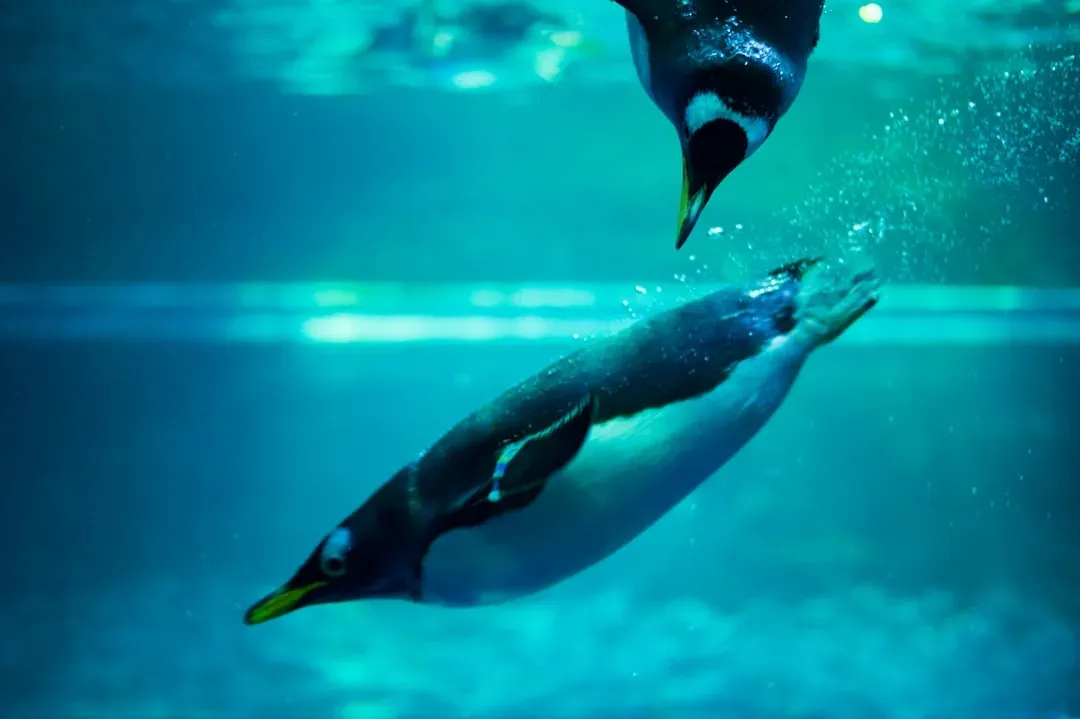
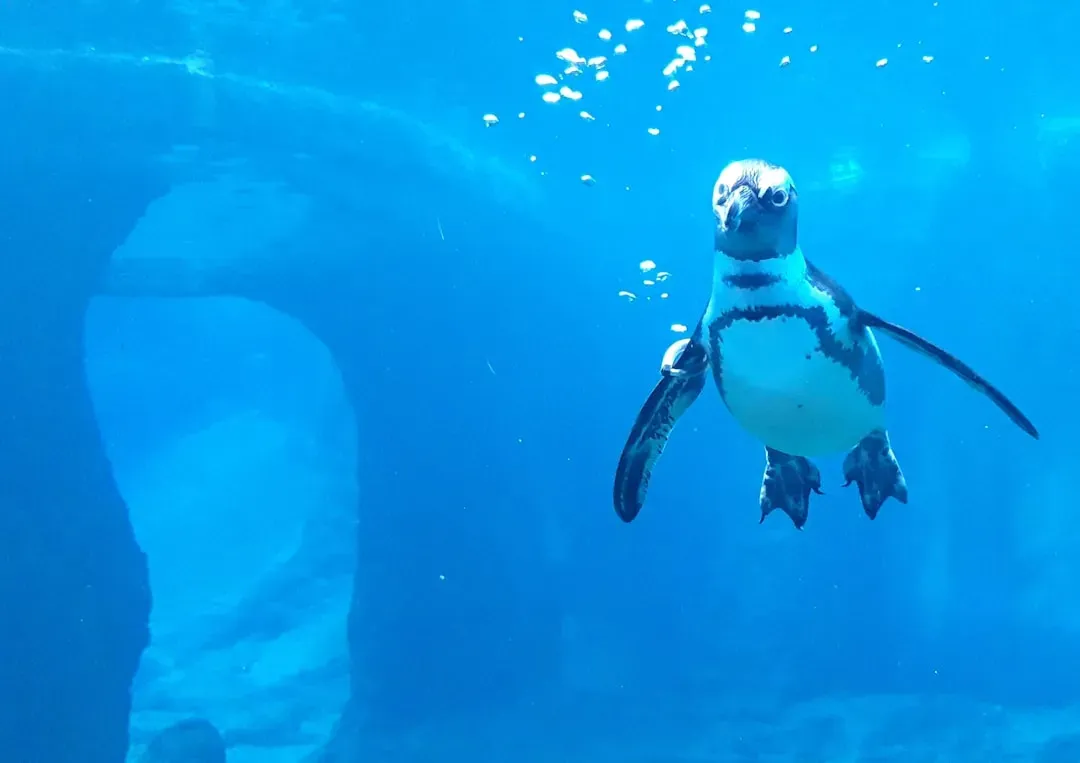
To understand what those reptiles were doing, it helps to look closely at penguins themselves. Penguins do not just kick their feet and wiggle; their main engine is the pair of stiff, flattened wings they use as flippers. They flap these “wings” much like flying birds flap theirs in the air, but with a motion tuned for water, pushing both on the downstroke and the upstroke. This creates lift and thrust at the same time, letting them dart, twist, and stop with shocking precision.
If you watch slow‑motion footage, you can see that penguins are essentially flying underwater, banking like tiny submarines with wings. Their bodies are torpedo-shaped to reduce drag, their bones are dense to help them stay submerged, and their muscles are arranged to drive those powerful flaps without tearing themselves apart. When scientists recognize similar design patterns in fossil reptiles – rigid flippers, robust shoulder joints, streamlined bodies – it becomes natural to ask whether those animals might have been doing a version of the same underwater dance.
Meet the Marine Reptiles That “Flew” in the Sea
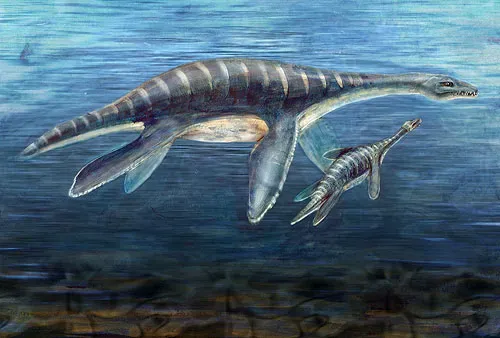
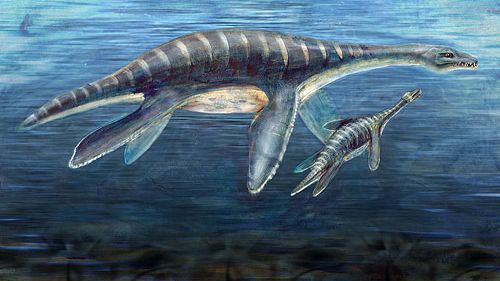
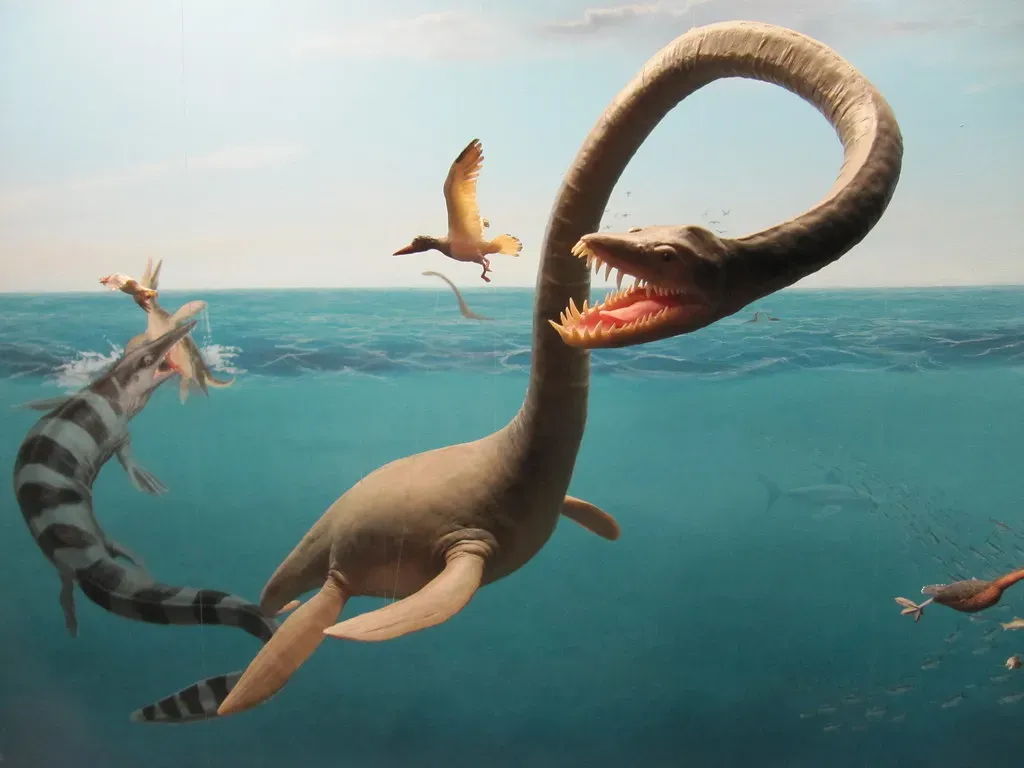
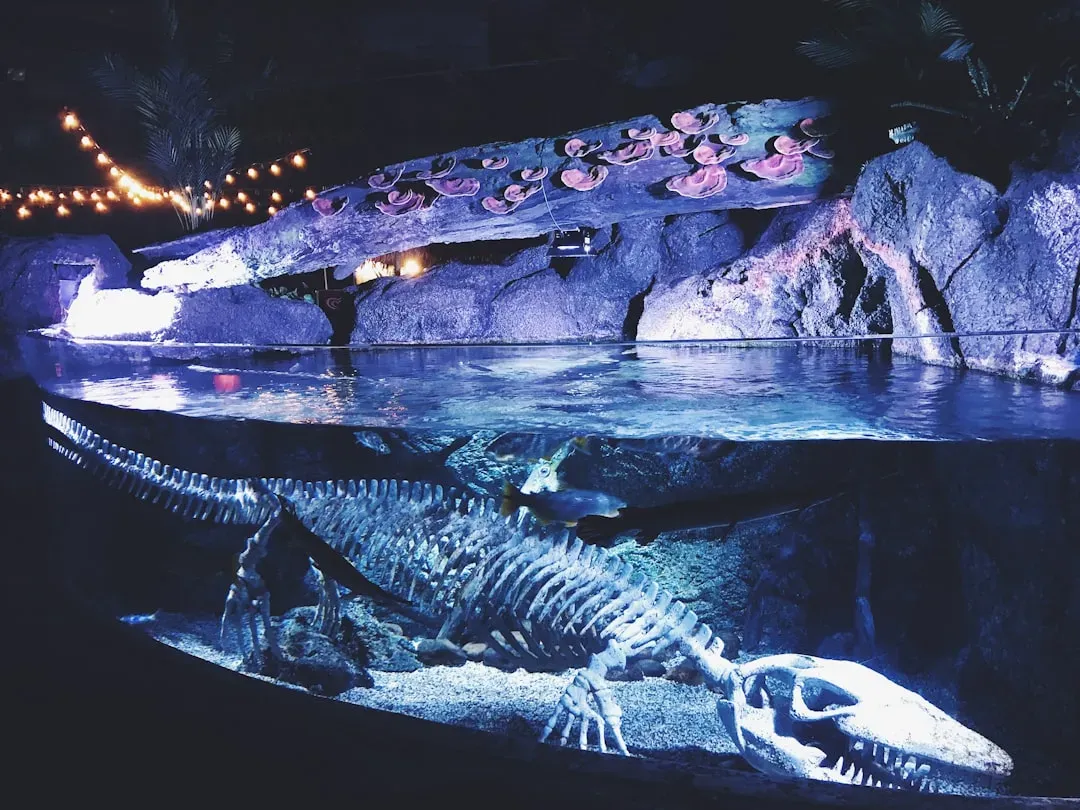
Among the most compelling examples of underwater flight in marine reptiles are the plesiosaurs and their shorter‑bodied cousins, the pliosaur‑type animals. These creatures had broad, paddle‑like limbs and large, well‑developed shoulder and hip girdles to anchor strong swimming muscles. Instead of relying on a long, whipping tail like many fish, they seem to have used their flippers as the main drivers of propulsion. That already sets them apart from many other marine animals, and it pushes them into penguin territory in terms of biomechanics.
Some studies of their skeletons suggest that plesiosaurs may have used all four flippers in a coordinated, wing‑like pattern. There is still debate about whether the front flippers did most of the work and the back ones acted as stabilizers, or whether all four were actively flapping to generate thrust and lift. Either way, their limb joints and bone shapes point toward a style of movement that feels closer to the underwater “flight” of a penguin or a sea turtle than to the side‑to‑side tail strokes of a shark. That makes them some of the oddest, and arguably most elegant, swimmers in the fossil record.
Convergent Evolution: Nature’s Copy‑Paste Trick
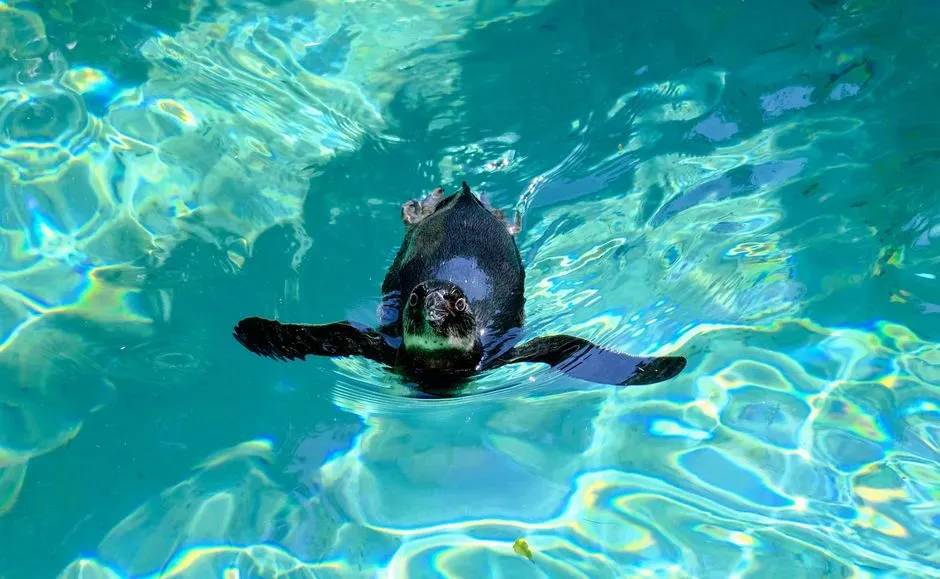
When completely unrelated animals solve the same problem in a similar way, biologists call it convergent evolution. It is nature’s version of two engineers in different eras independently inventing almost the same gadget, simply because it works so well. Penguins, marine turtles, some marine reptiles, and even modern sea lions have all, in their own ways, flattened their limbs and used them like paddles or wings to move underwater. They do not share a recent common ancestor that swam that way; instead, they bumped into the same solution because the physics of water is unforgiving.
The ocean demands efficiency. In water, drag is brutal, and any clumsy movement wastes energy quickly. So animals that spend their lives chasing agile prey or trying not to become prey themselves are pushed toward more streamlined bodies and powerful, controlled strokes. A wing‑like flipper that can generate lift and thrust is simply a very good answer to that problem. That is why ancient marine reptiles and modern penguins can end up wearing similar “designs,” even though one group is long gone and the other is waddling around on ice today.
What Fossils Reveal About Their Stroke
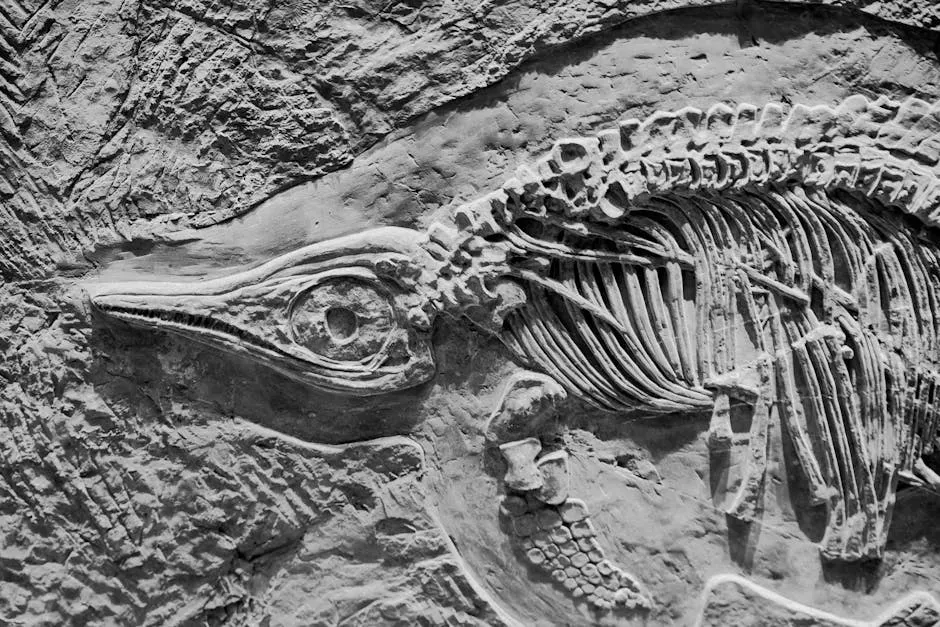
Of course, we cannot go back in time and film a plesiosaur or other marine reptile swimming, so scientists have to read the clues locked in fossil bones. Paleontologists analyze the shape of joints, the thickness of bones, and the places where muscles would have attached to reconstruct how those limbs moved. In some especially well‑preserved fossils, even the outline of soft tissue or the relative proportions of bone segments can offer hints about flexibility or stiffness. Together, these details act like stage directions for a performance we can never actually watch.
Researchers also run computer simulations and build physical models to test different swimming styles against the anatomy. By comparing the fossil skeletons to modern animals that swim with underwater flight – like penguins, sea turtles, or even auks and murres – scientists can see which motions make sense and which would strain the joints unrealistically. The overall pattern suggests that at least some marine reptiles did not simply paddle; they used a flapping, lift‑based stroke that would have looked surprisingly smooth and bird‑like if we could see it today. Is every single detail nailed down? Not yet, but the broad story is becoming hard to dismiss.
Why Swimming Like a Penguin Was Such a Smart Move
Swimming like a penguin is not just a quirky evolutionary choice; it comes loaded with advantages. Underwater “flight” can be extremely efficient, allowing animals to cover long distances without exhausting themselves. It also provides fine control over direction and speed, which matters a lot if you are trying to sneak up on fast, agile prey or navigate complex environments like reefs and rocky coastlines. In a world where survival often comes down to milliseconds, the ability to accelerate and turn on a dime can mean the difference between a successful hunt and going hungry.
There is also the question of lifestyle. Marine reptiles that used a penguin‑like stroke may have been able to exploit different ecological niches than tail‑powered swimmers. They could potentially hover in the water, brake hard, or rise and sink with precise control, much like penguins weaving through schools of fish or diving to just the right depth. To me, that paints a vivid mental picture: ancient seas filled not just with lumbering giants but with agile, wing‑flapping predators carving graceful arcs through the water. It makes the oceans of the past feel far more dynamic and alive than the old textbook images of clumsy monsters suggest.
What This Tells Us About Evolution – and About Us
![What This Tells Us About Evolution - and About Us (By Printed under a CC BY license, with permission from Nadine Bösch and Beat Scheffold, original copyright [2013]., CC BY 2.5)](https://nvmwebsites-budwg5g9avh3epea.z03.azurefd.net/dinoworld/f47e5f9baa26288fc47cbffd80e7597f.webp)
The idea that marine reptiles once swam like penguins might sound like a niche detail, but it says something much bigger about how evolution works. Life on Earth repeatedly stumbles onto similar solutions because the rules of physics and biology are the same, regardless of whether you are a bird, a reptile, or a mammal. When we see the same broad design show up again and again – streamlined shapes, wing‑like flippers, lift‑based strokes – it is a clue that those designs are not random; they are tested, refined answers to shared challenges. That realization makes evolution feel less like chaos and more like a patient, messy kind of engineering.
Personally, I think it also shifts how we picture the deep past. Instead of distant, alien creatures that we cannot relate to, these animals start to feel more familiar. They moved through their world using mechanics we can still watch today in penguins slicing through icy water or turtles gliding off a reef. In a way, they remind us that we are part of a long, ongoing story of bodies adapting to a demanding planet. The next time you see a penguin zipping around in an aquarium video, it is worth wondering what long‑extinct reptilian “cousins of the idea” might once have done something eerily similar, millions of years before any bird ever existed.
Conclusion: A Past That Looks Strangely Familiar
When you put it all together, the evidence that some marine reptiles swam in a way broadly comparable to penguins is, in my view, too compelling to shrug off as coincidence. Is it identical? No – and pretending otherwise would be overselling it. But the shared themes of stiff flippers, robust shoulder joints, streamlined bodies, and lift‑based strokes point to a style of movement that deserves to be taken seriously as a kind of underwater flight. For me, the most exciting part is not that the fossils mimic modern animals, but that they show how often evolution revisits the same clever tricks.
I also think this story exposes a quiet bias many of us have: we tend to see the ancient world as crude and clumsy, when in reality it was packed with sleek, highly tuned athletes of their time. Marine reptiles swimming like penguins were not awkward experiments; they were successful, refined solutions to the brutal demands of life in the sea. That should change how we imagine prehistoric oceans – not as slow, murky arenas, but as arenas full of precision and speed. So the next time you watch a penguin rocket through blue water, will you see only a cute bird, or will you also glimpse the ghost of a reptile that mastered the same physics long before?