Stand on a beach today and stare out at the waves, and it feels pretty calm and familiar: a few dolphins, some sharks, maybe a sea turtle if you’re lucky. Now try to imagine that same ocean hundreds of millions of years ago, when the water was ruled by creatures that looked like they’d escaped from science fiction. Many of them lived and died long before the first dinosaur ever took a step on land, yet they make even the most terrifying T. rex look almost ordinary by comparison.
That’s the wild part of modern paleontology: the deeper we dig into ancient seafloor sediments and strange fossil beds, the clearer it becomes that Earth’s oceans have been home to predators so bizarre that our current marine life feels almost conservative. Some had rotating jaws like a circular saw, others had armor-plated heads that turned their mouths into biological guillotines, and some looked like living kites drifting through dark, oxygen-poor seas. The story of these predators is not just about shock value; it shows how alien our own planet used to be, and how fragile and experimental life really is.
The Cambrian Explosion: When Evolution Went Weird First
Imagine a world where almost everything bigger than a worm is brand new. That’s the Cambrian Period, roughly over half a billion years ago, when complex animals suddenly diversified in a blink of geologic time. Instead of the familiar fish, whales, and sharks we know today, the oceans swarmed with strange, soft-bodied creatures, many with body plans that look like evolution was testing wild prototypes. Eyes appeared in more advanced forms, hard parts like shells and spines spread, and predators and prey entered a biological arms race that rewrote the rules of life.
In places like the Burgess Shale in Canada and the Chengjiang deposits in China, paleontologists have uncovered snapshots of these early ecosystems preserved in astonishing detail. Here we find some of the earliest apex predators, and they don’t look anything like sleek sharks or toothy reptiles. Instead, many seem almost cobbled together: spiny, lobed, fringed with flaps, eyes on stalks, jaws that are more like nutcrackers or hoops than anything we see today. These fossils are a reminder that the familiar line-up of modern animals is not the “default” setting for life on Earth; it’s just one of many experiments, and the Cambrian oceans were where the weirdest ones thrived.
Anomalocaris: The Original Alien Apex Predator
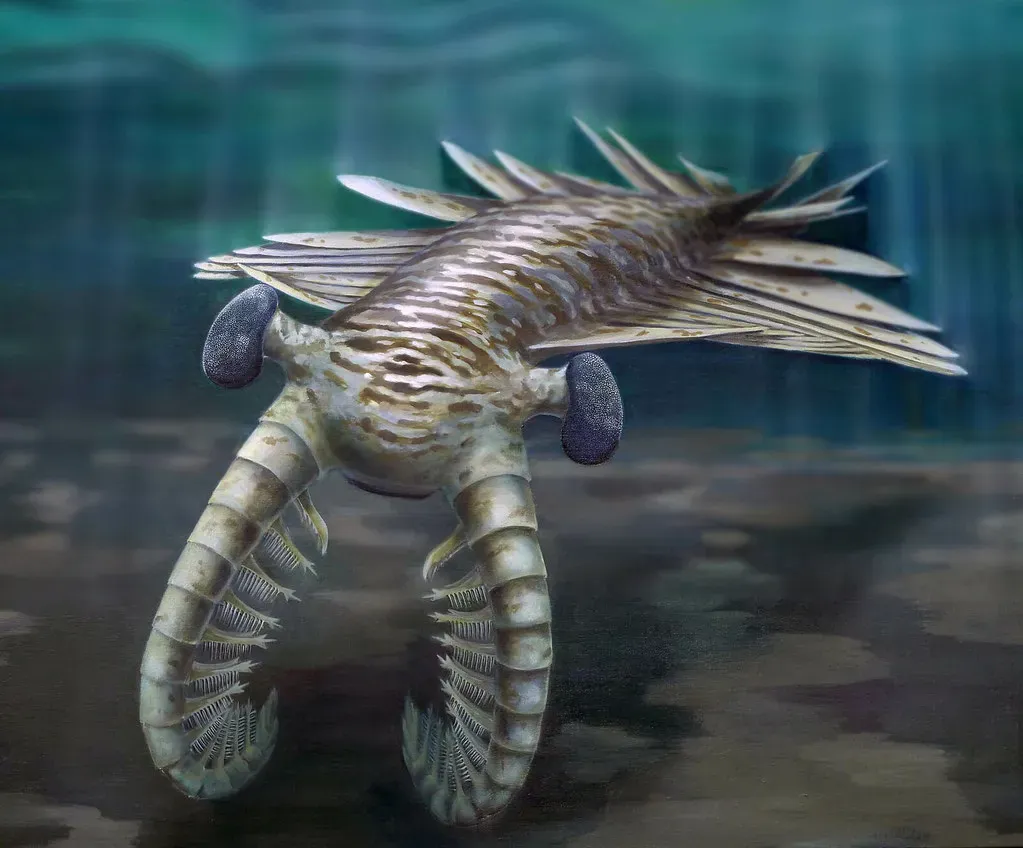
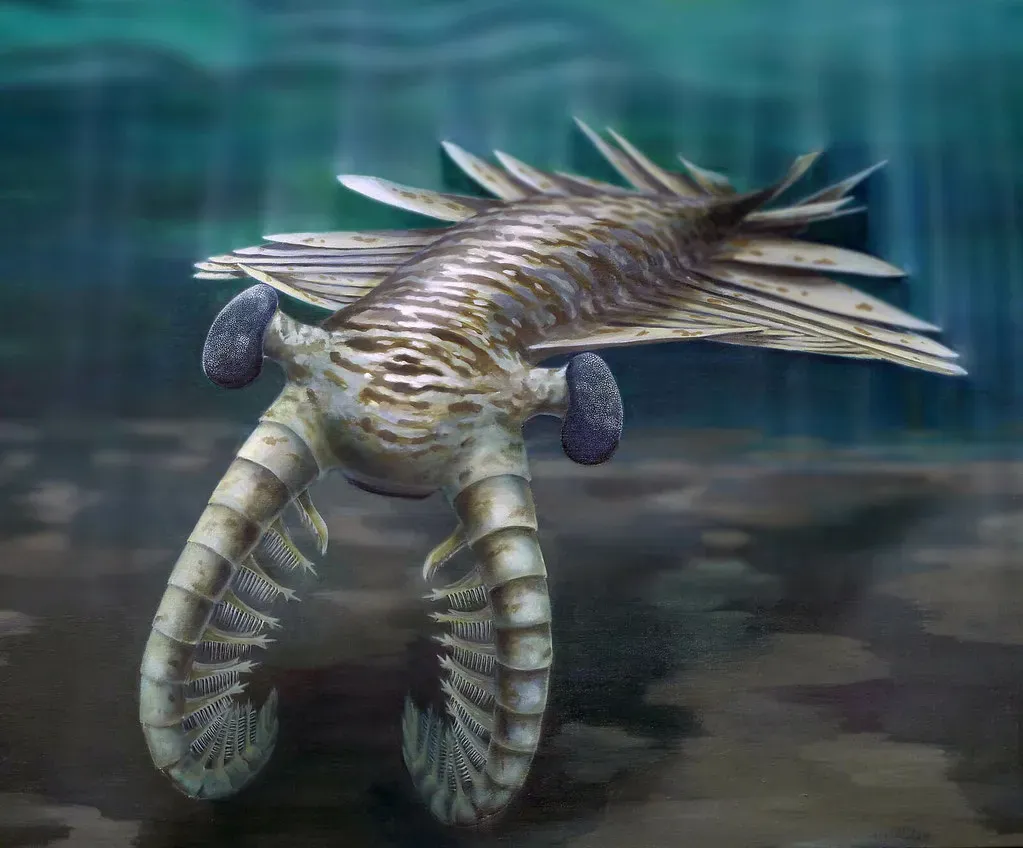
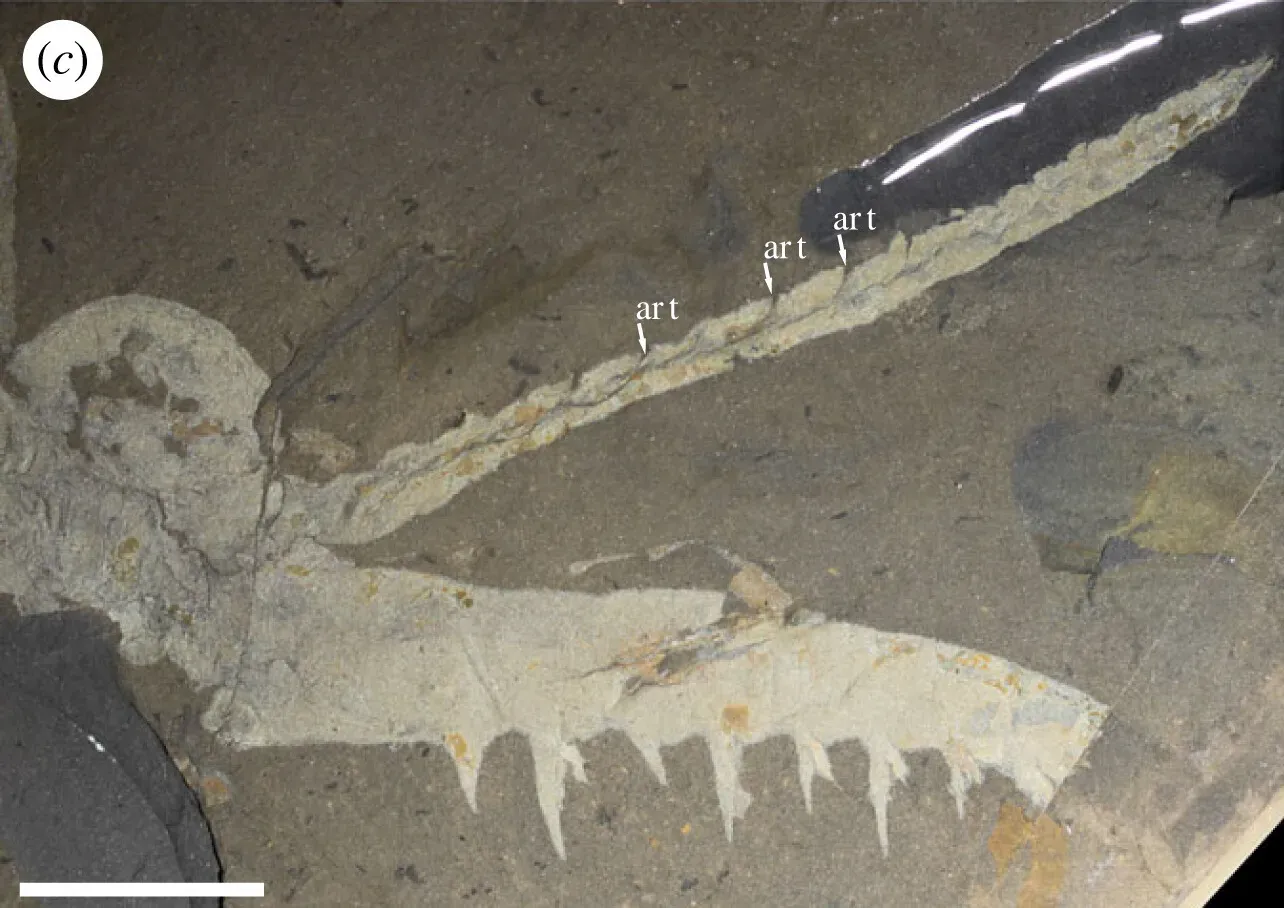
If you had to pick one creature to represent how strange early ocean predators could be, Anomalocaris would be a top contender. It lived during the Cambrian, long before dinosaurs, and it grew to about the size of a human adult in some species, which was enormous for its time. Its body was flanked by rows of flexible swimming flaps, giving it a kind of undulating, hovering movement through the water. At the front, it had a pair of segmented, spiny appendages like grasping arms, used to snag prey and bring it toward a circular mouth lined with overlapping plates.
This mouth, often compared to a pineapple ring or a camera shutter, is one of the main reasons Anomalocaris looks so otherworldly. It did not have a traditional fish-like jaw or the needle teeth we expect from predators; instead, the plates could close inwards to crush or tear soft-bodied prey, and maybe even crack into trilobites in some interpretations. Its large, complex eyes gave it an advantage as a visual hunter in a world where many creatures probably stumbled blindly through the water. To me, Anomalocaris feels almost like the “beta version” of a predator, proof that once evolution invented active hunting, it was willing to try just about any design to make it work.
Tully Monster and Other Misfit Hunters of the Shallow Seas
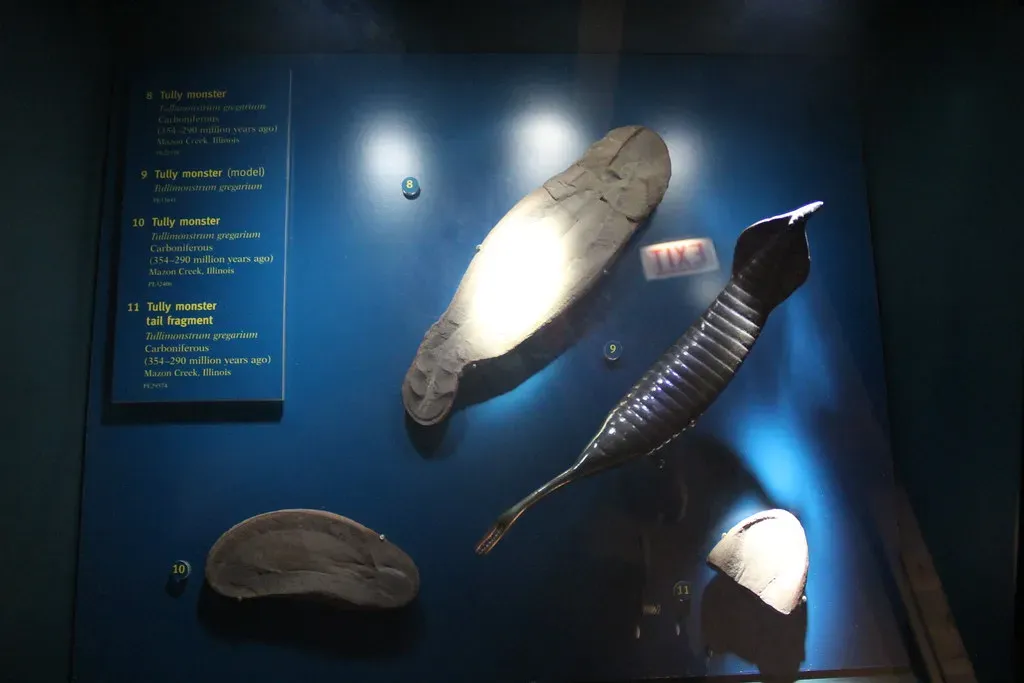
Not all ancient marine predators fit neatly into our modern categories, and some still defy clean classification even today. One of the most famous examples is the so-called Tully monster, a soft-bodied creature from the Carboniferous Period, discovered in the fossil beds of Illinois. It was small, but its design was downright uncanny: a torpedo-shaped body, stalked eyes, and a long, flexible snout ending in a claw-like mouth. For decades, experts debated whether it was a worm, a mollusk, a vertebrate, or some exotic offshoot that left no living relatives.
The Tully monster might not have been a top-tier apex predator, but it does represent a style of predation we struggle to imagine today: soft-bodied, squishy hunters using extendable proboscises and pincer-like jaws to probe sediment, grab smaller animals, or suck food into their weird little faces. It reminds me of the way some modern deep-sea creatures operate, feeling more like living shadows than robust, armored beasts. And the Tully monster is not alone; whole families of ancient ocean hunters fall into a kind of taxonomic limbo. Their strange anatomy shows that a lot of early predatory strategies never made it past their experimental phase, vanishing before the more stable fish- and reptile-dominated seas took over.
Dunkleosteus: The Armored Giant With a Bone-Crushing Bite
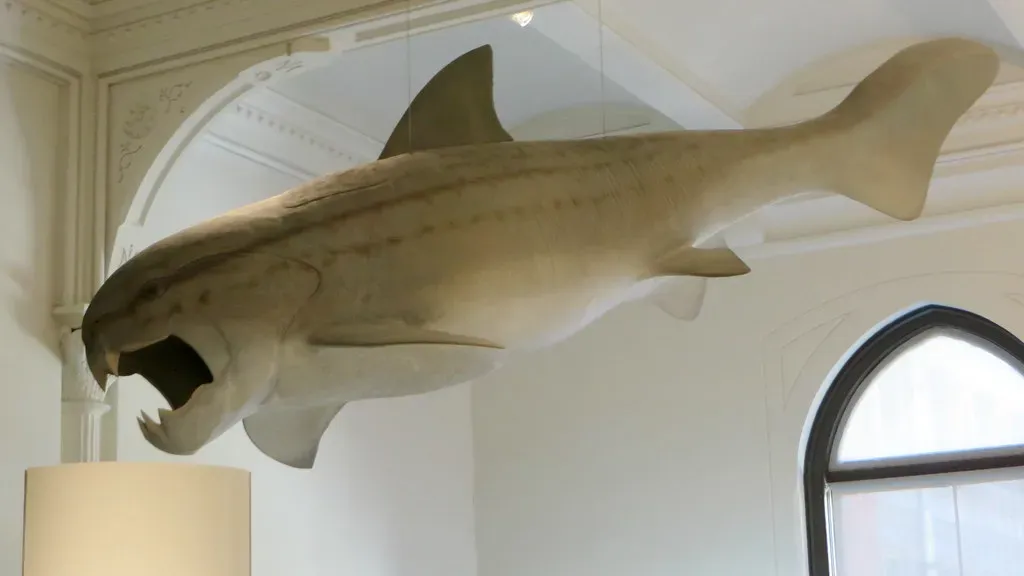
Fast forward to the Devonian Period, sometimes called the “Age of Fishes,” and we meet one of the most formidable marine predators that ever lived: Dunkleosteus. This massive placoderm fish could reach lengths comparable to a bus, and it wore armor plates around its head and neck like a natural tank. Instead of having rows of individual teeth, Dunkleosteus had sharp bony plates that functioned like enormous, self-sharpening shears. Each time the plates slid against each other, they stayed razor keen, turning its jaws into a horrifying guillotine.
Estimates based on its skull mechanics suggest it could deliver one of the most powerful bites of any animal to have ever lived in the oceans, strong enough to mash through thick armor or crush anything unfortunate enough to end up in its mouth. Picture a predator that looks vaguely like a monstrous fish, but with the front half encased in heavy armor and a face that seems built purely for cutting and crushing. This is not the elegant, streamlined killer we imagine when we think about sharks; it’s more like a brutal siege engine roaming the open water. Compared with even the fiercest marine reptiles that would later swim in the age of dinosaurs, Dunkleosteus feels more raw and mechanical, as if it were evolution’s heavy metal phase.
Megalodon vs. Mosasaurs: Dinosaurs’ Ocean Rivals
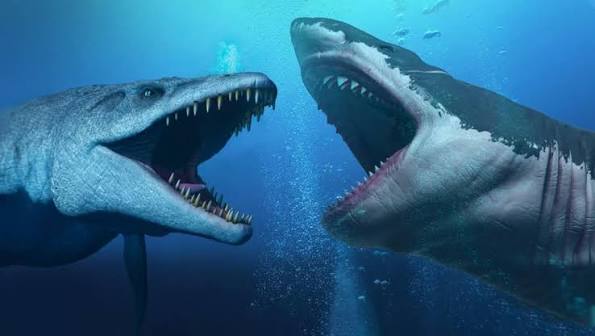
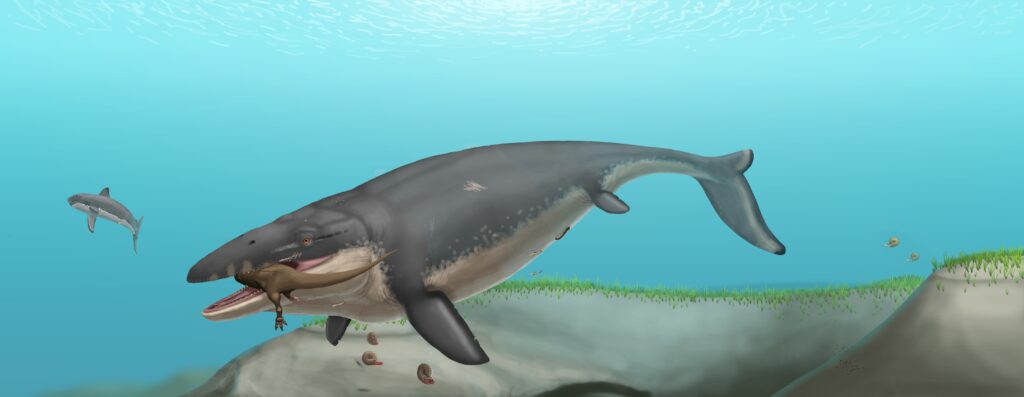
People love to talk about dinosaurs, but the oceans during and after their reign had predators that were literally built to take on giant prey. In the Late Cretaceous, mosasaurs ruled the seas: huge, streamlined marine reptiles with double-hinged jaws and snake-like skulls, able to swallow large chunks of meat or even whole animals. Their bodies were powered by strong tails and paddle-like limbs, and some grew longer than almost any modern shark. These were not side characters to the dinosaurs; in their domain, they were the equivalent of tyrannosaurs, only faster and more adapted to three-dimensional underwater ambushes.
After the dinosaurs and mosasaurs disappeared, later oceans produced monsters like the giant shark often called Megalodon, which lived millions of years after the last non-bird dinosaurs died. It likely preyed on whales and large marine mammals, and its jaws were large enough to bite through bone with terrifying ease. If you imagine swimming in a world where the top predators are not just bigger than great white sharks, but also faster and bulkier, it becomes clear that “dinosaur age” terrors were not confined to land. In my view, it is slightly misleading that pop culture crowns dinosaurs as the ultimate prehistoric predators; out at sea, creatures like mosasaurs and Megalodon were every bit as dominant and, frankly, just as nightmare-inducing.
Helicoprion and the Circular Saw Jaw
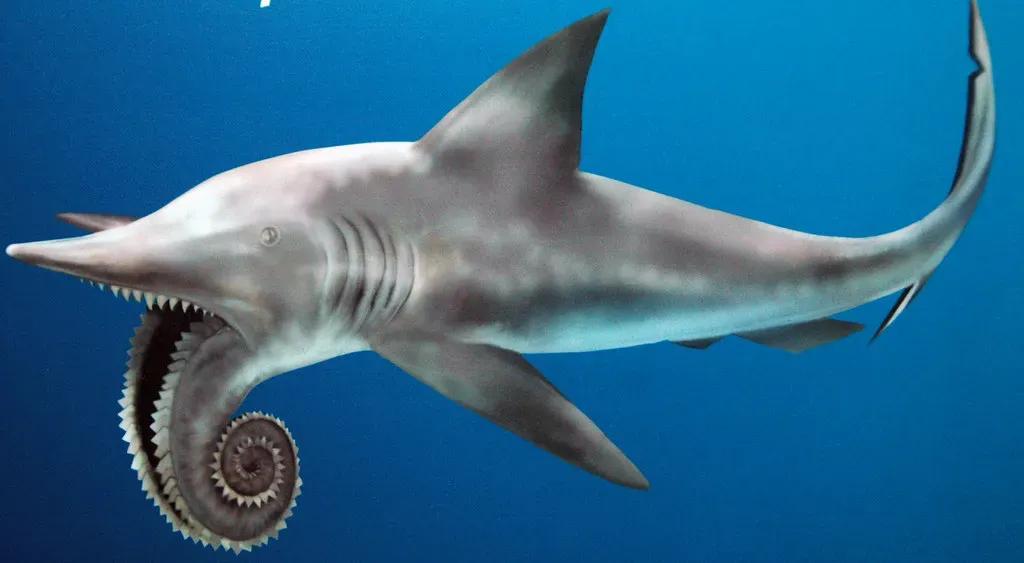
Some ancient predators are not frightening because of their size, but because their anatomy seems to break the rules of biology. Helicoprion is a prime example: a long, shark-like fish that lived in the Permian Period and possibly into the early Triassic, most famous for its bizarre “tooth whorl.” Instead of replacing old teeth in a straight line, this animal stacked new teeth in a spiral, creating a kind of circular saw built into its lower jaw. For a long time, scientists struggled to figure out where on the body this spiral even went, because fossils mostly preserved the teeth and not the softer tissues or cartilage.
Current reconstructions place the tooth whorl inside the lower jaw, where it would have rolled prey inward like a conveyor belt, slicing as it went. It likely specialized in soft-bodied or lightly armored animals, using its whorl to cut and shred rather than crush. To me, Helicoprion feels like something a bored engineer would sketch in the margins of a notebook just to see if it could work. The fact that evolution actually tried this design in the open ocean, and that the animal survived long enough to diversify into multiple species, is one of the clearest signs that ancient seas hosted innovation that makes even the fiercest dinosaur jaws seem almost predictable.
Kronosaurus, Pliosaurs, and the Myth of the “Sea Dinosaur”
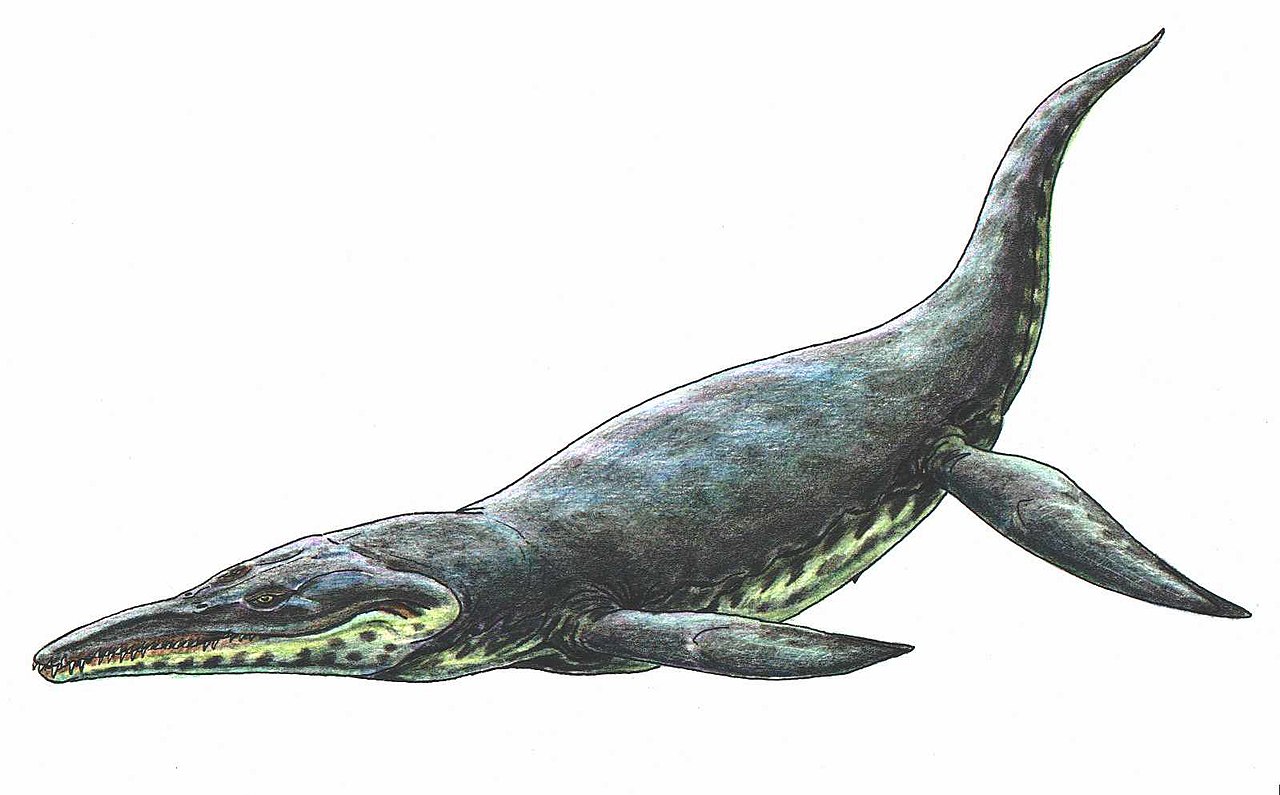
Whenever huge marine reptiles like Kronosaurus or the pliosaurs show up in documentaries, they’re often casually called “sea dinosaurs,” but that is technically wrong. These animals were not dinosaurs; they were their own separate groups of marine reptiles. In life, they were enormous, short-necked, barrel-bodied swimmers with massive heads and conical teeth designed for seizing large prey. Some likely hunted other marine reptiles, big fish, and anything else unfortunate enough to be within range of their lunging attacks.
The reason they matter in this story is that they show how the oceans consistently evolved their own apex predators that could rival or surpass land-based giants in sheer power. Their bodies were powered by four strong, paddle-like flippers, letting them make sudden bursts of speed despite their bulk. It’s easy to imagine them as oceanic analogs to big cats, only on a gigantic scale and in a fully aquatic setting. The idea that dinosaurs were the pinnacle of prehistoric ferocity feels weaker when you picture a pliosaur erupting from below, jaws wide, engulfing an animal nearly as large as itself in a single, bone-crunching bite.
Why Ancient Marine Predators Look So Alien to Us
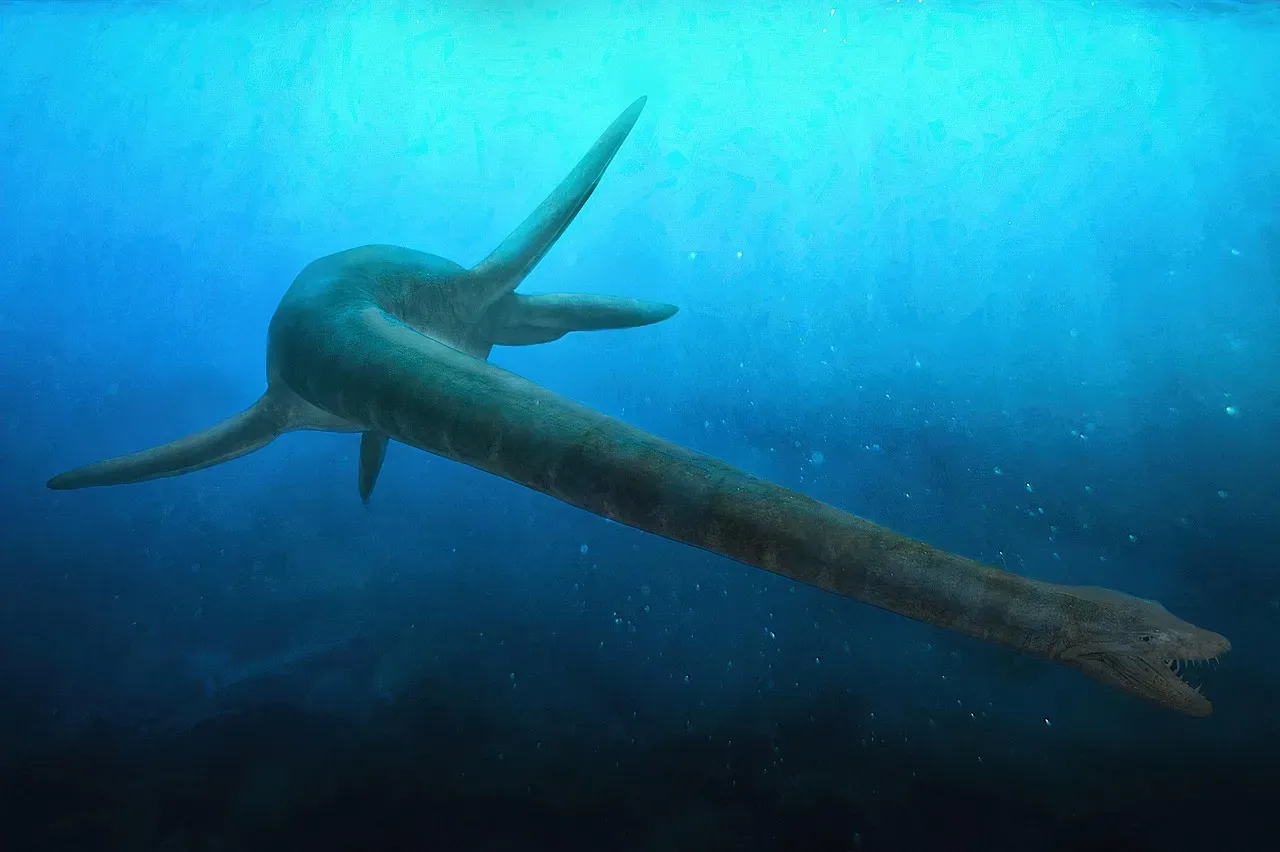
There’s a reason ancient ocean predators often feel more alien than any dinosaur: water is a different world with different physical rules. Buoyancy, pressure, and light distribution allow body plans that simply could not work on land. That environment let evolution stretch its imagination much further, experimenting with forms that could hover, glide, or lurk in ways we are not used to seeing. Soft-bodied hunters with tentacles, spiral jaws, blade-like fins, or armor plating all found some niche in the shifting seas of deep time.
Another reason is that many of these creatures lived in periods when ecosystems were still in flux and basic body architectures were not as “locked in” as they are today. Modern oceans are dominated by a few big groups: fish, squid and octopus relatives, marine mammals, crustaceans. But go back far enough, and you are looking at a laboratory full of evolutionary prototypes, many of which had no future beyond their own era. When I look at these fossils, I don’t just see monsters; I see evidence that life is far more experimental and open-ended than our current world suggests, and that the most familiar animals today may one day look just as strange to future observers.
Conclusion: Dinosaurs Were Impressive, but the Oceans Were Wilder
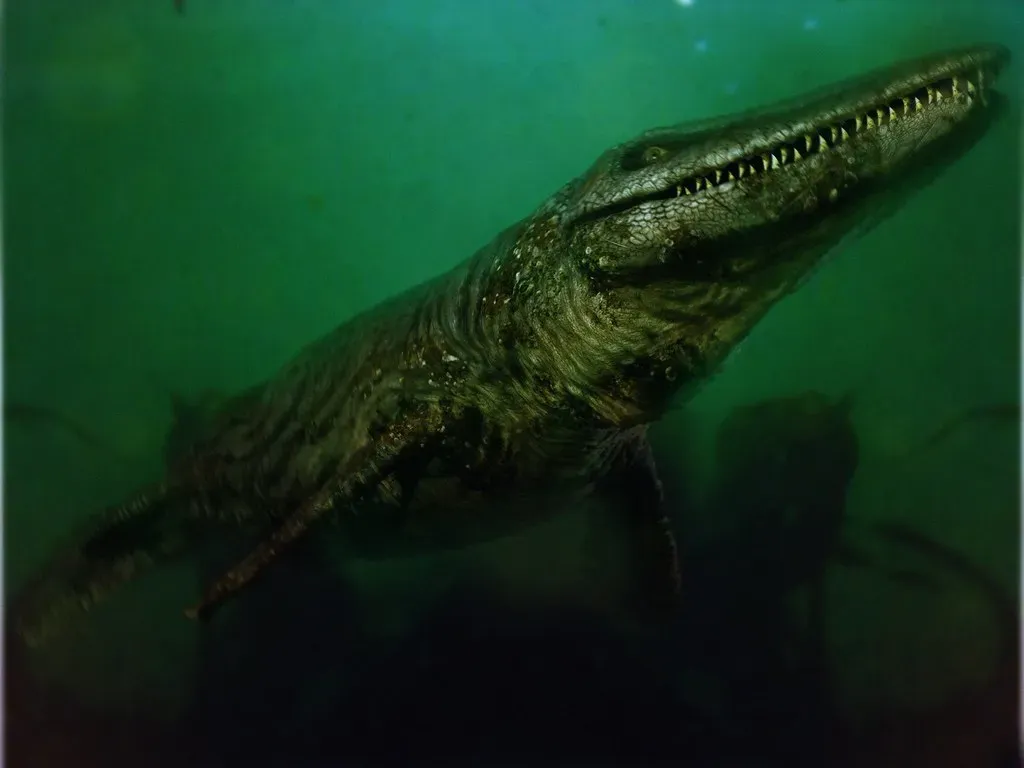
It’s tempting to treat dinosaurs as nature’s ultimate flex, but once you dive into the fossil record of the oceans, that narrative starts to fall apart. From Anomalocaris and Dunkleosteus to mosasaurs, pliosaurs, and the saw-jawed oddity of Helicoprion, marine predators pushed anatomy and hunting strategies into territory that land animals rarely matched. The seas repeatedly spawned giants, armored juggernauts, spiral-toothed slicers, and soft-bodied phantoms that would look more at home in a cosmic horror story than in an earthly ecosystem. Compared to that long parade of aquatic nightmares, even an iconic predator like Tyrannosaurus feels almost straightforward: big head, big teeth, big legs, simple story.
My own opinion is that we have been giving dinosaurs far too much of the spotlight while ignoring the oceans that quietly hosted some of evolution’s boldest and strangest experiments. The fossil record tells us that if you really want to see how weird life on Earth can get, you do not look to the forests and plains; you look to the ancient seafloor and the predators that ruled it. In a way, those vanished oceans are a humbling reminder that our world has worn many faces, and that what feels normal now is just one chapter in a very strange book. If you had to choose, would you rather meet a dinosaur on land or face one of these ocean predators in the water?