
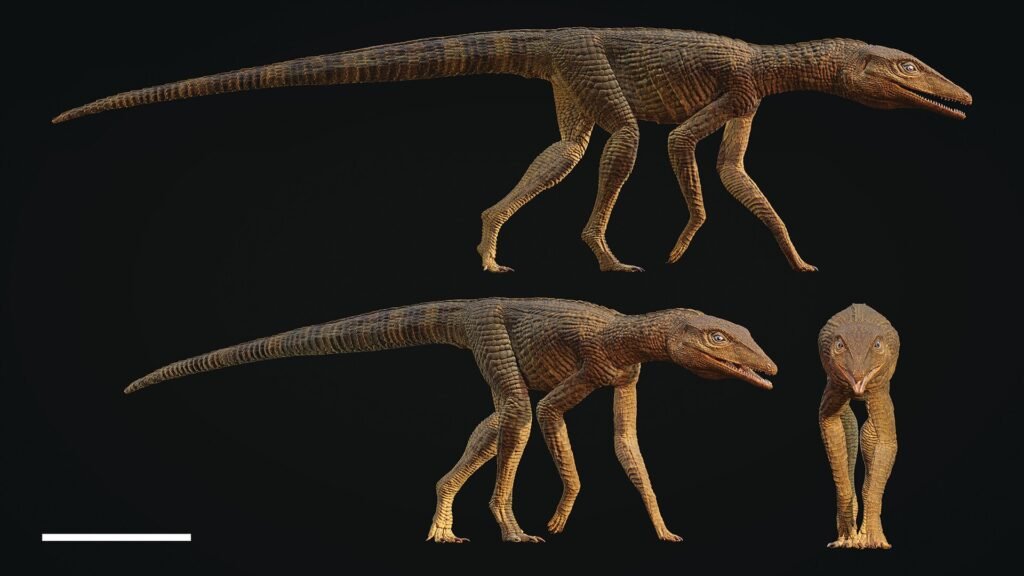
Think “crocodile” and your brain probably jumps straight to murky rivers, ambush attacks, and that slow, armored crawl along the bank. But wind the clock back more than 200 million years and the family tree of crocodiles looks almost unrecognizable. Some of their distant relatives sprinted across dry land on long legs, with bodies and lifestyles that feel closer to a cheetah or a wolf than the modern swamp lurker you might picture today.
These land‑running, meat‑eating crocodile cousins completely upend the usual story we tell about reptiles as sluggish, bottom‑dwelling hangers‑on. They were fast, agile, and in some places they were the top predators long before the big celebrity dinosaurs took over. Once you meet them, it’s hard not to rethink what “crocodile” even means – and to wonder how many other creatures we have unfairly stereotyped just because of the survivors we see today.
The Crocodile Family Tree Is Stranger Than It Looks
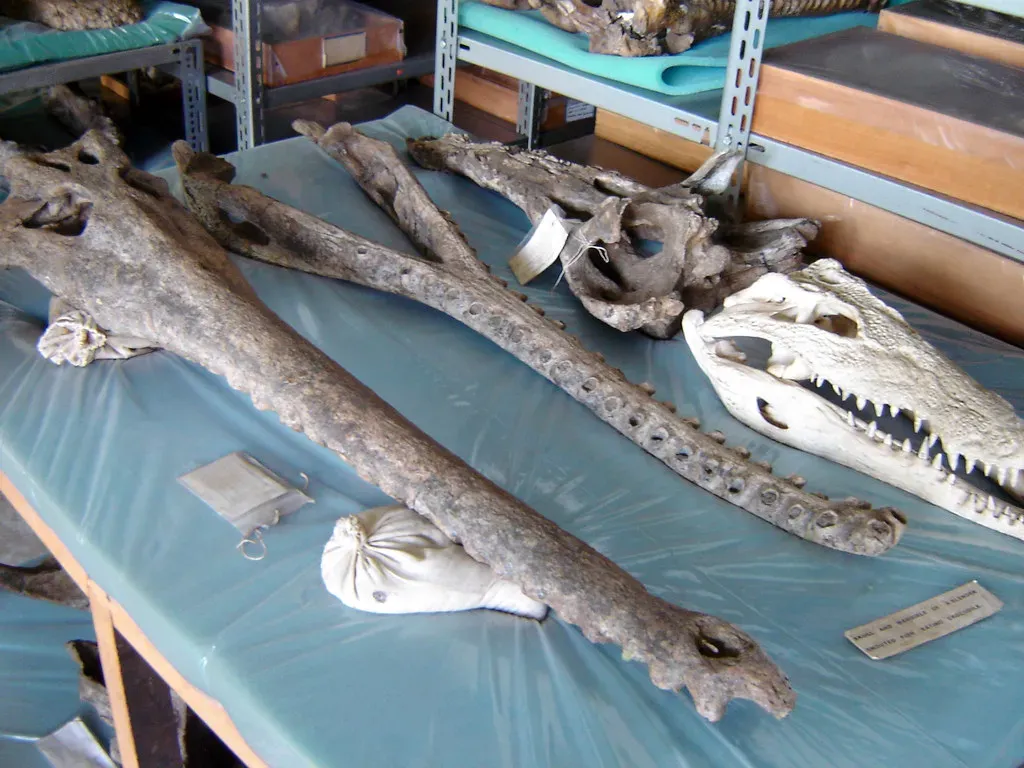
It’s tempting to look at a living crocodile and assume its ancestors always looked more or less the same: low to the ground, heavily armored, living half in water and half on land. In reality, today’s crocodiles are just one surviving twig on a much bigger branch called the pseudosuchians, the broader group that includes all croc‑line archosaurs. Go back to the Triassic Period, more than two hundred million years ago, and that branch exploded into a wild variety of shapes and lifestyles, many of them nothing like the modern river ambushers we know.
Some of these early croc relatives had upright limbs instead of the classic sprawl, lightly built skeletons, and skulls that look more like those of land‑running predators. In the same way that dogs range from tiny lap breeds to greyhounds built for speed, prehistoric croc cousins experimented with everything from squat, armored plant‑eaters to tall, slender hunters. The idea that crocodiles are “living fossils” is only half true: the living forms have been conservative for a long time, but their broader lineage was once far more inventive and daring than most people realize.
Meet the “Fast Crocs”: Terrestrial Hunters on Long Legs
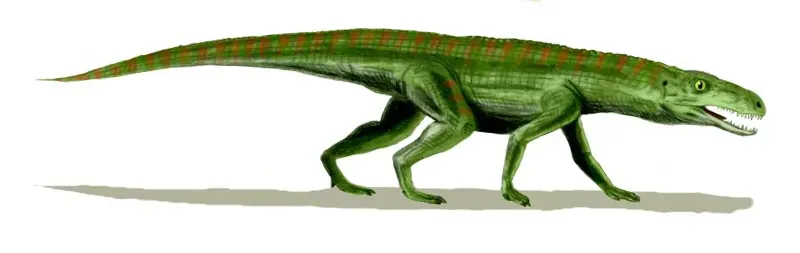
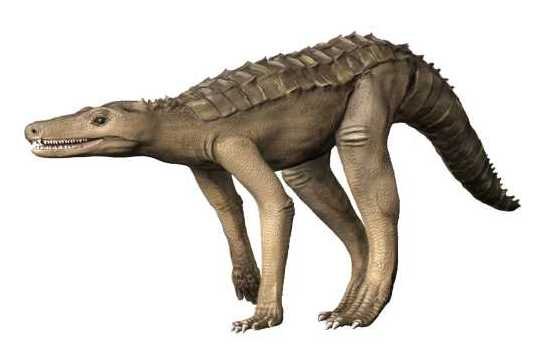
Among the most surprising of these ancient crocodile relatives were the terrestrial, or land‑dwelling, predators that paleontologists sometimes nickname “fast crocs.” These animals, such as species in groups like the sphenosuchians and some Triassic croc‑line forms, had long limbs held more vertically under the body, a bit like the pose you see in a dog or a small antelope. That posture is a big deal: it hints at efficient walking and running on open ground instead of lumbering along the bottom of a river.
Their bodies were often more gracile, or lightly built, with narrower trunks and reduced armor compared with modern crocodiles, which trade speed for protection. Imagine something with a crocodile‑like head at the front, but a surprisingly spry frame behind it, built to cover ground, chase prey, and possibly even maneuver in packs or at least in crowded environments. While they still carried the signature crocodilian teeth and powerful jaws, these animals were not waiting in the shallows; they were out on the hunt, moving with purpose across dry land.
Evidence from Bones: How Paleontologists Know They Ran
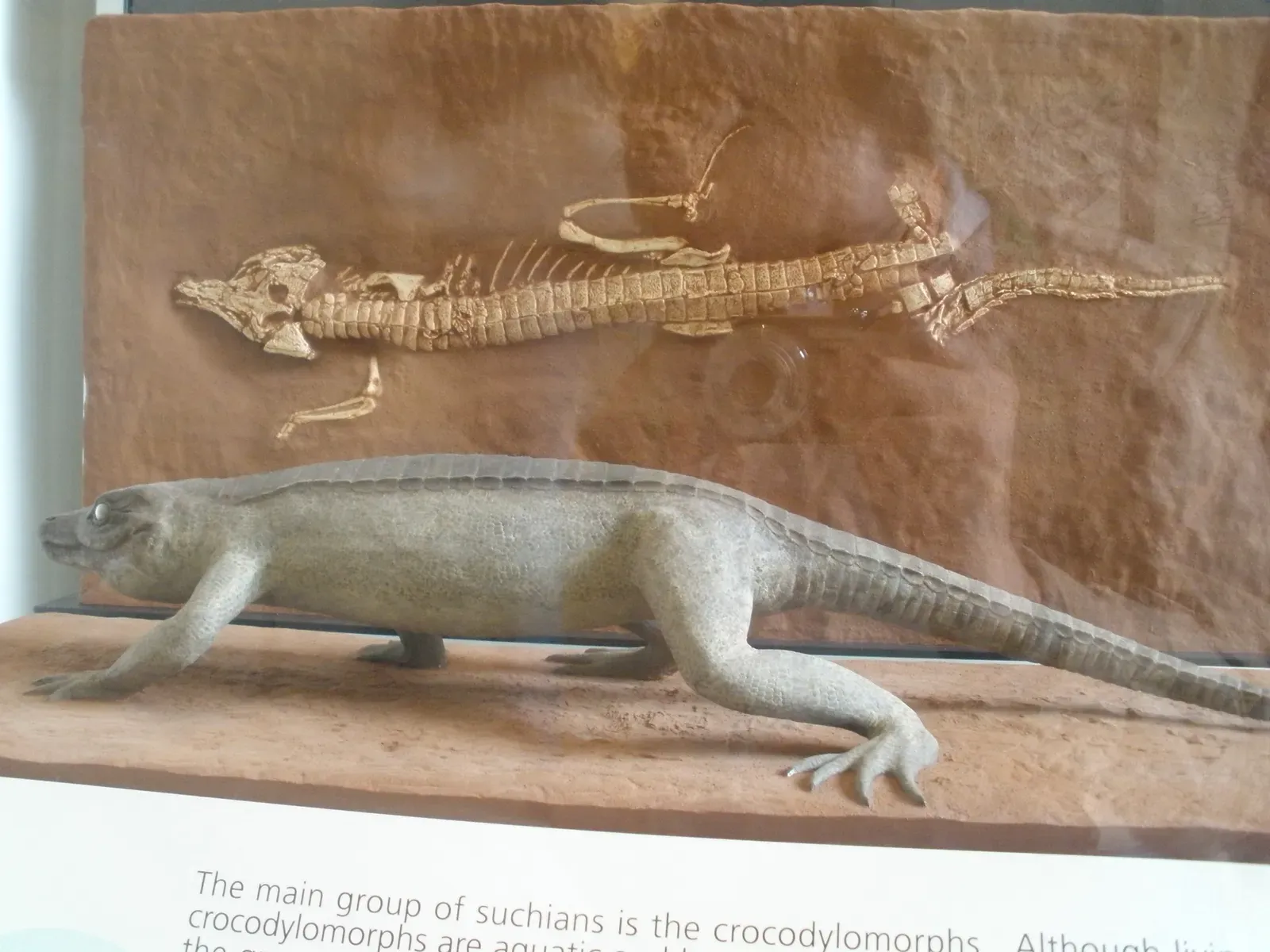
We obviously do not have videos of these prehistoric croc cousins sprinting around, so paleontologists tend to squeeze every possible clue out of bones and rock. Limb proportions are one of the strongest hints: when the hind legs are long compared to the rest of the body and the bones are relatively slender, that often signals an animal adapted for speed and endurance. The way the joints fit together – especially the ankle and hip – can also show whether the limbs were held in a more upright, pillar‑like posture suited to running.
Even the tail and spine tell a story. A stiffened tail and certain muscle attachment features suggest strong propulsion and balance, useful for quick movements on land. In some fossil skeletons, the arrangement of the ankle bones is particularly revealing, matching patterns associated with efficient forward motion rather than the sideways sprawl of many modern reptiles. When you line up all those clues, it becomes hard to escape the conclusion that these were not clumsy marsh dwellers but animals built to move quickly and confidently over solid ground.
Hunting on Land: What Was on the Menu?
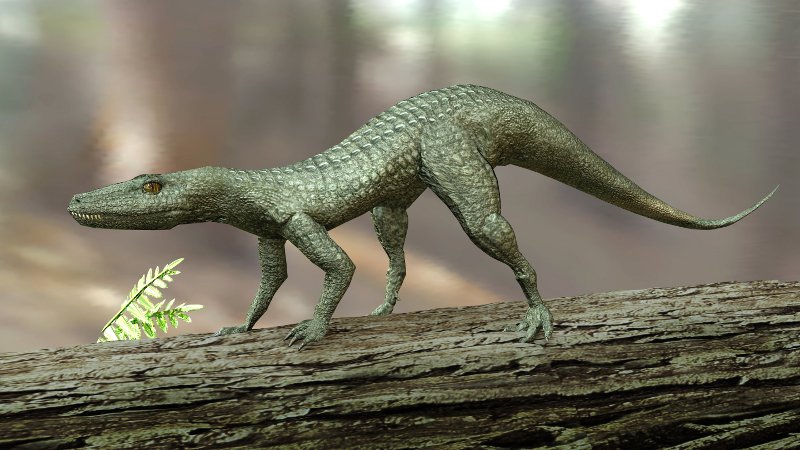
Long legs and upright posture are only half the picture; what really locks in the idea of active hunters is their skull and teeth. Many of these terrestrial croc relatives had narrow, elongated snouts filled with sharp, recurved teeth ideal for grabbing and holding struggling prey. Their jaws were shaped less like a broad crushing clamp and more like a precision tool for slicing into flesh, a design you find again and again in meat‑eating animals that chase or ambush on land.
Based on their size and the ecosystems they lived in, paleontologists think these animals likely hunted small to medium‑sized vertebrates – early reptiles, mammal‑like creatures, and possibly juvenile dinosaurs where they coexisted. Picture something more like a fox or a jackal in ecological role, darting after quick prey or snapping up anything careless enough to wander too close. They probably did not roar around as unstoppable monsters, but in their own worlds they were nimble, dangerous predators that made life on land much riskier for anything bite‑sized or slow to react.
Sharing the Stage with Early Dinosaurs
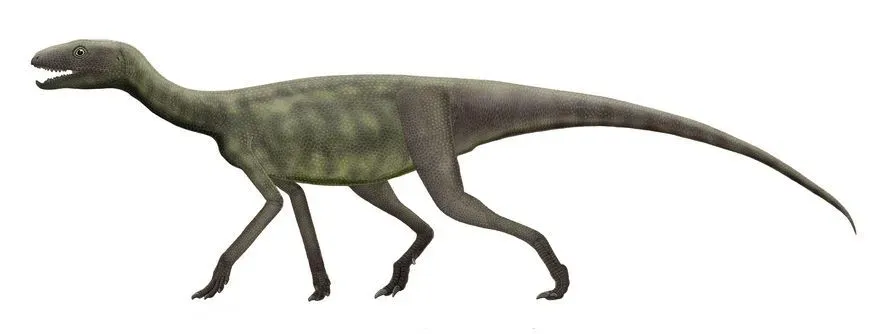
One of the most mind‑bending parts of this story is who these land‑running croc relatives lived alongside. During the Late Triassic, before the age of giant dinosaurs we usually picture, the ecosystems were more like experimental laboratories. Both dinosaur‑line and crocodile‑line archosaurs were evolving side by side, trying out similar lifestyles and body plans. In some regions, croc relatives seem to have taken on roles we would later associate with theropod dinosaurs, such as medium‑sized land predators.
This overlap means that if you were standing in a Triassic forest, you might have seen an agile, long‑legged croc cousin racing across the ground while early dinosaurs were still relatively modest players. It flips the usual script that dinosaurs instantly dominated everything. For a while, the croc lineage produced some serious contenders in the race for top predator, and only later did the dinosaur branch truly pull ahead and hold that crown for tens of millions of years.
Why the Fast Crocs Disappeared While Their Slower Cousins Survived
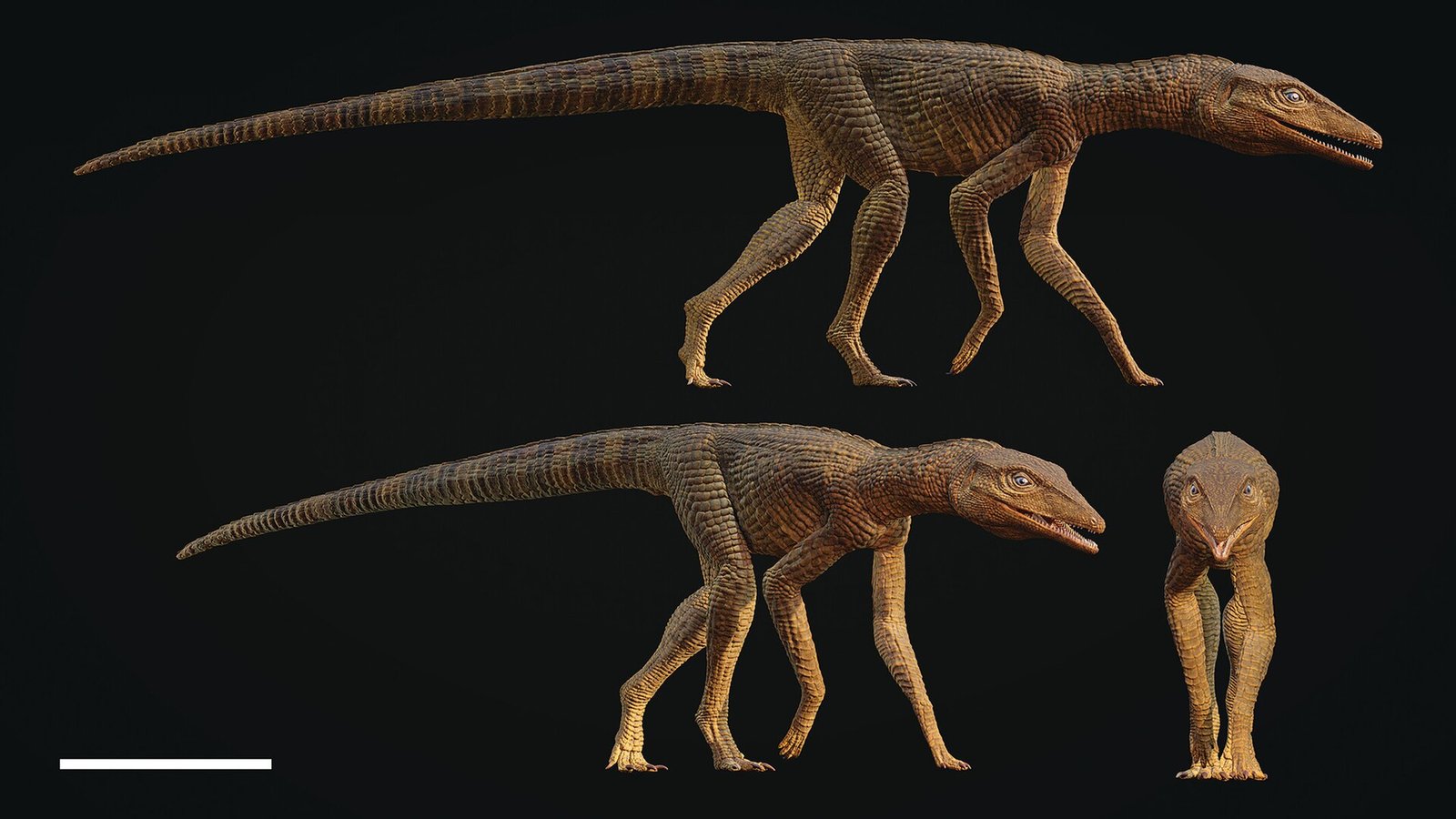
So if these land‑running croc relatives were so capable, why do we not see anything like them today? The fossil record suggests that many of the more specialized terrestrial forms dwindled as dinosaurs diversified and ecosystems shifted. Mass extinction events at the end of the Triassic and later environmental changes likely hammered these agile croc cousins harder than the more generalist, semi‑aquatic types that could ride out upheavals in refuges like rivers, lakes, and coastal swamps.
Over time, the lineages that survived to give rise to modern crocodiles leaned heavily into the semi‑aquatic ambush lifestyle that works so well today. It might feel almost unfair: the bold experimenters on land faded away, while the conservative, armor‑plated lurkers pulled through. But that is evolution in a nutshell – success is not about being the flashiest or the fastest; it is about being the one that can keep hanging on when the world repeatedly shifts under your feet, or in this case, under your claws.
How These Discoveries Change Our Picture of Crocodiles
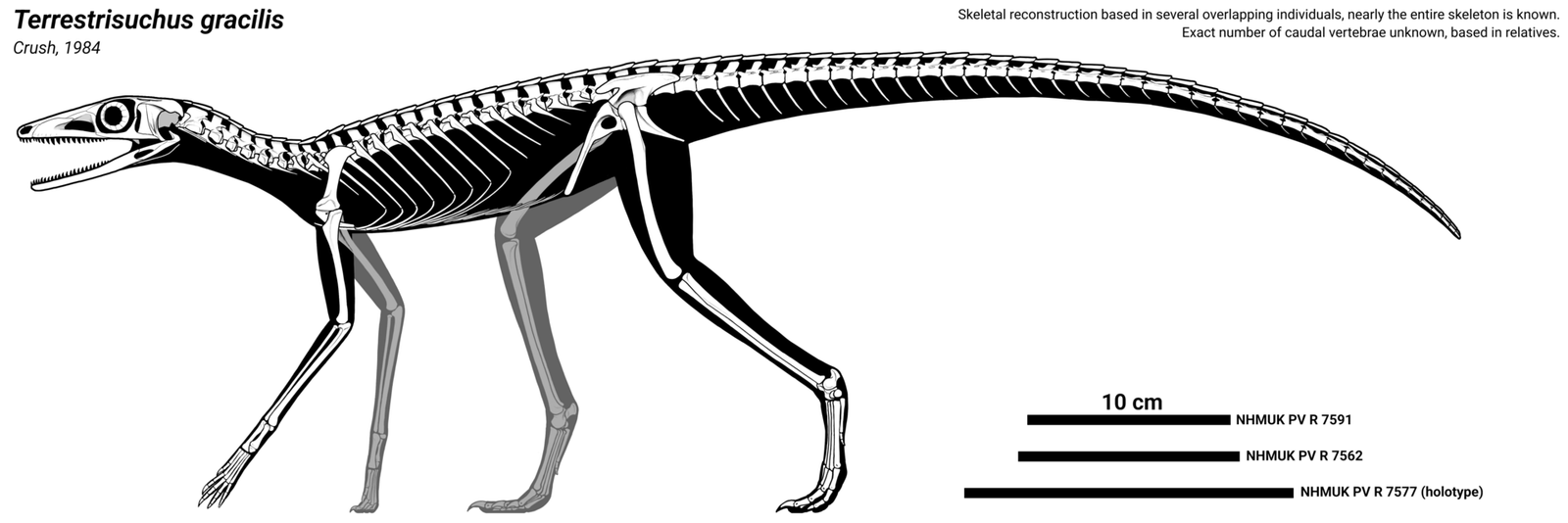
Once you learn about these long‑legged, land‑hunting crocodile relatives, it becomes hard to look at a modern croc the same way. That motionless body in the water suddenly hints at a deep, hidden history of experimentation, speed, and flexibility. Instead of seeing crocodiles as evolutionary leftovers that never changed, you start to see them as survivors of a once wild and varied dynasty that tried out almost every trick in the book.
Personally, I find it weirdly inspiring. If an animal we instinctively write off as a slow, armored throwback once produced sprinters, runners, and land‑stalking hunters, it reminds me that our mental boxes for living things are often far too narrow. The next time you see a crocodile or alligator, you are not just looking at a river predator; you are looking at the last members of a family whose cousins once dashed across ancient landscapes like reptilian greyhounds chasing their next meal.
What These Ancient Croc Relatives Tell Us About Evolution (And Ourselves)
For me, the story of these prehistoric, long‑legged croc relatives makes one point loud and clear: evolution is far messier and more creative than the neat diagrams in textbooks suggest. We like simple stories where one group is “meant” for water, another is “meant” for land, and everything slots into tidy categories. The reality is that lineages spill out of those boxes all the time. Croc relatives became swift land hunters; some dinosaur lines went back toward the water; and birds, the last surviving dinosaurs, ended up flying through the sky and living in our cities.
There is an opinion buried in this that I cannot shake: whenever we assume a creature – or a person – has only one way to live, we are almost always selling them short. The fast, land‑hunting croc cousins are gone, but their bones are a quiet rebuke to our habit of underestimating both nature and each other. If something as seemingly locked‑in as a crocodile can have a history full of runners, sprinters, and land stalkers, what hidden versions of ourselves might the fossil record of the far future someday reveal? Did you expect the crocodile family to have this many surprises up its sleeve – or would you have guessed something completely different?