If you could dive back roughly two hundred million years and slip beneath the surface of a warm Jurassic sea, you’d find yourself staring into the eyes of a giant that almost nobody talks about. Not a dinosaur stomping on land, but a marine predator so large and powerful that even many modern ocean hunters would look small beside it. Temnodontosaurus was a reptile built for speed, power, and precision, and in its time, it ruled the waves.
When I first learned about Temnodontosaurus, I remember thinking it sounded like something from a big-budget sci‑fi movie: a streamlined body, massive jaws lined with teeth, and eyes so huge they practically redefined what “good vision” means in the ocean. Yet this animal was real, and its fossils tell a story that’s stranger and more impressive than most fiction. Once you see how this creature lived, hunted, and even gave birth, it’s hard not to wonder why it isn’t as famous as the T. rex or the megalodon.
A Super‑Sized Predator in an Ancient European Sea
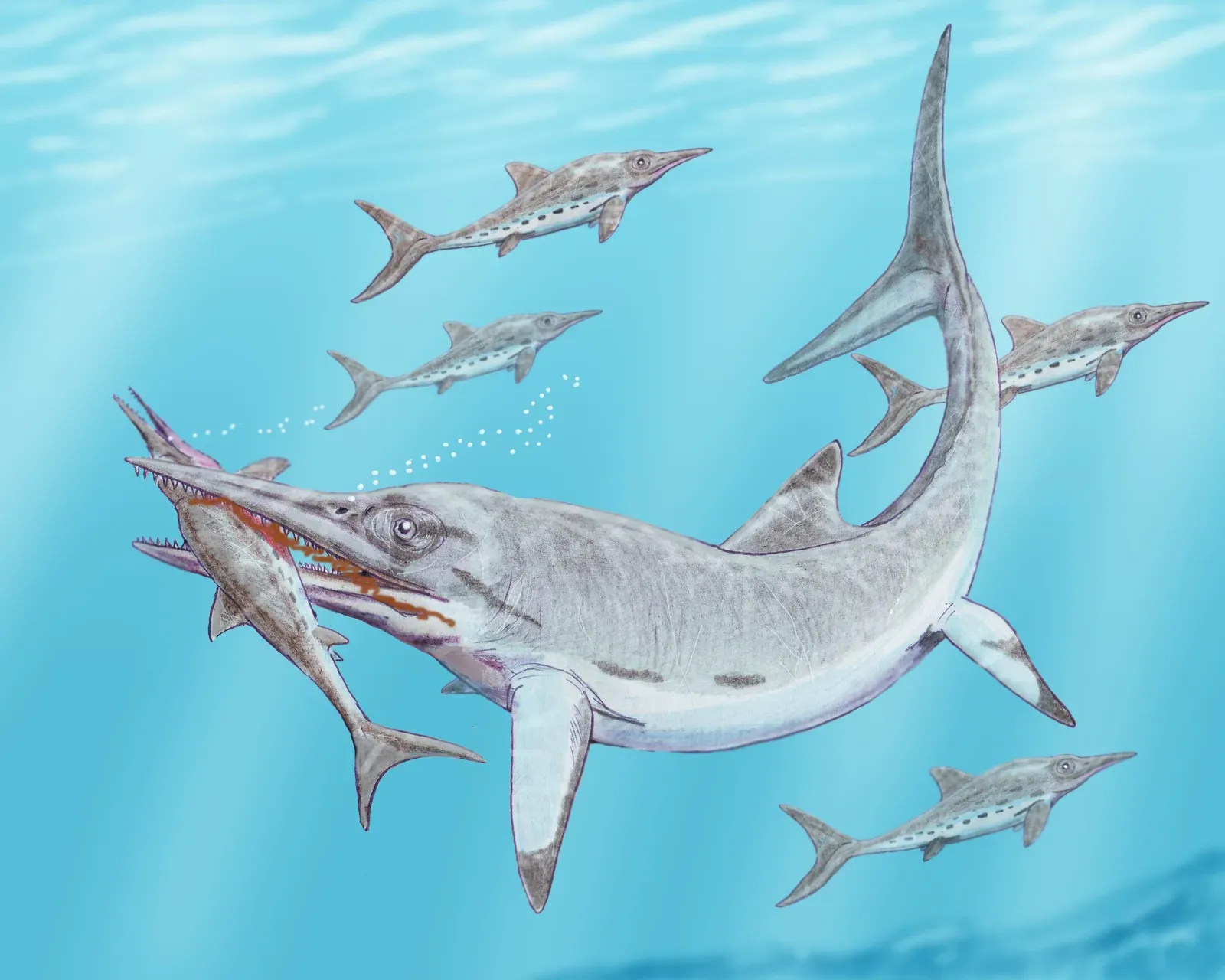
Temnodontosaurus swam in the early Jurassic period, mainly in what is now western Europe, when that part of the world was covered by shallow seas. Picture the coastlines of modern England, Germany, and France, but instead of ferries and fishing boats, the water was full of marine reptiles, ammonites, and strange fish. In that crowded ecosystem, Temnodontosaurus sat near the top of the food chain, a marine reptile that did the job sharks and orcas do today.
This creature was part of the ichthyosaurs, a group of marine reptiles that looked, at a glance, a lot like dolphins or tuna. That resemblance is not a coincidence; both evolved the same general torpedo‑shaped body because it’s simply one of the best solutions for moving quickly and efficiently through water. Temnodontosaurus took that basic ichthyosaur design and scaled it up, turning it into something closer to a living submarine than a fish‑like reptile.
How Big Was Temnodontosaurus Really?
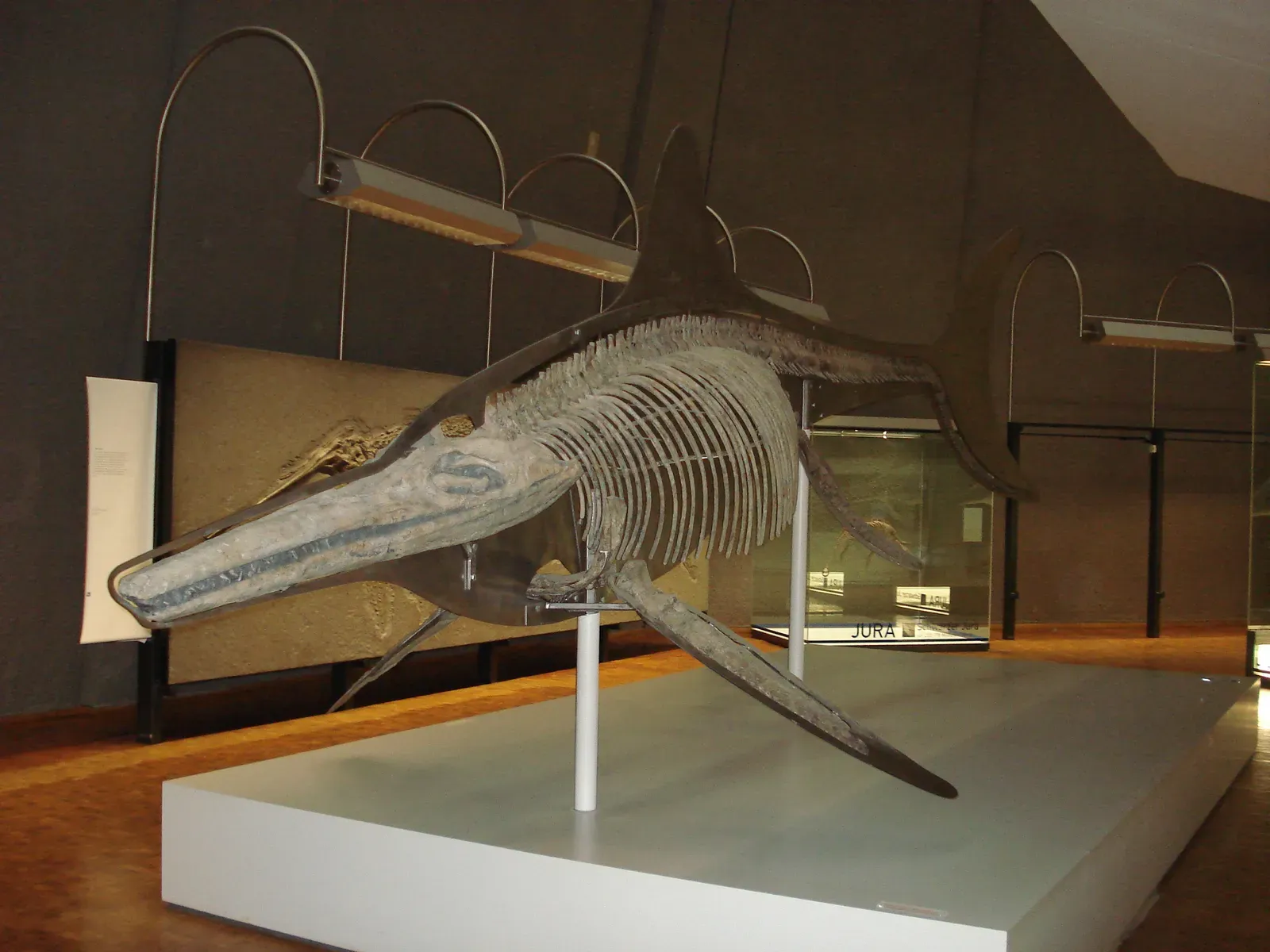
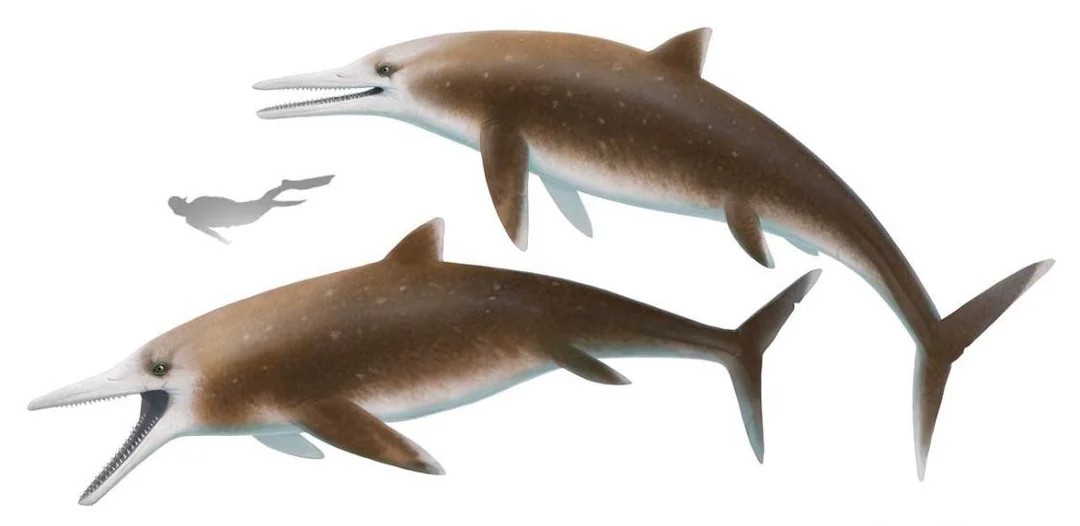
Size claims about prehistoric animals can get wild fast, so it’s worth staying grounded in what the fossils actually tell us. The best‑known species, like Temnodontosaurus platyodon, had bodies that may have stretched well over ten meters long from snout to tail, roughly the length of a large bus. Some estimates for the biggest individuals push beyond that, putting them in the same general neighborhood as modern orcas and even edging close to some smaller baleen whales.
To put that in perspective, imagine standing at one end of a city bus and realizing its entire length is a single reptile gliding past you. Its head alone would be longer than many people are tall, and its jaw packed a serious punch. While later marine reptiles in other groups may have grown even larger, for its own time and habitat, Temnodontosaurus was enormous. It was not just big; it was big in a world where most other things in the water were comparatively modest, which made its presence even more intimidating.
Built Like a Living Torpedo
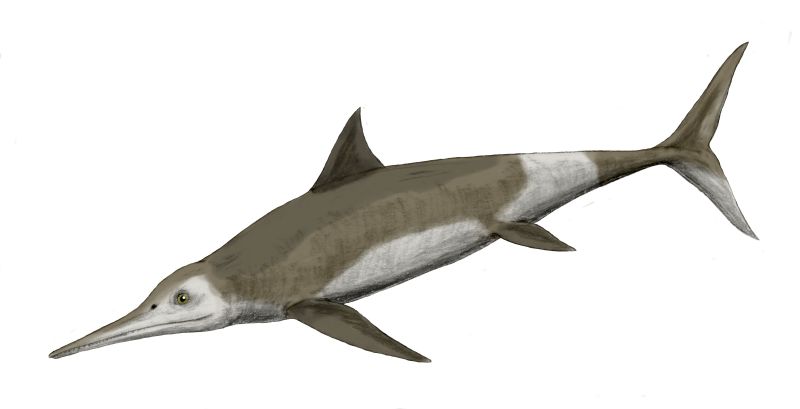
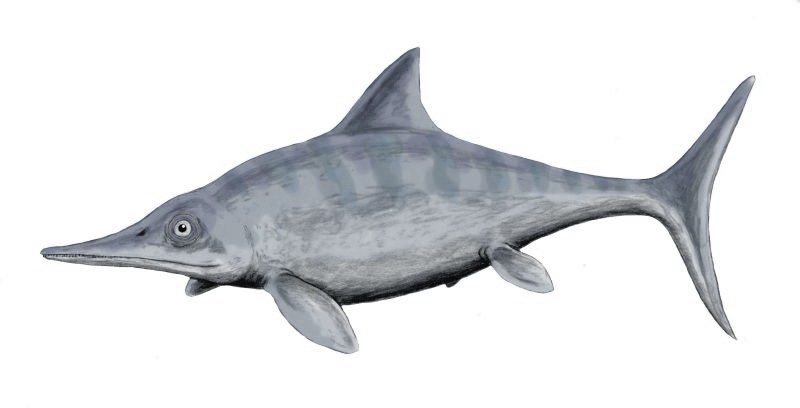
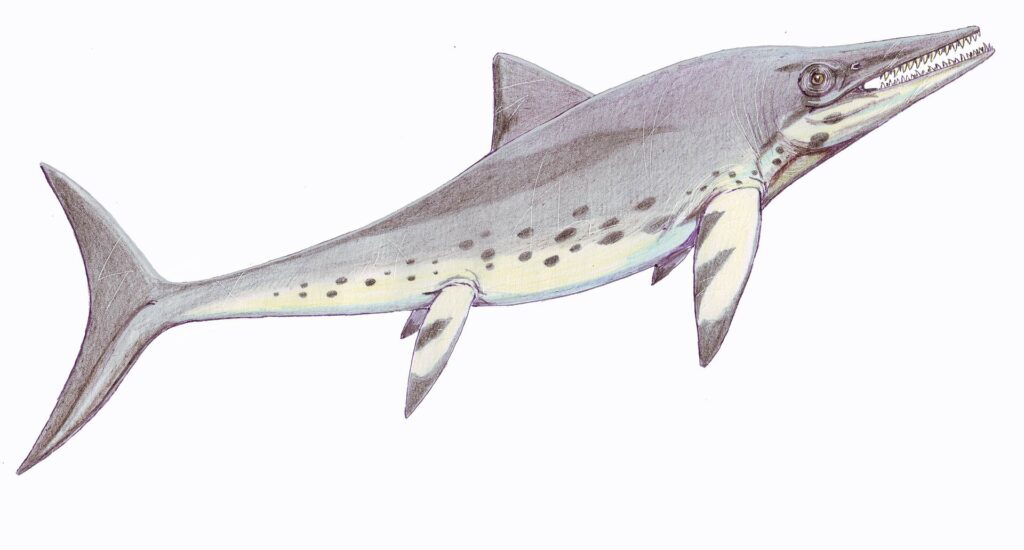
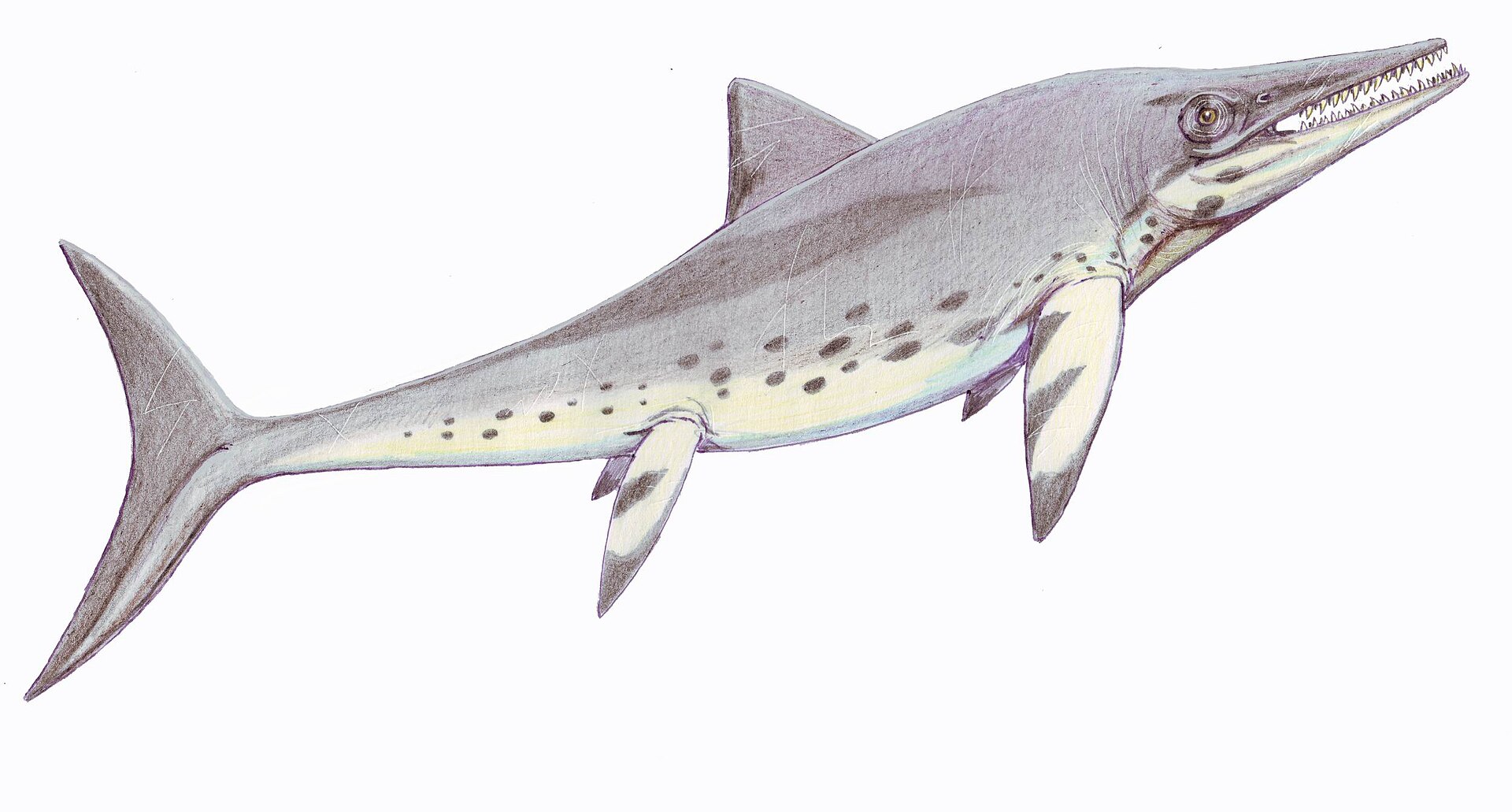
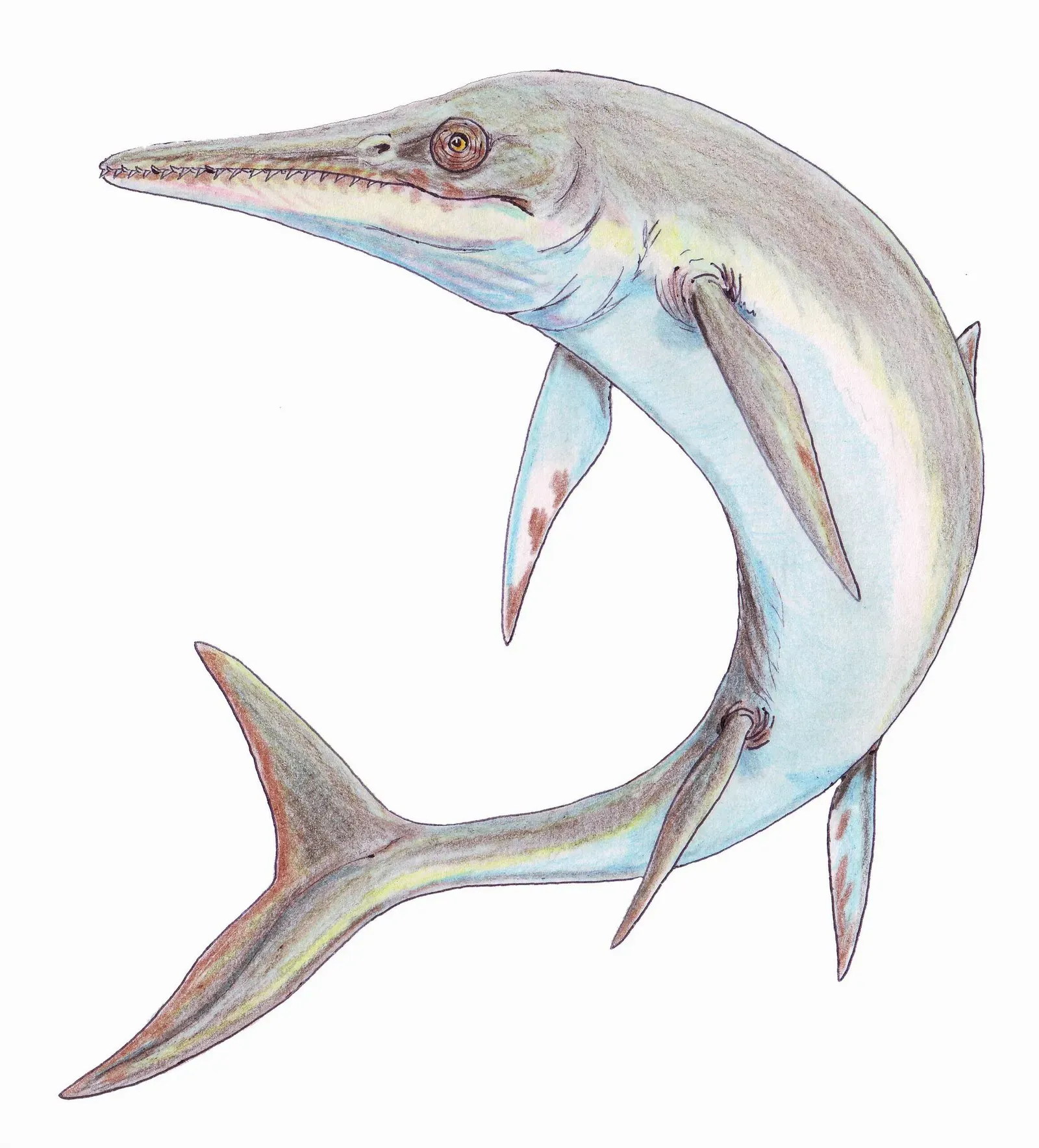
Temnodontosaurus did not rely on bulk alone; its entire body was a lesson in streamlined design. It had a long, torpedo‑shaped torso, a powerful tail fin, and paddle‑like limbs that acted as stabilizers, allowing it to move smoothly through the water. This shape reduced drag, meaning it could accelerate and maintain respectable speeds while still conserving energy. In a world where chasing prey could mean the difference between life and death, that efficiency mattered.
Its skull was narrow and elongated, with strong jaw muscles and teeth shaped for gripping and slicing, not for crushing shells. That tells us something about its preferred diet: soft‑bodied, fast‑moving prey rather than armored bottom dwellers. Think of it as the marine equivalent of a cheetah rather than a bear. Instead of plodding along and overwhelming its food with sheer force, it used precision, speed, and agility to hunt in open water.
Those Enormous Eyes and Razor Teeth
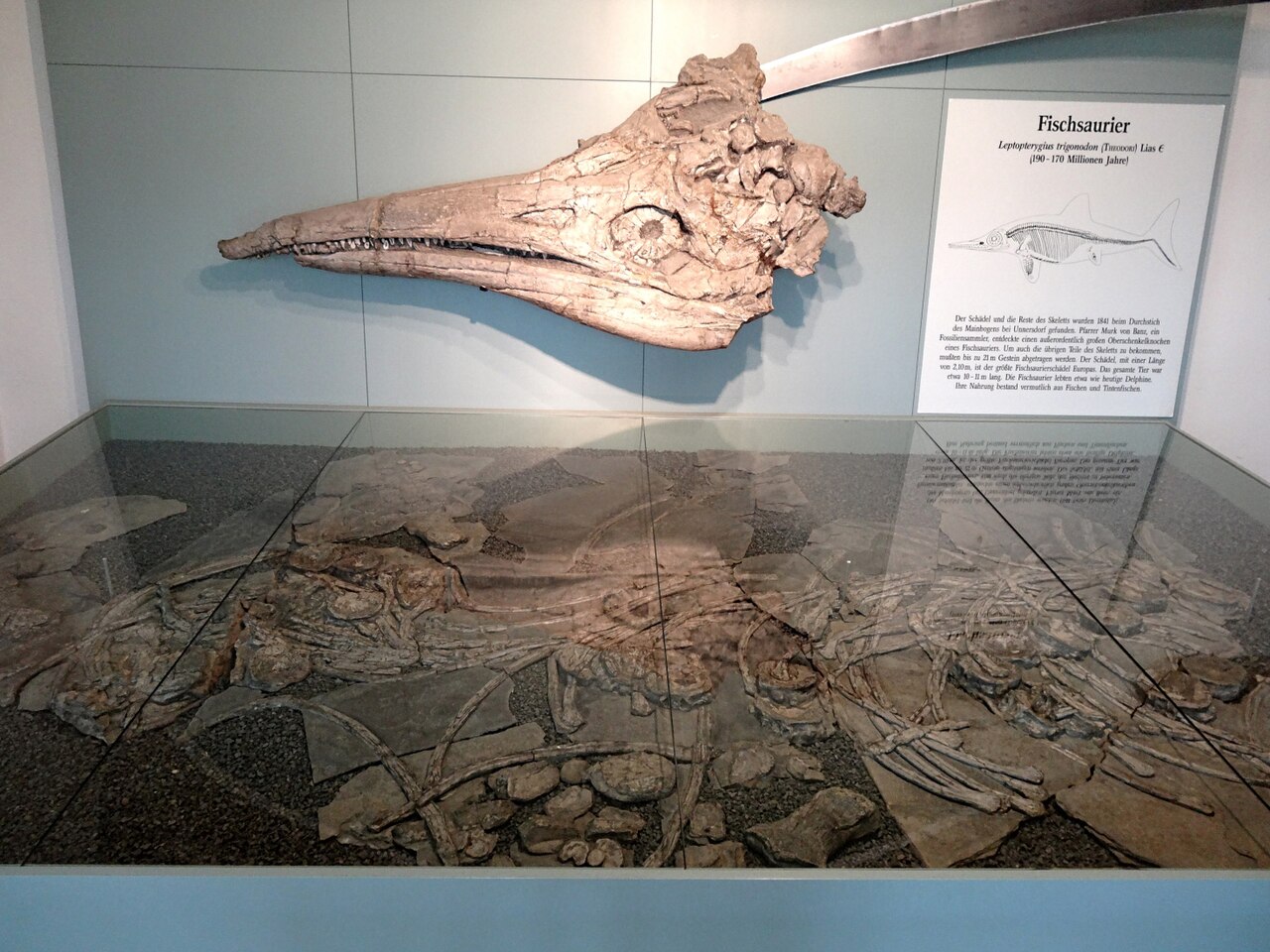
One of the most astonishing things about Temnodontosaurus is its eye size. Fossil skulls show bony rings that supported eyes among the largest of any known vertebrate, land or sea. Large eyes help gather more light, which is especially useful in deeper or murkier water, or during low‑light conditions like dawn and dusk. That suggests Temnodontosaurus might have hunted in dimly lit environments where other animals were at a disadvantage.
Combine that with jaws lined with strong, conical teeth, and you get a picture of a hunter that could see its targets when they could barely see it. It probably targeted fish, squid‑like cephalopods, and possibly smaller marine reptiles, slicing through schools of prey with swift, powerful lunges. If you imagine a stealth bomber that can also sprint, you have a rough emotional sense of how unfair it must have felt to be prey in the same ocean as this animal.
Ecoterror of Its Time: Apex or Just Near the Top?
It’s tempting to declare Temnodontosaurus the absolute, undisputed apex predator of its seas, but real ecosystems are messy and layered. There may have been other sizable marine reptiles sharing the waters, and different age groups of Temnodontosaurus probably targeted different prey. Adults likely hunted larger animals in open water, while juveniles focused on smaller fish and invertebrates closer to safer, shallower zones. Even so, adults would have been among the most feared animals in their part of the ocean.
Calling it one of the largest hunters ever is not exaggeration in terms of its role as a massive, active predator weighed against body length and hunting strategy. It was not as big as the very largest whales or some later marine reptiles, but those giants often filtered small prey rather than actively chasing down large animals. Temnodontosaurus was a top‑tier pursuit hunter, more like a scaled‑up combination of a swordfish and a killer whale, and that makes its predatory lifestyle especially impressive.
Birth, Survival, and What It Tells Us About the Oceans
Like other ichthyosaurs, Temnodontosaurus gave birth to live young rather than laying eggs on land. Fossils from related species show embryos preserved inside the mother, and this reproductive strategy tells us that these animals spent their entire lives in the ocean. That level of commitment to a marine lifestyle is rare and powerful; it marks them as truly oceanic, not just land reptiles that occasionally visited the water. Their survival depended on mastering that environment from birth.
The eventual decline and extinction of ichthyosaurs, including giants like Temnodontosaurus, reminds us that even apex hunters are vulnerable to long‑term changes. Shifts in climate, sea levels, prey availability, and competition can slowly erode even the strongest lineages. To me, that is one of the most sobering lessons: no matter how perfect a predator seems in its own time, the world keeps changing. In a strange way, studying Temnodontosaurus is like holding up a mirror to our current oceans and asking whether today’s giants are as safe as they look.
Why Temnodontosaurus Deserves to Be a Household Name
In my opinion, Temnodontosaurus gets nowhere near the recognition it deserves. We tend to obsess over dinosaurs that roamed the land, while the marine reptiles that dominated entire oceans sit quietly in museum drawers and technical papers. Yet a giant, fast, sharp‑toothed reptile with enormous eyes patrolling ancient European seas is every bit as dramatic as any dinosaur showdown. If anything, it feels more eerie, because the ocean still hides big, fast things from us today.
When you line it up with other great hunters in Earth’s history, Temnodontosaurus easily belongs in the conversation about the most formidable predators that ever lived. It combined size, speed, and sensory power in a way that would make most modern animals look under‑equipped. If we gave it even a fraction of the attention that T. rex or megalodon get in popular culture, people might see prehistoric oceans with fresh eyes. Next time you look out over the sea, it’s worth asking yourself: if a creature like that swam beneath these waves two hundred million years ago, what are we still underestimating today?