Somewhere beneath the limestone riverbeds of central Texas, an ancient world is still writing its own story. Long before cattle ranches and Hill Country highways defined the landscape, massive creatures moved across shallow tidal flats, pressing their feet into soft coastal mud with enough force to leave marks that endured for more than a hundred million years.
From roughly 120 to 100 million years ago, dinosaurs lived in the coastal shallows and offshore islands of Texas, leaving footprint evidence behind for future generations to investigate. What those footprints reveal today is not just a record of individual animals, but a surprisingly rich picture of prehistoric movement, behavior, and ecology – a hidden highway carved in stone.
The Ancient Coastline That Made It All Possible
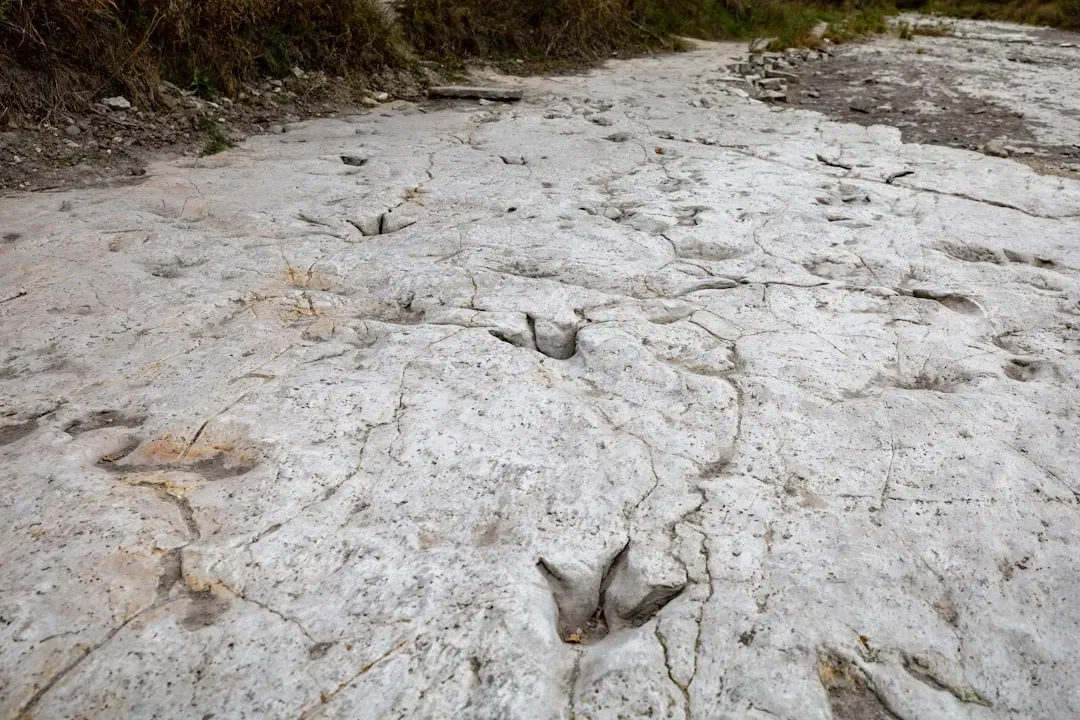
The ancestral precursor to the Gulf of Mexico once inundated what is now central Texas, forming a shallow sea with carbonate-rich tidal flats where prehistoric track makers walked along the shoreline, leaving footprints in the clay-like mud. It was the kind of environment that, almost accidentally, became one of the most important fossil-preservation zones in North America.
Baked by the sun, the exposed footprints hardened, filled with debris, and were then covered by more sediment as sea levels rose. Buried for tens of millions of years, the original shoreline layer lithified, turning into limestone. Around 113 million years ago, this area sat at the edge of an advancing and retreating sea, where calcium carbonate deposits from the shells of crustaceans formed a limey mud with the perfect consistency – not too wet, not too stiff – to preserve tracks.
Glen Rose: The Dinosaur Capital of Texas
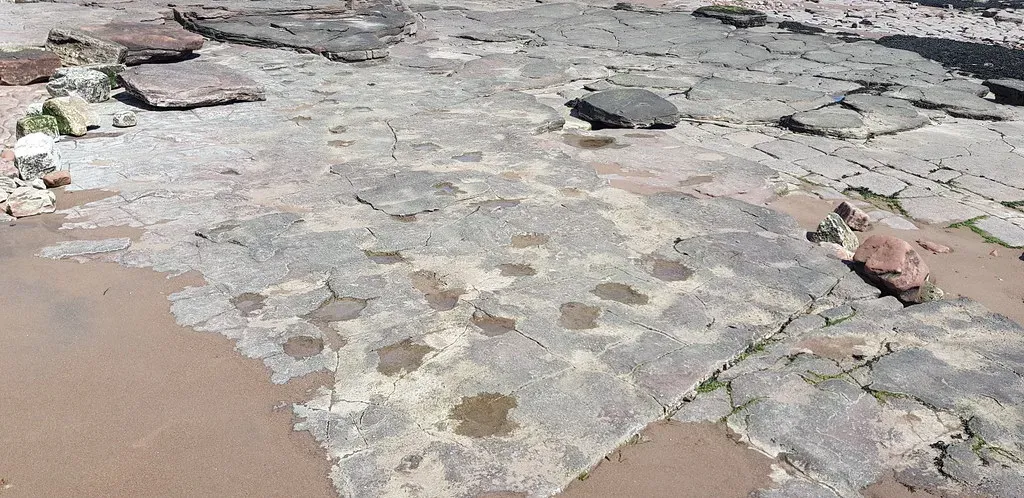
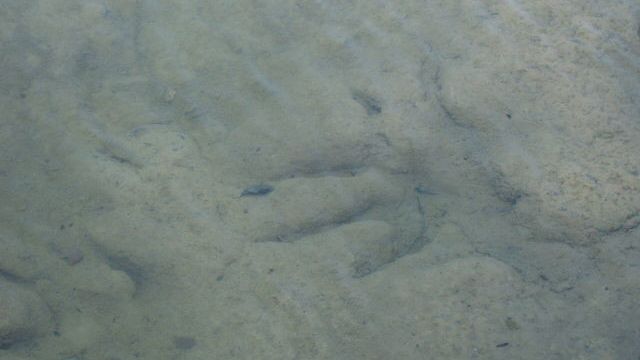
Approximately 113 million years ago, the area now known as Glen Rose sat along an ancient sea coastline. Dinosaurs roamed the area and left their imprints on what is now the Paluxy River. Their footprints were preserved and buried under sediment, and geologists classify the rock layer as Lower Cretaceous limestone. That geological legacy earned the town a singular designation.
Distinctive footprints of at least two early inhabitants made Glen Rose known far and wide as the Official Dinosaur Capital of Texas. Paleontologist James Farlow of Indiana University-Purdue University Fort Wayne, who has studied dinosaur tracks in Texas since 1980, describes the northern loop of the Paluxy River at Dinosaur Valley State Park as the site of one of the most spectacular concentrations of fossilized dinosaur footprints in the world.
R.T. Bird and the Discovery That Changed Paleontology
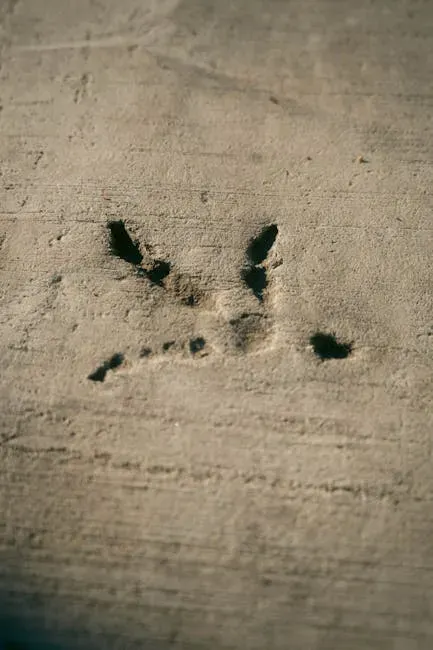
R.T. Bird, the chief fossil hunter for the American Museum of Natural History in New York City, heard about the Texas tracks while gathering fossils across several western states and made a detour to Glen Rose in 1938. Locals were happy to show him numerous three-toed tracks. When he discovered basin-sized footprints in the riverbed near theropod tracks, it was a true eureka moment.
Bird’s find – the first sauropod footprints to be recognized anywhere in the world – put Glen Rose on the paleontological map and sparked public fascination with dinosaurs as cultural icons. His discoveries on the Paluxy River and other Texas track sites changed how paleontologists and the public view dinosaurs, as the sauropod trackways proved that these enormous creatures could walk on land, refuting the prevailing belief that sauropods were primarily aquatic.
Two Giants: The Acrocanthosaurus and the Sauroposeidon
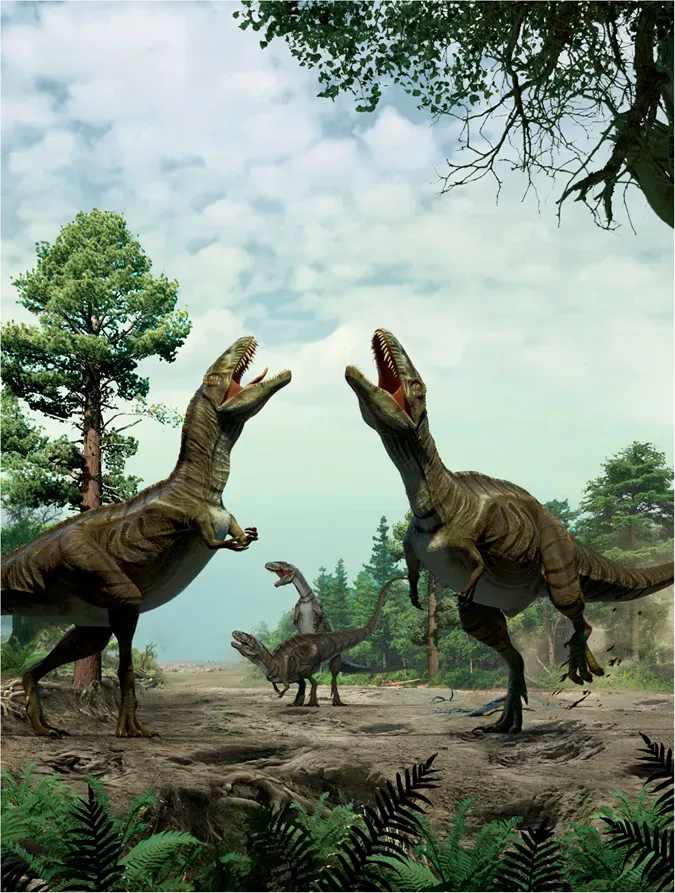
The Acrocanthosaurus and the Sauroposeidon proteles were the two most prominent dinosaurs in the area – one a meat eater, the other a plant eater. Paleontologists who examined the three-toed prints identified Acrocanthosaurus as the likely trackmaker – an imposing carnivore up to 30 feet long and weighing two to three tons, with menacing claws, serrated teeth, and a bony ridge that ran the length of its spine.
The sauropod was 70 feet long and 13 feet high at its hip, weighing 40 to 44 tons, and it left hind footprints over a yard long, with smaller, clawless horseshoe-shaped front footprints. Rear footprints of the sauropods are as much as three feet in diameter and 18 inches deep. Walking alongside impressions that size puts the sheer scale of these animals into a whole different perspective.
What the Trackways Tell Us About Behavior
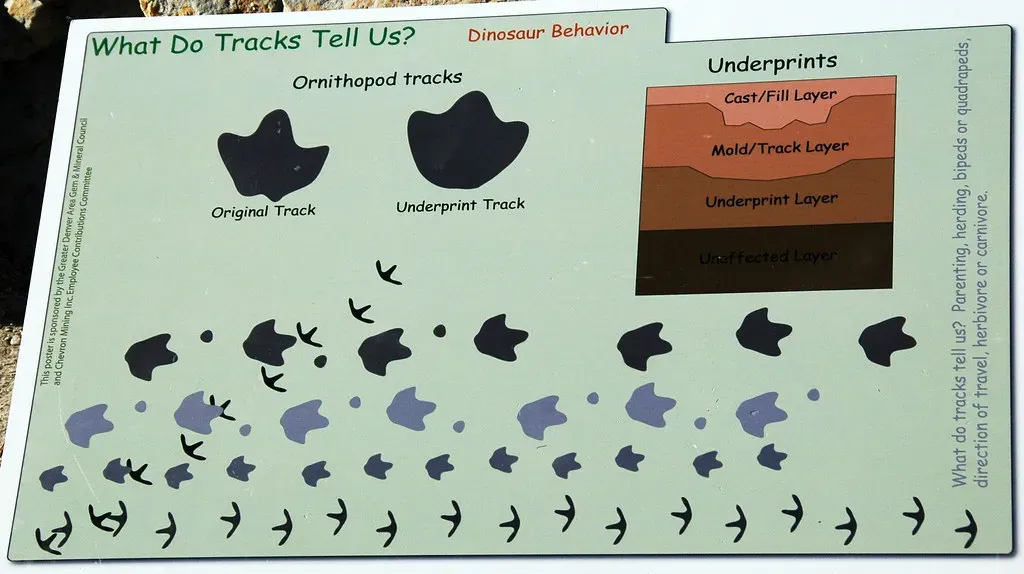
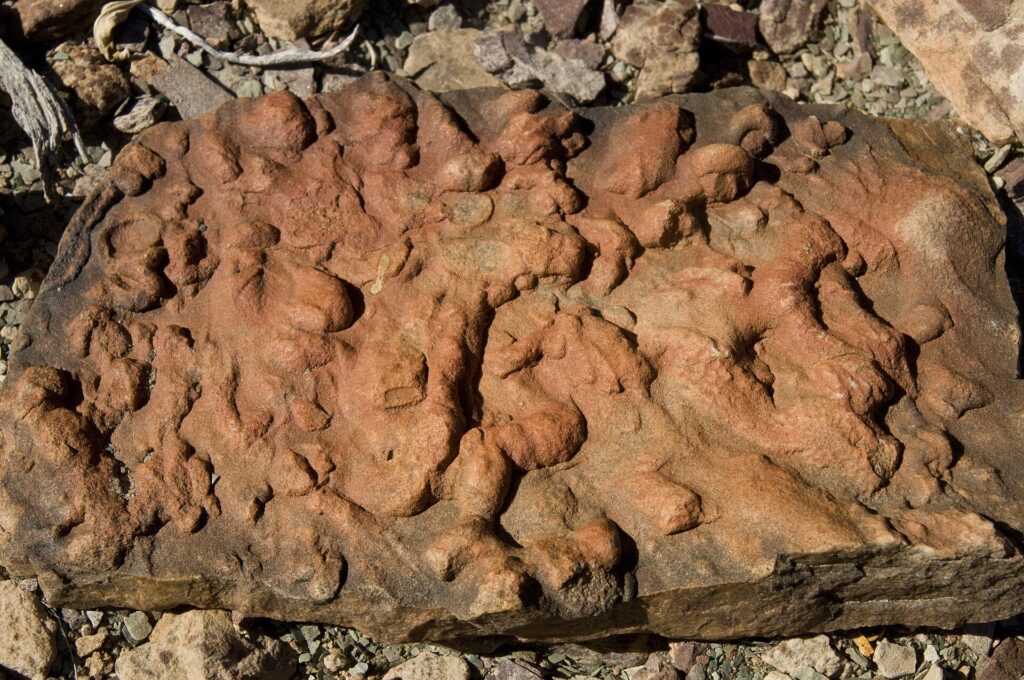
Field research at track sites sheds light on the size, posture, gait, stride, and speed of track makers and provides insight into individual and group behaviors that cannot be gleaned from skeletal remains. You can get information about the posture of the animal that would be more difficult to obtain from the skeleton, about the speed the animal was moving, and how it was responding to the sediment when it was still loose before turning to rock.
Trackways of bipedal dinosaurs show a mirror-image distribution, suggesting movement of animals back and forth along a shoreline. In contrast, most sauropod trackways head in roughly the same direction, suggesting passage of a group of dinosaurs. The trackways collected by R.T. Bird suggest that at least one theropod was following a sauropod. Prior to Bird’s discoveries, paleontologists believed dinosaurs dragged their tails like lizards. Yet Texas trackways show no tail marks – dinosaurs held their tails aloft while walking.
Floods and Droughts Keep Uncovering New Secrets
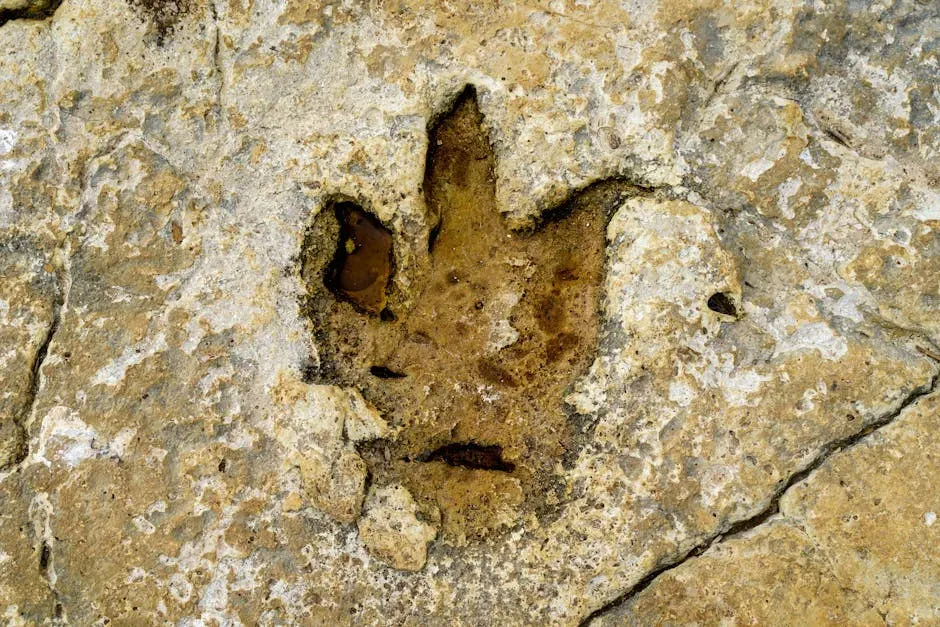
Ancient dinosaur footprints dating back 115 million years were discovered in Northwest Travis County, Texas, after recent flooding swept away layers of sediment and brush that had long hidden them. The discovery was made in the Big Sandy Creek area by a group of volunteers. A volunteer helping residents clear debris discovered 15 large, three-clawed dinosaur footprints scattered in a crisscross pattern, tracks that were left by meat-eating dinosaurs similar to Acrocanthosaurus, a roughly 35-foot-long bipedal carnivore.
In the summer of 2022, extreme drought had also exposed tracks in the Paluxy riverbed that had been submerged and unseen for more than 20 years. Paleontologist Matthew Brown said he and his team planned to return to the Travis County site to thoroughly document the tracks with maps and 3D imaging, hoping to learn more about how many creatures are represented and whether they were left by a group or by a single dinosaur roaming Texas Hill Country. Texas, it seems, keeps offering up new chapters no matter the season.
Preserving the Prehistoric Highway for the Future
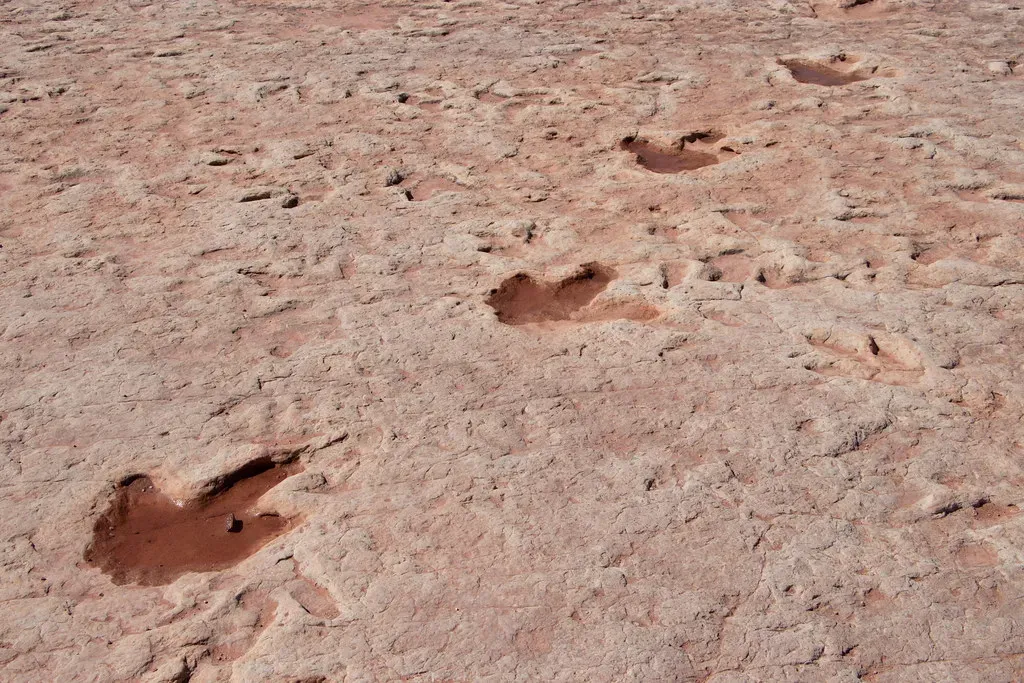
In the 1930s, paleontologist Roland T. Bird identified fossilized tracks in the limestone bed of the Paluxy River. In 1940, Bird supervised the removal of two large limestone slabs bearing the tracks – one sent to the American Museum of Natural History in New York, and the other brought to the University of Texas’s Texas Memorial Museum. The sauropod trackway that spans both slabs was scientifically described and named Brontopodus birdi in Bird’s honor, and these tracks remain designated reference specimens for this type of dinosaur footprint.
Based on recommendations provided in 2024 by a national conservation and restoration firm, the museum began the process of protecting the trackways from further damage by relocating the slabs to a controlled laboratory for conservation, where experts will prepare them for installation in a more protective, visitor-friendly environment. The future Dinosaur Trackways Building will offer an ideal environment for the fossilized footprints not only to endure as a scientific specimen but to finally delight the masses, with 360-degree access to the tracks for the first time. It is a fitting next chapter for fossils that have already spent over a century reshaping how science understands these ancient animals.
Conclusion
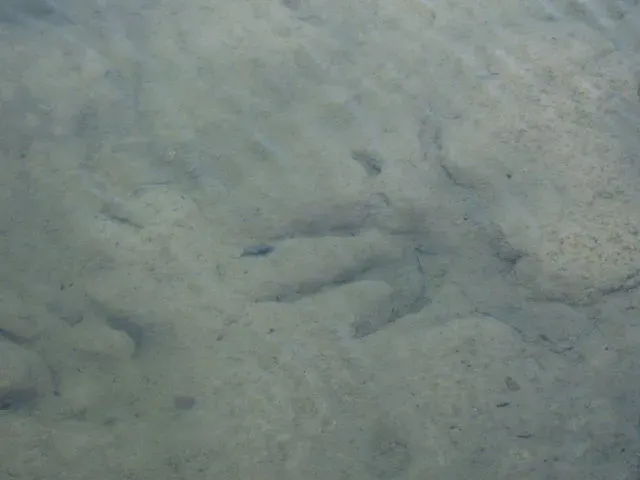
Texas has always been known for its scale, and its prehistoric record is no exception. The dinosaur trackways embedded across its riverbeds and limestone outcrops represent one of the most detailed, accessible windows into Cretaceous life anywhere on Earth. Three primary dinosaur track makers in Texas during the Lower Cretaceous were sauropods, theropods, and ornithopods – a group of herbivores that left broad, three-toed tracks.
Each new flood, each summer drought, each volunteer clearing debris after a storm has the potential to pull back the curtain on yet another stretch of this hidden prehistoric highway. During the Cretaceous Period, much of Texas was underwater, and what is now North Texas used to be an ancient shoreline – a prime environment for preserving prehistoric activity such as dinosaur footprints. The stone remembers, even when everything else has long since washed away.