
Think about the last time you cried and did not know exactly why. Maybe it was a sad movie, a random song in the car, or good news that hit you harder than expected. Your eyes filled with tears that did far more than just clean dust off your corneas. They carried meaning, sent signals, and probably changed how you felt afterward. That strange mix of biology and emotion is at the heart of one of the weirdest facts about being human: as far as we can tell, we are the only species that sheds visible tears in response to feelings.
From an evolutionary point of view, that is bizarre. Natural selection usually trims away anything that wastes energy or makes us more vulnerable, and yet emotional tears are obvious, messy, and sometimes socially risky. Scientists have plenty of ideas about why they might have evolved, but no single explanation completely fits all the evidence. That uncertainty is not a weakness of the science; it is a clue that crying sits at a crossroads where physiology, psychology, and social life all collide in a uniquely human way.
Humans cry emotional tears, animals (as far as we know) do not

Animals produce tears to lubricate and protect their eyes, just like we do. If you chop an onion next to a dog, its eyes will water. If a cat gets something stuck in its eye, it will tear up. But what we do not see, even in highly social mammals like chimps, dolphins, or elephants, is the kind of visible, overflowing tear production that humans show during emotional episodes. They vocalize, they show facial expressions, they alter posture and behavior, but the wet, glistening cheeks seem to be uniquely ours.
Researchers have looked carefully for emotional tearing in other species and, so far, there is no convincing, repeatable evidence that any non-human animal cries tears because it is sad, moved, or overwhelmed in the human sense. That does not mean animals do not feel; it just means their emotional signaling uses different channels. In a way, the absence of emotional tears everywhere else makes our watery eyes even more striking, like a rare trait that must have had some strong payoff to stick around in our species.
The basic tear system: an ancient tool with a new twist

Evolution almost never builds from scratch; it repurposes old tools for new jobs. The tear system is very old in vertebrates, originally there simply to keep the eye moist, clear debris, and defend against infection. Basal tears constantly bathe our corneas. Reflex tears flush out irritants like smoke or dust. Those kinds of tears are uncontroversial and clearly useful. They exist in many animals and make straightforward survival sense.
Emotional tears, though, seem to be an extra layer on top of this ancient mechanism. The same lacrimal glands and ducts are involved, but now their output is linked to brain regions that process emotion, stress, and social context. It is as if evolution plugged our tear machinery into our emotional wiring and then let culture, relationships, and language amplify the effect. From a biological engineering perspective, it is a clever hack: take a visible, already-existing fluid and turn it into an emotional megaphone.
Chemistry in your tears: more than just salty water

When scientists compare emotional tears with basic or reflex tears, they do not find identical fluids. Emotional tears can contain higher levels of certain hormones and proteins associated with stress and arousal, such as stress-related molecules that shift when we are emotionally overwhelmed. That suggests emotional crying is not just a dramatic faucet turning on; it is a physiological event that potentially changes what is going on inside the body.
Some researchers have proposed that releasing these substances in tears could help reduce stress or rebalance the nervous system, which would give emotional crying a direct internal benefit. The evidence for a strong detox or cleansing effect is mixed, though. While many people say they feel better after a good cry, lab studies show the mood effects depend heavily on context, support, and what triggered the crying. So the chemistry is real, but whether the tears themselves are a powerful internal reset button or just one piece of a bigger emotional cascade is still up for debate.
Crying as a silent, powerful social signal

If there is any area where emotional tears make obvious sense, it is social signaling. Tears dramatically change how a face looks. A crying person appears more vulnerable, more in need, sometimes more sincere. Experiments using photos with and without digitally added tears show that observers judge the teary faces differently: more distressed, more in need of comfort, and more likely to be helped. In tight-knit human groups, that kind of signal could be extremely valuable.
From an evolutionary angle, this lines up with our hyper-social nature. Humans rely on others to survive far more than most animals do, and subtle communication about inner states can make cooperation more efficient. Tears turn an internal emotional storm into an external, unmissable cue. You can ignore someone saying they are fine; it is much harder to ignore the person whose eyes are overflowing. In that sense, emotional tears might be like a biological highlighter pen that evolution applied to our faces.
Attachment, caregiving, and the crying baby problem

One of the most compelling ideas focuses on attachment between caregivers and infants. Human babies are unusually helpless for a very long time, and their survival depends on eliciting fast, reliable care. Vocal crying is already a powerful alarm, but as infants develop, visible tears may add another layer, especially at closer distances where facial cues matter most. Tears could help caregivers distinguish between mere fussiness and deep distress, nudging them toward a stronger, more nurturing response.
Over time, that infant-caregiver system might have been co-opted into adult social life. The same cues that once said “protect me, I am helpless” now operate in friendships, romance, and group conflicts. When an adult cries, it can soften aggression, defuse anger, or strengthen bonds, drawing on ancient patterns that used to keep babies alive. Personally, whenever I see someone cry in a serious conversation, I notice how the emotional temperature in the room shifts almost instantly, as if an invisible lever has been pulled.
Tears, trust, and emotional honesty
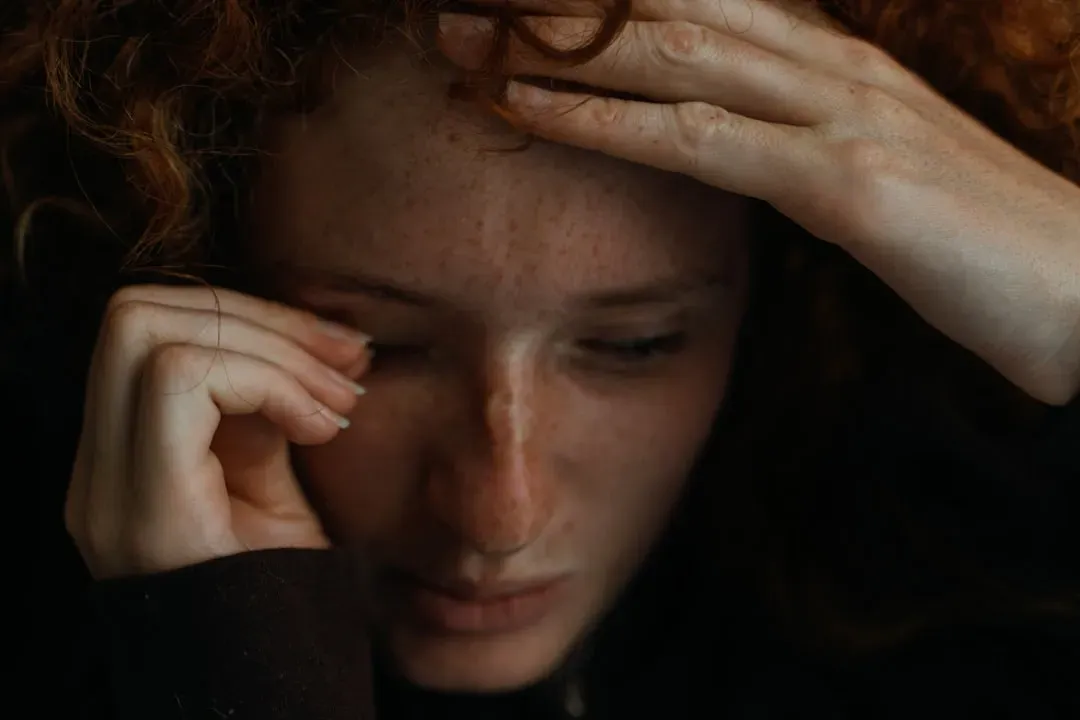
Another angle is that emotional tears can serve as a costly, hard-to-fake signal of sincerity. It is relatively easy to say the right words without meaning them. It is much harder to convincingly produce a flood of tears on command, especially in high-stakes, unpredictable situations. In evolutionary terms, signals that are costly or difficult to fake are often more trustworthy, because cheats cannot easily imitate them without paying a price.
In social species like ours, where cooperation, alliances, and reputation matter, having a semi-reliable indicator that someone truly feels remorse, grief, or joy could be incredibly useful. Tears can influence forgiveness, reconciliation, and empathy. Of course, humans can learn to manipulate crying, and not every tearful episode is pure. But on the whole, our gut tends to treat genuine-looking tears as evidence that something deep is going on, which suggests that the signal still carries weight.
Culture, gender, and why some people cry more than others

Even if the basic capacity for emotional tears is universal, the way we express it is heavily shaped by culture, gender norms, and personal history. Some societies view crying in public as natural and acceptable; others treat it as something to be hidden, especially for men. Surveys and observational studies generally find that women report crying more frequently than men, though the gap varies across countries and is influenced by how safe people feel showing vulnerability.
Hormones, upbringing, and personality all feed into these patterns. A person raised in a family where tears were met with comfort might cry more openly as an adult than someone who was teased or punished for crying. I still remember learning as a kid that certain adults admired “toughness” and looked down on tears, and how quickly that changed what I showed on my face. These cultural layers do not change the underlying biology, but they do filter how often we see that biology on display, which can make it tricky to draw clean evolutionary conclusions.
Do emotional tears actually help us feel better?

Popular wisdom says that a good cry is cleansing, but the science is more cautious. Some studies find that people report feeling better after crying, especially if they receive comfort or if the tears lead to emotional insight or support. Others show that crying can leave people feeling worse in the short term, drained or embarrassed, particularly when they feel judged, alone, or out of control. The psychological impact is not one-size-fits-all.
From an evolutionary standpoint, this mixed picture is important. If emotional tears had a huge, consistent internal benefit, we might expect very strong evidence for mood improvement regardless of context. Instead, the benefits seem closely tied to social surroundings and meaning. That nudges the story back toward the idea that emotional crying evolved primarily as a social behavior, and the subjective relief some of us feel is partly a side effect of being seen, held, or understood rather than the tears themselves doing magical brain housekeeping.
Why there is still no single, neat evolutionary answer

Scientists love tidy explanations, but emotional tears refuse to sit politely in one box. The evidence points in several directions at once: chemical shifts, social signaling, attachment, trust, cultural shaping, and individual psychology. No single theory fully explains why a trait as specific and visible as emotional crying should evolve only in humans and not show up, at least visibly, in other intelligent, social animals. That complexity is exactly why the field still treats this topic as an open question rather than a solved puzzle.
My own opinion is that looking for one master explanation is the wrong move. Emotional tears probably emerged and stuck around because they did several things at once: they piggybacked on an existing eye-protection system, amplified social communication, strengthened caregiver bonds, and sometimes shifted internal states in helpful ways. Evolution often favors messy, multi-use traits over elegant single-purpose gadgets. Human crying, with all its awkwardness and beauty, looks like one of those messy successes.
Conclusion: our tears might be one of the most human things about us
When you step back, the fact that no one can yet give a complete evolutionary explanation for emotional tears feels oddly fitting. Crying is where logic meets mystery: an ancient gland, a modern brain, and a social world all tugging on the same fragile thread. To me, that uncertainty is not frustrating but humbling. It suggests that some of the most ordinary things we do every day, like tearing up at a song or sobbing in a friend’s kitchen, sit right at the edge of what science is still working to fully understand.
If anything, emotional crying looks less like a mistake and more like a risky but brilliant evolutionary gamble. By putting our inner lives on our faces, we made ourselves vulnerable, but we also unlocked deeper trust, richer connection, and a kind of emotional transparency that few other species can match. Maybe the real lesson is that being human means living with signals we cannot completely explain but that still move us powerfully. The next time tears surprise you, will you see them as a weakness to hide, or as one of the strangest, most uniquely human signals you have?