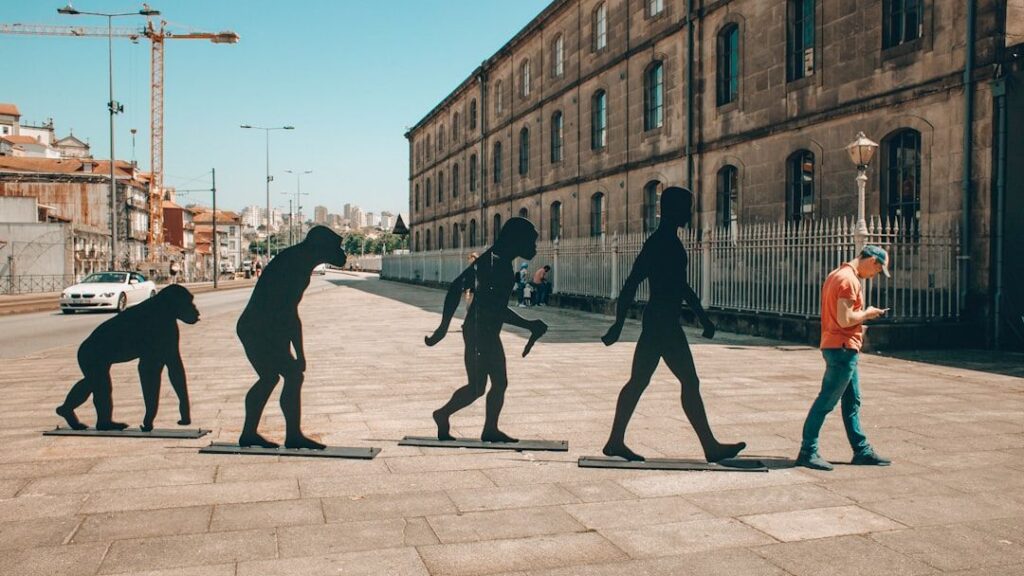
If you laced up for a casual ten‑kilometer run this morning, you did something no other primate on Earth can do, and almost no other animal would ever bother to do without a life‑or‑death reason. That Saturday fun run, that deeply unnecessary third lap around the park when you could have stopped, is one of the strangest behaviors in the animal kingdom. From an evolutionary point of view, choosing to run far, on purpose, for no immediate survival payoff, is bizarre.
Yet humans not only can do it, many of us are compelled to. Marathons sell out in minutes, ultrarunners string together distances that would humble a horse, and millions of people take up running not to chase prey or escape predators, but simply because it feels meaningful, cleansing, or oddly satisfying. Behind that modern habit is a story that stretches back roughly two million years, involving bones, tendons, brains, and social lives slowly reshaped by natural selection until our ancestors became the weird, high‑endurance apes we are today.
The Strange Truth: Humans Run Far When We Don’t Need To

Imagine explaining to an early hominin that you ran twenty miles last weekend, not to hunt, not to migrate, but to collect a flimsy medal and a banana at the finish line. They would probably stare at you like you had lost your mind. In nature, running long distances is costly: it burns a lot of energy, increases the risk of injury, and exposes you to danger. Most animals only invest that much effort when the stakes are extremely high, like chasing down food or avoiding becoming food themselves.
Humans flipped that script. We still use running for sport and fitness, but often the run itself is the goal, not any immediate payoff. People wake up before dawn to jog city streets, pound treadmills after work, or tackle ultramarathons across deserts and mountains. The “reward” is delayed and abstract: better health, a sense of pride, social status, or the emotional high that distance runners know well. From a strict short‑term survival lens, it makes very little sense. From the perspective of a species whose entire body and brain were shaped by endurance, it suddenly looks like an ancient instinct playing out in a modern setting.
The Endurance Running Hypothesis: How Long‑Distance Running Shaped Our Species
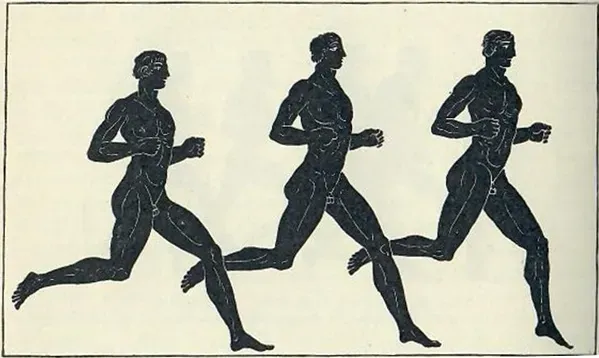
Anthropologists have spent decades wrestling with a big question: why are humans such good distance runners at all? One influential idea is the endurance running hypothesis. It proposes that our ancestors evolved the ability to run long distances not to sprint away from danger, but to travel steadily over huge areas and, crucially, to hunt by outlasting prey. Instead of relying on speed like a cheetah or power like a lion, early humans may have specialized in slow, relentless pursuit, tracking animals under the hot sun until those animals overheated and collapsed.
This kind of persistence hunting still exists in a few traditional societies today, and it is brutal to watch: a small group of hunters jog after an antelope for hours in the midday heat, never letting it fully rest. Humans, with our efficient cooling, can keep going while the animal slowly succumbs to heat stress. Over hundreds of thousands of generations, pressures like these likely favored hominins whose bodies dissipated heat better, whose joints could handle repetitive impact, and whose metabolism could support sustained effort. That deep evolutionary history helps explain why, in a climate‑controlled world with supermarkets and delivery apps, so many of us voluntarily recreate a softer version of that same challenge for fun.
The Two‑Million‑Year Makeover: From Short‑Legged Ape to Endurance Specialist
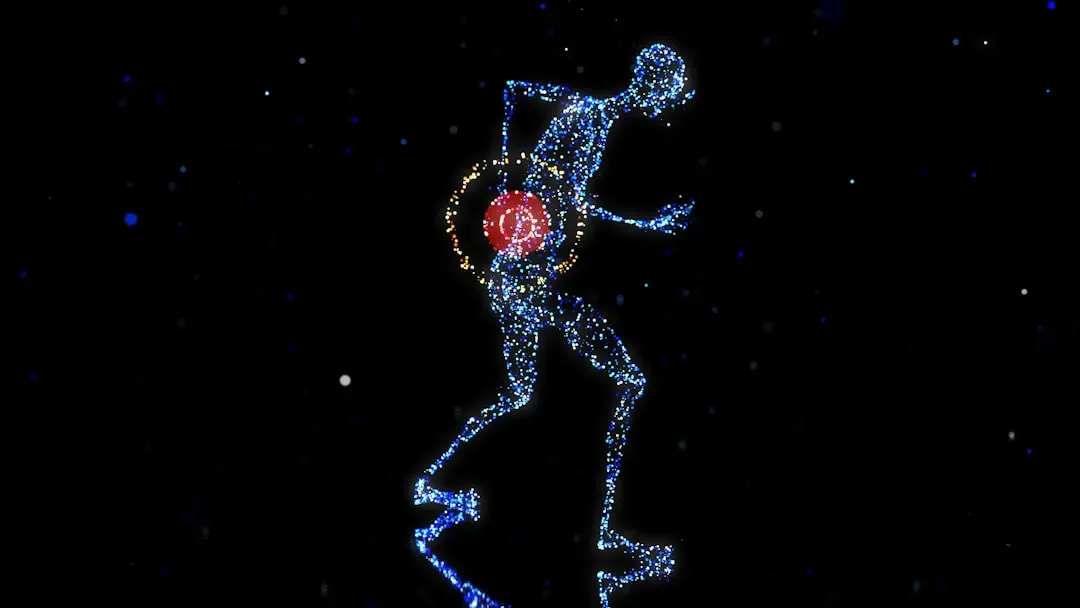
If you “rewind the tape” about two million years, early members of our genus looked and moved very differently from us. Earlier hominins had shorter legs, more curved fingers, and bodies still partly adapted to life in the trees. Over time, as open savannas replaced dense forests in many regions, selection favored individuals who could cover long distances on the ground more efficiently. That meant longer legs, narrower hips, and changes in the spine and pelvis that helped transfer force smoothly during running.
Fossil skeletons from species like Homo erectus show this transition clearly: their limb proportions, joint surfaces, and overall body plan look far more like those of a modern distance runner than those of a chimpanzee. The evolution of these traits was not a quick tweak; it was a slow, cumulative redesign unfolding over roughly two million years. Each generation carried slightly different bodies, and those whose anatomy allowed them to forage farther, track prey longer, and survive in hot, open environments tended to leave more descendants. The distance runner’s frame you see on a marathon course today is the result of that long, quiet experiment in natural selection.
The Hidden Hardware: Unique Human Anatomy That Makes Long‑Distance Running Possible
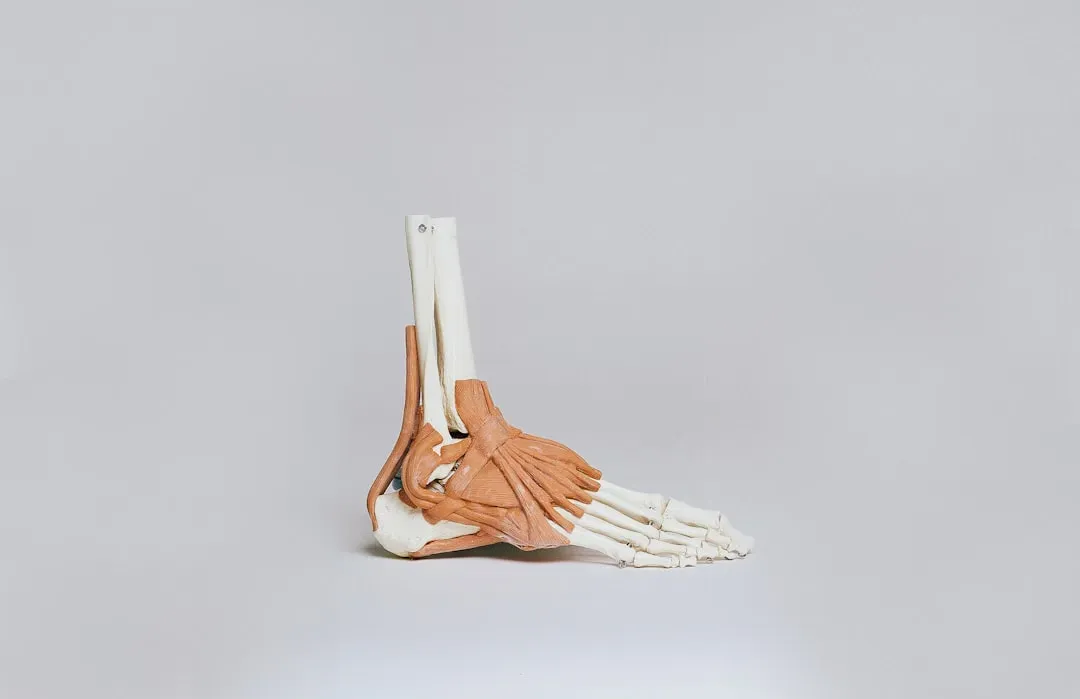
We tend to notice the obvious features of runners: strong legs, toned calves, maybe a light frame. But some of the most important running adaptations are less visible and strikingly rare among primates. Humans have a big, elastic Achilles tendon that stores and releases energy with each stride, acting like a biological spring. Our long legs and relatively short toes make push‑off more efficient, reducing the muscular effort needed to keep moving. These are not trivial details; they fundamentally change how much energy it costs to run mile after mile.
Then there are the stabilization and shock‑absorbing systems quietly doing their job with every step. The nuchal ligament in the back of the neck helps keep our head steady while we run, something other apes lack. Enlarged gluteal muscles stabilize the pelvis, and the arch of the human foot acts like a built‑in suspension system. Combined, these features allow us to trot along without our heads lurching wildly or our joints taking catastrophic impact. No other primate has this exact package of traits. Chimps and gorillas are incredibly strong, but ask them to run ten kilometers on two legs and they simply do not have the anatomical toolkit to do it safely or efficiently.
Why No Other Primate Evolved This Package

It is tempting to assume that, given enough time, any mammal could evolve to do what humans do. But evolution is about trade‑offs and ecological niches, not some ladder of progress where every species strives toward marathon readiness. Other primates remained in environments where climbing, short bursts of speed, and powerful upper bodies mattered more than efficient long‑distance travel. Their shoulder joints, hands, and torsos stayed optimized for life in trees, not for pounding across open plains for hours at a time.
That different set of pressures locked them into a different evolutionary path. Long, springy tendons are less useful if your main challenge is swinging from branch to branch. A big, heavy upper body is fantastic for climbing, but not for distance running. The human combination – long legs, elastic tendons, stable head and trunk, advanced sweating – is unusual not because other primates somehow “failed” to achieve it, but because they never needed it. We became the endurance specialists of the primate world because our ancestors moved into a niche where endurance paid off; theirs stayed in niches where it did not.
The Cooling System: Why Humans Can Run Through the Heat

Running hard under a hot sun is brutally stressful on the body. Muscles generate heat, the environment adds more, and if that heat cannot be shed, things go downhill fast. Humans developed an unusually powerful cooling system to deal with this problem. We have a high density of sweat glands all over our skin and relatively little body hair, which makes evaporation far more effective. As sweat evaporates, it draws heat away, letting us keep our core temperature in a safe range even during prolonged effort.
Compare this to many other mammals that rely more on panting, which works well at lower intensities but breaks down when running fast or for a long time. Our ability to cool while moving at a steady pace gave early humans a real advantage in hot, open landscapes. It is probably no coincidence that many modern long‑distance races are held in conditions that would flatten a lot of animals if they tried to match our pace over many hours. When you jog on a hot afternoon, constantly wiping sweat from your forehead, you are tapping into one of the most underrated superpowers our species ever evolved.
The Brain Chemistry of Running for “No Reason”

All of this still leaves a nagging question: if long‑distance running originally evolved for survival – hunting, scavenging, migrating – why are so many humans willing to do it now with no immediate payoff? One big piece of the puzzle lies in the brain. Sustained aerobic exercise triggers a cocktail of chemical changes in the nervous system: increased levels of certain neurotransmitters, growth factors that support brain health, and that familiar rush of euphoria and calm that many runners describe. Those states are not an accident; they likely evolved as a kind of internal reward system to keep our ancestors moving when the hunt or the journey demanded it.
In a modern world where food, safety, and shelter can often be secured without leaving your chair, those ancient reward circuits are still there, waiting to be activated. Running taps into them in a powerful way. That is one reason someone can go from hating their first mile to craving their next training session a few months later. The distance may no longer be essential for catching dinner, but it is still feeding something deep in the brain that recognizes sustained effort, rhythm, and forward motion as meaningful. In that sense, the fact that we run “for no reason” says less about irrational humans and more about how thoroughly endurance is wired into our emotional lives.
From Survival Strategy to Identity: Why Running Still Matters

Look around at a big city marathon, and you will not see desperate hunters; you will see people running for hundreds of different reasons that all trace back, in a way, to the same ancient capability. Some are there to manage anxiety, others to build community, others to prove something to themselves or to the world. Running has become a language we use to talk about resilience, discipline, and transformation. It is a survival tool repurposed as a lifestyle, a therapy, a subculture. I still remember my first race, feeling like I had discovered a secret tunnel out of everyday stress and into a quieter, tougher version of myself.
To me, that is the most striking thing about our species’ relationship with distance running. We evolved to run because we had to, but we keep running because it changes how we feel about our bodies and our lives. No other primate stands at a starting line with a bib number, eager to suffer for a medal, a story, and a sense of belonging. That is uniquely human. Our anatomy, fine‑tuned over two million years for endurance, has outlived its original job description, and now it lets us chase something far more abstract: meaning. The next time you see someone out for a long run with no predator behind them and no prey ahead, you are looking at an animal that turned a survival strategy into an identity – and honestly, I think that stubborn, unnecessary effort is one of the best things about us. Did you expect that?