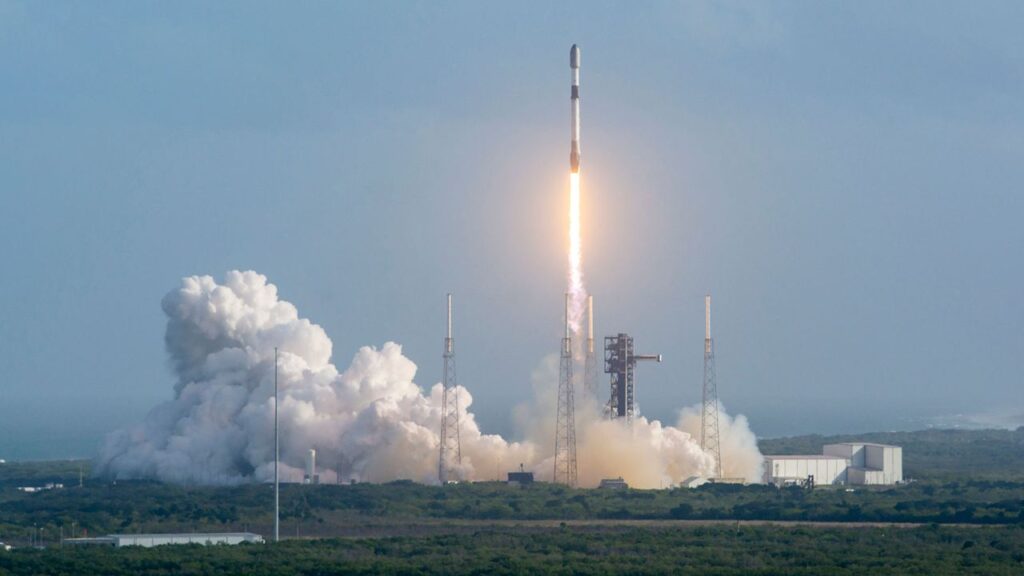
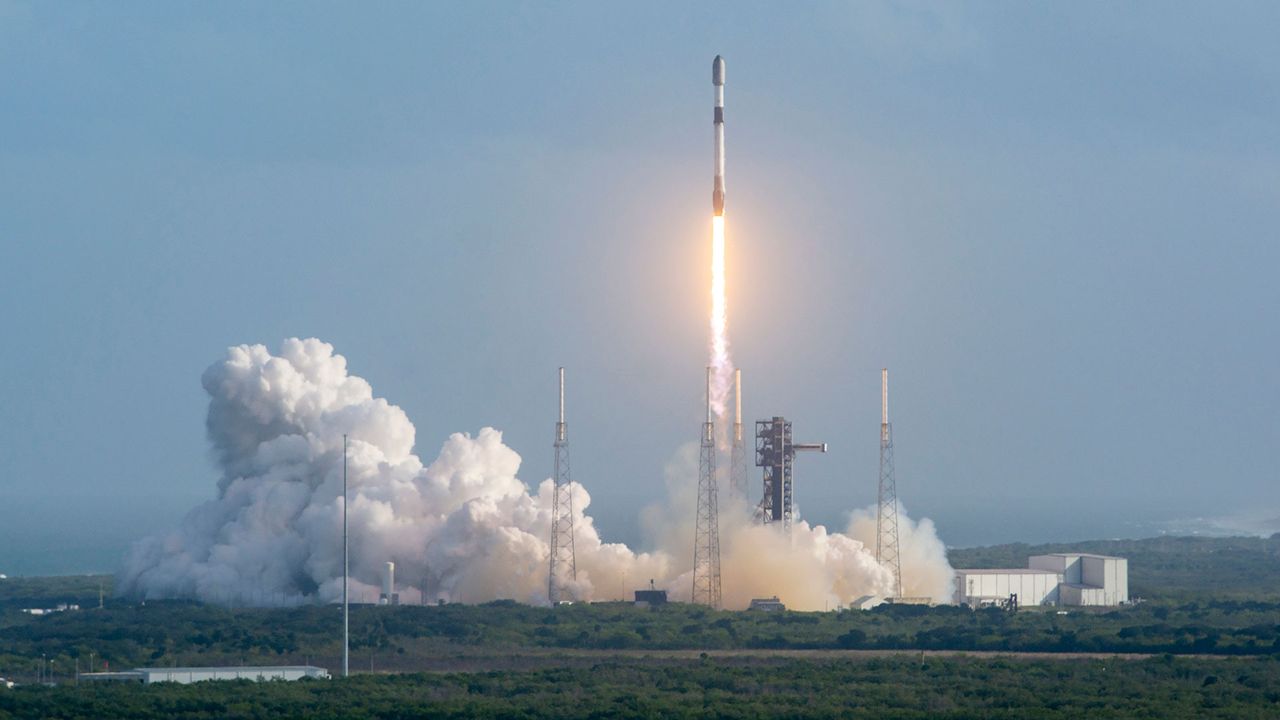
A Routine Yet Remarkable Liftoff (Image Credits: Cdn.mos.cms.futurecdn.net)
Cape Canaveral Space Force Station served as the launchpad for SpaceX’s latest mission, propelling 29 Starlink satellites into low-Earth orbit and advancing the company’s ambitious global broadband network.
A Routine Yet Remarkable Liftoff
The Falcon 9 rocket ignited its engines at precisely 1:01 p.m. EST on January 12, 2026, piercing the Florida sky with a trail of fire and smoke. This mission marked another step in SpaceX’s relentless pace of deployments, showcasing the reliability of their reusable technology. The booster, on its 29th flight, separated cleanly from the upper stage and executed a flawless landing on the drone ship Just Read the Instructions stationed in the Atlantic Ocean.
Spectators along Florida’s Space Coast gathered to witness the event, a testament to the growing public fascination with private space ventures. The satellites, once deployed, began their journey to operational altitude, where they will join thousands of predecessors to beam high-speed internet to underserved regions worldwide. SpaceX confirmed all systems performed nominally, underscoring the maturity of their launch operations.
Expanding the Starlink Constellation
With this launch, SpaceX added to a constellation that now exceeds 6,000 satellites, inching closer to full global coverage. Each Starlink satellite weighs about 573 pounds and features advanced laser links for inter-satellite communication, enhancing data relay efficiency. The company’s goal remains providing affordable internet access, particularly in remote areas where traditional infrastructure falls short.
Engineers at SpaceX headquarters monitored the deployment in real time, ensuring the satellites unfurled their solar arrays and initiated maneuvers without incident. This batch belongs to Group 6, optimized for lower orbits to minimize latency. As the network grows, users can expect improved speeds and reliability, with beta testers already reporting download rates over 100 Mbps in various locations.
The Reusability Edge in Action
Reusability defines SpaceX’s approach, and this mission highlighted it vividly. The first-stage booster, previously flown 28 times, returned to Earth after just over eight minutes, demonstrating cost savings that fuel further innovation. Recovery teams aboard the drone ship prepared the hardware for refurbishment, potentially readying it for another launch within weeks.
Such efficiency contrasts with traditional expendable rockets, allowing SpaceX to conduct multiple missions monthly. This Florida-based launch followed closely on the heels of two others earlier in January, illustrating the high tempo of operations at Cape Canaveral. The site’s strategic location supports rapid turnaround, benefiting both commercial and government payloads.
Implications for Global Connectivity
Starlink’s expansion promises to bridge digital divides, from rural American communities to isolated Pacific islands. Governments and businesses alike eye the service for emergency communications and remote work solutions. However, regulators continue to scrutinize the constellation’s environmental impact, including potential light pollution for astronomers.
SpaceX addresses these concerns through ongoing collaborations with international bodies. The mission’s success reinforces investor confidence, with the company planning even more launches throughout 2026. As satellite numbers climb, the vision of ubiquitous internet becomes increasingly tangible.
Key Takeaways
- 29 satellites launched successfully, boosting Starlink’s total fleet.
- Reusable Falcon 9 booster completed its 29th flight and landed safely.
- Mission advances global internet access for underserved populations.
This launch not only exemplifies SpaceX’s engineering prowess but also edges the world toward a more connected future – what role do you see satellite internet playing in bridging global gaps? Share your thoughts in the comments.