There is something almost impossible to fully absorb about the idea of looking down at a preserved impression in ancient rock and realizing that a human being, a real person with weight and stride and purpose, left that exact mark millions of years ago. It is not just science. It feels personal, visceral, a thread stretched impossibly thin across time but somehow still holding.
Fossil footprints are among the most direct, emotionally striking pieces of evidence we have about our ancestors. Unlike bones, which can be scattered or misidentified, a footprint captures a living moment: the weight of a body, the direction of movement, even the pace of someone’s stride on an ordinary day. Let’s dive in.
The Oldest Steps Ever Taken: What the Laetoli Trails Tell You
Imagine two or three individuals walking across a freshly fallen layer of volcanic ash in what is now Tanzania, roughly 3.6 million years ago. They had no way of knowing they were leaving behind what would one day become one of the most celebrated fossil discoveries in human history. Footprints unearthed at Laetoli in northern Tanzania are dated to about 3.6 million years ago. That number is difficult to fully comprehend, and honestly, it should be.
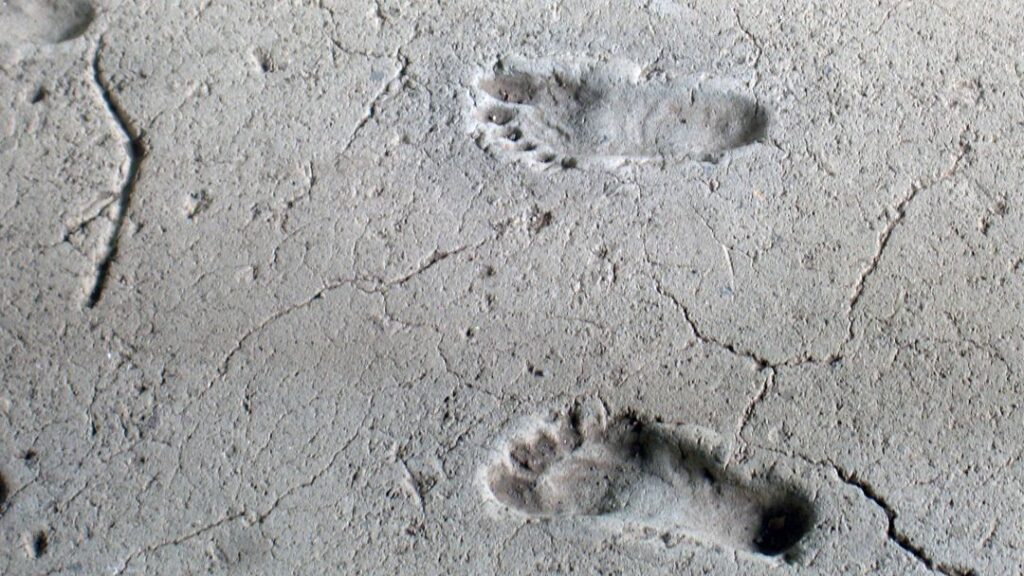
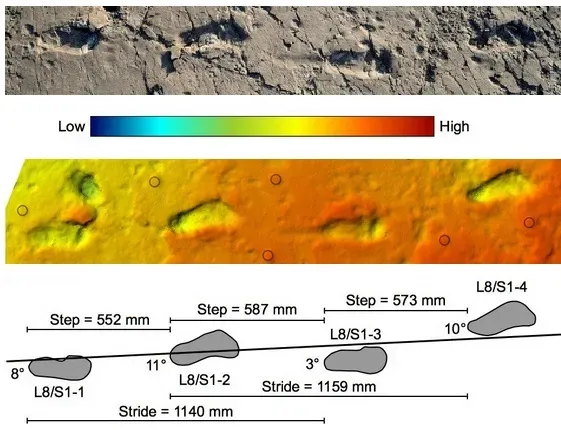
The main trackway extends roughly 27 meters and contains about 70 footprints made by three early humans walking across a layer of freshly fallen volcanic ash. Think of it like walking on wet concrete, except the concrete was an entire volcanic landscape, and it hardened into geological record while the world changed beyond all recognition around it. The Laetoli footprints were most likely made by Australopithecus afarensis, an early human whose fossils were found in the same sediment layer.
The incredibly rare Laetoli tracks show short strides and a bent-over gait, hallmarks of upright walking long before hominins like Homo sapiens appeared. What you are seeing when you look at those impressions is the very birth of something recognizably human: the decision to stand tall and move forward. The footprints show that the individuals had perfect, two-footed strides. That alone is extraordinary.
Could Crete Be the Origin Point? The 6-Million-Year Mystery
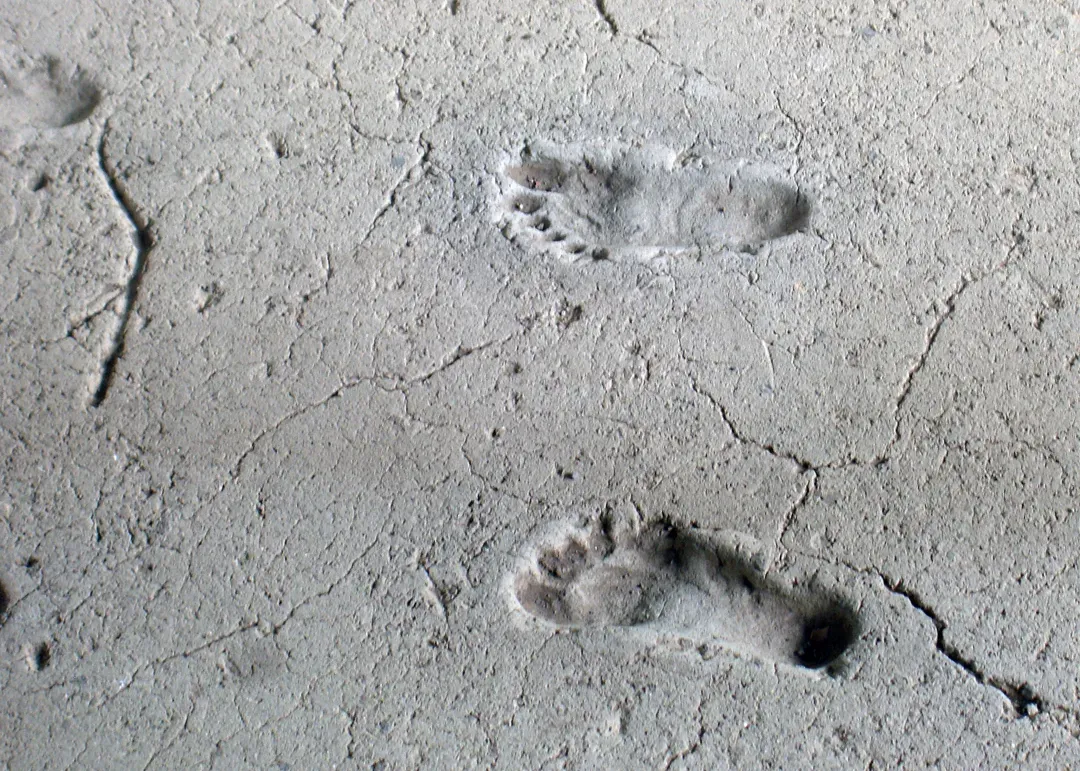
(Original text: self-made), CC BY-SA 3.0)
Here is where things get genuinely fascinating, and a little controversial. Most people assume human origins are a purely African story. The imprints at Laetoli are widely accepted as the oldest known early-human footprints, but a more recent discovery on the Mediterranean island of Crete complicates the picture. In 2002, a vacationing paleontologist first spotted a set of fossilized footprints near the village of Trachilos that could rewrite humanity’s timeline. The Crete tracks, more than 50 impressions preserved in fossilized beach sediments, were initially dated to about 5.7 million years ago.
This suggests the footprints could belong to an early hominin who was walking upright much earlier than our known ancestors in Africa. It is possible that species was Graecopithecus freybergi, a proposed hominin whose fossils have been found in Greece and dated to more than 7 million years old. Now, I want to be clear: this is still very much a scientific debate, not a settled conclusion. The evidence shows that the evolution of bipedalism was certainly more complex than we once believed. Some researchers find the Crete evidence compelling; others remain cautious. Still, the idea that humanity’s first upright steps may have been taken on a Mediterranean beach is almost poetic.
Two Species, One Shoreline: The Kenya Discovery That Stunned Scientists
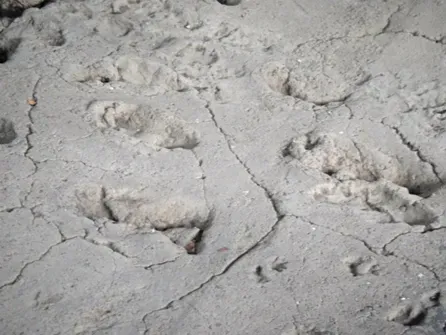
A series of preserved footprints have revealed the co-existence of two ancient human species. The fossils provide the first physical confirmation that Homo erectus and Paranthropus boisei lived alongside each other. Let that sink in for a moment. Two completely different human species, sharing a lakeshore, going about their daily lives. It is the kind of thing that sounds like science fiction, except it is preserved right there in the fossil record.
Two sets of fossilized footprints from early human species were made within a few hours of each other about 1.5 million years ago. Footprints from two different types of ancient primates related to humans were likely left within hours of each other along the shoreline of a lake in what is now Kenya. The astonishing discovery of these fossilized footfalls confirms that the two hominin species lived side by side, and it offers insight into how they might have cooperated or competed.
These sites yielded further evidence that Homo erectus and Paranthropus boisei lived alongside each other at sites spanning up to 200,000 years. This prolonged overlap suggests low to neutral competition between these two species, which may have enabled their long-term coexistence during the early Pleistocene. Think of it like two very different neighbors sharing the same block for hundreds of thousands of years, neither one driving the other out. It challenges every oversimplified story of human evolution you have ever been told.
Eve’s Footprint and the Oldest Modern Human Steps in South Africa
Eve’s footprint is the popular name for a set of fossilised footprints discovered on the shore of Langebaan Lagoon, South Africa in 1995. They are thought to be those of a female human and have been dated to approximately 117,000 years ago. The nickname “Eve’s footprint” might sound dramatic, but honestly, it earns it. This makes them the oldest known footprints of an anatomically modern human. You are looking at the steps of someone who was, biologically speaking, just like you.
Paleontologists determined the oldest known Homo sapiens footprints are within South Africa’s Garden Route National Park in 2023. Dated to about 153,000 years ago and preserved in coastal sand dunes, the tracks reveal details of stride, posture and body size, offering a rare glimpse of our human ancestors in motion. The idea that a sand dune, of all things, could preserve your exact footstep for over a hundred and fifty thousand years is almost absurdly beautiful. It is hard not to feel something standing in front of that kind of evidence.
White Sands and the Rewriting of American History
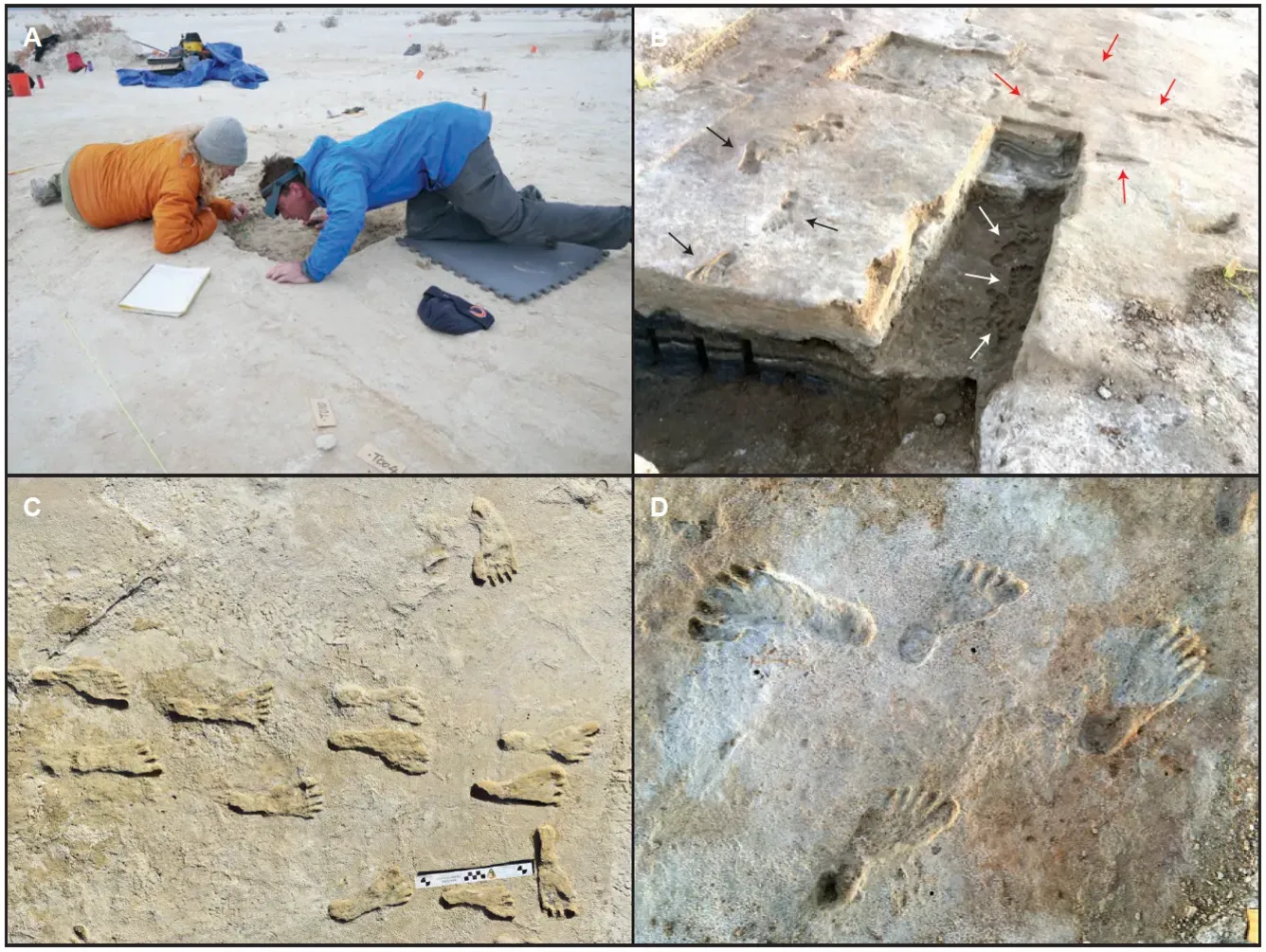
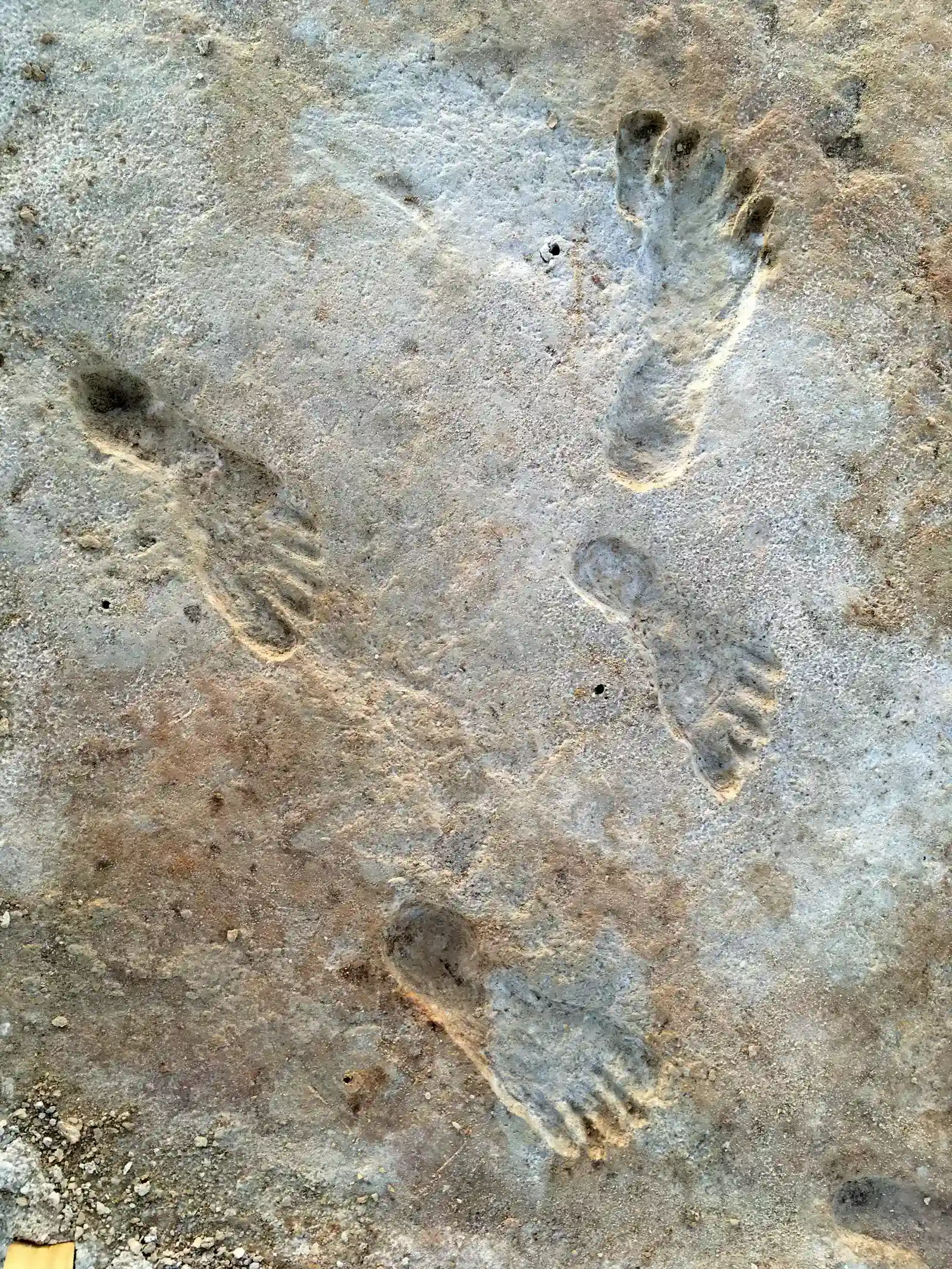
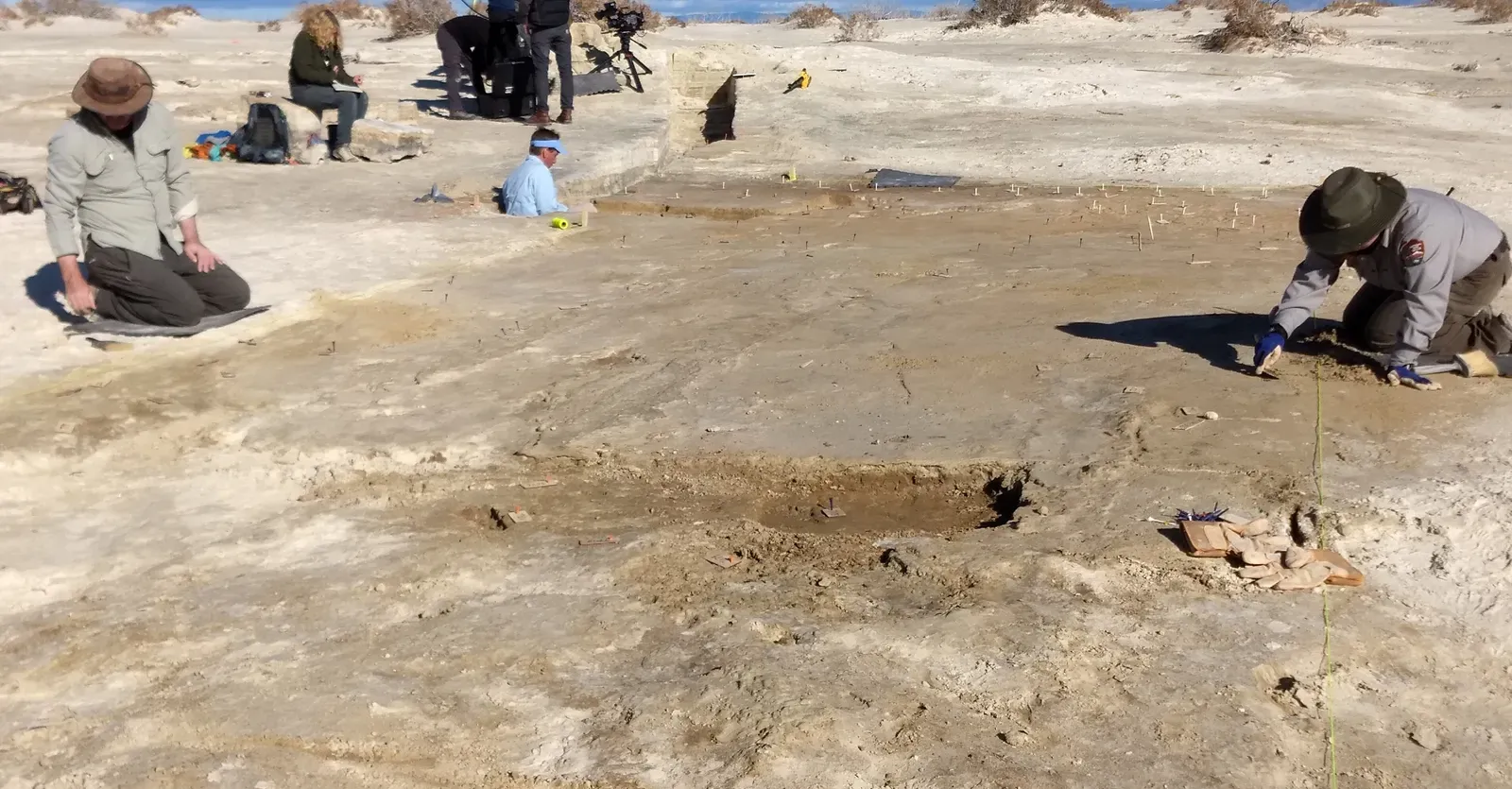
For decades, the story of how humans arrived in the Americas seemed fairly settled. Then came a discovery in New Mexico that upended everything. New research reaffirms that ancient human footprints found in White Sands National Park, New Mexico, date to between 21,000 and 23,000 years ago, placing humans in North America thousands of years earlier than once thought. That is not a small revision. It is a fundamental reshaping of the narrative of an entire continent’s human history.
The 61 footprints are located at the shore of a dried up ice age era lake in the Tularosa Basin. The prints were laid on the shores of the now-dry lake at a time when the climate in the region was less arid. Instead of being a desert of gypsum dunes, the region had extensive grasslands and abundant vegetation. Picture that: lush green wetlands where today there are only pale white dunes. Together, scientists now have 55 radiocarbon dates on three types of materials, including seeds, pollen, and mud, all pointing to the same time period. That level of confirmation is, to put it simply, hard to argue with.
One set of prints appears to show human hunters tracking a giant sloth. Variations in the tracks left by the sloth show that it stood on its hind legs and spun around, possibly showing fear, but there is no evidence that the hunt was successful. A failed hunt, 23,000 years ago, preserved in the ground forever. Somehow that story makes these ancient people feel breathtakingly real.
Ancient Footprints in Arabia: Humans Where They Should Not Have Been
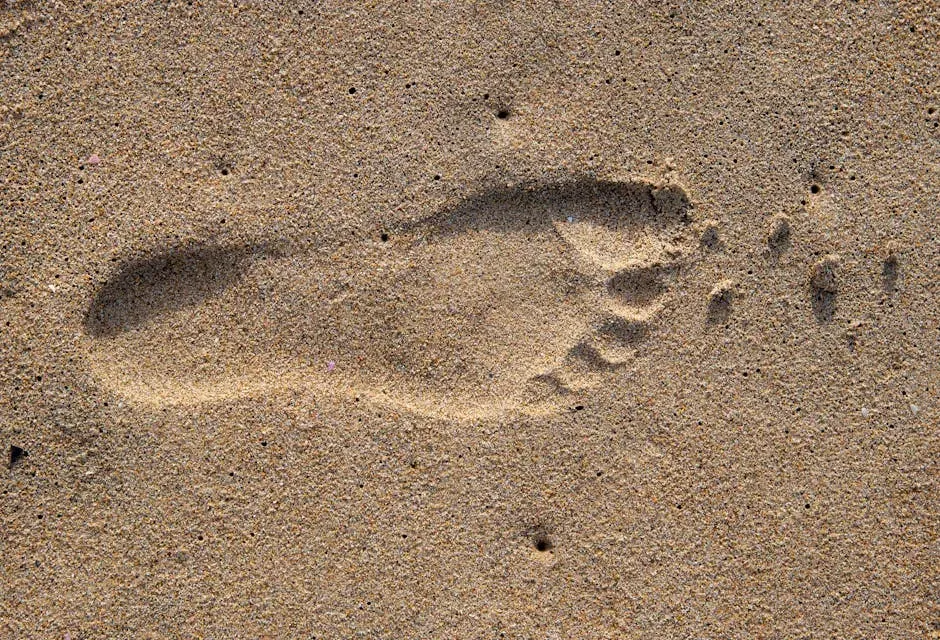
The Nefud Desert of Saudi Arabia today is one of the harshest, most unforgiving landscapes on Earth. So researchers were genuinely surprised by what they found buried beneath its sands. Researchers discovered 120,000-year-old human footprints in the Nefud Desert of Saudi Arabia. Preserved in an ancient lake bed, the tracks were left by a small group of Homo sapiens. These traces reveal surprising details about their movements across the Arabian Peninsula.
The footprints at Alathar Lake not only reveal the presence of early humans but also offer a snapshot of the ecosystem that existed over 100,000 years ago. Surrounding the human footprints, scientists identified tracks from animals such as elephants, camels, and antelopes. The research paints a vivid picture of a lush environment that was vastly different from the arid desert seen today. This is one of the most powerful things fossilized footprints do that bones and tools simply cannot: they paint an entire living scene. Situated between Africa and Asia, the Arabian Peninsula acted as a land bridge, allowing humans to migrate from Africa into other parts of the world. Over time, Arabia’s varied landscapes offered resources that helped early humans survive and settle in the region.
What Footprints Teach You That Bones Never Could
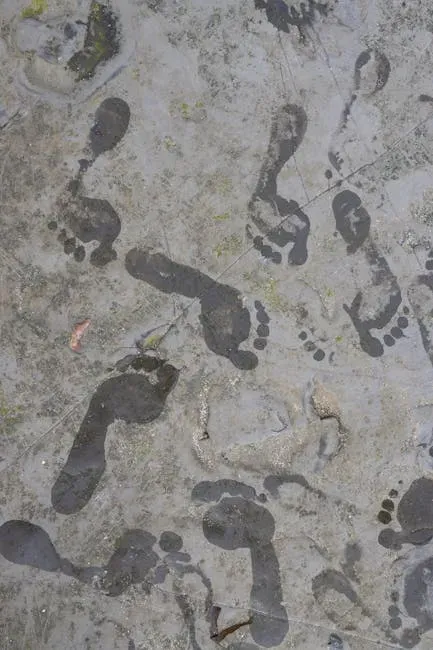
Let’s be real: bones are impressive. But they have limits. A skeleton tells you what someone looked like; a footprint tells you what they were doing. Fossil footprints provide vivid snapshots that bring our fossil relatives to life. With these kinds of data, scientists can see how living individuals, millions of years ago, were moving around their environments and potentially interacting with each other. That is something that cannot really be extracted from bones or stone tools.
Scientists can learn a lot from sites where human footprints have been found, including estimates of height, weight, and gait of the humans who made the footprints, which also tells us how many people made the footprints. That is an almost absurd amount of information locked inside a shallow impression in ancient mud. Fossil discoveries show that the human family tree has many more branches and deeper roots than we knew about even a couple of decades ago. In fact, the number of branches on our evolutionary tree and the length of time has nearly doubled since the famous “Lucy” fossil skeleton was discovered in 1974. Footprints are a critical part of that expanding picture.
When combined with fossils, ancient tools, and DNA, preserved steps become powerful clues in reconstructing ancestral lives. It is hard to say for sure exactly what daily life looked like for our ancestors, but footprints bring us closer than almost anything else. They are the most intimate evidence we have, a direct physical record of a human body in motion, engaged with the world, alive.
Conclusion: The Ground Beneath Your Feet Has a Memory
Every major footprint discovery reshapes what we thought we knew. They move the timeline, challenge the geography, and put a human face on our ancient past. From volcanic ash in Tanzania to desert lakebeds in Saudi Arabia, from South African dunes to the gypsum flats of New Mexico, the Earth has been quietly holding these moments for us, waiting for the right person to look down.
What strikes me most is not the age of these footprints, though the numbers are staggering. It is the ordinariness of what they capture. A parent carrying a child. A group stopping by a lake for water. Hunters following an enormous sloth across a mudflat. These were just people living their lives, completely unaware they were writing history with every step.
The fossil record is not finished speaking. New finds continue to reshape the story, and there are almost certainly more prints waiting beneath sediments we have not yet excavated. There were periods in the past when three or four early human species lived at the same time, even in the same place. We, Homo sapiens, are now the sole surviving species in this once diverse family tree. That is a humbling thought. We are the last ones walking. What footprints are we leaving behind?
What do you think about it? Tell us in the comments.