Southern Thailand – Researchers have tapped into years-old camera trap images to spotlight a potential stronghold for the endangered Asian tapir in the Khlong Saeng–Khao Sok Forest Complex.
Bycatch Data Yields Unexpected Breakthrough
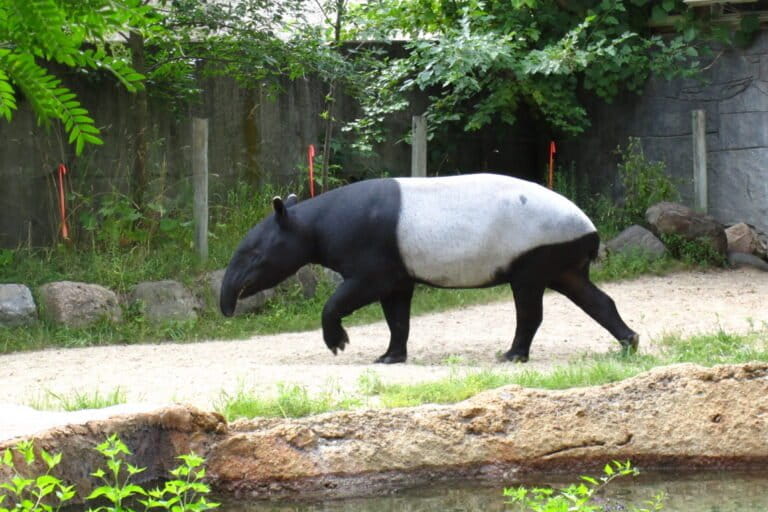
Bycatch Data Yields Unexpected Breakthrough (Image Credits: Imgs.mongabay.com)
Scientists sifted through 91 overlooked photographs captured between 2016 and 2017, identifying at least 43 individual Asian tapirs (Tapirus indicus). These images emerged as bycatch from traps originally deployed to monitor Asian black bears and sun bears across 40 sites in the forest complex.
Lead researcher Wyatt Petersen from King Mongkut’s University of Technology Thonburi spearheaded the analysis, published in Mammalian Biology. The team distinguished each tapir through unique scars, ear notches, and sexual characteristics. Most captures occurred at night, underscoring the species’ nocturnal habits. This approach proved more efficient than traditional foot surveys along forest trails.
Population Estimates Challenge Prior Assumptions
Density models pegged tapir numbers at 6 to 10 individuals per 100 square kilometers, rivaling densities in protected Malaysian reserves. Extrapolating across the vast forest complex suggested up to 436 mature tapirs, dwarfing earlier IUCN figures of fewer than 250 for Thailand and neighboring Myanmar combined.
Experts cautioned that uneven distribution might lower the true count. Still, the findings elevated the area’s status as a critical refuge. Globally, fewer than 2,500 mature Asian tapirs persist, with populations halved by habitat pressures in recent decades.
Behavioral Clues from the Shadows
Tapir detections rose with elevation in this Thai habitat, bucking trends observed in Sumatra’s stable lowlands. Males appeared twice as often as females, hinting that females roam broader territories.
These patterns emerged from the archived data without fresh fieldwork. Adult tapirs, weighing up to 350 kilograms, favor dense undergrowth where their black-and-white camouflage thrives. Such insights refine habitat models for the elusive herbivores.
Persistent Threats Demand Urgent Action
Habitat fragmentation and snares from hunters exact the heaviest toll, compounded by predators like tigers and leopards. Thailand’s remaining groups cling to protected zones, yet numbers dwindle.
- Loss of contiguous forests severs migration routes.
- Snares, meant for smaller game, ensnare the giants indiscriminately.
- Human expansion erodes the vast territories these slow breeders require.
- Edge avoidance keeps tapirs hidden but vulnerable inside shrinking patches.
Ecologist Naparat Suttidate of Walailak University emphasized their ecological role. “They are large, slow-reproducing species requiring large areas of specific habitat [and] play a vital role as seed dispersers, helping to maintain biodiversity in plant communities,” she stated.
Key Takeaways
- 43+ tapirs identified from bear-targeted traps, signaling a density of 6-10 per 100 km².
- Forest complex may harbor up to 436 individuals, far exceeding prior regional estimates.
- Bycatch reuse offers a low-cost tool for tracking shy species amid mounting threats.
The Khlong Saeng–Khao Sok Forest Complex now stands as a beacon for targeted protection, where intact wildlands sustain biodiversity engineers like the Asian tapir. Harnessing overlooked data not only maps hidden populations but also galvanizes support for tropical forests. What steps should follow to safeguard this discovery? Share your thoughts in the comments.