Imagine a world where the land is completely silent, no birds, no rustling of small animals through dry leaves, no footprints in the mud beyond the water’s edge. Then, slowly, something changes. A creature with fins sturdy enough to push against the earth begins to venture out, tentatively, into a world it was never quite built for. That’s the story we’re talking about here, one of the most dramatic transformations in the entire history of life on our planet.
The evolution of early reptiles from aquatic ancestors to fully terrestrial animals is a saga that spans hundreds of millions of years, involves improbable biological innovations, and keeps surprising scientists right up to the present day. In 2026, we know more about this transition than ever before, yet the mystery keeps deepening with every fossil pulled from the rock. So let’s dive in, because the story of how reptiles conquered the land is every bit as wild as it sounds.
The Ancient Ocean Origins: Where the Journey Began
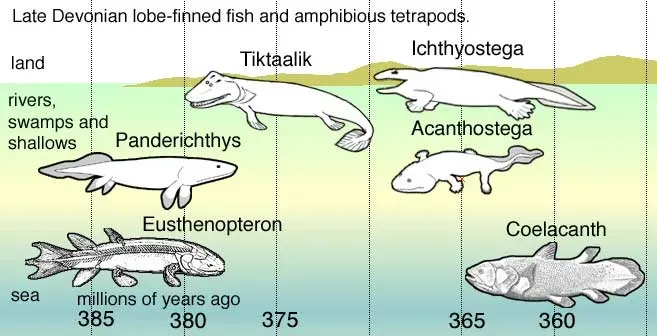
(SVG of Panderichthys) GNU FDL
Panderichthys ???
Acanthostega GNU FDL
Pleaisaides GNU FDL
Eusthenopteron public domain
Eusthenopteron public domain
Coelacanth public domain
Spreadsheet chart and gradient done with Appleworks, images composited and text added in Photoshop Elements, on a 2001 iBook (G3 466). Contact me at w:user talk:dave souza to request any changes.
Enlarged replacement uploaded as image:Fishapods.png, I don’t have the software, time or ability nor skill to produce an svg version. . Dave souza (talk) 11:15, 16 November 2008 (UTC), CC BY-SA 3.0)
Let’s be real: the idea that you and every lizard, crocodile, and snake on Earth share an ancestor that once swam through ancient seas sounds almost too extraordinary to believe. Yet the evidence is overwhelming. Over 370 million years ago, early ancestors of today’s reptiles and mammals crawled out of the water onto land. That single event, or rather that long, grinding process, changed the history of the planet forever.
The Devonian period, often referred to as the “age of fishes,” marks significant developments in the lineage that would give rise to amphibians and, subsequently, reptiles. The Devonian period, spanning from 415 to 355 million years ago, is believed to have been a warm period in Earth’s history, with reconstructions of sea surface temperatures suggesting an average of around 30 to 33 degrees Celsius. Those warm, shallow, nutrient-rich waters were essentially the cradle of everything that would one day walk on land.
Tetrapods originated a long time ago in the Devonian period, when strange lobe-finned fishes began to haul themselves out of the water, probably around 390 million years ago. This ancestral stock later split into two main evolutionary lines. Think of it like a great fork in the road of life, one path heading toward the amphibians we know today, the other leading toward the amniotes, the group that would eventually produce reptiles, birds, and even mammals.
Tiktaalik: The Fishapod That Rewrote the Story
http://nsf.gov/news/mmg/mmg_disp.cfm?med_id=58310
http://nsf.gov/news/news_summ.jsp?cntn_id=106807
https://flickr.com/photos/nsf_beta/3705198718, Public domain)
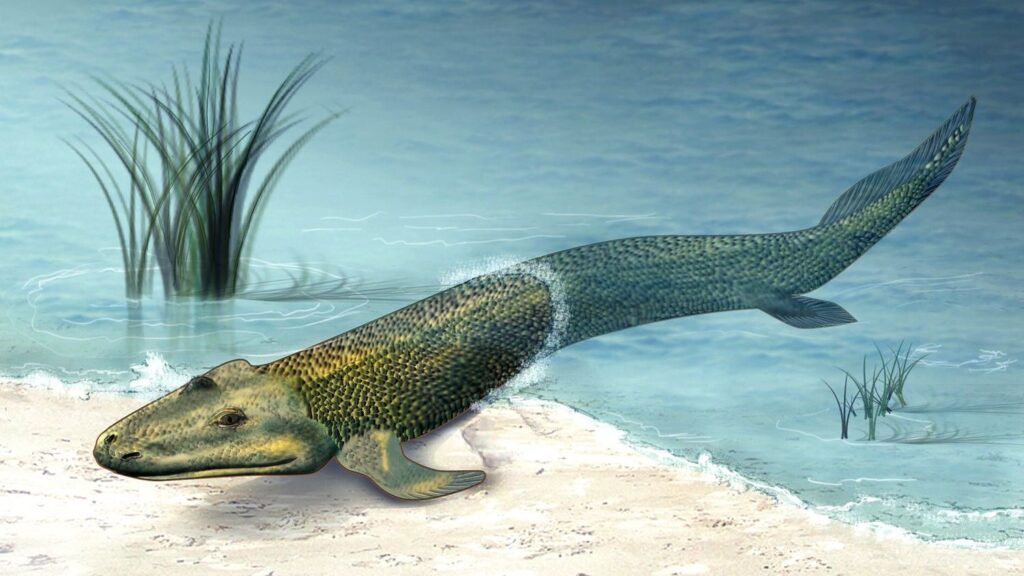
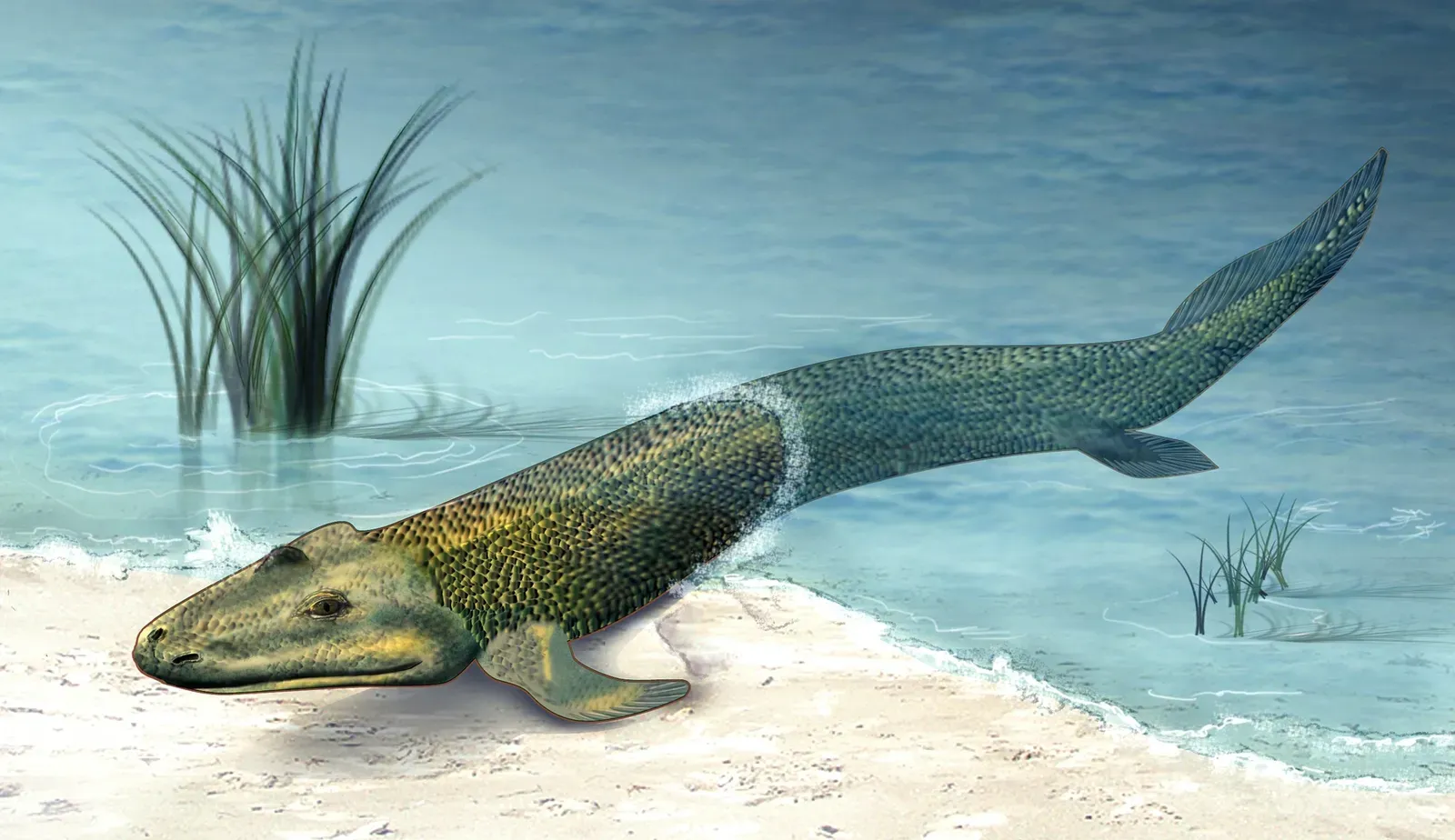
If you had to pick one single fossil that captures the most dramatic moment in reptile evolution, it would have to be Tiktaalik. Tiktaalik roseae is an extinct fishlike aquatic animal that lived about 380 to 385 million years ago during the earliest late Devonian Period and was a very close relative of the direct ancestors of tetrapods. Honestly, when you first see a reconstruction of this animal, it looks like something out of a fever dream, a creature caught halfway between two worlds.
Unearthed in Arctic Canada, Tiktaalik is a non-tetrapod member of bony fish, complete with scales and gills, but it has a triangular, flattened head and unusual fins. Its fins have thin ray bones for paddling like most fish, but they also have sturdy interior bones that would have allowed Tiktaalik to prop itself up in shallow water and use its limbs for support as most four-legged animals do. That’s the key detail right there. The bones of the arm were already there, buried inside those fins, waiting for millions of years to become something more.
Tiktaalik possesses a unique trait: the ability to push itself up using its arm-like fins. The anatomy of Tiktaalik demonstrates that the transition from fin to limb had occurred partially in water-residing organisms, disproving the earlier proposal that the change occurred in early terrestrial organisms. It is, in a very real sense, the moment evolution started practicing for the land, right there in the shallow water.
The Oldest Footprints: A Stunning Discovery That Changed Everything
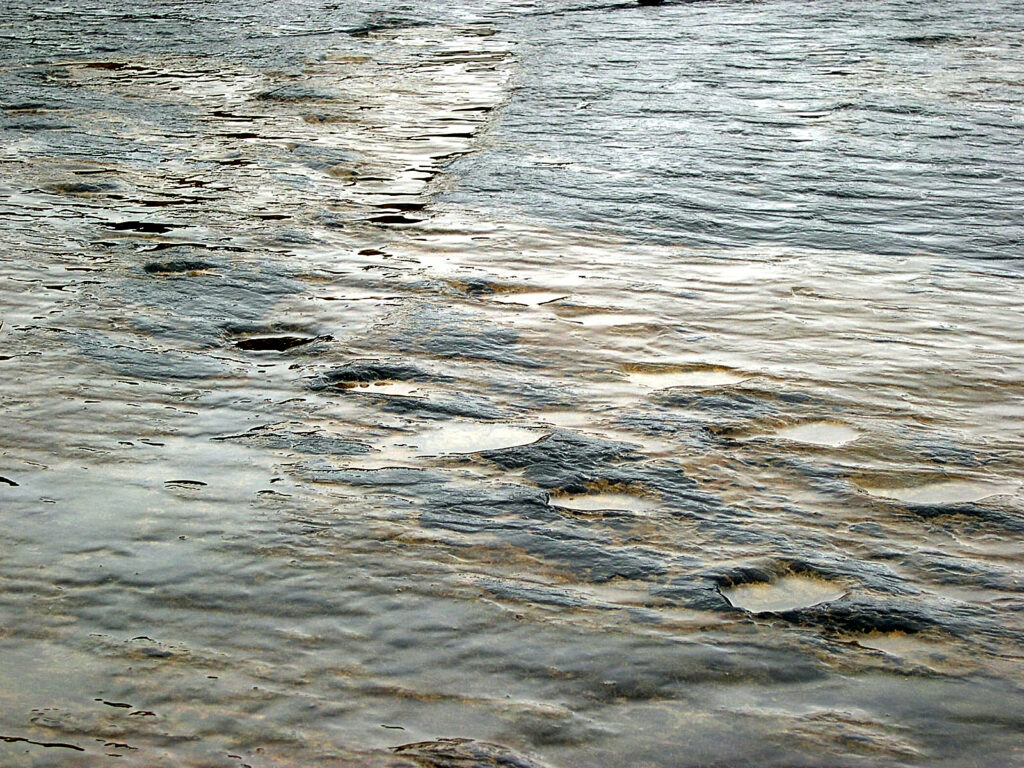
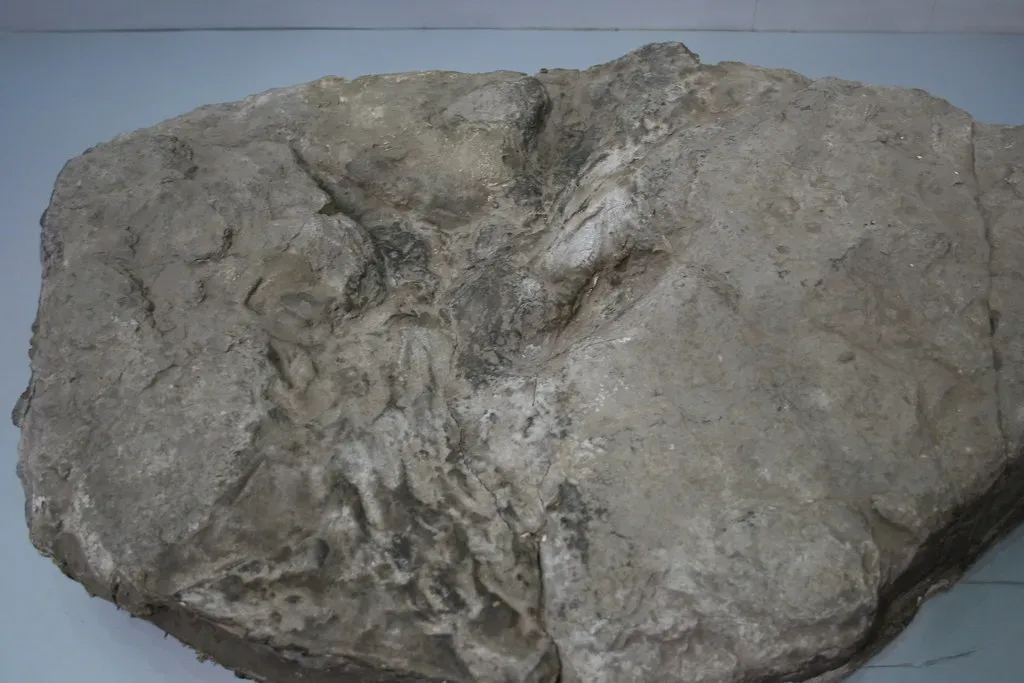
Here’s where the story takes a genuinely shocking turn, one that even scientists weren’t prepared for. Distinct clawed footprints found on a slab of 356 million-year-old rock from Australia suggest that reptile relatives appeared between 35 million and 40 million years earlier than previously believed. To put that in perspective, that’s not a minor calendar adjustment. That’s like learning a chapter you thought happened in one century actually happened in a completely different era.
The rock slab was found by amateur paleontologists in the Snowy Plains Formation in Victoria, Australia, and appears to show two sets of tracks from the same animal representing the earliest clawed footprints ever discovered. The shape of the feet is similar to a modern water monitor’s, and though the animal’s exact size is unknown, it may have resembled a small goanna-like creature about 80 centimeters in length. The surface of the slab is covered with dimples made by raindrops, recording a brief shower just before the footprints were made, proving the creatures were moving about on dry land. That detail about the raindrops still gives me chills.
This discovery pushes back the likely origin of crown-group amniotes by at least 35 to 40 million years. The implications for the early evolution of tetrapods are profound. It seems that tetrapod evolution proceeded much faster, and the Devonian tetrapod record is much less complete, than has been thought. In other words, there’s a whole chapter of history out there that we simply haven’t found yet.
The Revolutionary Amniotic Egg: Nature’s Greatest Invention
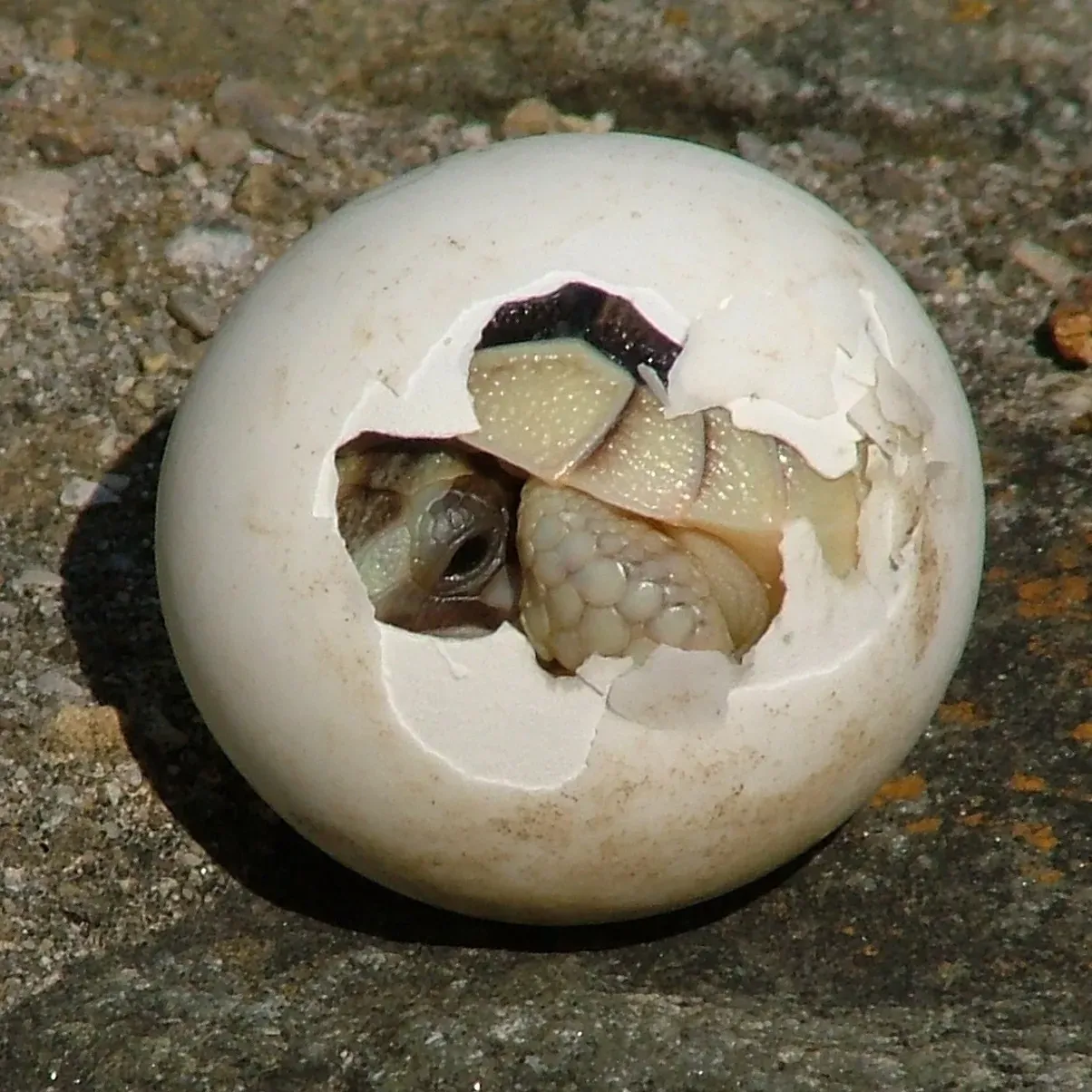
If you want to understand why reptiles succeeded where amphibians could not fully break away from water, you need to understand one extraordinary biological innovation. In evolutionary terms, reptiles advanced beyond the amphibians by becoming capable of living completely terrestrial existences, without the need to return to the water for reproduction. The beginning of the reptiles is marked by the appearance of amniote eggs, in which an embryo could develop on land in a protected watery environment without having to pass through the larval stages typical of the amphibian life cycle. This was nothing short of revolutionary.
The evolution of amniotic membranes meant that the embryos of amniotes were provided with their own aquatic environment, which led to less dependence on water for development and thus allowed the amniotes to branch out into drier environments. This was a significant development that distinguished them from amphibians, which were restricted to moist environments due to their shell-less eggs. Picture it like the difference between building a temporary shelter in the rain versus carrying your house with you wherever you go.
Before the amniotes, the first tetrapods to evolve limbs from fishy fins were broadly amphibious in habits, having to live in or near water to feed and breed. When the amniotes came on the scene around 320 million years ago, they were able to break away from the water by evolving waterproof skin and other ways to control water loss. Interestingly, recent research has even suggested that the earliest amniotes may have retained their young inside the body rather than immediately laying hard-shelled eggs, making the whole story even more nuanced than once thought.
Waterproof Skin and Scaly Armor: The Body’s Land-Ready Makeover
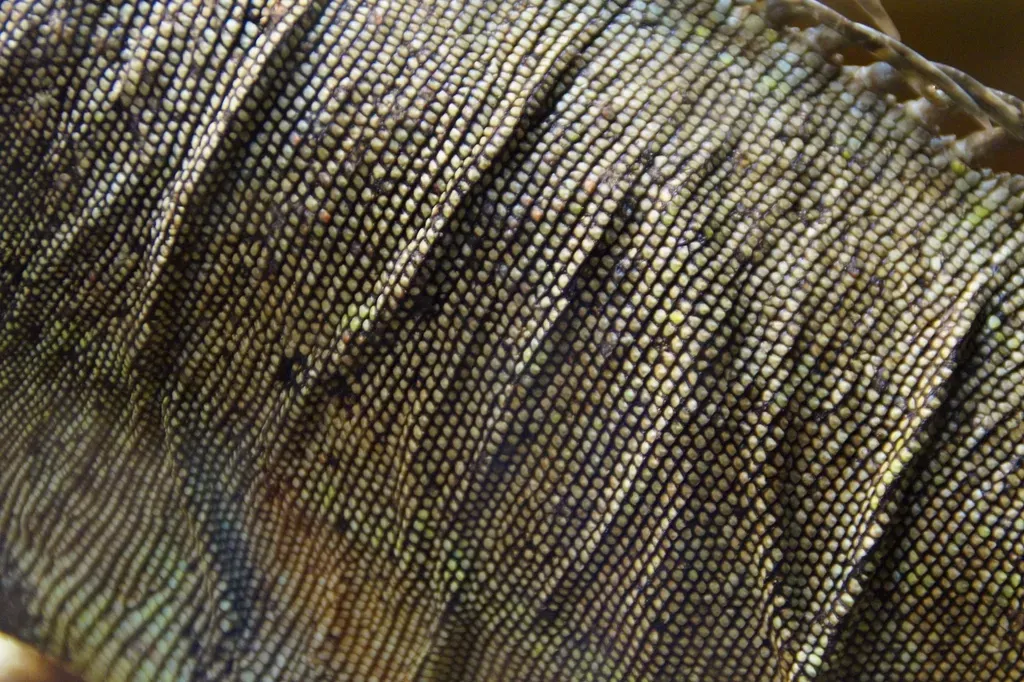
You might not think much about your own skin, but for early reptiles, the development of a new kind of skin was literally the difference between surviving on land or drying out and dying. One of the key adaptations that permitted reptiles to live on land was the development of scaly skin containing the protein keratin, which prevented water loss from the skin. Keratin is the same structural protein found in your fingernails and hair, so in a very real sense, you carry a piece of that ancient reptilian heritage with you right now.
Alpha keratin is a strong structural protein found in the skin of all amniotes, and it prevents desiccation by preventing water loss through the skin. A number of keratinous epidermal structures have emerged in the descendants of various reptilian lineages and some have become defining characters for these lineages, including scales, claws, nails, horns, feathers, and hair. Compared to the permeable skin of amphibians, this provided amniotes with an improved ability to take advantage of niches farther from water. It’s a remarkable evolutionary chain that connects the scales of a crocodile to the feathers of an eagle.
The presence of an amniotic buffer, of a water-impermeable skin, and of a robust, air-breathing, respiratory system, allow amniotes to live on land as true terrestrial animals. The evolutionarily derived characteristics of amniotes include the amniotic egg and its four extraembryonic membranes, a thicker and more waterproof skin, and rib ventilation of the lungs, with ventilation performed by drawing air into and out of the lungs by muscles such as the costal rib muscles and the diaphragm. Each of these systems had to evolve in concert, and that kind of coordinated biological transformation across millions of years is genuinely awe-inspiring.
Hylonomus and the First True Reptiles: Small Beginnings, Big Legacy
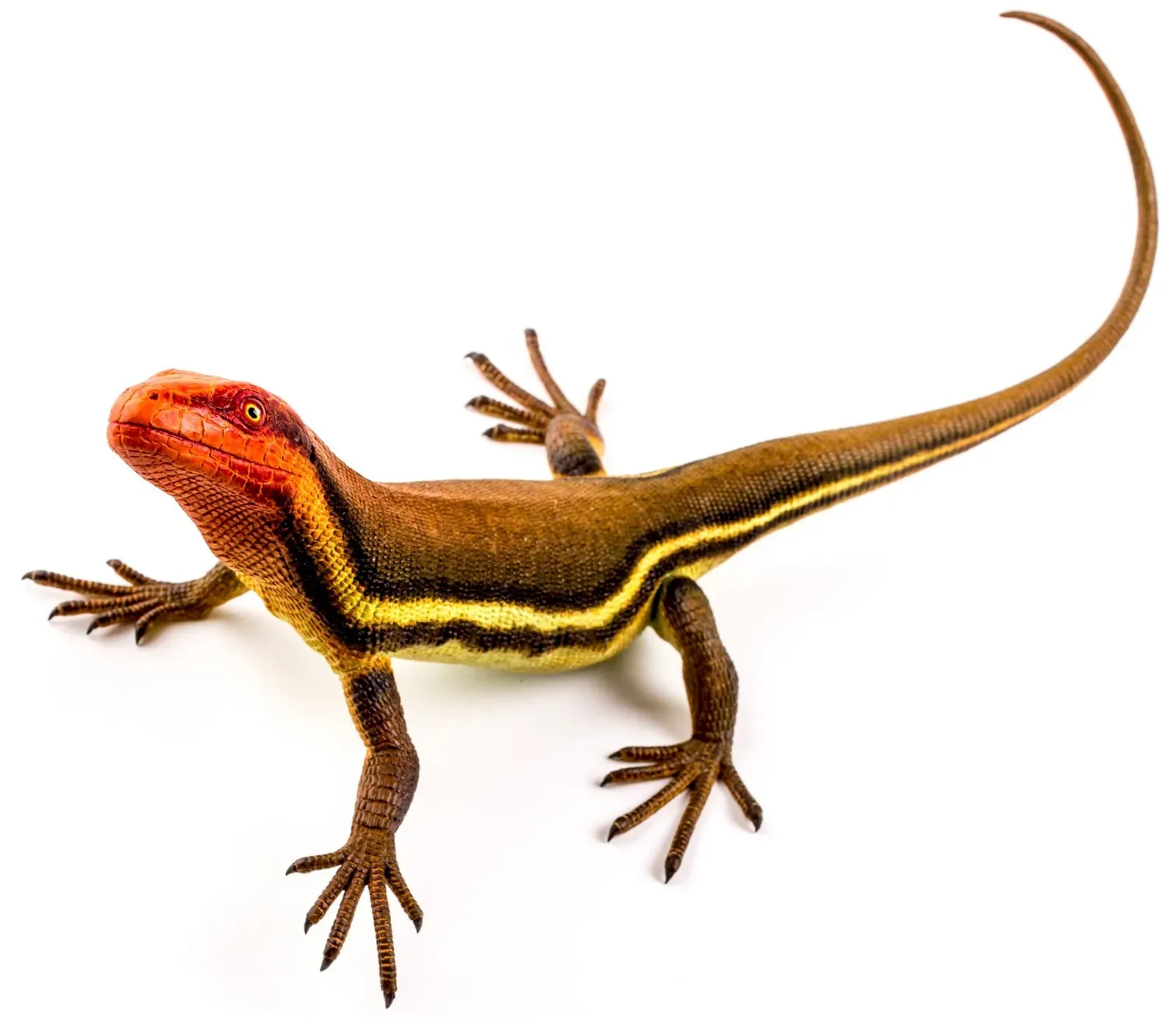
This file was uploaded by MUSE – Science Museum of Trento in cooperation with Wikimedia Italia., CC BY-SA 3.0)
So what did the first true reptiles actually look like? Here’s the thing: they weren’t the towering, thundering giants you might imagine. The earliest known reptiles, Hylonomus and Paleothyris, date from Late Carboniferous deposits of North America. These reptiles were small lizardlike animals that apparently lived in forested habitats. That’s it. Small. Quiet. Scurrying through ancient forests while gigantic insects buzzed overhead in air far richer in oxygen than what we breathe today.
The 318 million-year-old reptile footprints were found in sea cliffs on the Bay of Fundy, New Brunswick, Canada. They show that reptiles were the first vertebrates to conquer dry continental interiors. Amphibians were the first creatures to make it onto land, but it has long been suspected that reptiles were the first to colonize continental interiors, since they don’t need aquatic habitats to breed, unlike their amphibian cousins. That distinction matters enormously because colonizing the interior of continents, far from any water, opened up an almost unimaginably vast new ecological frontier.
Stratigraphic calibration of results indicates that parareptiles began their evolutionary radiation before the close of the Carboniferous Period, and that the diversity of end-Carboniferous reptiles is actually far greater than suggested by previous work. Reptiles arose about 320 million years ago during the Carboniferous period. From that humble beginning, a lineage would eventually give rise to the dinosaurs, the flying pterosaurs, the marine plesiosaurs, and ultimately the birds singing outside your window this morning. Did you ever expect that a small lizard-like creature scurrying through a Carboniferous swamp would start a dynasty that never truly ended?
Conclusion: A Story Still Being Written
The evolution of early reptiles from sea to land is not a closed chapter in natural history. It is a story that researchers are actively rewriting, sometimes in dramatic fashion. The discovery of those ancient footprints in Australia in 2025 alone pushed back the timeline of reptile origins by tens of millions of years, reminding us that our understanding of this incredible transition is still incomplete. Every new fossil, every new scan, every new analysis has the potential to upend what we thought we knew.
What makes this story so compelling is its intimacy with your own existence. Today, all animals with limbs that live on land, including humans, are descended from reptiles. The scaly skin, the clawed feet, the egg designed to keep moisture inside, all of these innovations were once radical departures from the norm, solved one generation at a time over hundreds of millions of years. When you look at a lizard sunning itself on a rock, you’re not just watching a cold-blooded animal catching warmth. You’re looking at the living result of one of the most audacious evolutionary journeys this planet has ever witnessed. What part of that journey surprises you most? Share your thoughts in the comments below.