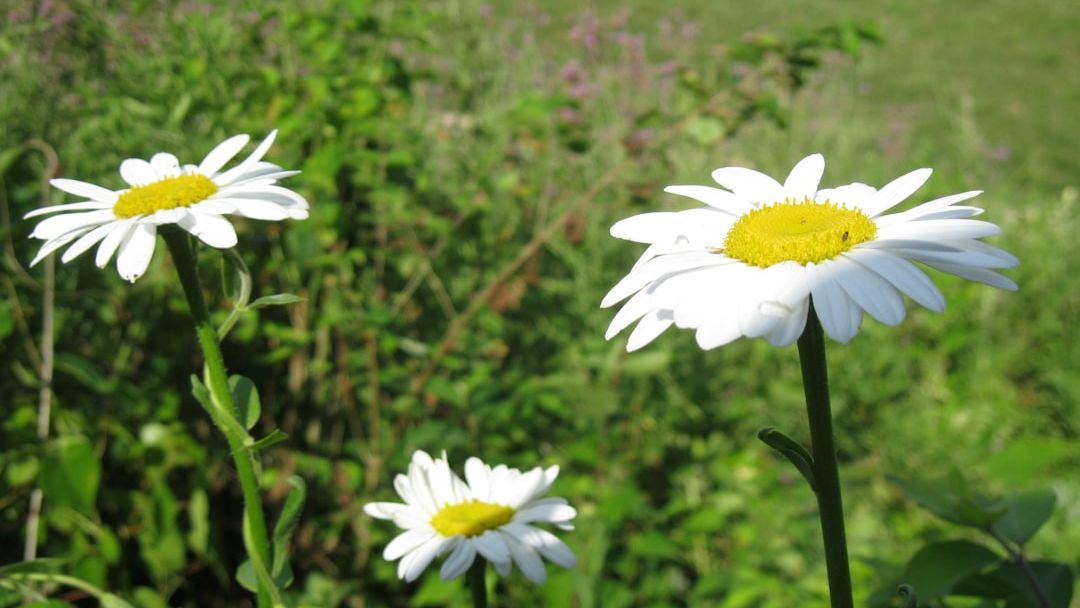
The Rapid Evolution of Giant Daisies – Image for illustrative purposes only (Image credits: Unsplash)
Galápagos Islands – Scientists have documented the swift evolutionary radiation of Scalesia, the archipelago’s giant daisies, in a manner strikingly similar to Charles Darwin’s famous finches.[1][2] These plants, which arrived from mainland South America around one million years ago, diversified into 15 species that occupy diverse habitats from humid forests to arid lowlands. A recent genomic analysis highlights how natural selection shaped their forms, offering fresh insights into plant adaptation on isolated islands.
Scalesia’s Adaptive Radiation Takes Root
The genus Scalesia belongs to the daisy family and stands out for its morphological variety. Some species grow as low shrubs, while others reach heights of tall trees. Leaves differ dramatically too, ranging from broad and smooth to small and deeply lobed.[1] These lobed structures help the plants cope with the Galápagos’ hot, dry conditions by improving airflow and minimizing water loss.
Researchers compared this diversification to the finches Darwin observed during his 1835 voyage. Just as those birds developed specialized beaks for specific foods, Scalesia species adapted to unique ecological niches. All extant species emerged relatively recently, within the last million years, underscoring the pace of evolution in this isolated setting.[2]
Genetic Pathways to Parallel Adaptation
A study published in Nature Communications on April 16, 2026, examined genomes from 396 individuals across all 15 Scalesia species. The team integrated genomic data with leaf measurements and gene expression profiles from developing leaves. They found that lobed leaves – a key adaptation – evolved independently multiple times.[2][1]
Co-author Vanessa Bieker noted the surprise in these findings: “This provides a clear example of parallel evolution: nature arriving at the same solution multiple times, but through different genetic pathways. Instead of being controlled by a single ‘master gene,’ evolution appears to draw on an entire network of interacting genes, tweaking different components to produce similar outcomes.”[1] Selection acted on various regulators in the pathway governing leaf polarity – the adaxial (upper) and abaxial (lower) surfaces. The plants’ allopolyploid origins, stemming from hybrid ancestors with doubled chromosomes, supplied the raw genetic diversity needed for such flexibility.[2]
Key Genetic Insights:
- Lobed leaves evolved convergently via diversifying selection.
- Different genes in the leaf development network drove similar traits.
- Founder populations retained high diversity through polyploidy.
- Shared ancestral variation fueled rapid morphological shifts.
Signs of Speciation in Progress
Analysis revealed substantial genetic differences among populations within the same species, even after accounting for isolation. Michael D. Martin, a co-author from the Norwegian University of Science and Technology, observed: “Populations within the same species show large genetic differences and have been isolated from one another for long periods. This means new species may be in the process of forming.”[1] Such nascent speciation reflects long-term separation across the islands’ varied terrains.
This pattern echoes earlier work on Scalesia’s radiation. A 2020 study detailed how the plants colonized multiple islands early on, leading to parallel speciation events. The common ancestor, an allotetraploid hybrid, provided a genetic toolkit for exploiting new environments.[3]
Conservation Implications for Island Endemics
Scalesia species face mounting threats, including invasive species, habitat loss, and climate shifts. Some, like Scalesia atractyloides on Santiago Island, qualify as critically endangered. The high intra-specific genetic structure uncovered in the latest research complicates preservation efforts, as isolated populations verge on becoming distinct species.[2]
Understanding these dynamics aids targeted interventions. Protecting genetic diversity now could safeguard future evolutionary potential. As islands like the Galápagos continue to reveal nature’s adaptability, they also warn of vulnerabilities in a changing world.
The story of Scalesia demonstrates evolution’s creativity under constraint. A single colonizer sparked a botanical explosion, proving that isolation and variation can yield extraordinary diversity in short order.