America has always held its secrets in the dirt. Beneath parking lots, under National Park trails, inside eroding badlands cliffs, and even below the foundations of old armouries, some of the most breathtaking dinosaur discoveries in scientific history have quietly been waiting. You probably walk past history like this more often than you realize.
What makes the American story of dinosaur discovery so remarkable is not just the sheer number of finds. It is the way each one has forced scientists to throw out old assumptions, redraw evolutionary timelines, and rethink how these creatures lived, moved, and died. Buckle up, because the ground beneath your feet is far older, and far stranger, than you might imagine. Let’s dive in.
New Jersey’s Backyard Bombshell: The Discovery That Changed Everything
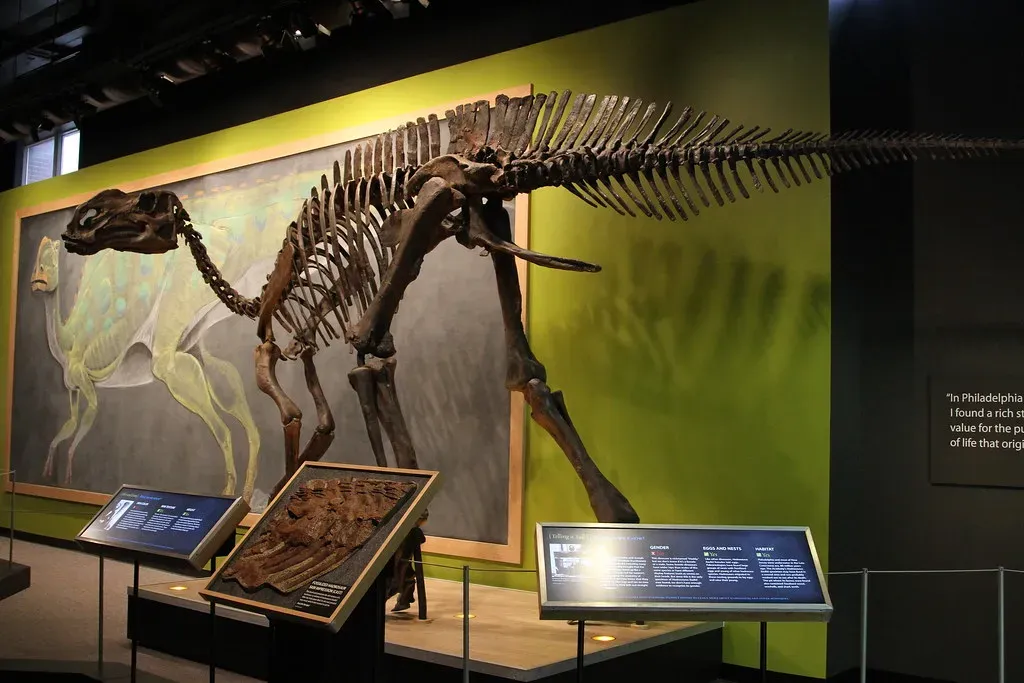
Imagine a farmer digging in a marl pit in Haddonfield, New Jersey, back in 1858, not knowing he was about to upend scientific history. The Hadrosaurus foulkii, the first nearly complete dinosaur skeleton to be discovered virtually intact anywhere in the world, was unearthed in October 1858, in a marl pit in Haddonfield, Camden County, by William Parker Foulke. That find was so enormous, both literally and scientifically, that it stunned the entire academic community.
The discovery of this 25-foot, eight-ton, duck-billed herbivorous creature was so unexpected that it startled scientific thinking of the day and led to a revision of many conventional ideas about the physical structure and life habits of prehistoric reptiles. This dinosaur, which lived 70 to 100 million years ago during the Cretaceous period, was also the first dinosaur ever displayed for public view, drawing tens of thousands of visitors to the Academy of Natural Sciences from the 1870s to the 1940s. Honestly, it is hard to overstate how enormous this single pit discovery was for all of science.
The Bone Wars: America’s Most Gloriously Chaotic Scientific Feud
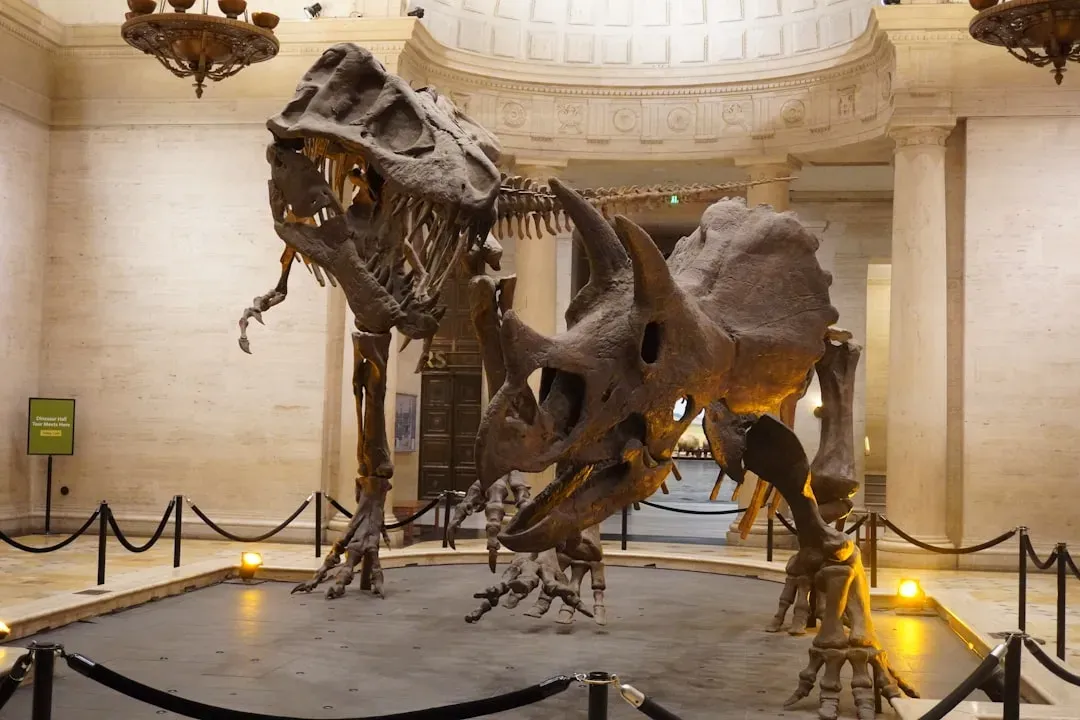
Here’s the thing about scientific progress – sometimes it moves fastest when two people absolutely cannot stand each other. A fierce rivalry emerged during the late 1800s between two palaeontologists, Othniel Charles Marsh and Edward Drinker Cope. Both men fought relentlessly to find and name the most dinosaurs, and as time went on, the feud became even more bitter, with tactics including spying, theft, and even the destruction of fossils to get ahead.
As messy as it all was, the scientific payoff was staggering. What came out of this period was a significant increase in knowledge of North American dinosaurs, including the discovery of many near-complete specimens. In total, the two men described 136 species of dinosaurs, including such famous names as Stegosaurus, Triceratops, Allosaurus, Diplodocus, and Brontosaurus. Two feuding academics gave you essentially the entire dinosaur hall of fame. You have to appreciate the irony of that.
Carnegie Quarry and the Wall of Bones: Utah’s Treasure Buried in Rock
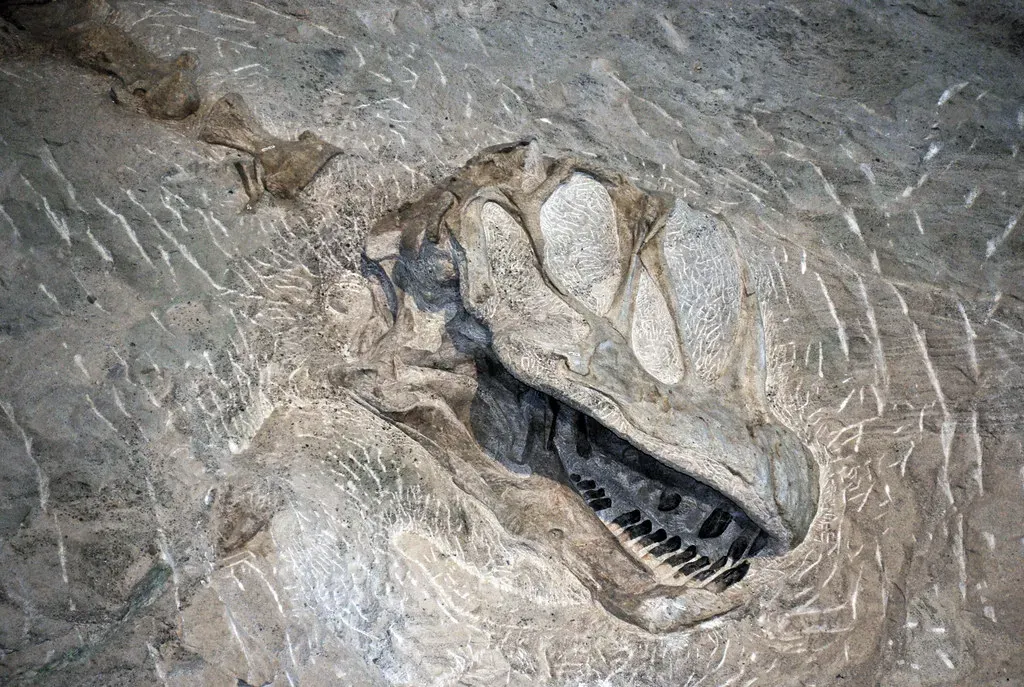
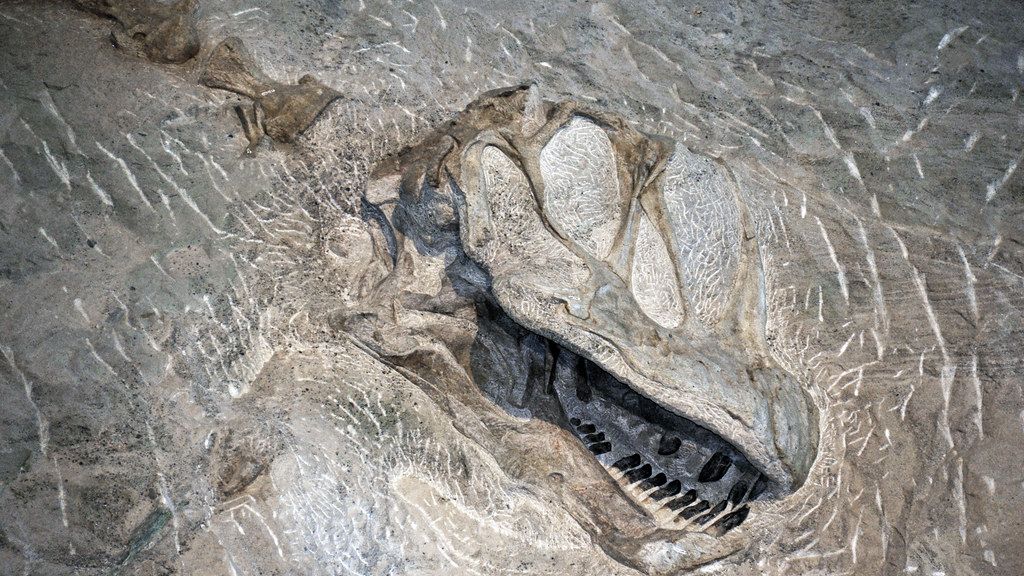
Picture a sandstone cliff with thousands of dinosaur bones just poking out of it, right there in the open. That is exactly what you would see if you visited Dinosaur National Monument today. The dinosaur fossil beds were discovered in 1909 by Earl Douglass, a paleontologist working and collecting for the Carnegie Museum of Natural History. He and his crews excavated thousands of fossils and shipped them back to the museum in Pittsburgh, Pennsylvania for study and display. President Woodrow Wilson proclaimed the dinosaur beds as Dinosaur National Monument in 1915.
Numerous scientifically important fossils were recovered from the quarry, including the most complete sauropod fossil ever found, and the largest nearly complete dinosaur skeleton ever found. Sauropod skeletons from the quarry are displayed at the Smithsonian Museum of Natural History, the Royal Ontario Museum, the Carnegie Museum of Natural History, the American Museum of Natural History, and the Denver Museum of Nature and Science. That is essentially the greatest hits collection of natural history museums, all filled from a single stretch of Utah rock.
The Morrison Formation: America’s Single Richest Dinosaur Ground
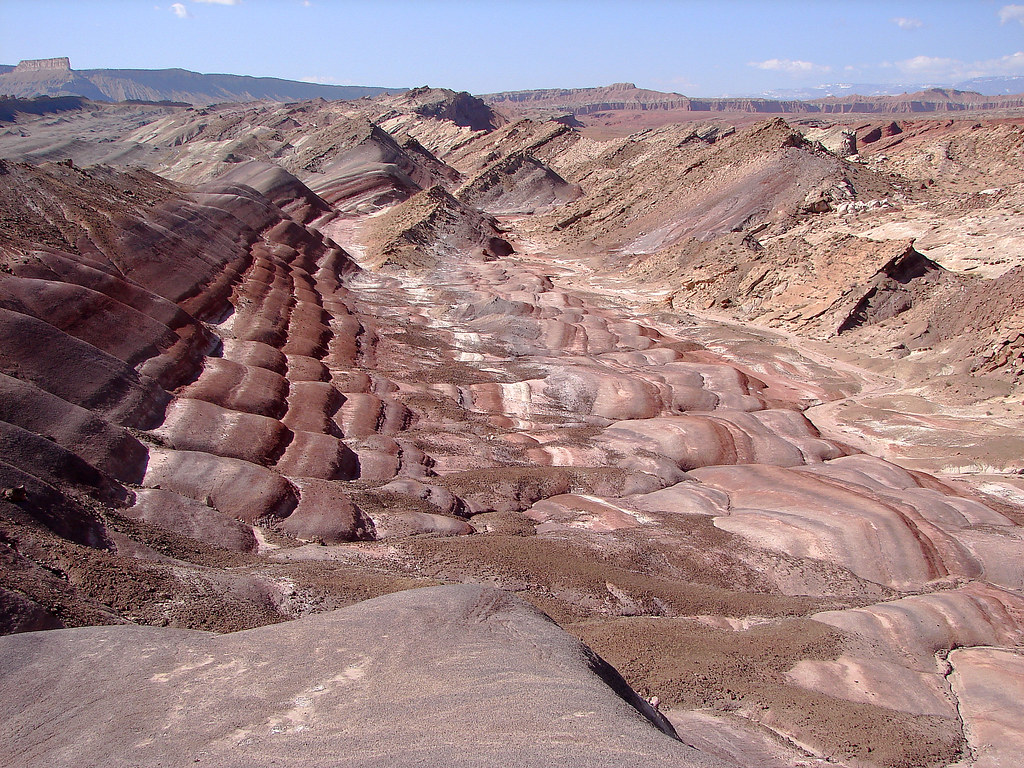
If you are looking for the single most fertile dinosaur real estate on the planet, you do not need to travel to Mongolia or Argentina. You just need to head west. The Morrison Formation is a distinctive sequence of Upper Jurassic sedimentary rock found in the western United States which has been the most fertile source of dinosaur fossils in North America. It is composed of mudstone, sandstone, siltstone, and limestone, and most of the fossils occur in the green siltstone beds and lower sandstones, relics of the rivers and floodplains of the Jurassic period.
The USA’s Morrison Formation has produced some of the most famous dinosaurs in the world, such as Allosaurus and Stegosaurus. The Late Jurassic Morrison Formation is found in several U.S. states, including Colorado, Utah, Wyoming, Montana, New Mexico, Oklahoma, South Dakota, and Texas, and is notable as being the most fertile single source of dinosaur fossils in the world. Think of it like a prehistoric cemetery that stretches across half a continent. The scale of it is almost surreal.
Hell Creek Formation: Where the Age of Dinosaurs Came to a Violent End
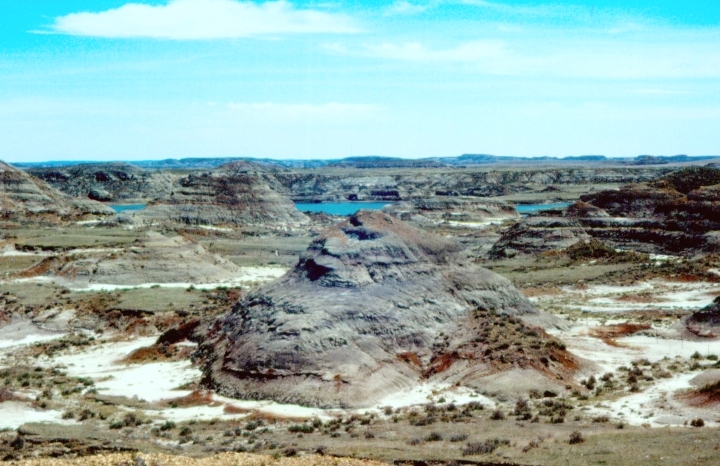
If any stretch of American ground could be called the setting for the ultimate extinction scene, it would be the Hell Creek Formation. The Hell Creek Formation extends over Montana, Wyoming, North Dakota, and South Dakota, and was deposited during the last 2.2 million years of the Cretaceous, making it among the most fossiliferous and intensively studied Late Cretaceous terrestrial deposits in the world. That is like having a crime scene preserved right at the moment of impact.
Fossils in the formation include the remains of plants, dinosaurs, and many small Cretaceous mammals, including some early primates. The rich dinosaur fauna includes theropods such as Tyrannosaurus, pachycephalosaurs, ornithopods, ankylosaurs, and ceratopsians such as Triceratops. The formation also provides evidence of an extra-terrestrial impact event, preserved as a thin clay layer that contains large quantities of the rare Earth element iridium, marking the mass extinction event that brought about the demise of the non-avian dinosaurs. It is hard to think of any other place on Earth where you can literally stand at the boundary between two geological eras.
Ahvaytum bahndooiveche: Wyoming’s Tiny Dinosaur That Rewrote the Origin Story
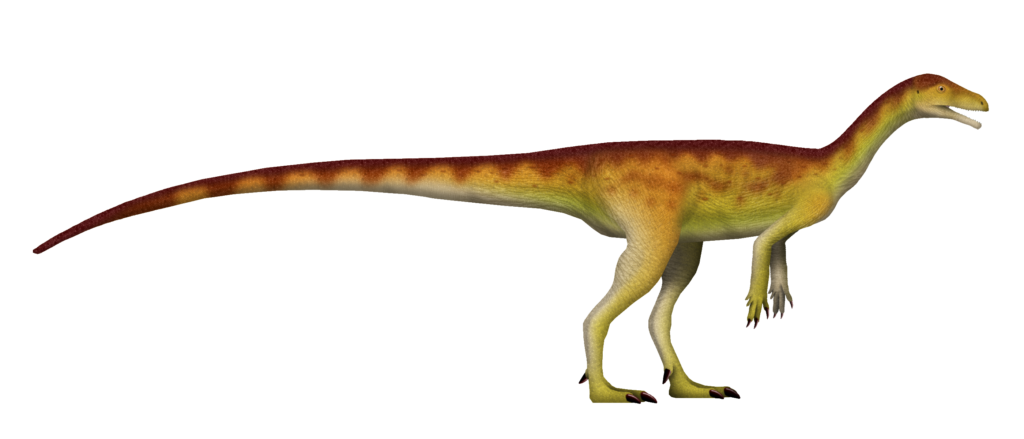
I know it sounds crazy, but one of the most important dinosaur discoveries in recent years involved a chicken-sized animal in Wyoming. Not a giant. Not a predator with bone-crushing jaws. Just a tiny little creature with extraordinarily big implications. Researchers announced the discovery of the oldest dinosaur in the northern hemisphere, Ahvaytum bahndooiveche. The team spent years analyzing fossils from the new, chicken-sized dinosaur, which were found in present-day Wyoming in 2013.
High-precision radioisotopic dating of rocks in the formation that held Ahvaytum’s fossils revealed that the dinosaur was present in the northern hemisphere around 230 million years ago. The researchers also found an early dinosaur-like track in slightly older rocks, demonstrating that dinosaurs or their cousins were already in the region a few million years prior to Ahvaytum. The name Ahvaytum bahndooiveche, meaning “long ago dinosaur,” was created by study author Reba Teran, a member of the Eastern Shoshone Tribe, whose ancestral lands include the site in Wyoming where it was found. That combination of scientific breakthrough and cultural honor is genuinely moving, when you stop to think about it.
Lokiceratops: Montana’s Bizarre Horned Giant With a Viking Name
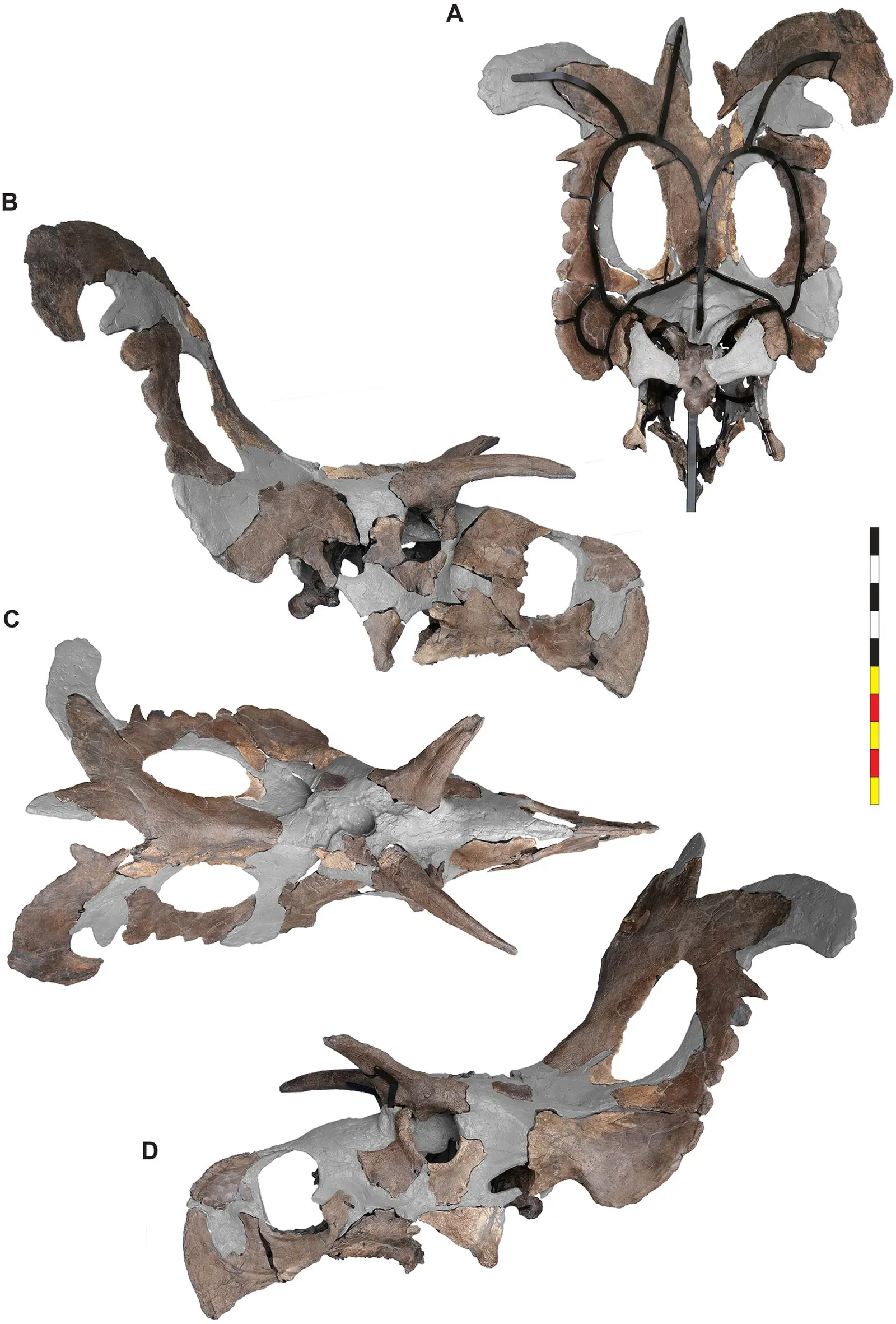
Some dinosaurs just demand a dramatic entrance. Lokiceratops rangiformis is one of them. Estimated to be 22 feet long and weighing 11,000 pounds, Lokiceratops is the largest dinosaur from the group of horned dinosaurs called centrosaurines ever found in North America. It has the largest frill horns ever seen on a horned dinosaur and lacks the nose horn that is characteristic among its kin. Picture a five-ton animal with horns so exaggerated they look borrowed from Norse mythology. That is basically what scientists found.
Lokiceratops was excavated from the same rock layer as four other dinosaur species, indicating that five different dinosaurs lived side by side 78 million years ago in the swamps and coastal plains along the eastern shore of Laramidia, the western landmass of North America created when a seaway divided the continent. Three of these species were closely related but not found outside the region, and this diversity is comparable to what you would see on the plains of East Africa today with different horned ungulates. Five similar species in one small region, evolving side by side. That is diversity that makes today’s African savannah look restrained.
Nanotyrannus and the Dueling Dinosaurs: North Carolina’s Game-Changing Find
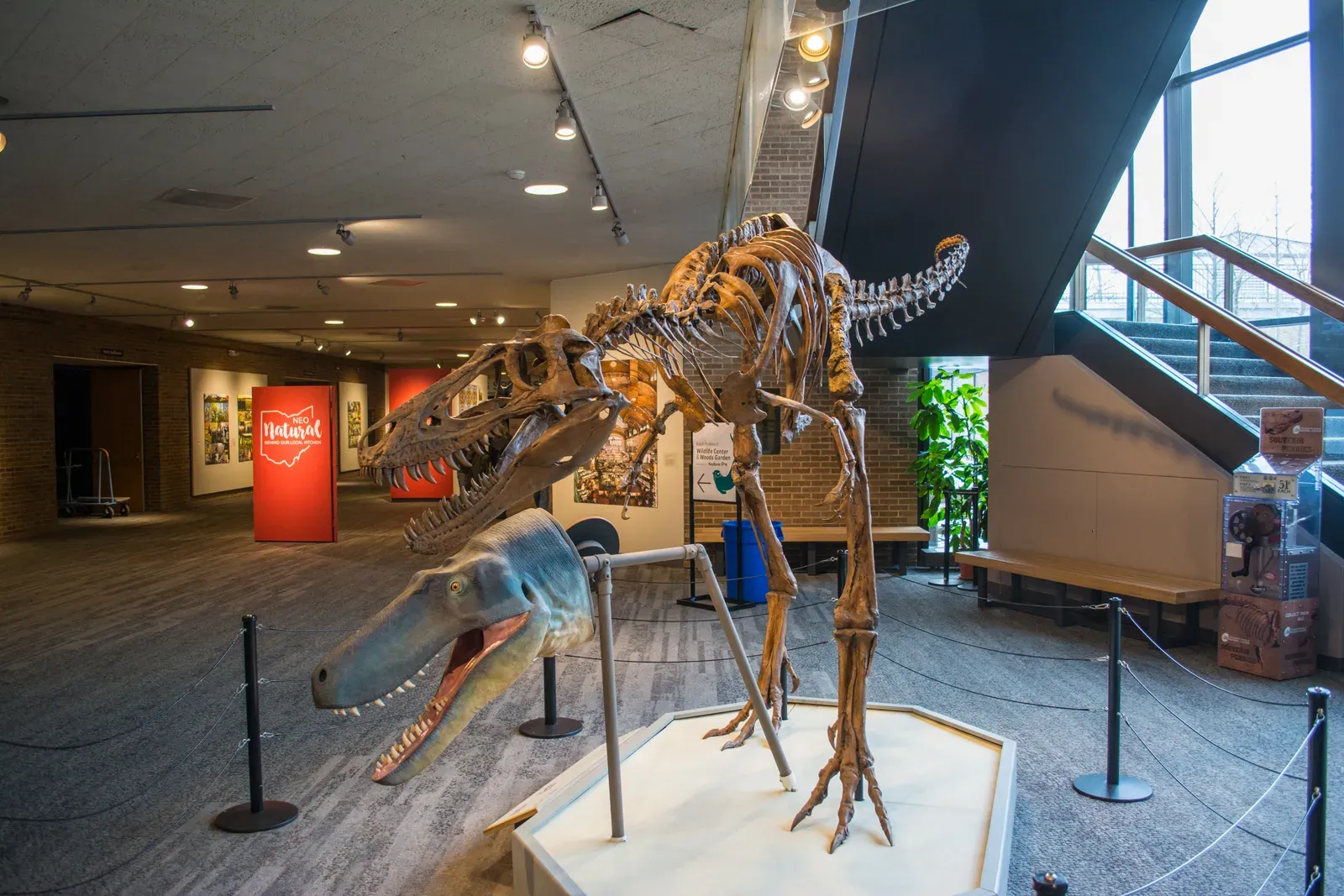
For decades, paleontologists have debated whether a small tyrannosaur called Nanotyrannus was truly its own species or just a young T. rex. That debate, it turns out, has now been settled, and the answer is stunning. For decades, paleontologists used Nanotyrannus fossils to model T. rex growth and behavior. New evidence reveals that those studies were based on two entirely different animals, and that multiple tyrannosaur species inhabited the same ecosystems in the final million years before the mass extinction event.
Confirmation of the validity of Nanotyrannus means that predator diversity in the last million years of the Cretaceous was much higher than previously thought. Paleontologists in the North Carolina Museum of Natural Sciences’ SECU DinoLab, the world’s only paleontology preparation lab regularly open to the public, have been studying the pair of exquisitely preserved, 67-million-year-old specimens. The idea that two different large tyrannosaurs were prowling the same landscape at the same time is, to put it plainly, one of the most exciting paleontological revelations in recent memory.
Conclusion: The Ground Beneath Your Feet Still Holds Secrets
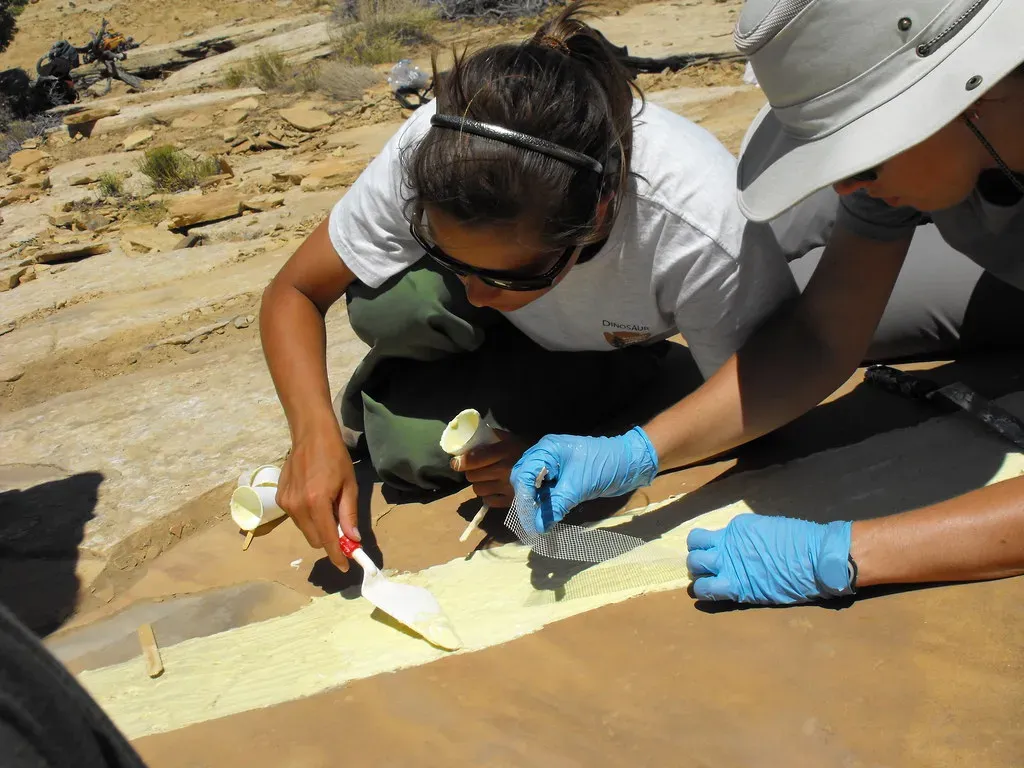
What is perhaps most thrilling about America’s dinosaur story is that it is nowhere near finished. Recent parking lot construction work in Dinosaur National Monument revealed previously uncovered dinosaur fossils near the Quarry Exhibit Hall, marking the first fossil excavations at that location since 1924. A parking lot. Under an existing monument. Still yielding new bones.
From a marl pit in New Jersey to a chicken-sized Wyoming fossil that rewrote evolutionary timelines, from the chaotic genius of the Bone Wars to a five-ton horned giant named after a Norse god, America’s dinosaur discoveries have repeatedly proven that the most incredible things are often the ones hiding in plain sight. The next world-changing fossil might already be eroding out of a hillside somewhere, just waiting for the right pair of eyes. So, when you’re next walking through your local national park or state trail, you might want to glance down a little more often. What would you think if the next great find turned out to be right under your feet?