
Imagine standing on an African savannah sixty thousand years ago and realizing you’re not alone in the way you think you are. The landscape is full of familiar animals, the sky looks like the same sky we see now, but the truly startling part is this: you are not the only kind of human. Other humans, with different faces, bodies, and even brains, are out there too – close enough to meet, trade with, fight, or fall in love with. That idea feels almost like science fiction, yet it’s one of the most grounded, well-supported truths in human evolution.
For most of us, “human” is almost a synonym for “Homo sapiens.” One species, one story. But the fossil record and ancient DNA have shattered that illusion. Our past is crowded. At several points in the last few hundred thousand years, there were multiple human species alive at the same time – at least four, maybe six or more overlapping on the planet. The honest answer is both thrilling and frustrating: we know enough to say the world used to be much more humanly diverse than it is today, but not enough to draw a perfectly clean, final headcount. Let’s walk through what we really do know, where scientists are still arguing, and why this question matters far beyond trivia.
The Surprising Truth: We Were Never Truly Alone
If you picture the story of humanity as a neat ladder from ape-like ancestor to modern people, you’re already off track. The real story looks more like a tangled, branching tree, with experimental offshoots, dead ends, and side branches living at the same time. At no point in the last few million years was there a single, simple “line” marching toward us like a straight arrow. Instead, there were cousins, neighbors, and sometimes direct competitors sharing landscapes and resources.
One of the most surprising realizations of the last few decades is that even the recent past – the last hundred thousand years or so – wasn’t a one-species show. Our own species, Homo sapiens, shared the planet with at least Neanderthals and Denisovans during that time, and probably with several other species in Africa and Asia. It’s almost eerie to think that for most of our species’ existence, being “human” meant belonging to one of several different human species, not one global winner. The lonely, single-species world we live in today is actually the strange exception, not the rule.
Who Counts as “Human” Anyway? Drawing the Line
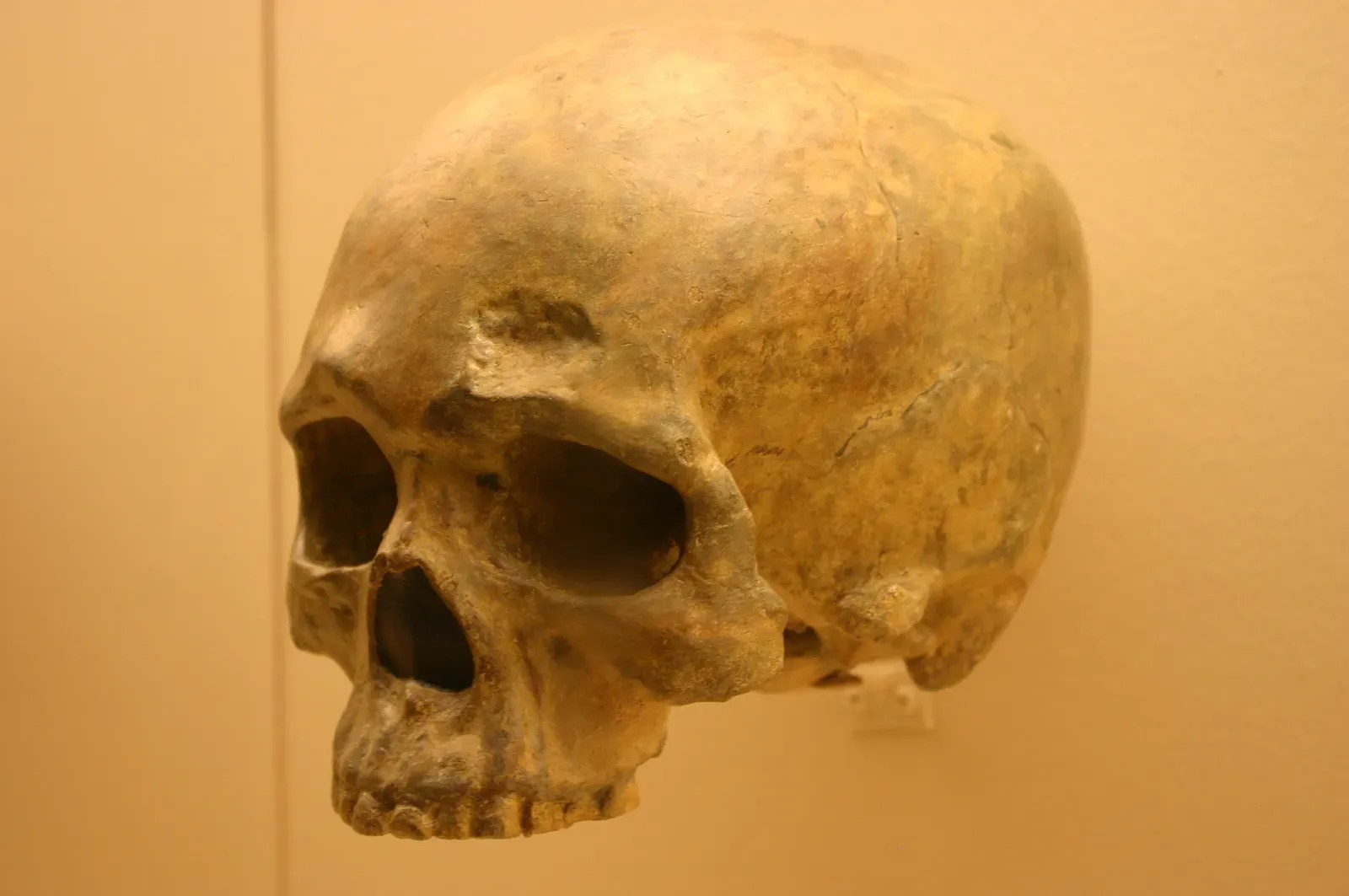
Before you can answer how many human species walked the Earth together, you have to decide a trickier question: what does “human” actually mean? Scientists mostly use “human” to describe members of the genus Homo – that is, species closely enough related to us that they share key traits like bigger brains, more complex tool use, and a body plan adapted for long-distance walking. But when you look closely, that boundary is messier than it sounds. Some earlier relatives, like Australopithecines, walked on two legs and used tools but are usually not called “human,” while some later Homo species looked very different from us but are absolutely in the human club.
On top of that, species themselves are not as clear-cut as high school biology textbooks make them sound. The classic rule – that different species cannot or do not interbreed successfully – breaks down with ancient humans. We know from DNA that Homo sapiens and Neanderthals interbred, and that Homo sapiens and Denisovans interbred, leaving genetic traces in many people alive today. So we’re dealing with a world where human groups were distinct enough to classify as different species, yet not so separate that they never mixed. That makes the counting game inherently fuzzy, and any honest answer has to leave room for debate.
The “Big Three”: Homo sapiens, Neanderthals, and Denisovans
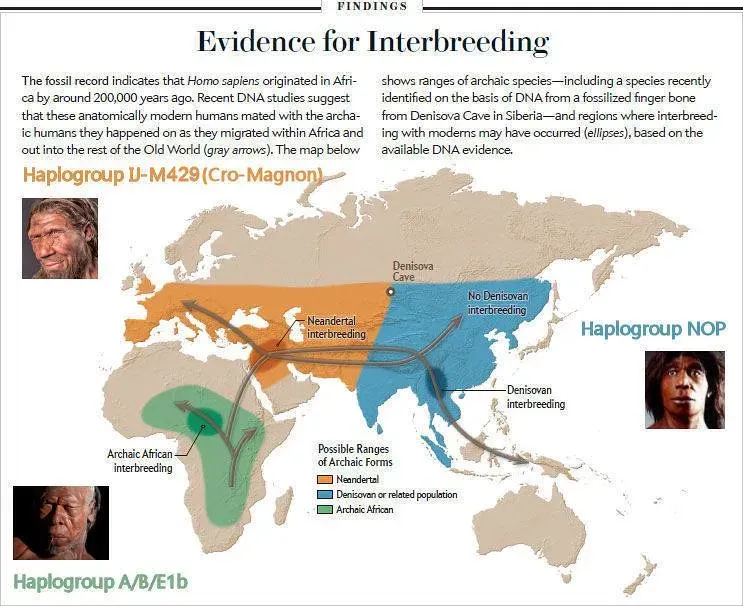
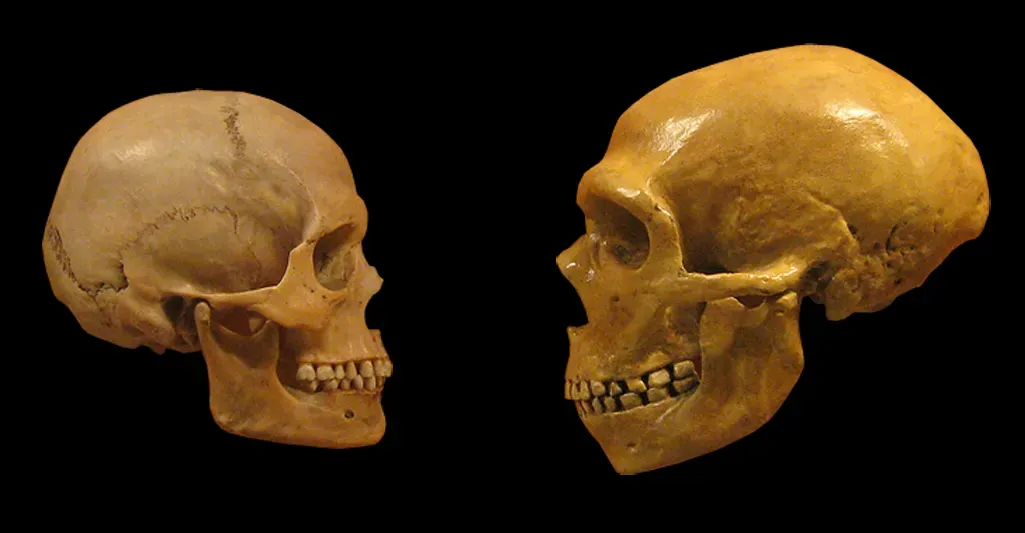
When people talk about multiple human species coexisting in the relatively recent past, three names almost always show up: Homo sapiens, Neanderthals, and Denisovans. Homo sapiens – us – appear in Africa more than two hundred thousand years ago. Neanderthals are found mainly in Europe and western Asia, with roots going back several hundred thousand years. Denisovans, known mostly from Siberia and parts of Asia, are a bit of a genetic ghost: we have very few bones, but a lot of DNA clues from people in places like Melanesia, Papua New Guinea, and parts of East and South Asia.
For tens of thousands of years, these three species overlapped in time and, at least in some areas, in space. Neanderthals and Homo sapiens both lived in parts of Europe and the Middle East. Denisovans and Homo sapiens overlapped somewhere in Asia, although the details are still being pieced together. They were not just abstract neighbors. They met, exchanged genes, and probably technologies and behaviors too. In my view, that makes calling them “other” humans a bit misleading; they were simply different versions of us, close enough to love or hate, and ultimately close enough to be absorbed into the one surviving lineage.
The Crowd Grows: Flores, Luzon, and Other “Hobbit-Sized” Mysteries
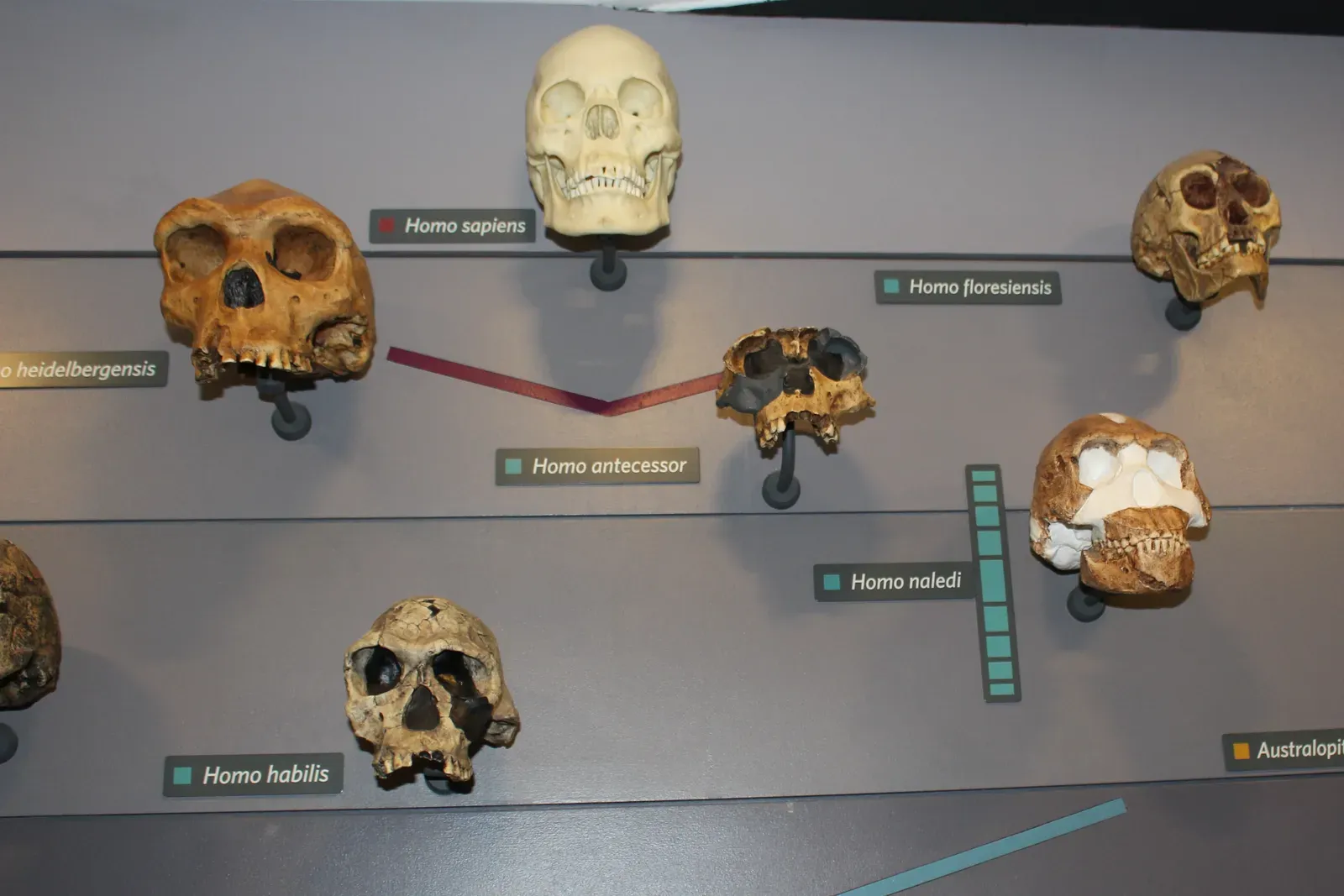
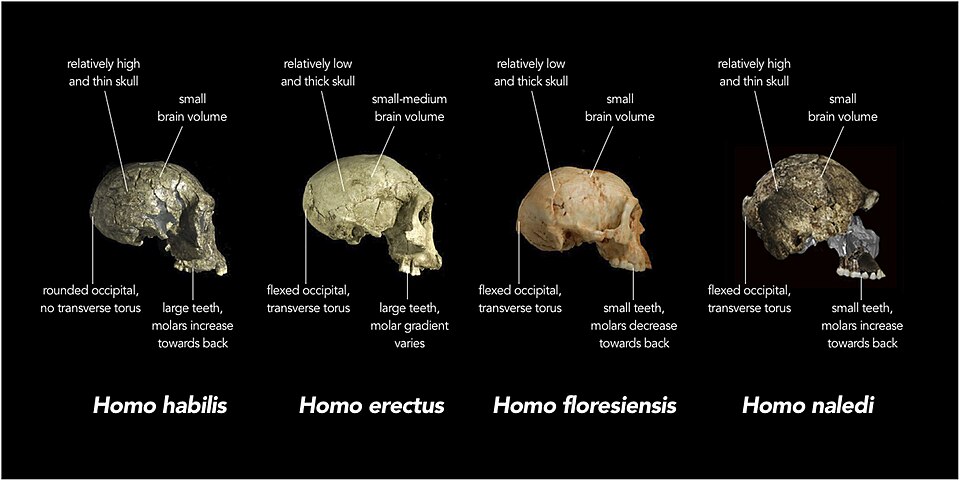
Beyond the big three, the early twenty-first century delivered some jaw-dropping surprises: tiny-bodied humans living on remote islands, long after Neanderthals had emerged and while our own species was already spreading. On the Indonesian island of Flores, fossils of Homo floresiensis – often nicknamed “hobbits” because of their small size – appear to have survived until roughly about fifty thousand years ago, overlapping in time with Homo sapiens. In the Philippines, another small-bodied species, Homo luzonensis, has been dated to around fifty to sixty thousand years ago as well.
These finds blew up the idea that late-surviving non-sapiens humans were all large-bodied, northern, and similar to Neanderthals. Instead, we have evidence of diverse, island-adapted human species holding on in pockets of Southeast Asia while our species was already marching across the globe. Did our ancestors meet them? It’s quite possible, but the evidence so far is thin and heavily debated. What’s clear is that, at least on the global timescale, Homo sapiens, Neanderthals, Denisovans, Homo floresiensis, and Homo luzonensis were alive at overlapping periods. The world sixty thousand years ago was, at the very least, a four or five human–species world, even if not all of them were rubbing shoulders in the same valley.
A Busier Past: How Many Species at Once Is Plausible?
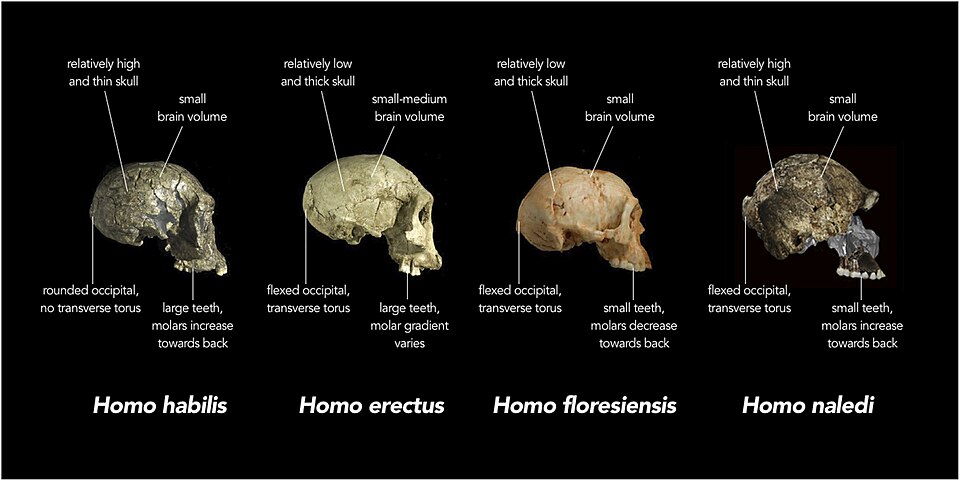
So what is the realistic upper limit? Many paleoanthropologists argue that, around sixty to one hundred thousand years ago, there could have been at least four to six distinct human species alive on Earth at the same time. If you count Homo sapiens, Neanderthals, Denisovans, Homo floresiensis, Homo luzonensis, and a possible late-surviving form in Africa sometimes grouped around Homo heidelbergensis or related species, you already get to that rough range. Some researchers think there may have been even more unrecognized lineages, hinted at by strange DNA signals in modern African genomes that do not match any known fossils.
That said, the key word is “plausible.” Fossil preservation is rare, and island species are especially easy to miss. Our current headcount is surely incomplete. Personally, I think it’s safer to say something like this: during some windows in the last hundred thousand years, the planet almost certainly hosted at least four distinct human species, and likely more. But pretending we can confidently say “there were exactly seven” or “only five” is overselling what the evidence can do right now. The past is crowded, but it is also patchy, and humility is part of being honest about deep time.
Did We Drive the Others to Extinction – Or Was It More Complicated?
Whenever people hear that we once shared the world with other human species, the next question is almost always: what happened to them? The tempting story is that Homo sapiens showed up, outsmarted or outcompeted everyone else, and wiped the board clean. There is at least some truth to the idea that we were a disruptive force. Our species seems particularly good at rapid innovation, flexible social networks, and expanding into new environments. When a species like that arrives in your territory, it’s unlikely to leave everything exactly the way it found it.
But the evidence does not really support a simple “genocidal super-species” narrative. Climate swings, shifting habitats, volcanic eruptions, disease, and small population sizes all likely played roles in the decline of Neanderthals, Denisovans, and other groups. In some cases, extinction did not mean total disappearance but absorption: genes flowed into Homo sapiens populations rather than vanishing. I think it’s more honest – and more unsettling – to see our past as a slow, tangled replacement process with moments of cooperation, conflict, and intermarriage, rather than a single dramatic war of extermination.
What Ancient DNA Tells Us About Shared Worlds
The real game-changer in this whole debate has been ancient DNA. Before scientists could pull genetic material out of old bones and teeth, many of these questions felt almost unanswerable. We could compare skull shapes and guess at relationships, but we had no way to test whether groups were closely related, whether they interbred, or how their populations rose and fell over time. Now, we can see that people outside Africa generally carry a small fraction of Neanderthal ancestry, while some populations in Oceania and parts of Asia carry Denisovan ancestry as well.
Those genetic traces are like ghost footprints in the sand, proof that different human species were not just passing ships in the night. They met frequently enough, and intimately enough, to leave permanent marks in our DNA. The same kind of work is beginning to suggest that there may have been unrecognized “ghost lineages” of archaic humans in Africa as well, whose bones we either have not found or have not identified yet. The more genomes we sequence, the clearer it becomes that our supposedly clean species story is laced with the DNA of others. In a quiet, literal sense, we still carry pieces of those lost humans under our skin.
Why This Matters for How We See Ourselves Today
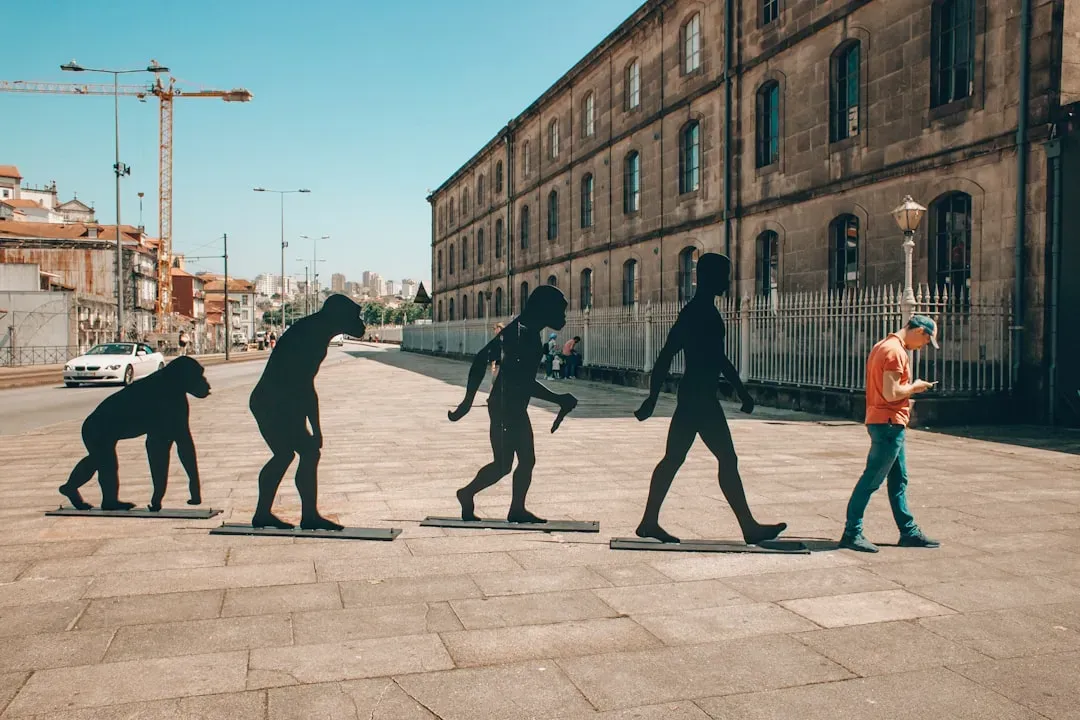
It might be tempting to treat all of this as an interesting bit of prehistoric gossip, but I think it cuts deeper than that. For centuries, people have tried to rank human groups, justify racism, or build myths about purity and superiority on top of bad science. The reality of a multi-species human past, with constant mixing and overlapping, blows those ideas apart. There is no pure lineage, no single, isolated people marching untouched through time. We are the mongrel survivors of a deeply mixed family tree, and that is our strength, not our shame.
There is also a more personal lesson here. The fact that there were once other kinds of humans – with their own minds, fears, loves, and stories – should shake our arrogance a little. Our species did not always look like the inevitable winner. We are one branch that happened to survive while others, just as real and just as human, came to an end. When I think about that, it makes the idea of wiping out species today, or treating other people as disposable, feel even more reckless. We are already the last human kind standing. Do we really want to act like we learned nothing from the rest of the family disappearing?
Conclusion: A Crowded Yesterday, a Lonely Today
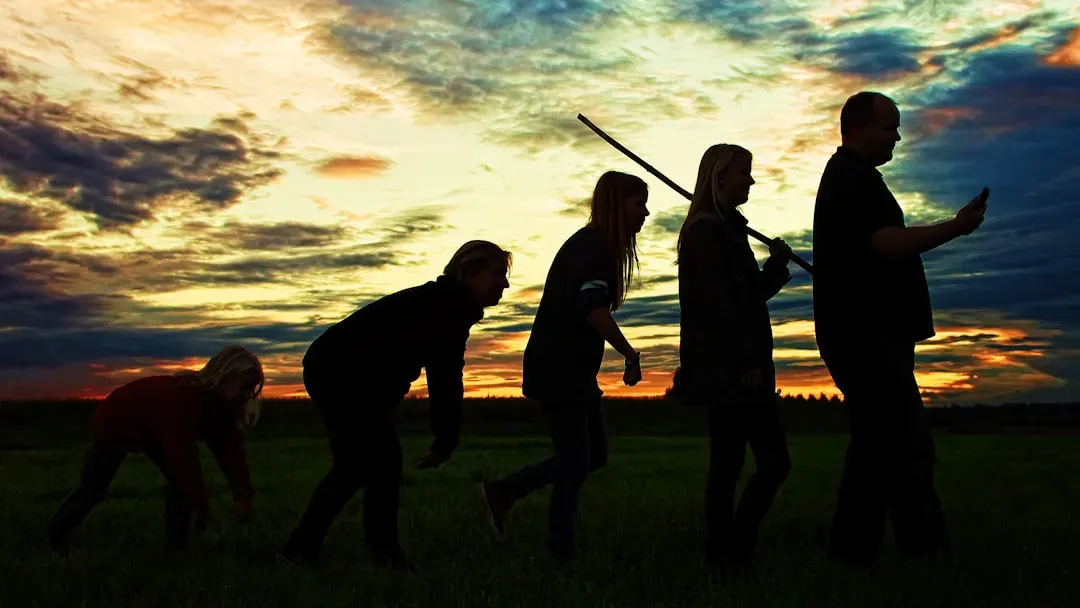
So The most honest, evidence-based answer is that, during some key windows in the last hundred thousand years, there were at least four and probably more, possibly six or beyond, living in overlapping stretches of time. Homo sapiens, Neanderthals, Denisovans, Homo floresiensis, Homo luzonensis, and at least one or two still-mysterious African lineages all likely shared the planet in a loose, shifting mosaic. They did not all gather in one place for a family reunion, but they existed together in the same global moment, aware of each other in some regions and completely unknown to each other in others.
My opinion is that focusing too hard on the exact headcount misses the bigger, more unsettling point: the natural state of our world used to be a diversity of humans, and we have become a single, lonely outlier. We are the last surviving experiment out of many, not the inevitable peak of some grand design. That realization should humble us, but it should also expand our imagination of what “human” can mean. If several different human species once shared this planet, maybe the strangest thing is not that they vanished – but that only one of them is left to tell the story. Did you expect that the loneliest time to be human would be right now?