
Imagine stepping into a new world and realizing, almost instantly, that you’re no longer anywhere near the top of the food chain. The air is colder, the light hits differently, and scattered across this strange landscape are tracks the size of dinner plates and shadows that move like slow, living boulders. For the first humans entering the Americas, this wasn’t a movie or a myth. It was Tuesday.
What makes this story so gripping is that it actually happened, even if the details are still being untangled. Early humans walked into a continent packed with massive, now-extinct animals: towering ground sloths, elephant‑like gomphotheres, lion‑sized cats, and giant birds that could shred you with a kick. It’s one of those moments in deep time where you can almost feel the tension: new predators, new prey, new rules. And the wildest part is how much of it we can now piece together from footprints, bones, and a lot of scientific detective work.
Crossing into a Monster-Filled Continent
The earliest people in the Americas probably did not realize they were walking into a land still ruled by giants. Whether they followed a coastal route along the Pacific or slipped through ice-free corridors as the glaciers retreated, they were pushing into territory no human had ever seen, but where megafauna had been thriving for ages. Think of it like opening the door to a new room in a house you thought you knew, only to realize it’s been occupied for thousands of years by heavily armed roommates.
Archaeological and genetic evidence suggests that humans were present in the Americas by at least the late Ice Age, overlapping with a menagerie of enormous mammals and powerful predators. These were not rare oddities tucked away in remote corners; they were everyday realities on the landscape. From the moment people started exploring new valleys and rivers, they were stepping straight into the hunting grounds of saber‑toothed cats, American lions, and dire wolves. The first impression of this continent would not have been gentle or quiet; it would have felt alive, dangerous, and overwhelmingly big.
Face to Face with Giant Ground Sloths
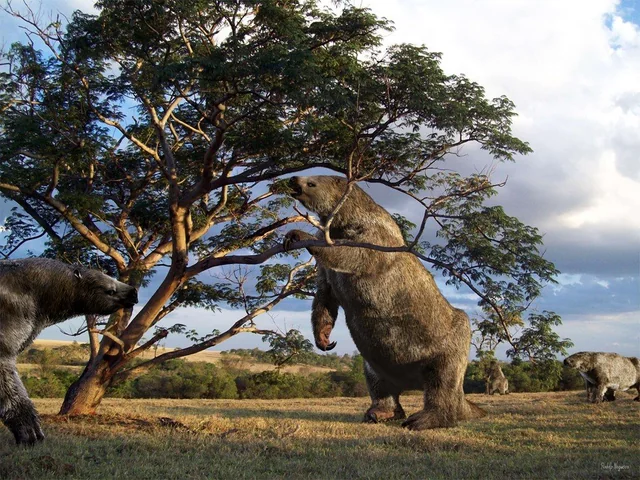
If you hear the word “sloth” and picture a sleepy, palm‑tree hugger, you’re about as far from the truth as you can get for the Ice Age Americas. Giant ground sloths, like Megatherium and Eremotherium, were enormous, ground‑dwelling beasts that could stand taller than a two‑story house and weighed as much as a small truck. They had long, curved claws not for slicing but for ripping branches and roots, yet you wouldn’t want to test how defensive those claws could get if you startled one at close range.
For the first human groups who encountered them, these sloths would have been both fascinating and unnerving. Imagine tracking one across an open plain, seeing its deep footprints sunk into the soil like bathtub-sized impressions, then watching it rear up to strip entire branches from a tree. They were slow compared to big cats, but their sheer mass and reach would make them formidable if threatened. It is easy to picture early people telling nighttime stories around the fire about these lumbering “monsters,” half food source, half living mountain that you approach with extreme caution.
Mammoths, Mastodons, and Elephant-Like Giants
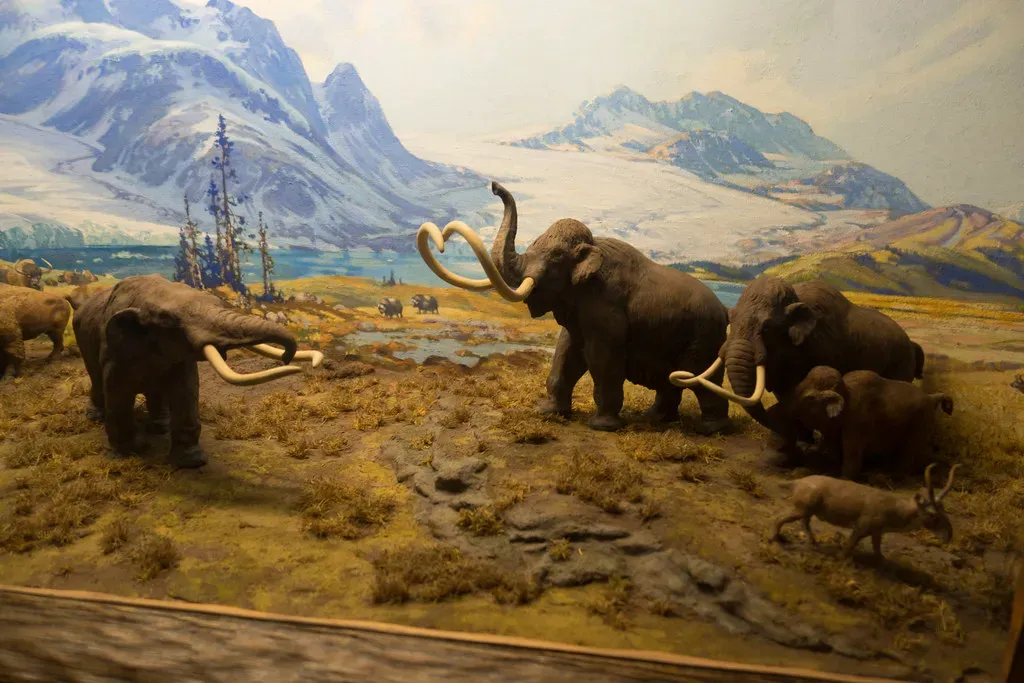
Some of the most iconic megafauna the first Americans met would have felt strangely familiar: mammoths and mastodons, elephant relatives marching in family groups across the tundra and forests. Mammoths tended to favor more open, grassy environments, while mastodons were browsers of woodlands, plucking leaves and twigs with their trunks. To humans used to hunting large herbivores, these animals were gigantic jackpots, but also mobile fortresses with tusks long enough to impale and crush anyone who got careless.
You can imagine the emotional roller coaster of watching a mammoth herd for the first time: awe at their scale, tension at the risk, and a sharp, strategic focus as hunters debated how, or if, to take one down. Successful hunts could feed a group, provide hides and bones for tools and shelters, and create social rituals around such a massive kill. At the same time, getting too close to a panicked adult could be a death sentence. These animals embodied both abundance and danger, pulling early humans into a tightrope walk between opportunity and catastrophe.
Saber-Toothed Cats, American Lions, and Other Apex Nightmares
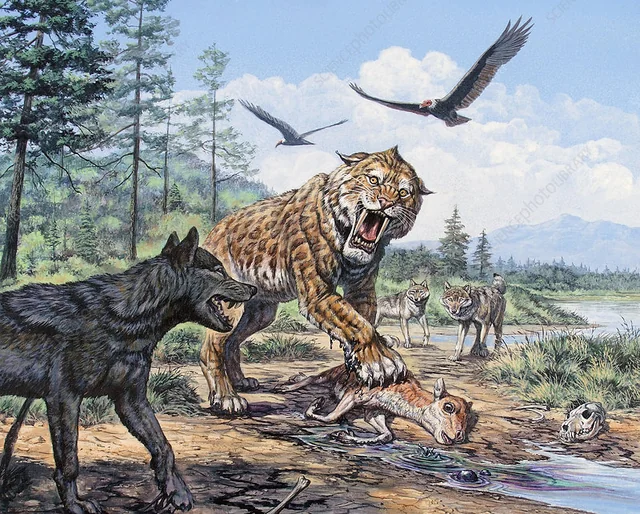
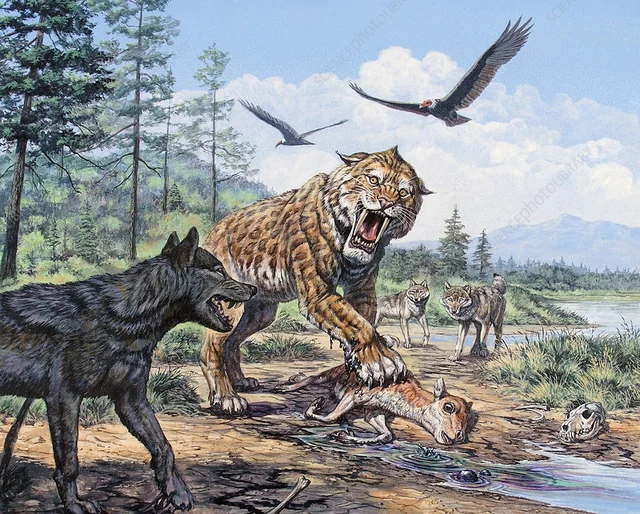
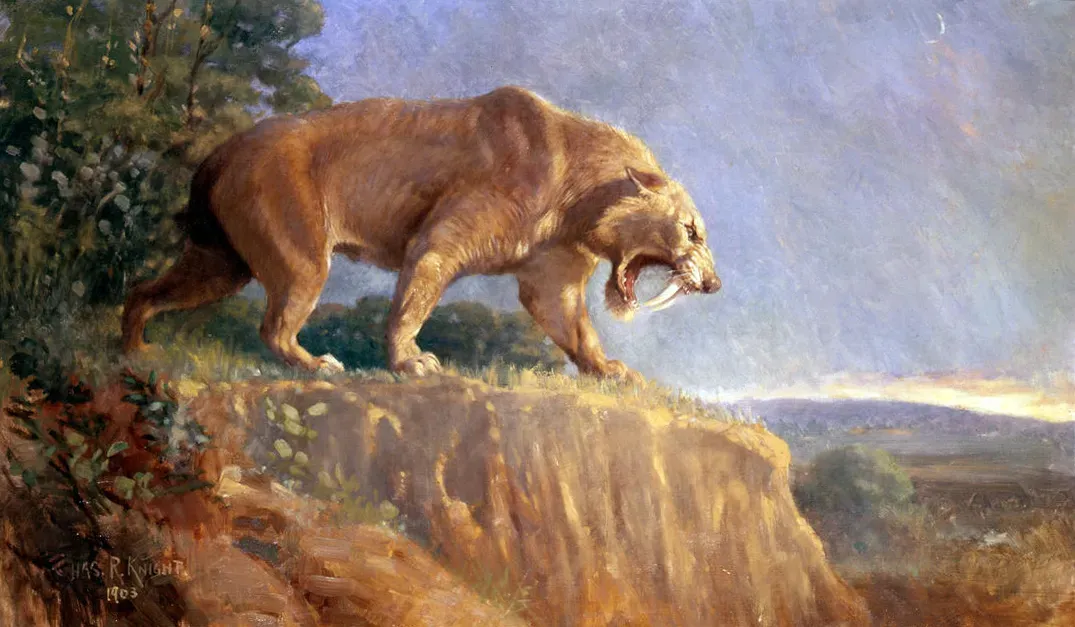
Herbivores get most of the sympathy in these stories, but the real nightmare fuel for early humans would have been the big predators. Saber-toothed cats, like Smilodon, had muscular bodies built for ambush, with jaws that opened wider than any modern big cat’s and upper canines shaped like daggers. American “lions” were larger than modern African lions and likely roamed widely across open habitats, while packs of dire wolves brought the weight of coordinated attacks and crushing bites. To step into this ecosystem was to enter a food web where humans were just one more option on the menu.
Picture traveling at dusk, that eerie time when light flattens and shadows blur, knowing that one misstep could mean walking into a predator’s kill site. Early people had fire, weapons, and group strategy, but they were learning the predators’ patterns from scratch. Every snapped twig could trigger fight‑or‑flight calculations. Did you climb a tree, circle downwind, or huddle close together to look bigger and louder? These cats and wolves would have forced humans to refine their senses, sharpen their cooperation, and maybe even invent stories and taboos that kept children from wandering alone into tall grass.
Glyptodons, Terror Birds, and the Truly Bizarre
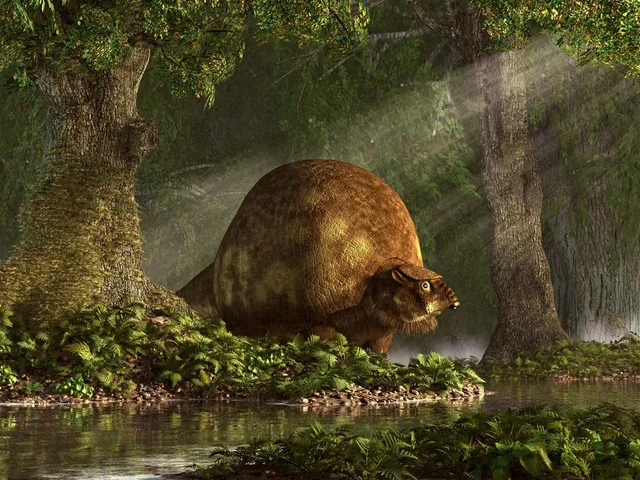
Beyond the “classic” Ice Age stars, the Americas hosted a cast of megafaunal oddities that look almost made up from a modern perspective. Glyptodons were enormous relatives of armadillos, armored like living tanks with domed shells and sometimes club‑like tails. Imagine trying to butcher one of these creatures or deciding whether it was even worth attacking such a walking shield. Then there were giant flightless birds in parts of the Americas, sometimes nicknamed terror birds, with powerful legs and beaks designed to tear and crush.
Encountering animals like these would have disrupted any expectations humans carried from other continents. A glyptodon might look slow and harmless until you realized that a panicked one could bowl you over like a runaway boulder. A massive bird, towering above a human and capable of deadly kicks, blurs the line between prey and predator in a way that feels almost surreal. This mix of strange body plans and unfamiliar behaviors meant that early people had to build entirely new mental maps of what could hurt them, what they could eat, and what they should probably just admire from a very cautious distance.
Tracks in the Mud and Stories in the Dark
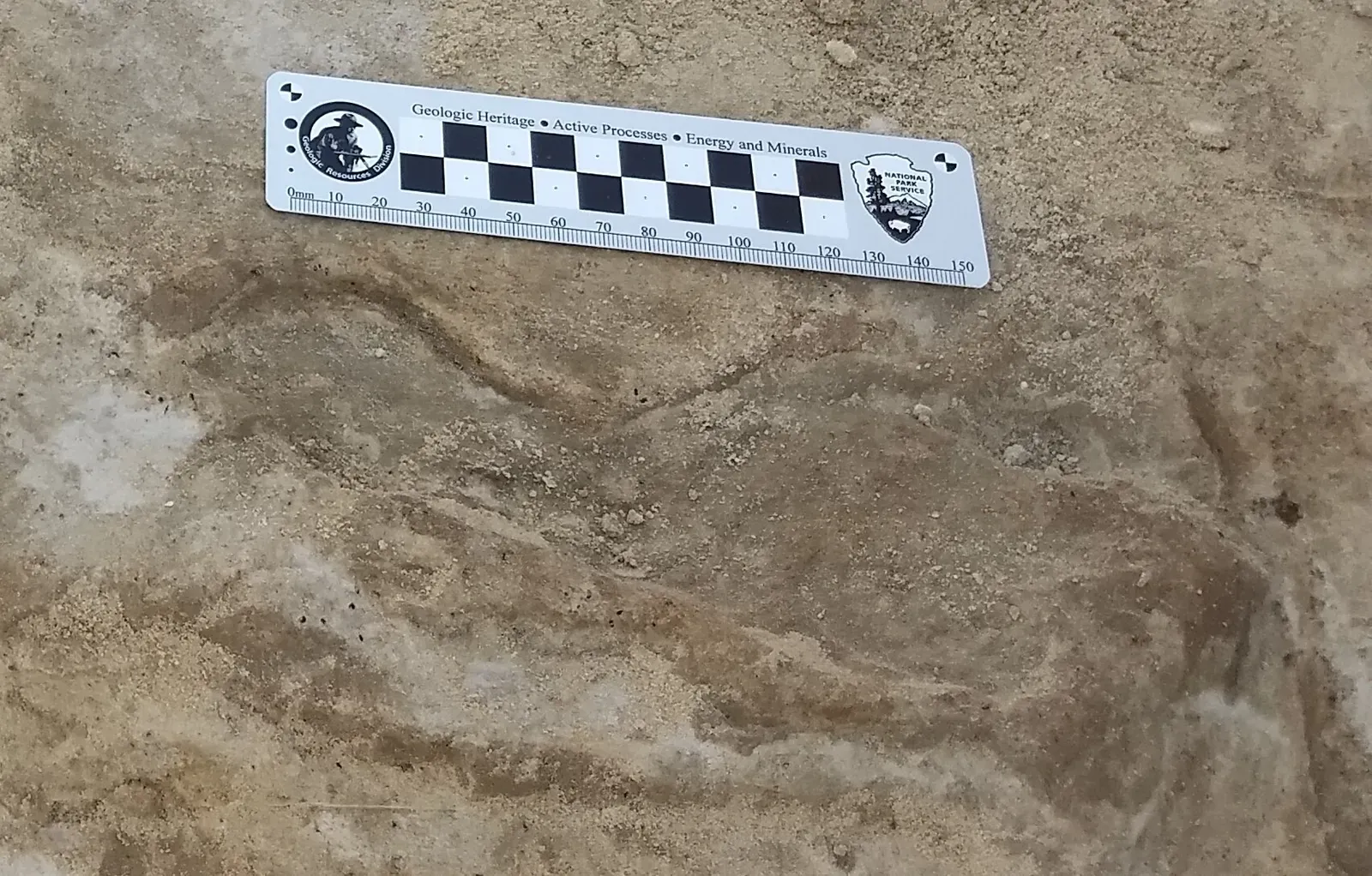
One of the eeriest details we can piece together today comes from Ice Age footprints preserved in ancient lakebeds and sediments. Some of these trackways show human prints crisscrossing with those of mammoths, giant sloths, and other megafauna. You can almost reconstruct the moment: a person walking along a wet shoreline, following or avoiding the paths of massive animals whose steps left crater-like impressions. In a way, these footprints are the closest thing we have to an eyewitness account, captured not in words but in pressure and mud.
At night, those tracks would have turned into stories. Humans have always processed risk and wonder through narrative, and it is hard to believe that people sharing landscapes with nightmarish beasts did not spin tales about them. Maybe the giant sloth became a spirit of the forest, or mammoths turned into ancestors made of hair and ivory. The line between practical field notes and myth would have been thin: stories that kept children safe from predators and clumsy adults away from unstable ice would naturally grow into legends. The emotional reality of living among megafauna probably felt like a mix of field guide and ghost story, all told around crackling fires under an unfamiliar sky.
Hunters, Extinctions, and an Uncomfortable Legacy
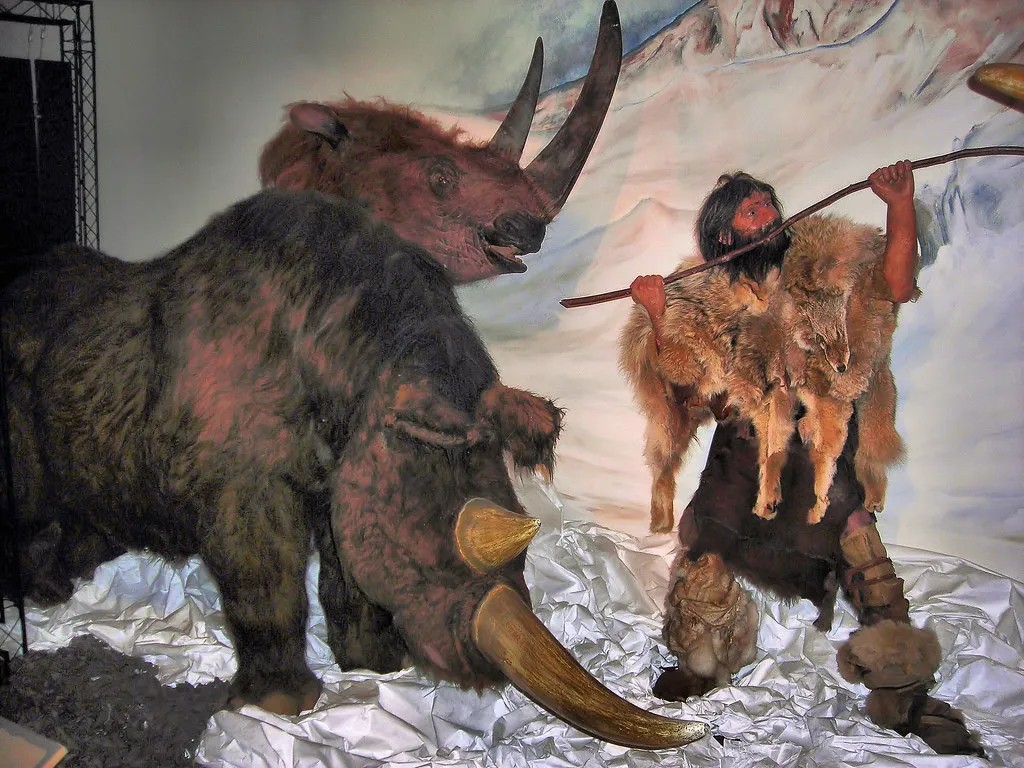
The hard, slightly uncomfortable truth is that humans did not just witness this world of giants; they helped end it. As people spread through the Americas, many of the large mammals and birds vanished over a relatively short span of geological time. Climate change at the end of the Ice Age reshaped ecosystems, but the timing in many places lines up suspiciously well with human expansion and hunting. It is likely that a combination of habitat shifts, resource pressure, and sustained hunting pushed fragile megafaunal populations over the edge.
I find it hard not to see a mirror here. The first Americans walked into a nightmare of giant beasts and, through ingenuity and persistence, slowly turned it into a landscape where humans were firmly on top. That might sound like a triumph, but it also feels like the opening chapter of a pattern we’re still stuck in: we arrive, we adapt, and the biggest, slowest, most extraordinary creatures often pay the price. The encounter between those early people and Ice Age megafauna was probably terrifying, awe‑inspiring, and brutally pragmatic all at once. Maybe the real question is not just what they saw when they first arrived, but what they would think of the quiet, mostly giant‑free continent we walk across today. Would they be impressed by our safety, or unsettled by the silence where their monsters used to roam?