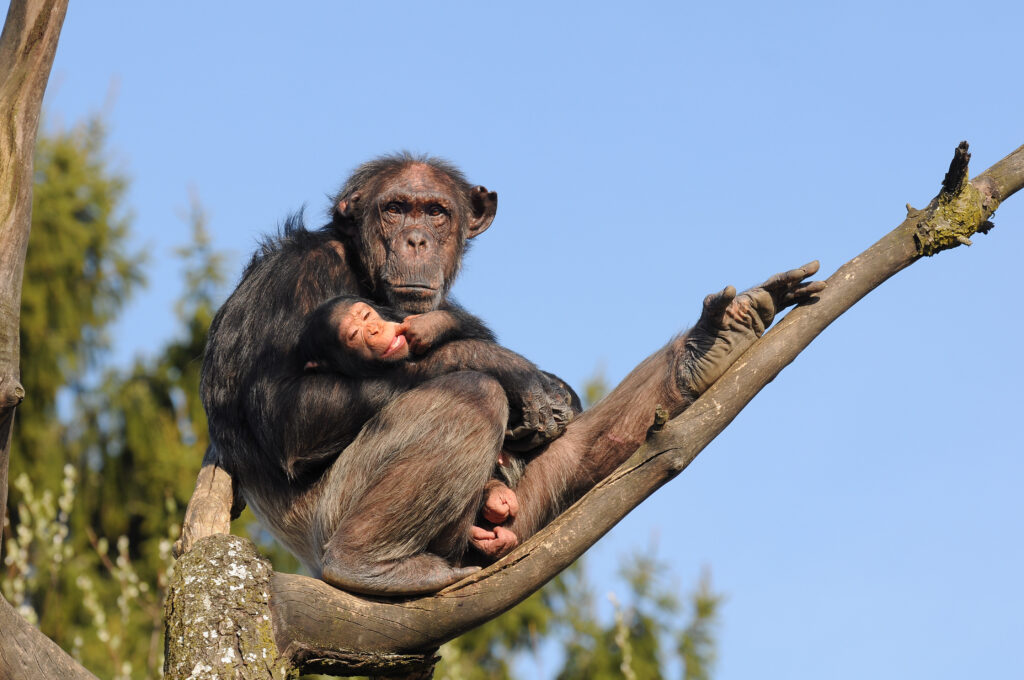
Kibale National Park, Uganda – A once-unified community of nearly 200 chimpanzees in the remote Ngogo forest underwent a rare permanent split around 2015, igniting years of lethal violence among former allies. Researchers, drawing on three decades of observations, documented the division of the world’s largest known wild chimpanzee group into Central and Western factions. What began as social polarization escalated into coordinated attacks, with the smaller Western group targeting the larger Central faction in at least 24 raids since 2018. This unprecedented event sheds light on the fragility of primate societies and underscores the value of long-term conservation efforts in protected habitats.
Unprecedented Signs of Fracture Emerge
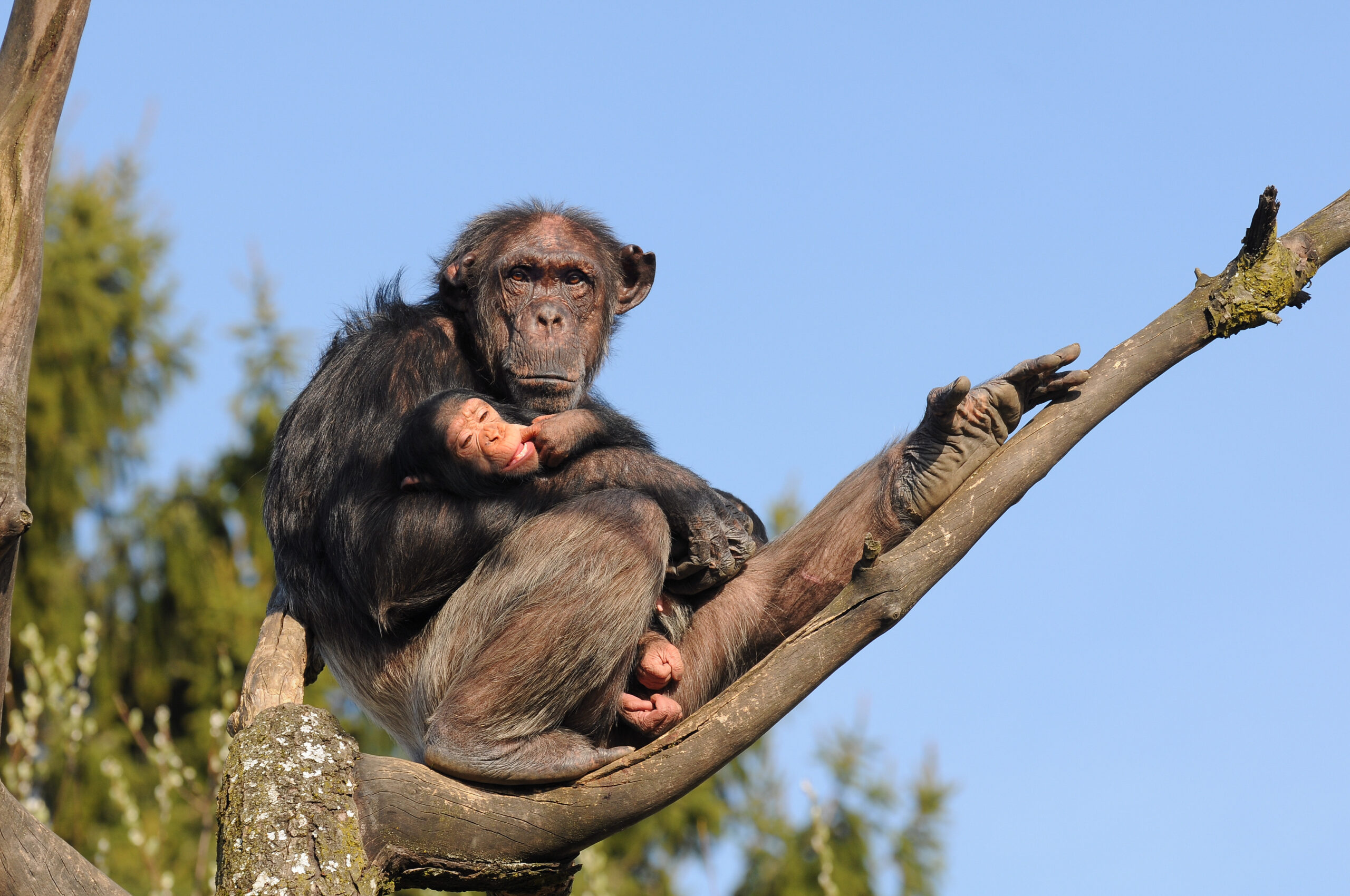
Unprecedented Signs of Fracture Emerge (Image Credits: Upload.wikimedia.org)
On June 24, 2015, field researchers witnessed a pivotal moment: chimpanzees from the Western cluster approached a Central party near the territory’s center, only to flee silently upon hearing calls from the other side, pursued by the Central males. This avoidance marked the first clear behavioral shift in the Ngogo community, previously characterized by fluid interactions across two loose clusters. Social network analyses revealed a sharp rise in group modularity that year, as grooming and proximity ties strengthened within clusters and weakened between them.
By 2016, Western males launched the first territorial patrols aimed at the Central area, initially joined by some Central individuals. Tensions peaked in 2017 when Western chimps severely injured the Central alpha male, coinciding with a respiratory epidemic that killed 25 community members. Spatial separation solidified, transforming the shared forest center into a contested border.
- 1995–2014: Cohesive group of ~200 chimps shares territory, grooms across clusters, and reproduces inter-cluster.
- June 2015: First avoidance incident signals polarization.
- 2016: Patrols begin.
- 2017: Alpha male injured; epidemic strikes.
- 2018: Permanent fission confirmed; violence erupts.
Lethal Attacks Reshape the Community
Following the 2018 fission, the Western group – now comprising about 83 individuals, including 10 adult males and 22 mature females – initiated relentless raids on the larger Central faction of roughly 107 chimps, with 30 adult males and 39 mature females. Observers recorded 24 attacks through 2024, including six lethal assaults on adult males and 14 confirmed infanticides, totaling at least seven mature males and 17 infants killed. An additional 14 Central adolescent and adult males vanished without trace, likely victims of unreported aggression.
Mortality in the Central group surged dramatically, exceeding rates seen in typical intergroup chimp conflicts by over 30 times. Lead researcher Aaron A. Sandel noted, “The Central group is at risk – they have had a dramatic increase in mortality.” Chimpanzees that once groomed and patrolled together now treated each other as deadly outsiders, overriding years of bonds with new group loyalties.
| Group | Adult Males | Mature Females | Total Est. |
|---|---|---|---|
| Western | 10 | 22 | 83 |
| Central | 30 | 39 | 107 |
Factors Behind the Dramatic Split
No single trigger explains the fission, but researchers point to mounting pressures on the oversized community. Abundant food at Ngogo had sustained the large group, yet competition for resources and mates likely strained ties as the population hit ~200. Key demographic shocks compounded this: five adult males and one female died in 2014, followed by an alpha male turnover in 2015 and the 2017 epidemic.
Social network disruptions played a central role, per the relational dynamics hypothesis. Losses of “bridge” individuals eroded cross-cluster links, polarizing the groups. Sandel emphasized, “What’s especially striking is that the chimpanzees are killing former group members. The new group identities are overriding cooperative relationships that had existed for years.” Reproduction halted across factions after March 2015, sealing the divide.
Insights into Primate Bonds and Human Parallels
This first rigorously documented chimp fission challenges assumptions about group violence. Unlike stranger conflicts, Ngogo’s involved lifelong companions turning lethal, without ethnic or ideological markers – mirroring potential roots of human polarization. The study suggests relational shifts alone can fracture societies, offering hope that interpersonal reconciliation might prevent escalation.
Sandel reflected, “If relational dynamics alone can drive polarization and lethal conflict in chimps without language, ethnicity or ideology, then in humans, those cultural markers might be secondary… it may be in the small, daily acts of reconciliation and reunion between individuals that we find opportunities for peace.” Such parallels highlight chimpanzees’ complex social cognition.
Conservation Imperative in Kibale
Kibale’s protection by the Uganda Wildlife Authority enabled this landmark research, shielding Ngogo from tourism pressures unlike Jane Goodall’s Gombe site. Yet vulnerabilities persist: the 2017 human-transmitted epidemic prompted strict quarantines, reducing chimp viral loads. As endangered primates, each loss impacts viability, especially with Central’s depleted ranks.
Long-term monitoring continues, probing causes through vast datasets. Sandel affirmed, “This is an ongoing story. Using long-term data, we will be able to understand causes and consequences.” Sustained habitat safeguards remain crucial amid climate and disease threats.
Key Takeaways
- The Ngogo split is the first confirmed permanent chimp community fission, occurring roughly once every 500 years.
- Western raids killed at least 24 Central chimps, with higher tolls likely.
- Relational breakdowns, not just ecology, drive primate – and possibly human – conflicts.
The Ngogo chimpanzees’ saga reveals how prosperity can breed division, urging vigilance in conservation. As researchers track this evolving conflict, it prompts reflection on unity’s fragility across species. What lessons do you draw from this primate drama? Share in the comments.