Teruel, Spain – Paleontologists have identified a jaw fragment from decades-old excavations that fundamentally alters the known history of weasels and their kin. The specimen, named Galanthis baskini, dates to the late Miocene epoch approximately 6.5 million years ago. This discovery effectively doubles the previous timeline for the Mustelinae subfamily, which previously relied on fossils from Poland and Germany around 3.5 million years old. Researchers now see evidence of these small carnivores thriving far earlier amid shifting ancient landscapes.
A Jaw-Dropping Revelation from the 1990s
A Jaw-Dropping Revelation from the 1990s (Image Credits: Pexels)
Excavations at the Las Casiones site in Aragón’s Teruel region during the 1990s yielded the key fossil, a partial jaw that sat unstudied until recently. Advanced imaging techniques, including micro-computed tomography, allowed scientists to reconstruct its internal structures and confirm its unique traits. This tiny predator, comparable to today’s smallest carnivoran, emerged as the earliest known member of Mustelinae – weasels, ferrets, and minks.
The find challenges long-held assumptions about when these agile hunters first appeared. Previously, the subfamily’s origins traced to the Pliocene, but G. baskini anchors them firmly in the Miocene. Its discovery highlights the value of revisiting museum collections for overlooked treasures.
Portrait of a Pint-Sized Predator
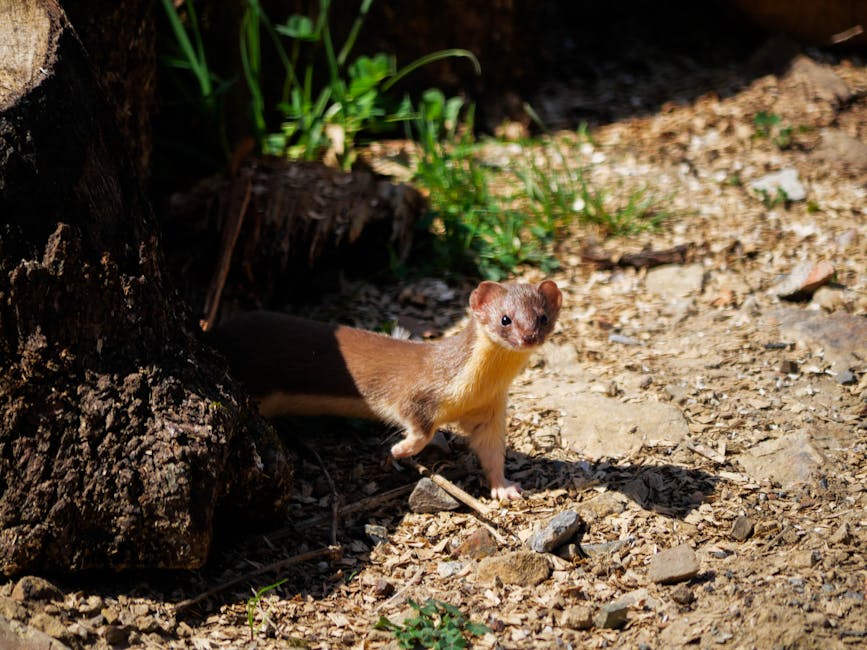
Galanthis baskini weighed roughly 135 grams, or about five ounces, matching the least weasel (Mustela nivalis) in stature. Sharp teeth and a robust skull pointed to a carnivorous diet, suited for seizing small prey. The genus name draws from Greek mythology, where Galanthis transformed into a weasel, fitting for this evolutionary milestone.
Phylogenetic analysis positioned it as the most basal Mustelinae species, confirming small body sizes marked the group’s start. Scientists also reclassified a contemporaneous Chinese fossil as Zdanskyictis, underscoring Eurasia’s pivotal role in mustelid diversification.
- Body mass: Approximately 134.55 grams
- Skull features: Stout build with carnassial teeth for shearing meat
- Body plan: Likely elongated and flexible, inferred from relatives
- Habitat adaptation: Open terrains with abundant rodents
- Discovery method: Micro-CT for 3D dental reconstruction
Reshaping Mustelid Origins
The research, published in Palaeontology, involved an international team including Chris Law from the University of Washington, senior author Alberto Valenciano from Complutense University of Madrid, and Daniel De Miguel from the University of Zaragoza. Their work extended Mustelinae’s fossil record from the Pliocene back to the late Miocene (6.56–6.26 million years ago).
“G. baskini is exciting because it confirms that weasels were present in the Late Miocene. And it’s pretty cool that G. baskini was the size of the least weasel – that means small weasels were already around more than 6 million years ago,” Law noted. Valenciano added, “The new genus, Galanthis, is named after a figure from Greek mythology who was transformed into a weasel, symbolizing the fossil’s significance as representing the origin of the weasel family.”
Driven by Landscape and Prey Shifts
Mid- to late-Miocene changes, such as grassland expansion across Eurasia, coincided with rodent population booms. These conditions favored nimble predators able to pursue quarry into tight burrows. G. baskini‘s form suggests early Mustelinae exploited such niches effectively.
De Miguel emphasized Aragón’s fossil wealth: “This research is a clear example of the remarkable richness of Aragón’s fossil record of mammals, recognized worldwide.” The specimen’s traits align with molecular estimates, bridging fossil and genetic data on carnivoran divergence.
| Fossil/Species | Age (million years) | Location | Estimated Mass (grams) |
|---|---|---|---|
| Galanthis baskini | 6.5 | Spain | 135 |
| Previous oldest Mustelinae | 3.5 | Poland/Germany | Variable |
| Least weasel (M. nivalis) | Modern | Global | ~50-250 |
Key Takeaways
- Mustelinae originated in the late Miocene, doubling prior fossil evidence.
- Small size defined the subfamily from its earliest known representative.
- Eurasian sites like Teruel reveal critical chapters in carnivoran evolution.
This breakthrough not only extends the weasel family’s story but invites deeper exploration of how ancient ecosystems sculpted today’s wildlife. Future skeletons could quantify their iconic elongation precisely. What do you think about this glimpse into prehistoric hunters? Tell us in the comments.