Pack hunting is often thought of as a modern invention of nature. Wolves, wild dogs, lions – these are the animals that come to mind when you picture coordinated, social predation. Yet the fossil record increasingly suggests that this strategy is far older than anyone once assumed, predating mammals by tens of millions of years. Bones buried in ancient riverbeds, preserved footprints locked in stone, and chemical signatures hidden inside fossilized teeth are all slowly building a case that some of prehistory’s most formidable predators were not lone killers at all.
The science here is honest about its limits. Much of the evidence in favor of pack hunting is circumstantial, say paleontologists. Behaviors don’t leave direct physical evidence in the fossil record, so scientists must instead rely on indirect clues such as bone beds, trackways, bone damage patterns, and comparative studies with modern animals. What follows is a look at seven prehistoric creatures for whom that indirect evidence has become compelling enough to warrant serious attention.
Deinonychus: The “Terrible Claw” and Its Famous Cold Case
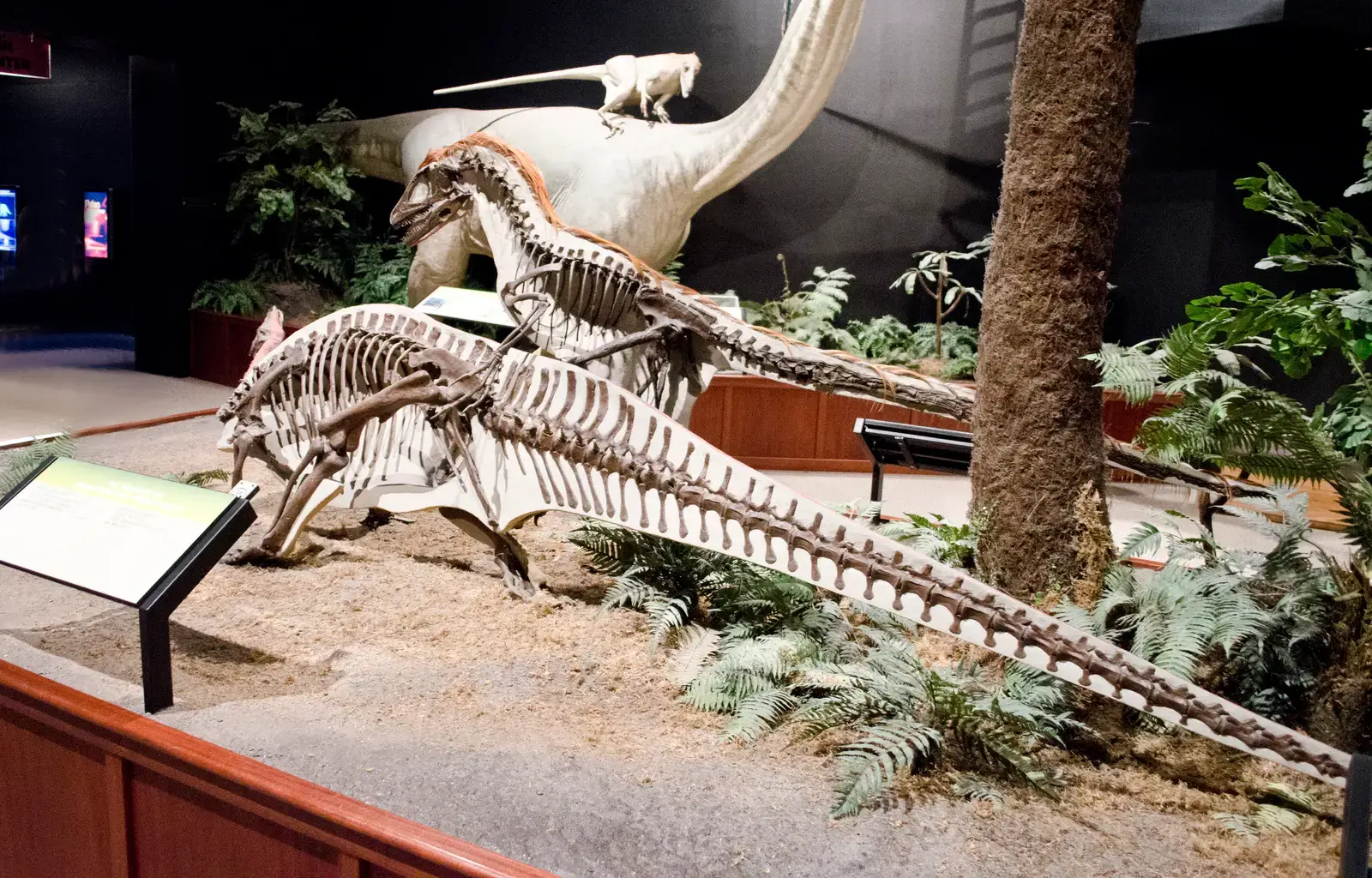
Few prehistoric creatures have sparked as much debate as Deinonychus, the sharp-clawed theropod that directly inspired the raptors of Jurassic Park. Deinonychus teeth found in association with fossils of the ornithopod dinosaur Tenontosaurus are quite common in the Cloverly Formation, and two quarries have been discovered that preserve fairly complete Deinonychus fossils near Tenontosaurus fossils. The first, the Yale quarry in Montana, includes numerous teeth, four adult Deinonychus, and one juvenile. The association of this number of skeletons in a single quarry suggests that Deinonychus may have fed on that animal, and perhaps hunted it.
The size difference between predator and prey is where the pack hunting theory really gains traction. A Tenontosaurus was a large plant-eating dinosaur exceeding twenty feet and over two thousand pounds, while a big Deinonychus was eleven feet long and roughly two hundred pounds. It is unlikely a Deinonychus would be able to, on its own, bring down a Tenontosaurus. The discovery of partial Deinonychus skeletons at almost a third of sites containing Tenontosaurus led researchers to conclude that Deinonychus were like wolves, working together to take down much larger prey. However, the debate is far from settled, with some paleontologists arguing the sites represent competitive scavenging rather than coordinated hunting.
Mapusaurus: Giants Traveling Together in Argentina
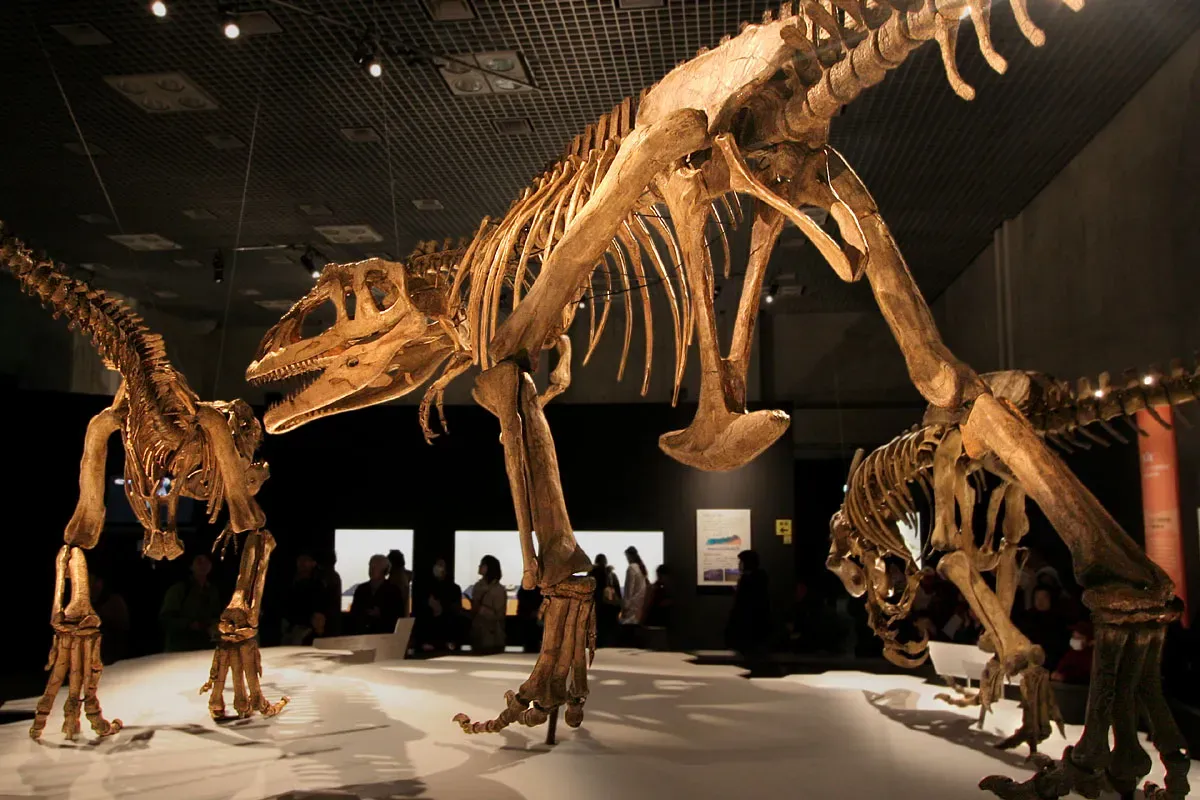
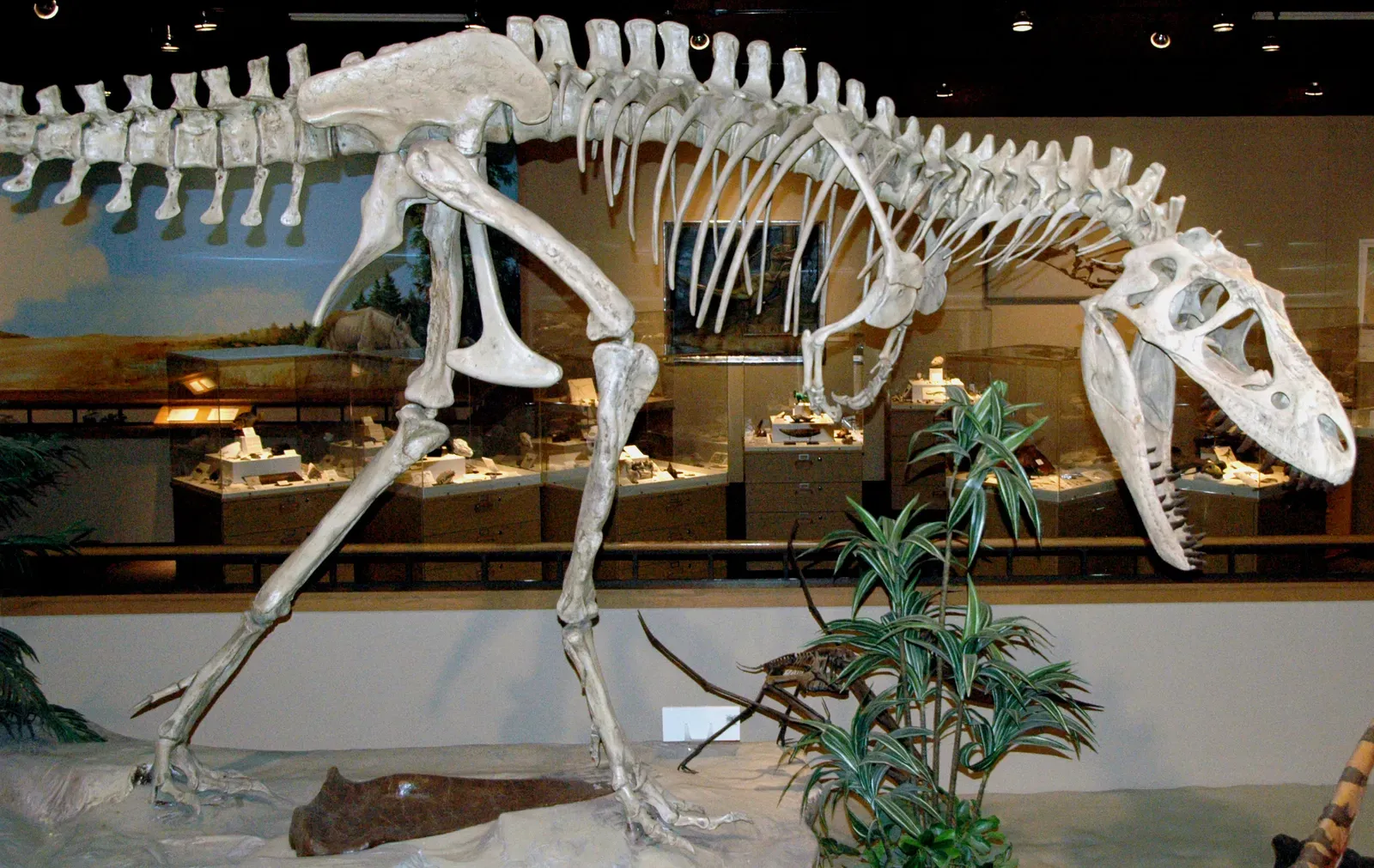
Uploaded by FunkMonk, CC BY 2.0)
Mapusaurus, a relative of Giganotosaurus and one of the largest carnivorous dinosaurs ever discovered, reached lengths of up to forty-one feet. The bone bed contained at least seven individuals of varying ages, suggesting these massive predators may have lived and possibly hunted in family groups. This discovery is particularly significant because it challenges the assumption that the largest predatory dinosaurs were necessarily solitary.
Paleontologist Rodolfo Coria repeated suggestions that this congregation of fossil bones may indicate that Mapusaurus hunted in groups and worked together to take down large prey, such as the immense sauropod Argentinosaurus. If so, this would be the first substantive evidence of gregarious behavior by large theropods, although whether they might have hunted in organized packs or simply attacked in a mob remains unknown. You have to weigh that uncertainty against the sheer improbability of the alternative. The concentration of multiple large predators in one location is difficult to explain through random fossilization events and strongly suggests some form of social grouping.
Allosaurus: A Jurassic Bone Bed That Raises Questions
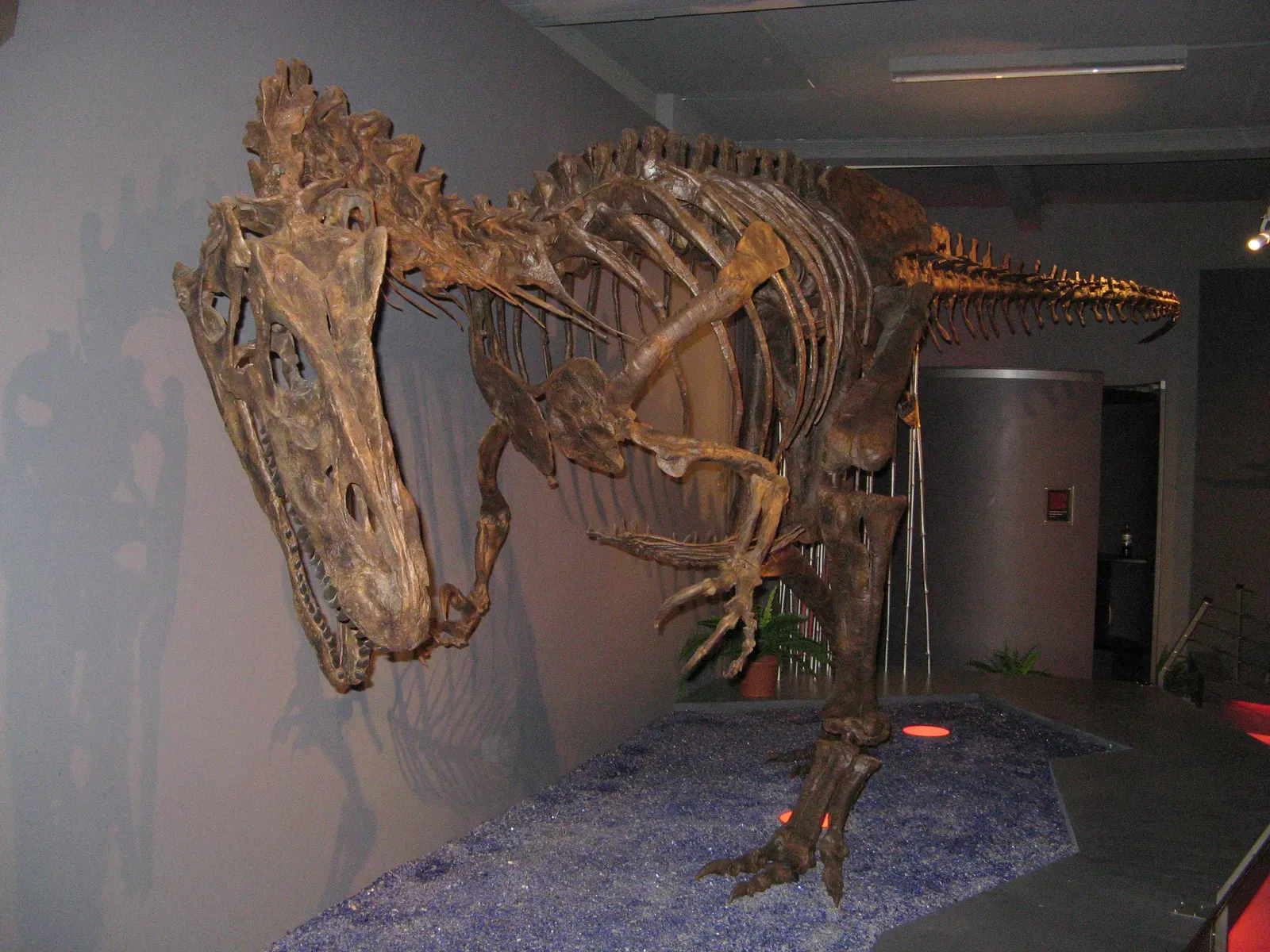
Mass death assemblages, which are locations where multiple individuals of the same species died together, provide compelling evidence for social behavior in extinct animals. The infamous Cleveland-Lloyd Dinosaur Quarry in Utah contains the remains of at least forty-six Allosaurus individuals, suggesting either pack hunting or competitive feeding at a predator trap. No other single-species accumulation of a large predatory dinosaur from the Jurassic comes close to this scale.
Some researchers believe Allosaurus may have relied on ambush tactics, attacking prey with sudden bursts of power. Others suggest it could have hunted in groups, using pack-like strategies to bring down enormous dinosaurs such as Stegosaurus or Apatosaurus. One theory proposes that Allosaurus delivered trachea-crushing bites, while another imagines it using its head almost like a hatchet, swinging down to slash and tear at flesh. The skull anatomy supports multiple scenarios, which is part of why the pack hunting debate for this animal has lasted for decades without a clean resolution.
Tyrannosaurus Rex: The Solitary King Reconsidered
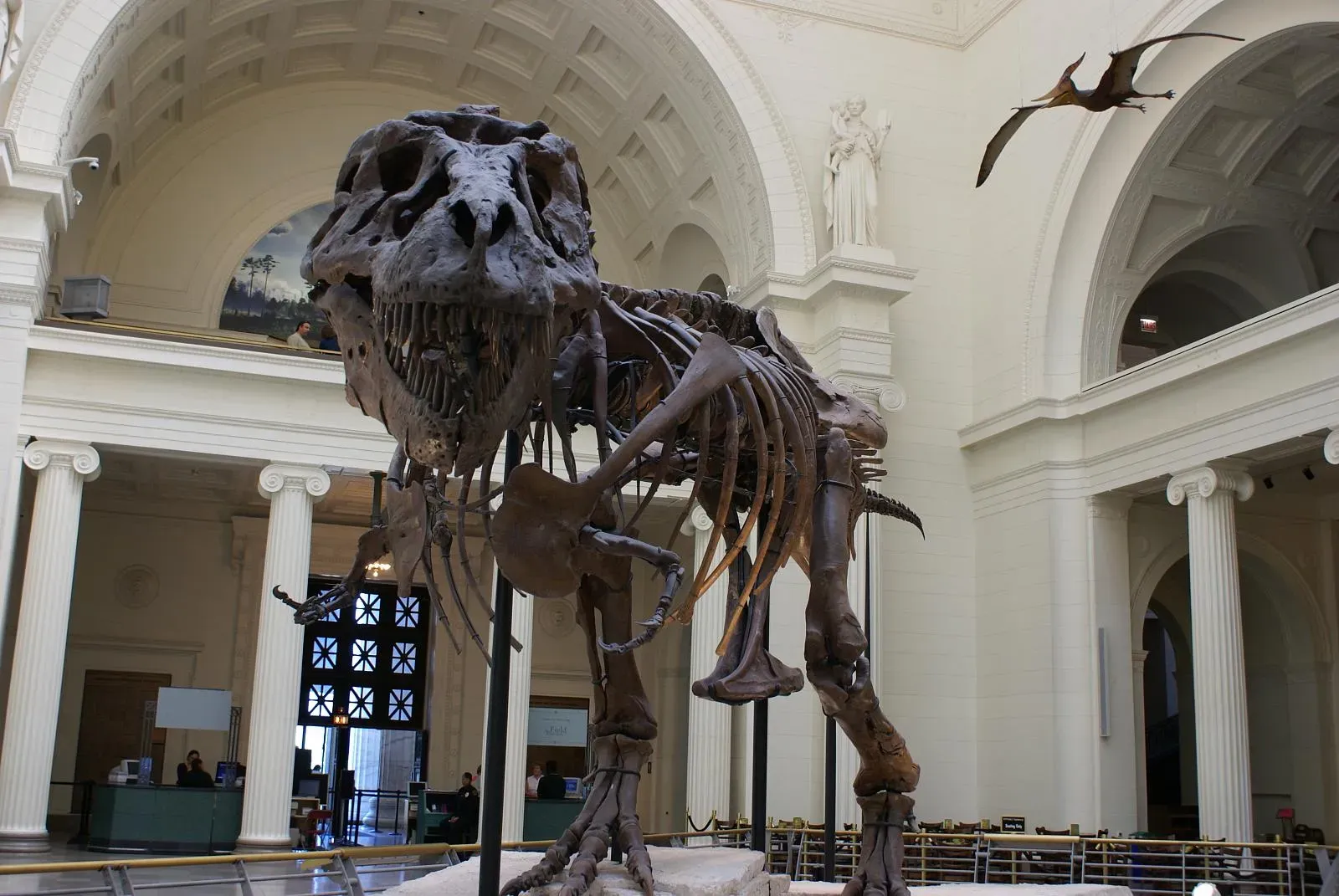
The hunting behavior of Tyrannosaurus rex, perhaps the most iconic predatory dinosaur, remains highly debated among paleontologists. Traditionally portrayed as a solitary hunter, recent evidence has called this assumption into question. Multiple bone bed discoveries have gradually shifted the conversation. One bonebed in Alberta, Canada, contains the bodies of twelve to fourteen Albertosaurus that were seemingly concentrated together during a flooding event. In Montana, an area about half the size of a tennis court contains the remains of at least three Daspletosaurus, and even the site in South Dakota that yielded the famous T. rex fossil Sue contained remains of other T. rex individuals.
Fossil trackways – fossilized prints of predators moving together – can also indicate group behavior. Evidence of this kind is limited but known from some species, such as tyrannosaurs. Yet even this is not conclusive that they hunted as one group. Analysis of rare earth elements, stable isotopes, and charcoal concentrations at one site convincingly shows a synchronous death event of four or five tyrannosaurids, adding to a growing body of evidence that tyrannosaurids were capable of interacting as gregarious packs.
Velociraptor: Hollywood’s Icon and a Complicated Reality
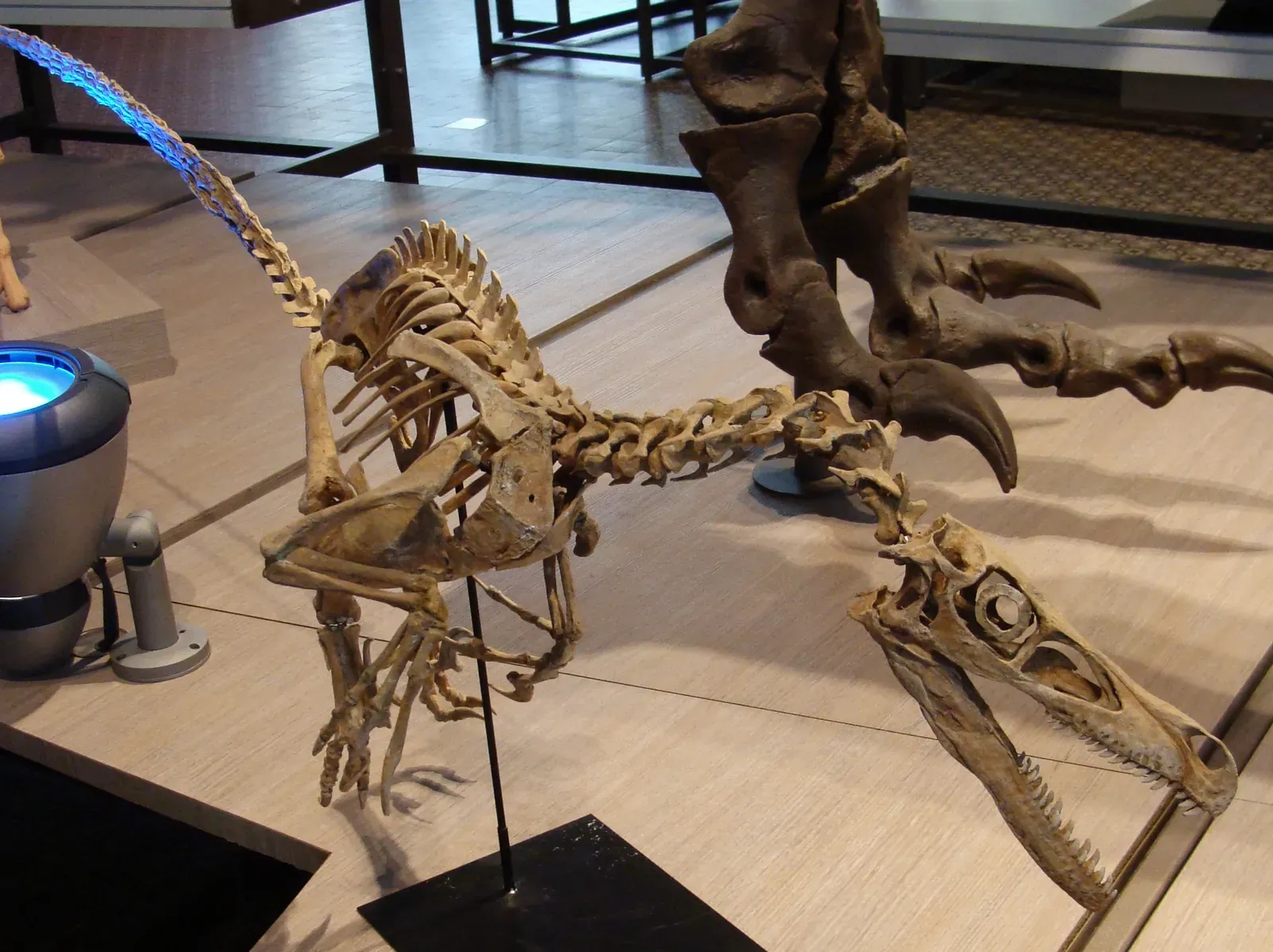
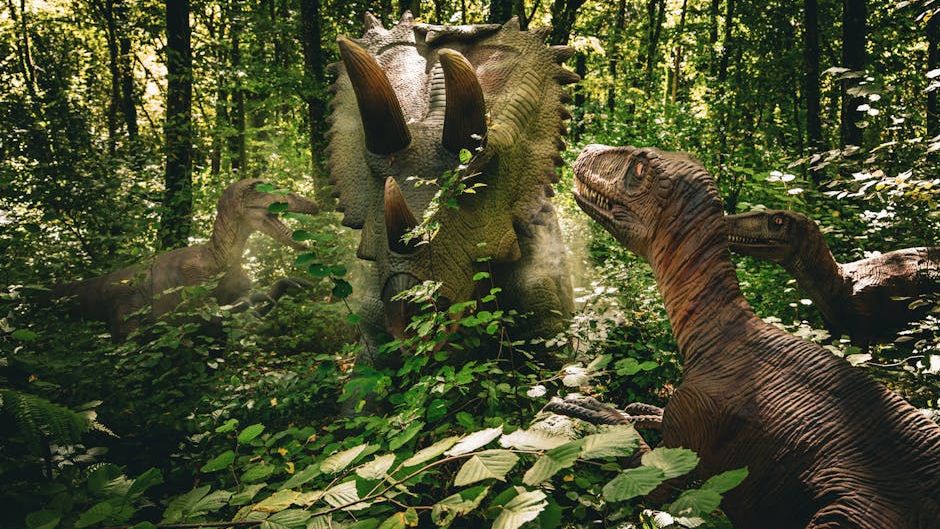
Velociraptor is one species that some paleontologists believe was potentially smart enough to band together on hunts. The anatomical case for this is worth your attention. Dromaeosaurs all share the same characteristics – a lightly built skull with sharp backwardly curved teeth, elongated arms and hands with sharp claws, and an extraordinary sickle-like second toe claw carried raised off the ground. Dromaeosaurs probably had keen vision and their brains were relatively large for a dinosaur. Relative brain size is one proxy researchers use to assess the cognitive capacity needed for social coordination.
Still, the evidence for true wolf-style coordination remains thin for Velociraptor specifically. A further step would be working out whether the dinosaur in question had the brain capacity to work cooperatively. Research focusing on the potential brain capacity of theropods argues the case for pack hunting, but these findings are hotly debated among paleontologists. A paper by Li et al. describes track sites with similar foot spacing and parallel trackways, implying gregarious behavior, though not necessarily coordinated pack hunting. The distinction matters – moving in a group is not the same as hunting as one.
Albertosaurus: A Tyrannosaur With a More Social Profile
Among the tyrannosaurs, Albertosaurus offers some of the cleaner evidence for group living. One bonebed in Alberta, Canada, contains the bodies of twelve to fourteen Albertosaurus that were seemingly concentrated together during a flooding event. The range of ages represented at that site is particularly telling, because it mirrors the age-diverse composition you see in social predators today, where young animals travel and learn alongside adults rather than fending for themselves from birth.
One of the key aspects of pack hunting in carnivorous dinosaurs was potentially the presence of alpha predator leadership. Within a pack, there would often be an individual that assumed a dominant role and acted as the leader during hunts. This alpha predator would possess unique characteristics or employ dominance displays that established their leadership position, with that role being crucial in coordinating the pack’s hunting efforts. Whether Albertosaurus operated this way can’t be confirmed from bone beds alone, but the multi-age grouping fits the pattern in a way that’s hard to dismiss.
Utahraptor: North America’s Largest Raptor and Its Bone Bed Secret
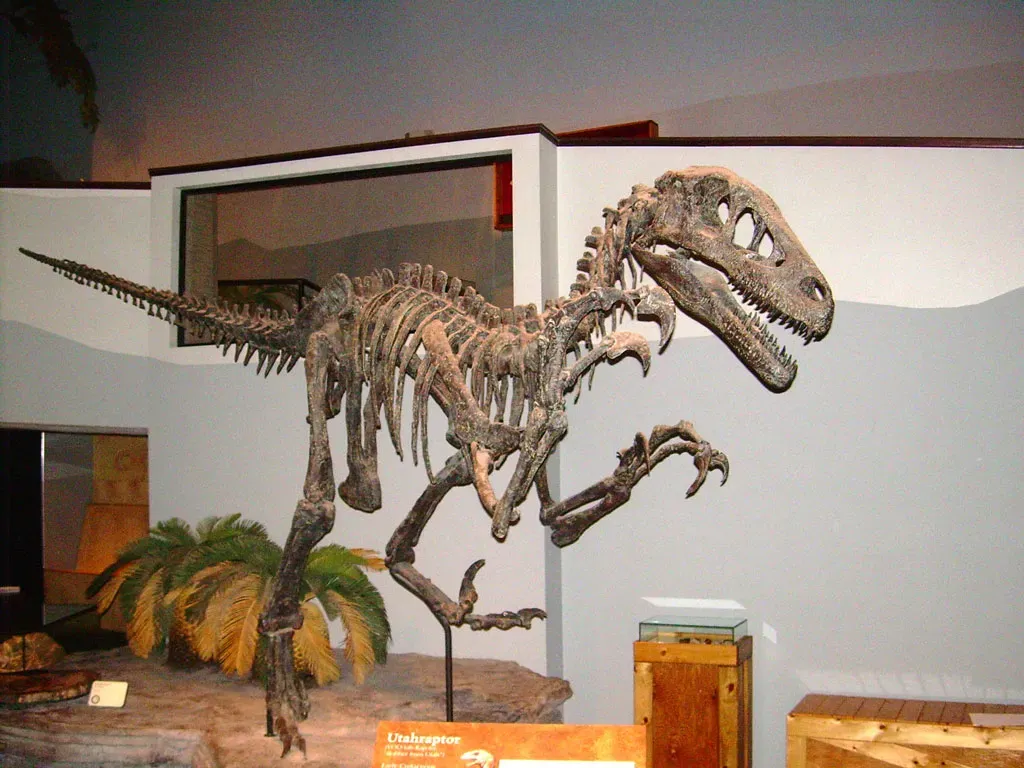
Utahraptor, the largest dromaeosaurid known from North America, stood out even among raptors for sheer physical scale. Known theropod bone beds and fossil graveyards include those of dromaeosaurids Deinonychus and Utahraptor, suggesting that multiple individuals of these species were found in concentrated deposits. A particularly remarkable find – a large block of sandstone from Utah – contained multiple Utahraptor individuals of different sizes preserved together, interpreted by some researchers as a group that became mired in quicksand-like sediment, possibly while hunting together.
The presence of multiple individuals of the same species in close proximity suggests that these dinosaurs may have hunted in packs rather than individually. This cooperative hunting strategy would have allowed them to take down larger prey and defend their territories effectively. The hunting strategies of dinosaurs had profound implications for prehistoric ecosystems. Pack hunting predators exert different selective pressures on prey populations compared to solitary hunters, potentially driving the evolution of defensive adaptations in herbivorous dinosaurs. The arms of prey animals didn’t evolve in a vacuum, and the defensive anatomy of large herbivores may itself be evidence of coordinated predatory pressure.
What the Evidence Really Tells You
It’s worth being clear about one thing: these fragmentary pieces of evidence require careful interpretation, and conclusions about social hunting behaviors often remain tentative. The scientific understanding evolves with each discovery, making dinosaur behavioral paleontology one of the most dynamic areas of prehistoric research. No one has found a frozen moment of ten raptors coordinating a kill. What scientists have found are patterns – bone beds, trackways, isotope signatures, and age distributions – that keep pointing in the same direction.
The evolution of pack hunting in certain dinosaur lineages may have contributed to their success, allowing them to exploit ecological niches unavailable to solitary predators. These social innovations potentially represent important evolutionary experiments that preceded the complex social behaviors seen in modern birds, the living descendants of theropod dinosaurs. Every time you watch a crow solve a problem or a bird of prey scout territory, you’re looking at the behavioral inheritance of animals whose distant ancestors may have hunted in the same coordinated way these fossils now hint at.
The idea that cooperative hunting is a purely modern mammalian invention grows harder to defend with each new excavation season. The prehistoric world was not simply a place of lone giants crashing through primeval forests. It was, at least in part, a world where some predators understood something profound: that together, you could bring down what none of you could face alone. The bones, slowly and patiently, are telling us exactly that.