You carry ghosts in your cells. Not the spooky, haunted-house kind, but fragments of a vanished species that once walked beside us, hunted with us, and, as we now know for sure, had children with us. Modern genetics has revealed something wild: parts of Neanderthal DNA are still quietly riding along in many of our genomes today, influencing everything from how we fight infections to how we sleep.
Once, Neanderthals were the caricature of human evolution: the crude, heavy-browed cousins who lost. But the story turned out to be a lot more complicated, and honestly, a lot more beautiful. The more scientists dig into ancient DNA, the clearer it becomes that Neanderthals did not simply vanish; pieces of them are still here, written into our biology and our everyday lives. That raises a huge, unsettling question: if their DNA lives on in us… did their story ever really end?
A Shocking Discovery: We Are Not Purely “Modern” Humans
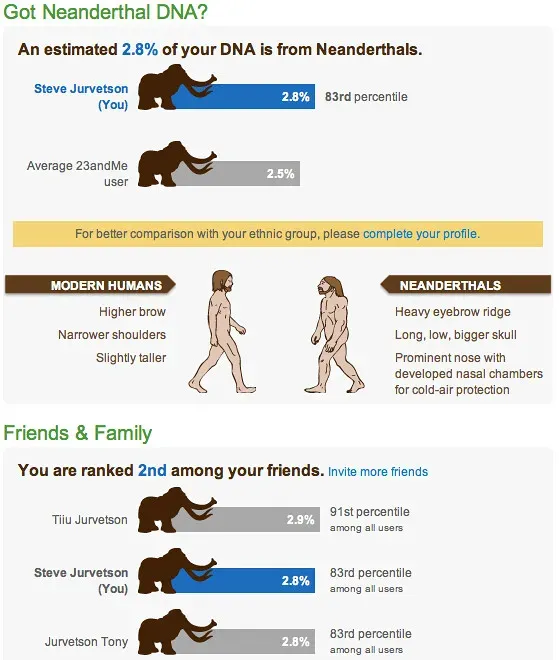
For a long time, the popular story went like this: modern humans evolved in Africa, spread across the globe, outcompeted Neanderthals, and replaced them. Clean, simple, and kind of flattering to us. Then ancient DNA sequencing came along and smashed that tidy narrative. When scientists first compared Neanderthal genomes to living people, especially those with non-African ancestry, they found something no one seriously expected: clear genetic signatures of Neanderthal ancestry.
That means there was interbreeding, and not just a one-off event. People with ancestry from Europe, Asia, and many parts of the Americas typically carry a small but meaningful percentage of Neanderthal DNA in their genomes. It is not enough to make us some kind of half-and-half hybrid, but it is way too much to ignore. In other words, “modern human” is not a pure, separate category. We are the result of meetings, crossings, and shared lives between our species and theirs.
How Scientists Actually Found Neanderthal DNA in Us
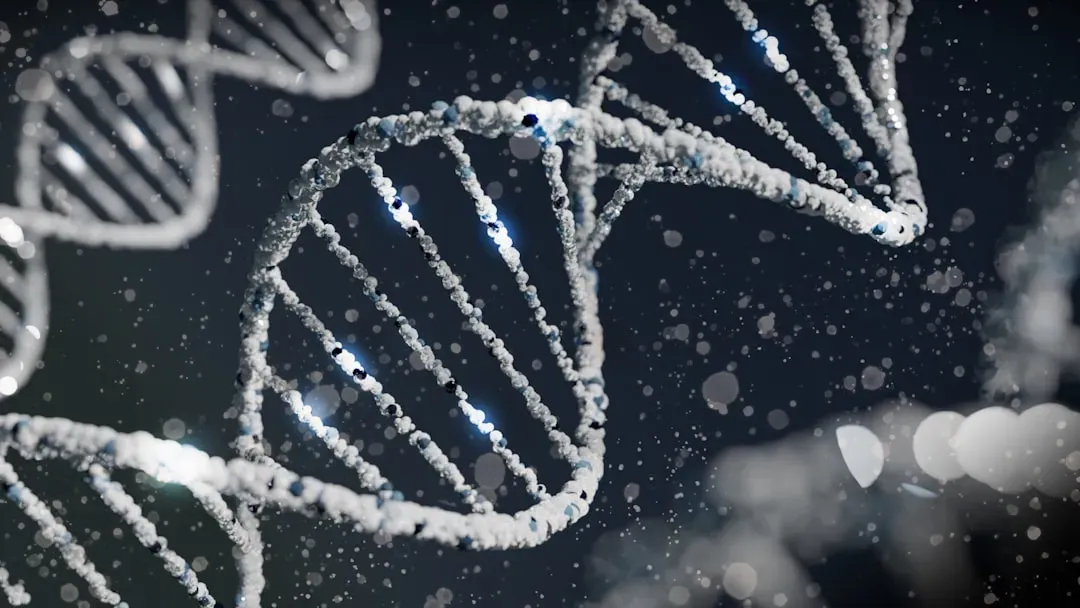
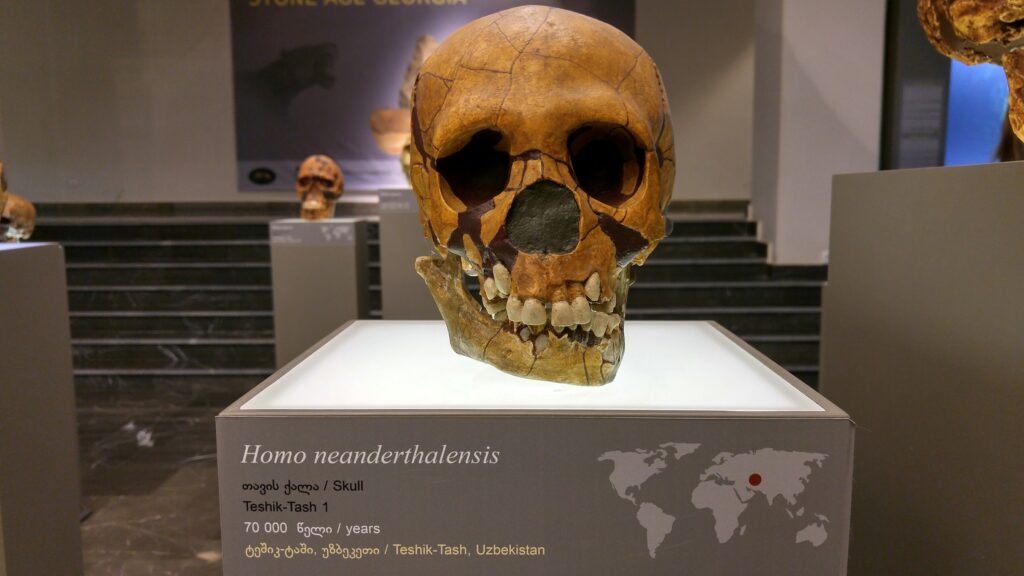
So how do you even know if someone has Neanderthal DNA? It is not like there is a little label on those genes saying “property of Neanderthals.” The breakthrough came from high-quality ancient genomes. By extracting and sequencing DNA from well-preserved Neanderthal bones, scientists built reference genomes that act like a genetic fingerprint. Then they compared that fingerprint across the genomes of living people from around the world.
When the same unusual genetic variants showed up both in Neanderthals and in modern humans outside Africa, but not in most African populations, it painted a very specific picture: these variants were inherited from Neanderthals after modern humans left Africa and met them in Eurasia. It is a bit like running a forensic analysis on our chromosomes and finding a match to an ancient “suspect.” The more we refine this comparison, the clearer it becomes that Neanderthal DNA really is woven into our own genetic fabric.
How Much Neanderthal DNA Do We Carry – And Who Has More?
People sometimes imagine that if they have Neanderthal ancestry, it must be a big chunk, like having a Neanderthal great-grandparent. Reality is more subtle. Most people with roots in Europe or Asia carry only a small percentage of Neanderthal DNA across their whole genome. That may sound tiny, but scattered across billions of DNA letters, it adds up to a lot of inherited segments. Different populations have slightly different amounts and different regions of Neanderthal ancestry, shaped by where their ancestors migrated and who they encountered along the way.
People whose ancestry is primarily from sub-Saharan Africa typically have much less Neanderthal DNA, because their lineages did not go through the same intensive mixing events in Eurasia. However, the world is so interconnected today that ancestry is often a rich blend, and neat categories blur. The wildest twist is this: if you combine everyone alive today, almost the entire Neanderthal genome is “covered” somewhere across living humans. No single person has all of it, but collectively, we are like a broken-up archive of their genetic legacy.
What Neanderthal Genes Are Doing Inside Your Body Right Now
The question that matters most is not just whether Neanderthal DNA is in us, but what it is actually doing. Surprisingly, many Neanderthal-derived genetic variants are active players in our biology. Some influence immune responses, helping our bodies recognize and fight off certain pathogens. Others show up in traits related to skin and hair, like how our bodies respond to sunlight or regulate pigmentation. A few are associated with sleep patterns and how our internal clocks respond to daylight and seasons.
This makes sense when you think about it. When modern humans left Africa and entered Eurasia, they encountered new climates, new diseases, and new ecosystems. Neanderthals had already been living in those environments for hundreds of thousands of years. Taking in some of their genes was, in evolutionary terms, like copying the homework of someone who had already done the assignment. I love that this flips the story: instead of Neanderthals being the slow cousins, they were in some ways ahead of us on surviving in harsh northern worlds.
When Neanderthal DNA Helps – And When It Hurts
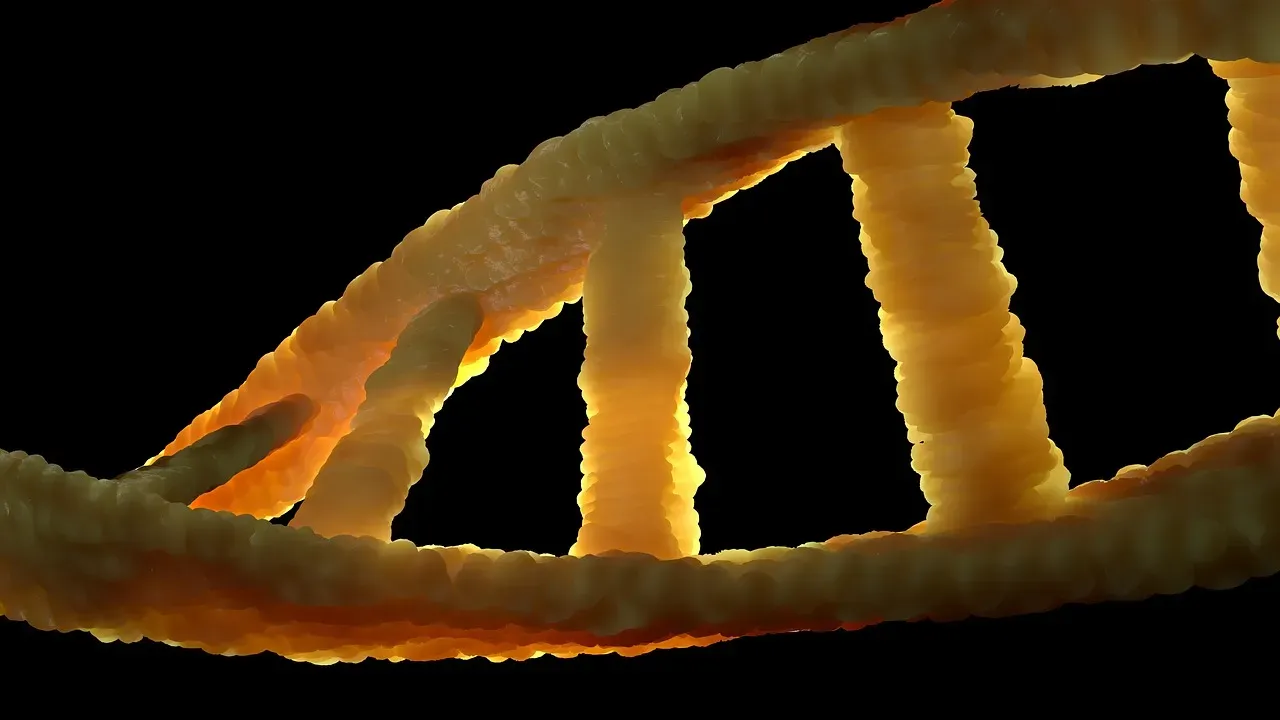
The story is not all rosy. Some Neanderthal-derived variants may have helped our ancestors, but in the modern world, they can come with trade-offs. Genes that once boosted immunity against ancient infections might now increase the risk of inflammatory or autoimmune conditions. Certain Neanderthal-linked variants appear to be associated with differences in how we process fat, respond to stress, or handle certain environmental exposures. A trait that was an advantage in an ice age wilderness is not necessarily ideal for someone working at a desk and ordering food delivery.
At the same time, some Neanderthal DNA probably did not pull its weight and was gradually weeded out by natural selection. That is why we see Neanderthal ancestry concentrated in certain parts of our genome and almost completely absent in others, especially in regions critical to things like reproduction and brain development. Evolution has been pruning that ancient inheritance for tens of thousands of years, keeping what mostly works and discarding what does not. The result is a messy compromise: some helpful relics, some neutral passengers, and a few lingering genetic hassles.
Neanderthals Were Not the Brutes We Once Imagined
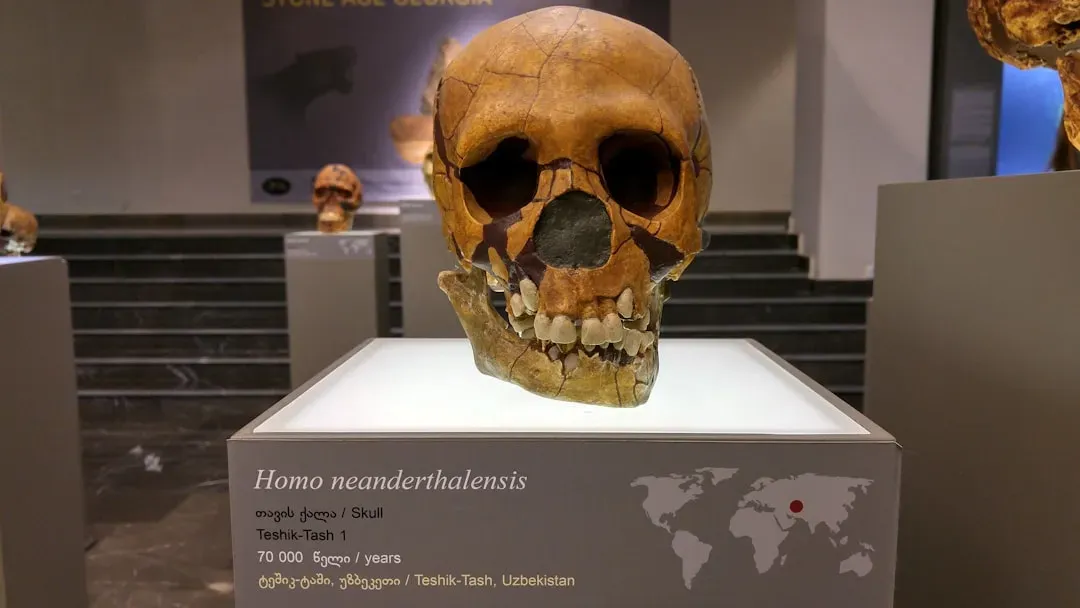
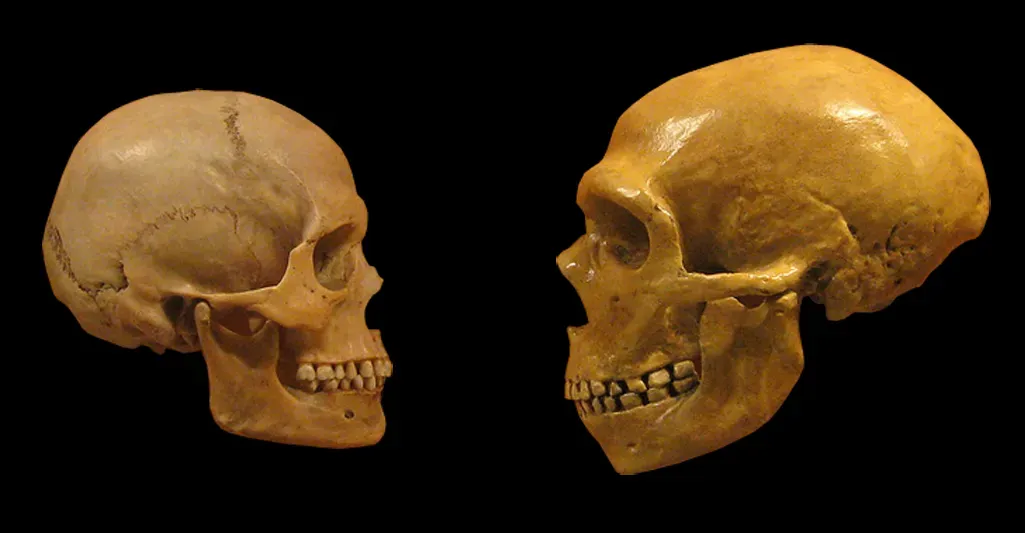
The idea that their DNA lives on in us also forces a reassessment of who Neanderthals really were. For most of the twentieth century, they were portrayed as clumsy, unintelligent, and basically doomed. But archaeological and genetic evidence has steadily chipped away at that stereotype. They made tools, controlled fire, hunted large animals, used pigments, and adapted to brutally cold climates. Their brains were at least as large as those of early modern humans, and their social lives were probably a lot richer than we once gave them credit for.
The fact that our ancestors formed long-term relationships and had children with Neanderthals suggests that they were not seen as monsters or complete “others,” but as people – different, yes, but close enough to share lives. I find that deeply moving. It also makes the old “ladder of progress” image, with us at the top and them below, feel embarrassingly outdated. What we are learning instead is that human evolution is a bush, not a ladder: intertwined branches, side paths, and overlaps, with Neanderthals as one of our closest, most intimate branches.
To me, that changes how we should talk about them. They were not failed experiments. They were another way to be human in a tough world – and part of that way lives on, invisibly, in many of us.
The Emotional Side of Knowing You Carry Neanderthal DNA
On paper this is all genetics and population history, but on a personal level it hits differently. The first time I really sat with the idea that I might be carrying small fragments of Neanderthal DNA, I felt a strange mix of awe and sadness. Awe, because it means my own body is an unbroken chain reaching back not just through Homo sapiens, but into another human lineage entirely. Sadness, because that lineage is gone as a distinct people; what remains are tiny molecular echoes scattered across billions of modern lives.
There is also something oddly comforting about it. We like to think of ourselves as cleanly separate categories – this species, that group, this history, that history. But our genomes keep telling a different story, one of constant blending and shared ancestry. The Neanderthal traces inside us are a reminder that crossing boundaries is not the exception in human history; it is the rule. When you zoom out far enough, ideas about “pure” bloodlines fall apart, and what is left is a tangled, shared story of survival and connection.
A Story That Never Truly Ended
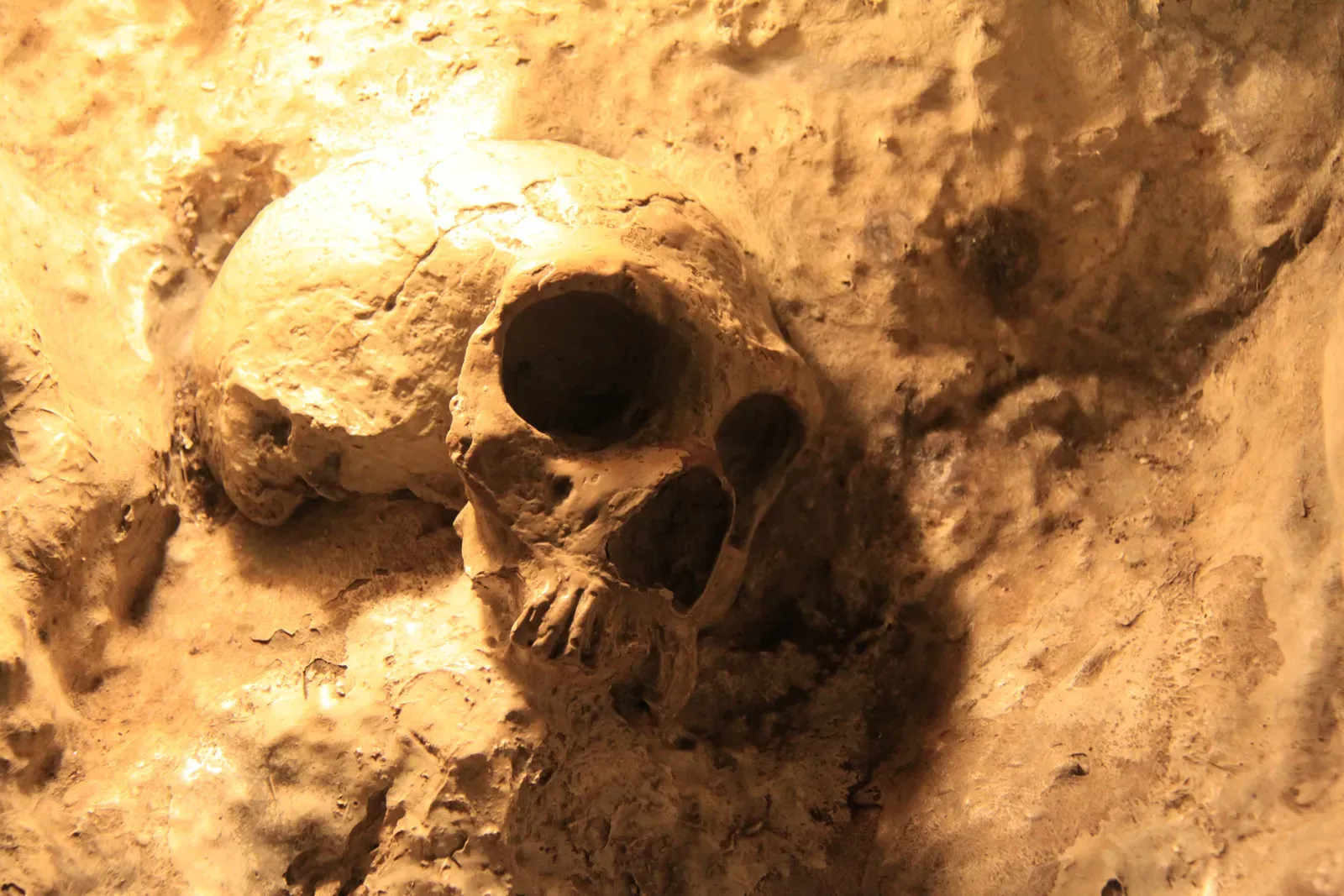
So did Neanderthals really go extinct? Biologically, as a separate, recognizable population, yes – they are no longer walking around with their characteristic bodies and faces. But on a deeper, genetic level, their story did not come to a clean full stop. It faded into ours. Their DNA is stitched into our immune systems, our skin, maybe even tiny pieces of how we think and feel. It is like a book series where the “final” volume secretly merges into another series, and the characters never quite leave the stage.
I think that has an uncomfortable but necessary lesson hidden in it. We like to draw sharp lines between “us” and “them,” between winners and losers in evolution, between the living and the gone. Yet our own genomes are evidence that the borders are blurrier than we admit. The Neanderthal story did not completely end because our story absorbed it and carried it forward. When you look at it that way, it becomes harder to see any human group as fully separate or any lineage as truly isolated. Maybe the real question is not whether Neanderthals are gone, but how many other forgotten stories are still quietly pulsing inside us, waiting to be noticed.