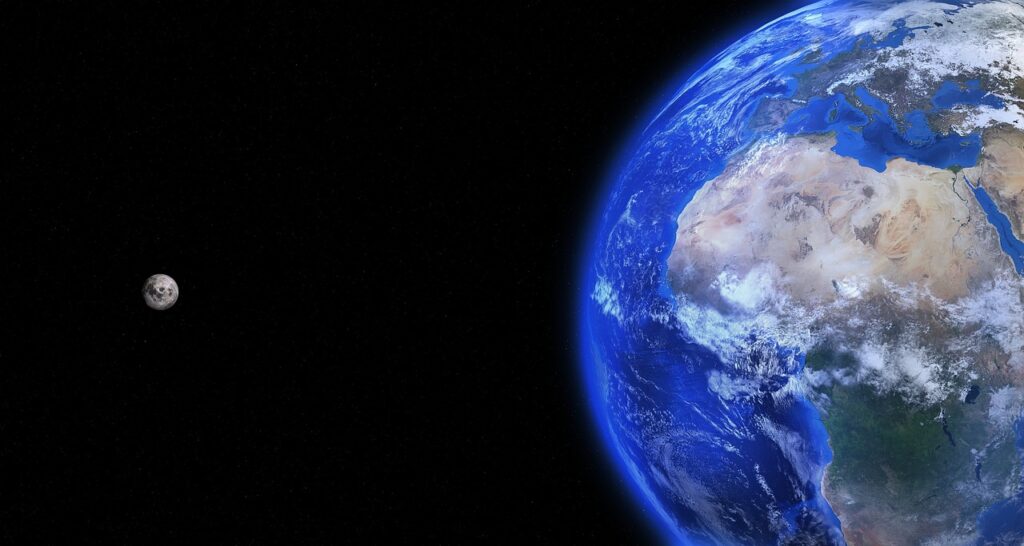
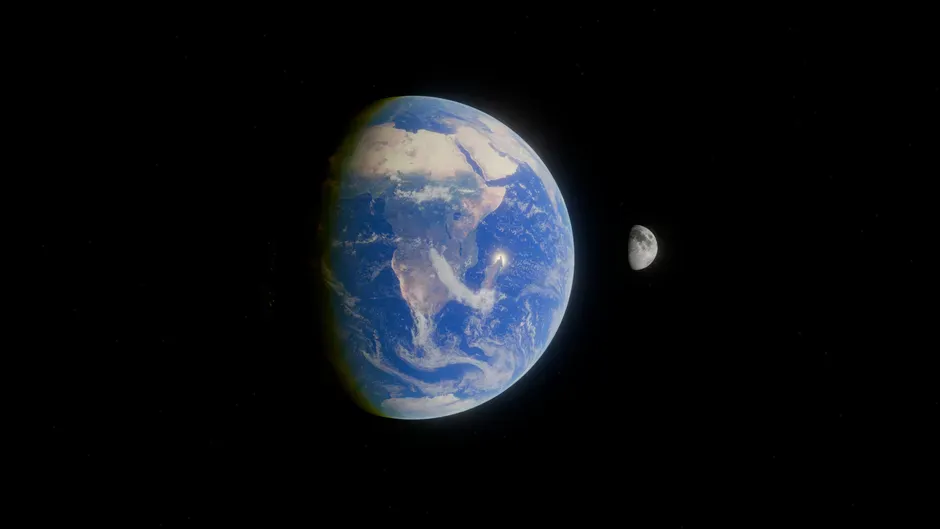
Look up at the Moon tonight and you might feel like you are staring at an ancient life-support system. Far from being just a pretty light in the sky, many researchers now think our Moon quietly helped steady Earth’s climate for billions of years, giving complex life the breathing room it needed to emerge. Without it, our planet might have swung wildly between deep freeze and scorching heat, a cosmic roller coaster too chaotic for large, fragile organisms to survive.
This idea is bold, but it is not wild science fiction. It grows out of decades of work on orbital mechanics, ancient tides, and the deep history of Earth’s atmosphere and oceans. The evidence is not perfect or complete, and scientists still argue over how big the Moon’s role really was, but the picture that is forming is fascinating: the Moon may have been one of the quiet heroes in the story of life on Earth.
The Moon’s Gravitational Grip and Earth’s Wobble
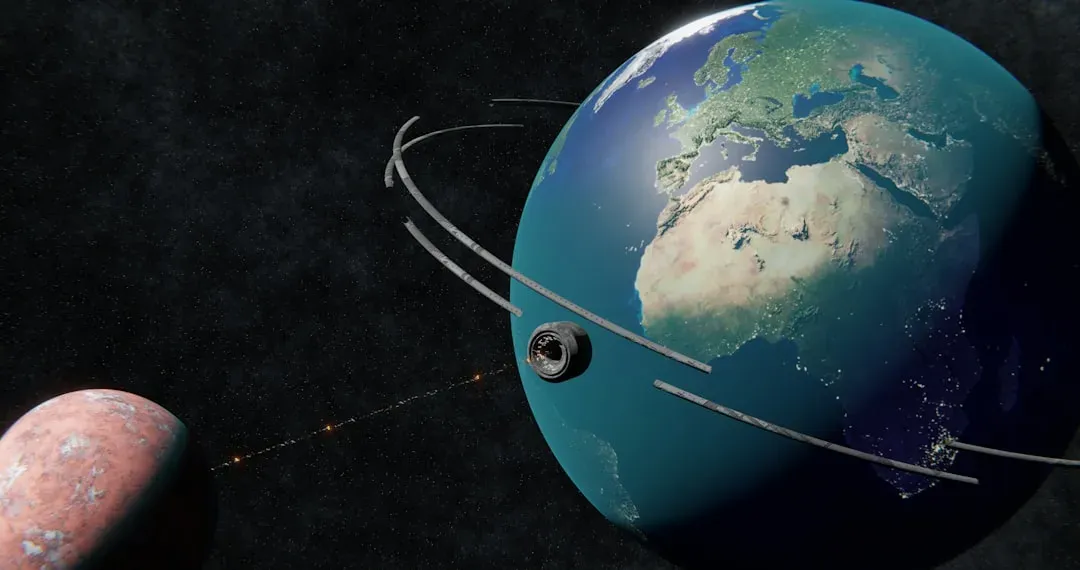
One of the most surprising claims in this research is that the Moon acts like a stabilizing hand on a spinning top. Earth does not spin perfectly upright; its axis is tilted, and that tilt slowly wobbles over time. Without a large moon, models suggest that this tilt could have chaotically shifted by huge amounts, driving brutal swings in climate over tens of thousands to millions of years. With the Moon’s strong gravitational pull, though, that wobble is damped and kept within a more moderate range.
This matters because our axial tilt controls how sunlight is distributed between the poles and the equator, and over the seasons. Large, rapid changes could mean polar regions sometimes getting tropical sunshine and then plunging back into deep cold, over geological blink-of-an-eye timescales. The Moon does not freeze Earth’s tilt in place, but it narrows the range of motion and slows the pace of change, likely preventing the most extreme scenarios that could have made long-term climate stability much harder to achieve.
Obliquity Chaos: A World Without a Big Moon
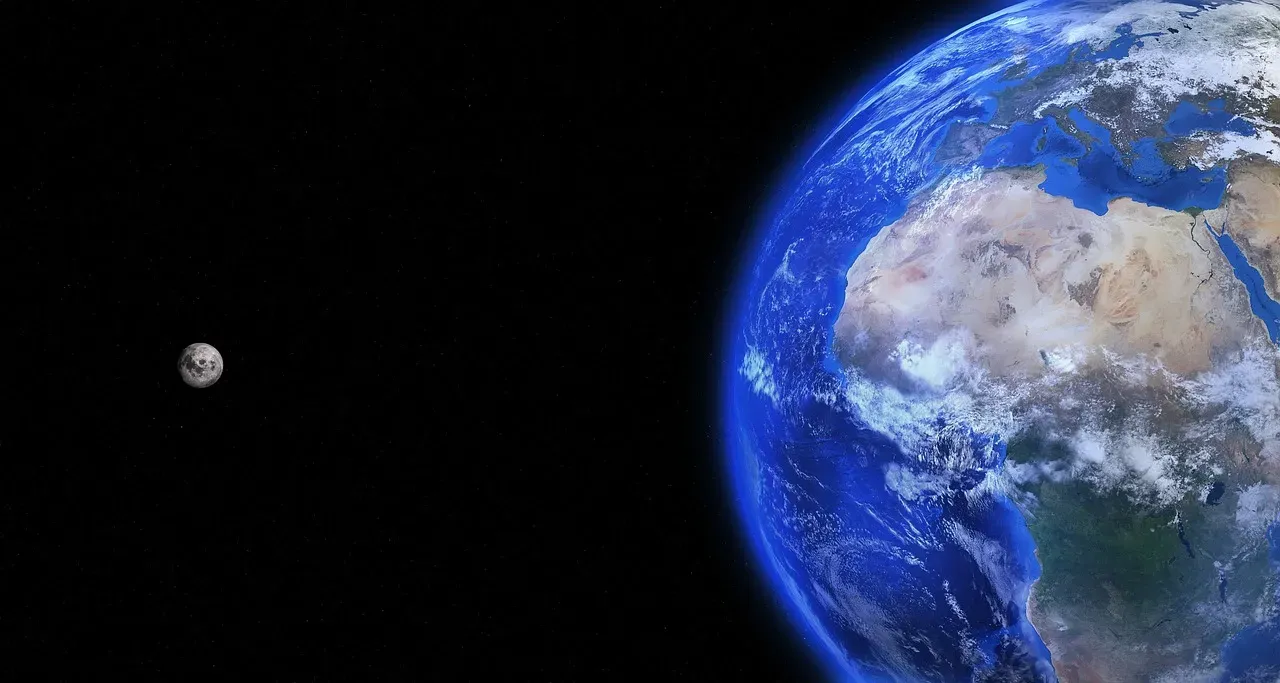
To understand just how important this might be, scientists run simulations of Earth-like planets with and without large moons. In many of these models, a moonless Earth experiences what researchers call obliquity chaos: the tilt can slowly wander from almost upright to extremely tilted, even approaching angles where the poles point almost directly at the Sun. That kind of shift would transform the climate, turning regions into deserts or ice sheets over and over again through deep time.
Now imagine trying to build complex ecosystems in a world like that. Forests, coral reefs, and large animals depend on relatively predictable patterns over millions of years, not just stable weather from year to year. If continents are constantly being punished by sudden swings in sunlight and temperature, evolution keeps having the rug pulled out from under it. The Moon, by restraining those wild swings, may have kept Earth in a middle lane where evolution could patiently assemble complex life instead of starting over repeatedly.
Tides, Mixing Oceans, and the Slow Work of Chemistry

The Moon’s influence is not just about tilt; it is also about tides. For billions of years, lunar tides have been raising and lowering sea levels twice a day, dragging massive amounts of water back and forth across continental shelves. This motion mixes the oceans, transports nutrients, and affects how heat is distributed from the equator toward the poles. On a quiet, nearly tideless ocean, stratification can trap cold, nutrient-rich water in the depths and leave surface waters starved.
Researchers studying ocean circulation increasingly see tides as a hidden engine behind global climate and nutrient cycles. Stronger tides driven by a nearby large moon early in Earth’s history could have helped keep the oceans well mixed, supplying life with the ingredients it needed while also moving heat around the planet. Over vast stretches of time, this kind of steady mixing may have supported a more uniform, resilient climate system, one less prone to tipping into global snowball states or runaway heating.
From Microbes to Multicellular Life: Why Stability Matters
Life appeared on Earth relatively early, but complex life took a long time to show up. For billions of years, our planet was dominated by microbes that could survive extreme conditions. Building large, multicellular organisms with specialized tissues is a slower, riskier evolutionary project. It demands long periods of environmental stability so that complex adaptations are rewarded instead of constantly wiped out by drastic climate swings.
In that context, even modest climate smoothing by the Moon could have made a big difference. A planet that avoids the most violent swings in tilt, ocean circulation, and temperature gives evolution a longer runway. It is a bit like trying to build a cathedral in a city that is constantly struck by earthquakes versus one that only shakes mildly from time to time. The Moon did not design the cathedral, but it may have kept the ground steady enough for builders to keep working.
Comparing Earth to Mars and Venus
One way to judge the Moon’s importance is to look at our neighbors. Mars and Venus offer cautionary tales of rocky planets that ended up with climates deeply hostile to complex life as we know it. Mars, with its small moons and weak gravity, lost most of its atmosphere over time and now endures thin air and extreme temperature swings. Venus, closer to the Sun and lacking a large stabilizing moon, slipped into a runaway greenhouse, locked beneath crushing clouds and intense heat.
Of course, the differences between these planets and Earth go far beyond the presence or absence of a big moon. Distance from the Sun, initial water content, internal geology, and many other factors are crucial. Still, when you put the puzzle together, Earth stands out not just for being in the right orbit but for having this unusually large companion. The Moon may be one piece of a delicate combination that pushed our world down a uniquely life-friendly path.
The Giant Impact: A Violent Birth with Long-Term Benefits
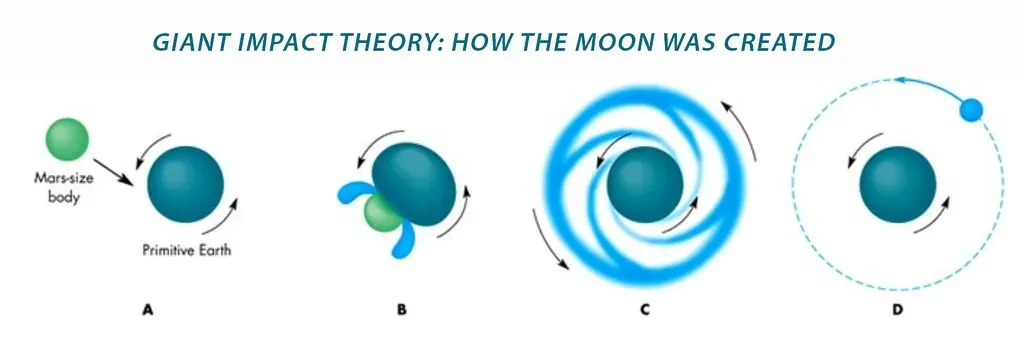
The leading theory for the Moon’s origin is that it was born from catastrophe: a Mars-sized body slammed into the early Earth, throwing molten debris into orbit that eventually coalesced into the Moon. At first glance, this sounds like a recipe for disaster, not a life-friendly feature. Yet, in a strange twist, that ancient chaos may have set up the conditions for long-term stability. The collision likely spun Earth faster and changed its tilt, but it also created the massive satellite that would later calm that very spin.
There is an almost poetic irony in the idea that a violent impact billions of years ago gave rise to a guardian of climate stability. Over time, the Moon’s gravitational pull has slowed Earth’s rotation and adjusted the dance between day length, tides, and axial wobble. What began as an act of destruction may have cleared the way for a world where complex life could eventually flourish, a reminder that in planetary history, short-term chaos and long-term stability can be deeply intertwined.
What This Means for Life on Exoplanets
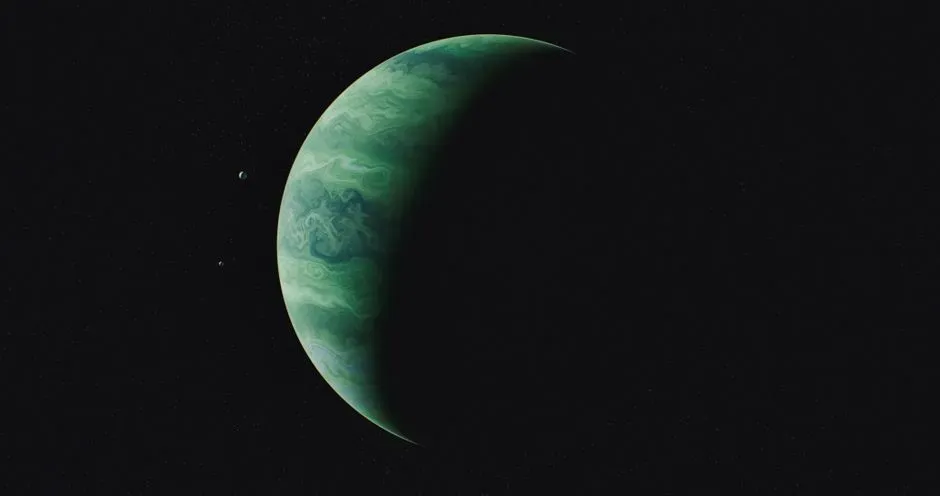
If the Moon really did help stabilize Earth’s climate, it raises a provocative question for the search for life elsewhere: should we be looking not just for Earth-like planets, but also for Earth-like moons? Most of the exoplanets we have found so far are detected indirectly, and their moons, if they exist, are incredibly hard to see with current technology. That means we might be missing a key piece of the habitability puzzle when we judge distant worlds solely by their distance from their stars or their size.
At the same time, we should be cautious. It is possible that some planets can achieve long-term climate stability without a large moon, thanks to different orbital configurations or internal dynamics that make them naturally steady. The Moon may have been a major helper for Earth, but not an absolute requirement for life everywhere. Still, the idea that big moons might tip the scales in favor of complex life is compelling, and it makes our own sky companion feel much more important than a simple nighttime landmark.
A Personal Take: The Moon as an Unsung Co-Author of Our Story
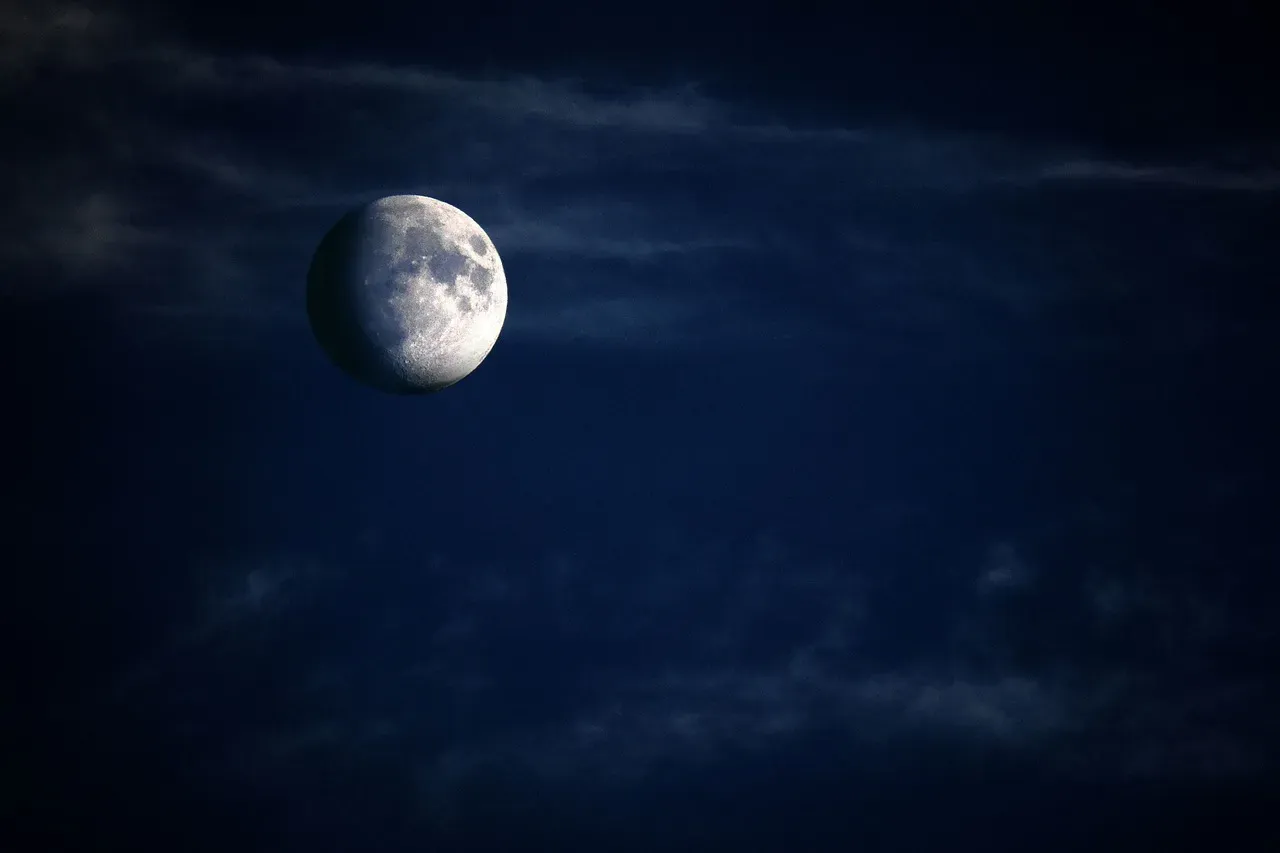
When I think about this research, I find it hard not to feel a bit humbled. For most of human history, the Moon has been a symbol in myths, art, and poetry, but not seen as a practical partner in our survival. The more we learn, the more it starts to look like a quiet co-author of our story, shaping the background conditions that let forests, oceans, and eventually people exist at all. It is almost unsettling to realize how much of our fate may have depended on a cosmic accident billions of years ago.
My personal opinion is that we should treat the Moon’s stabilizing role as a strong possibility, not a settled fact. The physics of tides and obliquity are well grounded, but the exact size of the Moon’s contribution to climate stability remains uncertain. Still, even the chance that it played a major role should change how we see our place in the universe. We do not just live on a lucky planet; we might live in a lucky double system, where a shattered past gave rise to a future rich with life. The next time you see the Moon hanging quietly in the sky, it is worth asking yourself: how different would everything be if it were not there?