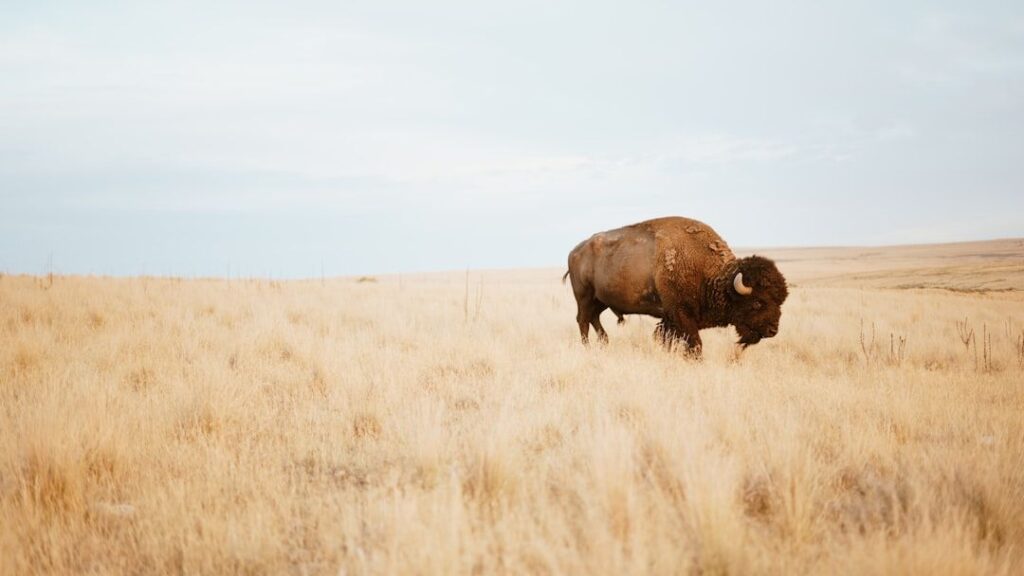
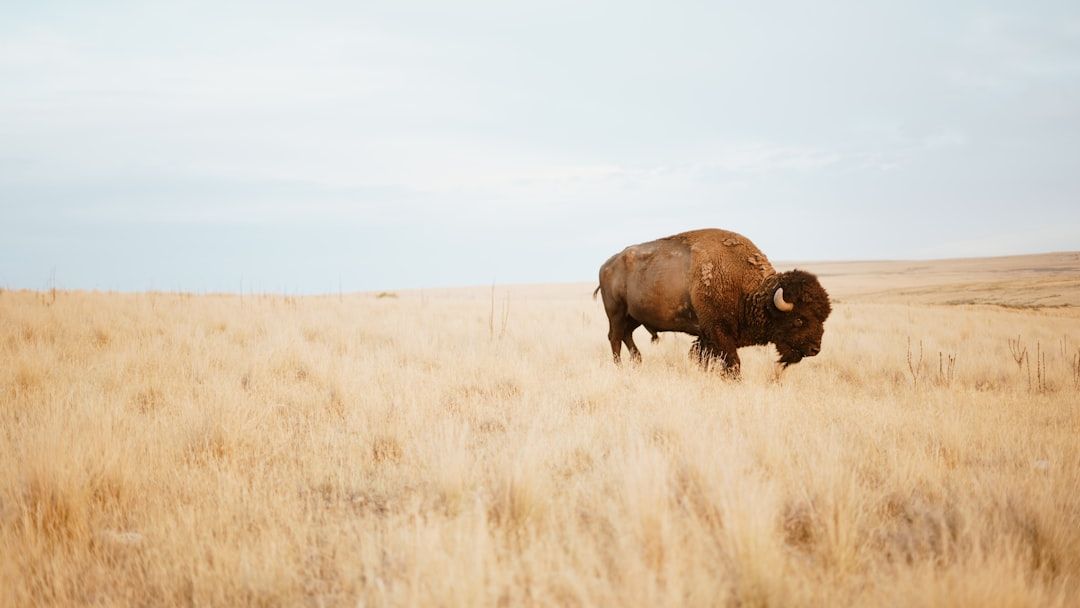
Seismic lines attract bison … sometimes to their death – Image for illustrative purposes only (Image credits: Unsplash)
In the remote boreal forests along the British Columbia-Alberta border, wood bison herds continue to navigate a landscape shaped by decades of oil and gas exploration. Linear clearings known as seismic lines crisscross the region, remnants of surveys that once mapped underground resources. Recent tracking of a reintroduced population shows these features exert a subtle but measurable pull on the animals, even as their numbers remain stalled.
Tracking a Reintroduced Herd
Researchers began aerial surveys of the northeastern British Columbia wood bison population in 2020. Two years later they fitted 14 animals with GPS collars and followed their movements through the end of 2023. The data revealed consistent patterns across summer and winter seasons.
Bison spent more time near seismic lines, pipelines, and oil-field facilities than expected. The animals appear to use the cleared paths as travel corridors, grazing on the grasses and forbs that grow along the edges. This behavior mirrors patterns seen in other large herbivores, yet it raises questions about long-term effects on a species still recovering from near-extinction.
Attraction Meets Clear Limits
The preference for these human-made features is not unlimited. When disturbance becomes too dense, the bison avoid the area altogether. This threshold suggests the animals tolerate moderate levels of industrial infrastructure but retreat when activity intensifies.
Scientists note that the population, first established with 43 animals translocated from Elk Island National Park in 1999 and 2000, grew to roughly 400 individuals about a decade ago. Since then it has shown little further increase. The plateau stands in contrast to expectations for a species capable of rapid growth under favorable conditions.
Hidden Costs of Following the Lines
While the cutlines offer easier movement and fresh forage, they also expose bison to several risks. Vehicles on nearby roads can strike animals that cross the paths. Poachers have targeted bison near oil and gas sites, and young calves traveling the open corridors face greater exposure to wolves that also use the same routes.
One researcher described finding collars on carcasses where the cause of death remained unclear. Another observed that the features may function as an ecological trap, drawing animals in without providing lasting benefits. These pressures help explain why the herd has not expanded as managers had hoped.
Key differences emerge when comparing wood bison to caribou, another species affected by the same landscape. Management approaches that work for one do not always suit the other, and the two sometimes respond in opposite ways to the same disturbances.
Looking Ahead for Recovery
The findings underscore the need for tailored strategies as more wood bison populations expand into industrial zones. Researchers emphasize that the goal remains wild herds that do not depend on human-altered habitats. Continued monitoring will help clarify how much disturbance the animals can sustain before numbers begin to decline.
They may be a trap because bison are attracted by them, but those features may not confer benefits.
Future reintroductions will likely encounter similar challenges, making early planning for linear features an important part of recovery efforts. The current data provide a clearer picture of both the opportunities and the constraints these animals face in a changing northern landscape.