
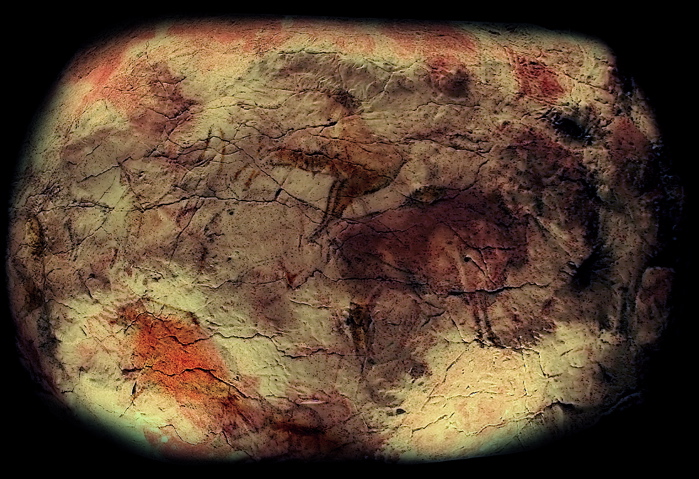
Humans like to think of creativity as a sudden spark: one person, one moment, one masterpiece. But in a cave in northern Spain, the story is completely different. There, a single painted panel was not the work of one mind, or even one era, but the accumulated trace of hundreds of generations, returning over roughly twenty millennia to the same slab of stone, in the same chamber, lit by the same kind of wavering firelight. This is the unsettling, almost sci‑fi truth behind some of Spain’s most famous Paleolithic art, including the great painted ceilings of Altamira. Dating techniques show that what we see as a single “panel” of bison, horses, and signs is actually a layered project that stretches from about thirty‑five thousand years ago to roughly fifteen thousand years ago. In other words, by the time the last bison was painted, the first one on that wall was already more ancient than the pyramids are to us today.
A wall that outlived empires, languages and entire cultures
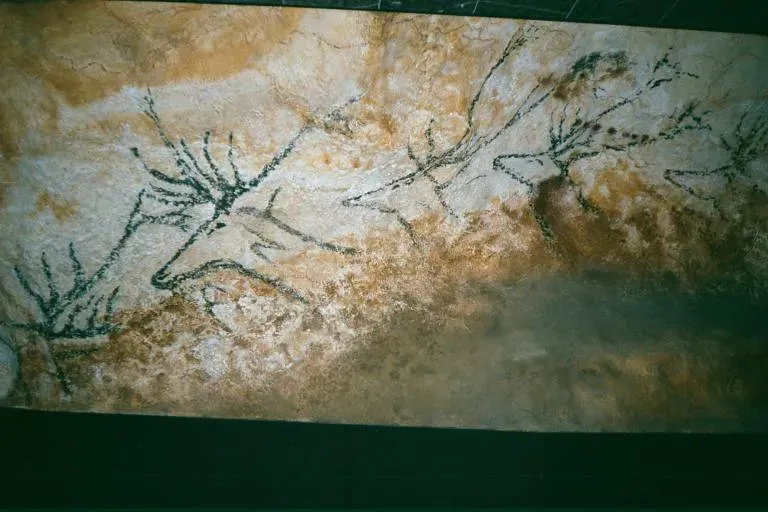
Imagine one rock surface silently watching the world change for twenty thousand years. When the earliest marks were made on that Spanish cave wall, glaciers still dominated much of Europe, mammoths and woolly rhinoceros roamed nearby plains, and what we call “history” was unimaginably far in the future. Yet generation after generation kept coming back to that same patch of stone, as if it was an altar, a screen and a notebook all at once. Archaeologists now know this is not poetic exaggeration but a literal timescale. In caves like Altamira, uranium‑series dating of the thin mineral crusts that form over pigments has revealed that some motifs were laid down around thirty‑five millennia ago, and others closer to fifteen millennia ago. That means the “panel” is not really a single artwork but a stacked archive of decisions made by people who would have considered one another as distant ancestors, if they could even imagine how much time separated them.
How scientists can tell a panel took 20000 years
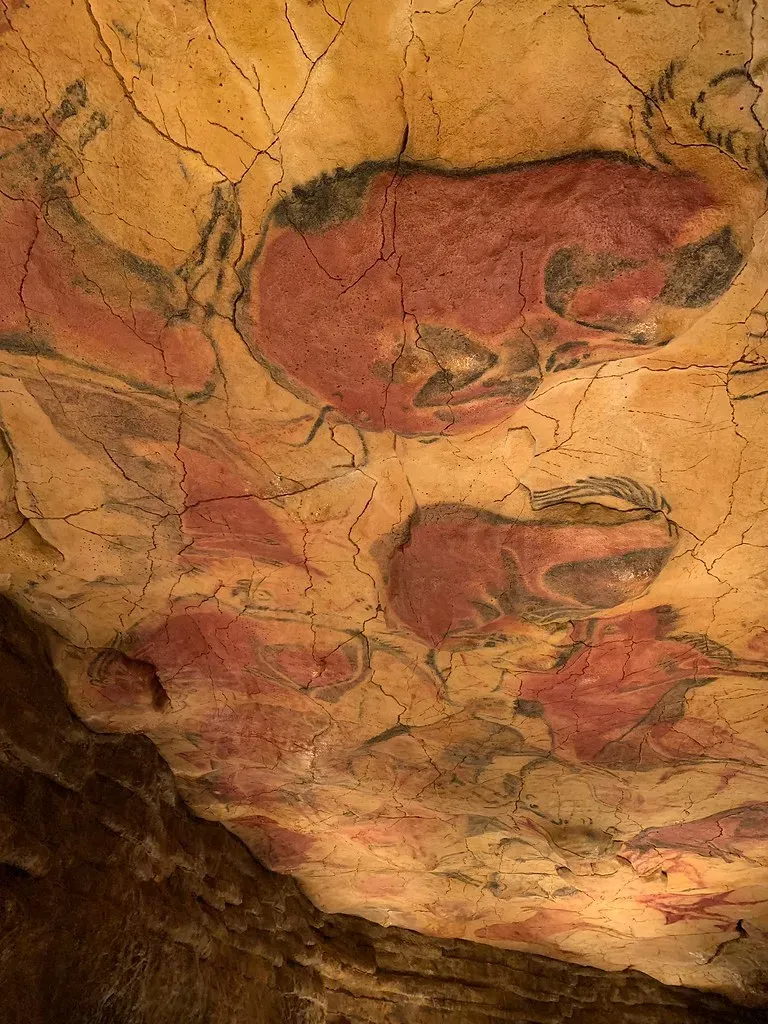
It is tempting to assume we could never reconstruct such a long creative timeline, but the science behind it is surprisingly robust. Water seeping through cave rock leaves calcite deposits over everything, including painted lines. These translucent crusts trap tiny amounts of radioactive uranium that slowly decays into thorium at a predictable rate. By drilling microscopic samples from above and below a painted layer and measuring that decay, researchers can bracket the minimum and maximum ages of the paint beneath. What stunned specialists when these tests were applied in Spain was the sheer spread of dates on a single wall. Some red dots and abstract signs turned out to be among the earliest layers, while later animal figures, with more confident shading and perspective, belonged to periods thousands of years afterward. Style studies backed this up: details like the way legs are drawn, how bodies are shaded, and which animals are chosen match known phases of Ice Age culture, confirming that this was a stop‑start project renewed again and again rather than a one‑off mural.
Different hands, same wall: reading the style of vanished artists
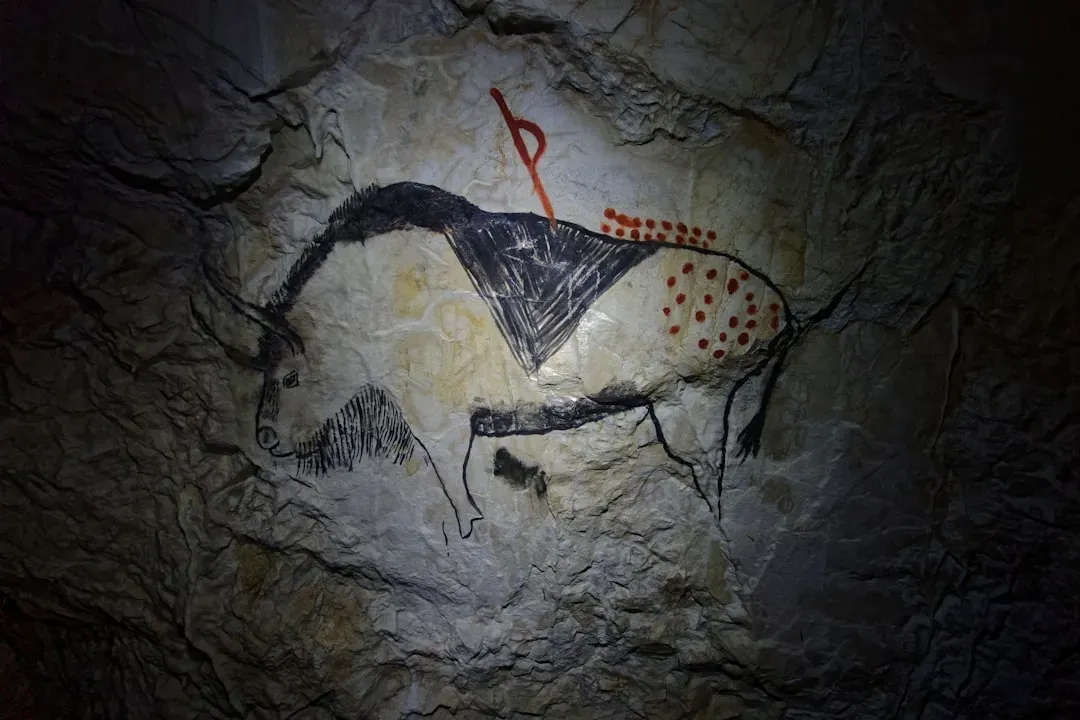
If you stand in front of one of these panels (or, more realistically, in a carefully controlled replica), it is easy to feel as if a single genius decorated the entire thing. The bison seem to flow into each other; the horses share a similar curve of neck; the red signs hover like a consistent visual language. But close analysis tells a messier, more human story. Many figures overlap or partly erase each other, and subtle style shifts betray the presence of different painters with different levels of skill and different artistic fashions. Art historians of prehistory look for clues the same way a modern expert might compare Renaissance paintings. Some animals are flat silhouettes, others show a sophisticated use of the cave’s bulges to create a three‑dimensional effect. Some hooves and horns are sketchy; others are obsessively precise. This variation is not random. It maps onto the archaeological record of changing tool types and living patterns outside the cave, suggesting that the panel was like a family album continually updated – new images tucked awkwardly around older, revered ones, each generation both respecting and subtly editing what came before.
Firelight, flicker and the original “immersive art experience”
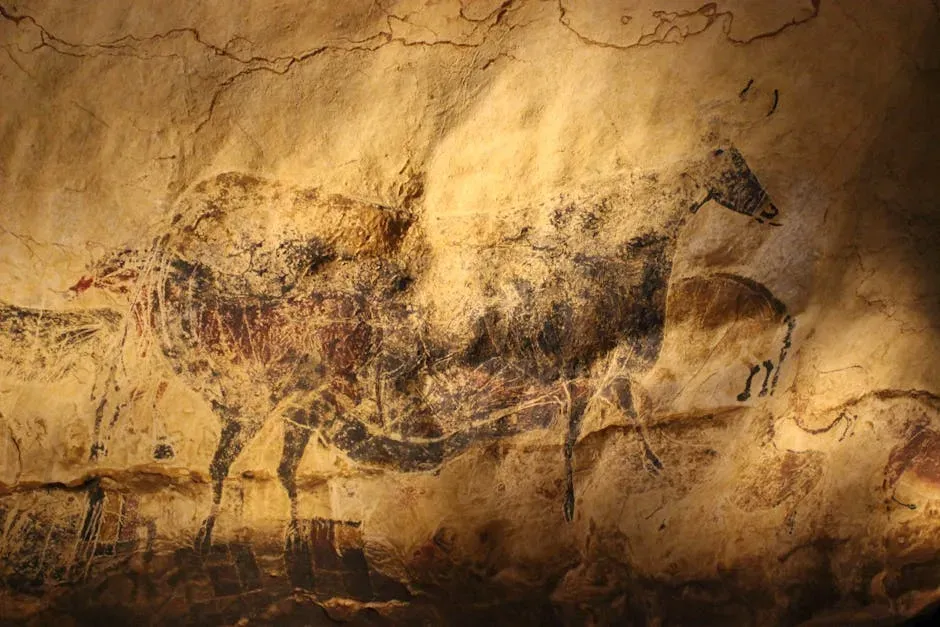
We tend to imagine cave paintings the way we see them in photographs: evenly lit, motionless, quiet. The reality would have been the opposite. The only light source was flame – fat lamps, torches, or small hearths – which means every image on that panel would have shimmered and breathed as shadows danced across the rock. Bison would seem to move as the light shifted over a bulging ceiling; lines might appear and disappear with each step you took. This flicker is not just atmosphere; many researchers think it was part of the point. Artists often chose locations where the natural contours of the stone suggest animal backs, shoulders or faces, then placed paint to enhance that illusion. In a dark chamber, the effect of a glowing, half‑emerging herd must have been intense. It is not hard to imagine why people kept returning to that same spot for thousands of years. When I first walked into a small, decorated cave in northern Spain, even its modest red deer felt almost aggressive in the lamplight, like you had just stumbled into a living presence that was waiting for you.
Why keep painting the same sacred panel for millennia?
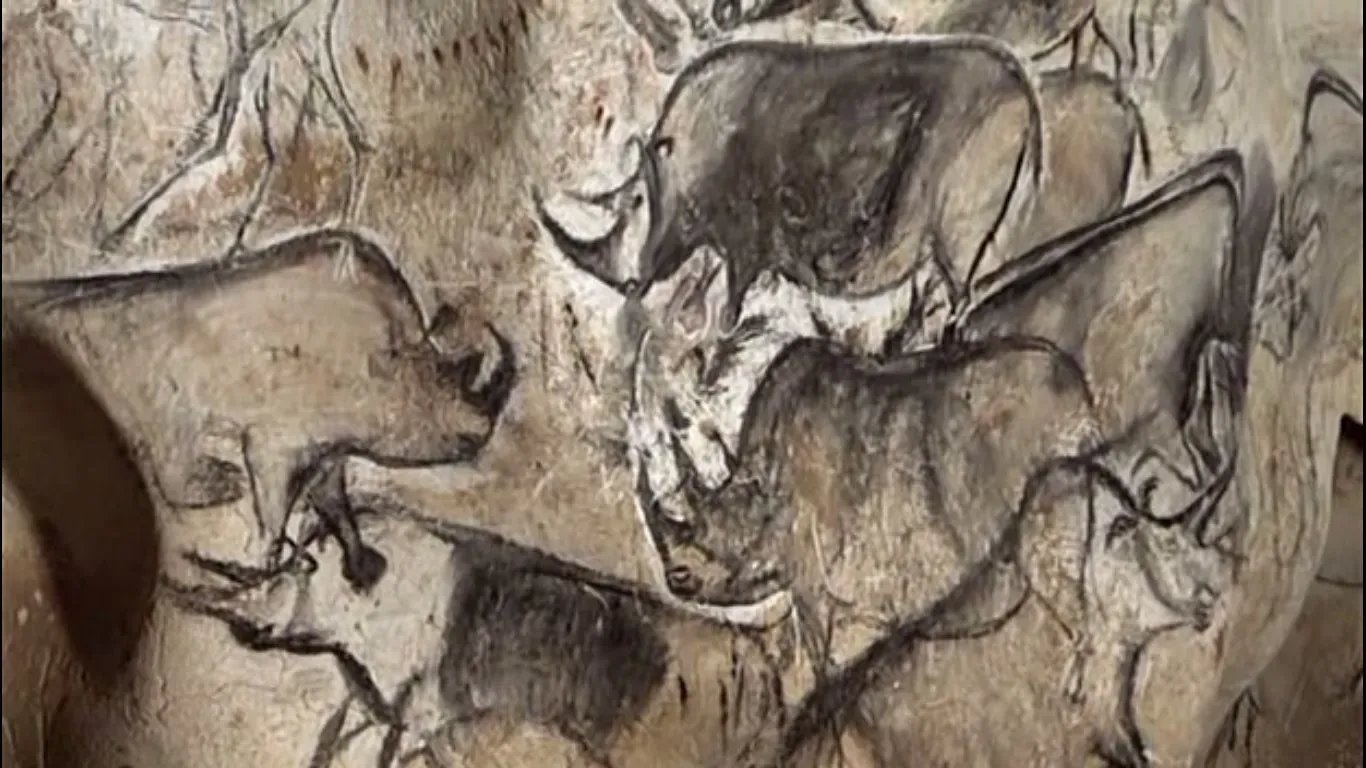
Here is where we hit the honest limits of evidence and step into informed interpretation. We do not know exactly what these paintings meant to their makers, and we should be wary of tidy stories. Even so, the stubborn fact that people walked deep underground, over and over again, to add new figures to a specific panel demands an explanation. Hunting magic, storytelling, rites of passage, clan insignia, offerings to unseen powers – all have been proposed, and the truth may be some tangled combination. One of the strongest clues is repetition. Certain animals and signs reappear across vast stretches of time: bison, horses, deer, hand stencils and abstract marks like dots and branched lines. This persistence suggests that the wall was not just a convenient blank surface but a charged place where particular symbols mattered. Returning to the same panel may have been a way of plugging into that inherited meaning, much like building new chapels onto an old cathedral or adding graffiti to a famous urban wall. You do not start from scratch; you talk back to what is already there.
Ancient DNA and the shock of touching the artists themselves
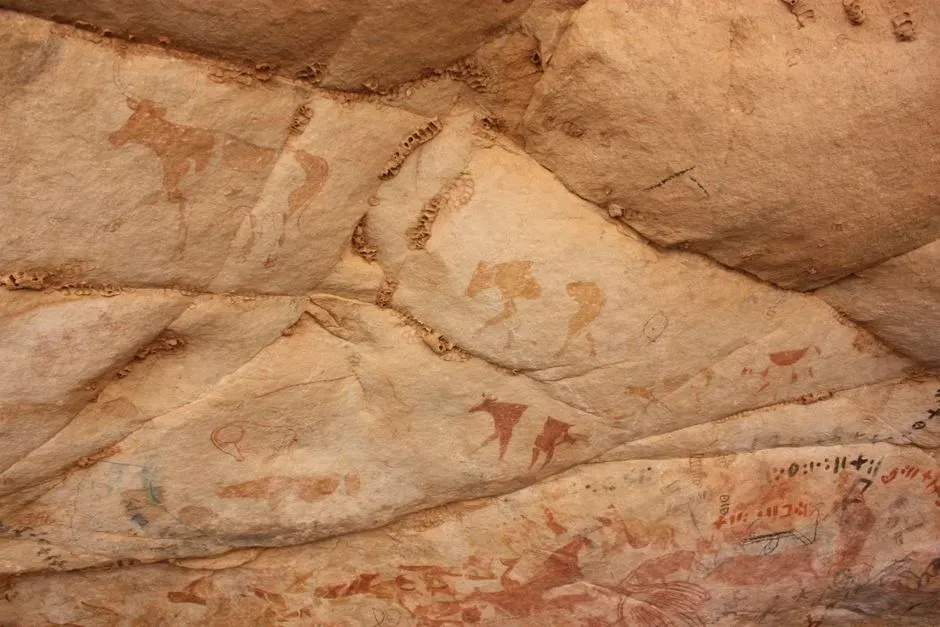
One of the wildest twists in recent research is that scientists have actually begun pulling ancient human DNA directly from cave walls and rock art. Tiny samples scraped from pigment or nearby deposits in caves in Spain and Portugal have yielded genetic traces that are thousands of years old. In some panels, the DNA likely comes from the very people who leaned on the wall, mixed the pigment in their mouths, or pressed their hands against the stone to make a stencil. We have to be careful here: DNA alone cannot tell us who painted what or what they believed. But it does something almost more profound. It proves that individual bodies were physically close enough to leave microscopic fragments of themselves where the art still sits. Some samples show multiple genetic signatures layered in the same area, matching the archaeological story of repeated visits by different groups over very long periods. Suddenly, that “timeless” panel becomes crowded with very specific lives, each one as mortal and as ordinary as ours.
What a 20000‑year panel says about us today
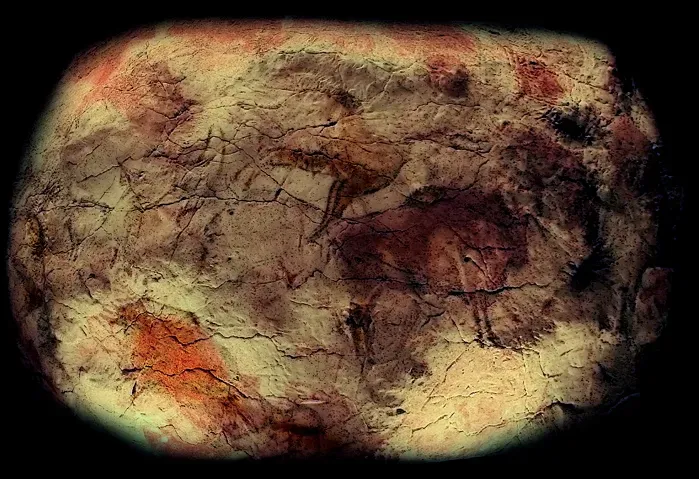
It would be easy to romanticize these artists as mysterious geniuses or to reduce them to symbols in some cosmic human story. I think the more uncomfortable – and more honest – reading is that they were people facing their own problems, fears and joys, leaving marks that were meaningful in their own moment and only accidentally immortal. The fact that a single panel in Spain holds a continuous thread of such moments across twenty thousand years should shake our sense of what counts as “long term” commitment. To me, the most radical lesson of that wall is about attention. We live in a culture where an image may be forgotten in twenty minutes; that cave panel was sustained, revisited and carefully expanded for a span longer than all of recorded history. That is not just impressive, it is a quiet rebuke. It suggests that humans are capable of tending shared symbols for far longer than any one lifetime, if we choose to. So the real question is not whether those ancient artists were like us. The uncomfortable question is whether we still know how to be like them – to keep coming back, in our own flickering light, to the same hard questions and the same shared walls.