For a long time, if you asked where the story of human art truly began, most people would have pointed straight to Europe: Lascaux in France, Altamira in Spain, maybe Chauvet with its dramatic horses and lions. The unspoken assumption was that the first sparks of symbolic genius, the real “birth” of art, happened in the caves beneath the European Ice Age skies. Then came a quiet shock from an unexpected place: the humid karst landscapes of Indonesia.
When researchers announced that some cave paintings on the Indonesian island of Sulawesi were older than the famous European masterpieces, it did more than nudge a few dates around. It tore open a cozy story and forced scientists to rethink what it means to be human, when creativity truly ignited, and whether we’ve been looking in the wrong places all along. The idea that the world’s earliest known figurative art might come from tropical Asia, not Europe, still feels almost rebellious – and that’s exactly why it matters.
A Surprising Discovery Hidden in the Tropics
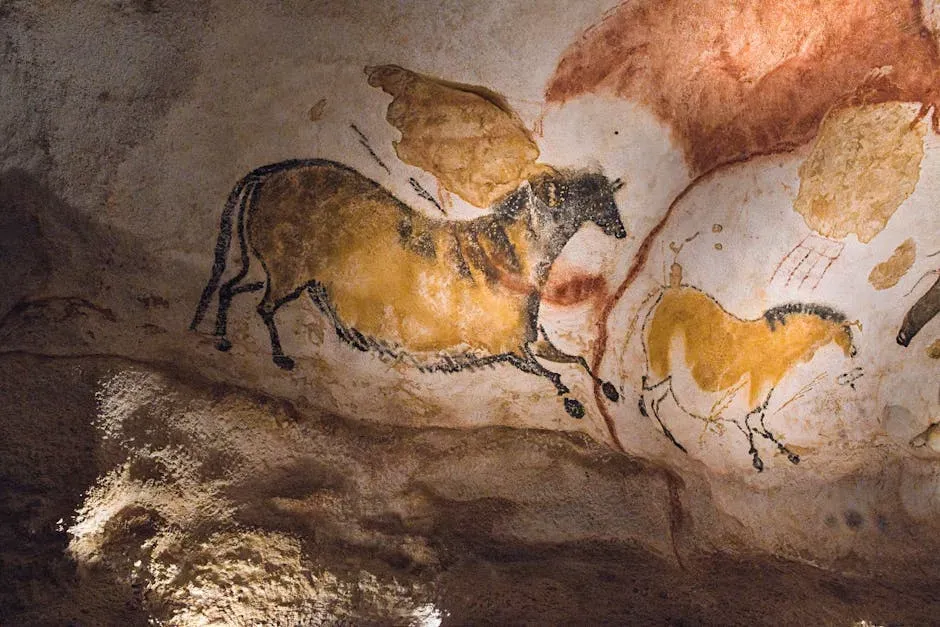
Imagine expecting to find the roots of human creativity under icy stone ceilings in France or Spain, and instead, the crucial evidence turns up in a hot, humid cave in Indonesia. In Sulawesi and neighboring islands, researchers exploring remote limestone hills stumbled on cave walls covered in reddish-brown images: animals, hand stencils, and scenes that clearly were not random doodles. These paintings had been known locally, but globally, they flew under the radar for years, treated as side notes rather than center stage.
It took careful scientific dating techniques to show just how wrong that judgment was. When scientists measured tiny mineral crusts that had formed over the pigments, they realized some Sulawesi paintings predated Europe’s most famous cave art by thousands of years. The idea that the tropics, long overlooked in early-art narratives, held this kind of deep-time cultural treasure shocked many researchers – and honestly, it still feels like we’re only just starting to absorb what that means.
Why Age Matters: Rewriting the Global Story of Art
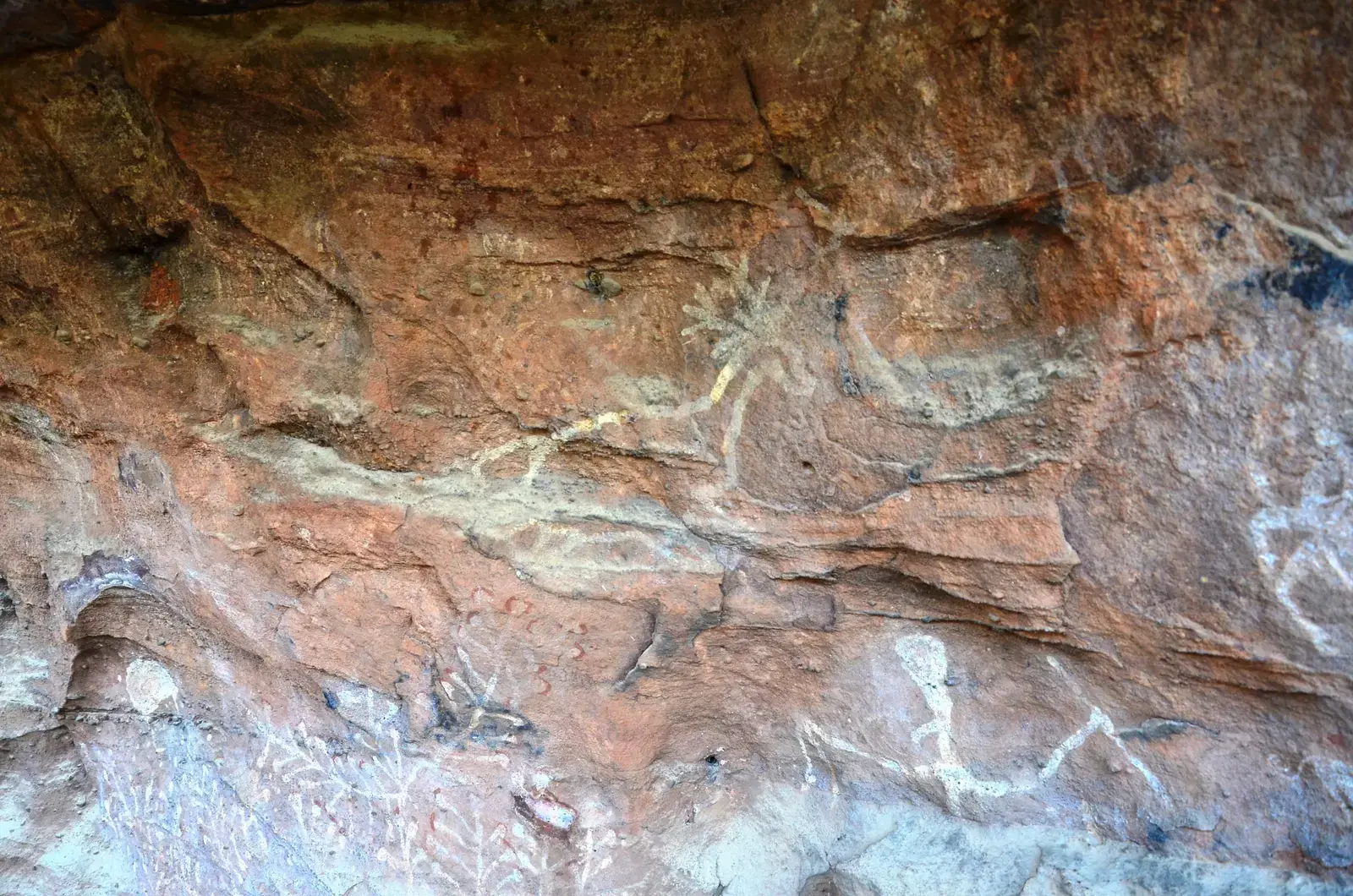
At first glance, arguing whether one painting is a few thousand years older than another might sound like academic nitpicking. But in archaeology, those differences in age are like flipping the script on who got there first. For decades, Europe’s Ice Age caves were treated almost like a holy origin myth for art, the place where “modern” symbolic thinking really took off. When Indonesian paintings turn out to be older, that narrative suddenly looks very provincial.
If sophisticated images were already being painted in Southeast Asia around the same time – or earlier – than in Europe, then artistic creativity clearly did not “start” in one special place. Instead, it probably traveled with humans as they spread across the world or even emerged independently in several regions. That makes the story of early art less like a single lightbulb switching on in Europe and more like a network of campfires flaring up across continents, often at similar times, shaped by different environments and traditions.
Dating Rock Art: How Scientists Measured the Impossible

One of the trickiest problems with cave paintings is that you can’t just take a piece of pigment, run a simple test, and get a neat birthday. In many cases, there is not enough organic material in the paint for classic radiocarbon dating. So researchers in Indonesia turned to another clever method: they dated the thin mineral crusts, mainly calcium carbonate, that had grown over the paintings like tiny geological bandages. Those crusts contain uranium that slowly decays, and by measuring that decay, scientists can figure out how long they have been forming.
The crucial detail is that the painting must be older than the crust lying on top of it, so that date becomes a minimum age. When those minimum ages came back older than famous European cave art, it was like opening an envelope and finding a result that nobody had bet on. This technique is not perfect and comes with margins of error and debates over sampling, but it has been tested in different parts of the world. The recurring pattern – very old art appearing far beyond Europe – makes it hard to cling to the old Euro-centered timeline with a straight face.
What the Indonesian Cave Paintings Actually Show
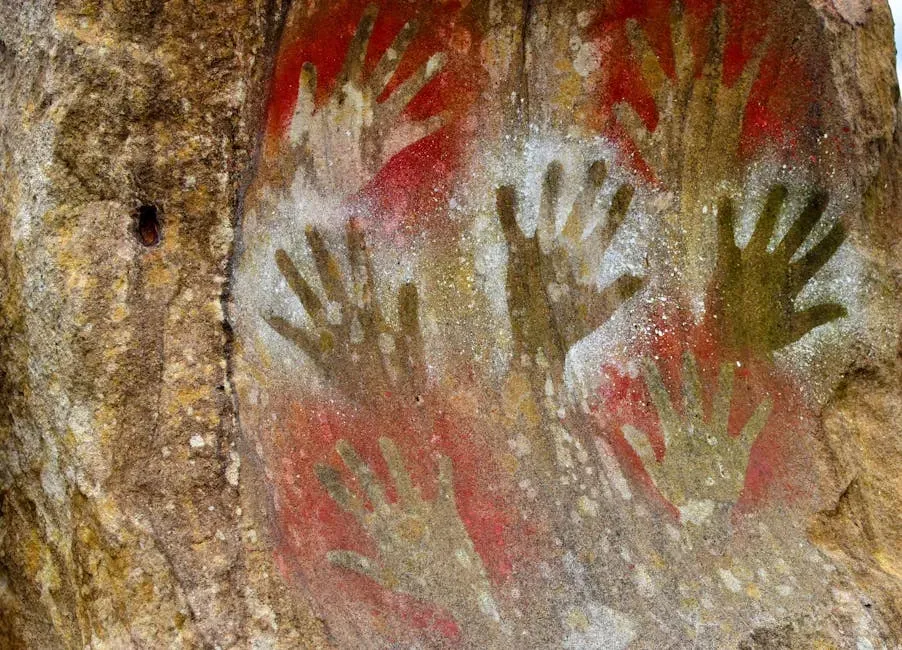
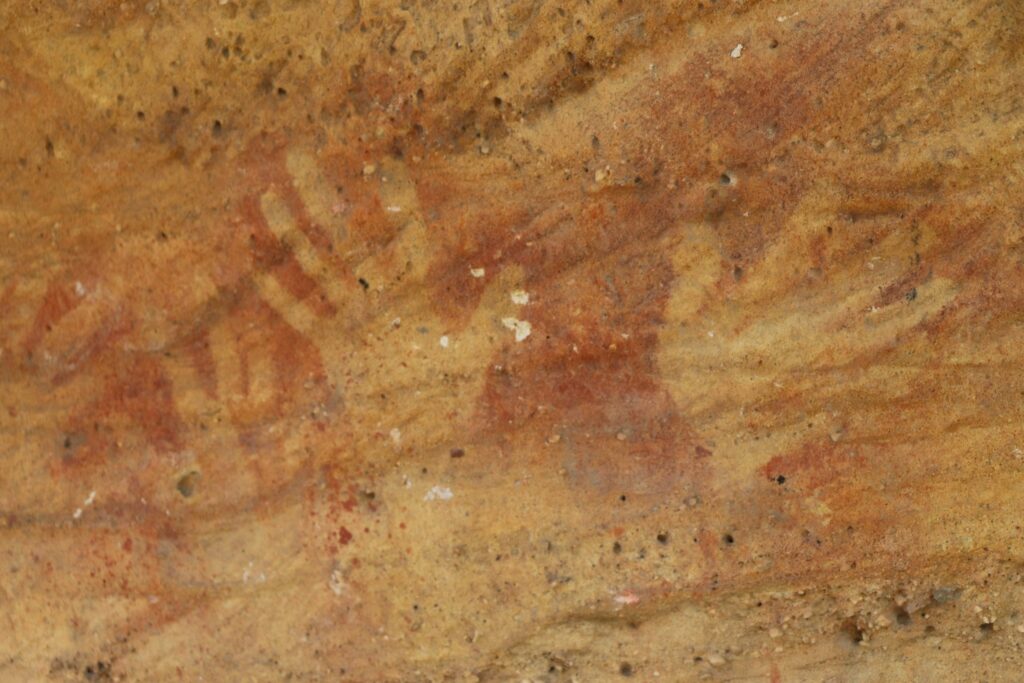
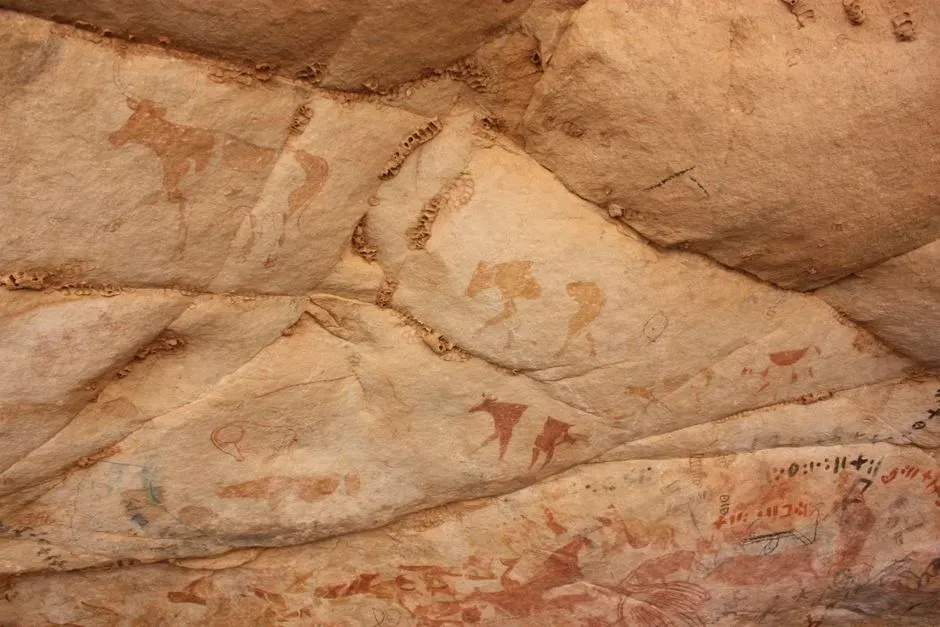
These Indonesian caves are not just decorated with random lines; they hold surprisingly complex imagery. On Sulawesi, there are hand stencils formed by people placing their hands on the rock and blowing or spitting pigment around them, leaving ghostly prints that feel eerily intimate. Alongside these, you see animals like wild pigs and other local fauna, painted with enough clarity that you can recognize the species. Some panels even appear to show groups of animals or scenes with multiple elements interacting.
What really makes archaeologists sit up is that some of these figures are considered figurative art: clear representations of real, identifiable beings, not just abstract marks. The ability to depict the world in symbolic form – turning a living creature into a painted icon on a cave wall – says a lot about the way people thought. These images strongly suggest that humans in this region were capable of complex, symbolic storytelling long before anyone set foot in a European cavern with a torch and a bowl of pigment.
What This Says About the Minds of Early Humans

Every time we push the dates of early art further back, we are really nudging the timeline of human imagination. The Indonesian cave paintings hint that people living tens of thousands of years ago in Southeast Asia were not just surviving; they were interpreting their world and expressing it in highly symbolic ways. Painting an animal is not the same as simply hunting it. It means abstracting it, turning it into a symbol that can carry spiritual, social, or practical meaning within a group.
To me, this is the most powerful part: it suggests that wherever humans went, they carried a shared mental toolkit that included the urge to make images, tell stories, and leave marks that would outlive them. The fact that we find this in Indonesia, far away from the often-romanticized European caves, makes our ancestors feel more universal and less stuck in one corner of the map. It argues strongly that the spark of creativity is not a regional anomaly but a built-in feature of being human.
Challenging Eurocentric Myths About “Civilized” Creativity
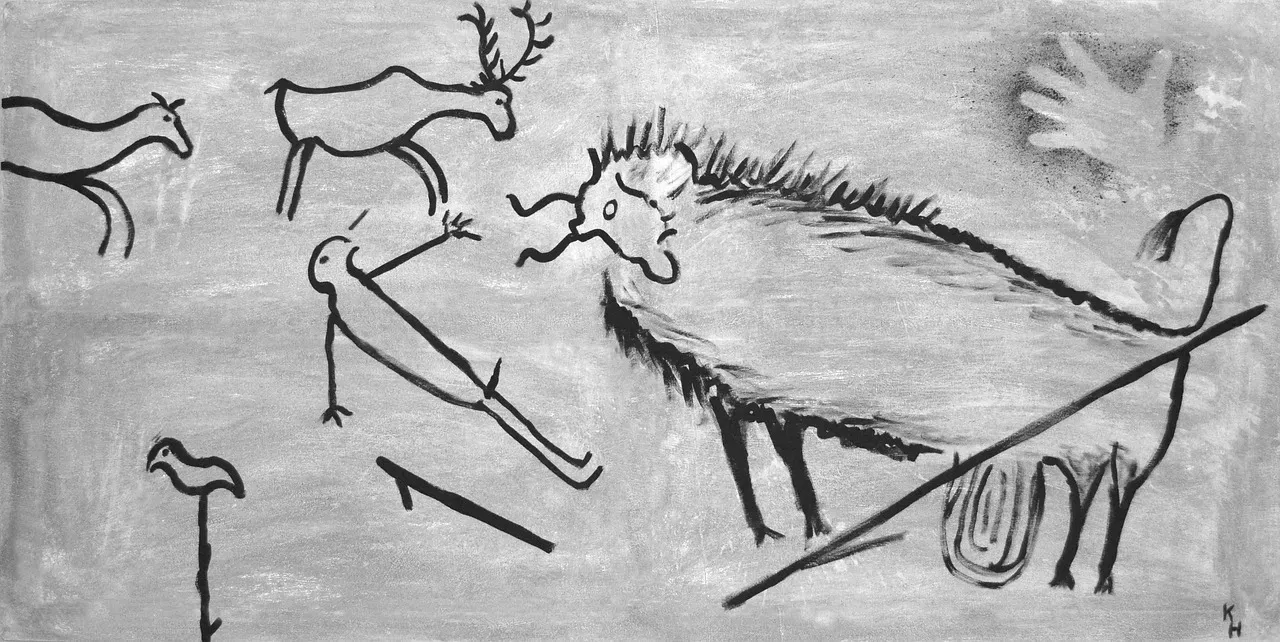
Whether people admit it or not, a lot of older research treated Europe as the default home of progress, including in art. The idea that the earliest known figurative paintings might come from Indonesia rather than France quietly undermines that old hierarchy. It forces us to accept that early humans outside Europe were just as innovative, just as capable, and just as symbolically rich. Personally, I think this is long overdue and a much more honest way to look at human history.
Once you accept that some of the oldest known figurative art sits in Indonesian caves, it becomes awkward to talk about Europe as the undisputed cradle of creativity. It also raises uncomfortable questions: How many other regions have equally old art that either eroded away, remains hidden, or simply has not been studied with the same intensity? The shift feels a bit like realizing that the “main storyline” of humanity has been edited to favor one region, and now we’re finally seeing some pages that were missing from the global script.
A Wider Pattern: Ancient Art All Across the Old World
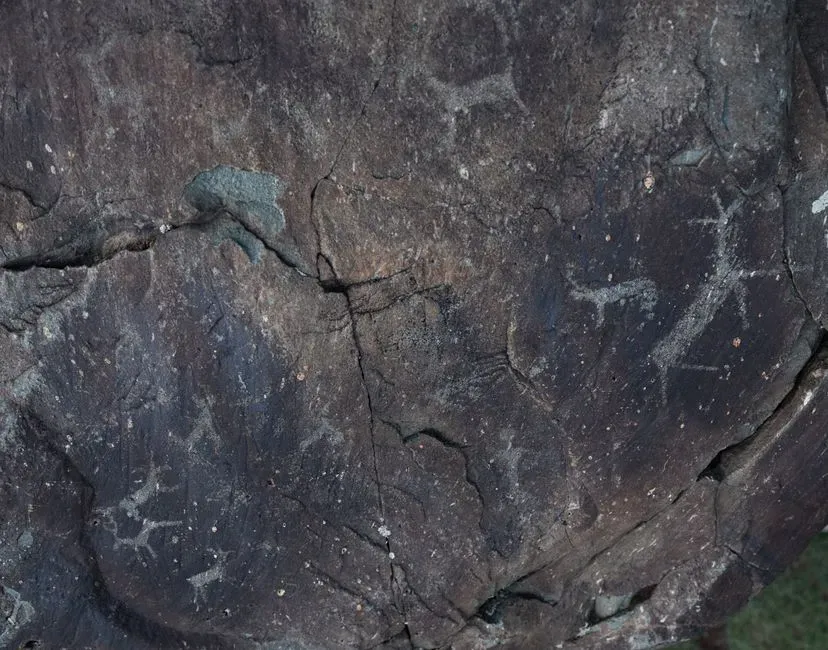
The Indonesian discoveries do not stand alone; they plug into a growing global pattern. Early rock art has been found in places as diverse as Australia, South Africa, and the Arabian Peninsula, some of it remarkably old and sophisticated. Each new find chips away at the idea that art bloomed in only one favored place before slowly seeping outward. Instead, it looks more like multiple regions – linked by migrations, shared ancestry, and local innovation – were experimenting with images in parallel across huge distances.
This wider pattern supports the idea that symbolic thinking and artistic expression likely developed along with the spread of Homo sapiens rather than being a late, regional upgrade. The Indonesian caves are especially important because they provide strong, well-dated evidence of this in Southeast Asia. They help shift our mental map from a single epicenter to a web of creative hotspots, a bit like discovering that an entire archipelago of islands exists where you used to think there was only one proud continent.
What We Still Don’t Know – and Why That Uncertainty Is Exciting
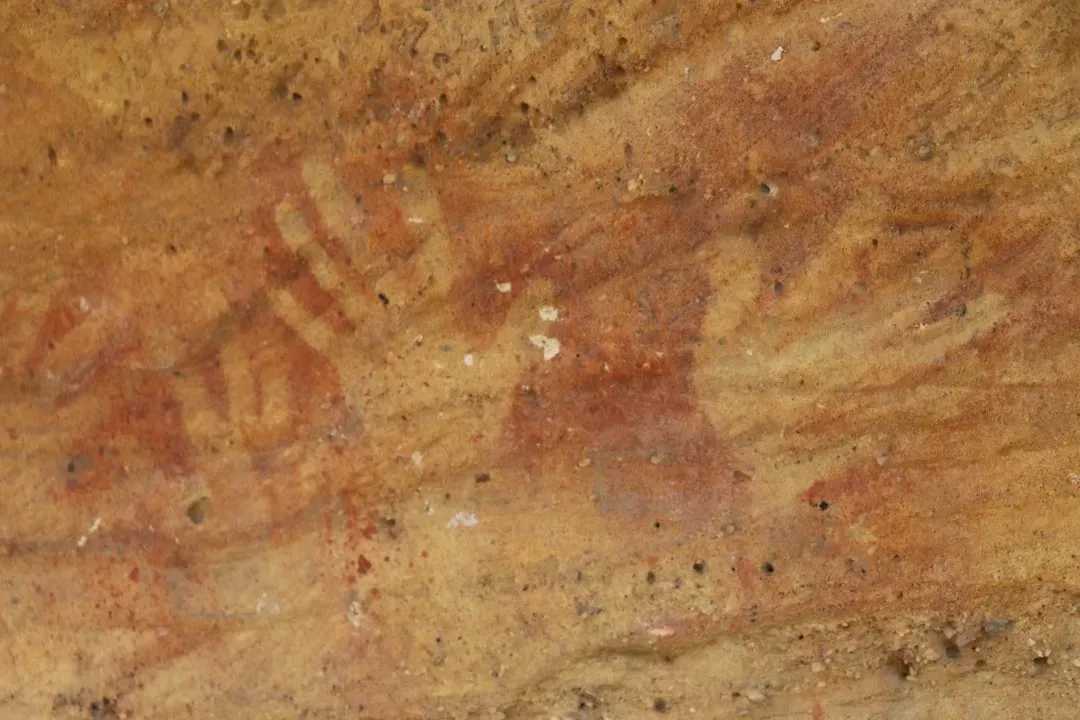
As dramatic as these Indonesian age estimates are, they do not close the case; they open it. Dating rock art is technically tough, and new methods or samples can always tweak the numbers. There is also a good chance that older art remains undiscovered, either hidden under layers of mineral deposits, faded beyond recognition, or tucked into unmapped caves in regions that are difficult to access. So while current evidence points to these Indonesian paintings as among the oldest known figurative examples, the story is very much still in motion.
For me, that uncertainty is not a problem; it is the most exciting part. It means that the grand story of when and where humans first began making art is still being written, and future discoveries could shift the spotlight again – maybe to Africa, maybe to another part of Asia, maybe somewhere we are not even thinking about yet. The Indonesian findings taught us a valuable lesson: the moment we think we know where creativity “began,” we are probably underestimating both our ancestors and the size of the world.
Conclusion: Why These Indonesian Caves Change More Than Just Dates
I think the real impact of the Indonesian cave paintings is not just that they are older than famous European ones, but that they force us to drop a comforting, Eurocentric fairy tale about where human brilliance started. They suggest that as soon as people had the cognitive tools to imagine and remember, they were probably making art wherever they went – from tropical valleys to icy plains. That makes our shared past feel more democratic, more widespread, and frankly more interesting than a single, one-region origin story ever could.
In my view, clinging to the idea that art “properly” began in Europe is not only outdated; it misses the whole point of what these ancient images are telling us. The earliest known figurative paintings in Indonesia remind us that human creativity is not the property of one place or one culture; it is a deep, global inheritance. If a hand stencil on a Sulawesi cave wall can silently overturn a century of assumptions, what else might still be waiting in the dark, just beyond the beam of our headlamps?