Imagine a walking tank the size of a bus, trundling through a prehistoric forest with armor thicker than most predators’ teeth were long. That is Ankylosaurus: one of the strangest, most over-engineered animals to ever walk the planet, and somehow also one of the most mysterious. For all its viral fame in documentaries and games, we actually know surprisingly little about its day-to-day life, which makes every fossil fragment feel like a new clue in an ancient detective story.
What we do know is captivating. Ankylosaurus was not just a “big armored dinosaur”; it was a finely tuned survival machine designed to make predators think twice and then turn around. Its bones, armor, and even the shape of its skull tell a story of quiet power, stubborn resilience, and a lifestyle that probably looked slow and peaceful from the outside – but was built on brutal evolutionary trial and error. Let’s step into its world and see how this tank-like dinosaur really lived.
A Tank on Legs: Armor, Spikes, and the Famous Tail Club
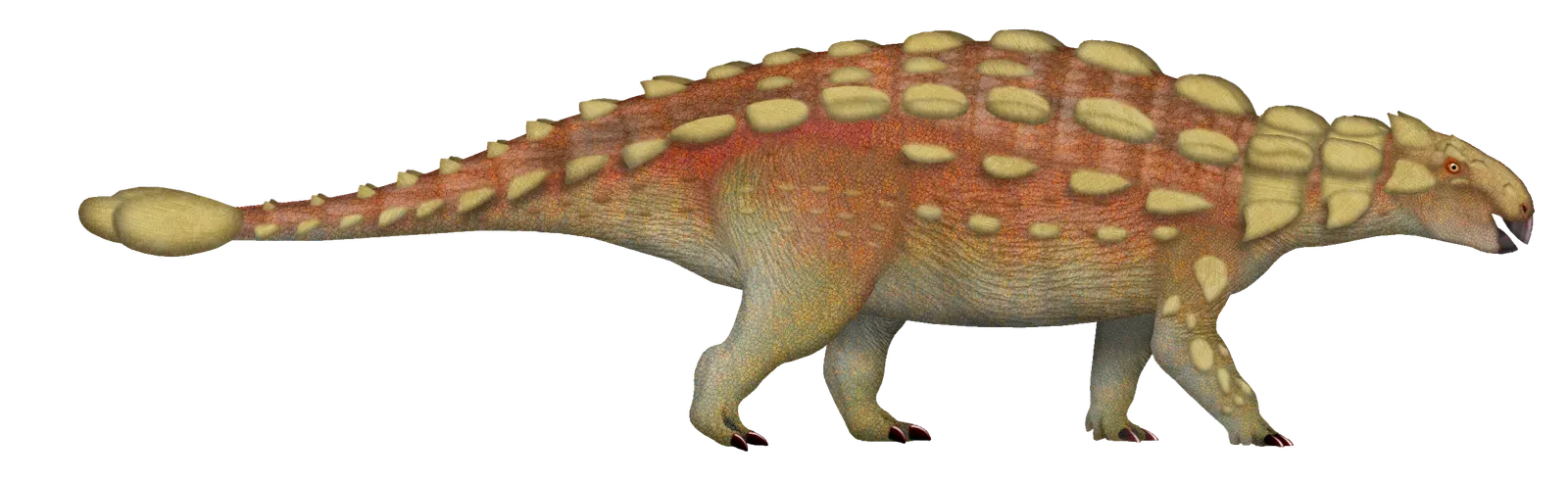
The first thing everyone notices about Ankylosaurus is the armor, and for good reason: this dinosaur was basically a walking fortress. Its back was studded with bony plates called osteoderms, embedded in the skin like natural body armor, some shaped like thick tiles and others like low spikes. Between these plates, a tough hide likely filled the gaps, creating an almost continuous shield that would have made biting into it a terrible idea for any predator.
Then there’s the tail club, the feature that turned Ankylosaurus from a defensive wall into an active threat. At the end of its tail, the vertebrae stiffened and fused, supporting a heavy, bulbous mass of bone shaped a bit like a giant, knobbly sledgehammer. Muscles along the tail suggest it could swing with serious force – powerful enough, based on biomechanical studies of similar ankylosaurs, to break bone if it landed well. Picture a slow-moving tank that suddenly whips around and swings a wrecking ball at knee height; that was the nightmare facing any carnivore that underestimated it.
How Big Was This Walking Fortress, Really?
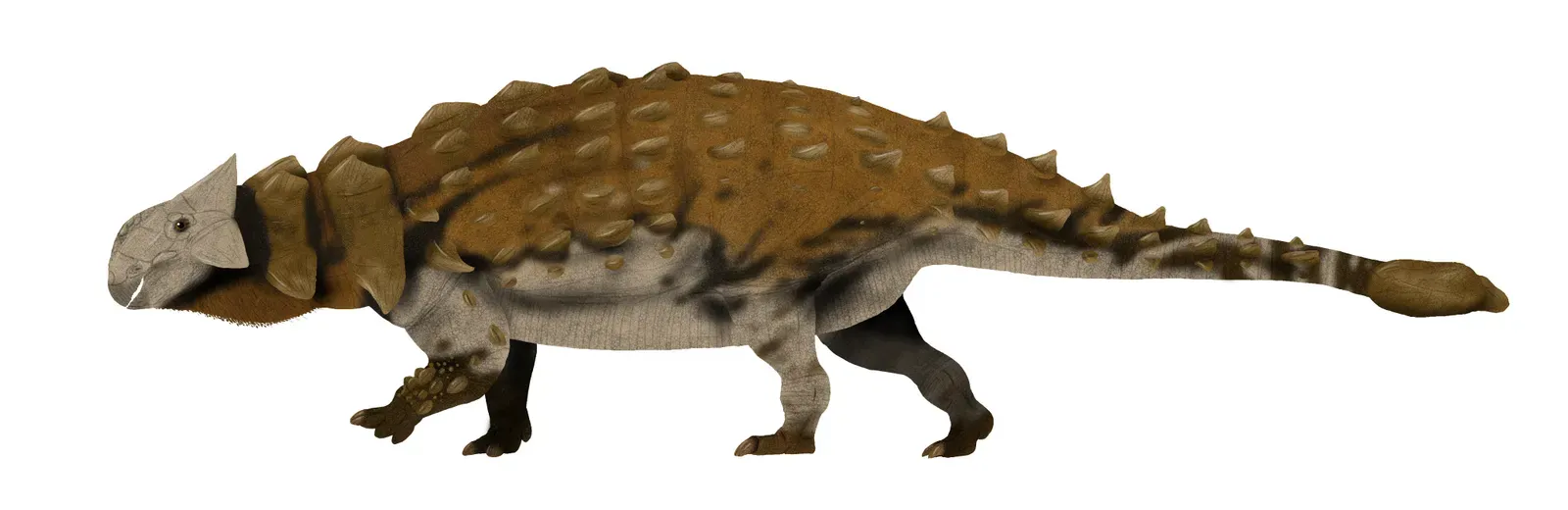
Popular art makes Ankylosaurus look absolutely colossal, and honestly, that’s not far off. Most estimates put it around the length of a city bus – roughly close to the size of a small truck from nose to tail. It likely weighed several tons, with much of that mass coming from thick bones, dense muscles, and all that embedded armor. This was not a lightweight sprinter; it was built to be heavy, stubborn, and hard to move.
What’s funny is that, despite its massive size, its body proportions are almost endearingly awkward to our eyes. Ankylosaurus had relatively short, sturdy legs that gave it a low, wide stance, like a coffee table on powerlifting day. That low profile was part of its defensive design: a predator had to get past armor, spikes, and a swinging tail just to even attempt a vulnerable bite. In a world full of tall, sharp-toothed hunters, being short, heavy, and close to the ground may have been one of its greatest strengths.
A Day in the Life: Slow, Steady, and Surprisingly Strategic
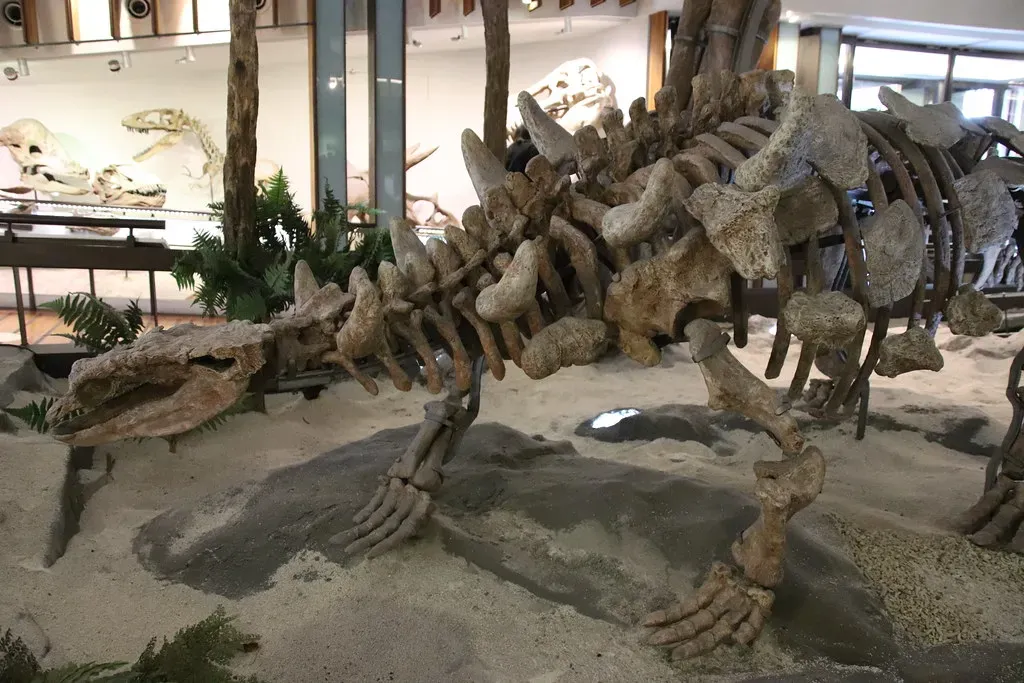
We obviously do not have a time-lapse video of Ankylosaurus roaming its habitat, but its skeleton gives us strong hints about how it likely lived. Its limbs were built for strength rather than speed, with robust bones and joints suggesting a slow but powerful gait. Picture it trudging along, head low, scanning for low plants, not hurrying for anything unless it really had to. This was not a chase animal; it was the definition of “come at me if you dare.”
That does not mean its life was boring. Surviving as a bulky herbivore in a world of huge predators takes constant awareness. Ankylosaurus probably relied on a combination of good senses and good positioning: staying near cover, moving in areas where it could brace against attacks, and using its tail club as a last resort. I always picture it like an ancient armored bus that tries to avoid traffic, but if you rear-end it, your car is done for.
What Did Ankylosaurus Eat, and How Did It Eat It?
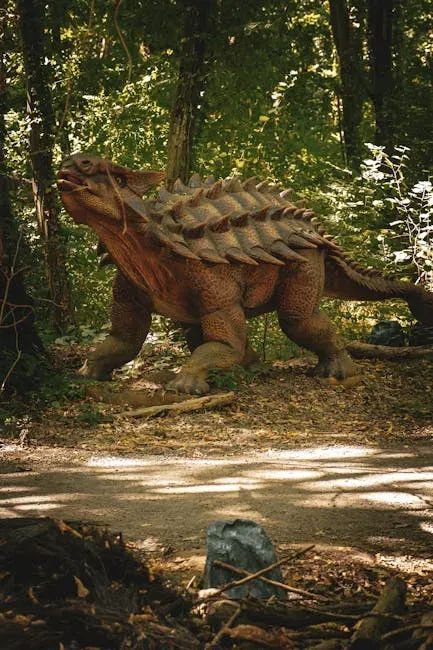
For an animal covered in armor and armed with a bone club, its diet was almost comically gentle: plants, plants, and more plants. Its skull and teeth suggest it was a low browser, feeding close to the ground on ferns, low shrubs, and maybe fallen leaves. The teeth were small and leaf-shaped, better for cropping and slicing vegetation than grinding it to a pulp, so it may have relied on a big gut to do much of the processing after swallowing.
Its beak at the front of the jaws was probably key, clipping plants much like a pair of garden shears. Given its size, it would have needed a lot of food each day, but not in quick bursts – more like a slow, steady intake as it moved through its environment. Think of it as the prehistoric version of a lawn mower that never shuts off, quietly moving along and turning plant matter into the energy needed to haul around all that armor.
Predators, Fights, and the Logic of Being Hard to Kill
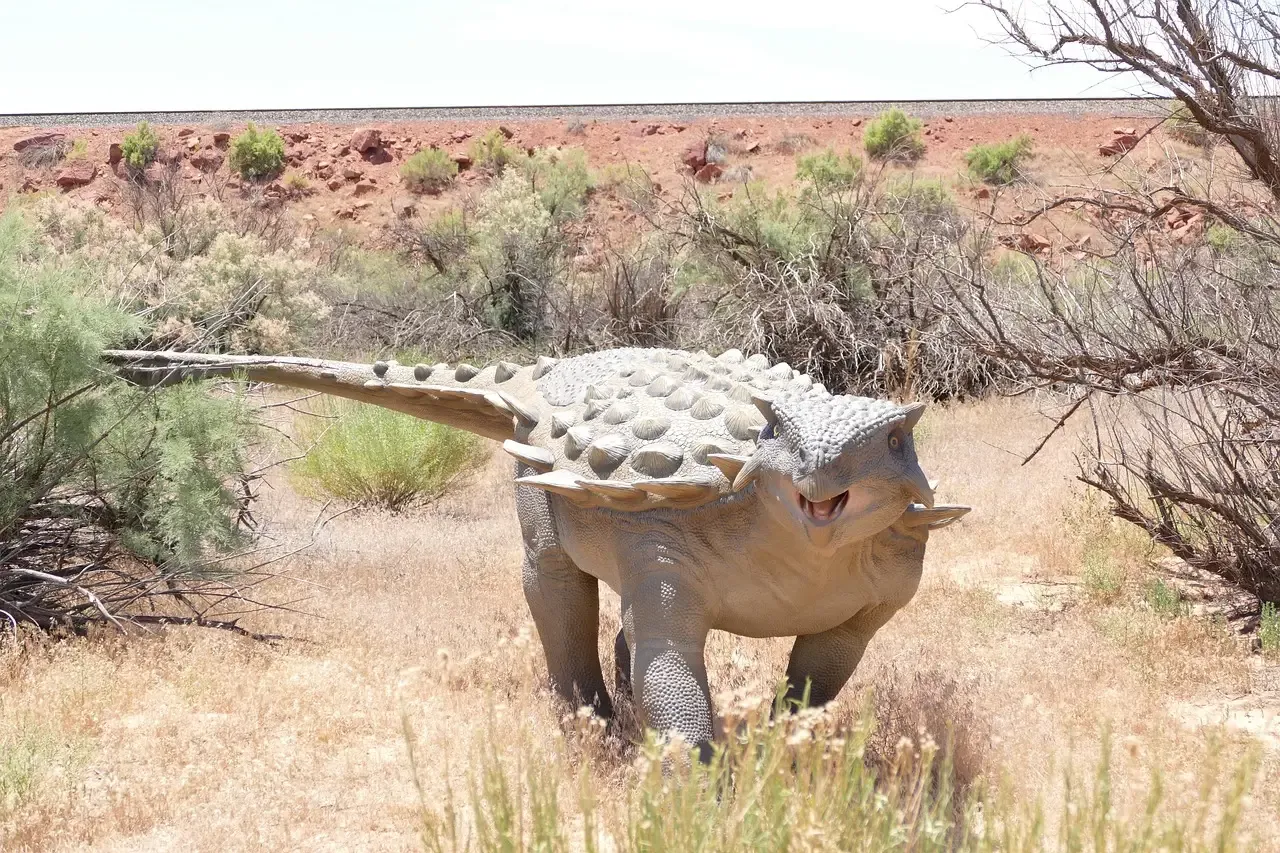
Living at the end of the Cretaceous in what is now North America, Ankylosaurus shared its world with some serious predators, including tyrannosaur-type carnivores. That makes its body plan make a lot more sense. The armor on its back and neck was like a direct reply to the powerful, bone-crushing jaws of big theropods: if you keep your vulnerable belly down, your armored back up, and your tail ready, you turn yourself into a bad investment for any hunter.
There’s a good chance that most encounters never escalated into full-on combat. Predators, like modern big cats or wolves, often avoid prey that looks like too much trouble, because a broken jaw or leg can be fatal. Ankylosaurus embodied this deterrence strategy. Its goal was likely not to fight but to convince predators that fighting was pointless. Still, the moment a carnivore pushed its luck, that tail club could come into play, perhaps smashing at legs or hips. In a sense, Ankylosaurus turned defense into a kind of psychological warfare: one good swing might have been enough to teach a predator population to respect that low, armored silhouette.
Ankylosaurus in Its World: Climate, Neighbors, and Ecosystem Role
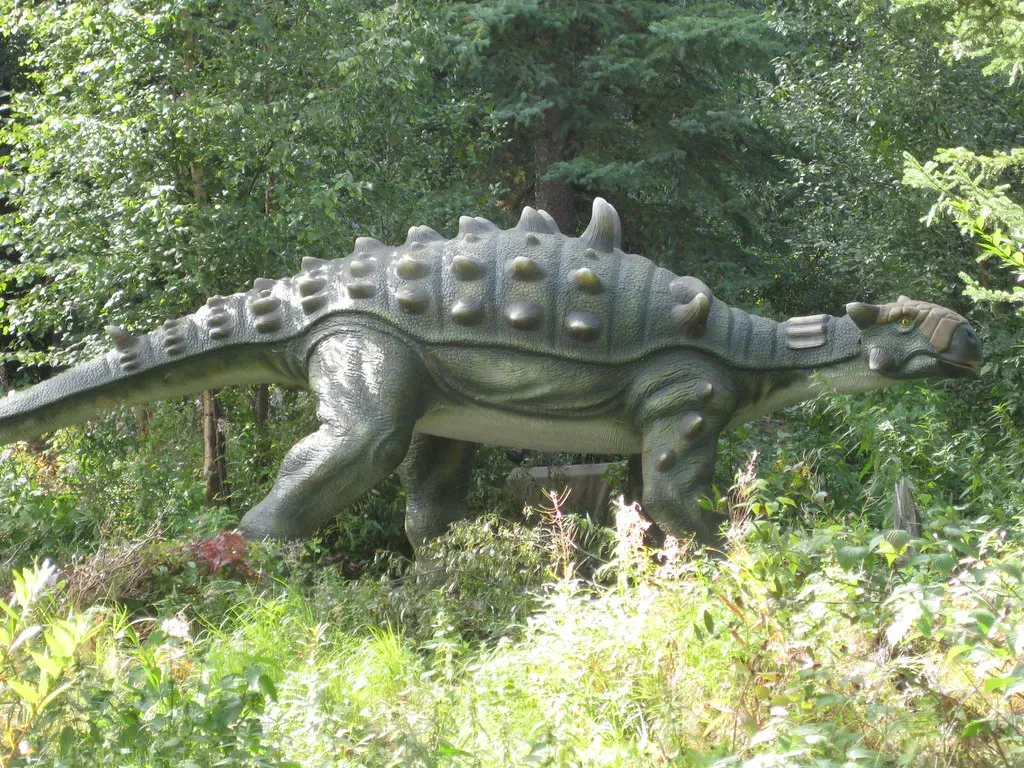
Ankylosaurus did not wander an empty landscape; it lived in a dynamic ecosystem near the end of the dinosaur age. Its environment likely included forests, floodplains, and river systems, with a mix of trees, understory plants, and open spaces. Other herbivores like hadrosaurs and ceratopsians probably shared these habitats, each feeding at different levels or on different kinds of vegetation, reducing direct competition – like different customers in the same buffet line preferring different dishes.
As a heavy, low-browsing herbivore, Ankylosaurus probably played a quiet but important role in shaping plant communities. By mowing down shrubs, trampling undergrowth, and moving seeds through its digestive system, it would have influenced which plants thrived and where they spread. In modern ecosystems, large herbivores are often ecosystem engineers, and it is hard not to see Ankylosaurus as filling a similar role – just with the added twist of looking like a living armored vehicle rumbling through the underbrush.
Why Ankylosaurus Still Captivates Us Today
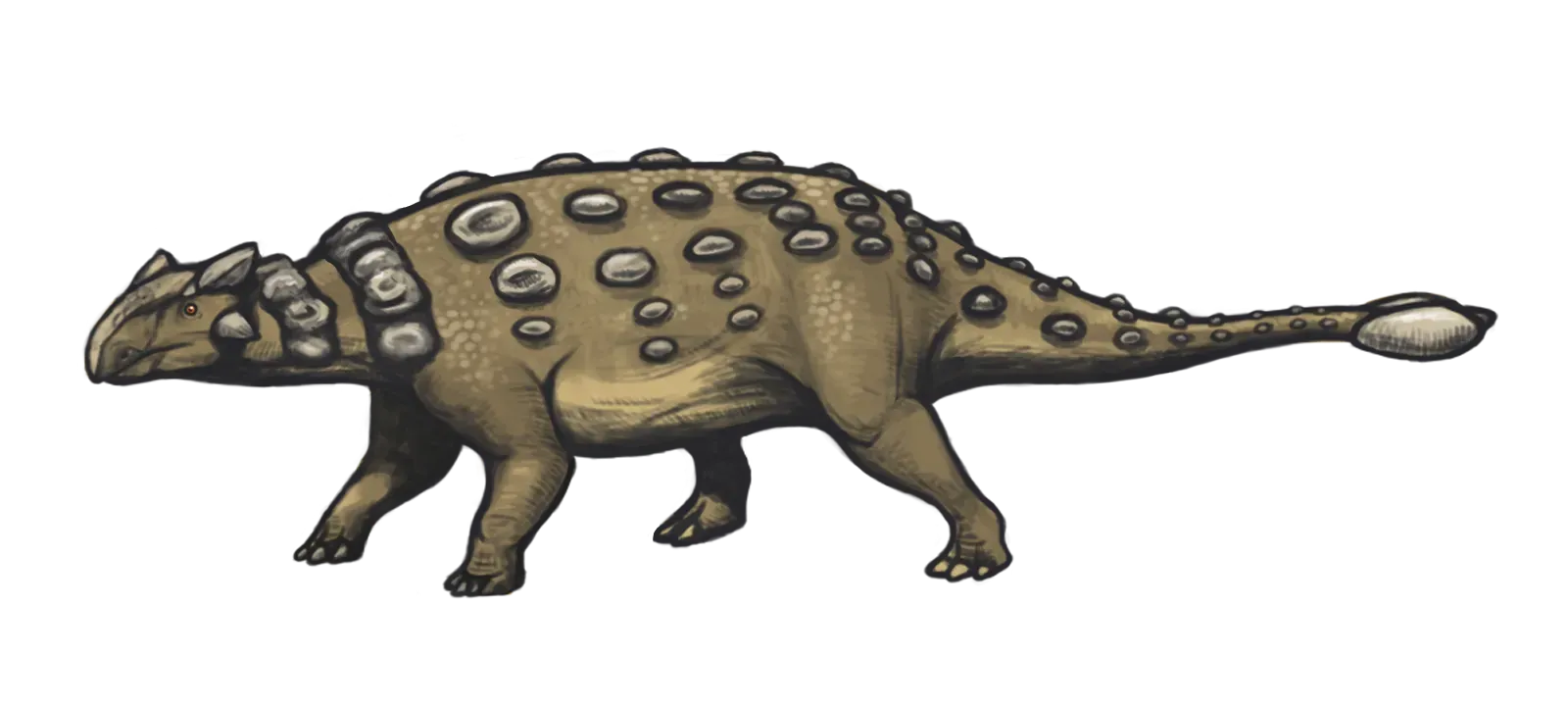
There is something deeply appealing about an animal that survives not by being the fastest or the deadliest, but by being almost absurdly well defended. Ankylosaurus hits that sweet spot between intimidating and oddly lovable: it looks like a tank, but it lived off plants and mostly kept to itself. In a culture that often celebrates speed and aggression, this dinosaur is a reminder that durability and patience can be just as powerful. Personally, I have always liked that it seems built for the long game rather than flashy heroics.
It also taps into our fascination with armor, technology, and design. When you look at Ankylosaurus, it is hard not to think of tanks, armored trucks, or even medieval knights in full plate. Yet this design was not dreamed up in a war room; it was refined over millions of years by natural selection. That makes it feel both alien and oddly familiar, like nature invented a piece of military hardware long before humans figured it out. Maybe that is why it keeps popping up in movies, games, and kids’ books – it is proof that reality already built some of the coolest “machines” we can imagine.
Conclusion: The Quiet Power of a Dinosaur That Refused to Be Easy Prey
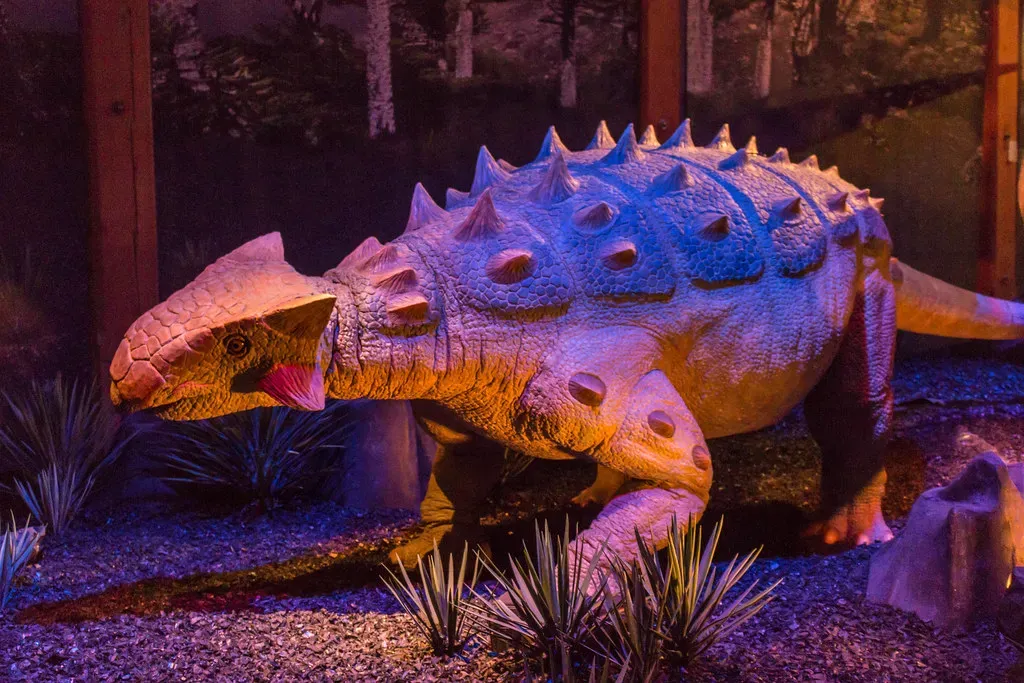
When you strip away the pop-culture exaggerations and look at the evidence, Ankylosaurus emerges not as a mindless brawler but as a masterclass in quiet resilience. It did not race, it did not chase, and it probably did not seek fights. Instead, it doubled down on one core idea: survive by making yourself so costly to attack that most enemies will not even try. In an age dominated by toothy terrors and towering giants, that is a surprisingly modern, almost minimalist strategy – invest everything in staying alive, and let the hotheads burn out.
My honest opinion is that Ankylosaurus deserves more respect than it usually gets in the shadow of famous predators. It might not have the drama of a charging tyrannosaur, but it represents a different kind of power: the power of being hard to break, hard to panic, and hard to destroy. In a world that often rewards speed and spectacle, there is something quietly inspiring about a creature that thrived by being stubbornly un-killable. If you had to pick a dinosaur body to walk around in for a day, would you really choose the fragile sprinter over the armored tank?