
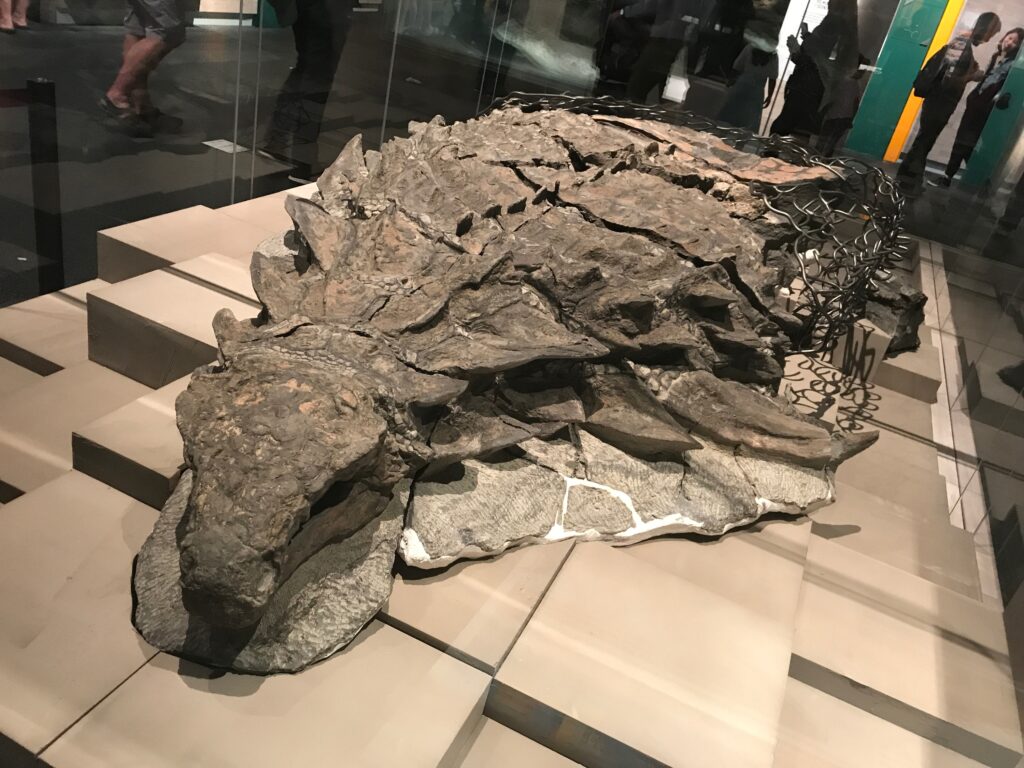
Every now and then, a discovery drops that feels less like a fossil and more like a time capsule with the lid still sealed. That is what happened when paleontologists uncovered an astonishingly well‑preserved dinosaur whose body was so intact that scientists could study its last meal, its battle scars, and even estimate its age at death with unusual confidence. It is the closest thing we have to looking at a dinosaur that simply lay down millions of years ago and never got up again.
Finds like this are not your typical dusty bones loosely scattered in rock. We are talking about skin impressions, preserved gut contents, and injuries frozen in time, all wrapped up in a single animal. It is the kind of specimen that forces experts to slow down, stare, and rethink what they thought they knew. Let’s unpack how a fossil like this even exists, what it reveals, and why it has scientists both thrilled and a little humbled.
A fossil that looks more like a body than a skeleton
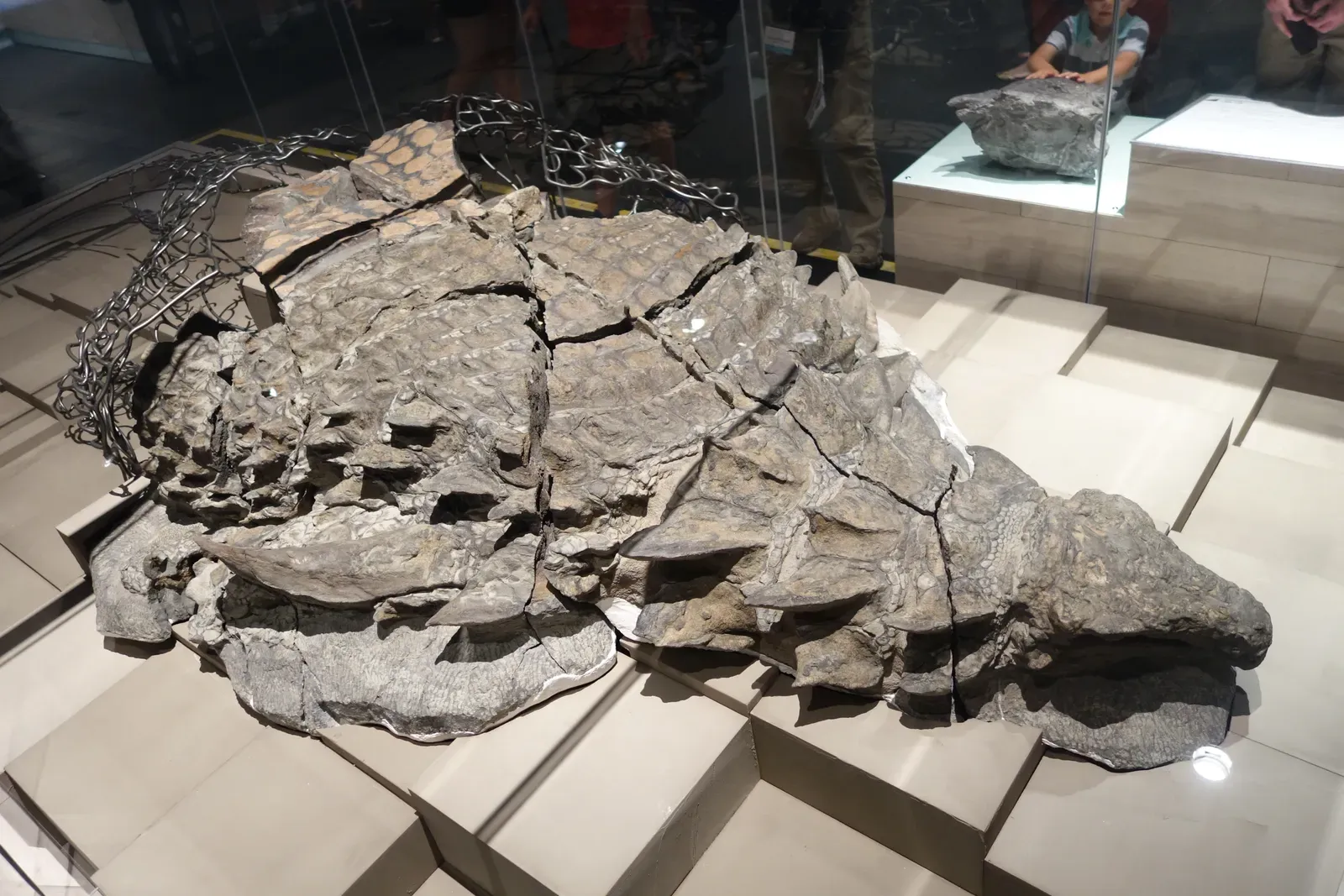
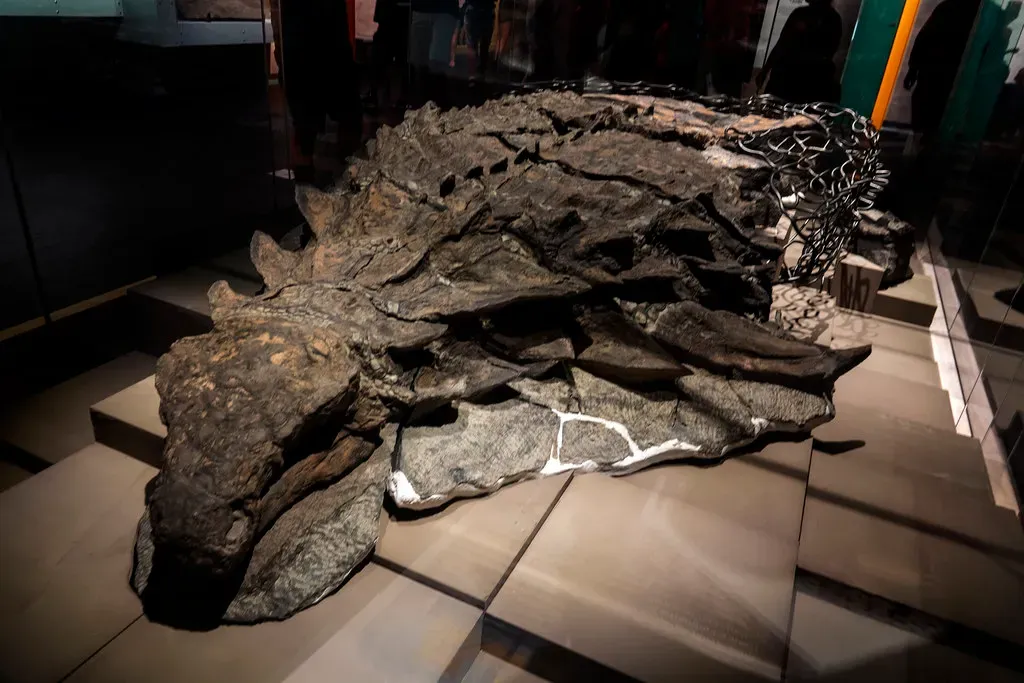
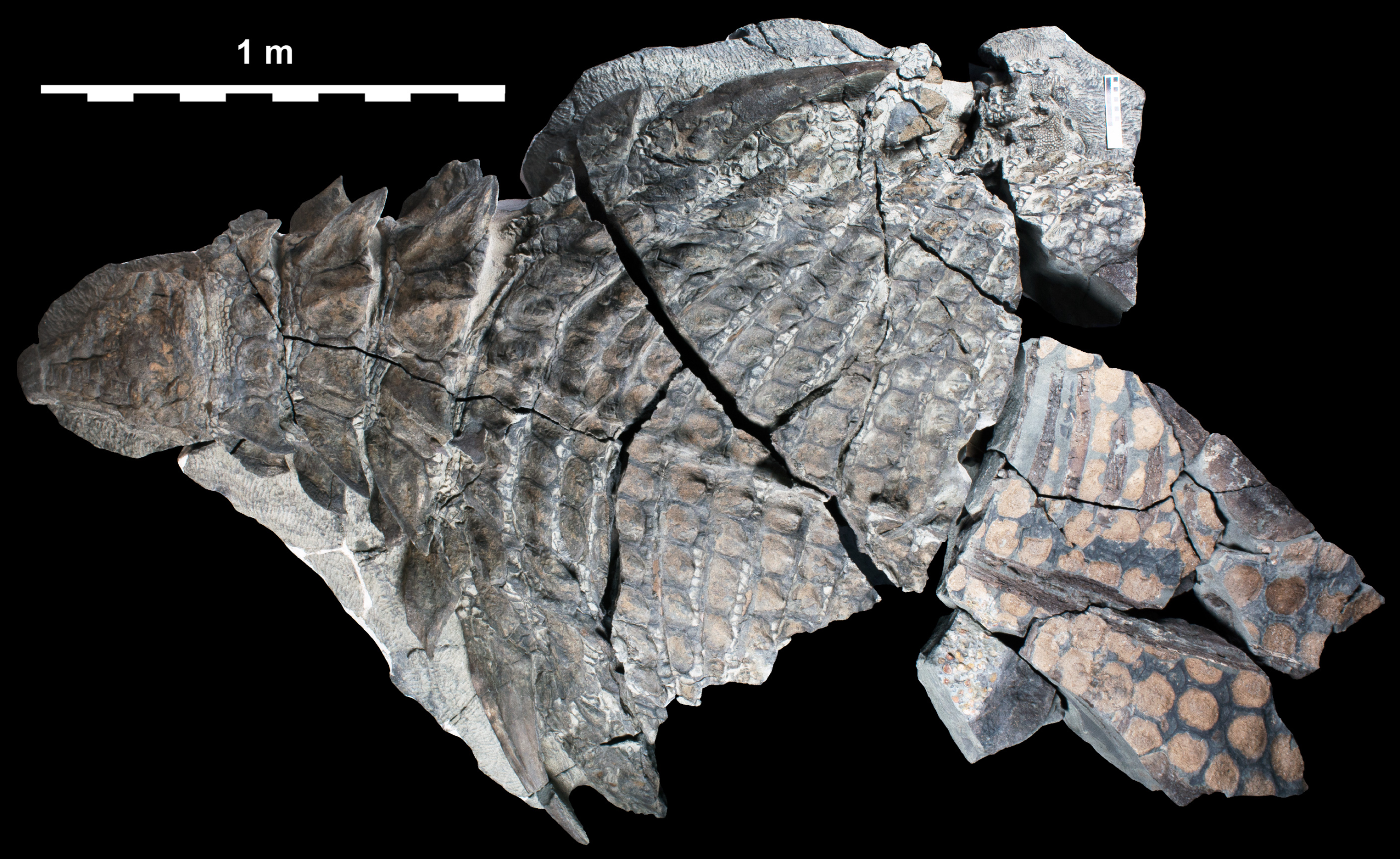
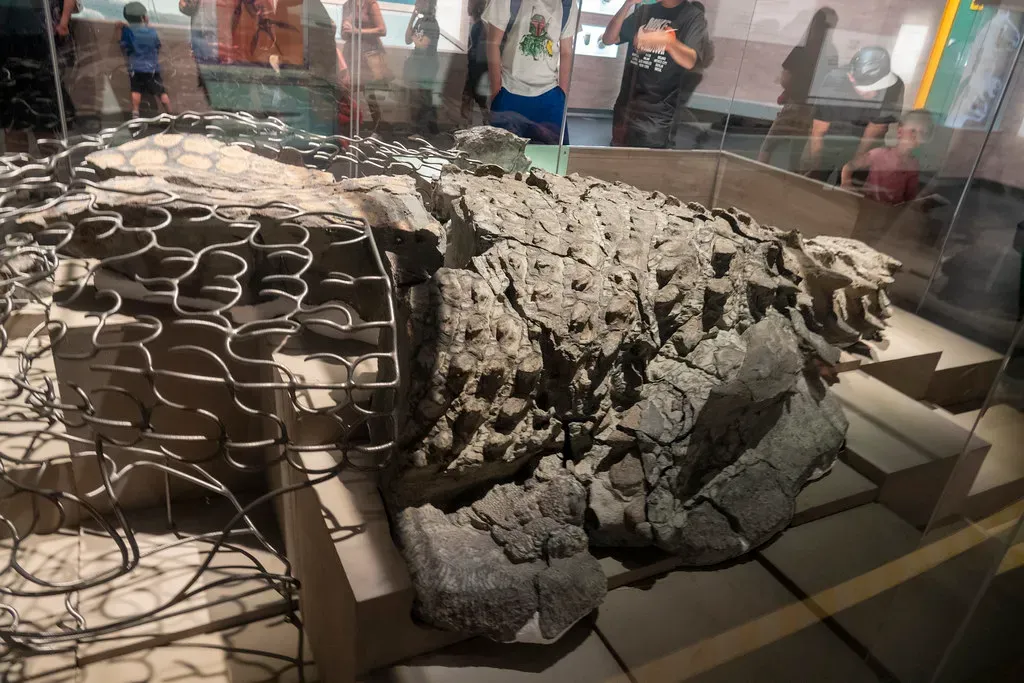
Most dinosaur fossils are puzzles missing half the pieces, but this one is more like opening a box and finding the puzzle already assembled. The animal’s body was preserved in three dimensions, not flattened like a pressed leaf, which means researchers could actually see the curvature of its torso, the shape of its limbs, and even impressions of its skin. Instead of interpreting scattered bones, they were working with something eerily close to a whole carcass frozen in stone.
When paleontologists talk about an intact dinosaur, they do not mean it is still fluffy and colorful like in a movie, but this comes shockingly close in scientific terms. Skin patterns, muscular outlines, and the overall life posture of the dinosaur are far easier to reconstruct when the fossil has not been torn apart by scavengers or smashed by geological processes. For once, they are not guessing how everything fit together – they can literally see it.
The last meal: reading a dinosaur’s stomach like a crime scene file
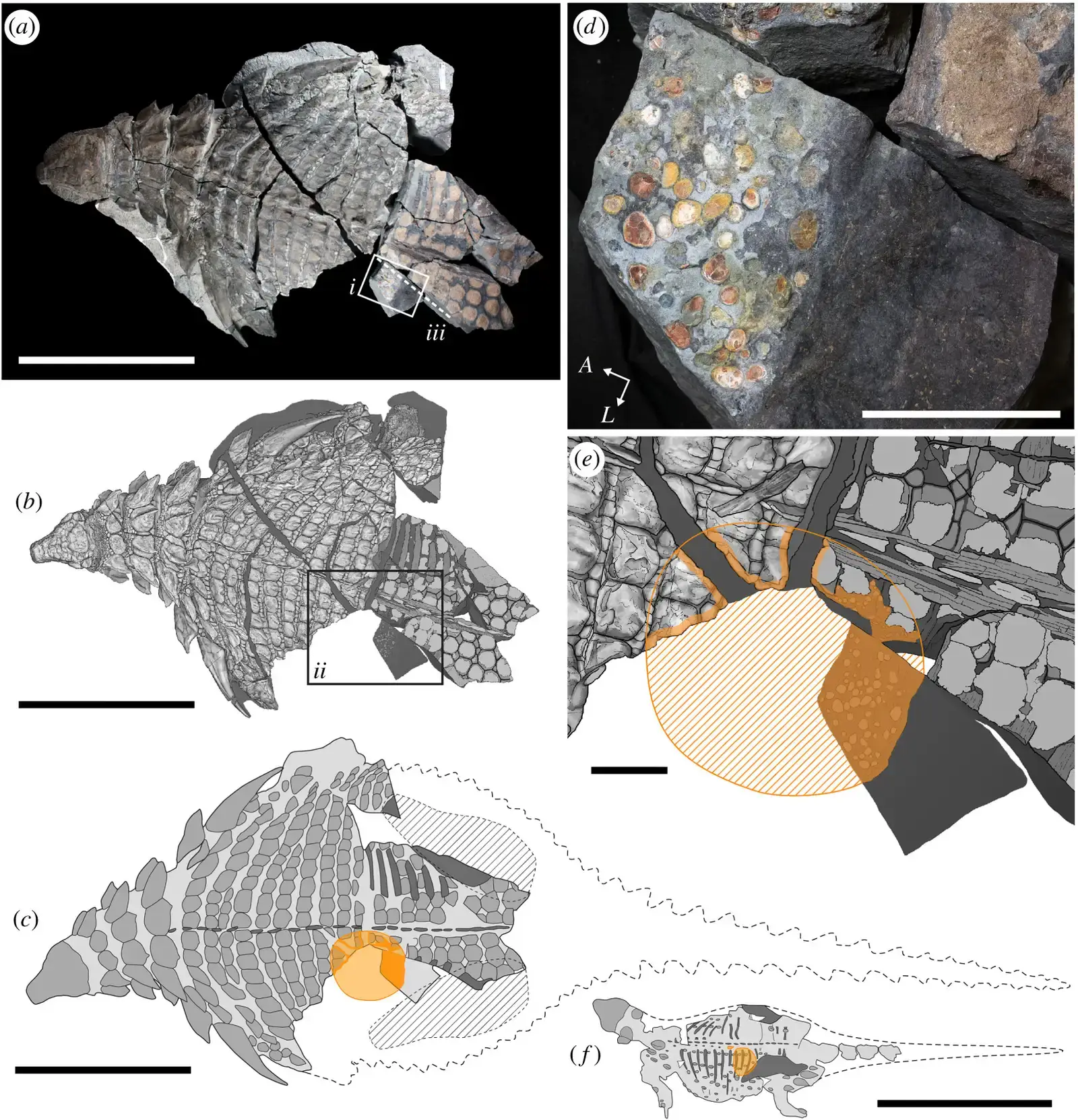
One of the most mind‑bending parts of this fossil is that scientists could peer into what the dinosaur was eating shortly before it died. Usually, stomach contents are long gone, but in rare cases the material inside the gut gets preserved and mineralized along with the rest of the body. That turns the digestive tract into a tiny, stone‑encased time capsule of its final meals. It is like catching a snapshot of the animal’s diet at the exact moment life stopped.
By slicing and scanning that internal material, researchers can identify plant fragments, bone shards, or other food remains, and compare them to known species from the same ecosystem. It moves diet from speculation to direct evidence: not “this type of dinosaur probably ate X,” but “this specific individual definitely ate X on its last day.” As someone who loves the forensic side of science, I find that utterly gripping – it turns a dinosaur from an abstract creature into a real animal that just had lunch.
Injuries written on the bones: a prehistoric medical record
The same fossil that preserves a dinosaur’s last meal can also preserve its pain. Bones record trauma: fractures, infections, bite marks, and healed wounds all leave telltale signs. In a specimen this intact, researchers can track where the animal was injured during life and distinguish between damage that happened while it was alive and breaks that occurred after death. That is like having access to a medical chart compiled by geology instead of doctors.
By examining the pattern and healing of these injuries, scientists can ask shockingly personal questions: Did this dinosaur survive an attack and live for months or years afterward? Was it limping? Did it suffer from chronic damage or infection? When I read about cases where a dinosaur survived brutal wounds only to die later from something completely different, it feels less like reading about a monster and more like reading the biography of a tough, unlucky animal that just happened to live millions of years too early for sympathy cards.
How scientists estimate a dinosaur’s age at death
Figuring out how old a dinosaur was when it died is not guesswork; it is closer to reading tree rings, but in bone. Many dinosaurs, especially larger ones, show growth lines in their bones that form in cycles, a bit like annual rings in wood. By slicing bones and looking at them under a microscope, researchers can count these growth markers and estimate how many years the animal lived. A fossil this intact often preserves multiple bones suitable for such analysis, which boosts confidence in the age estimate.
On top of that, scientists look at how fused the bones are, the thickness of the bone walls, and whether growth had slowed down before death. Put together, these clues reveal whether the dinosaur was a juvenile, in its prime, or nearing old age. Personally, I find it strangely moving when a paper casually mentions that an animal died as a subadult or a mature adult – it reminds me of reading the end of a character arc in a novel, only this story was written in bone instead of ink.
The rare conditions that create such astonishing preservation
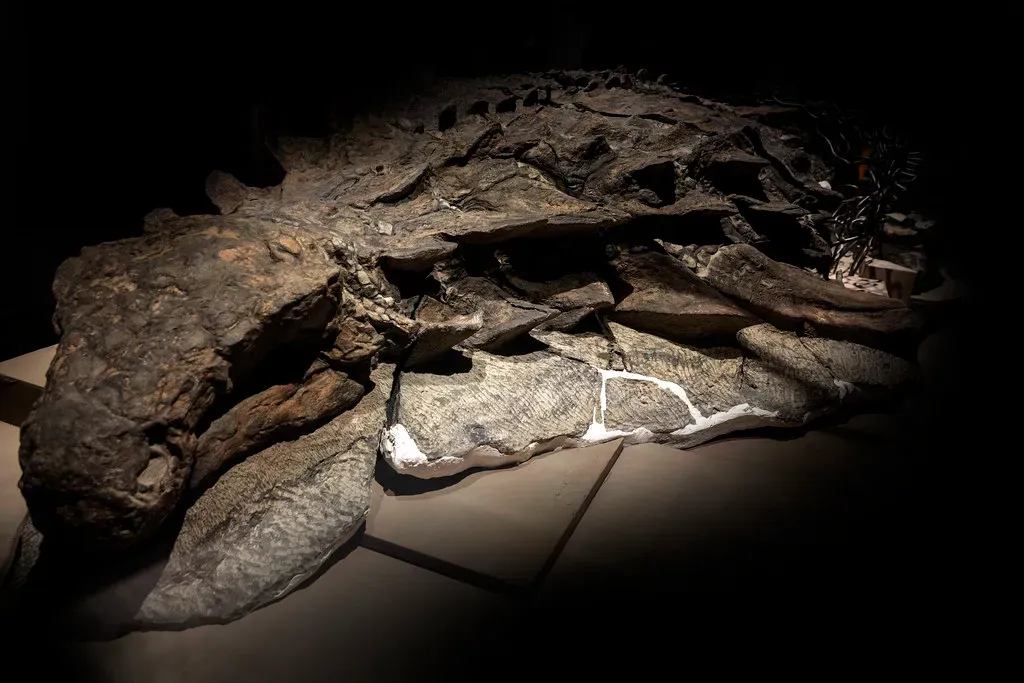
A nearly intact dinosaur fossil like this is a geological lottery win, and the odds are brutally low. To preserve a body so completely, the animal usually has to be buried quickly, often by mud, sand, or underwater sediments, before scavengers and weather can rip it apart. Low oxygen conditions help slow decay, and the chemistry of the surrounding environment has to be just right to mineralize soft tissues and internal structures before they vanish. One small change in timing or conditions, and we would have had scattered bones instead of a near‑complete time capsule.
That rarity is why paleontologists go a little wild when something like this surfaces – it is not just another data point, it is a whole library. These exceptional fossils act as calibration points for everything we think we know based on more fragmentary material. When an intact specimen confirms or challenges our reconstructions of posture, diet, or growth, it forces the field to sharpen its ideas. To me, that constant tension between incredible luck and rigorous science is one of the coolest parts of paleontology.
Why this one fossil changes how we imagine dinosaurs
When you can say with confidence what a specific dinosaur had eaten, where it had been injured, and how old it was, that animal stops feeling like a vague monster and starts feeling like a real individual. It was not just “a herbivore” or “a predator,” but a creature that survived injuries, made it to a certain age, and happened to die not long after a particular meal. That level of detail collapses the distance between us and them; suddenly, it is easier to picture this dinosaur walking, eating, and struggling the way modern animals do.
I think fossils like this quietly push back against the cartoonish image many of us grew up with. They encourage us to see dinosaurs less as props for action scenes and more as animals with lives full of ordinary moments – feeding, healing, aging, and sometimes getting unlucky. In my view, that is the real power of a specimen this intact: it does not just rewrite science papers, it reshapes our imagination. And honestly, once you have “met” a dinosaur this personally, it is hard to go back to seeing them as just giant skeletons in a museum hallway.
Conclusion: the closest we get to looking a dinosaur in the eye
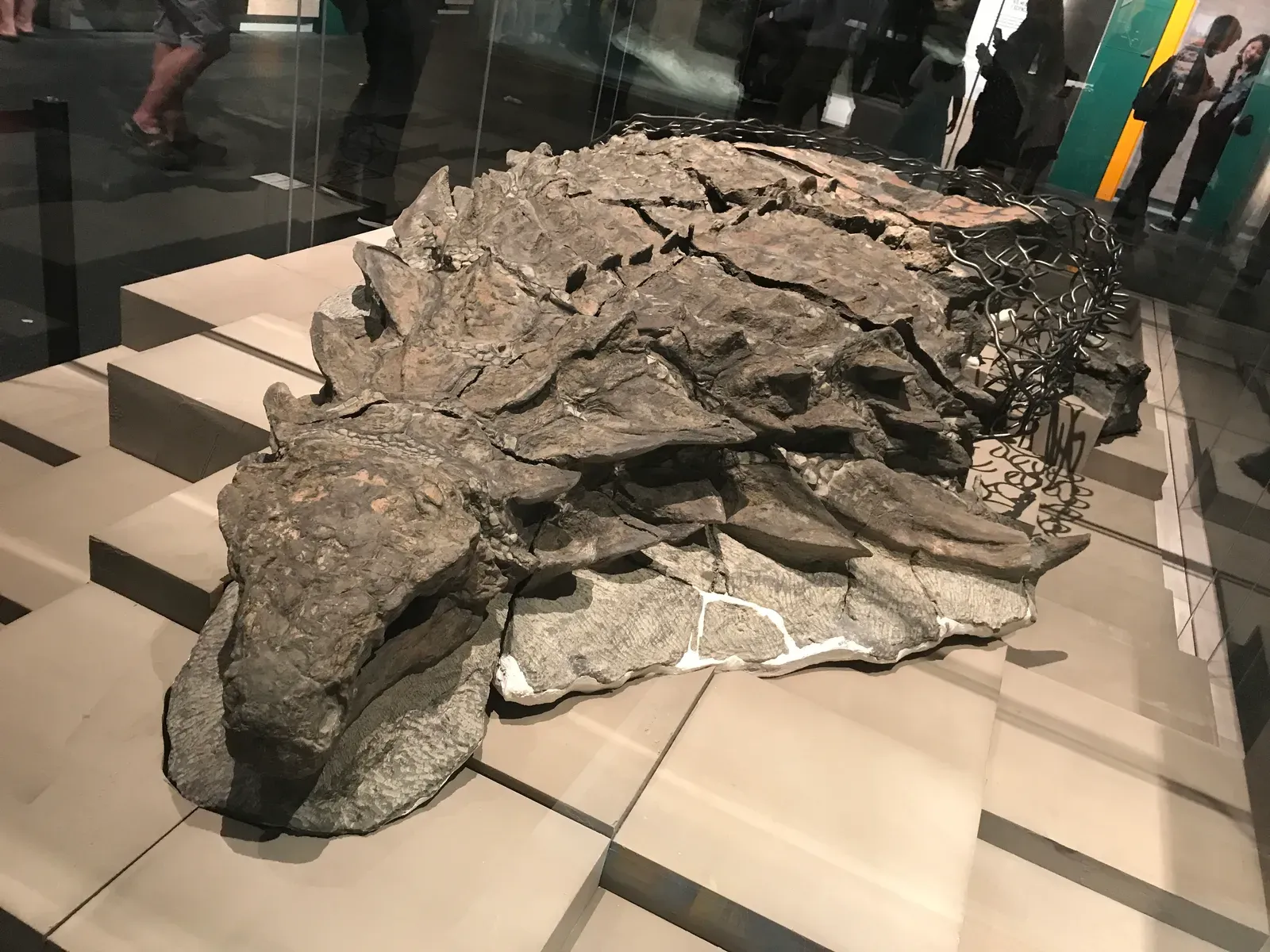
To me, a fossil this perfectly preserved is the scientific equivalent of a once‑in‑a‑generation photograph: raw, unposed, and impossible to forget. It lets researchers move from broad, safe generalizations to intimate, specific truths about one animal’s final chapter – what it ate, what hurt, and how long it had walked the Earth before everything stopped. That makes the past feel less like a distant blur and more like a real place full of individuals who lived out entire lifetimes before vanishing into stone.
I am convinced that discoveries like this quietly change the culture around dinosaurs, nudging us away from seeing them as movie monsters and toward seeing them as complex, resilient, sometimes unlucky animals that deserve the same curiosity we give to whales, wolves, or eagles today. In a world obsessed with speed and novelty, there is something grounding about spending years studying one extraordinary fossil until it finally starts to talk. If you could stand in front of that specimen, knowing everything we have pulled out of it, would you still see just a fossil – or would you feel like you were almost face to face with its former owner?