If you picture the end of the dinosaurs as a single fireball streaking across the sky and wiping everything out in an instant, you’re only seeing the movie-trailer version of the story. The real event, the one that reshaped the entire planet about sixty six million years ago, is far messier, stranger, and more mysterious than that. You are dealing with a planetary crime scene where most of the physical evidence has been buried, recycled by plate tectonics, or eroded away over tens of millions of years.
Yet, from scattered traces in rocks, minerals, and fossils, you can still reconstruct an event so violent it ended roughly three out of every four species on Earth, including all non-avian dinosaurs. The broad strokes are clear: a massive asteroid slammed into what is now Mexico’s Yucatán Peninsula. But once you zoom in, nearly every step in the chain of destruction still raises unanswered questions. As you look closer, you realize this is less a closed case and more an ongoing investigation where each new discovery opens a fresh line of doubt.
You Stand on a Planet Marked by a Hidden Scar
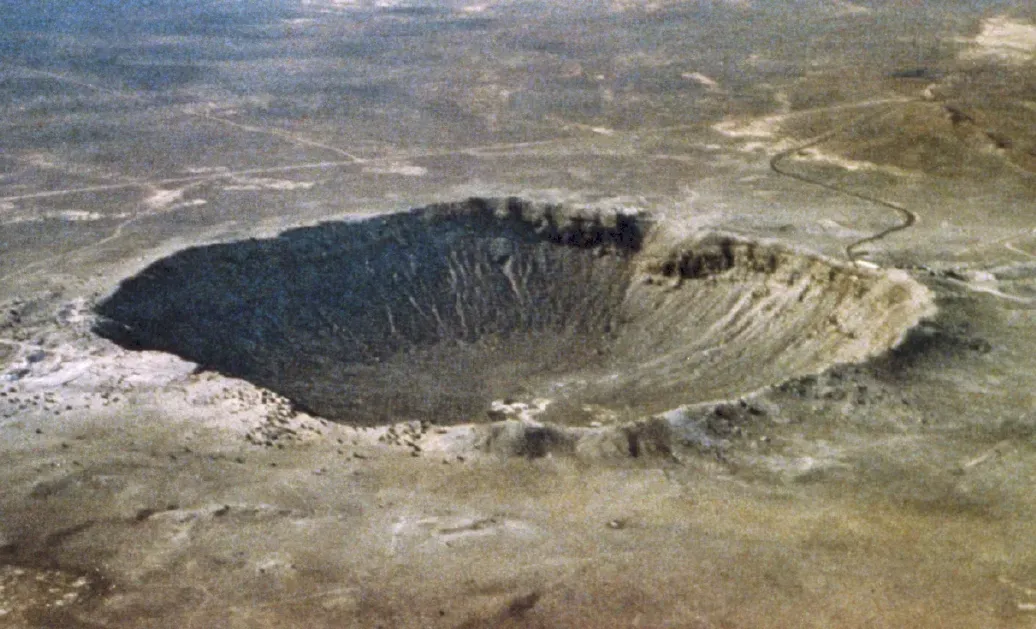
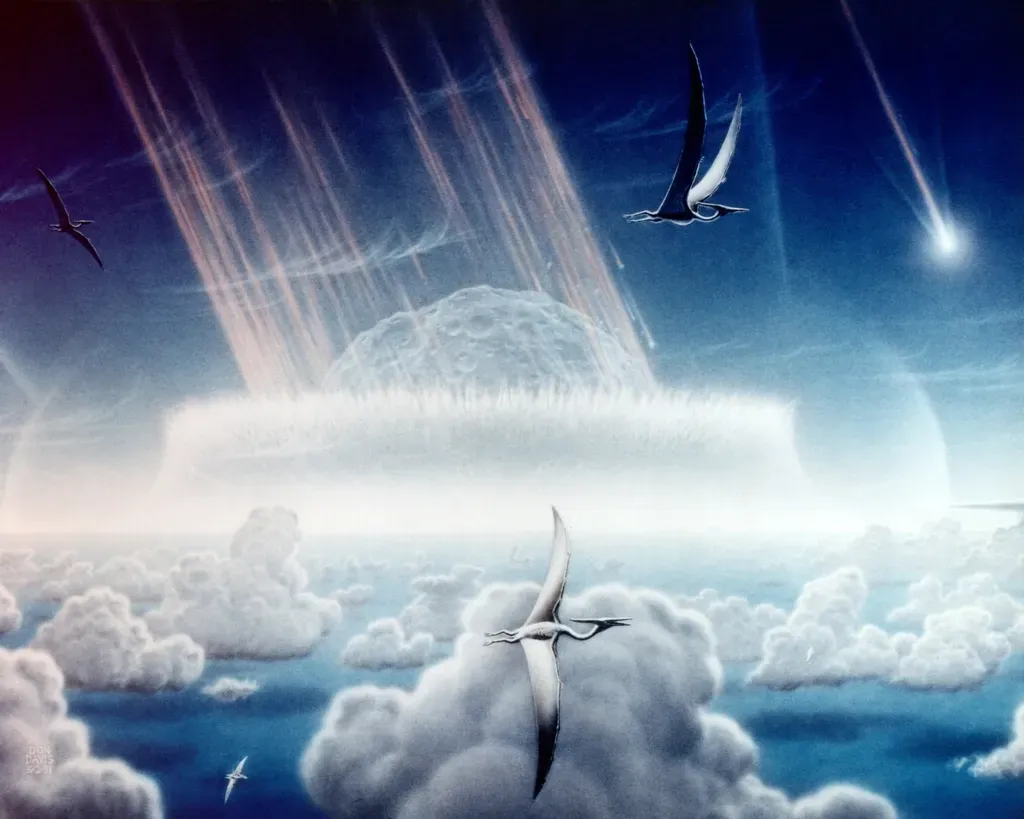
If you could drain the oceans and peel away the water from the Gulf of Mexico, you’d see something unsettling hiding under the seafloor: a huge, buried ringed structure about one hundred and fifty kilometers wide. This is the Chicxulub crater, the impact site most scientists agree is ground zero for the dinosaur extinction. You live on a planet that literally still carries the scar of that day, even if you never see it directly.
What makes this crater so important to you is that it matches what you’d expect from a roughly ten-kilometer-wide asteroid slamming into Earth at tens of thousands of kilometers per hour. The rocks there are shocked and melted; there’s a layer rich in iridium, a metal more common in asteroids than in Earth’s crust; and age dating lines up with the extinction boundary. Yet even here, in the supposed smoking gun, you face mysteries: you still debate the exact size, angle, and speed of the impactor, and how those details shaped everything that followed in the atmosphere, oceans, and biosphere.
You Can Read the “Doom Layer” in Rocks Around the World
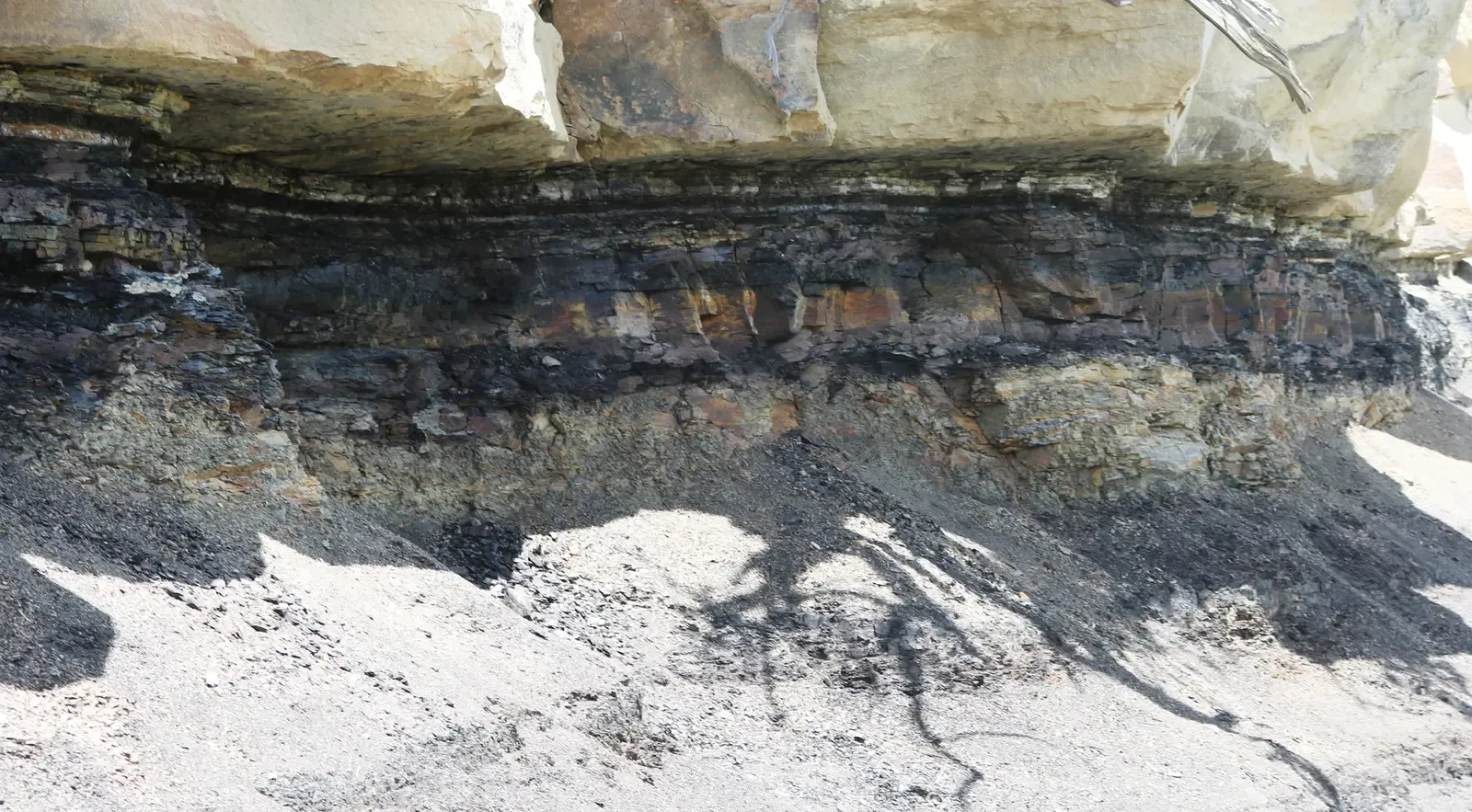
If you go to cliffs, quarries, or road cuts in many parts of the world, you can actually find a thin, dark band of rock that marks the moment life changed forever. Geologists call it the K–Pg boundary, and if you look closely, you’ll notice it often contains a spike in iridium, tiny glassy spheres called tektites, and sometimes grains showing signs of intense shock. You are literally able to place your fingers on the dividing line between the age of dinosaurs and the age of mammals.
What this layer tells you is that something sudden and global happened: this is not the slow fade of a dying world but a sharp break. Still, the layer doesn’t spell out every detail for you. You need to interpret whether the ejecta fell in hours or days, how long the skies stayed dark, and whether wildfires were nearly planet-wide or more regional. The rocks hand you an outline, but as you try to fill in every hour and every year of that catastrophe, you run into gaps that no outcrop fully answers on its own.
You Live with the Debate: Impact Alone or Impact Plus Volcanoes?
One of the biggest questions you still wrestle with is whether the asteroid did all the killing by itself or whether it hit a world already weakened by massive volcanic eruptions. Around the same time as the impact, enormous outpourings of lava in what’s now India created the Deccan Traps, a volcanic province that spilled out layers of basalt over a huge area. You are looking at eruptions that may have lasted hundreds of thousands of years, releasing greenhouse gases and toxins into the atmosphere.
This sets up a dilemma for you: did the Deccan eruptions slowly stress ecosystems, warming the climate and altering oceans, while the asteroid provided the final blow? Or did the impact itself trigger changes in the timing or intensity of those eruptions? Different studies push you toward different answers, and the data is subtle: changes in temperature, shifts in carbon cycles, slight moves in volcanic activity dates. You’re forced to hold a nuanced view, where an asteroid might be the main executioner, yet long-lived volcanism may have weakened your planet’s biosphere before the final strike.
You Still Do Not Fully Grasp How Fast Life Collapsed
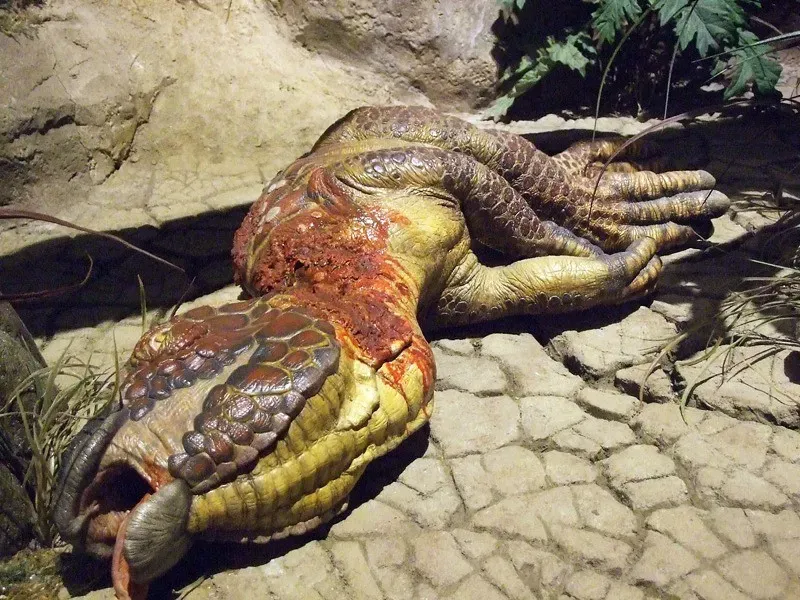
When you think about an extinction, you might imagine everything dying in a single night. The truth is more complicated and, in some ways, more disturbing. Yes, there were immediate deaths from shock waves, tsunamis, and firestorms, especially near the impact site. But many of the most devastating effects you care about likely unfolded over months, years, and even thousands of years afterwards, as food chains unraveled and climates lurched between extremes.
Fossil evidence suggests that some groups vanished almost instantly at the boundary, while others staggered on for a short time before disappearing. You still argue over how quickly forests burned and regrew, how long sunlight was dimmed by dust and soot, and how long it took plankton at the base of marine food webs to recover. When you hold a fossilized dinosaur bone from just before the boundary, you are touching a creature that had no idea time was running out, and the exact timeline of its world’s collapse is something you’re still trying to pin down with every new fossil bed you uncover.
You Share the Planet with the Dinosaurs’ Surviving Relatives
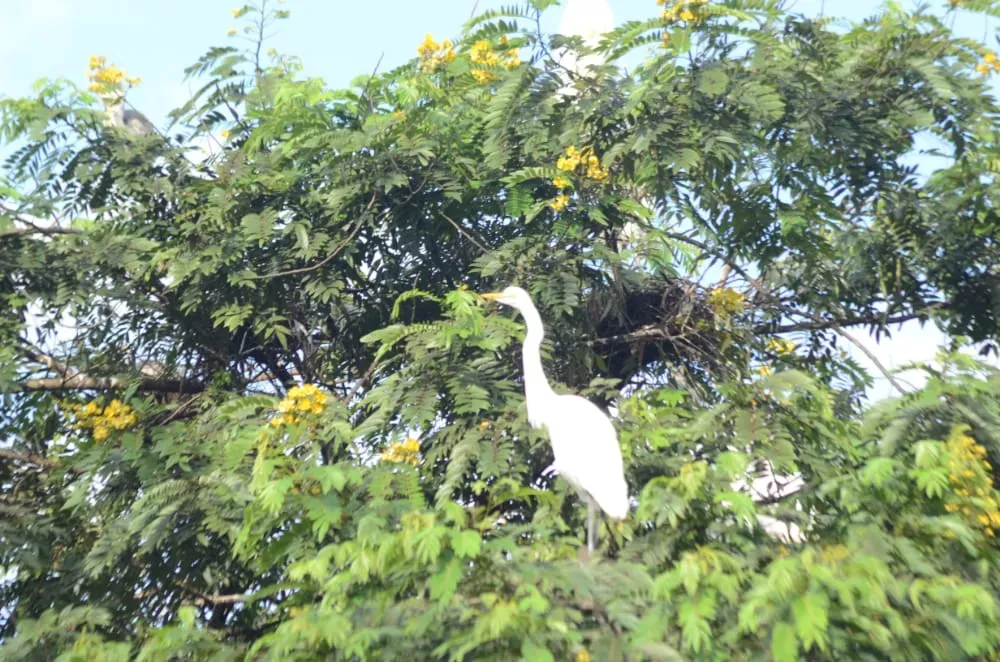
One of the most surprising parts of this story is that dinosaurs never completely vanished; instead, one branch survived and still surrounds you today: birds. Genetic evidence and fossil discoveries show that birds are living theropod dinosaurs, scaled down and feathered, perched on trees, power lines, and city rooftops. When you watch a crow problem-solve or a hawk circle overhead, you are seeing a distant echo of that ancient world.
Yet you still have big questions about why certain dinosaur lineages made it through when so many others perished. Smaller body size, faster reproduction, and perhaps the ability to eat a wider variety of foods may have helped some bird lineages survive the post-impact chaos. But there is no single trait you can point to and say it guaranteed survival. Instead, you are left piecing together an intricate survival puzzle, where chance, ecology, and anatomy all play roles you’re still working to understand in detail.
You Keep Finding “Last Dinosaurs” and Rethinking the Ending
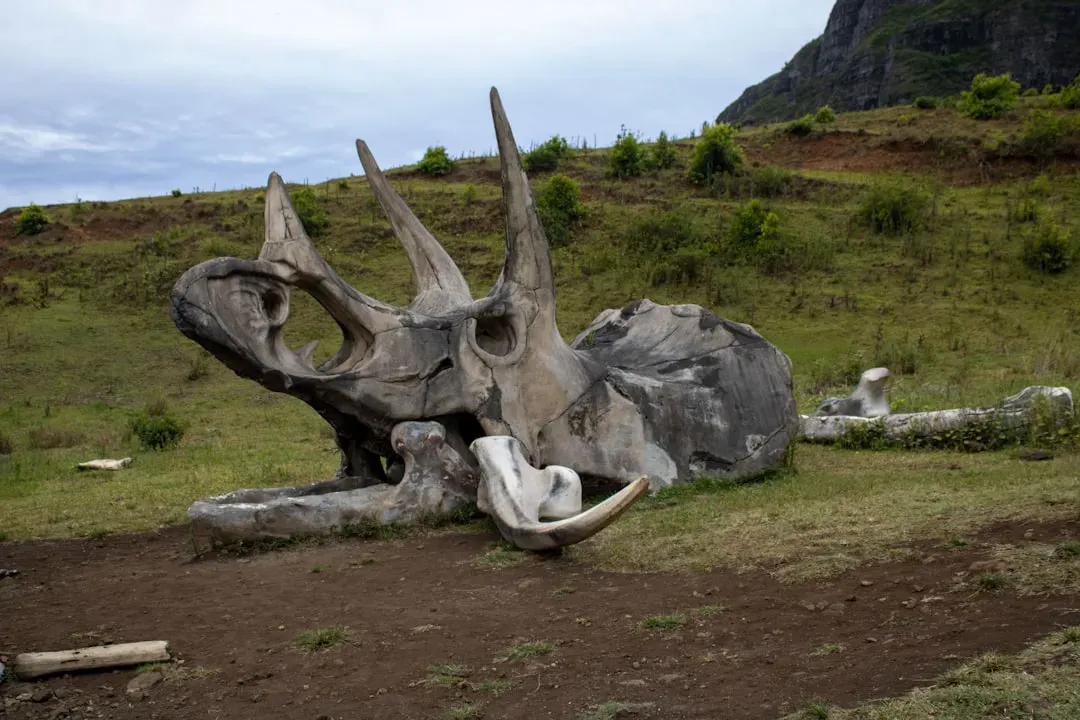
Every time a new dinosaur fossil is discovered from just before the impact, the story you tell yourself about that final chapter shifts a little. Some sites show a healthy, diverse dinosaur fauna right up to the boundary, suggesting they were not in long-term decline. That challenges the older idea you may have heard that dinosaurs were already fading and the asteroid merely finished them off. Fossils instead hint that many dinosaurs were doing fine until disaster hit.
On the flip side, you have to admit your fossil record is patchy and biased. Many environments do not preserve bones well, and entire regions and time slices are still poorly sampled. That means you might be missing whole communities and subtle trends in diversity and ecology. As you add new finds from places like North America, Asia, and South America, you’re forced to rewrite timelines, redraw family trees, and reconsider whether the dinosaurs’ end was a complete surprise to the biosphere or the final step in a more complex reshuffling of life.
You Are Still Learning What This Extinction Means for Your Future
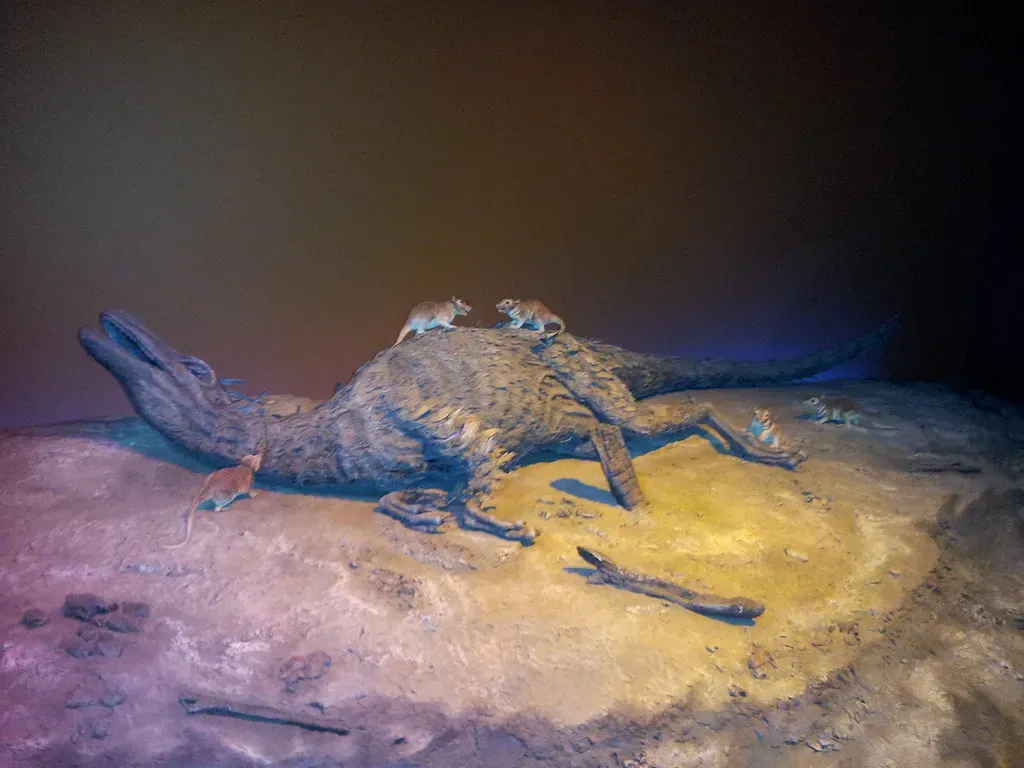
It is tempting to treat the dinosaur extinction as a piece of distant, finished history, but it has direct implications for your present and future. By studying how ecosystems collapsed and recovered, you gain clues about how today’s world might respond to rapid changes in climate, habitat, and biodiversity. You see that life can be incredibly resilient, bouncing back with new forms and lineages, yet you also see that the recovery took hundreds of thousands, even millions, of years, far beyond any human timescale.
When you compare ancient greenhouse spikes, ocean acidification events, and mass die-offs with what you are now doing to the planet, a quiet, unsettling realization creeps in: you are living in the first species capable of understanding past extinctions while also driving new ones. That knowledge lets you treat the dinosaur extinction as more than a curiosity; it becomes a warning written in stone. The secrets you keep uncovering are not just about how a world ended long ago, but about how you might choose to avoid triggering your own version of a planetary reset.
In the end, you are left with a story that is both partly solved and deeply unfinished. You know an asteroid hit, climates shifted, ecosystems collapsed, and dinosaurs – aside from the bird lineage – disappeared. But you still do not fully understand every mechanism, every timeline, every survival trick that shaped that dark interval. Maybe that’s the strangest and most humbling part for you: even with satellites, supercomputers, and precision lab instruments, the Earth keeps some of its most dramatic chapters slightly out of reach. As you look up at the night sky, do you ever wonder what other secrets are still waiting in the rocks beneath your feet?