I still remember the first time I saw a Tyrannosaurus rex skeleton in a museum. Even behind glass and with kids running around, it felt like standing in front of something both impossibly old and weirdly alive. Now imagine not just any T. rex, but the most complete skeleton ever found, so detailed that it rewrote parts of what scientists thought they knew about the most famous dinosaur on Earth. That is what makes this particular fossil such a standout in a world full of dinosaur superstars.
This specimen is not just a cool museum centerpiece; it is a scientific gold mine. From the way its bones knit together to the scars etched into its skeleton, it has offered a shockingly intimate look at the life, struggles, and even the death of a single animal that lived roughly about sixty‑six million years ago. Its story blends human drama, field grit, cutting‑edge science, and a surprising amount of mystery. The deeper you go into its history, the more it feels like peeling back layers of a real‑life detective story that just happens to star a giant predator.
A Chance Discovery That Changed Dinosaur Science
The discovery of the world’s most complete T. rex skeleton did not begin with a grand expedition funded by a movie studio; it started with people doing the unglamorous work of searching badlands layer by layer. These landscapes, often empty and harsh, hide treasures that only become visible after erosion does its slow work and a trained eye catches a fragment of bone sticking out from the rock. Imagine hiking for hours through wind and dust, staring at the ground, and then suddenly spotting something that might rewrite a chapter of Earth’s history. That moment of recognition is as much about experience as it is about luck.
What made this particular find extraordinary was how much of the skeleton actually turned up. Many T. rex fossils are frustratingly incomplete – just a skull here, a leg bone there – as if the past is deliberately teasing us. In this case, as more rock was removed, more bones appeared in place, hinting that this was not just another partial specimen. That realization transforms the mood on a dig from routine to electric. Everyone on site suddenly understands they are not just digging up bones; they are uncovering the single best chance so far to study this animal almost as a whole individual, rather than as a scattered puzzle.
Why “Most Complete” Matters More Than It Sounds
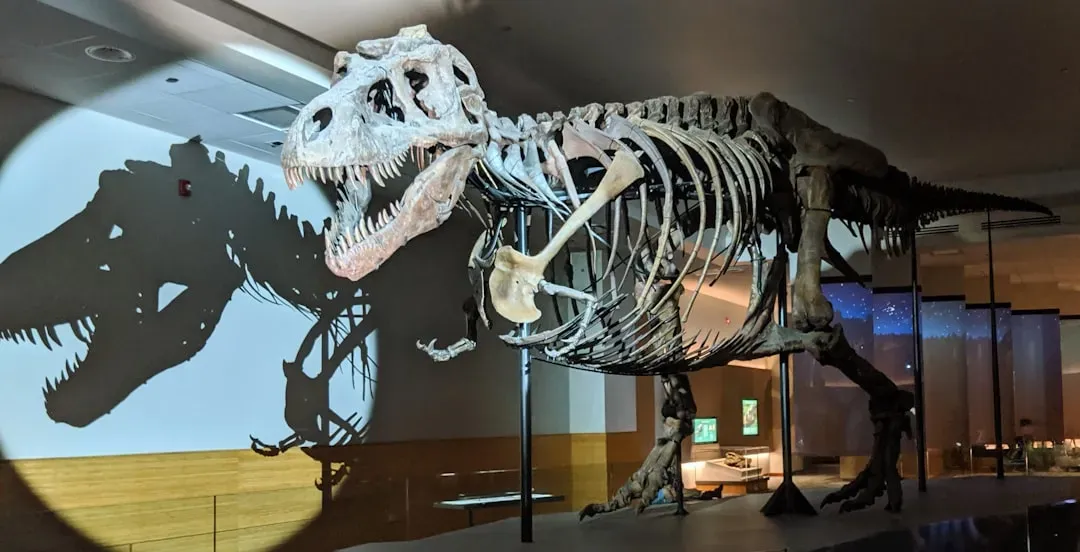
Calling a skeleton the “most complete” might sound like a brag for museum marketing, but scientifically, it is a huge deal. When paleontologists talk about completeness, they are asking how much of the animal’s original skeleton is actually there – skull bones, ribs, vertebrae, hips, limbs, tail, the whole package. Many dinosaur species, even famous ones, are known from surprisingly little material, forcing scientists to fill in gaps with educated guesses and comparisons to other fossils. With a highly complete T. rex, those guesses shrink and the hard data grows.
A nearly whole skeleton lets scientists test assumptions they have been making for decades. How long was the tail really, and how did it balance the body? Exactly how thick were the leg bones relative to the hips and spine? Were some bones misinterpreted on earlier, more fragmentary skeletons? Suddenly, small details – like the angle of a joint or the curve of a rib – become much more reliable. It is a bit like finally getting the full blueprint of a building after years of trying to reconstruct it from a handful of bricks and a blurry photo.
Reconstructing the Life of a Giant Predator
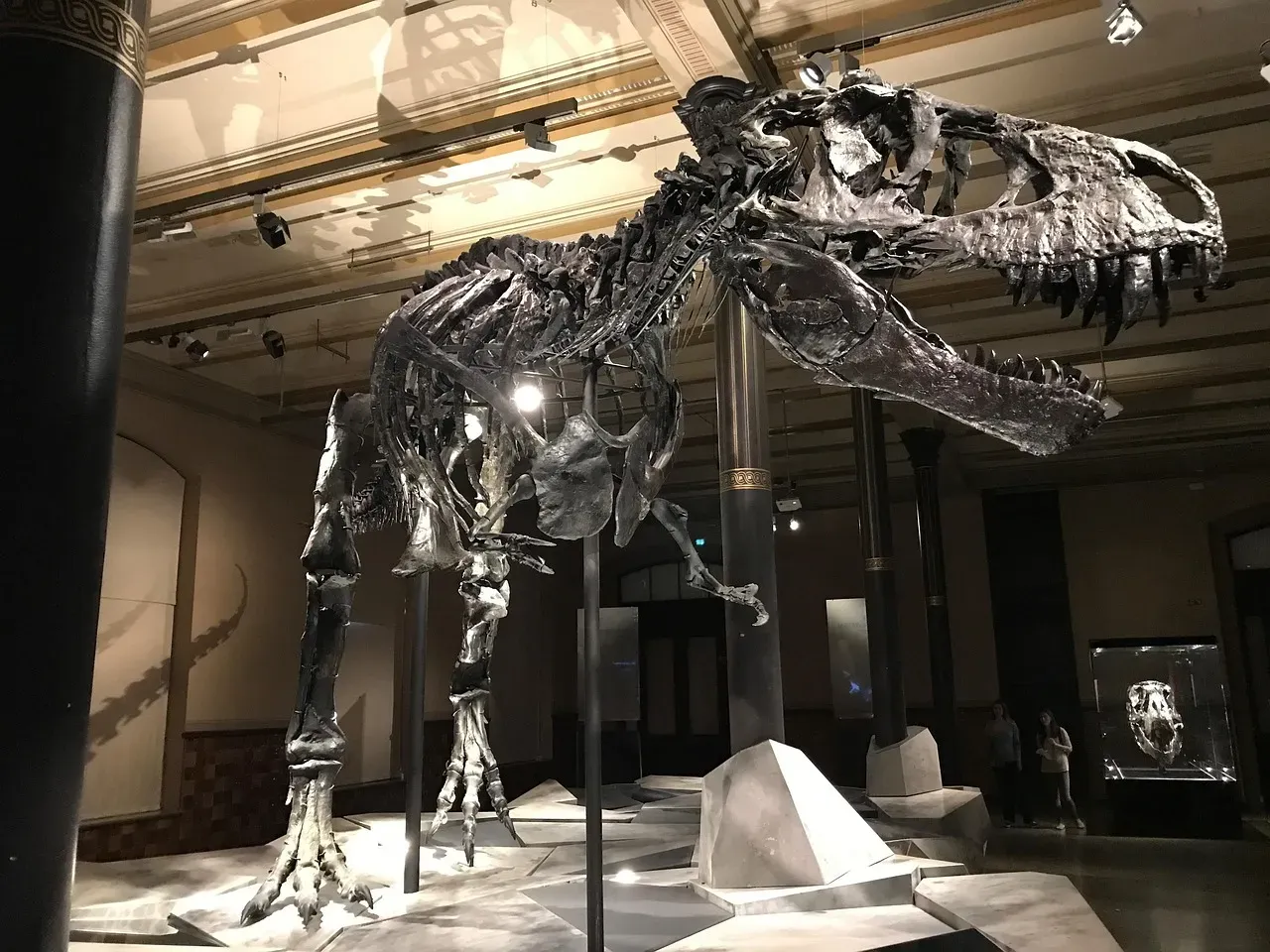
One of the coolest things about a complete T. rex is how it turns from a static skeleton into a biography written in bone. With so many parts preserved, scientists can estimate its age at death, how fast it grew, and what kind of life it likely led. By slicing thin sections from certain bones and looking at the growth rings inside – kind of like tree rings – they can track periods of rapid growth and times when things slowed down, perhaps due to food shortages or injury. These patterns reveal that T. rex did not grow at a steady, gentle pace; it had growth spurts and lulls, more like a teenager than a tank.
The sheer size of the skeleton also forces hard questions about how such an animal actually functioned day to day. With a robust skull, massive jaw muscles, and thick neck vertebrae, this T. rex clearly packed an enormous bite, but the body had to support that weight and power. Strong, muscular legs indicated a predator capable of covering ground quickly, though probably not at the wild speeds sometimes imagined in movies. The more you look at the full skeleton, the more it feels like a finely tuned compromise between brute strength and just enough agility to make being a top predator worth the metabolic cost.
Evidence of Pain, Injury, and Survival
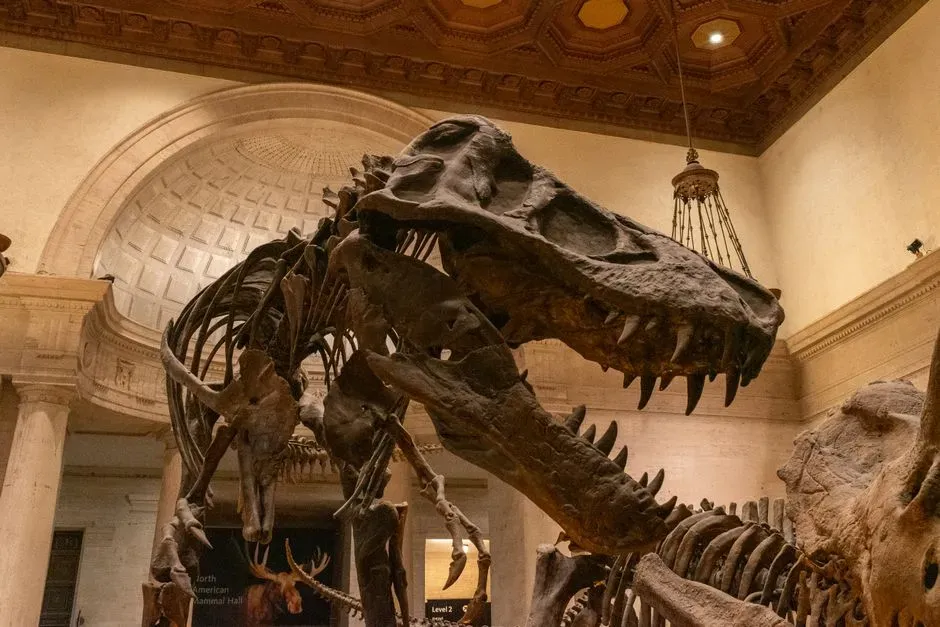
One of the most haunting things about this particular T. rex is that its skeleton does not just show what it was; it shows what it went through. Many bones bear signs of healed injuries – subtle distortions, roughened surfaces, or fused areas where fractures once existed. Some ribs and vertebrae show damage that suggests violent impacts, possibly from fights with other large animals or brutal encounters during the hunt. These are not dramatic movie wounds; they are quiet, anatomical scars that tell a story of repeated survival. This was an animal that got hurt and kept going.
There are also signs of disease and infection, including areas on some bones that look swollen or porous, which paleontologists interpret as evidence of long‑term health issues. In some specimens, jawbones show lesions linked to serious oral infections that might have made feeding painful, yet the animal still lived long enough for the damage to partially heal. That kind of evidence is strangely humanizing. It reminds you that even the most fearsome predator on the planet dealt with sickness, pain, and wear and tear over time, much like large modern animals such as lions or polar bears.
How the Skull and Jaws Changed Our Picture of T. Rex
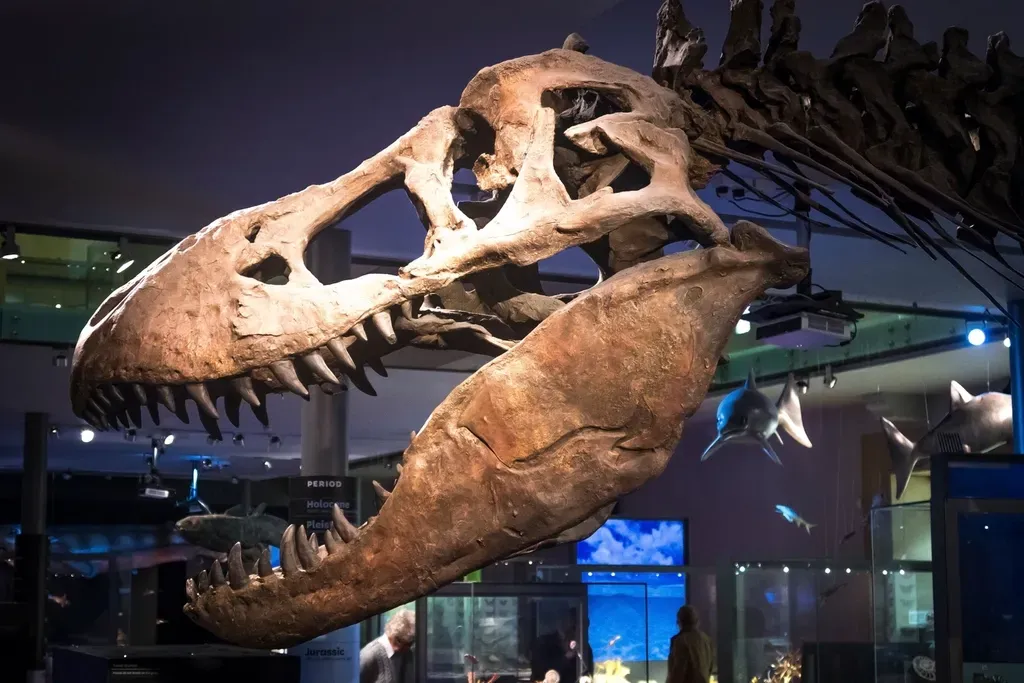
The skull of this remarkably complete T. rex is not just big; it is intricately informative. With so many bones preserved and articulated, scientists could examine how the different skull elements locked together, how the nasal and facial bones helped absorb stress, and how the jaw joints moved during a bite. The structure supports the idea that T. rex had an incredibly powerful bite, among the strongest of any land animal known, capable of crushing bone rather than just slicing flesh. This fits with the idea of a predator that not only killed its prey but also chewed straight through skeletons to access nutritious marrow.
Details around the skull also help refine ideas about its senses. The spacing and orientation of the eye sockets suggest strong binocular vision, which would have helped with judging distance in a dense environment. The bony passages associated with the inner ear and parts of the snout point to an animal with good hearing and a keen sense of smell, roughly similar in some ways to modern vultures or big carnivorous birds. When you put all that together, this T. rex was not just a heavy hitter; it was a highly tuned sensory machine, built to locate, track, and ambush other animals across its Late Cretaceous world.
New Clues About Posture, Movement, and Muscles
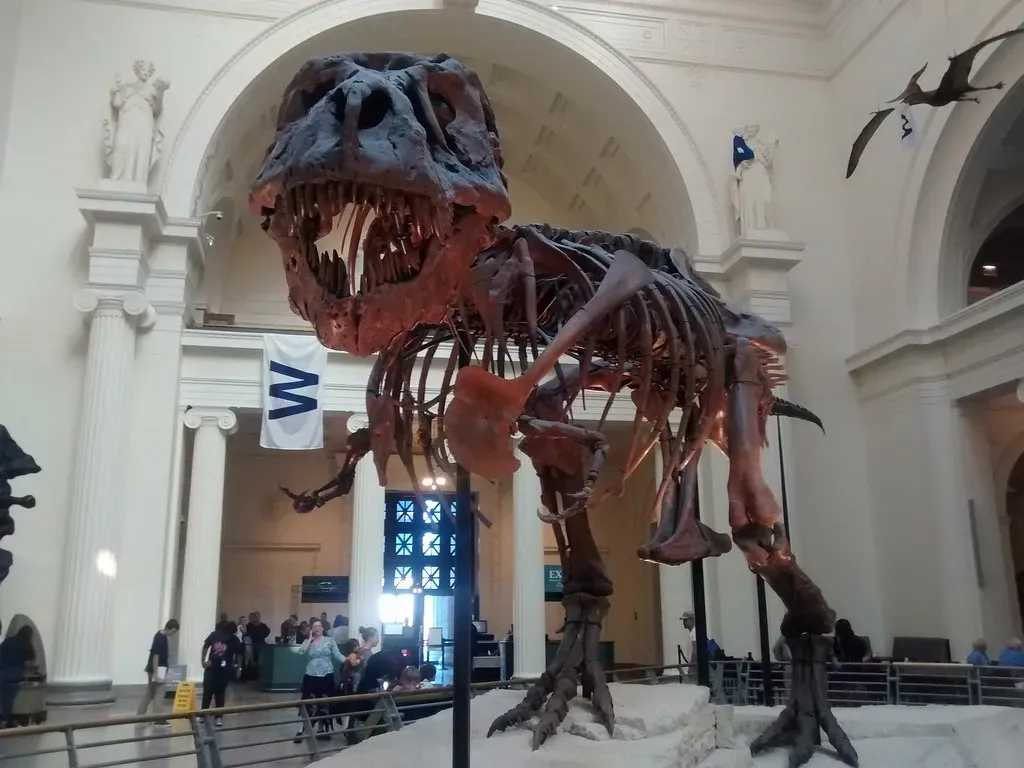
Before discoveries like this, popular depictions of T. rex often showed it standing upright with its tail dragging along the ground, like a giant kangaroo with anger issues. A much more complete skeleton tells a different story. The arrangement of the vertebrae, hips, and tail bones makes it clear that the animal balanced its body in a more horizontal pose, with the tail stretched out as a counterweight. This posture is not a minor detail; it transforms T. rex from a lumbering monster into something more athletic and dynamic, closer in feel to a huge, deadly bird of prey.
The limb bones play a huge role in understanding how this dinosaur moved. The proportions of the thigh and shin bones, the structure of the ankle, and the attachment points for muscles suggest a powerful but not reckless runner. It probably could not sprint like a cheetah, but it did not have to; its strategy may have been more about short, decisive bursts of speed combined with ambush and intimidation. The famously tiny arms, when seen in context with the rest of the skeleton, make more sense too. They were short but robust, with strong muscle attachments, hinting at a role in gripping or stabilizing prey during the final moments of a kill rather than just being evolutionary leftovers.
What the Bones Reveal About T. Rex Behavior
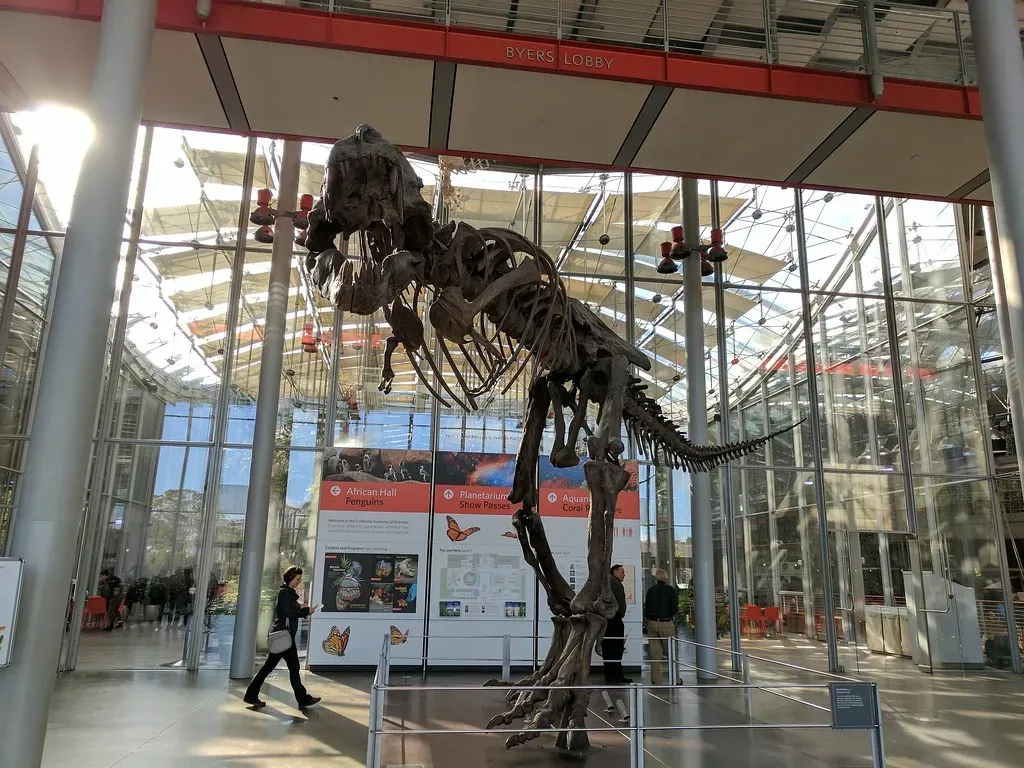
Behavior is one of the hardest things to infer from fossils, but a skeleton this complete gives scientists more to work with than usual. Bite marks on bones, including possible T. rex bites on other T. rex skeletons, suggest that these animals might have sometimes fought each other or scavenged on their own kind’s carcasses. Healed injuries point to individuals surviving conflicts or accidents that could have easily been fatal. When you combine that with the raw power built into the jaws and neck, you start to picture a world where confrontations between large predators were rare but catastrophic.
Some researchers look closely at the wear and tear on teeth and joints to infer how T. rex spent its days. Teeth that show heavy wear, chipping, or replacement patterns hint at a lifetime of crunching through tough material like bone. Joint surfaces, especially in the hips and knees, can reveal whether the animal spent more time walking long distances or stalking and lunging in shorter bursts. Even though these behavioral ideas are always a bit speculative, the completeness of the skeleton means fewer leaps of faith and more grounded, testable hypotheses about how this animal actually lived.
The Human Drama: Ownership, Auctions, and Ethics
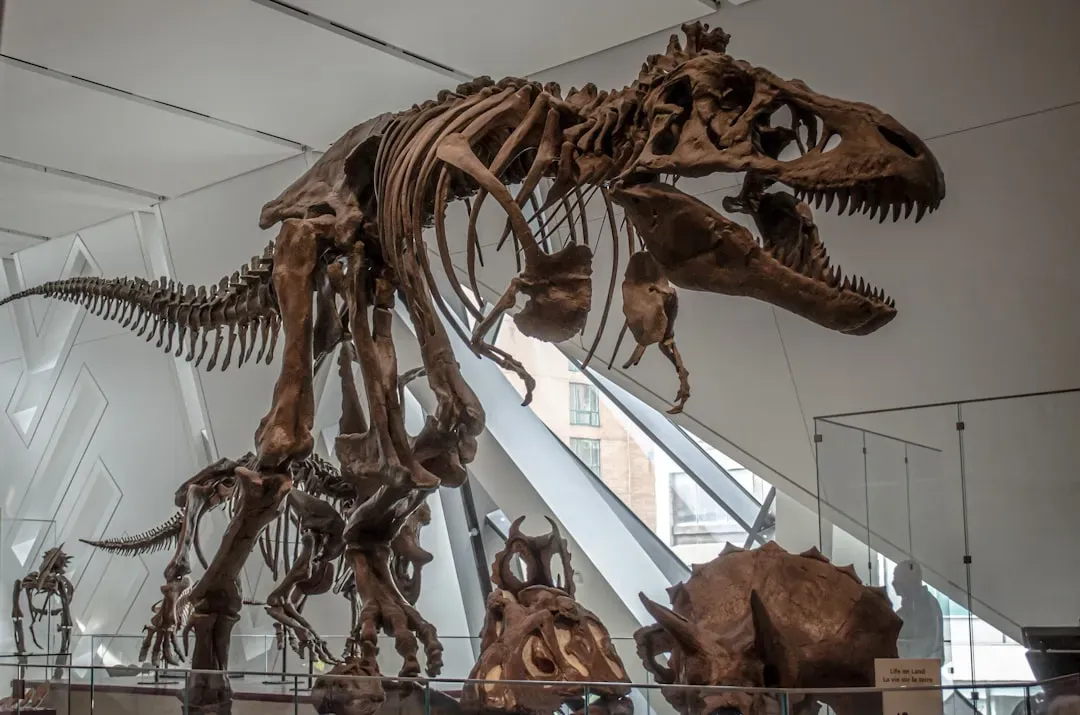
As much as this T. rex is a scientific treasure, it is also wrapped up in a very human story involving money, ownership, and debates over who should control major fossils. High‑profile specimens like the most complete T. rex can attract intense interest from private collectors, museums, and even governments. Sales can reach sums that feel more like art auctions than scientific transactions, turning a pile of ancient bones into a modern economic flashpoint. Whenever that happens, scientists worry – sometimes with good reason – that access for research could become limited or fragile over time.
These controversies have forced paleontology to wrestle with uncomfortable questions. Should a fossil of such importance belong solely to a public institution, where it can be studied and displayed without fear of being moved into private hands? Or is private funding sometimes the only realistic way to rescue and care for specimens that might otherwise erode away? Personally, I lean strongly toward keeping keystone fossils, especially record‑setting skeletons like this one, in stable, publicly accessible collections. When a fossil has the power to transform our understanding of life’s history, it feels wrong for it to vanish into a private living room or vault.
How One Skeleton Reframed the Age of Dinosaurs
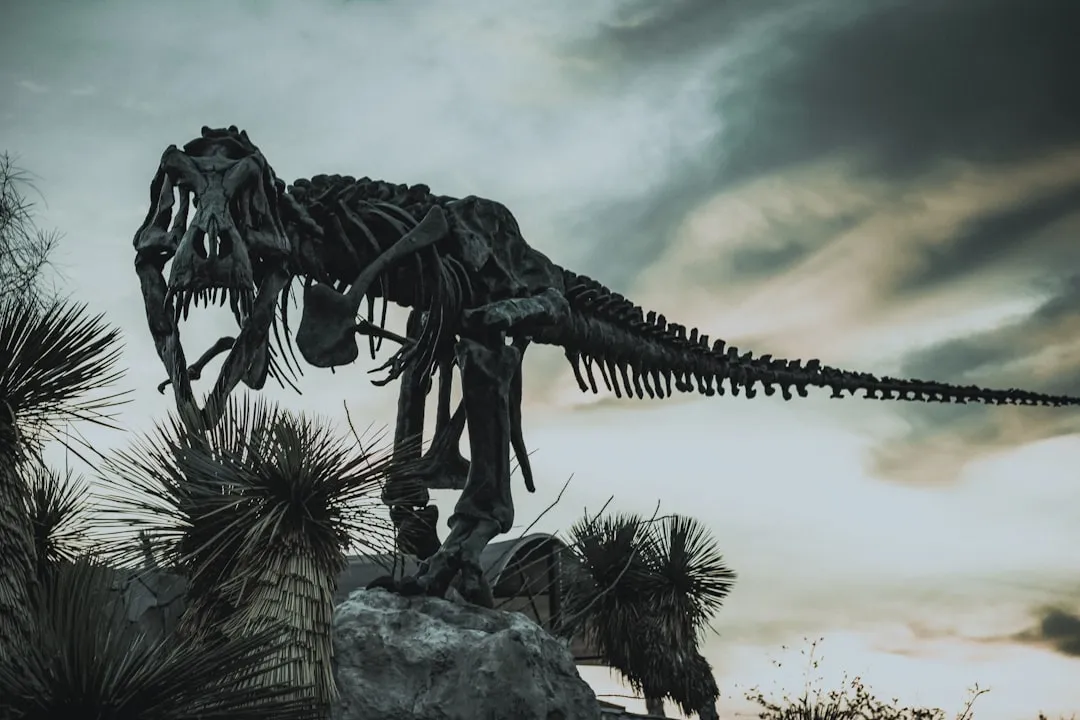
The impact of the world’s most complete T. rex skeleton goes beyond the species itself. By nailing down details of T. rex anatomy, growth, and behavior, it helps clarify the entire top layer of Late Cretaceous ecosystems in North America. When you understand the apex predator more precisely, you can better infer the pressures on herbivores, the competition between carnivores, and the overall energy flow of the system. It is like finally getting a crisp, high‑resolution image of the keystone piece in a sprawling mural that had always looked a little fuzzy.
This specimen has also helped refine questions about dinosaur evolution just before the mass extinction event that wiped them out. Was T. rex thriving right up to the end, or already under subtle stress from climate and environmental changes? Detailed growth and health data from such a complete individual can be compared with other fossils to spot patterns – like whether later T. rex individuals were smaller or more stressed than earlier ones. The answers are still evolving, but what is clear is that this skeleton functions as a kind of anchor point, a reference standard that future discoveries will be measured against for decades to come.
Conclusion: A Fossil That Refuses to Be Just a Museum Piece
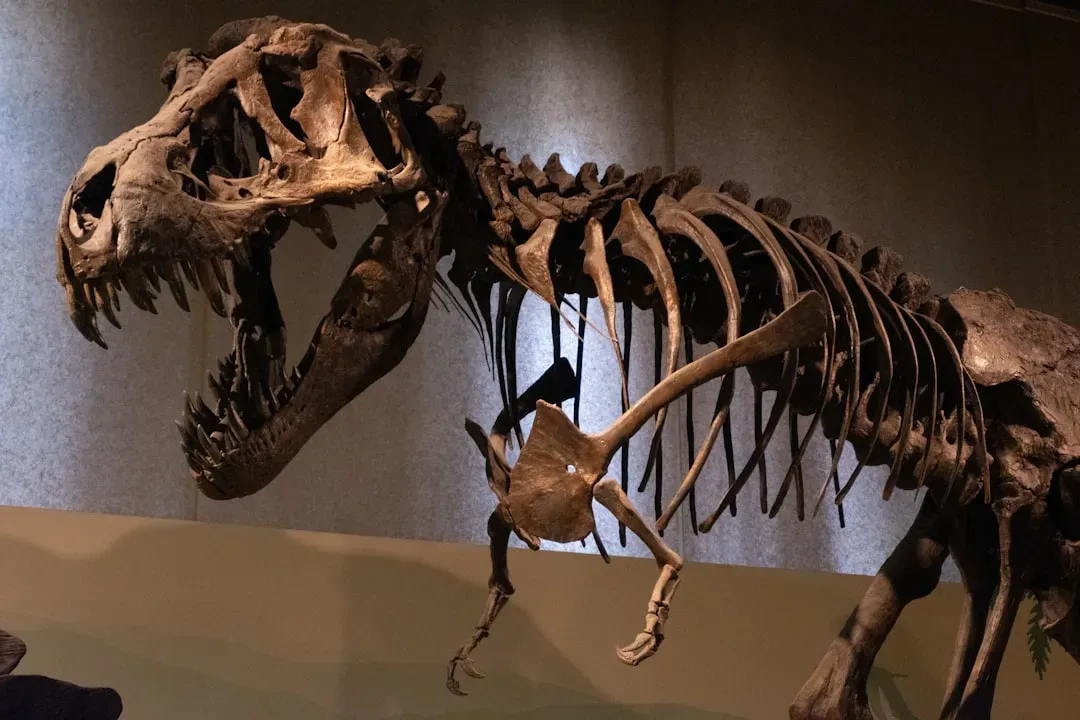
In the end, the world’s most complete T. rex skeleton is not just a dead animal on a metal frame; it is a stubborn challenge to our imagination and our priorities. It proves that with enough luck, persistence, and care, the deep past can speak to us in incredible detail – down to the scars of old injuries and the subtle curves of bones that shaped a predator’s stride. At the same time, it exposes how fragile that connection is, hanging on decisions about land rights, auction houses, and whether we value public knowledge over private display. I think it is fair to say that any society willing to let a fossil of this importance disappear from open scientific access is making a short‑sighted, almost reckless choice.
What stays with me most is how this single skeleton collapses the distance between our world and one that ended tens of millions of years ago. You look up at its towering skull and it is hard not to feel a mix of awe and unease, knowing that this animal was once as real and urgent as any lion stalking a savanna today. That emotional jolt is not a side effect; it is the point. Fossils like this force us to recognize that Earth’s story is far bigger and stranger than our brief moment in it, and that we have a responsibility to listen carefully when the rocks finally give up their secrets. If one T. rex can tell us this much, how many other stories are still waiting just below the surface, one lucky discovery away?